
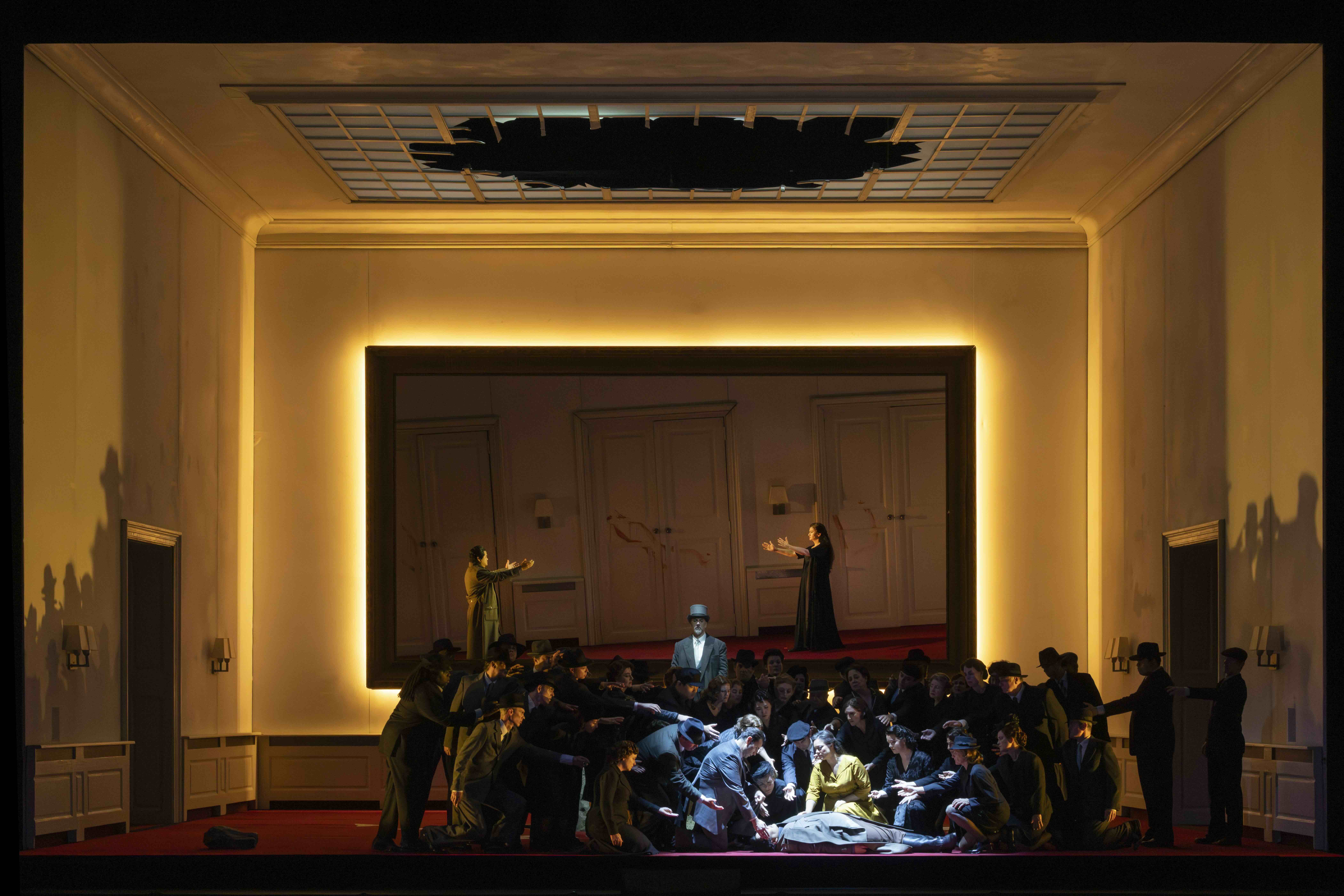
I covered the first two productions of San Francisco Opera’s 2026-27 season for Musical America: Simon Boccanegra and Mary, Queen of Scots.
Filed under: Musical America, review, San Francisco Opera, Verdi, women composers

October 7, 2026 • 3:17 pm 0
I covered the first two productions of San Francisco Opera’s 2026-27 season for Musical America: Simon Boccanegra and Mary, Queen of Scots.
Filed under: Musical America, review, San Francisco Opera, Verdi, women composers
June 27, 2026 • 4:24 pm Comments Off on A Night at the Opera, a Nightmare at the Museum

The first of my reports for Musical America on last weekend’s visit to San Francisco:
Filed under: Musical America, review, Richard Strauss, San Francisco Opera
November 18, 2025 • 2:51 pm Comments Off on ‘The Monkey King’: Opera Now Review
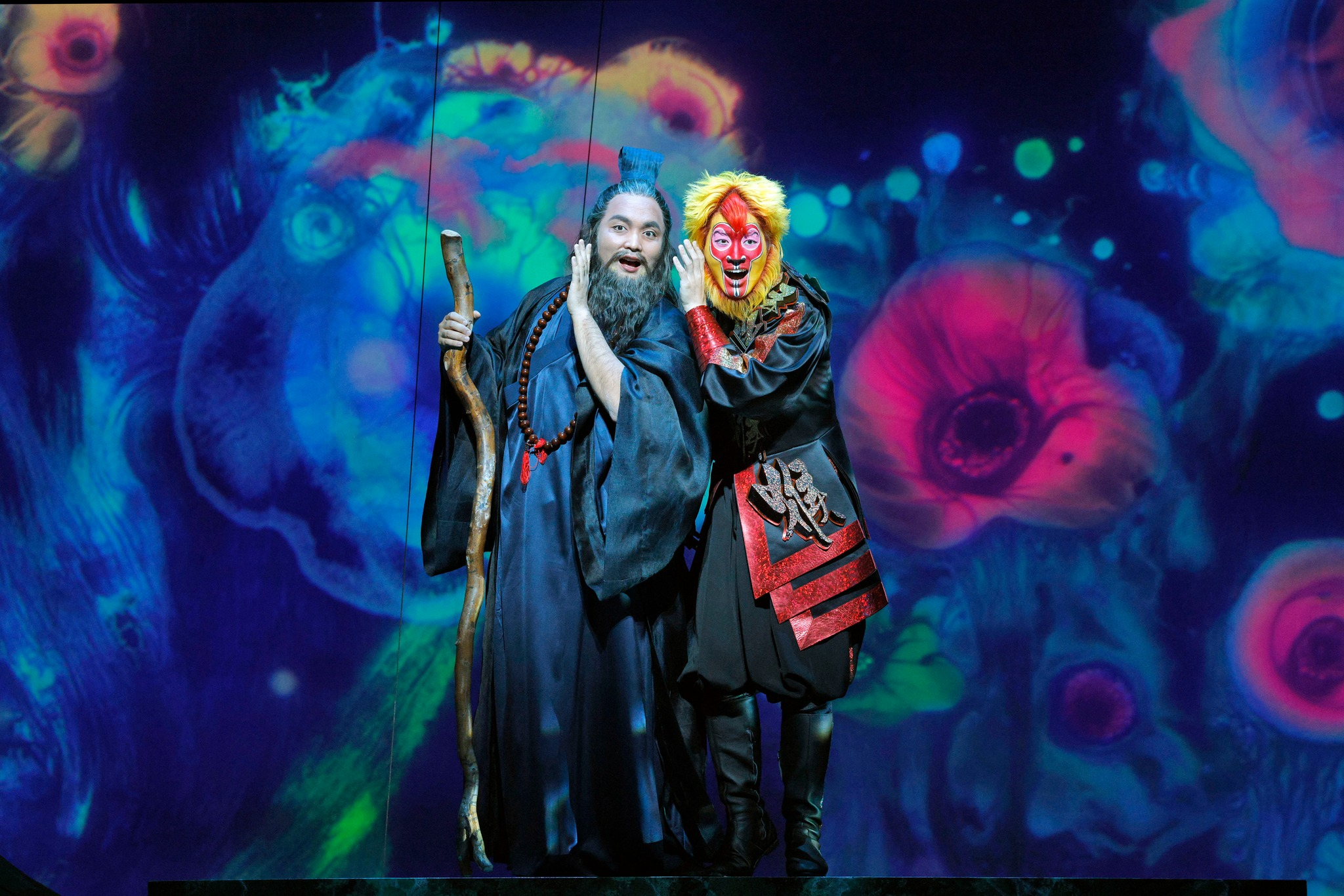
Huang Ruo and David Henry Hwang’s The Monkey King is a very palpable hit at San Francisco Opera. The rest of the run appears to be already sold out, but a livestream of tonight’s performance at 7.30 PT will be available here starting at 7.30 pm PT ($25); the stream will also be available on demand from 23 Nov at 10am PT to 25 Nov at 10am PT.
My review for Opera Now:
Just after singing what may be the most beautiful music in The Monkey King, the opera’s irrepressible hero promptly marks his territory with a triumphant stream of urine. It’s an indelible assertion of Monkey’s contradictions – and a characteristic example of Huang Ruo’s assured pacing. His underlying musical control gives this sweeping, adventure-driven tale cohesion, navigating its comic and sublime registers with unforced confidence. The transitions are so natural they scarcely call attention to themselves. …
Filed under: new opera, review, San Francisco Opera
November 14, 2025 • 9:12 am Comments Off on A Shape-Shifting Hero for a ‘Third Culture’ Opera

My New York Times feature on Huang Ruo and his brand-new opera “The Monkey King,” with a libretto by David Henry Hwang – opening tonight at San Francisco Opera.
Inside a cavernous rehearsal space near the War Memorial Opera House in San Francisco, the singer portraying the monk-like sage Subhuti was wielding a golden kung fu staff with serene precision. “Power alone is not enough” he intoned to the trickster hero of “The Monkey King,” Huang Ruo’s opera, which premieres this month at San Francisco Opera.
Filed under: new opera, New York Times, San Francisco Opera
November 2, 2025 • 5:22 pm 1
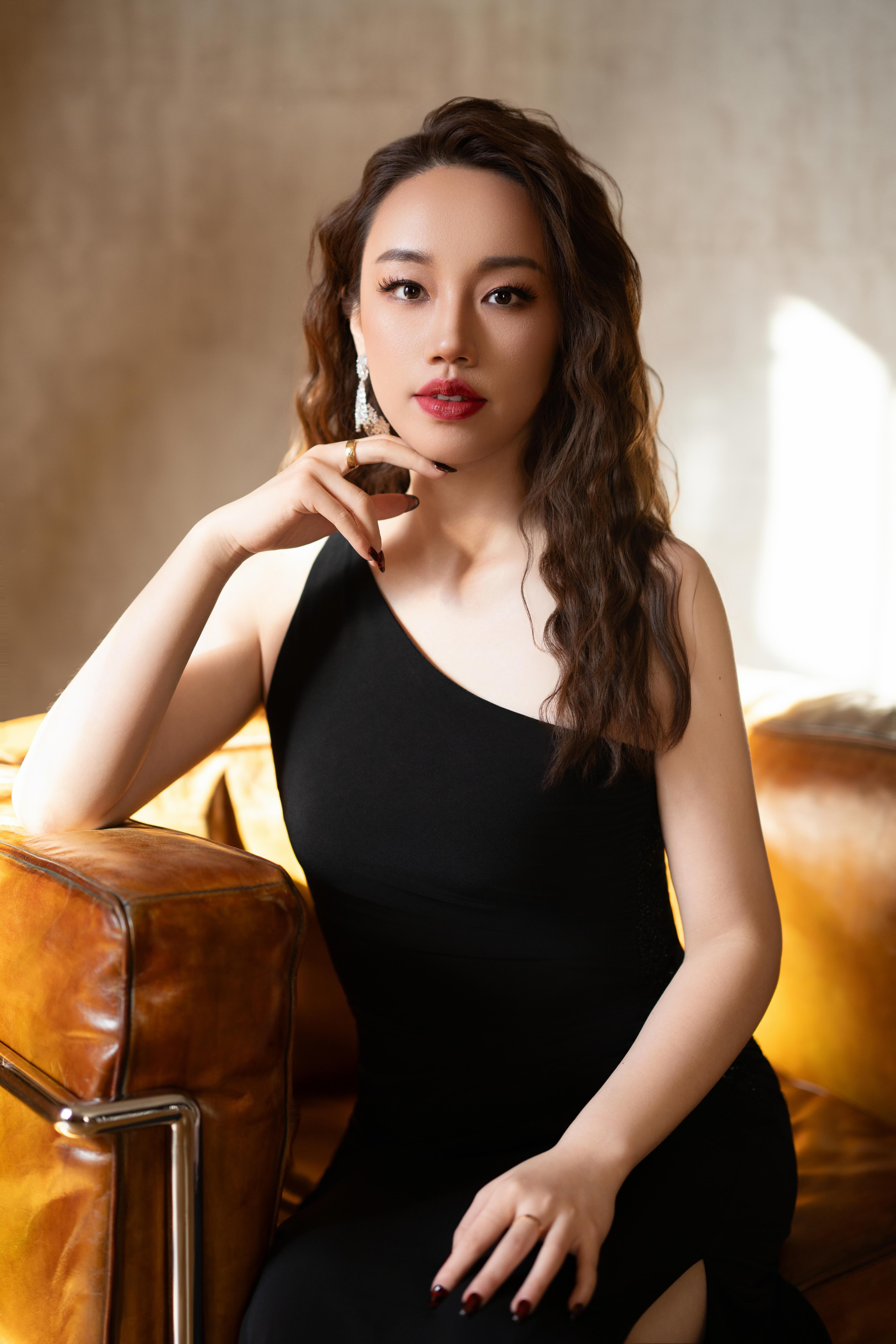
Here’s my profile of mezzo-soprano Hongni Wu, Musical America’s New Artist of the Month for November:
When Hongni Wu bounded across the stage as Cherubino in Santa Fe Opera’s Marriage of Figaro last summer, she seemed to compress a teenager’s swirl of conflicted emotions into a single breath. …
Filed under: Musical America, San Francisco Opera, Santa Fe Opera, singers
November 1, 2025 • 9:45 am 2
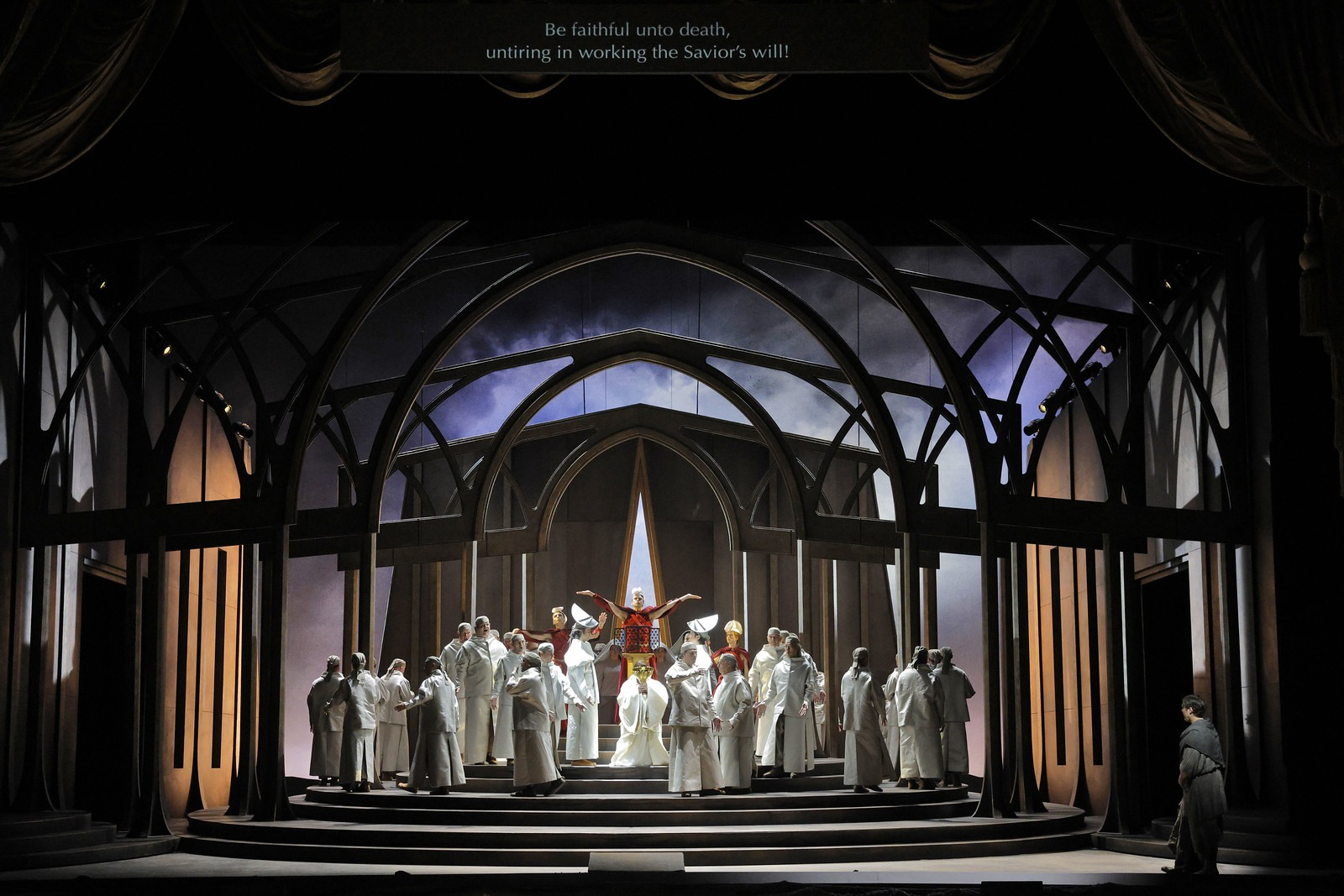
My review of San Francisco Opera’s new production of Parsifal has been posted on the Opera Now website:
Time moves differently in San Francisco Opera’s Parsifal. Under Eun Sun Kim’s baton, Wagner’s score breathes with a kind of suspended inevitability, while movement and light unfold in ritual slow motion, evoking a theatre of Baudelairean correspondences, where sound, image and gesture seem to mirror one another in continual exchange.
Filed under: review, San Francisco Opera, Wagner
June 24, 2025 • 5:37 pm 2
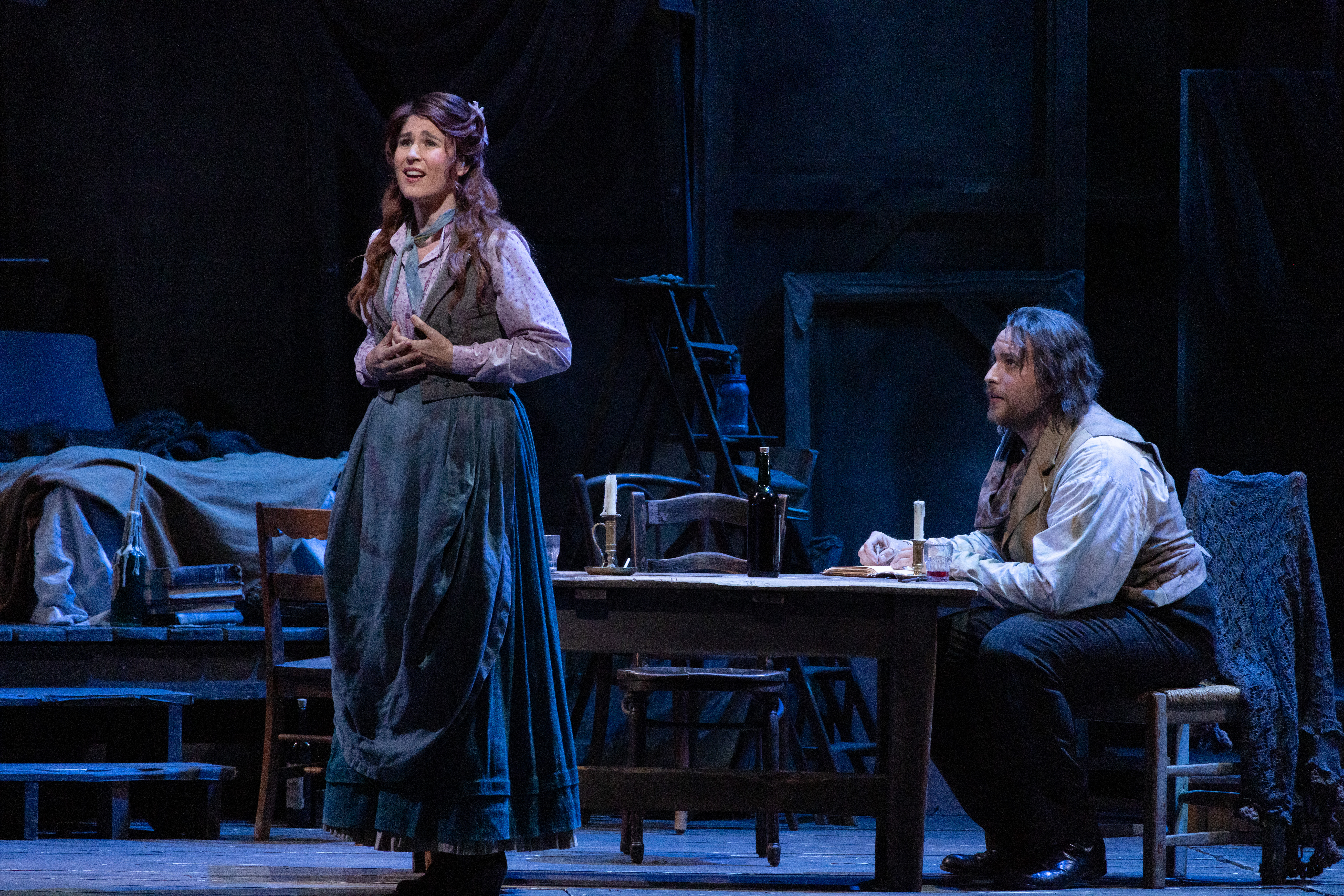
Since its founding in 1923, San Francisco Opera has maintained a love story of its own with La Bohème. The company actually opened with a performance of the beloved classic, cementing its identity with Puccini’s story of young love and youthful illusions. One thing this summer’s revival makes clear: when done persuasively, La Bohème seems immune to aging, undiminished in its emotional pull.
John Caird’s production, which originated in 2012 and first arrived at the War Memorial Opera House in 2014, with a revival in 2017, was presented as part of this summer’s shorter-than-usual season alongside a gripping interpretation of another great opera by a youthful artist in the process of making pivotal discoveries about what opera can do: Idomeneo, by the 20-something Mozart. In this revival of Caird’s original staging by Katherine M. Carter, the chemistry between the two main couples and among their circle of close friends gained a dramatic clarity that was believable.

A visual metaphor for the intensity of their dreams and idealism emerges in designer David Farley’s sets, which seem filtered through the imagination of the painter Marcello – as if memory itself were the canvas. Instead of a cosy view of the Parisian skyline, the distinctly crowded and cluttered garret is framed by panels that seem to be his own creation, works in progress. In the crowd scene at Momus, the wintry city is populated by still more painted façades that verge on abstraction, Cubistally tilted as if to hint at the transformation of experiences recollected from a distance, as they become stylized, mythologized. While also nodding to the aesthetic of Toulouse-Lautrec and the Belle Époque, the visual world inhabited by this Bohème wasat times almost dreamlike, even surreal.
Puccini’s achievement in this opera, bolstered by his collaboration with librettists Luigi Illica and Giuseppe Giacosa, gains traction from the varying manifestations of community among these young people: the cramped garret coming alive with roughhousing banter and energy and the glittering Café Momus brimming with a chaotic joy and sense of possibility against all the odds.
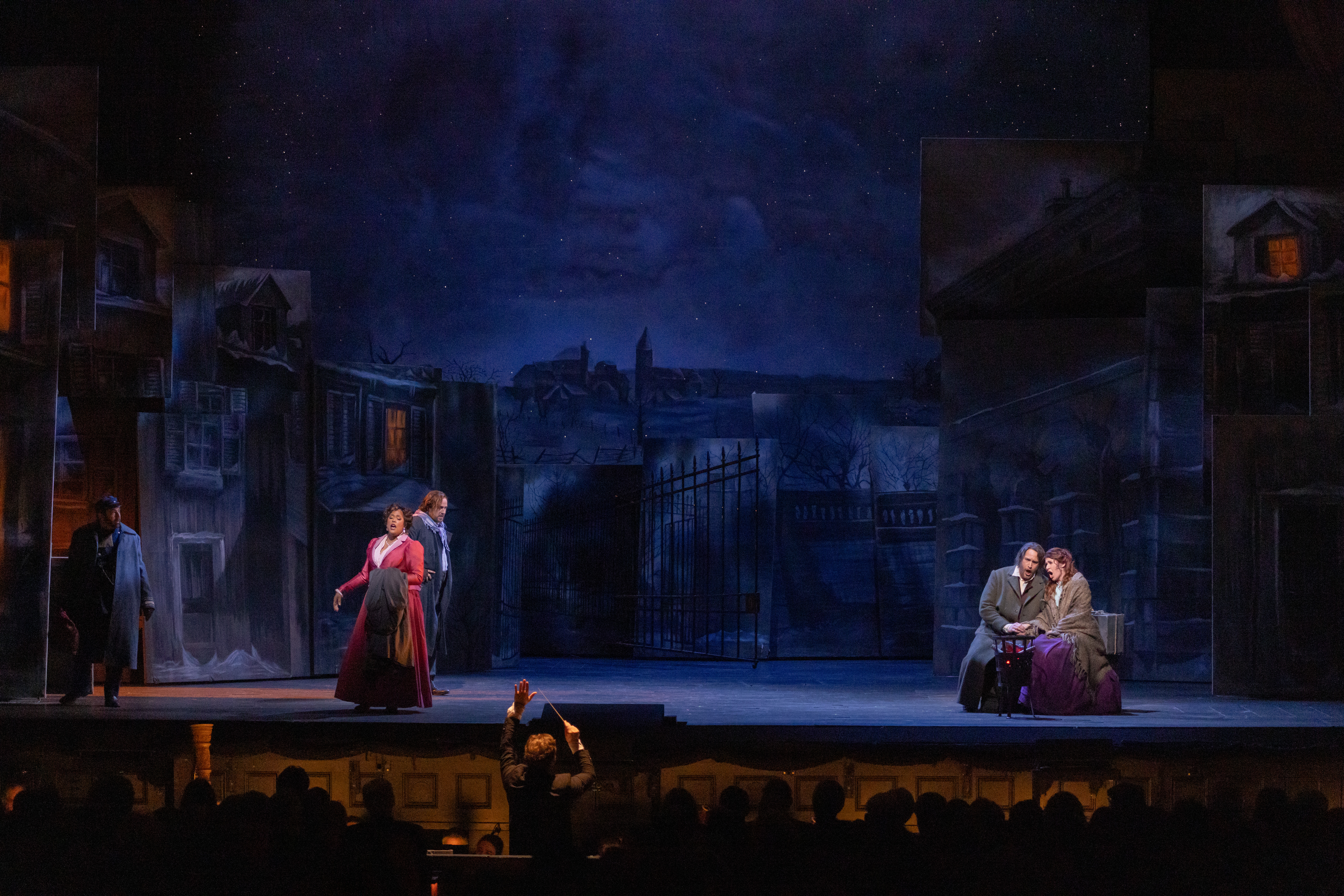
Much has been written about La Bohème as an opera of Romantic nostalgia, but this production underscores its deeper structure as a work of memory. Puccini’s savvy recapitulation of musical material – most movingly in the final act’s return to the music of Mimì and Rodolfo’s first meeting – carried incalculable expressive weight in Ramón Tebar’s sensitively detailed conducting, a highlight of the production. With his fine ear for balance and unwavering attention to the colors and harmonic richness of Puccini’s score, he had the orchestra paint in layered brushstrokes of timbre, shaping phrases with warmth and elasticity.
I heard the “alternate” cast on June 18. As Rodolfo, tenor Evan LeRoy Johnson made a welcome impression with his hefty, burnished tone and grounded stage presence. His rapport with Australian soprano Nicole Car as Mimì allowed him to trace an arc from self-conscious artist to grief-stricken lover. Car, in turn, conveyed Mimì’s innocence and vulnerability without reducing her to frailty. Even in the character’s earliest moments, there was a quiet self-awareness beneath the surface. Car uncovered more psychological nuance than is often seen in the third-act encounter with Rodolfo, singing with radiant control across the range. Her resonant low notes lent unexpected weight to a role sometimes misconstrued as a passive victim.

Filling in for the originally announced Will Liverman, baritone Lucas Meachem sang Marcello for the full run, bringing the painter to life with vocal vitality and a sharply etched dramatic immediacy through telling details, like his hint of jaded disdain when he first interacts with Mimì at Momus. He emerged as the opera’s emotional linchpin, bridging the bohemians’ slapstick and the lovers’ tragedy. His scenes with Rodolfo had the ease of real camaraderie – and rivalry.
As Musetta, soprano Brittany Renee lit up the stage with a performance abounding in vocal charisma and larger-than-life presence that also amplified the somewhat underworked Toulouse-Lautrec angle. Her “Quando me’n vo’” was anything but coquettish posturing but a declaration of unapologetic vitality. At the same time, she allowed a genuine compassion for Mimì to emerge with affecting sincerity in the deathbed watch.
There was much to enjoy in the detailed work of the companions as well. Bogdan Talos made a dignified and ultimately touching Colline, keeping a mostly detached air until the death scene released a surge of directness. His “Vecchia zimarra” felt like an intimate farewell to youth itself. Another highlight of the production was Samuel Kidd’s vividly observed portrayal of Schaunard (the one actual musician among these Bohemians), especially in his gleefully morbid story of how a dead parrot brought a windfall – a comic moment that, like so much in Bohème, holds a tragic echo in hindsight. Dale Travis brought seasoned comedic timing to his dual character roles as the landlord Benoit and sugar daddy Alcindoro. The SF Girls and Boys Choruses added charm to the Café Momus scene.
But what gave this performance its distinctive character was the sensitive, detailed conducting of Ramón Tebar. The Spanish conductor proved a superb collaborator – very much a singers’ conductor – with an ear for balance and a painter’s attention to color. He brought out the harp’s glitter, the dark undertow of strings beneath bright melodies, and the often-overlooked harmonic richness of Puccini’s score.
As Larry Rothe insightfully writes in his beautiful program essay, Rodolfo, in retrospect, is not a novice in love but an artist transformed by a singular experience: “He hears himself pleading his case to Mimì in a new voice, honest and unguarded … Mimì, as Rodolfo recalls her, will always illuminate the memory of those rough days … those days that, for all their hardship, will always bear the tender ache suggested in that pivotal rising and falling fourth [of Rodolfo’s motif].”
That “tender ache” lingered well after Rodolfo’s cries of despair in this wonderful revival, reminding us not just of the pain of loss, but of how art redeems it – by turning memory into music.
Filed under: Puccini, review, San Francisco Opera, La Bohème, opera, Puccini, theatre
October 28, 2024 • 10:51 am Comments Off on “Tristan und Isolde” at San Francisco Opera

I reviewed San Francisco Opera’s new production of Wagner’s endlessly fascinating masterpiece for Opera Now:
An extraordinary thing is underway at San Francisco Opera: by taking on one of the major works of the wizard of Bayreuth each season, music director Eun Sun Kim has set about establishing herself as a formidable young Wagnerian….
Filed under: review, San Francisco Opera, Wagner
October 4, 2024 • 11:16 am Comments Off on “The Handmaid’s Tale” at San Francisco Opera

Some thoughts for Musical America on San Francisco Opera’s fall production of The Handmaid’s Tale:
SAN FRANCISCO—It was at the turn of the millennium that composer Poul Ruders and librettist Paul Bentley adapted The Handmaid’s Tale into an opera. These days, however, their version of the dystopian novel Margaret Atwood published in 1985 seems ominously closer to an opera ripped from the headlines than a cautionary tale …
Filed under: Musical America, new opera, review, San Francisco Opera
June 24, 2024 • 11:29 am Comments Off on The Pain and Insight of Saariaho’s “Innocence”
Here’s my review for Musical America of the American premiere of Kaija Saariaho’s final opera, Innocence, which was presented by San Francisco Opera this month:
Filed under: Musical America, review, Saariaho, San Francisco Opera
 Arts & Culture Stories from NPR
