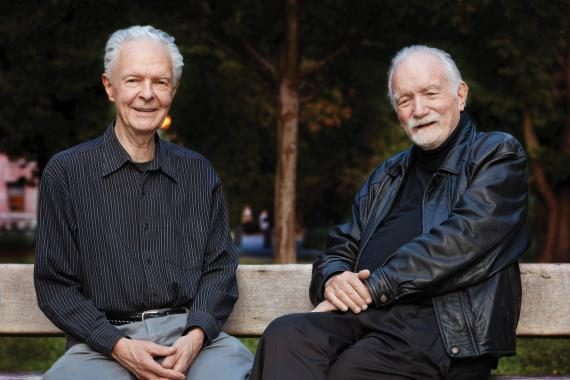
Legendary trombonist and improviser Stuart Dempster himself will join in to celebrate his 90th birthday with a solo improvisation on conch shell. Dempster is famous for his extraordinary sonic explorations of the Fort Worden cistern and its 45-second reverberation.
Augustin Hadelich is of course a familiar and well-loved figure in Seattle, where I last heard him in March in a memorable, thoughtfully programmed recital with Francesco Piemontesi at Meany Center for the Performing Arts. What a pleasure to encounter him in varied contexts at this summer’s Lucerne Festival as ‘artiste étoile.’
The first concert of my visit here brought the Beethoven Violin Concerto with the Berliner Philharmoniker and Kirill Petrenko – a kind of anti-concerto in its resistance to conventional virtuoso display that, paradoxically, became one of the great models for the Romantic violin concerto and that is also extraordinarily difficult to play convincingly.
I was blown away by Hadelich’s signature blend of warmth and poetry, and also by the natural give-and-take between him and this collective of world-class musicians, each with such a strong musical personality. As an encore, he offered his own touching arrangement of Schumann’s Träumerei.
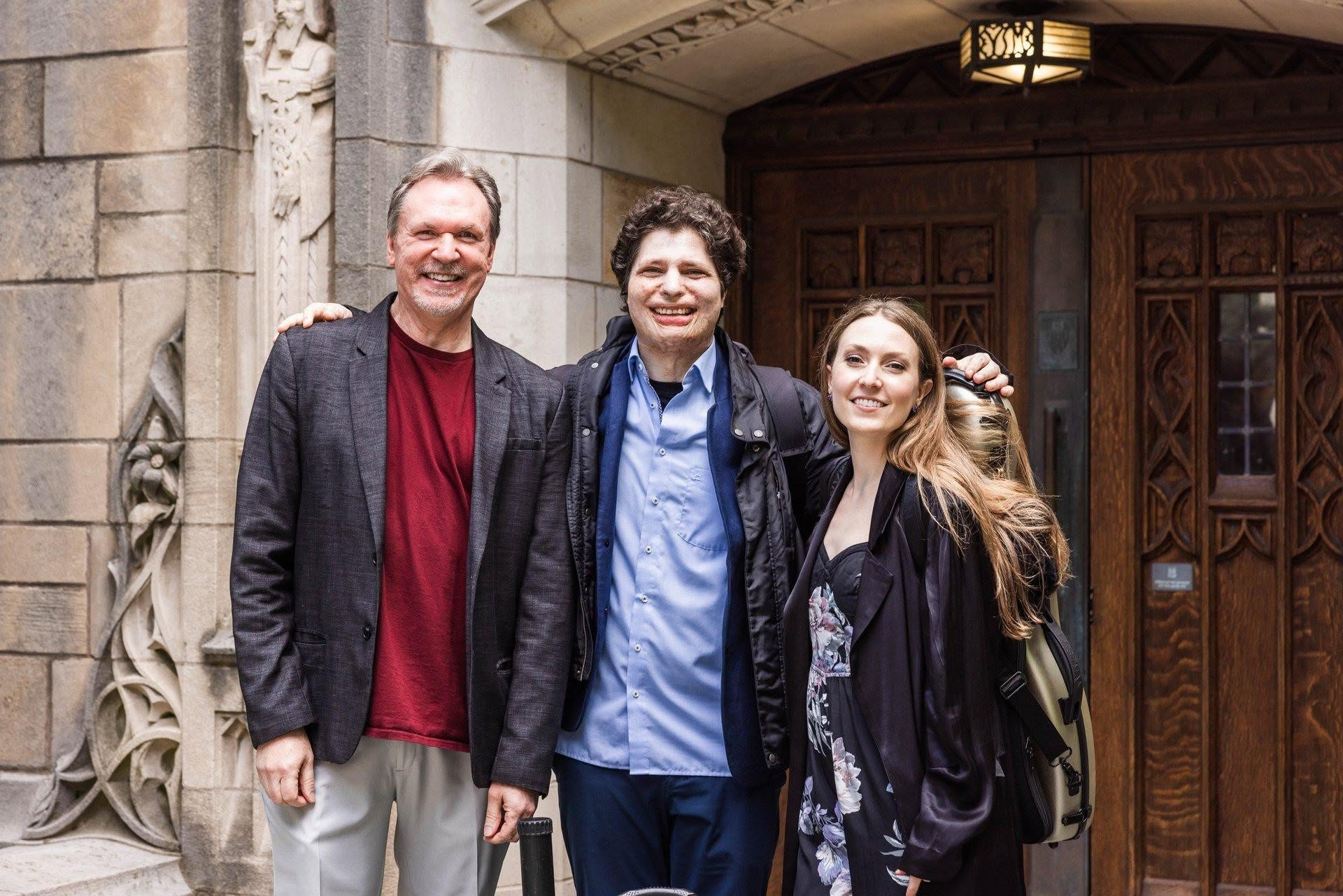
Over the weekend, Hadelich joined with Mark O’Connor and Maggie O’Connor (all pictured here together) for ‘Fiddle Night’ in the smaller venue that is used for many of the Lucerne Festival Academy concerts. The program opened with a set by the O’Connors, charmingly introduced from the stage and including ‘Wildflowers’ as a tribute to Dolly Parton. (Mark O’Connor also played on the original 1987 recording with Parton, Linda Ronstadt, and Emmylou Harris.)
Hadelich then took the stage alone for his arrangement of Howdy Forrester’s ‘Wild Fiddler’s Rag’ – also included on his American Road Trip album – and O’Connor’s ‘Menuhin Caprice,’ written for the Menuhin Competition, a witty take on virtuosity that fuses American fiddling with the classical caprice tradition.
The high point was O’Connor’s calling-card tune, ‘Appalachia Waltz’ – played by all three violinists together as an unhurried, shared meditation that seemed to reflect on Lucerne Festival’s ‘American Dreams’ theme with a certain ache – looking back at what the American dream once promised, and asking whether it still has a future.
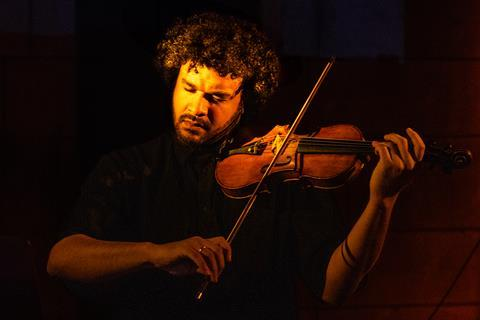
British violinist Peter Sheppard Skærved, known for his wide-ranging repertoire and interdisciplinary work, discusses the challenges and rewards of recording Hersch’s monumental cycle engaging with the paintings and drawings of Peter Weiss… continue
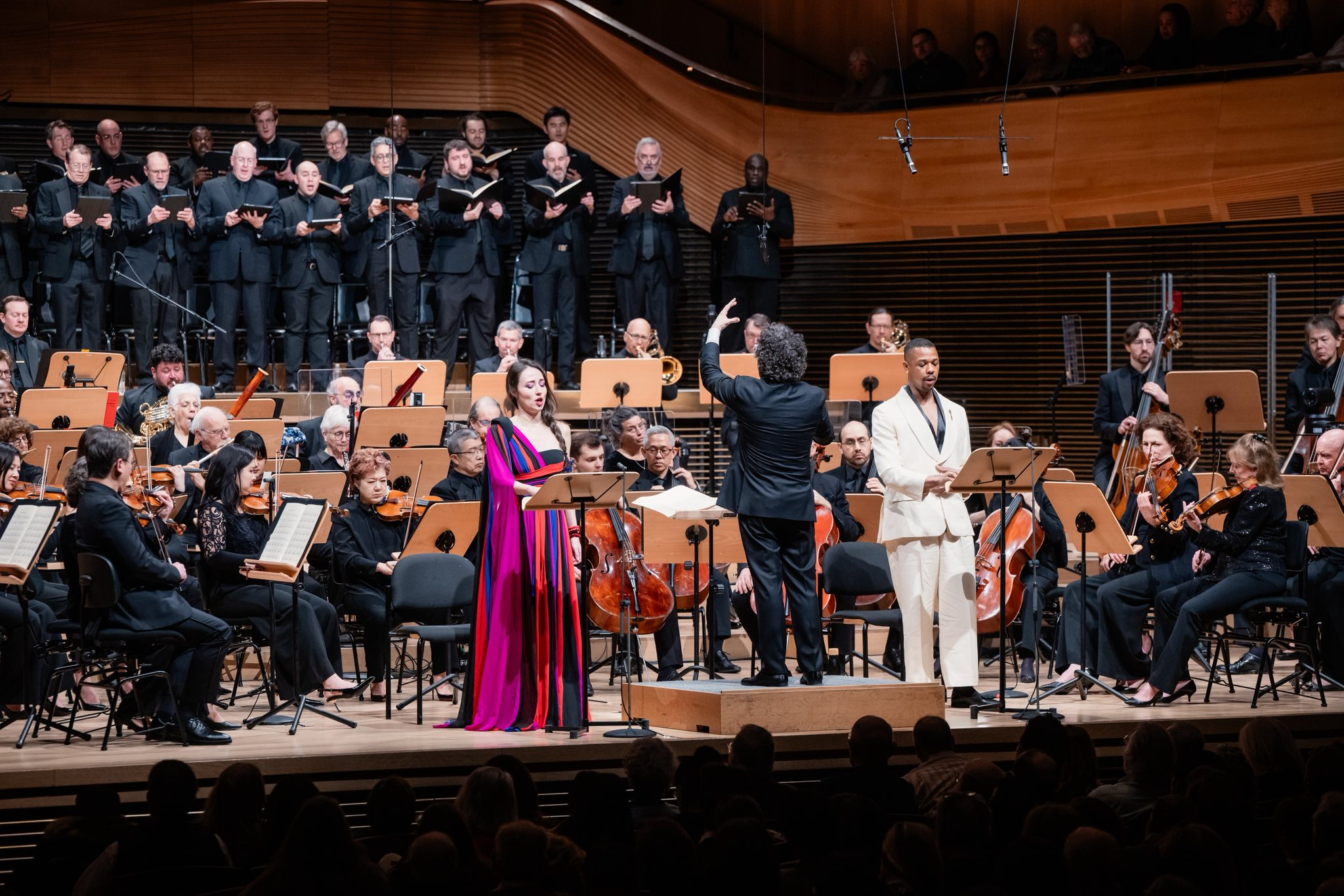
The New York Philharmonic has been on quite a roll with Gustavo Dudamel: after last week’s The People United Will Never Be Defeated! variations-extravaganza comes another major commission this week: David Lang’s the wealth of nations – based on TheWealth of Nations – yes, that one, which turns out to be surprisingly fertile ground for a massive choral/orchestral piece.
David Lang approaches music as a tool for understanding how people are connected — emotionally and collectively — even in places where we don’t expect music to go. Across his career, he has returned repeatedly to large-scale, text-driven works that place individual voices within a wider civic frame, exploring moral, social, and political questions without prescribing answers. Rather than treat music as an abstract system, Lang has used it as a means of examining how societies organize themselves — and what gets smoothe
Virginia Symphony Orchestra premieres Curtis Stewart’s I wouldn’t stop there: in the words of a KING this weekend. He spoke with The Strad about the work:
Curtis Stewart embodies a distinctly contemporary vision of the classical violinist today. On stage and off, he operates with a directness that resists polish for its own sake, favouring instead a sense of immediacy and responsibility. As a violinist and composer in equal measure, with education central to his work, he treats classical music as something to be actively made, not simply handed down….
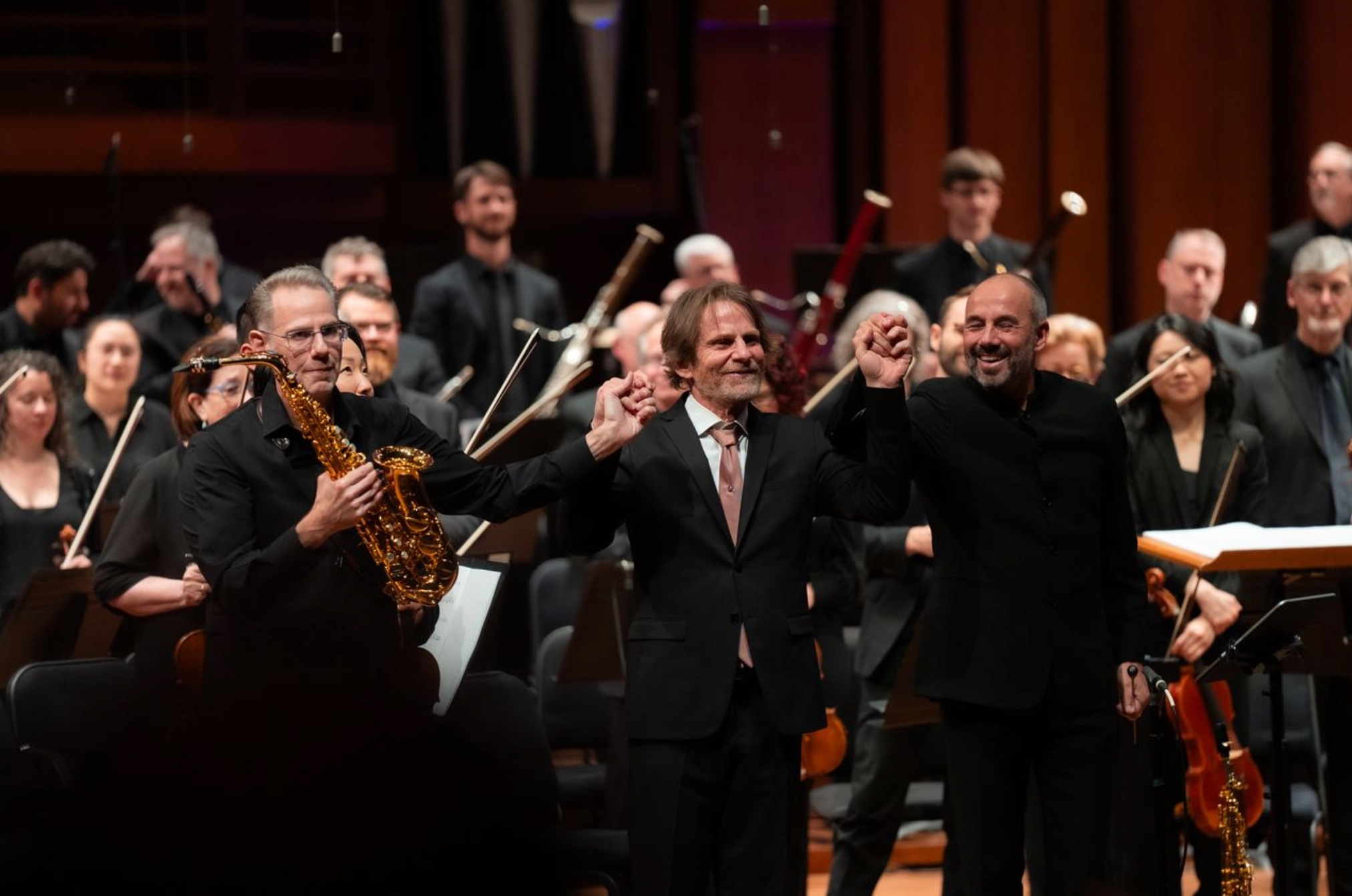
Saxophonist Timothy McAllister, composer Steven Mackey, and conductor Lawrence Renes take bows; photo: Jon Pendleton
A wonderful new saxophone concerto by Steven Mackey featuring Timothy McAllister and some classic John Adams from Seattle Symphony – my review for Classical Voice North America:
SEATTLE – Rather than propose a grand narrative of American music, the Seattle Symphony’s all-American program on Nov. 20 with guest conductor Lawrence Renes set three sharply contrasting voices side by side: Copland’s atmospheric Quiet City, Steven Mackey’s brand-new saxophone concerto Anemology, and John Adams’ ever-astonishing Harmonielehre — a lineup that underscored how differently American composers have approached the orchestra over the past century…. continue
The New York premiere of “Music for New Bodies” at Lincoln Center as part of the Run AMOC* Festival at Summer for the City. (Lawrence Sumulong / Courtesy of Lincoln Center)
On November 1, Meany Center for the Performing Arts presents Matthew Aucoin’sMusic for New Bodies, a “vocal symphony” based on the poetry of Jorie Graham and staged by Peter Sellars — in other words, not to be missed. I spoke with Aucoin about New Bodies for The Seattle Times:
“The voice of the bottom of the ocean. The voice of the medicines moving through your veins. The voice of the core of the Earth.”
Composer Matthew Aucoin names them like a spell — presences that inhabit “Music for New Bodies,” his 70-minute vocal symphony that will receive its West Coast premiere at the University of Washington’s Meany Center on Nov. 1. ..
Gabriella Smith recording “Lost Coast” with cellist Gabriel Cabezas at Greenhouse Studios in Iceland. (Sandro Manzon)
Here’s my Seattle Timesprofile of the remarkable young composer Gabriella Smith. This week’s Seattle Symphony concerts will feature her innovative cello concerto Lost Coast, with Gabriel Cabezas as the soloist:
Her official bio reads like a manifesto: “Gabriella Smith is a composer whose work invites listeners to find joy in climate action.” The 33-year-old has built a creative world around that idea — one where music and environmentalism are inseparable…
And it begins! Ojai Music Festival launches its 79th edition today, 5 June, and will be streaming the concerts at Libbey Bowl on the OMF homepage at OjaiFestival.org and on the festival’s YouTube channel.
Writing the OMF program notes is always an immersive experience, but this year’s festival programming by Music Director Claire Chase has proved to be the most fulfilling since I began writing for the festival. The 2025 edition also carries a bittersweet resonance since Artistic and Executive Director Ara Guzelimian just announced that he will conclude his tenure with the 2026 OMF.
So many highlights to look forward to over this extended weekend, which showcases the incredible community of fellow artists with whom Claire Chase has chosen to collaborate. In the spotlight tonight are Marcos Balter and his epic Pan – a signature contribution to Chase’s ongoing Density 2036 project – and Annea Lockwood’s bayou-borne, an homage to the late Pauline Oliveros, her close friend, mentor to Chase, and a tutelary spirit watching over the music-making at Ojai.
Happy 80th birthday to Leonard Slatkin! I had a chance to speak with the great American maestro about his career — and ongoing projects — for this story in Gramophone‘s August issue:
His vivid curiosity is unmistakable in the variety of projects planned for this milestone birthday year. These range from publishing a pair of books and spending more time on his own composition to launching a new partnership as artistic consultant to the Las Vegas Philharmonic. Appearances on the podium are naturally also on the calendar. This autumn brings reunions with the three American orchestras indelibly shaped by Slatkin’s years at their helm (in St Louis, Washington DC and Detroit); some international conducting engagements beckon as well.