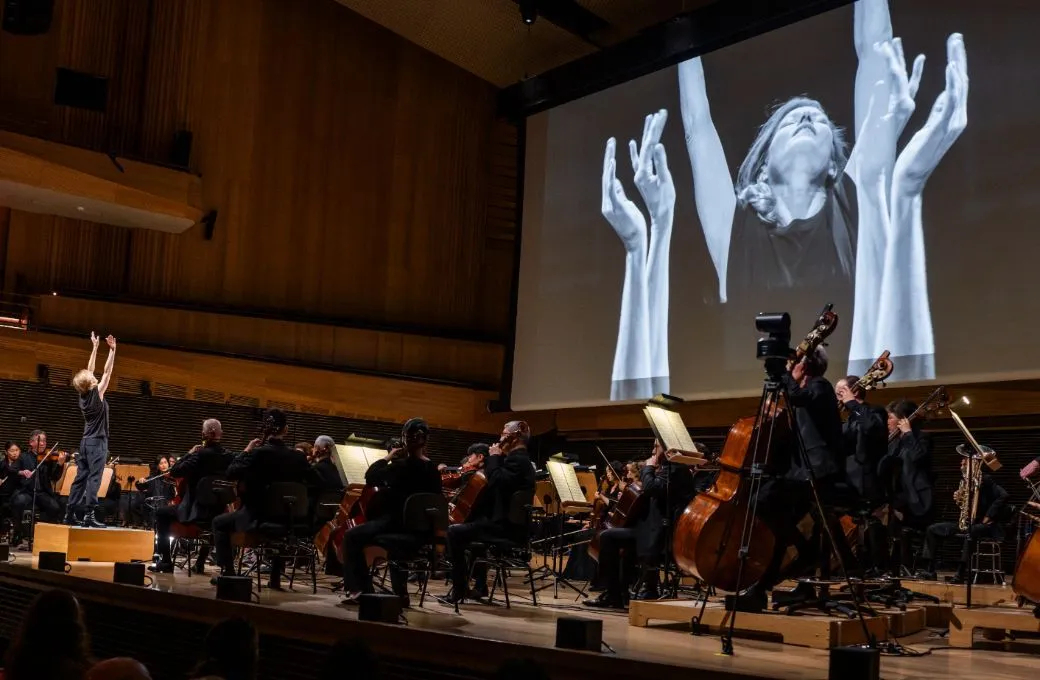
Conducting and singing the single role in La Voix humaine simultaneously might run the risk of turning Francis Poulenc’s harrowing monodrama from 1958 into a self-conscious gimmick of virtuoso multitasking. In her New York Philharmonic performance, however, Barbara Hannigan forged not only those roles but acting, stage movement and live video into a single, tightly controlled dramatic line that held the hall in tense silence, punctuated by uneasy laughter. …
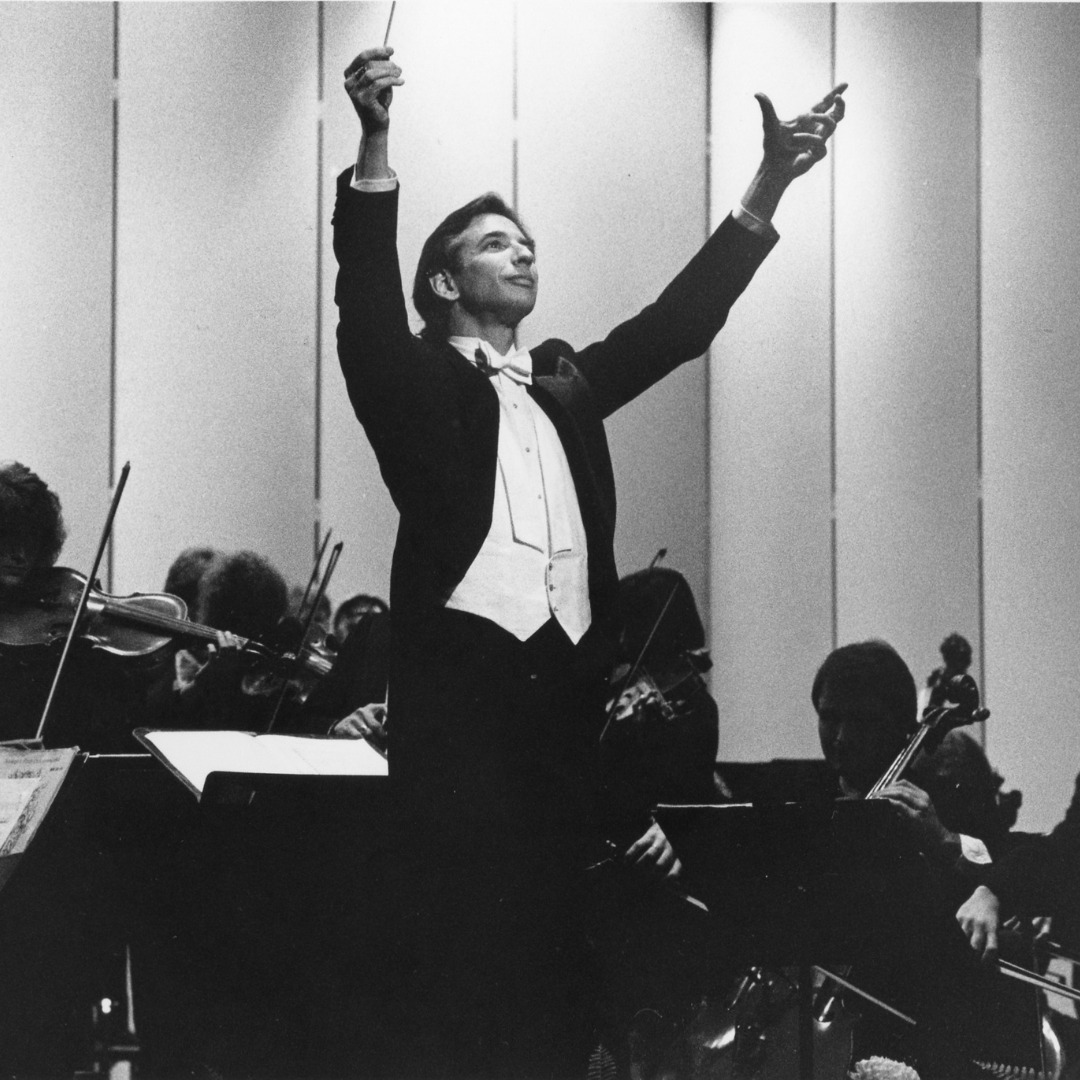
The sad news we knew was coming, reported on the FaceBook page of Michael Tilson Thomas:
“It is with deep sadness that we let you know of Michael Tilson Thomas’s passing on April 22, 2026. In 2021, Michael was diagnosed with Glioblastoma Multiforme, an aggressive type of brain cancer. Through his illness he continued to make music—a testament to his legacy as an artist and communicator. He was preceded in death by his husband Joshua Robison, and passed away at home surrounded by loved ones and family. Joshua and Michael are survived by their sisters, nieces and nephews.”
Joshua Kosman, whose tenure as chief critic of San Francisco Chronicle spanned the entire Michael Tilson Thomas era with SF Symphony, provides a beautiful tribute here, while Lisa Hirsch – another longtime observer of MTT’s Bay Area career – offers a thoughtful assessment for NPR here; Tim Page reflects on MTT’s legacy for the Washington Post; and Anthony Tomassini’s NY Times obituary can be found here.
In town this week to guest with the Seattle Symphony, Nicholas McGegan – widely admired for his work in the world of historically informed performance – showed how well those instincts translate to Mendelssohn with a modern symphony orchestra.
Last night’s fabulously entertaining program opened with ‘Die schöne Melusine’ and a set of rarely heard motets – a highlight in their own right – before moving into the long second half devoted to the complete incidental music to ‘A Midsummer Night’s Dream.’
Mendelssohn’s overture from 1834, inspired by the legend of a shape-shifting water spirit bound to an unhappy fate – her better-known counterparts include Rusalka and Ondine – ripples with refined wind writing and lively string figurations that were handled by the musicians with agility and precision. For all its structural looseness, McGegan kept it flowing, shaping its contrasts with a sure sense of character without trying to force it into a tighter mold.
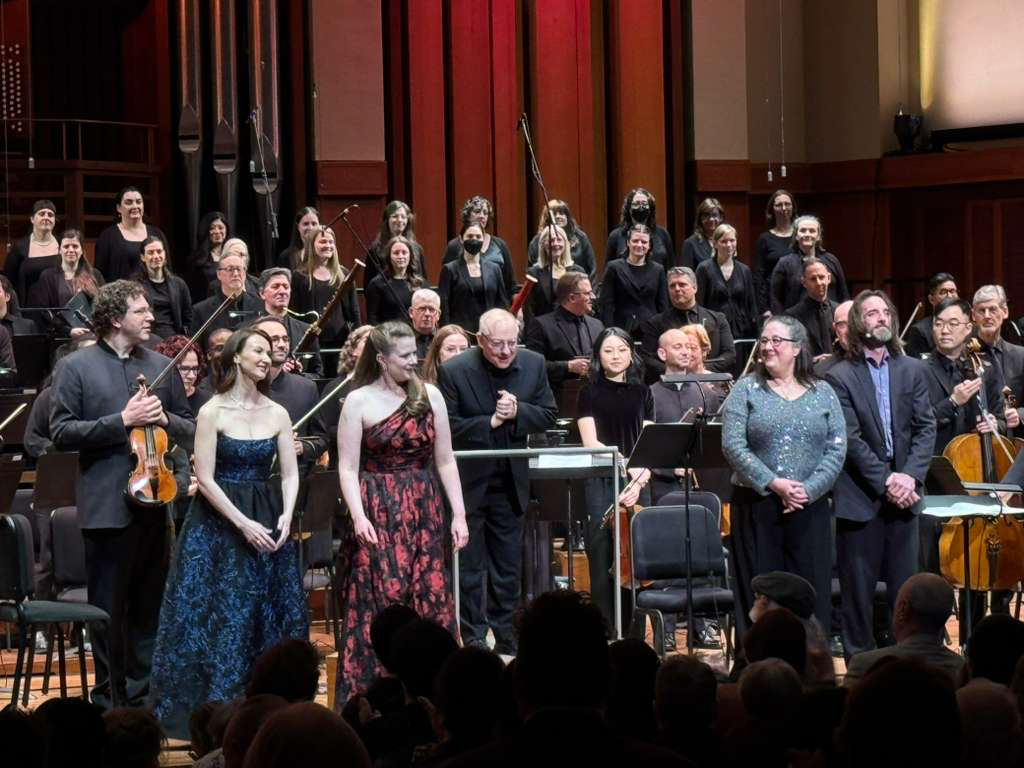
A real discovery was Three Motets, an early work inspired by Mendelssohn’s first trip to Rome in 1830, which brought in the upper voices of the Seattle Symphony Chorale, joined by soprano Ksenia Popova and mezzo-soprano Sarah Larsen. His experience of the French nuns at the Trinità dei Monti atop the Spanish Steps, singing unseen behind a screen, inspired this three-panel setting of Latin sacred texts.
Each of the motets explores a distinct style and mood: contemplative and restrained in pathos in Veni Domine; serene and closely interwoven, with echoes of Handel and Bach – especially the B minor Mass – in Laudate pueri; and dramatic and joyful in Surrexit pastor bonus, which unfolds almost like a mini-cantata. Its central duet, featuring the exquisitely interwoven voices of Popova and Larsen, suggests Mary Magdalene at the tomb, comforted by an angel, before the chorus concludes with a buoyant Alleluia of overlapping voices.
Originally written for voices with organ accompaniment, the motets were heard here in McGegan’s own orchestration, which showed real sensitivity to the vocal textures and shifts of mood. Veni Domine used winds alone, before opening out to a fuller orchestral palette in the other motets, without overwhelming the singers. The Chorale showed some unevenness in the a cappella sections, with dynamics and steadiness of line not always consistent across the ensemble, but the motets came across with grace and beauty.
The second half shifted gears from concert performance to a thoroughly enchanting hybrid of music and theater: narration, lighting, and Mendelssohn’s score interwove with excerpts from Shakespeare’s comedy, equal parts mischief and poetry. The orchestra, chorus, and vocal soloists shared the stage with narrators Julie Briskman and Ryan Higgins, who took on multiple roles.
McGegan was fully in his element here, with nimble, characterful gestures to shape the fairy music while broader motions brought out the comedy. He made a strong case for the unity of Mendelssohn’s score, linking the overture, a work of teenage genius, with the incidental music written sixteen years later so that it all felt of a piece.
Contrasts were deftly handled: skittish fairy music, quicksilver and pointed; the Nocturne, warmly Romantic, with fine phrasing from principal horn Jeff Fair; and the Wedding March, heard in context, surprisingly fresh and rousing. McGegan’s energy on the podium was infectious as he seamlessly navigated sudden shifts between spoken excerpts and orchestral color with the ease of scene changes in film, without breaking the flow.
The musicians leaned convincingly into the theatrical side, and the narrators carried much of the momentum. Julie Briskman stood out, bringing both a touch of tenderness and comic sparkle to Titania, and, as Flute the Rude Mechanical, delivering an outrageously over-the-top Thisbe, sprawling onto the podium in exaggerated death throes at Nicholas McGegan’s feet before being shooed away. Among his varied roles, Ryan Higgins brought an especially energetic presence to Oberon. Simple but effective lighting – uncredited in the program – added just the right touch without becoming fussy.
Near the end, when the chorus sings Oberon’s speech (“Through the house give glimmering light”) over the E minor fairy music of the Overture, Mendelssohn’s instrumental writing suddenly joined Shakespeare’s poetry from the 1590s, now composed into a fresh context sixteen years later, in a way that felt both surprising and somehow inevitable.
A hugely enjoyable and inventive performance, which will be repeated on Saturday and Sunday.
I interviewed Franco-Belgian cellist Camille Thomas for The Strad about the creation of her new album Rendez-vous, a project that she and pianist Julien Brocal conceived during a recent residency at Tippet Rise Art Center.
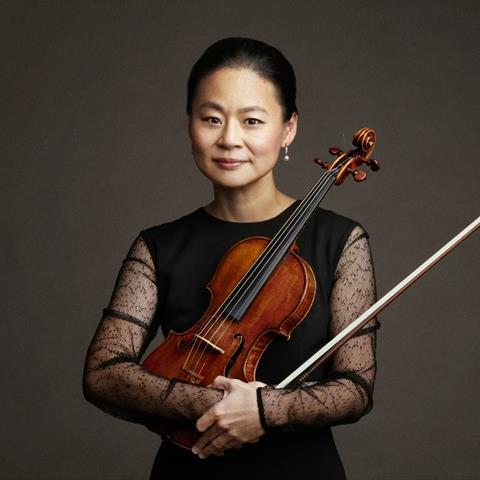
For the April 2026 edition of The Strad, I spoke with Midori about her album of music by the Schumanns, with Festival Strings Lucerne and Daniel Dodds as well as pianist Özgür Aydin:
For many violinists of Midori’s generation, Robert Schumann’s Violin Concerto in D minor occupies an ambiguous position on the edge of the core repertoire. ‘As a young violinist making my way through the repertoire for my instrument, I encountered a healthy portion of Romantic concertos – Tchaikovsky, Sibelius, Bruch, Dvořák, Brahms and others,’ she notes. ‘But the Schumann Violin Concerto? It is missing from the list without that being overly noticed.’ It was only later, she reflects, that the concerto gradually took its place alongside those more familiar works….
I had the pleasure of interviewing violinist Irvine Arditti for The Strad about his role in this fantastic new release of music by Roger Reynolds from Ekkozone records (for which I also wrote the liner note essay). He performs in WISDOM’s Sources, an expansive duo for violin and viola.
You’ve known Roger Reynolds and his music for many years now. Tell us a little about how you first connected and how your friendship and collaboration developed.
Irvine Arditti: Roger appeared at one of our concerts in Huddersfield’s new music festival in the early ’80s. We were playing music of Xenakis, whom I later found out Roger admired as much as I did. We were then a young, promising group rapidly gaining a reputation, and Roger offered us a quartet gratis if we agreed to programme it as much as we could.