My latest for Seattle Times:, on Conrad Tao’s upcoming Playlist concert with Seattle Symphony:
For Conrad Tao, playing Mozart is like a homecoming.
“The close relationship I have to Mozart is from childhood,” he said during a recent Zoom interview from his home in New York City. “It’s not only a return. Some of it is just a matter of being honest about where I come from.”
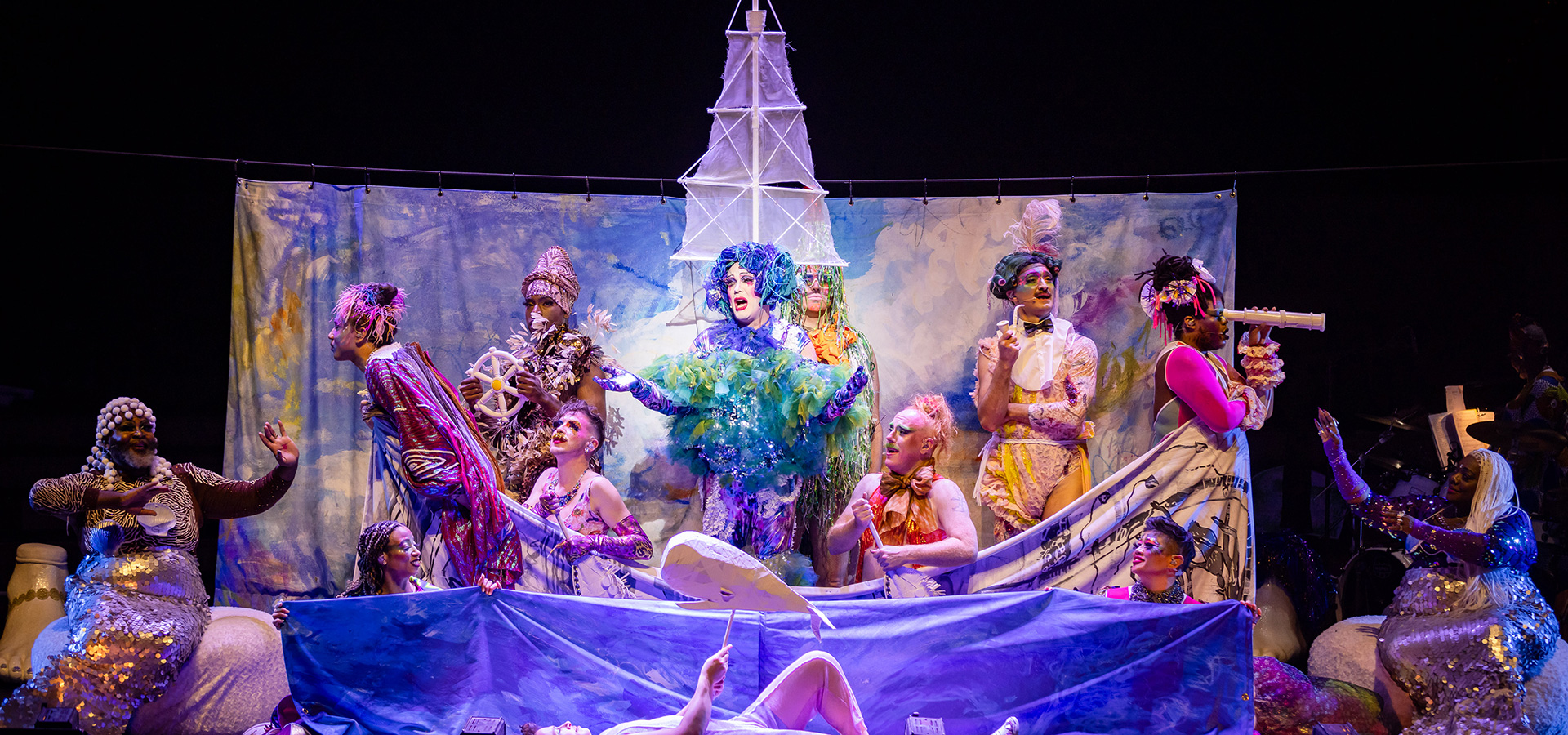
My essay on Taylor Mac and Matt Ray’s latest epic, Bark of Millions, for Cal Performances:
“All we do is sing songs,” says Taylor Mac about Bark of Millions, the new show he and composer Matt Ray have created together with their team of like-minded collaborators. “But there’s something about the ritual of song after song after song inspired by different queer people from world history that is really liberating” …
Randall Goosby, Christian Reif and the Seattle Symphony; photo (c)Brandon Patoc
While the search for a permanent music director continues, versatility has been in high demand at Seattle Symphony in recent seasons. Week after week, the musicians have had to adjust to the remarkably varied styles of a revolving door of guest conductors. But the latest visitor to the podium, the German conductor Christian Reif, brought the added challenge of a program calling for drastic shifts in style from one work to the next ….
Sound Salon (the series formerly known as Byron Schenkman & Friends) has a lovely program coming up Sunday evening: English Baroque love songs for voice, oboe, viol, and harpsichord. Sweeter than Roses (the title of the program, taken from a Henry Purcell song), presents soprano Grace Srinivasan, oboist Curtis Foster, Adaiha MacAdam-Somer on viol, and artistic director Byron Schenkman on harpsichord in music not only by Purcell and Handel but by such less-familiar figures as Elisabetta de Gambarini, John Stanley, and William Babell (all associated with Handel’s work), as well as by Thomas Arne and Ignatius Sancho, who escaped enslavement and became “a successful businessman, published author and composer, and champion for the abolition of slavery,” as Schenkman notes.
Natalie Christa Rakes performed the roles of Elaine and the narrator in Steven Mackey’s ‘Memoir.’ (Photos by Carlin Ma)
SEATTLE — “Slipping into sepia” is Steven Mackey’s phrase for a composer’s process of signaling an act of memory. “Ostensibly odd musical grammar in the present tense can be understood as an artifact of the past tense when it accompanies a remembered event, like a film’s sepia hue telling us that the scene is meant to be a recollection,” he writes in his commentary on Mnemosyne’s Pool(2014), a symphonic saga that is paired with his violin concerto Beautiful Passing(2008)on the most recent recording of Mackey’s music….
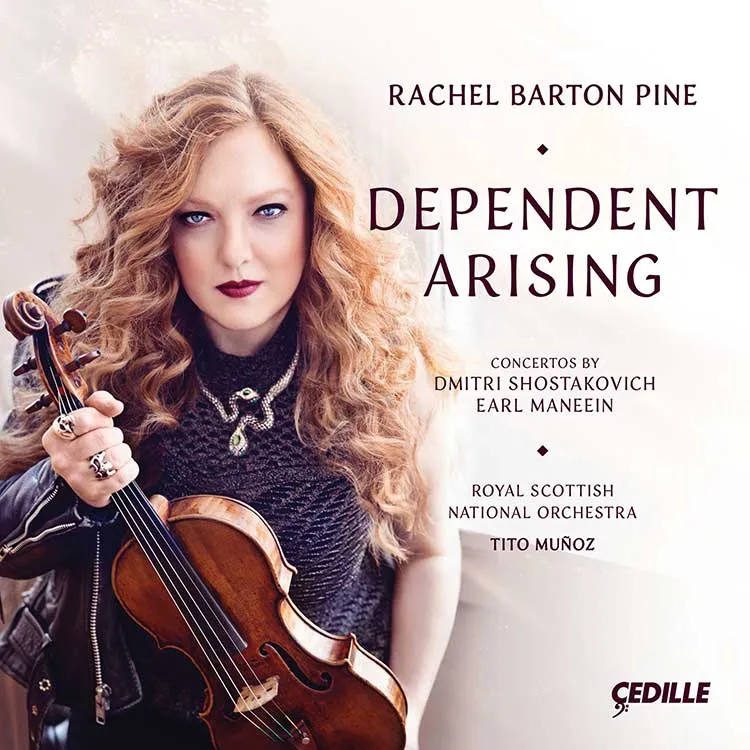
My latest for Strings magazine: meeting up with the insatiably curious Rachel Barton Pine.
Stickers for Metallica, Slayer, and Anthrax are emblazoned on the case that contains Rachel Barton Pine’s signature “ex-Bazzini, ex-Soldat” Joseph Guarneri del Gesù from 1742. The charismatic violinist doesn’t just defy categories. Her life as an artist is fueled by omnivorous curiosity, which Pine combines with searing musical intelligence and an impeccable virtuosity—all in the service of finding a deep connection to her audience….
Kevin John Edusei makes his Seattle Symphony debut conducting Widmann, Strauss, and Beethoven (with Steven Osborne in the Piano Concerto No. 5 in E-flat major); image (c) James Holt
An impressive Seattle Symphony conducting debut last night with Kevin John Edusei on the podium. Absolutely captivating account of Richard Strauss’s Ein Heldenleben, exquisitely tailored to give full weight to the more introspective moments — and reminding us that there’s even a touch of self-doubt in this score. The gorgeously shaped solos from concertmaster Noah Geller were especially thoughtful, while Jeff Fair and the horn section made a spectacular contribution. Overall I found this showcase of sonic theater more moving than usual in its effect.
Scottish pianist Steven Osborne emphasized poetry over heroics in Beethoven’s Emperor Concerto — sheer loveliness in the slow movement, where Edusei’s placement of the strings (basses and cellos to his left) enhanced the finely veiled sound. Osborne played the transition into the finale as if snapping out of a dream. The unannounced encore was apparently music of Keith Jarrett — an unexpected but beautiful choice.
A clever bit of Beethoven-related programming for the opener: German composer Jörg Widmann’s Conbrio, a deliciously paradoxical parody-of-pastiche that is serious and original, never actually quoting Beethoven yet evoking his personality at every turn through abstract gestures — as if trying to recuperate what it all once meant…. Two more chances to hear this excellent concert (Sat evening and Sunday matinee).







 MEMETERIA by Thomas May