MEMETERIA by Thomas May

Music & the Arts

Firebird Fever in Seattle, with Hard-Hitting Poulenc

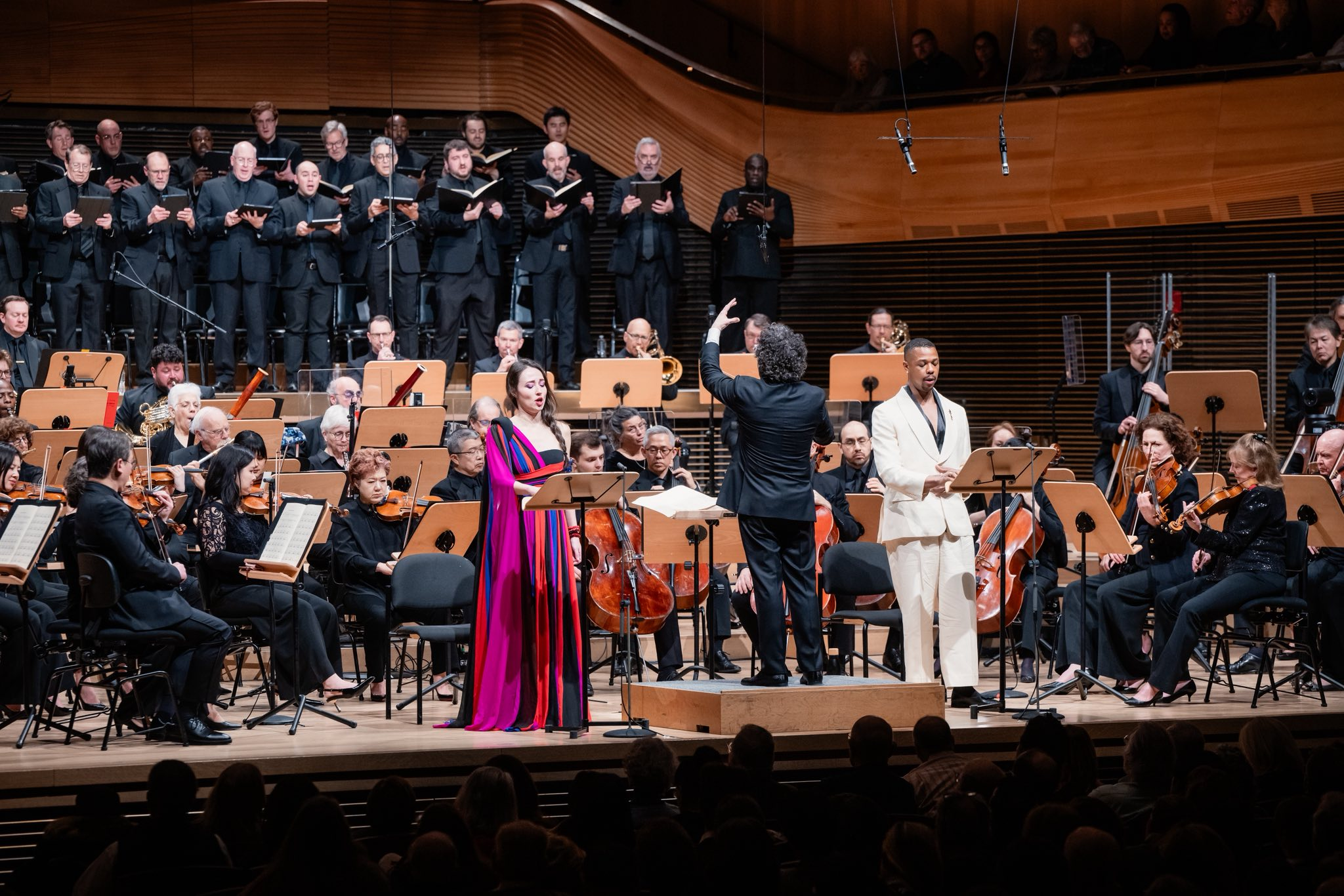
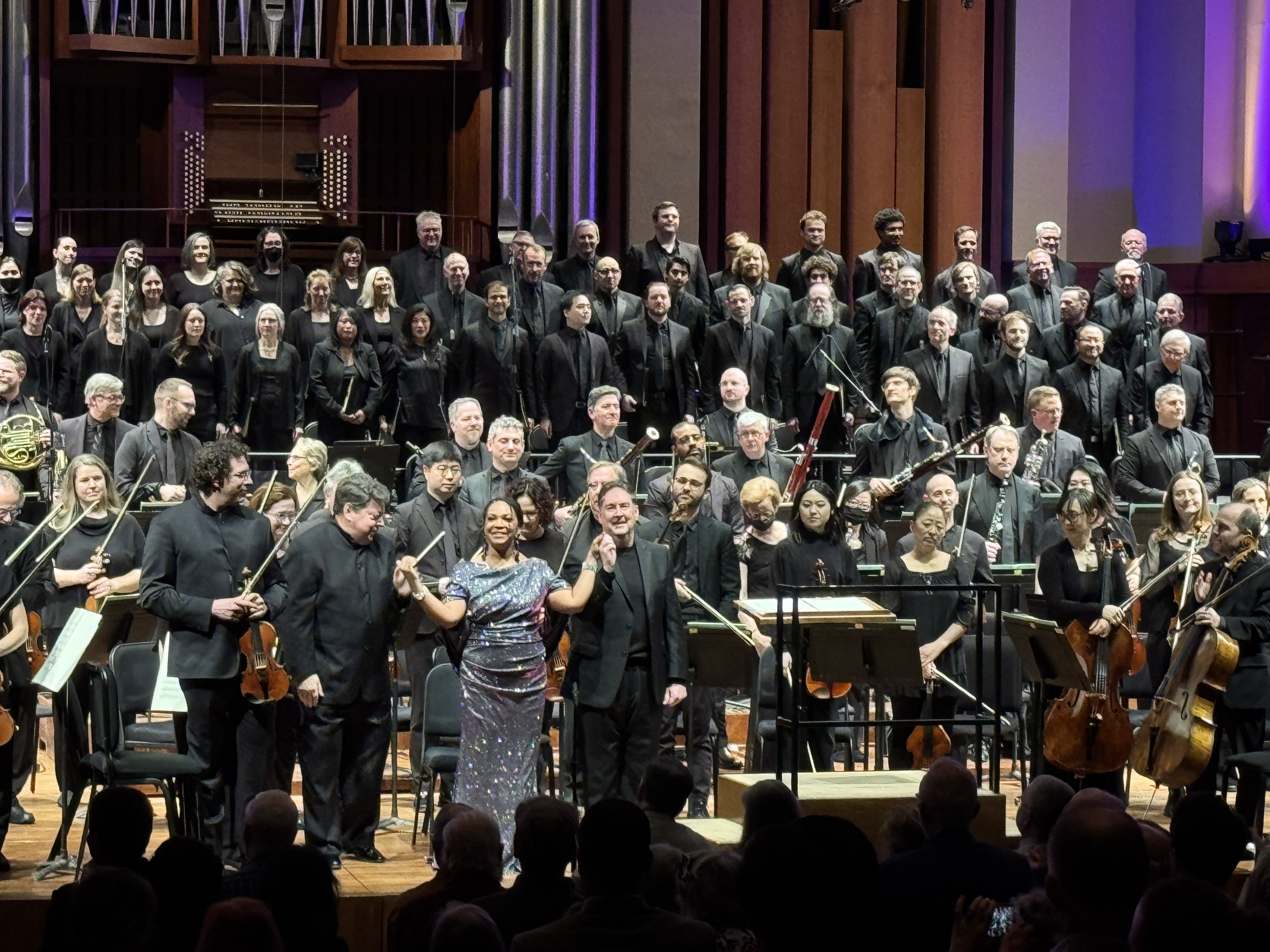
Seattle Symphony and Chorale with guest conductor Andrew Litton, soprano Janai Brugger, and chorus director Joseph Crnko; photo (c) Jorge Gustavo Elias

Stravinsky’s Firebird took on a conspicuous double life in Seattle this weekend, appearing both on the Seattle Symphony’s program and in Pacific Northwest Ballet’s first revival of its iconic Kent Stowell production of the complete ballet in two decades. 

At Benaroya Hall, guest conductor Andrew Litton led the orchestra in the suite from 1945 – the last and most expansive of the three concert suites Stravinsky fashioned from his breakout ballet for Diaghilev’s Ballets Russes company from 1910. The performance on Saturday felt fresh, gorgeously detailed, and unapologetically theatrical.


Litton leaned into the ballet’s contrasts. The more he coaxed the musicians to luxuriate in its moments of late-Romantic lushness and scintillating Impressionist atmosphere – the introductory music and Firebird dance, the hazy suspense of the mass hypnosis into which the evil wizard and his monsters are lured (featuring a moodily spellbinding bassoon solo) – the more sharply its modern edges came into relief, especially in a jaggedly propulsive account of the Infernal Dance.

The same ear for contrast extended to dynamics under Litton, from the most delicate brushes of strings to the shattering volume of the Infernal Dance and the blazing brass of the wedding apotheosis. 

After my experience of the full ballet at PNB the night before (vividly conducted by Emil de Cou and with Ashton Edwards making the Firebird’s ornateness feel natural), the suite registered differently than usual. It felt less abstract, more pointedly mimetic. Stravinsky’s astonishingly precise tracking of the stage action remained unmistakable. Take the Round Dance, with its graceful lyricism enhanced by the poignant interplay of cello and clarinet. Not just “lyrical contrast,” but a precise dramatic beat, inseparable from the princesses’ circling dance.

For all the impact of this Firebird, it was Poulenc’s Stabat Mater – astonishingly, the first appearance in Seattle Symphony’s repertory of this sacred choral work from 1950 – that made the strongest impression of the evening, and not just because of its rarity. Here, too, contrasts were paramount, if of a very different order. The twelve sections unfolded like panels of an altarpiece, their distinct characters left exposed and unsmoothed. 

The stern pathos of the opening chorale gave way abruptly to the stabbing violence of “Cujus animam gementem,” with moments of unexpected serenity later intervening. Litton let these tensions accumulate side by side, like a mosaic, so that the uneasy balance Poulenc sustains – between suffering and the promise of consolation – stood out with real force. 

There was no sentimental resolution here. Poulenc illuminates the prayer’s central paradox, with its scenes of gruesome suffering set alongside images of victory palms and paradise. Litton seemed fully attuned to that tension, with a real flair for Poulenc’s harmonic language – those turns that unsettle just as they begin to reassure – and a compelling sense of the overall sonic picture.

Soprano Janai Brugger sang with heartfelt, stirring beauty, her top register especially appealing—you just wish Poulenc had given her more to do. But he uses the part sparingly, allowing the soloist to emerge from and return to the choral texture. It’s an approach that was well served by the Seattle Symphony Chorale. Excellently prepared by Joseph Crnko, the chorus was as capable of Day-of-Judgment fury as hushed a cappella wonder.

A different strain of French music came with the opening account of Ravel’s orchestrated Le tombeau de Couperin, where the balance between elegance and loss is more delicately poised. Here, though, that poise proved elusive. Where Poulenc thrives on stark juxtaposition, Ravel’s more elusive paradox—the bright, even playful music of the Rigaudon shadowed by wartime loss—felt rather flattened.


Litton’s reading came across as polite but bland – beautifully played, but missing the suppleness and lift this music needs. The Forlane in particular feeling drawn out where I would have preferred a little more rhythmic flexibility. Still, there was fine playing to enjoy, not least Mary Lynch VanderKolk’s poignant oboe lines.

Filed under: Francis Poulenc, Maurice Ravel, review, Seattle Symphony, Stravinsky, , , ,

‘the wealth of nations’ by David Lang

The New York Philharmonic has been on quite a roll with Gustavo Dudamel: after last week’s The People United Will Never Be Defeated! variations-extravaganza comes another major commission this week: David Lang’s the wealth of nations – based on The Wealth of Nations – yes, that one, which turns out to be surprisingly fertile ground for a massive choral/orchestral piece.

My program essay for the piece can be found here:

David Lang approaches music as a tool for understanding how people are connected — emotionally and collectively — even in places where we don’t expect music to go. Across his career, he has returned repeatedly to large-scale, text-driven works that place individual voices within a wider civic frame, exploring moral, social, and political questions without prescribing answers. Rather than treat music as an abstract system, Lang has used it as a means of examining how societies organize themselves — and what gets smoothe

continue

Filed under: American music, commissions, David Lang, New York Philharmonic

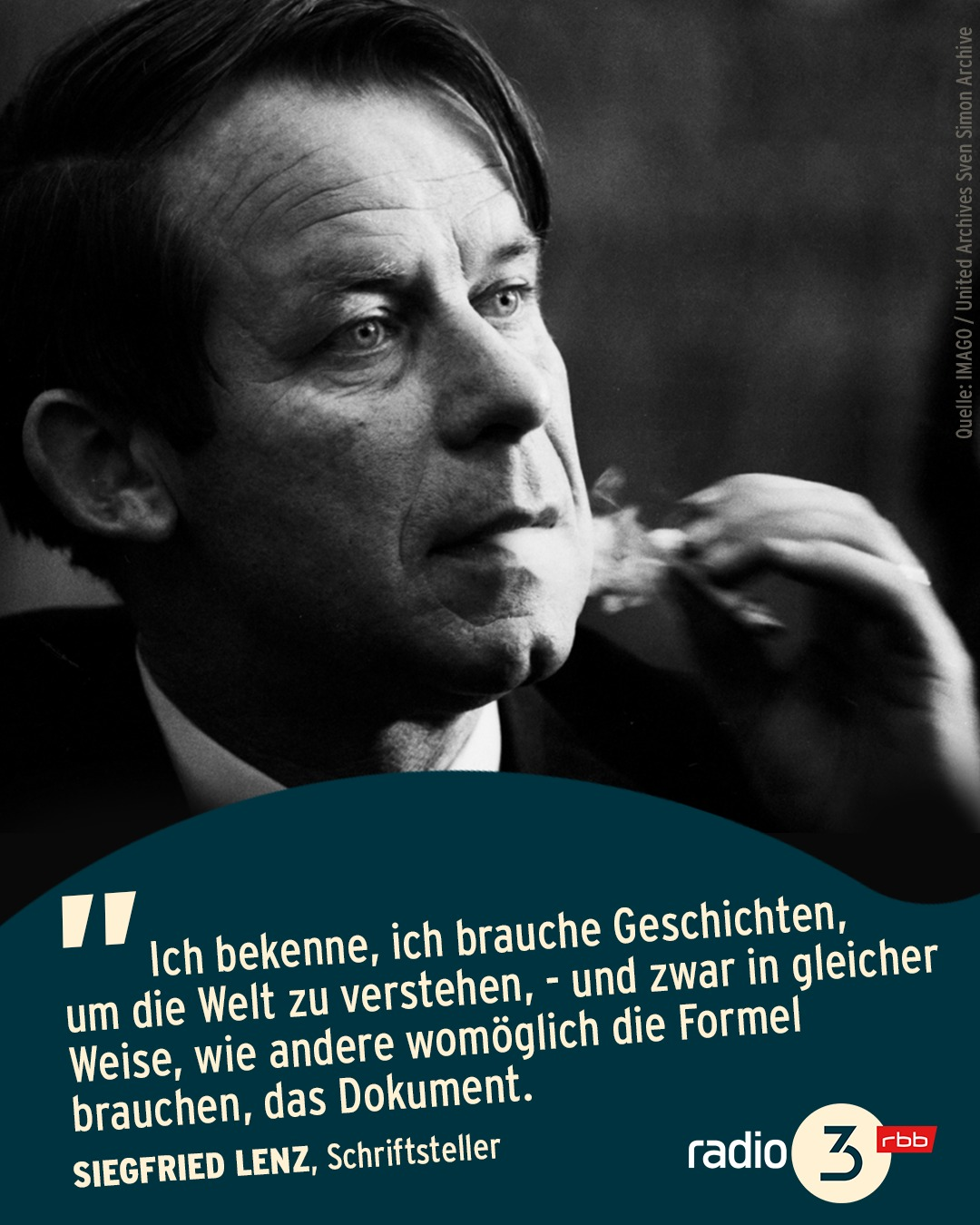
Siegfried Lenz at 100

The postwar German author, whose centenary is being celebrated today, published his well-known novel Deutschstunde in 1968: a chillingly precise and relevant story of ordinary people just “doing their job” under the Nazis.

From the Goethe Institut: “When Siegfried Lenz died in 2014, it was estimated that over 30 million copies of his works had been sold worldwide. His oeuvre comprises 14 novels, 120 short stories, numerous novellas and dramas for radio and theatre. They have been translated into at least 35 languages. Many of his short stories, especially the bizarre East Prussian stories from his volume of novellas So zärtlich war Suleyken (So Tender Was Suleyken), are prescribed reading in schools. Published in 1968, The German Lesson has become one of the most internationally prominent novels in German contemporary literature.”

Filed under: German literature, literature

‘WISDOM’s Sources’: Music of Roger Reynolds

Out today is the third installment in Ekkozone Records’ series of recordings devoted to the music of Roger Reynolds, as active as ever at 91. The strikingly original works here include WISDOM’s Sources, which grew out of Reynolds’s longstanding creative friendship with violinist Irvine Arditti, and ‘O’o’ – named for the now-extinct Hawaiian bird and written for flutist Robert Aitken. Danish percussionist and producer Mathias Reumert has been documenting Reynolds’s music in this remarkable series.

My album essay can be found here.

Filed under: new music, Roger Reynolds

Celebrating International Women’s Day

In honor of International Women’s Day: a salute to the bold, distinctive music of Joan Tower. Friday night’s Emerald City Music program featured Kristin Lee and Sandbox Percussion in works by three generations of women composers, including the Seattle premiere of her recent work To Sing or Dance.

Tower says that the piece grew out of a conversation with Arvo Pärt about the origins of music: “He felt music came from the voice (or singing) and I had a different idea that it came from the drum (or dancing).” She addresses the difference by writing for solo violin and percussion quartet, tackling the challenge of “how to have these two very different instruments in the same space, living fairly comfortably together” – the violin’s lyrical “song” gradually intertwines with the percussion’s rhythmic “dance.”

Tower’s inventive timbral colors and lively rhythmic counterpoint capped a terrific evening that also included the world premiere of Vivian Fung’s violin-and-percussion-orchestra concerto Goddess//Insect and Gabriella Smith’s Five.

Above is a rehearsal glimpse of To Sing or Dance with Sandbox Percussion for the 2024 world premiere (with violinist Soovin Kim).

And here’s an insightful closer look at Tower’s landmark Concerto for Orchestra from 1991:

Filed under: music news, women composers

RIP Bernard Rands (1934-2026)

This week brought news of the death of composer Bernard Rands. He passed away in Chicago on 4 March at the age of 92, closing the career of one of the last composers directly linked to the great postwar European modernist circle around Berio, Boulez, and Dallapiccola.

Rands’s longtime publisher, Schott Music, issued the following tribute (excerpted):

“Bernard Rands, the distinguished British composer long resident in the USA, most recently in Chicago, has died there on March 4, 2026, at the age of 92 in the company of his wife Augusta Read Thomas, herself a prominent composer. He leaves behind a catalogue of nearly 100 pieces, widely performed and recorded, all published by Schott, as well as an enormous and varied list of students.

Having studied in Bangor, in the north of Wales, he went to Italy first to study with Roman Vlad and later with Luigi Dallapiccola, perhaps the foremost pedagogue of his time and a formidable post-twelve-tone composer, he soon found himself in the circles of Luciano Berio (also a disciple of Dallapiccola), Pierre Boulez and Bruno Maderna, then three of the leading lights in European modernism.

His musical style began to move more and more in the direction of what would retroactively be called postmodernism, drawing inspiration from earlier material. As composers found various ways out of the post-serial crisis… Rands remained loyal to the modernist principles of craft and rigor while softening around the edges and incorporating more lyrical tendencies.

Rands’ music later took on introspective, even melancholic tendencies, as evident in the orchestral …body and shadow… and Symphony and the much later concerto for English horn (for Robert Walters).

In the mid-1970s, he accepted a job at the University of California, San Diego… After visiting posts at Boston University, the Juilliard School and Yale University, he became the Walter Bigelow Rosen Professor of Music at Harvard University until his retirement.”

Bernard Rands died in the company of his wife, the distinguished composer Augusta Read Thomas, whose vividly colored, poetically charged music has made her one of the most widely performed American composers of her generation.

Norman Ryan, Senior Vice President of Schott Music, notes:

It is with deep sadness that we bid farewell to Bernard Rands, a great artist, humanitarian, and friend. Feted with prestigious awards and honors received during a long life in music, Bernard gifted us with music that traces a line of lineage from Debussy and Sibelius through to Berio, his unique voice characterized by arresting instrumental colors and melodic invention. His love for music and for those that created it knew no bounds. At all times, he was the consummate gentleman – elegant, dignified and erudite. It was a great privilege to be his publisher. Bernard’s spirit and boundless creativity will live on his music. 

James M. Kendrick, President of Schott/EAMDC and Partner at the firm of Alter, Kendrick & Baron, states:

When I first joined European American Music in the Fall of 1977, I already knew that Bernard Rands was one of the leading British contemporary composers of his generation. I also knew that he had recently moved to  the US. But this was only the first part of a long and distinguished career, as Bernard quickly cemented his position as one of the premier composers of the world, and also as one of the most influential composition teachers of his time. It was a joy and privilege to know him and Gusty, and I join the music world in mourning the death of one of its greats.

Filed under: composers, music news

Private Passions, Public Peril in Seattle Opera’s “Fellow Travelers” 

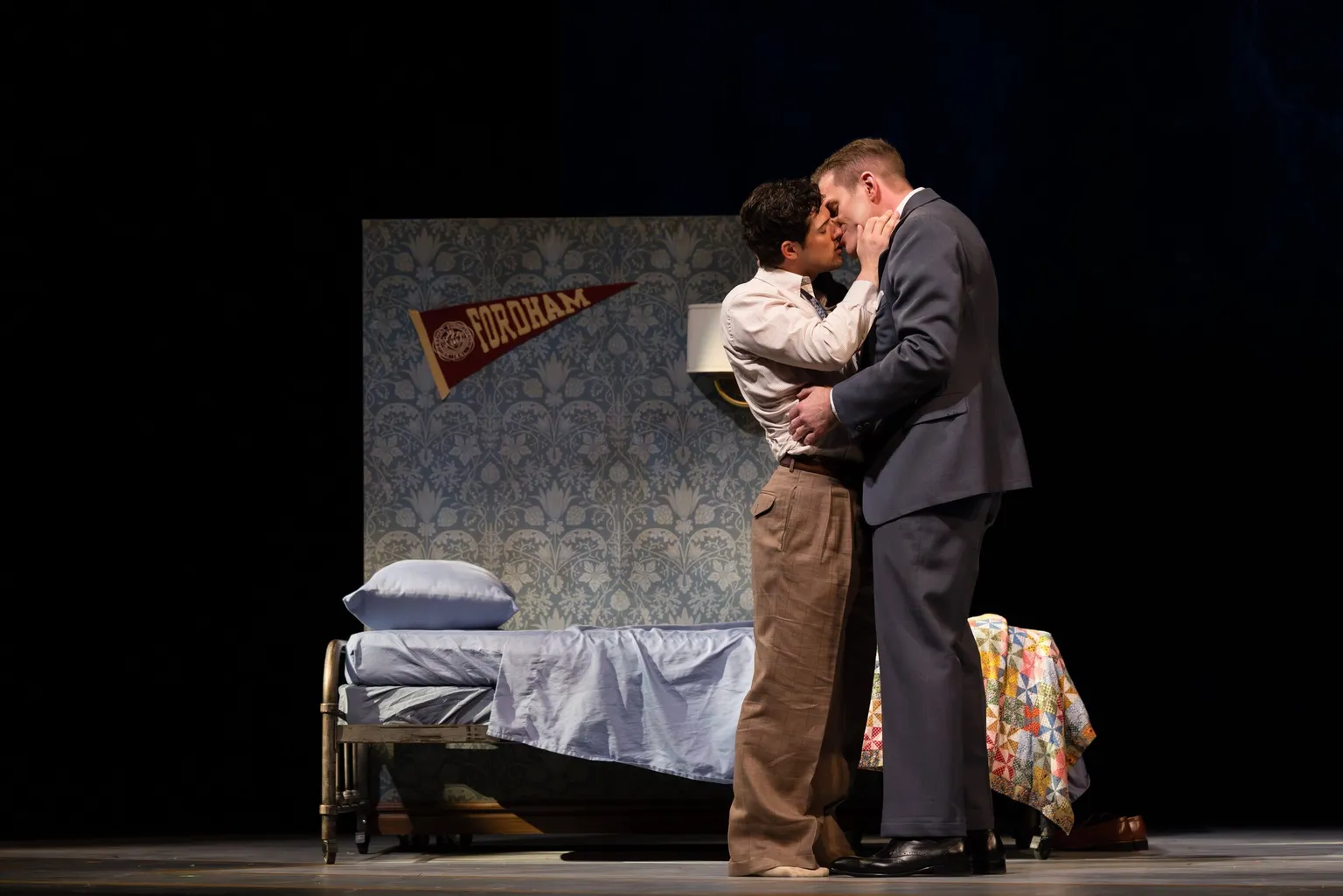
Colin Aikins as Timothy Laughlin, left, and Jarrett Ott as Hawkins Fuller in “Fellow Travelers” at Seattle Opera. (Sunny Martini)

The production of Gregory Spears’ and Greg Pierce’s opera Fellow Travelers presented by Seattle Opera has launched a U.S. tour. Here’s my review of opening. night for the Seattle Times:

Desire unfolds under watchful eyes in “Fellow Travelers.”

Set during the McCarthy-era Lavender Scare of the 1950s, the opera by composer Gregory Spears and librettist Greg Pierce opened Saturday at McCaw Hall, marking the first time a production centered on openly gay subject matter has appeared on Seattle Opera’s mainstage. 

continue

Filed under: American opera, culture news, review, Seattle Opera, Seattle Times

Archive

Enter your email address to follow this blog and receive notifications of new posts by email.