
Filed under: American music, Charles Ives, San Francisco Symphony

November 24, 2016 • 12:19 am Comments Off on Charles Ives: Thanksgiving and Forefathers’ Day
Filed under: American music, Charles Ives, San Francisco Symphony
August 25, 2016 • 9:14 am Comments Off on Remembering Lenny
In honor of Leonard Bernstein’s birthday — just two years away from the centenary now! — I’m reposting a link here to some thoughts from a few years ago.
Filed under: American music, anniversary, Bernstein
June 25, 2016 • 4:15 pm Comments Off on Tuning Up!
My preview of Seattle Symphony’s upcoming festival of American music, from Charles Ives to Julia Wolfe and John Luther Adams:
“There are as many sides to American music as there are to the American people,” Leonard Bernstein remarked in one of his popular Young People’s Concerts devoted to the topic “What Is American Music?”
“Maybe that’s the main quality of all — our many-sidedness. Think of all the races and personalities from all over the globe that make up our country. We’ve taken it all in,” he said.
Bernstein broadcast that message almost six decades ago in 1958. Since then the musical landscape has become vastly more diverse, many-sided and multi-layered. The old-fashioned image of the melting pot seems quaint compared to the dazzling, complex intersections and border crossings that make today’s musical scene so vibrant and self-aware.
Filed under: American music, Ludovic Morlot, Rhapsody, Seattle Symphony
April 5, 2016 • 1:49 am Comments Off on Opera Without Words

Under Christoph Eschenbach, the National Symphony recently premiered Tobias Picker’s Opera Without Words — his first major orchestral composition in years. The perceptive critic Hilary Stroh gave a sensitive review for Bachtrack.
Here’s the program essay I wrote for the NSO world premiere:
Tobias Picker, described as “displaying a distinctively soulful style that is one of the glories of the current musical scene” by BBC Music Magazine and “a genuine creator with a fertile unforced vein of invention” by The New Yorker, has drawn performances and commissions by the world’s leading musicians, orchestras, and opera houses.
Filed under: American music, commissions, new music, Tobias Picker, Uncategorized
March 12, 2016 • 10:08 am Comments Off on John Adams Conducts Scheherazade.2 at Seattle Symphony
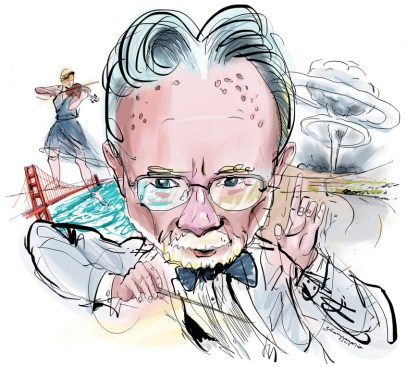
The cover story of the weekend section of The Seattle Times‘ is my feature on John Adams. He’ll be in town this coming week to conduct the Seattle Symphony in the West Coast premiere of his brilliant new violin concerto/dramatic symphony Scheherazade.2:
Some people feel like they’ve missed out because Mozart and Beethoven lived in a different century. But they’re overlooking the great artists who are in our midst today — composers writing music that is just as meaningful, and just as likely to last.
Filed under: American music, John Adams, Seattle Symphony, Seattle Times
September 12, 2015 • 11:04 pm Comments Off on Magical Magiya
A taste of a young composer who’s got a great season ahead of him:
Sean Shepherd‘s Magiya for the National Youth Orchestra in its inaugural season two years ago, from the BBC Proms.
Filed under: American music, new music
August 25, 2015 • 1:47 am Comments Off on Remembering Lenny
So today Leonard Bernstein would have turned 95 [97]. If he were Elliott Carter, he’d still have about nine [seven] years left to share his genius with us — and Lord knows the world could desperately use it. I can still feel a pang when I pass by the Dakota on Central Park West; strangely, that Sunday afternoon in October when he died there doesn’t seem so far off.
I got to meet him just once, near the end of his life, when he was touring with the Vienna Philharmonic, conducting a program of Mahler Five paired with the Mozart Clarinet Concerto. I waited patiently afterward to get him to sign the book I happened to have on me — the first volume of Ernst Bloch’s Das Prinzip Hoffnung, which immediately prompted him to set aside his bottomless…
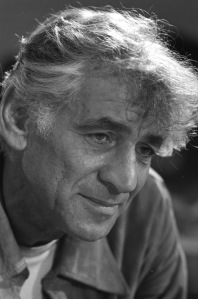
Lenny in 1971, when he was rehearsing his new work Mass to open the Kennedy Center
So today Leonard Bernstein would have turned 95. If he were Elliott Carter, he’d still have about nine years left to share his genius with us — and Lord knows the world could desperately use it. I can still feel a pang when I pass by the Dakota Building; strangely, that Sunday afternoon in October when he died there doesn’t seem so far off.
I got to meet him just once, near the end of his life, when he was touring with the Vienna Philharmonic, conducting a program of Mahler Five paired with the Mozart Clarinet Concerto. I waited patiently afterward to get him to sign the book I happened to have on me — the first volume of Ernst Bloch’s Das Prinzip Hoffnung, which immediately prompted him to set aside his bottomless…
View original post 509 more words
Filed under: American music, Bernstein
July 22, 2015 • 5:18 am Comments Off on A Gorgeous Chamber Music Première in Seattle
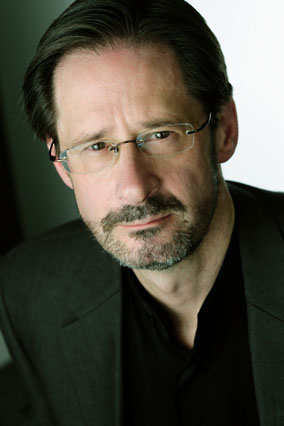
Steven Stucky; photo
(c) 2005 Hoebermann Studio
Along with its mix of well-known and unusual repertoire, the Seattle Chamber Music Society annually commissions a brand-new work for its Summer Festival. Monday evening’s programme unveiled the selection for 2015: Cantus by the Pulitzer Prize-winning composer Steven Stucky, who has gained prominence primarily as an instrumental and choral composer. (His first opera – a brilliantly witty yet at the same time touching one-act buffa to Jeremy Denk’s libretto improbably “dramatising” Charles Rosen’s The Classical Style – will receive its full stage première next week at the Aspen Festival.)
Filed under: American music, Brahms, chamber music, commissions, Mendelssohn, review, Seattle Chamber Music Society, Steven Stucky
July 10, 2015 • 9:08 am Comments Off on Leon Kirchner at Seattle Summer Chamber Festival
I was happy to hear Leon Kirchner’s (1919-2009) Trio No. 1 from 1954 programmed on the second concert of the ongoing Summer Chamber Festival. Cellist Ronald Thomas, together with violinist Augustin Hadelich and pianist Orion Weiss, gave an involving and committed performance of this complex score.
By way of introduction, Thomas charmingly recounted memories from years ago of the eccentric composer watching over rehearsals and reacting to the sound of his music. He framed the Trio as a work still rooted in the “gestures of Romanticism” beneath its imposing dissonance and rhythmic complexity. “Imagine it’s Richard Strauss, only with the notes not quite right.”
Filed under: American music, chamber music
July 4, 2015 • 11:30 am Comments Off on A Fourth with Ives
Celebrate American music! And you can’t do much better than Tilson Thomas and the San Francisco Symphony for this rep.
As Charles Ives impishly recalled about this third movement from his Holidays Symphony :
I did what I wanted to, quite sure that the thing would never be played, although the uneven measures that look so complicated in the score are mostly caused by missing a beat, which was often done in parades. In the parts taking off explosions, I worked out combinations of tones and rhythms very carefully by kind of prescriptions, in the way a chemical compound which makes explosions would be made.
And for good measure:
Filed under: American music, Charles Ives, John Adams, Michael Tilson Thomas, San Francisco Symphony
 Arts & Culture Stories from NPR
 MEMETERIA by Thomas May