MEMETERIA by Thomas May

Music & the Arts

Pollock and Cage

Animator Léo Verrier’s new Jackson Pollock-themed short (above) leads Colin Marshall to compare this film fantasy of the birth of Pollock’s famous technique with the real thing: “Chance may have led him to discover this practice, but it hardly means he gave up control.”

Marshall quotes another filmmaker, the maverick Stan Brakhage, on Pollock, who recalls a trip to visit the painter:

But they [some New York painters] were like commenting and the used they words ‘chance operations’ which was no bother to me because I was hearing it regularly from John Cage. And the power and the wonder of it and so forth . . . but this really angered Pollock very deeply and he said ‘Don’t give me any of your “chance operations”.’ He said, ‘You see that doorknob’ and there was a doorknob that was about fifty feet from where he was sitting that was in fact the door that everyone was going to have to exit be. and drunk as he was, he just with one swirl of his brush picked up a glob of paint, hurled it and hit that doorknob smack-on with very little paint over the edges. And then he said, ‘And that’s the way out.’

Meanwhile, in If Jackson Pollock Wrote Music, Kyle Gann explores the connections between Pollock and composers John Cage and Morton Feldman:

In the middle of the 20th century, the arts exploded into a new and unsettling realm of abstraction. Paintings were no longer paintings of something; they were simply paint. Music, too, was no longer about melody; it had abandoned the grounding in tonality that had been its mainstay for centuries. For some composers, notably John Cage, Morton Feldman, and Earle Brown, music was now about sound the way paintings were about paint.

Filed under: aesthetics, art, art history, film, modernist composers
Titian’s Dog

IMG_1076

In a recent article in The American Scholar“Carnival of the Animals” — Jan Morris joins Ruskin in admiring the menagerie of non-human creatures in Vittore Carpaccio’s paintings.

“I have counted in his pictures 20 species of animals and at least 11 sorts of birds,” writes Morris, “plus a winged lion, a basilisk, cherubs, peculiarly multi-antlered stags, and sundry angels.”

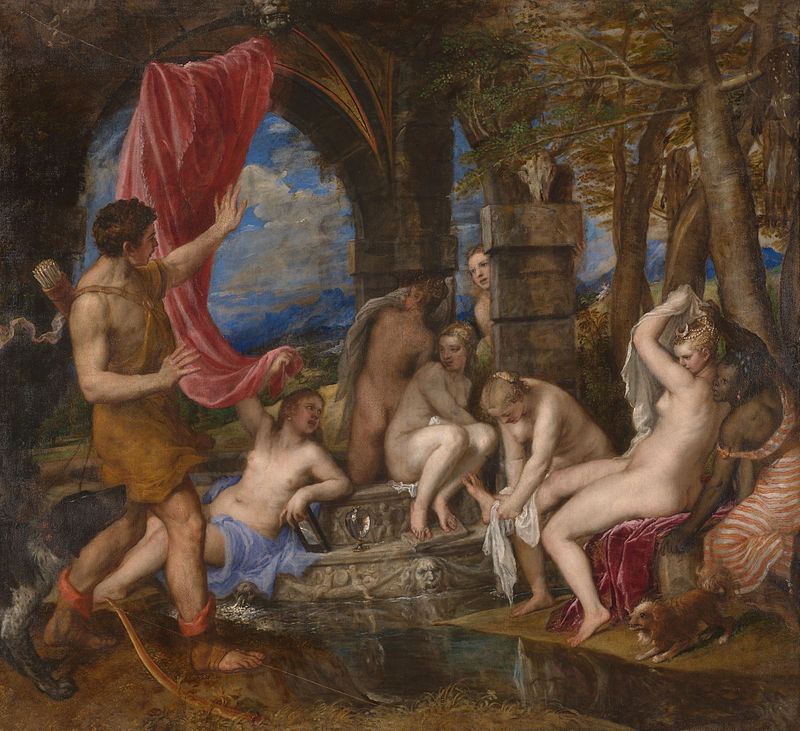
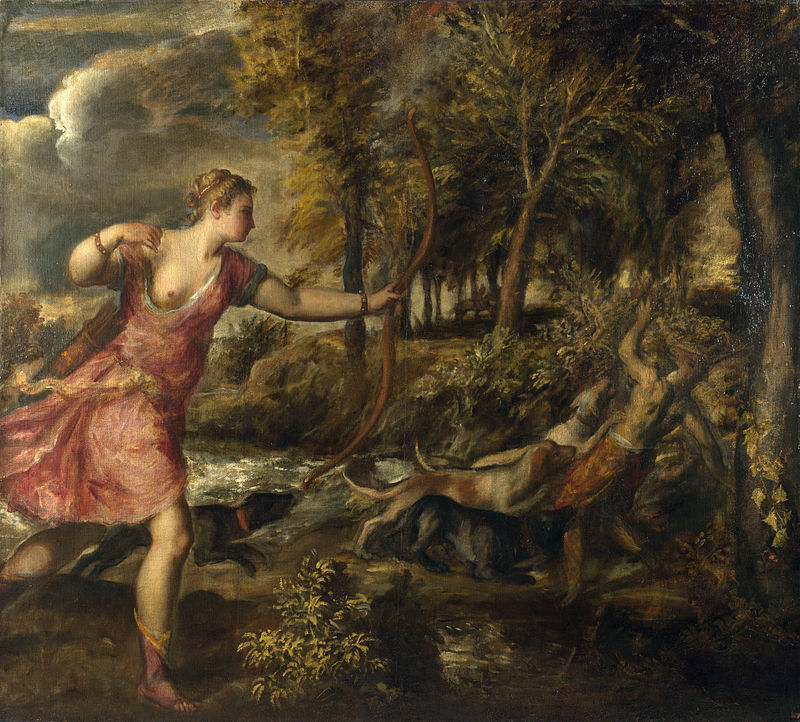
This reminded me of another Venetian painter and his love of nature: the great Tiziano Vecellio. I spent an ecstatic afternoon last month at the exhibition Titian and the Golden Age of Venetian Art at the Scottish National Gallery, which brought together Titian’s two Diana paintings as well as The Death of Actaeon — all part of his monumental mythological cycle of poesie canvases based on Ovid’s Metamorphoses, a vast commission by Philip II of Spain.

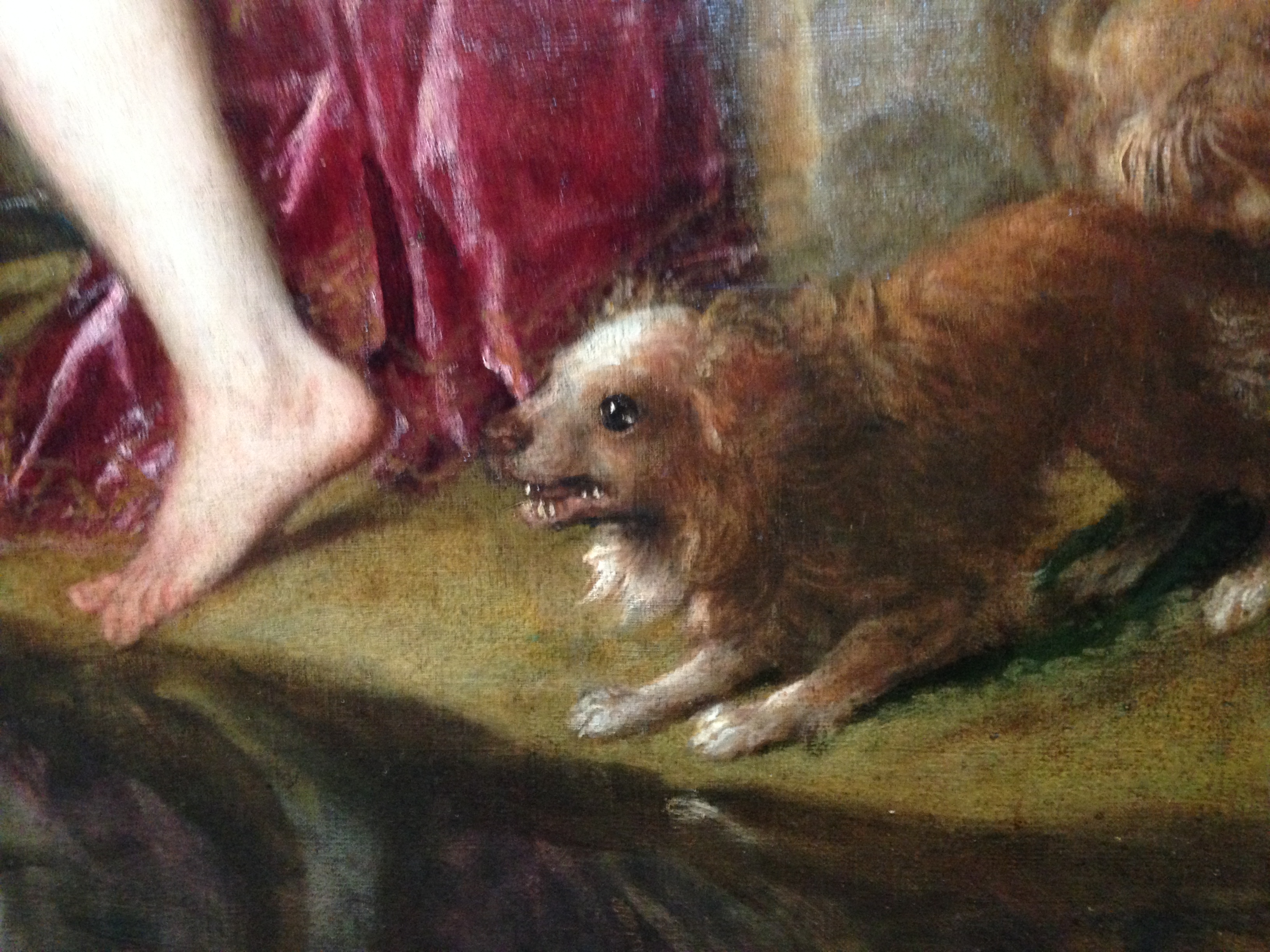
The detail above is from Diana and Actaeon (1556-59) and shows the goddess’s lap dog (a spaniel?) yelping at the male intruder who has unwittingly (so Ovid’s account goes) chanced upon the nude Diana and her nymphs as they are bathing in a spring.

Titian, Diana and Actaeon

Titian, Diana and Actaeon

Titian’s sequel painting narrates the denouement in which Diana curses the hapless Actaeon, causing him to be transformed into a stag and torn apart by his own hunting dogs. Given this context, the nearly comic effect of Diana’s little toy dog shown in a frenzy is all the more startling.

Titian, Death of Actaeon

Titian, Death of Actaeon

Filed under: aesthetics, art, art history, Titian

Aeneas and the White Sow

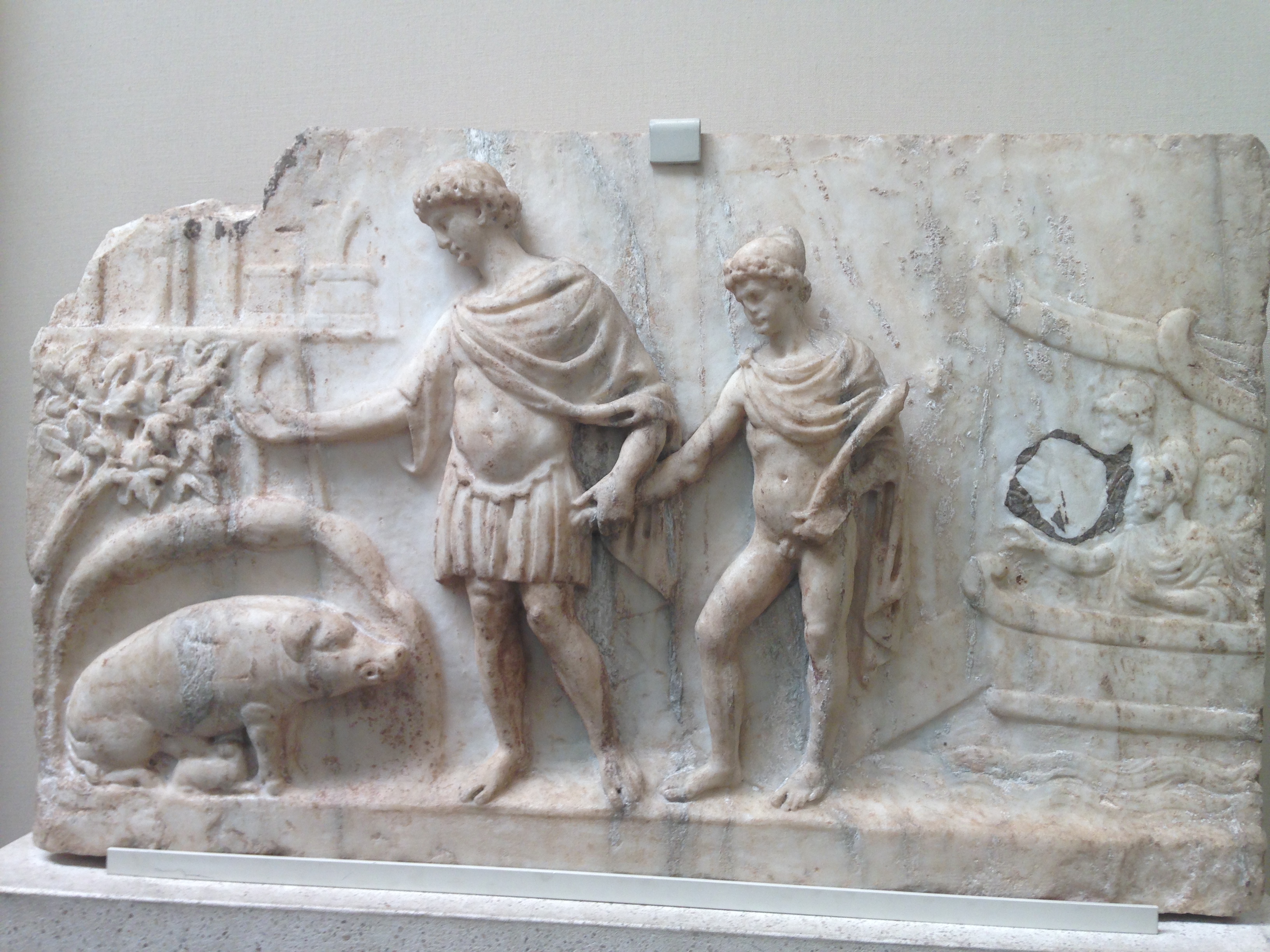
Aeneas, his son Ascanius, and the prophecy of the white sow (British Museum)

Aeneas, his son Ascanius, and the prophecy of the white sow (British Museum)

cum tibi sollicito secreti ad fluminis undam
litoreis ingens inventa sub ilicibus sus
triginta capitum fetus enixa iacebit,
alba solo recubans, albi circum ubera nati,
is locus urbis erit, requies ea certa laborum.

Virgil, Aeneid, Book III, 389-393

Filed under: art, Latin, Virgil

Archive

Enter your email address to follow this blog and receive notifications of new posts by email.