My essay on Handel’s magnificent ode Alexander’s Feast has been posted on the LA Master Chorale Site:
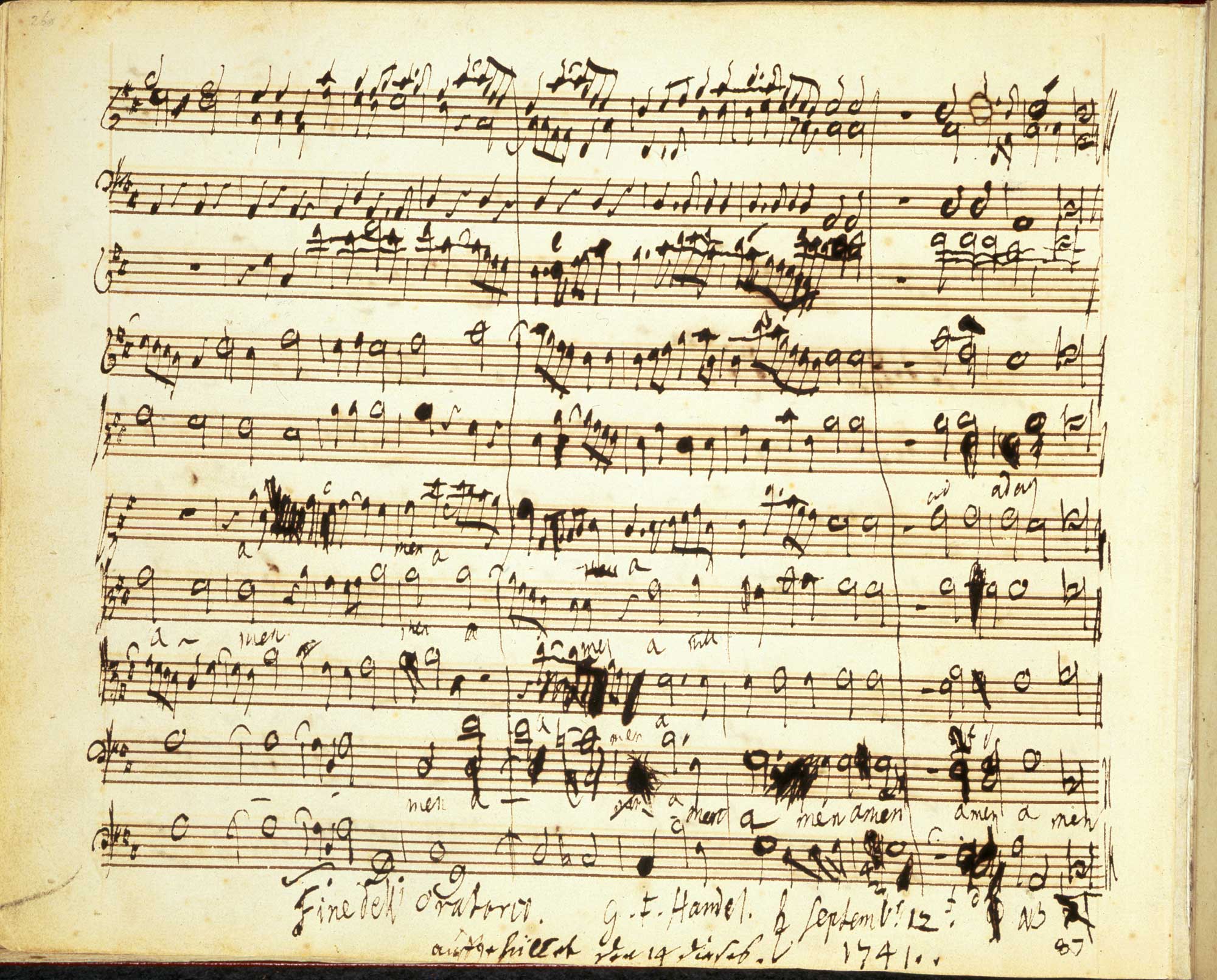
It sounds strange to refer to George Frideric Handel as a neglected composer. Messiah is such a fixture that the holiday season would feel bereft were it suddenly to disappear from the scene. (Never mind that its association with Christmas postdates the practice during the composer’s lifetime.)
Here’s my program essay for the upcoming West Coast premiere of Julia Wolfe’s Anthracite Fields, a remarkable oratorio:
“The thing I love about music is, it’s beyond words. But somehow the words crept back in — big time,” remarked Julia Wolfe in an interview on NPR’s Studio360 following the announcement that she had won last year’s Pulitzer Prize in Music for Anthracite Fields. Wolfe’s moving and innovative new oratorio fuses music with words to tell a story deeply rooted in American history — and one inextricably connected to how we live today.
A new essay for LA Master Chorale’s recent holiday program:
Senex puerum portabat/Puer autem senem regebat: “The old man held up the boy, but the boy upheld the old man.” Set to unforgettable music by the likes of William Byrd and Palestrina, this text comes from an antiphon marking the Feast of the Presentation of Jesus at the Temple: an old man (the “righteous and devout” Simeon) greets the Holy Family in the Temple 40 days after the birth of Jesus and rejoices in proclaiming the significance of the newborn.
Encountering a concert as imaginatively programmed as this makes you wonder why so many resign themselves to the same old boring, predictable holiday music rituals year after year. Leave it to Seattle Pro Musica (SPM) to design a yuletide concert replete with ear-opening discoveries. Billed as Northern Lights, the programme celebrated the winter spirit with a survey of choral music from Scandinavia and the Baltic countries, much of it by contemporary composers.
This week brings the San Francisco Symphony’s performances with Michael Tilson Thomas of the Missa Solemnis of Beethoven — a work that certainly belongs to my top-ten list of all time.
Following a trial run in Los Angeles in January, it’s being given as a “multimedia staged event”, complete with scenic, lighting, and video design; James Darrah is the director.
Of the earlier run in January, Mark Swed had this to say about MTT’s relationship with the Beethoven score:
In the grandest sense, this “Missa Solemnis,” with all its attendant baggage, is a kind of mission statement for MTT. He sets out to unpack a complicated artistic and musical construct, to reveal its workings and to treat it as a large-scale act of discovery.
The Missa Solemnis held intense personal significance for its composer as well: “Von Herzen — Möge es wieder — Zu Herzen gehn!” (“From the heart –- may it return to the heart!” wrote Beethoven on the copy of the score he presented to its dedicatee, his pupil and friend Archduke Rudolf.
For its public “premiere” in Vienna, three of the Missa‘s movements were given as part of the grand concert of 7 May 1824 that also unveiled the Ninth Symphony. (The secular context brought objections to performing the entire Missa.)
Next week MTT and the SFS continue their Beethoven Festival with a recreation of an earlier “marathon concert”: the one on a cold December night in 1808, when Beethoven premiered his Fifth and Sixth Symphonies, and Fourth Piano Concerto in a program that also included a concert aria, three movements from his other Mass setting (the Mass in C major), a piano fantasy, and the Choral Fantasy, that fascinating precursor to the Ninth.
My essay on Tan Dun’s Water Passion, which is being performed next weekend by Grant Gershon and the LA Master Chorale, is now live:
In 2013 the peripatetic Tan Dun traveled to the Thomaskirche in Leipzig to conduct his Water Passion in the very space in which J.S. Bach had introduced the St. Matthew Passion nearly three centuries ago (most likely in 1727). The gesture underlined the kind of cross-cultural counterpoint that lies at the heart of the Chinese composer’s oratorio.
The full title reads Water Passion after St. Matthew, yet Tan also models his work on his reading of Bach’s monumental precedent. It might even be titled Water Passion after St. Matthew after Bach — the second “after” being taken in its double sense of “according to” and “postdating” (for a contemporary world).
Last night’s LA Master Chorale program presented the world premieres of two pieces: Nackkum Paik’s Succession and the latest from composer-in-residence Shawn Kirchner. Here’s the essay I wrote for the program:
Images related to rising up have inspired wonder and awe ever since humans acquired consciousness. Such images are ubiquitous in the natural world around us — whether in the mountains that loom majestically over a landscape or the reliable motions of the firmament. Is it any surprise that themes of ascension are so integral to religions all around the world? “When the Buddha sat under the bo tree,” observes Joseph Campbell, “he faced east — the direction of the rising sun.”
My recent essay on the unusual (if most popular) of Handel’s oratorios:
Handel’s masterpiece has long been at the heart of the repertory, but it marked an unusual departure for the composer
If you could do the time warp and choose a few of the legendary premieres in music history to be teleported back to, what would make your list? Likely contenders might be Beethoven’s Ninth, Stravinsky’s Rite of Spring, perhaps Berlioz’s Symphonie fantastique and Monteverdi’s L’Orfeo, and — surely Messiah?
This list forms the basis for Thomas Forrest Kelly’s lecture series, published as First Nights, which teems with fascinating factoids to help us reimagine what the scenes of said premieres may have been like. Following the public rehearsal of Messiah on April 9, 1742, the official world premiere occurred on April 13, 1742, at the Great Music Hall in Dublin, having been postponed a day to allow for “several persons of distinction” to be able to attend; the “ladies who honour this performance with their presence” were requested to attend “without hoops” so as to make room for others. All told, the Great Music Hall would have accommodated about 700 (hoopless) people — though of course a seat would be reserved for our prospective time-traveler.
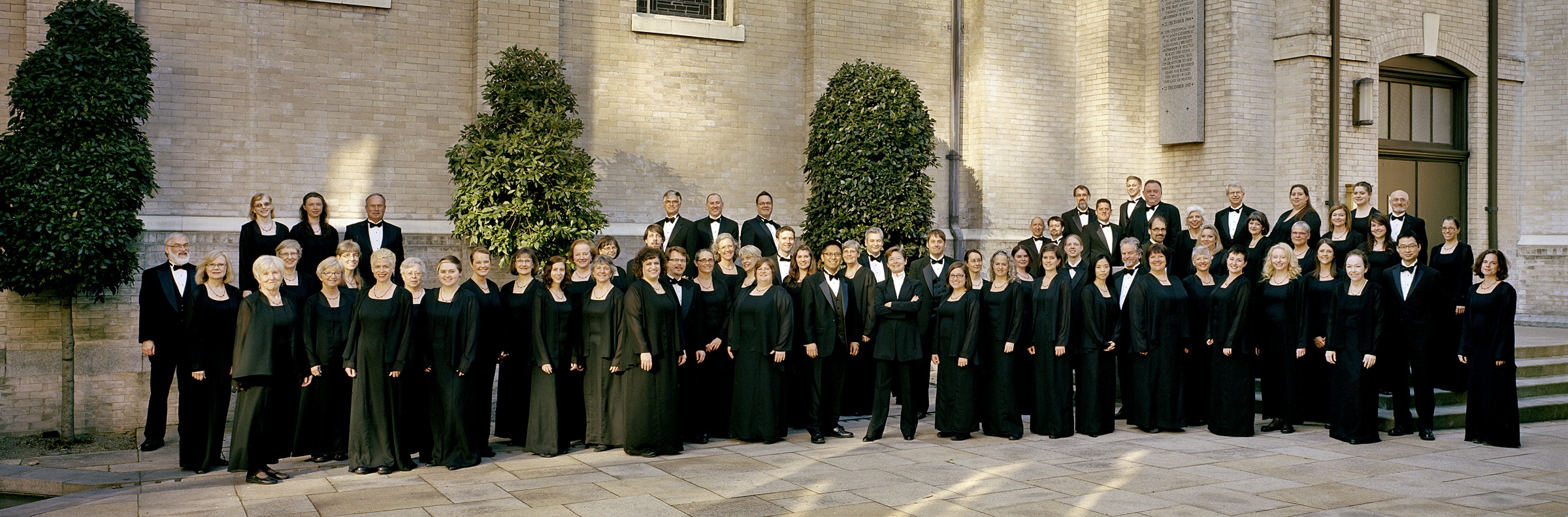
I’ve always admired the quality and imagination of Karen Thomas’s programming for Seattle Pro Musica, but their upcoming program, titled Passio: Light in Darkness, has me champing at the bit, to put it frankly.
“The concept for Passio is music related to Lent and the deep human emotions this season has inspired composers to explore,” says Thomas, who not only directs Pro Musica but is herself a composer. And that can also take the form of completely secular works like the little match girl passion by David Lang, which draws on models from Medieval mystery plays and J.S. Bach’s Passions to retell a children’s story of searing, tragic simplicity.
The fact that Pro Musica will be presenting match girl (in the area premiere of the choral version) is by itself enough of a sell: this just happens to be one of the most haunting and inspired choral compositions by an American composer in recent years. But the program also includes a “re-discovered” rarity from the Russian choral rep: Passion Week by Rachmaninoff contemporary Alexander Gretchaninoff (1864-1956). Plus, there will be sprinklings of music by Benjamin Britten, Thomas Weelkes, and living composers like Paul Mealor and Kay Rhie. All of these selections, in different ways, highlight the special strengths of Seattle Pro Musica — and of the smaller ensembles comprising the company.
Seattle Pro Musica
Lang, an LA native now based in New York (and known as one of the co-founders of the innovative Bang on a Can new-music outfit), has fast forwarded the American maverick lineage into the 21st century. Lang is also an adventurous collaborator who has worked with the likes of photographer William Wegman and the film director Jonathan Parker (scoring the 2009 indie comedy (Untitled). But for the little match girl passion, which won the Pulitzer Prize in Music in 2008, Lang engages in a remarkably original “collaboration” with sources you don’t normally associate with each other. He uses the tradition of musical settings of the Christian Passion narrative as a model for his retelling of an incredibly poignant children’s story by fairy-tale master Hans Christian Andersen.
The root of the word “passion” is from the Latin term for suffering. Lang strips away the traditional religious associations of the Passion story but uses the narrative techniques that were pioneered and perfected by Bach — “commentary” passages interpolated into the ongoing story — to recount the suffering and death of the little girl in Andersen’s story who tries to sell matches on a street corner on a brutally cold New Year’s Eve. Or, another way to put it, as Lang himself does: “There is no Bach in my piece and there is no Jesus — rather, the suffering of the little match girl has been substituted for Jesus’, elevating (I hope) her sorrow to a higher plane.”
There have been many musical adaptations of Andersen’s tale — TV musicals, operas, a synthpop video by Erasure, a concept album by The Tiger Lillies. But nothing I know comes close to the gut-wrenching impact of Lang’s treatment. His post-Minimalist score is deceptively simple, in keeping with the story. Spare harmonies and other archaisms evoke the starkness of early Medieval chant (think Perotin — that far back); tiny gestures generate maximal emotional response.
“There’s an extremely intimate quality to it,” Thomas explains. “Lang’s music has an immediacy and at the same time a kind of emotional reserve about it, because of the way he writes for the voices to evoke the Evangelist in a Bach Passion or a Greek chorus. So there’s a certain coldness and detachment as well that makes the tragic story that much more poignant as a result.”
Over the past two weeks, in concerts featuring the same vocal soloists, I’ve taken advantage of the rare opportunity to experience and compare the two great Passions by J.S. Bach that survive. (Pro Musica also performed the St. John Passion two seasons ago.) So it should be especially fascinating to encounter Lang’s piece, which I’ve long treasured since on recordings, with this context fresh in mind. Yet on its own terms, match girl is an immediately gripping and effective work, a mix of modern morality play and music theater — but with none of the preachiness that can sometimes creep into, say, a performance of Brecht.
Alexander Gretchaninoff in 1910
As for Gretchaninoff’s Passion Week, Karen Thomas points out that it will beautifully complement the pared-down sound of Lang’s little match girl passion by taking us to another extreme of lushness and blooming choral texture. Premiered in Russia in 1912, Passion Week sets texts from the Russian Orthodox liturgy that are used as prayers during the week that culminates in Easter. Gretchaninoff, a student of Rimsky-Korsakov, was part of the Renaissance of Russian choral music in the early 20th century that’s also represented by Rachmaninoff’s beloved Vespers (1915).
“In Gretchaninoff’s setting you can hear the influence of early Russian music and chant even more clearly,” says Thomas. “And he writes even more extensively for the low range of the basses than Rachmaninoff. This will sound especially compelling when heard in the acoustic space of St. James.”
Thomas adds that the prayers Gretchaninoff sets combine mystical and liturgical texts. They tend to be “more of a personal reflection” on the events of Good Friday, for example, than the librettos Bach set for his Passions. But this music fell into oblivion in the wake of the Soviet Union’s official crackdown on the Russian choral movement that had begun to take flight. Gretchaninoff himself stayed for a time but finally emigrated to the U.S. in 1939. His Passion Week wasn’t revived until the 1990s. Thomas believes these may be the first Seattle area performances.
An additional note: Yet another composer involved in the Russian choral movement — and another Rimsky student — will be in the spotlight next month when Cappella Romana presents the recently rediscovered Passion Week of Maximilian Steinberg, “the last major sacred work composed in Russia before Stalin’s 1932 crackdown (April 11 and 12).
Seattle Pro Musica’s Passio – Light in Darkness concerts take place on Saturday and Sunday, March 8 and 9, both evenings at 8 pm at St. James Cathedral. Tickets here.


 My essay on Handel’s magnificent ode Alexander’s Feast has been posted on the LA Master Chorale Site:
 Here’s my





 MEMETERIA by Thomas May