Kevin John Edusei makes his Seattle Symphony debut conducting Widmann, Strauss, and Beethoven (with Steven Osborne in the Piano Concerto No. 5 in E-flat major); image (c) James Holt
An impressive Seattle Symphony conducting debut last night with Kevin John Edusei on the podium. Absolutely captivating account of Richard Strauss’s Ein Heldenleben, exquisitely tailored to give full weight to the more introspective moments — and reminding us that there’s even a touch of self-doubt in this score. The gorgeously shaped solos from concertmaster Noah Geller were especially thoughtful, while Jeff Fair and the horn section made a spectacular contribution. Overall I found this showcase of sonic theater more moving than usual in its effect.
Scottish pianist Steven Osborne emphasized poetry over heroics in Beethoven’s Emperor Concerto — sheer loveliness in the slow movement, where Edusei’s placement of the strings (basses and cellos to his left) enhanced the finely veiled sound. Osborne played the transition into the finale as if snapping out of a dream. The unannounced encore was apparently music of Keith Jarrett — an unexpected but beautiful choice.
A clever bit of Beethoven-related programming for the opener: German composer Jörg Widmann’s Conbrio, a deliciously paradoxical parody-of-pastiche that is serious and original, never actually quoting Beethoven yet evoking his personality at every turn through abstract gestures — as if trying to recuperate what it all once meant…. Two more chances to hear this excellent concert (Sat evening and Sunday matinee).
Conductor Kahchun Wong and Chorus master Joseph Crnko with Seattle Symphony and Chorale and soloists Katie Van Kooten, Sara Couden, Thomas Cooley, and Hadleigh Adams (left to right); image (c) Jorge Gustavo Elias
Seattle Symphony performed its very first concert on this day in 1903: 24 musicians conducted by Harry F. West (details in Greg Lange’s History Link article here).
Meanwhile, the 21st-century incarnation of SSO is ringing in the New Year with guest conductor Kahchun Wong at the helm in performances of Beethoven’s Ninth Symphony. Yes, it has become cliché to do the Ninth at year’s end, but last night’s opening performance for a very full house genuinely stood out as a memorable event — particularly in comparison with the disappointments of last year’s go.
The Singapore-born Wong conducted the entire score from memory, drawing on a fascinating and idiosyncratic repertoire of gestures to communicate with the musicians: sweeping, circular motions, painterly hand waving, finger wiggles, a variety of crouching positions and leaps. It was clear how deeply he has internalized this music, allowing him to keep it flowing on multiple tracks at once. Phrases had compelling, dramatic shape, while he kept the larger arc of each movement, and of the entire Ninth, continually in view. The thunderous dive into the first movement’s recapitulation, for example, was breathtaking — a rare instance where the shift to major sounds not triumphant but catastrophic.
Especially noteworthy: Wong’s astonishing sensitive to dynamics and ability to shape and blend the sound to such fine gradations. Crescendos in the first two movements in particular were extraordinarily effective and dramatic. For the Scherzo, he opted for a somewhat more-measured tempo in lieu of the infernal machine that is frequently whipped into operation, and he likewise steered clear of the speeded-up pacing that has become fashionable for the slow movement, making a proper differentiation between the Adagio and Andante double variations. Nothing extreme, just a thorough immersion in the musical thought and feeling itself. Again, Wong’s loving attention to details of texture — the gentle throb of the violas not as accompaniment but part of the Adagio’s first theme — added immeasurably to this interpretation.
Also in contrast to last year, the Seattle Symphony Chorale sounded much better prepared and present, producing waves of glorious sound, as well as genuine mystery in the section where Beethoven re-enacts Gregorian chant — though the unnecessary use of amplification was an unfortunate choice. The soloists — soprano Katie Van Kooten soprano, alto Sara Couden, tenor Thomas Cooley, baritone Hadleigh Adams — didn’t blend particularly well, though some individual contributions made a powerful impact (especially Cooley’s exhortation in the high-flying march variation).
In Wong’s reading, only the “terror fanfare” that initiates the finale disappointed as too restrained. But his understanding of this massive structure as a miniature drama came through resoundingly, making for the finest overall Ninth I’ve heard in several years. Nothing else shares this program, so the focus is entirely on Beethoven. Even if you think you’ve heard the Ninth enough times for now, this one is worth seeking out. Wong returns to conduct Mahler’s Third in April. And judging from this success, we may be seeing a good deal more of him ….
David Robertson led the Seattle Symphony; photo by Brandon Patoc
SEATTLE — So far this season, the Seattle Symphony has played under no fewer than seven conductors as part of its central masterworks subscription series. The musicians have shown remarkable flexibility in adapting to a dramatically varied range of podium styles and personalities for each program as the search for a permanent music director continues.
I had the pleasure of covering the Royal Scottish National Orchestra’s latest concert in Edinburgh, which featured two guest artists in remarkable sync:
Although the most recent work on this weekend’s Royal Scottish National Orchestra programme dates from 1952, audiences are still just beginning to make its acquaintance. The ongoing reappraisal of the twentieth-century African American composer Florence Price would not be possible without the contributions of performers who have championed her music….
Congratulations to Stephanie Childress, Musical America’s New Artist of the Month for October 2023. My profile of this remarkable conductor has now been posted on Musical America’s website here.
The good fairies generously allotted the skills required to succeed as a conductor to Stephanie Childress. Or so it occurred to me while recently seeing this 24-year-old phenomenon in action leading a spirited, remarkably poised account of excerpts from Tchaikovsky’s Sleeping Beauty, beginning with “La Fée des lilas.” …
Congratulations to Hankyeol Yoon: the 29-year-old South Korean conductor was just announced as the winner of the 2023 Herbert von Karajan Young Conductors Award.
Conductor Hankyeol Yoon was the youngest ever recipient of the Neeme Järvi Prize at the 2019 Gstaad Menuhin Festival & Academy and subsequently received invitations from Kammerorchester Basel and the Basel and Bern symphony orchestras. Highlights of the 2022/23 season include debuts with Seoul Philharmonic Orchestra, Bern Symphony Orchestra and Busan Philharmonic Orchestra and a return to KBS Symphony Orchestra for concerts in Tokyo. He is currently one of the three finalist of Karajan Young Conductors’ Award and will conduct a concert at the Salzburg Festival in August 2023.
Recent highlights include concerts with Münchner Symphoniker, Norddeutsche Philharmonie Rostock, Neubrandenburger Philharmonie, Gstaad Festival Orchestra, Kammerorchester Basel, Korean National Symphony Orchestra and Daejeon Philharmonic Orchestra.
In 2019 Hankyeol was awarded 3rd prize at CAMPUS Dirigieren in Nuremberg and in 2021 he won the 2nd and audience prizes at the inaugural KSO International Conducting Competition in Seoul. Hankyeol was also a finalist at the 2020 Georg Solti Competition and 2021 Deutscher Dirigentenpreis respectively.
In 2021 Hankyeol stepped down as 2nd Kapellmeister of Theater und Orchester Neubrandenburg Neustrelitz. During his two-year tenure Hankyeol conducted several symphonic concerts as well as performances of Pariser Leben and il Barbiere di Siviglia. He also led a production of V. Ullmann’s Der Kaiser von Atlantis.
Hankyeol has previously worked as Assistant Conductor with Staatstheater Nürnberg, Grand Théâtre de Genève and Heidenheim Opera Festival, as well as with Symphonieorchester des Bayerischen Rundfunks under Daniel Harding and at Lucerne Festival as a Conducting Fellow under Thomas Adès.
Also a prize-winning composer, Hankyeol has been recognised at the Luciano Berio International Composition Competition Rome in 2020, TonaLi Composition Competition Hamburg in 2018, Vareler Composition Competition in 2016 and Concours de Geneve in 2015. In 2019 Hankyeol was one of two composers mentored by the Peter Eötvös Foundation in Budapest where his compositions were conducted by Peter Eötvös and he received mentorship from Sir George Benjamin. Under Unsuk Chin, Hankyeol made his debut as conductor and composer in South Korea at the Tongyeong International Music Festival. In December 2021 his latest work, Grande Hipab, was premiered by Ensemble Modern in Frankfurt.
Born in Daegu, South Korea but calling Munich his home since 2011, Hankyeol studied conducting, composing, and piano performance at the Hochschule für Musik und Theater München.
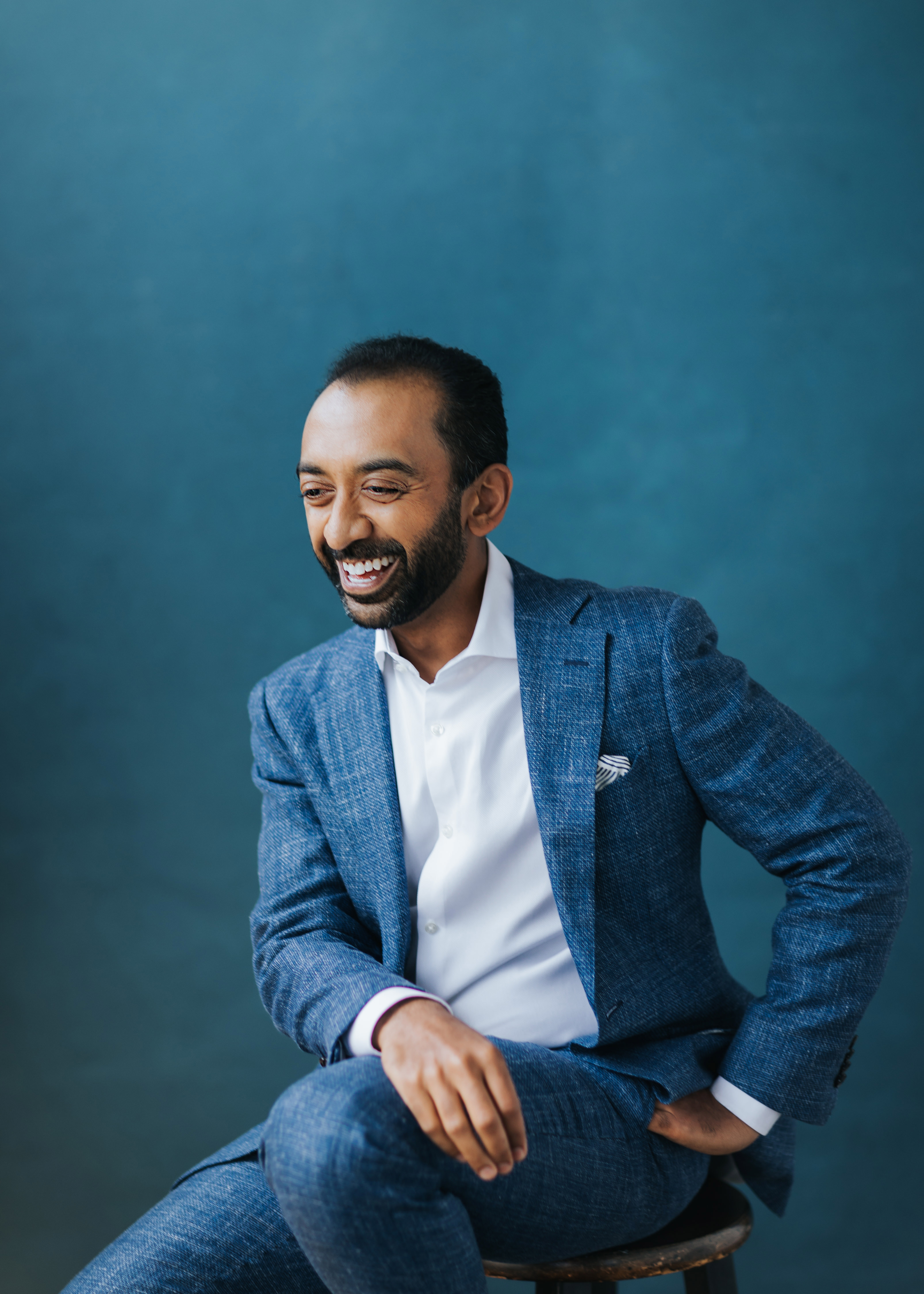
Sameer Patel has been appointed Music Director and Orchestra Conductor of the La Jolla Symphony & Chorus. His tenure will begin with the new 2023-24 season and follows a year-long search after the departure of Steven Schick, who stepped down from the role in May 2022. La Jolla’s Search Committee invited a small group of internationally renowned conductors to audition for the position. Patel will work alongside Arian Khaefi, the Sally and Einar Gall Music Director and Chorus Conductor.
Already a familiar presence to audiences in the San Diego region, Patel is currently Artistic Director of the San Diego Youth Symphony and was previously Associate Conductor of the San Diego Symphony, where he reinvigorated the orchestra’s programming and connection with its community.
Hailed as a rising star in the conducting world, Patel brings an impressive resume of international performances and collaborations to La Jolla. Patel studied at the University of Michigan and furthered his training across Europe with some of the leading conductors of our time. He now makes his home in San Diego with his wife, Shannon, and their two children, Devan and Veda.
“I am thrilled to join the La Jolla Symphony and Chorus as Music Director and Orchestra Conductor. From my earliest experiences working with the musicians, I’ve consistently been impressed not only with their artistic integrity and curiosity, but also by the way they so joyfully and willingly share their humanity both onstage and off,” Patel said. “I am grateful and proud to expand my musical involvement in this community that I love and believe in, and I look forward to a bright future together.”
From my recent profile of Sameer Patel for Musical America, who was featured in April as their New Artist of the Month:
As he describes the career choices that have led to his current position, Sameer Patel refers to a verse from the Bhagavad Gita: “It’s better to strive in one’s own dharma than to succeed in the dharma of another’ — in other words, to follow your own virtue or path or journey.”
UPDATE: Here’s a link to Medici.tv’s recorded livestream of the closing concert.
The Italian conductor Giuseppe Mengoli has been announced as the winner of the 2023 Mahler Conducting Competition, which confers a cash prize of 30,000 euros. The competition was held in Bamberg, Germany, from 7 to 13 July, with a repertoire including Mahler’s Seventh Symphony (from which different movements were played in each round), as well as Haydn’s Symphony No. 92 in G major (first round), Bernd Richard Deutsch’s Con moto, which was commissioned by the Bamberg Symphony and given its world premiere and (second round), Berg’s Seven Early Songs (semi-final), and Stravinsky’s Violin Concerto (final round).
The sold-out concluding concert of the competition will take place on Saturday, 15 July, with Mengoli leading the Bamberg Symphony. The program consists of Mahler’s Symphony No. 7, Haydn’s Symphony No. 92, and Berg’s Seven Early Songs, with Thomas Hampson as the soloist; Mengoli will record with the Bamberg Symphony next season.
Second place went to the Japanese American conductor Taichi Fukumura, who received 20,000 euros. In third place was the German conductor Georg Köhler, who was awarded a cash prize of 10,000 euros. Additionally, a new prize was introduced this year: Best Conducting of Contemporary Composition, which confers an award of 7,500 euros (donated by the Mahler Foundation). This was awarded to the American conductor Kevin Fitzgerald.
The Mahler Competition was founded in 2004 by the Bamberg Symphony and its principal conductor at the time, Jonathan Nott, and takes place every three years. The inaugural winner was Gustavo Dudamel. More candidates than ever before applied for the 2023 competition: there were 350 applicants, of which almost 20% were women; 16 male and 4 female conductors were selected and invited to Bamberg.
Until recently, Mengoli held the position of Assistant Conductor to Lorenzo Viotti at the Netherlands Philharmonic Orchestra and the Dutch National Opera in Amsterdam. In May 2023 he joined the artistic team for the Orchestre National de France new production of La Bohème at the Theatre de Champs-Elysees leading stage rehearsals and assisting Lorenzo Passerini. This summer he will be assisting at the Salzburg Festival, and he will work with the SWR Symphonieorchester in the upcoming season.
In May 2022, Mengoli assisted Lorenzo Viotti in Lisbon preparing as well as conducting the Gulbenkian Orchestra in Schoenberg’s Pelleas et Melisande. In October 2022, he made his debut with the Nederlands Kamerorkest and soloist Leonard Elschenbroich conducting the world premiere of Willem Jeths’s Cello Concerto No. 2 at the Cello Biennale 2022 in Amsterdam. He stepped in to prepare Beethoven’s Fifth with the Solistes Européen Luxembourg at very short notice, which led to an invitation to join the orchestra again for upcoming projects.
Mengoli’s conducting career began as a result of his experience as a concertmaster in youth and professional orchestras from the age of 19. Since then he has worked with Oleg Caetani, Daniel Barenboim, Christoph König, and John Axelrod and with such orchestras as the Real Orquesta Sinfonica de Sevilla, Oslo Opera House, LaVerdi Symphony Orchestra, and the Royal Opera House. In 2018 he made his conducting debut with the Gustav Mahler Jugend Orchester in Bad Schandau. During this time, he also served as concertmaster of the GMJO and as a substitute in orchestras like the Konzerthaus Orchester Berlin and Rundfunk Sinfonieorchester Berlin.
Winner of several international competitions as a violinist, he completed his violin studies cum laude and with special mention. Alongside the violin, Mengoli studied percussion, piano, and trumpet, and he has also worked as a composer and arranger of jazz. Having obtained his bachelor’s degree in orchestra conducting, he is currently pursuing his master’s degree at the Franz Liszt Academy in Weimar with Nicolás Pasquet and Ekhart Wycik and is regularly working with such orchestras as the Staatskapelle Weimar, the Jenaer Philharmonie, and the Thüringen Philharmonie Gotha.
Osmo Vänskä led the Seattle Symphony in a breathtaking account of Mahler’s Symphony No. 2. (Photos by Carlin Ma)
I reviewed the final concert of the Seattle Symphony season — an excellent performance of Mahler’s “Resurrection” Symphony No. 2 with guest conductor Osmo Vänskä:
SEATTLE — The Seattle Symphony’s season of guest conductors concluded with a visit by Osmo Vänskä. On June 24, he led a breathtaking, meticulous performance of Mahler’s Symphony No. 2. Conventional program structure offers a chance to experience each visiting conductor’s skills with a variety of pieces and styles. But with the entire concert devoted to this single work, Vänskä took on the additional test of sustaining the musical narrative over the length of a feature film.
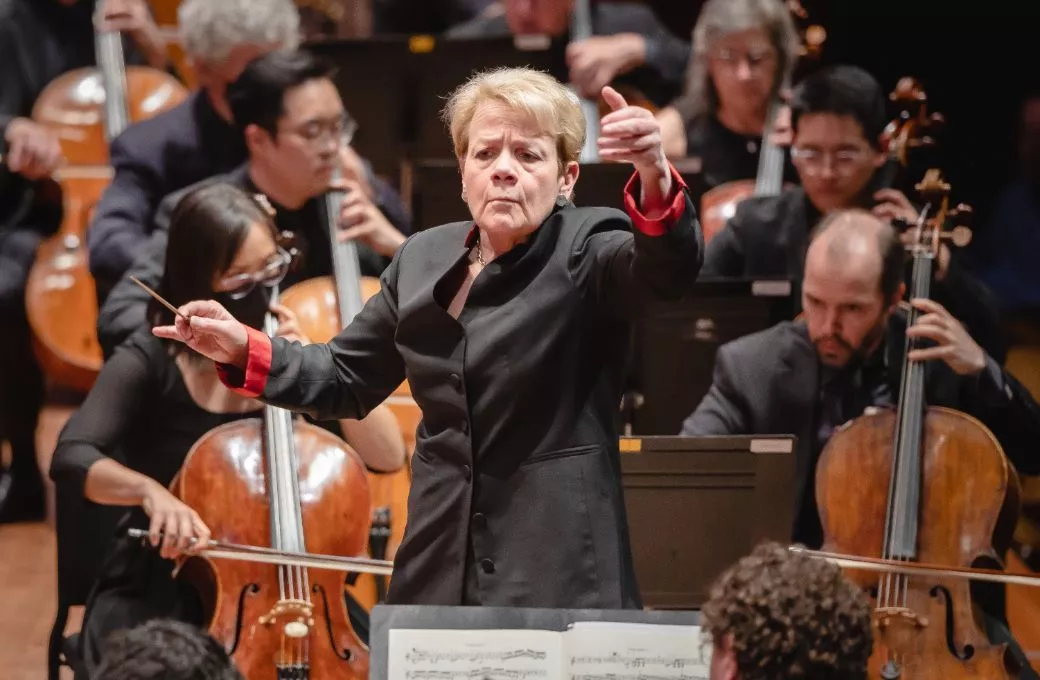
I reviewed this past weekend’s Seattle Symphony program with guest conductor Marin Alsop:
There was nothing star-crossed about Marin Alsop’s guest appearance with the Seattle Symphony. Fortune turned its wheel to allow for a happy, if long-overdue, collaboration following an absence of almost two decades from Benaroya Hall….





 MEMETERIA by Thomas May