MEMETERIA by Thomas May

Music & the Arts

Setting Norma

Norma

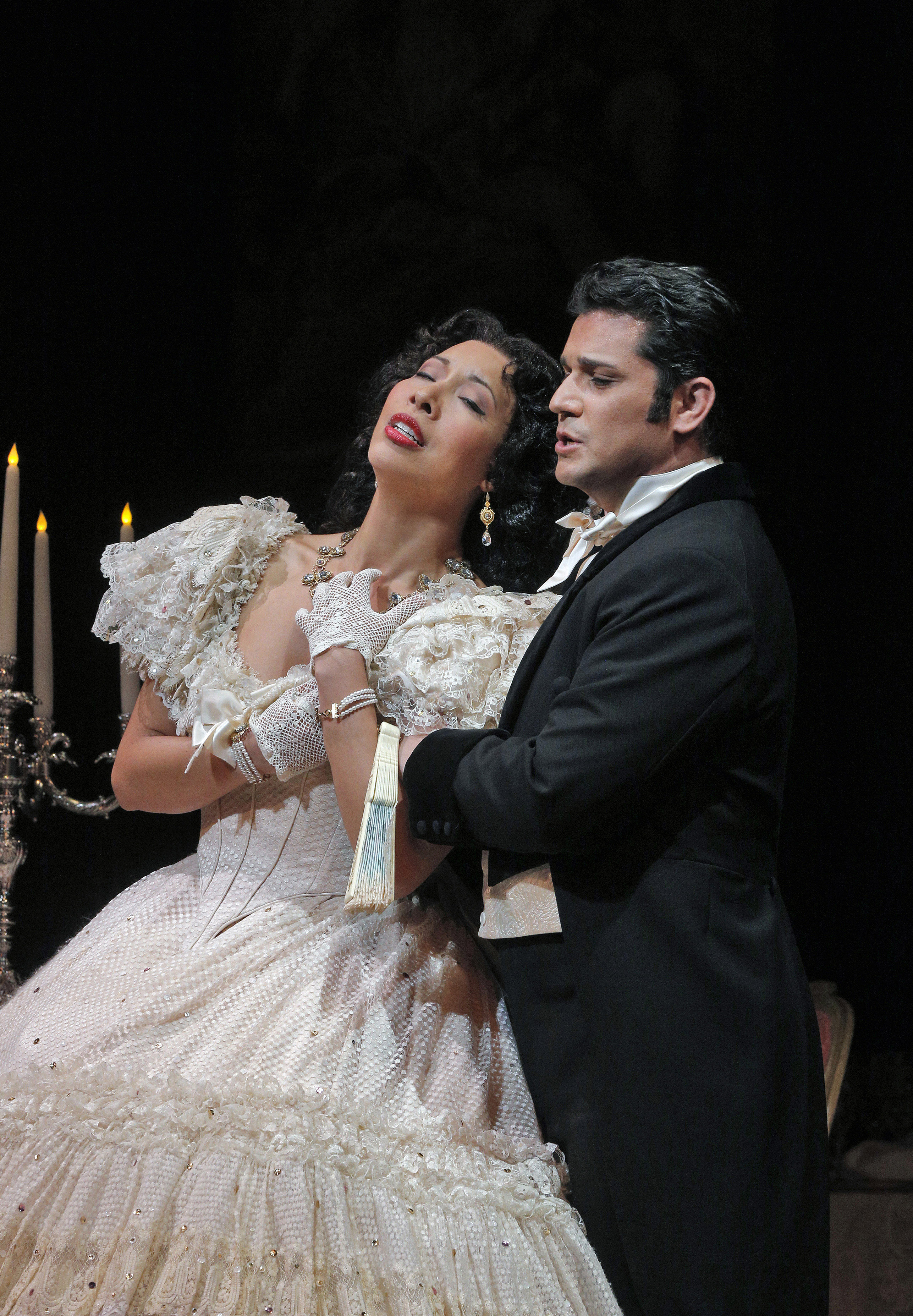
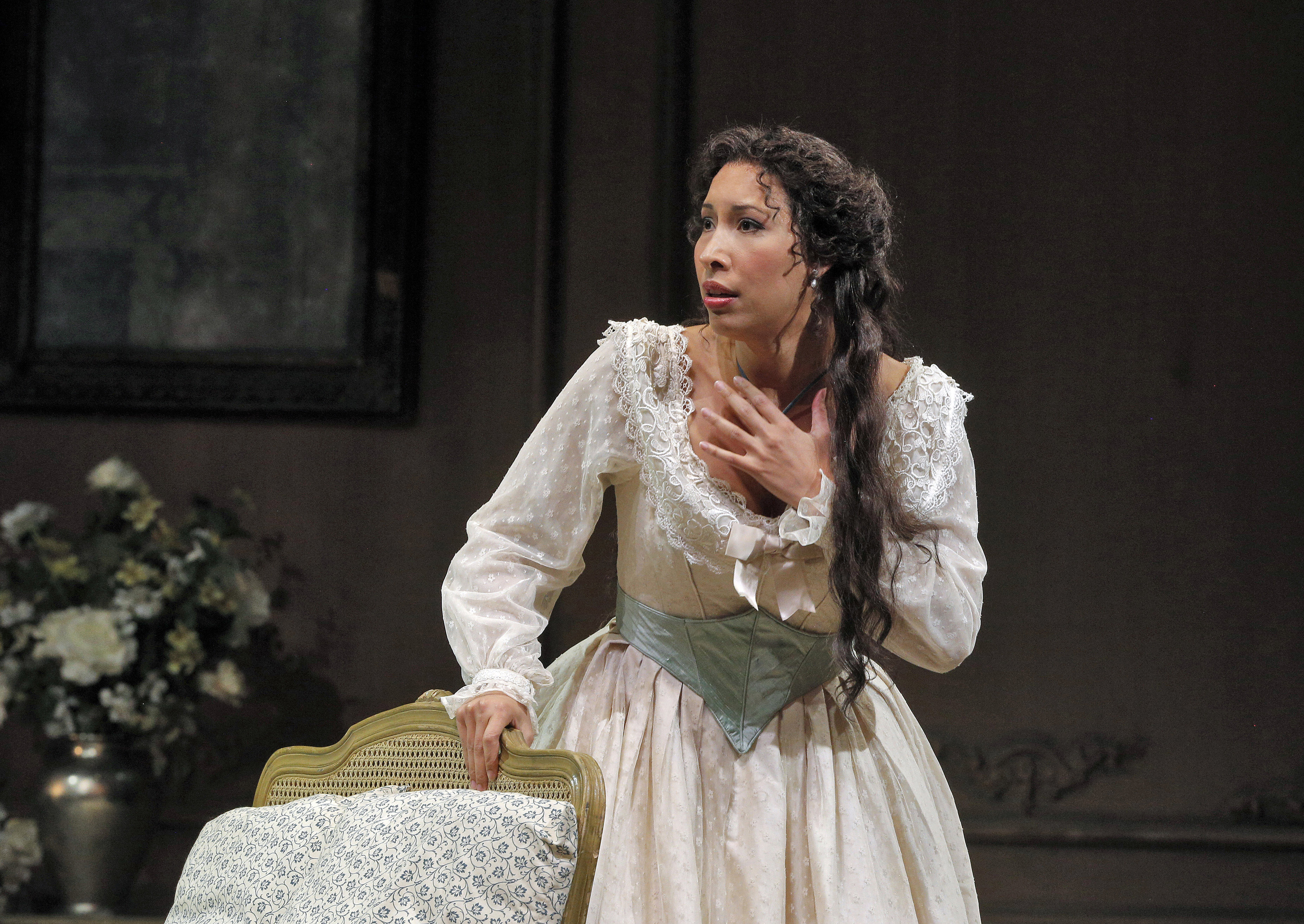
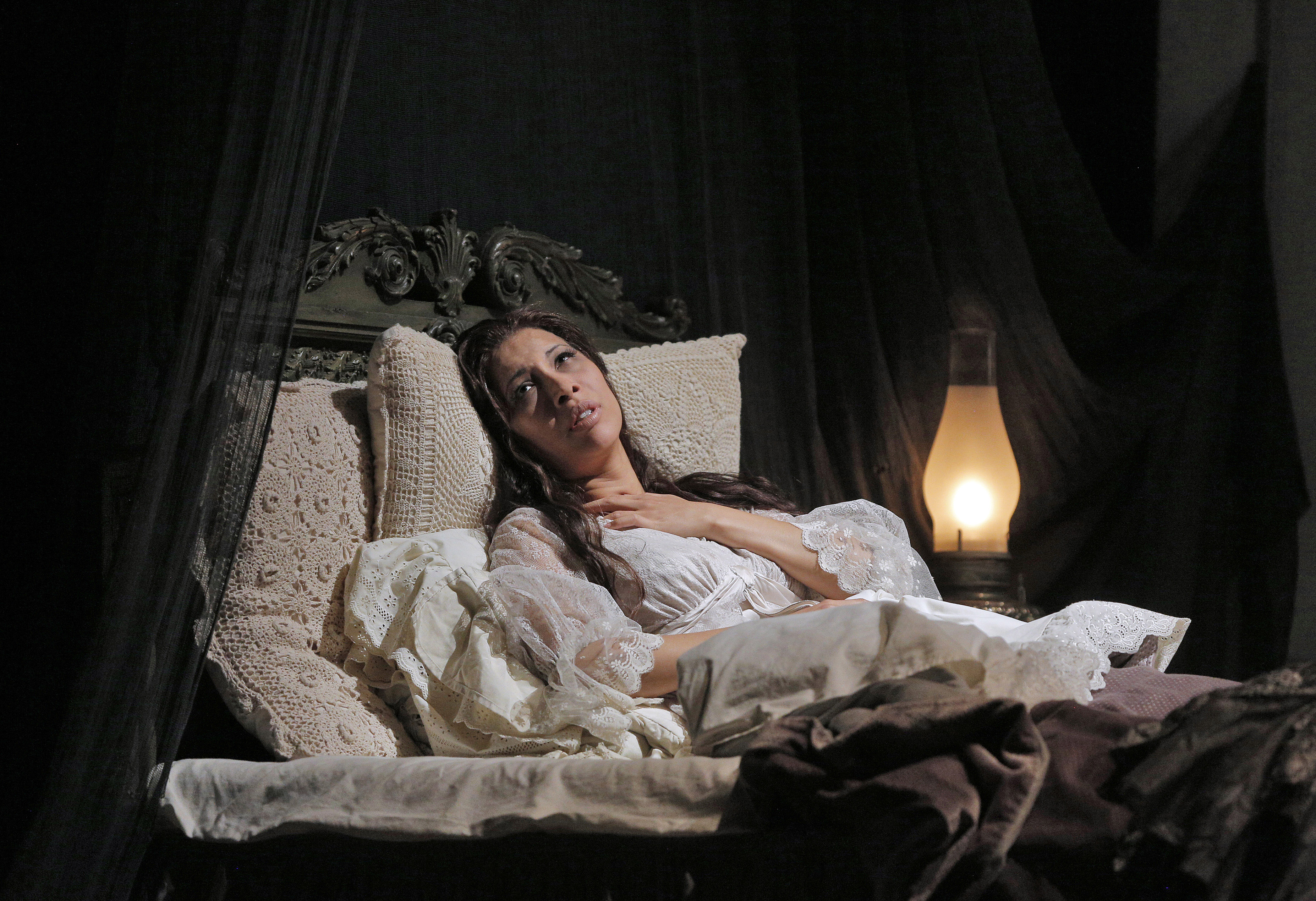
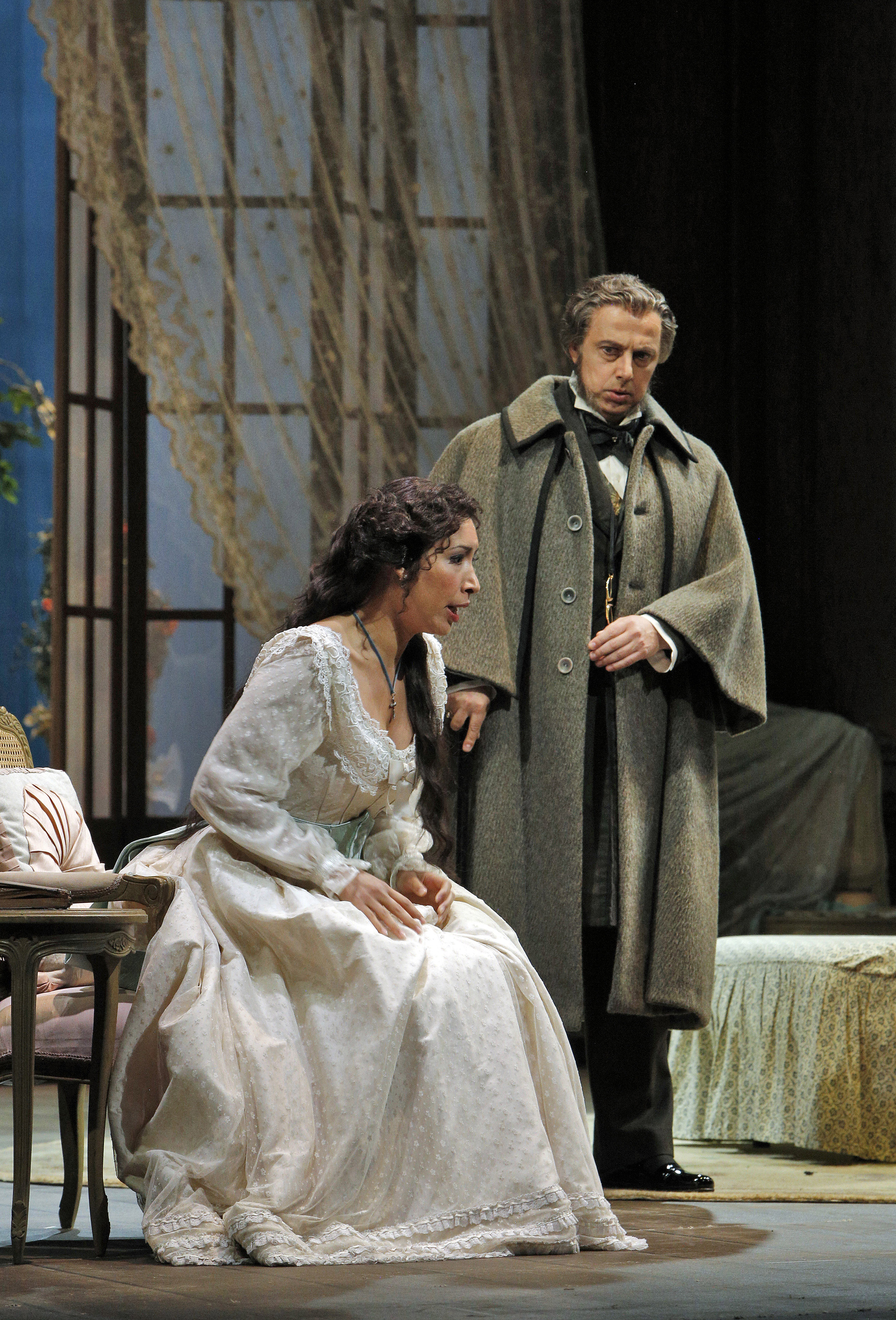
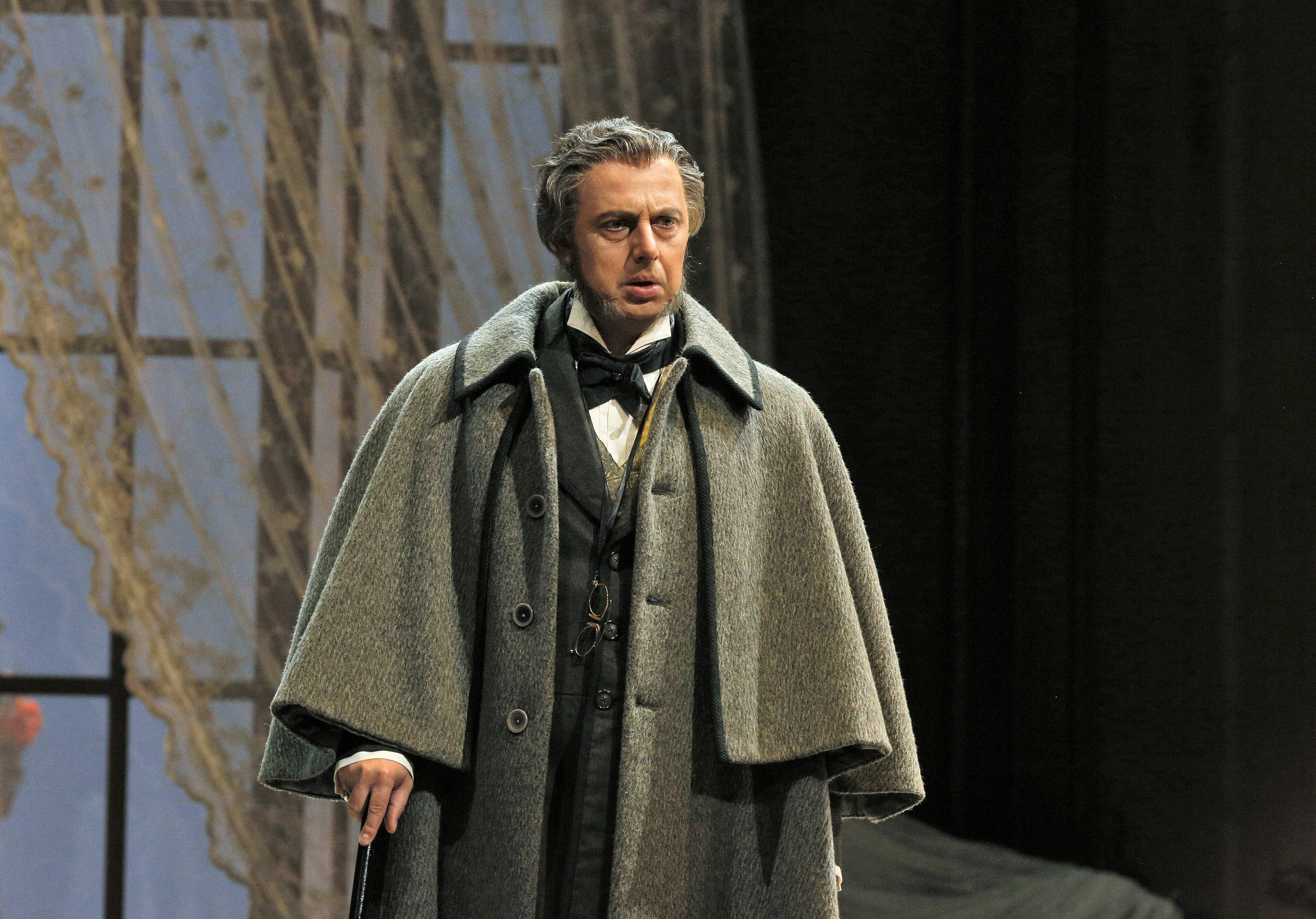
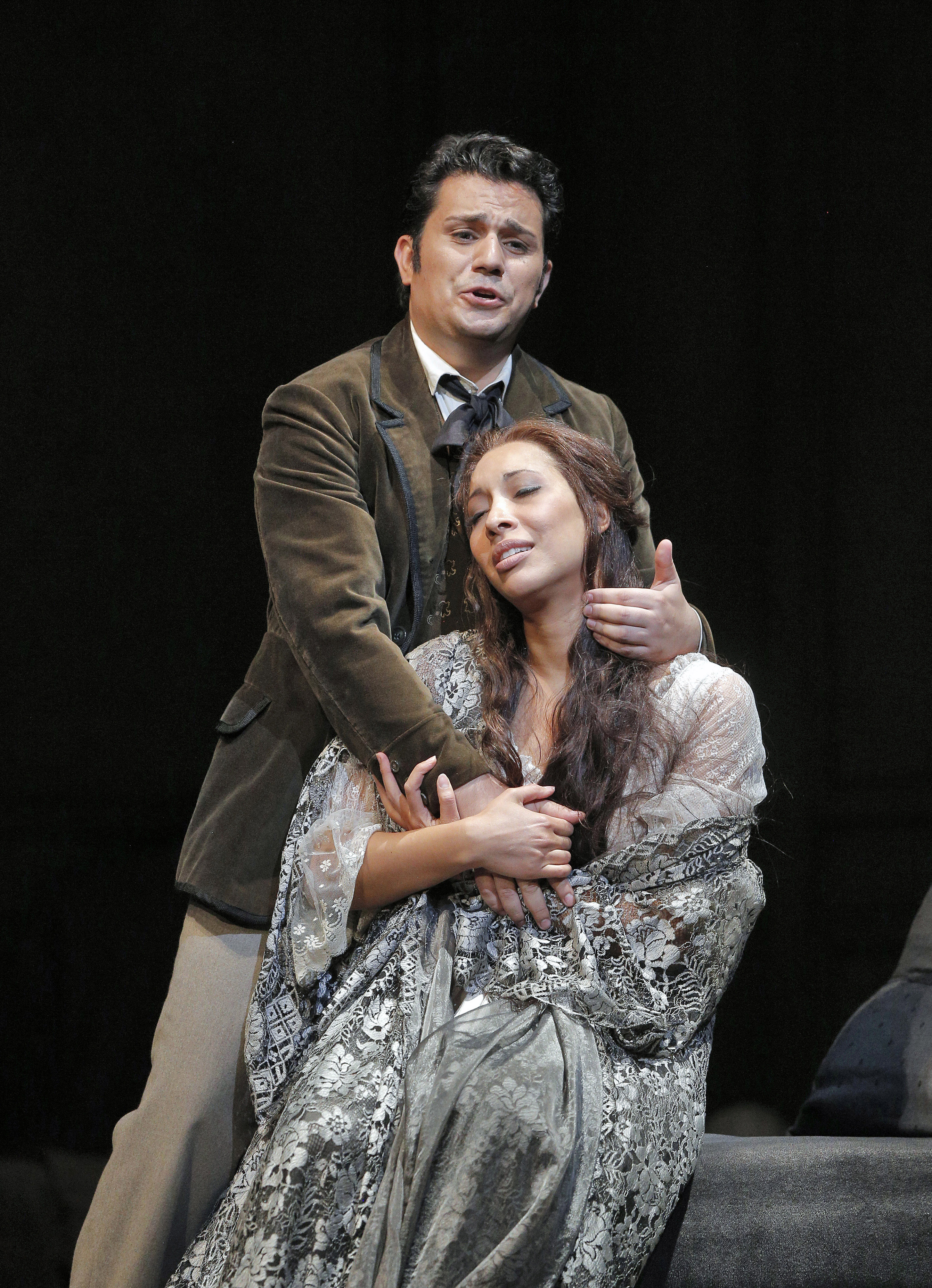
San Francisco Opera’s season just opened last night with a production of Bellini’s Norma starring Sondra Radvanovsky and Jamie Barton and directed by Kevin Newbury.

Here’s my feature essay for the opening program:

Setting Norma: Bellini and His Librettist

Many valid comparisons can be -— and have been — made between the film industry and opera as it was practiced in the golden era of bel canto in nineteenth-century Italy: the popular appeal of these media, their value as art versus “mere” entertainment, the clout of star performers, or the grueling, nervous-breakdown-inducing production schedules to get a new work “in the can.”

Another comparison that is especially intriguing is the parallel between screenwriters and librettists. To create a commercially viable film or opera that aspires to be something more than the run-of-the-mill competition, the practitioners of these respective crafts must walk a fine line. The indispensable qualification for that goal: being able to negotiate a tricky balance between artistic ambition and originality on the one hand, and generally understood conventions that define audience expectations on the other.

continue reading

Filed under: bel canto, essay, librettists, San Francisco Opera

National Youth Orchestra: Season 2

NYO

The National Youth Orchestra of the United States of America has just launched its second season. Tomorrow brings the NYO to Carnegie Hall for its official debut there, with a program of music by Bernstein, Britten (Gil Shaham soloing in the Violin Concerto). Mussorgsky, and a newly commissioned orchestral piece by Samuel Adams. David Robertson is serving as the NYO’s conductor this year.

For the new season I wrote a feature that appears in the Summer 2014 issue of Listen: Life with Classical Music:

It’s a ploy that always generates controversy: announce the death of “classical music” (however you define it), furnish your obituary with a sauce of ominous statistics and watch your site traffic explode. Another death knell hit the blogosphere and Twitterverse this January, courtesy of a Slate article titled “Requiem: Classical Music in America Is Dead,” which came illustrated with a gray-haired conductor stationed in front of a tombstone. Predictably, the piece triggered a raft ofindignant but thoughtful counterarguments in response.

continue reading

Filed under: American music, commissions, education, essay

Rigoletto and Its Curse

The Jester</i.  George Henry Hall (1825-1913)

The Jester, George Henry Hall (1825-1913)


Since today the Met begins its summer schedule of HD broadcast encores with Rigoletto here’s an essay I wrote for San Francisco Opera on Verdi’s rethinking of the elements of melodrama:

Master of the theater that he was, Verdi liked to recall a childhood incident in which real life seemed to trump the most hair-raising effects imagined for the stage.

At the local church in his native village of Roncole, young Verdi found his attention naturally drawn to the music he heard during worship services. One day, while serving as an altar boy, he became so distracted from his duties that the priest celebrating Mass kicked him. The boy went tumbling down the steps of the altar and, humiliated by this abuse, at once muttered a curse that the priest be struck down by lightning. The vindictive wish became reality eight years later when the offending cleric was instantly killed by a thunderbolt.

As an illustration of the apparent effectiveness of a curse—all the more alarming for being unforeseen—this episode might have found itself right at home in Verdi’s operatic universe. The device of the curse (along with its corollary, revenge) is, after all, as commonplace in nineteenth-century opera as the elaborate car chases meant to set the pulse pumping in blockbuster action films.

Curses in one form or another figure prominently throughout Verdi’s operas. Think of the early breakthrough work Nabucco (which actually dramatizes a moment of divine retribution in the form of a lightning bolt), Macbeth, with its collective imprecation against Duncan’s murderer, the gypsy curse of Il Trovatore, or Simon Boccanegra’s thrilling Council Chamber finale.

continue reading

Filed under: essay, San Francisco Opera, Verdi

A Heroine of Singular Complexity: Verdi’s Timely, and Timeless, La Traviata

Saimir Pirgu (Alfredo) and Nicole Cabell (Violetta). ©Cory Weaver/SFO

Saimir Pirgu (Alfredo) and Nicole Cabell (Violetta). ©Cory Weaver/San Francisco Opera

(San Francisco Opera’s revival of La Traviata has just opened. Following is the full version of the essay I wrote for SFO’s program book.)

On New Year’s Day of 1853 — more than two weeks before the opening of Il Trovatore — Giuseppe Verdi wrote to one of his businessmen-friends about the challenges of finding suitable libretti: “I want subjects that are new, great, beautiful, varied, daring … and daring to an extreme degree, with new forms, etc., and at the same time [that are] capable of being set to music.”

The thirty-nine-year-old composer goes on to mention his latest project, a new opera for La Fenice in Venice. Based on La Dame aux Camélias, the recent stage sensation by Alexandre Dumas the Younger, Verdi writes, “[it] will probably be called La Traviata. A subject for our own age. Another composer would perhaps not have done it because of the costumes, the period, or a thousand other foolish scruples, but I did it with great pleasure. Everyone complained when I proposed putting a hunchback on the stage. Well, I wrote Rigoletto with great pleasure. The same with Macbeth.”

Even set against his bold treatments of Victor Hugo and Shakespeare, Verdi was fully aware that he was taking an unusual risk by adapting such contemporary material for the opera stage. It was one thing to lace his operas with political themes “topical” for Risorgimento Italy, but something else altogether to address contemporary sexual mores and issues of social class not as light-hearted comedy but as full-on tragedy.

Still, for us today, it’s admittedly hard to think of La Traviata as controversial. This nineteenth work in Verdi’s oeuvre is not just a box office guarantee, but for many the very definition of opera.

La Traviata: 2014 production at San Francisco Opera; ©Cory Weaver/SFO

La Traviata: 2014 production at San Francisco Opera; ©Cory Weaver/SFO

Over the past five years La Traviata has securely held its position as the opera most frequently performed around the world: Violetta even surpasses her fellow tubercular Parisian, La Bohème’s Mimì, as far as this measurement of popularity goes. Popular culture is replete with variations on both stories: for the (once) hip Bohemians of Rent there are the hallucinogenic colors and all-star remake of “Lady Marmalade” of Baz Luhrmann’s Moulin Rouge!

La Traviata was the opera chosen to launch the past season at the Teatro alla Scala in Milan, marking Verdi’s bicentennial year. Any controversy that is generated comes from interpretive decisions: Dmitri Tcherniakov’s new production at La Scala, rather tamely set in the present, was theatrically booed by the loggionisti.

(Without doubt this was a reaction more vociferously negative than the fabled “fiasco” of the world premiere on March 6, 1853, which really came down to a mostly tepid response. Verdi himself stoked the legend of a disastrous opening-night reception, and the next staging a year later, also in Venice and with a slightly altered score, became an indisputable success.)
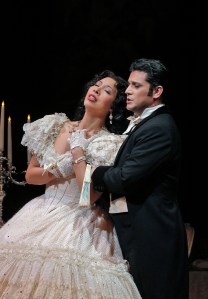
Nicole Cabell (Violetta) and Saimir Pirgu (Alfredo). ©Cory Weaver/SFO

Nicole Cabell (Violetta) and Saimir Pirgu (Alfredo). ©Cory Weaver/SFO

The irony of this is rich, because with La Traviata Verdi intended for the first time to have an opera staged with contemporary dress, though in the event he was compelled to accede to the Venetian censor’s demand to shift the period back to “circa 1700” as a comfortably safe temporal buffer. (The censorship situation there, it should be noted, was considerably more liberal than that found in other leading Italian theaters; it was for the same house in Venice that Verdi had written Rigoletto two years before.)

In later revivals Verdi acquiesced to this historical distancing. As a consequence, by the time operagoers finally encountered stagings of Verdi’s original vision of a work that would actually be set in the era in which it was composed, La Traviata had already become a “period piece.”

One of the chief arguments against directorial updatings — that they betray the composer’s original “intentions” — would have to take into account this sort of compromise constantly imposed on Verdi in order to get the subjects he chose to set to music produced. (Even the title — usually translated “The Fallen Woman,” though more literally it means “The Woman Who Went Astray” — documents a compromise for the title Verdi originally wanted: Amore e Morte.)

But the issue of Traviata’s temporal setting represents the mere surface. The great Verdi expert Julian Budden rightly points out that the lofty language indulged in by Verdi’s ever-compliant, ever-bullied librettist for the project, Francesco Maria Piave (recently responsible for adapting a Victor Hugo to the libretto of Rigoletto) at times ventures far from Dumas, giving an overall impression that is old-fashioned and “strictly operatic.” As a result, “even if [Verdi] had had his way in 1853 the modern setting would have seemed purely metaphorical.”

Instead, the bold modernity of La Traviata — the sense that this is “a subject for our own age” — has to do with the challenges Verdi set himself to grapple with a new kind of psychological realism: a realism of intimate, internal emotions as opposed to the grand passions that burn in Traviata’s swashbuckling immediate predecessor, Il Trovatore.

At one point Verdi was in fact working on both operas concurrently, and the most identifiably Trovatore-like moments in the score of Traviata are precisely those in which Verdi adheres most obviously to the conventional forms of the cabaletta (the “flashy,” usually faster-paced final section of a lengthy aria or duet).

Traviata‘s psychological realism was prompted by the subject matter of high-class prostitution and intimate relationships projected against the screen of modern urban life, with its ugly realities and fears, in particular those of poverty, alienation, and disease. In La Traviata Verdi turns to the raw facts of everyday life as experienced by people we can recognize (however costumed or wigged).
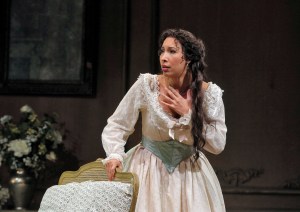
Nicole Cabell (Violetta). ©Cory Weaver/SFO

Nicole Cabell (Violetta). ©Cory Weaver/SFO

If we consider the realm of visual arts, the revolution represented by Édouard Manet in this regard still lies ahead: in 1863 he caused consternation by representing prostitution in Le Déjeuner sur l’herbe, which he followed later that year with the even more-controversial Olympia, updating the idealized and mythological image of Venus into a present-day courtesan.

Not until a pair of works that premiered in 1816 (both produced in Naples) — already within Verdi’s lifetime—did Italian opera even begin to represent death onstage for the first time: the long-lived Michele Carafa’s Gabriella di Vergy and Otello (when permitted by the censors) by his contemporary Gioachino Rossini.

And the terrifying details of death by tuberculosis had no operatic precedent. (The ill-fated Antonia from Offenbach’s The Tales of Hoffmann and both Leoncavallo’s and Puccini’s takes on La Bohème were still decades in the future.) “Poetic” dementia of the Lucia-di-Lammermoor brand is a far cry from the pathology of Violetta’s deathbed scene.

Our very first glimpse of the heroine onstage, in fact, specifies that she is consulting with Doctor Grenvil in the middle of her party. For a more-pertinent perspective on the contemporary and moral relevance of the situation depicted by Dumas and Verdi — in contrast to the tropes of Romantic individualism already established by Victor Hugo, even if his plays defied the censors — it might be useful to think of the original impact of plays like The Normal Heart and Angels in America in daring to channel the emotions caused by the AIDS crisis for the stage.

In The Literary Lorgnette, her study of the links between opera and literature in nineteenth-century Russia, Julie A. Buckler explores La Traviata’s legacy to the East, from the time it was first presented during the week of coronation festivities for Tsar Alexander II in 1856.

The opera, observes Buckler, “occupied a problematic social and aesthetic middle ground for Russian critics, depicting the demimonde [the term Dumas himself coined for the openly “secret life” of high-class sex workers] with an unnerving blend of Romantic and Realist convention.”

A new production by a Russian troupe in 1868 prompted an indignant review from the composer and critic Alexander Serov. Buckler quotes his objections to the “hospital-like” effect of the deathbed scene in particular. Serov fretted that in the future operas will be written in which “we will be taken, probably, into a clinic and made to be witnesses of amputations or the dissection of corpses!”

Nicole Cabell (Violetta). ©Cory Weaver/SFO

Nicole Cabell (Violetta). ©Cory Weaver/SFO

This fear of the opera’s corporeality and representation of disease, as Buckler points out, is inevitably linked with anxiety about its representation of sexuality. In his first private encounter with Violetta, Alfredo warns that her lifestyle is killing her, that she needs to take better care of her health — and, surely enough, she begins to convalesce during their idyll in the country, far from the sensual stimulation of Paris. Violetta’s situation fuses the three major themes of sex, sickness, and money.

Susan Sontag handily characterizes this fusion in her influential Illness as Metaphor, emphasizing the connotations shared by frivolous spending (with its implications of sexual promiscuity) and “consumption,” the word commonly used for tuberculosis: “Early capitalism assumes the necessity of regulated spending, saving, accounting, discipline—an economy that depends on the rational limitation of desire. TB is described in images that sum up the negative behavior of nineteenth-century homo economicus: consumption; wasting; squandering of vitality.”

Much has been made of the immediate enthusiasm with which Verdi reacted to seeing Dumas’ play while he was staying in Paris in 1852, soon after it opened. Despite the pressures of getting Trovatore produced, Verdi simultaneously completed his score for Traviata at record speed. Of course it is an inherently dangerous prospect to attempt to tease out connections between an artist’s personal life and an autonomous work of art.

Alexandre Dumas, fils

Alexandre Dumas, fils

Budden belabors that point by ridiculing the commonplace assumption that Verdi responded so strongly to Violetta’s story because, by this time, he was cohabiting with Giuseppina Strepponi, a former singer (she created the role of Abigaille in Nabucco) regarded by the provincials in Busseto, where he lived, as a woman of “loose virtue” on account of her illegitimate children from previous affairs.

Yet Verdi hardly need have fictionalized Giuseppina as Violetta to be attracted to the themes involved in La Dame aux Camélia — and to the larger archetype of real or perceived “fallen women” he created in six operas between 1849 and 1853, as examined by the late Joseph Kerman in his essay “Verdi and the Undoing of Women.” These women, who “are condemned for their sexuality” and as a result “suffer or die,” “may have allowed the composer a way to reflect on the social and private implications of his affair.”

Writes Kerman: “Of course Verdi would never have dreamt of equating Strepponi with Violetta. The point is that Violetta allowed him to explore feelings of love, guilt, and suffering that he learned from his experience as Strepponi’s lover. Verdi explored similar feelings in other operas around the same time,” though Kerman adds that “the fallen woman syndrome retreats” from his work after Traviata as new concerns come to the foreground.

Nicole Cabell (Violetta) and Vladimir Stoyanov (Germont). ©Cory Weaver/SFO

Nicole Cabell (Violetta) and Vladimir Stoyanov (Germont). ©Cory Weaver/SFO

The adultery represented in Stiffelio, the opera he wrote just before the experimental breakthrough of Rigoletto, in some ways can even be seen as a trial run for Traviata with its near-contemporary (early nineteenth-century) setting and focus on conflicting bourgeois values.

The source material for La Traviata — the play by Dumas, in turn adapted from his very first literary success, a novel published in 1848 — itself stands in a complicated relationship to the “raw data” of the author’s experience, even if some degree of both the novel’s and the play’s popularity involved the titillating glimpses they afforded “behind the scenes” into the illicit liaisons of well-to-do Parisian society.

Dumas’s novel, never out of print and recently published in a delightfully fresh new translation by Liesl Schillinger, includes nitty-gritty details about money and the day-to-day life of a high-class prostitute.

Naming his heroine Marguerite Gauthier, Dumas famously drew on his real-life affair with the already legendary courtesan Marie Duplessis but has long been castigated by feminists — as has La Traviata, to be sure — for co-opting a woman’s experience, distorting Marie Duplessis’s own autonomy through the filter of male desire and creating a hybrid “Madonna–whore” to fulfill the full spectrum of that desire. (Ironically, Dumas has been credited with coining the word “feminist” in a later pamphlet from 1872, L’Homme-Femme.)

In her recent biography of Duplessis, The Girl Who Loved Camellias, Julie Kavanagh traces the differences between the cultural icon of literature, stage, and screen and the real person who fled an abusive father and her native Normandy, arriving in Paris at the age of thirteen and transforming herself from an impoverished waif into an independent and sophisticated woman “determined to profit from Parisian culture and sample the same hedonistic pleasures available to men.”

But the treatment of Duplessis by Dumas was in its own way multifaceted, remarks Kavanagh. The novel was “part social document, part melodrama, both ahead of its time and rigidly conventional,” while the play remained an object of admiration by no less than Henry James. She quotes the latter’s verdict: “[Dumas] could see the end of one era and the beginning of another and join hands luxuriously with each.”

And what about Verdi’s treatment of the character originally inspired by Duplessis? Kavanagh finds that both Dumas and Verdi “softened her, capitulating to the romantic ideal that sought to exonerate and desexualize the fallen woman.” In Verdi’s opera, the “sordid” details of Violetta’s profession are essentially erased, her disease filling its place. She is in fact “etherealized”: “Un dì, felice, eterea” (“One day you appeared before me, happy, ethereal”) sings Alfredo in his early confession of love.

Indeed, the very first music Verdi gives us, in the Prelude — a musical portrait of Violetta — is a kind of sonic dematerialization. Divided violins suggest a sickly halo for this suffering saint. The faint similarity to Wagner’s “spiritual” string sound in the Prelude to Lohengrin (premiered in 1850, though not produced in Italy until 1871) only underscores the divergent aesthetics: increasingly, Wagner would turn to legend and myth as the vehicle for psychological truth, whereas here, for Verdi, the life we find around us serves that purpose.

Nicole Cabell (Violetta). ©Cory Weaver/SFO

Nicole Cabell (Violetta). ©Cory Weaver/SFO

The Prelude as a whole captures the heroine’s ambiguity: a woman who has sacrificed for love but who has also been defined by her devotion to pleasure. Despite having to shift the period of the action, Verdi incorporates an unmistakable sense of place — of the modern city par excellence, Paris, an epicenter of pleasure — through the endlessly dancing gestures of his music.

Waltz time is the identifiable signature of La Traviata, essential to its unique tinta; later, in the third-act prelude, the “halo” music is supplemented by a haunting melody breathing the melodic spirit of Chopin.

Why has La Traviata remained so enduringly contemporary for all its Romantic sublimation of the characters’ sexuality? If the plot shows Violetta being victimized, “redeemed” by her sacrifice, it is ultimately the music Verdi imagined that mediates our experience of these events. As Kerman eloquently notes: “Music traces the response of the characters to the action — and operas, like plays, are not essentially about the vicissitudes of women (or men); operas are about their responses to those vicissitudes.”

Take, above all, the remarkable duet between Violetta and Giorgio Germont that is the hinge of the opera—a duet far more involved in its musical design and emotional range than the two we get in the outer acts for the pair of lovers. We might be chagrined by Violetta’s willingness to accede to the senior Germont’s demands, but the music lays bare the psychological intensity both characters experience at each stage of the argument.

Vladimir Stoyanov (Germont). ©Cory Weaver

Vladimir Stoyanov (Germont). ©Cory Weaver

The achievement is comparable in its way to the pivotal duet between Wotan and Fricka at the heart of Wagner’s Ring, though Germont emerges as more psychologically complex. “Germont is not the monster of patriarchal authority that he is in the play,” Kerman writes. “Music recasts him as a fellow human being who moves her by his own unhappiness.”

Overall, Verdi still found it necessary at this point in his career to balance the expectations represented by the conventional formalities of Italian opera with the unique musical needs of a particular dramatic situation.

That explains how La Traviata can seem to look ahead, particularly in its novelty of material and psychological acumen, while adhering to the mold of the Italian operatic tradition Verdi had inherited — though beautifully pared down and simplified to their essence for this admirably economical score.
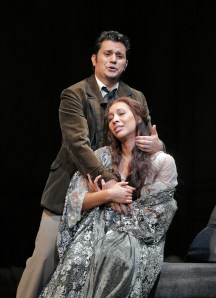
Saimir Pirgu (Alfredo) and Nicole Cabell (Violetta). ©Cory Weaver/SFO

Saimir Pirgu (Alfredo) and Nicole Cabell (Violetta). ©Cory Weaver/SFO

In their recent A History of Opera, Carolyn Abbate and Roger Parker draw attention to this paradox, noting that “this outward conformity” to musical tradition disguises two key ways in which the opera “breaks new ground.” One is the series of musical cues — above all the waltz, with its implications of “social velocity and uncertainty” — that provide local color and root the drama in the modern urban world, whatever the visuals may have signaled.

More importantly, for Abbate and Parker, is the expansion from “exquisite solo expression” to the confrontation of the great duet in Act Two. The story, they write, “confronts some of the most vexed issues surrounding sexuality, not least whether women had the right to choose their own destinies. These were matters that preoccupied people at the time, but had never before been raised so overtly on the operatic stage.”

La Traviata, then, reminds us of the potential for opera to remain relevant, to innovate while staying true to the universal. And the depth and dimension of Verdi’s portrayal of Violetta, who stands apart in the composer’s canon as a heroine of singular complexity, will continue to pose an inexhaustible challenge to singers — and to fascinate audiences as long as opera is performed.

(c) 2014 Thomas May — All rights reserved.

Filed under: essay, San Francisco Opera, Verdi

The Golden City and Its Opera

photo by  Mike Hofmann

photo by Mike Hofmann

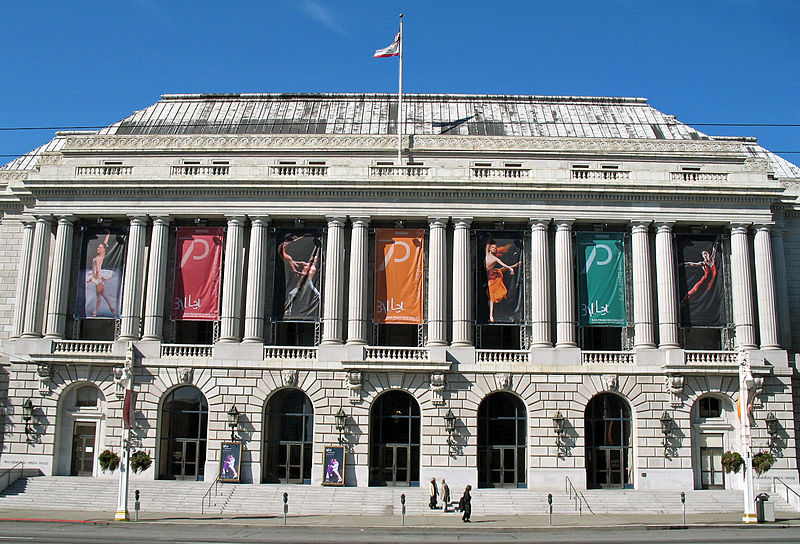
My cover story on San Francisco Opera and how it reflects the city’s love affair with the art is now online in the Spring issue of Opera America magazine.

On October 15, 1932, while the country was sinking deeper and deeper into the quicksand of the Great Depression, San Franciscans took time out to ignore the prevailing gloom and celebrate the official opening of the long-coveted home for their new opera company, the $5.5 million War Memorial Opera House. The Naples-born conductor and cultural impresario Gaetano Merola, who had founded San Francisco Opera and inaugurated its first season nine years previously with La bohème, turned once again to Puccini for the occasion and led a performance of Tosca. Addressing the packed audience during intermission, Wallace M. Alexander, the company’s new president, proudly announced: “Ladies and gentlemen, this is your opera house, your own rich heritage.”

[Reprinted by permission of Opera America, the quarterly magazine of the national service organization for opera.]

continue reading

Filed under: American opera, essay, San Francisco Opera

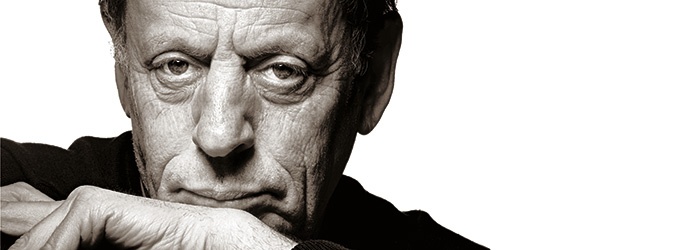
Minimalist Jukebox in LA: Philip Glass

Philip Glass

Philip Glass

The Los Angeles Philharmonic is now presenting its 2014 edition of the Minimalist Jukebox Festival, curated by Creative Chair John Adams. I’m especially excited about the offering for Thursday, 17 April: the Rome section from the CIVIL warS, a Robert Wilson-Philip Glass collaboration. Here’s the essay I wrote for the LA Phil’s program:

Is it too far-fetched to compare Einstein on the Beach’s seismic effect with that of The Rite of Spring? At least in terms of the prospects for contemporary opera in America — in a moribund condition at the time — Einstein’s U.S. premiere in 1976 was a game-changer. And in the context of Minimalism itself, this groundbreaking collaboration between Philip Glass and Robert Wilson opened up a new world of possibilities for a composer who, as Glass has often repeated, up to that point had never dreamed of writing opera.

By the time of his second collaboration with Wilson on the CIVIL warS project, Glass had taken up the “conventional” rhetoric of opera — which is to say operatically trained voices, chorus, and full orchestra — and translated this into his unique style and idiom.

Glass himself considers Einstein to be both his first opera and an end point — the culmination of a long period of experimentation in abstract, instrumental forms with what is now generally regarded as “hard-core” Minimalist processes. This inaugural collaboration with Wilson was followed by Satyagraha, his first work written for an actual opera company (Netherlands Opera). Glass then undertook Akhnaten, completing his trilogy of “portrait operas” based on iconic figures in the period when he was working on the CIVIL warS.

The work we hear on tonight’s program therefore represents another important early step in cultivating a medium on which Glass has concentrated, with incredible productivity, up until the present. It is in opera that “Glass found a medium in which he could put his newly developed language to expressive use,” as the critic Allan Kozinn observed as far back as 1986. His turn “from abstract composition to representational music” has not kept Glass from continuing to write such abstract instrumental works as symphonies, concertos, and quartets, but the collaboration with Wilson in particular left a decisive mark on Glass’s conception of Minimalist language.

This language itself, it should be noted, was in its Glassian dialect initially rooted in “representational” projects from the composer’s early Paris years, when he made pivotal encounters with Indian music and the theater of Samuel Beckett. Through these projects Glass became fascinated by theatrical and musical sensibilities that posited an alternative to Western conventions of narrative linear time and space. Glass apparently first happened upon the work of Robert Wilson via the 12-hour-long The Life and Times of Joseph Stalin, which the Brooklyn Academy of Music presented in 1973.

That encounter had the effect of an epiphany. “I understood then, as I feel I have ever since, [Wilson’s] sense of theatrical time, space, and movement,” Glass has remarked. The composer once characterized the sense of time in his own music as existing outside “colloquial time,” with the result that audiences tend to perceive this music “as extended time, or loss of time, or no sense of time whatsoever.”

In Einstein Glass had his first opportunity to match his musical constructions to the vision of the maverick director from Texas. Wilson abandoned the business career intended by his father to instead take up a life in the performing arts, evolving his enormously influential brand of theater in New York City’s avant-garde downtown scene of the 1960s.

Through his idiosyncratic collages of surreal, dreamlike elements, stylized stage movement and gesture, and associative rather than plot-driven content, Wilson created a modernist counterpart to the Wagnerian Gesamtkunstwerk — only this is a “total work of art” that, unlike Wagner’s, reflects the intersecting visions of its collaborators rather than the vision of a single artist.

And, as Glass has emphasized over the years, its meaning is outside the control of the creators. Figuring out the relation of his own music to the words and images of the entire theatrical experience (or film, in the case of his collaborations with the director Godfrey Reggio) thus requires the active participation of the audience to be completed. “Early on in my work in the theater, I was encouraged to leave what I call a ‘space’ between the image and the music. In fact, it is precisely that space which is required so that members of the audience have the necessary perspective or distance to create their own individual meanings.”

Even in a cantata-like concert performance lacking the hallucinatory visuals that originally accompanied the full staged version, the Rome section (a Prologue and three scenes), affords the audience fascinating examples of this “intertextual” space, which might be contrasted to a more straightforwardly expressive “translation” of text and feelings into musical content.

The libretto prepared by Wilson and his collaborator Maita di Niscemi, for example, wasn’t intended merely to be “set” to music. Wilson had already constructed a multilayered verbal and visual text lacking only the musical layer. Glass’s contribution thus represented the final creative stage. He carpentered his score to align precisely with the timings from a pre-recorded read-through of the text as a stage play (though with the words delivered at an abnormally but operatically “true” slow pace).

All of this was meanwhile intended as the part of a still larger whole titled the CIVIL warS: a tree is best measured when it is down, to be performed in Los Angeles to celebrate the international spirit of the Olympics held here in 1984. Wilson began with a characteristically elliptical take on the American Civil War — in particular, Matthew Brady’s haunting contemporary photographs — and imagined a world historical juxtaposition of images and associations from antiquity to the Space Age. These riff on themes of war and peace, nation and family, civil and internalized struggle and enlightenment.

The peculiar typography of the title draws attention to a “struggle” between upper and lowercase letters as well as to the plurality of this phenomenon. “Civil Wars” also happens to be the customary translation of one of Julius Caesar’s writings. The subtitle quotes from Carl Sandburg’s canonical biography of Abraham Lincoln, for whom Wilson devised an unforgettable visual of a figure who is eventuality “struck down” (a singer suspended in a 16-foot-high harness, draped with a long black coat and sporting a stovepipe hat).

Never lacking for ambition, Wilson intended to stage a day-long ceremonial opera featuring composers, writers, and performers from around the world. Glass was one of several composers invited to contribute music for a different section of the vast five-act opus. The sections which were completed took their names from the locations of their separate premieres: hence the Rome section, envisioned as the final, fifth act of the CIVIL warS, was independently commissioned and staged (in March 1984) by the Opera di Roma. Glass also wrote the music for the Cologne section (scenes from Acts 1, 3, and 4), while David Byrne created connective pieces to link the scenes, known as The Knee Plays or the Minneapolis section.

At the last minute, the LA Olympic Arts Festival pulled the plug and canceled its plans to fund the complete staging. One of the commentators in Katharina Otto-Bernstein’s 2006 documentary Absolute Wilson observes that the director has since regarded this decision as the single greatest disappointment of his career. The Rome section, like the others, was thus left as a torso that has been occasionally performed on its own.

There is no story to synopsize. Wilson and di Nascemi’s libretto is largely a collage, an assemblage of texts from letters of the American Civil War period, ancient tragedies by Seneca for the Roman connection (in the original Latin and translated into Italian), and stream-of-consciousness word poems by Wilson himself, recited by a male and a female narrator. (On the Nonesuch recording, these parts are taken by Wilson and Laurie Anderson.)

It is for you, gentle listener, to generate what you will from the text’s recombination of historical, iconic, symbolic, and seemingly “automatic” elements. Figures we expect to see from the American Civil War — Abraham and Mary Lincoln and Robert F. Lee (who reappear in Glass’s more recent 2007 work for San Francisco Opera, Appomattox) share this dreamscape with the (French-born) leader of the Italian Risorgimento, Giuseppe Garibaldi, Hercules and Alcmene (the hero’s mother), and mythic Hopi characters, the “Earth Mother” and “Snow Owl.”

Glass’s very first notes, an ominously descending bass, happen to echo a similar gesture at the beginning of Einstein. But the original commission by Rome Opera — in the land where opera was born — led Glass to reflect on the power of the human voice itself and its central role in this medium. Whereas Einstein had featured relatively little singing, the Rome score is cast for huge, dramatically projected voices, with especially demanding high parts for the soprano and tenor soloists.

At the same time, Glass resorts to a Wagnerian sweep of orchestral sonorousness over which these voices float, as well as recurrent motivic ideas such as the brief trumpet call pervading the Prologue. Oscillation between major and minor provides the fulcrum for Glass’s idiosyncratic slant on tonality. The orchestral writing features primary-color effects, with fresh twists on conventional instrumental “imagery” such as military brass and drums or the floating arpeggios of bel canto accompaniment.

Indigenously American congregational hymn singing also informs some of the choral writing (Scene B), and elsewhere references to nineteenth-century Romanticism (Verdi and Tchaikovsky) color the choral and solo parts as well as the orchestral interludes. Creating a panorama of alternately turbulent and elegiac soundscapes, Glass recontextualizes familiar imagery in a way that’s reminiscent of Wilson’s process. Musically, the result is akin to the opera’s mingling of history and myth, of artifact and dream.

(c) 2014 Thomas May – All rights reserved.

Filed under: American music, directors, essay, opera, Philip Glass

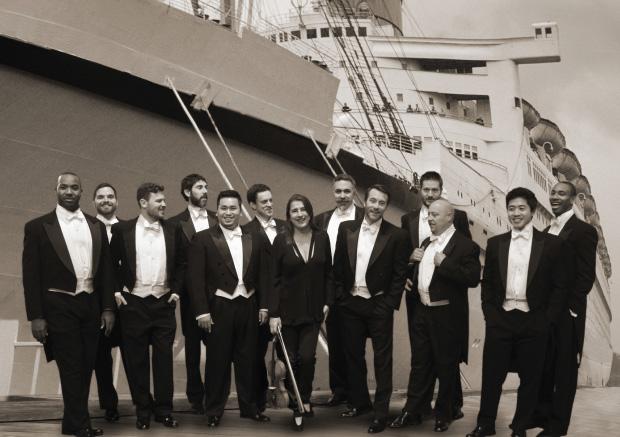
Atlantic Crossing

New Century Chamber Orchestra with Nadja Salerno-Sonnenberg

New Century Chamber Orchestra with Nadja Salerno-Sonnenberg

Here’s my new piece for Stanford Live’s remarkable performance series: this one involving the first-ever collaboration between Chanticleer and New Century Chamber Orchestra. I’ll post the entire original text here, since space limits prevented including all of it in the magazine. This special program embarks from Stanford tomorrow night.

A Provocative Entertainment: Setting Sail with Chanticleer and the New Century Chamber Orchestra

On 10 September, 1935, Kurt Weill disembarked from the SS Majestic and began exploring New York City. It had taken the ocean liner a mere six days to ferry Weill and his artistic partner Lotte Lenya – his ex-wife at the time, though the couple would remarry – across the Atlantic from Cherbourg. The towering skyline had already become a visual meme thanks to the century’s new mass medium of film: Lenya later recalled that its familiarity made it seem “really like coming home.” But what they encountered represented a new world in ways they couldn’t have anticipated.

Inside of a month, Weill found himself attending rehearsals for a pioneering work of musical theater titled Porgy and Bess, which prompted him to observe: “It’s a great country where music like that can be written – and played.” The German-born Weill may not have realized it at first, but he was already in the beginning stages of a reboot of his own identity as an artist. Instead of a European abroad, Weill would come to understand himself as an American writing for American audiences.

It’s the recurrent pattern of Old and New Worlds converging. But overlaid on this is a unique ambience deriving from the fact that it happened right in the dead center of what the poet W.H. Auden unforgettably called “a low dishonest decade.” That contact between Europeans and Americans in a period of ominous uncertainty, and the creative ferment it generated, could stand as an emblem for the programmatic concept Chanticleer and the New Century Chamber Orchestra (NCCO) have developed for their first-ever collaboration, “Atlantic Crossing.”

In place of the well-worn metaphor of a musical composition as a journey toward a predetermined destination, their idea is to draw attention to the cross-connections that happen en route. Travel itself becomes a metaphor for artistic evolution, as the thrill or nervous energy or bittersweet nostalgia involved in leaving one’s comfort zone and setting out on new ventures recharges the creative self. The categories of interchange making up the spine of “Atlantic Crossing” are the meet-ups between “high culture” and entertainment, modernity and timeless tradition, and, naturally, vocal and instrumental music making.

In practical terms, the junction of singing and playing instruments actually posed a significant challenge, since Chanticleer and the NCCO define themselves by their respective focuses on the former and the latter – a program simple-mindedly alternating between the two ensembles would be a program that ignores the entire point of collaboration.

Both Bay Area ensembles are acclaimed for their adventurous spirit, but their audiences tend not to overlap, so the prospect of joining together for the first time was intriguing when it began to percolate a few years ago. But however appealing such a partnership seemed in the abstract, “there was no existing repertoire that fit the bill for what we wanted to do to collaborate with orchestral forces,” explains Christine Bullin, Chanticleer’s president and general director.

The violinist Nadja Salerno-Sonnenberg, who also serves as music director of NCCO, adds that there’s a relatively restricted repertoire as it is for string orchestra on the one hand and for male chorus on the other. “So when you think about collaboration, you have to go the arrangement route. But we didn’t just want to come up with pieces that needed to be arranged. We wanted to develop a thematic evening as well.” According to Bullin, the creative challenge began to take shape as a search for an integrative theme that could “incorporate some of the things that each group already does and then allow for things we could do together.”

Why the theme of transatlantic crossings between Europe and America – and why in the 1930s? “The period between the two world wars is so fertile and so full of creativity,” says Bullin. While the worsening political situation in Nazi Germany forced Weill and many of the other artists featured on the program to flee Europe, these voyages were happening in both directions. American artists like George Gershwin encountered a heady atmosphere of experimentalism in Paris that fueled new ambitions, even as their European counterparts enthused over the energy and directness they found in the latest American music. The Atlantic crossing becomes fraught with ambivalence: it’s a vital means of escape but also offers the promise of a new beginning. Transatlantic journeys trace the age-old story of migration to more-favorable circumstances, but they at the same time they are the paradigm of a pilgrimage of discovery.

Naturally the focus on destinations has only been intensified by our modern patterns of travel: get there fast, by the most direct route, no frills along the way. In the 1930s the revolution in air travel already on the horizon was foreshadowed by the brief heyday of Germany’s Zeppelin company and its promotion of the dirigible alternative.

But the state-of-the-art ocean liners like the SS Normandie and the SS Isle de France, while speeding up the trip across the Atlantic, offered those in the top classes the leisurely pleasures of stylish travel, including much in the way of musical entertainment. It’s not a coincidence that one of the most potent recurring images in the modern mythology of the doomed Titanic involves the heroic last stand of its eight-piece orchestra.

The special aura attaching to this mode of travel, combined with its historical reality as the route by means of which thousands of musicians fled Hitler’s Germany, led to the decision to anchor “Atlantic Crossing” in a literal context. In planning the program, Chanticleer and NCCO decided they wanted to encourage the audience to imagine an actual ocean liner passage: the kind of voyage during which these musicians would have encountered one another or even participated in musical events.

“If you were on this ship, what you would have heard? It might have been the European music from that time, with the best of the European artists coming to America,” says Salerno-Sonnenberg. Some of these, like Béla Bartók, never had time to adjust to their surroundings in America; others, particularly Weill and Paul Hindemith, went on to create a significant body of work in their newly adopted homeland, taking pleasure in and emphasizing its cultural context.

Weill also serves as the focal midpoint of the program, in which the two ensembles join together for the first time for an all-stops-out arrangement of his iconic Three Penny Opera number, “Mack the Knife.” Weill is a powerful symbolic choice as well, since he represents the convergence of traditional European classical training and populist, vernacular directness – a reminder of the creative synergy that got shut off by the damaging dichotomy between “serious” music and entertainment that’s arguably a relic of the postwar era. As Weill unforgettably put it, “I have never acknowledged the difference between ‘serious’ and ‘light’ music. There is only good music and bad music.”

Consisting of just eight measures – some basic chords backing its eminently whistleable tune – “Mack the Knife” is a kind of blank slate that gets written over and layered into a ten-minute fantasy in the arrangement by Clarice Assad, a frequent collaborator with NCCO. Here and on her other arrangements for “Atlantic Crossing,” Assad hints at the ongoing role played by cross-connections among musical innovators in our own time.

Salerno-Sonnenberg calls Assad “probably the greatest arranger alive today. She’s the only one I can think of who could write these kinds of arrangements. Older composers would not have had the experiences available to her generation, and her background growing up in Brazil has given her a vast scope of knowledge of musical styles; all this variety of music lives inside of her.”

The art of arrangement as practiced by the Comedian Harmonists reveals another fascinating example of stylistic fusion from the 1930s. Launched by the young actor Harry Frommermann in the face of the profoundly depressed economy of Weimar-era Berlin, the original Comedian Harmonists numbered five singers along with the pianist Erwin Bootz. In another instance of how “Atlantic crossing” goes in both directions, they modeled themselves on the Revelers, an American group of close-harmony male vocalists. (A film biopic of the Comedian Harmonists was made in 1997 by the German director Joseph Vilsmaier, while Barry Manilow has written music for Harmony, a new musical about the group.)

The Comedian Harmonists anticipated the Beatles not only in the level of international popularity they achieved, but in the “feel-good” ethos of their deceptively effortless, extraordinarily sophisticated music making. In historical retrospect, their irresistible charm only underscores the insanity of what lay around the corner.

Because three of the sextet’s members were Jewish, the recently mandated race laws in Nazi Germany forced the Comedian Harmonists to break up at the height of their popularity, after they returned from their first and only American tour in 1934 (sailing on the symbolically appropriate SS Europa). Soon the Jewish members fled back across the Atlantic, but an attempt to form an American Comedian Harmonists met with only short-term success. (The baritone Roman Cycowski ended up serving for a period as cantor at Beth Israel Temple in San Francisco and was the last surviving member of the Comedian Harmonists.)

Reviewing Chanticleer’s program of material from the German sextet’s repertoire back in 2002, Octavio Roca aptly remarked that, however improbable the Comedian Harmonists seemed as a phenomenon, “there they were, just before German culture cut its own throat and visited unspeakable horror on the world, making sounds of joy for millions.”

But the story “Atlantic Crossing” seeks to recount involves the period before the madness, when European and American artists were listening to one another from new perspectives. Bullin points out that looking back at the accomplishments of the Comedian Harmonists helped define the overall “affect” for “Atlantic Crossing,” which aims to create a “provocative entertainment” as it prompts the audience to think about these varied kinds of cross-connections. The two ensembles might even be seen as themselves a kind of metaphor. Notes Salerno-Sonnenberg: “We wanted to imagine what happens when the two groups, which begin their journey on this ship as their own entities, finally meet up and start to jam together.”

On board ships like the Normandie traveled avant-garde pioneers and savvy, well-polished entertainers. Composers such as the Hungarian Míklós Rózsa brought their formidable classical training with them and ended up in Hollywood, where their soundtracks became part of the cultural landscape for millions of Americans. The ship itself provides an imaginary zone where, according to Salerno-Sonnenberg, “the entertainment sphere could meet up with the cutting-edge or avant-garde, where side says to the other: ‘This is what we do, now let’s do it together.’”

And waiting for them at the docks was the music being brewed by Americans themselves, from Gershwin’s jazz-symphonic-operatic fusions to the “loose, festive ensemble sound” of Duke Ellington’s orchestra, as Terry Teachout describes it in his marvelous new biography. Ellington, a “restless traveler,” himself had started leading his band on tours of Europe in 1933, and he was beginning to think of a very different Atlantic crossing that he wanted to evoke in a multi-movement suite – a composition expressing “the cruel journey across the sea and the despair of the landing, and then the days of slavery…” (Ellington).

Within a few years the luxuriously appointed ocean liners would be converted into war vessels. “We all know how the story ends,” says Bullin, but the horror to come is beyond the intended scope for “Atlantic Crossing.” Instead, “we’re going to get everyone to New York. Along the way we will create an intimate and entertaining atmosphere in which we hope the public will engage. We’re all in this lounge together.”

(c) 2014 Thomas May. All rights reserved.

Filed under: essay, programming innovation, vocal music

No Joke

John Adams; photo (c) Deborah O’Grady

John Adams; photo (c) Deborah O’Grady

On the road: after being in the spotlight in Madrid for the Orquesta Nacional de España’s Carta Bianca Festival, John Adams is being celebrated this week by the Toronto Symphony with the New Creations Festival. The festival culminates on Friday with one of Adams’s most fascinating recent works, Absolute Jest. Here’s the essay I wrote for the original version of Absolute Jest on the occasion of its world premiere by the San Francisco Symphony and the Saint Lawrence String Quartet in 2012:

More than three decades have passed since the San Francisco Symphony gave its first world premiere of music by John Adams (the choral-orchestral Harmonium in 1981). The event marked the beginning of a longstanding relationship between composer and orchestra that has resulted in the commissioning of several landmark works: Adams’s breakthrough orchestral composition, Harmonielehre (a new recording of which the SFS has just been released), El Dorado, the millennial “nativity oratorio” El Niño, the opera A Flowering Tree, and My Father Knew Charles Ives.

continue reading

Filed under: American music, essay, John Adams, new music

Archive

Enter your email address to follow this blog and receive notifications of new posts by email.