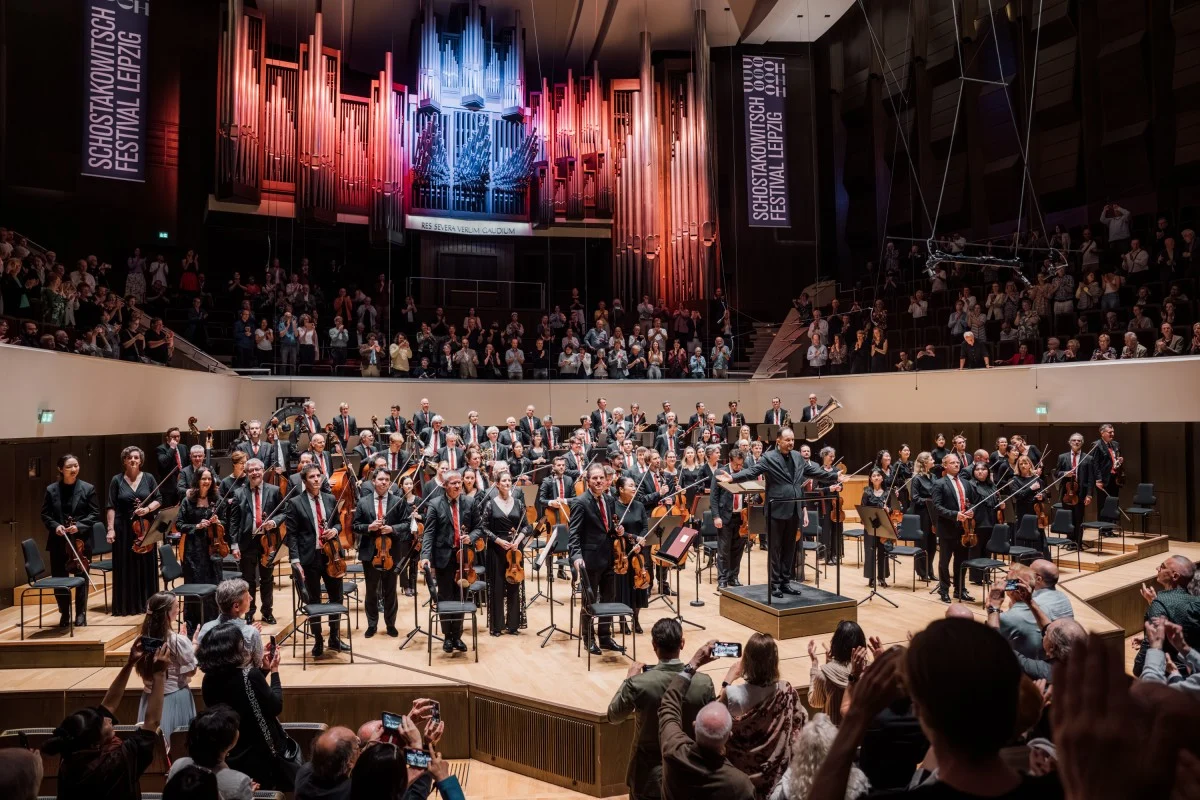
The South China Morning Post has published my story on the upcoming Hong Kong residency of the Gewandhausorchester Leipzig:
For centuries, Leipzig has been a city where music mattered. Johann Sebastian Bach spent the last 27 years of his life there as the city’s music director. Richard Wagner was born there. Felix Mendelssohn conducted there and founded Germany’s first conservatory….
In honor of International Women’s Day: a salute to the bold, distinctive music of Joan Tower. Friday night’s Emerald City Music program featured Kristin Lee and Sandbox Percussion in works by three generations of women composers, including the Seattle premiere of her recent work To Sing or Dance.
Tower says that the piece grew out of a conversation with Arvo Pärt about the origins of music: “He felt music came from the voice (or singing) and I had a different idea that it came from the drum (or dancing).” She addresses the difference by writing for solo violin and percussion quartet, tackling the challenge of “how to have these two very different instruments in the same space, living fairly comfortably together” – the violin’s lyrical “song” gradually intertwines with the percussion’s rhythmic “dance.”
Tower’s inventive timbral colors and lively rhythmic counterpoint capped a terrific evening that also included the world premiere of Vivian Fung’s violin-and-percussion-orchestra concerto Goddess//Insect and Gabriella Smith’s Five.
Above is a rehearsal glimpse of To Sing or Dance with Sandbox Percussion for the 2024 world premiere (with violinist Soovin Kim).
And here’s an insightful closer look at Tower’s landmark Concerto for Orchestra from 1991:
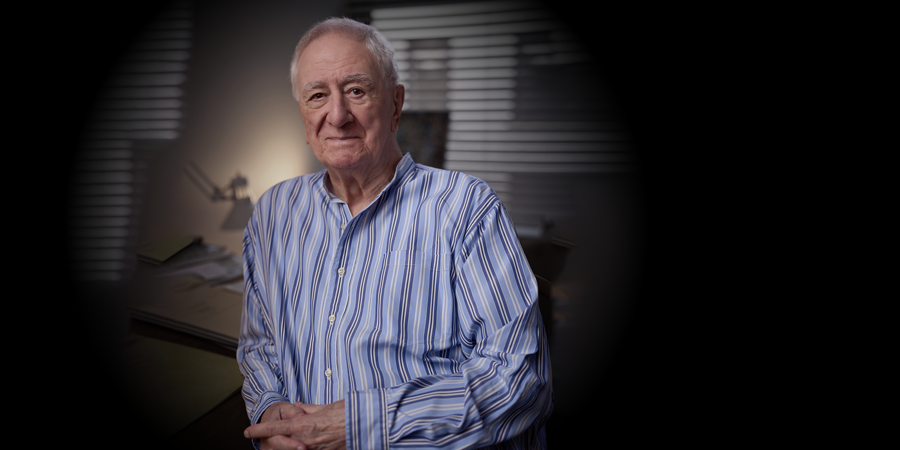
This week brought news of the death of composer Bernard Rands. He passed away in Chicago on 4 March at the age of 92, closing the career of one of the last composers directly linked to the great postwar European modernist circle around Berio, Boulez, and Dallapiccola.
Rands’s longtime publisher, Schott Music, issued the following tribute (excerpted):
“Bernard Rands, the distinguished British composer long resident in the USA, most recently in Chicago, has died there on March 4, 2026, at the age of 92 in the company of his wife Augusta Read Thomas, herself a prominent composer. He leaves behind a catalogue of nearly 100 pieces, widely performed and recorded, all published by Schott, as well as an enormous and varied list of students.
Having studied in Bangor, in the north of Wales, he went to Italy first to study with Roman Vlad and later with Luigi Dallapiccola, perhaps the foremost pedagogue of his time and a formidable post-twelve-tone composer, he soon found himself in the circles of Luciano Berio (also a disciple of Dallapiccola), Pierre Boulez and Bruno Maderna, then three of the leading lights in European modernism.
His musical style began to move more and more in the direction of what would retroactively be called postmodernism, drawing inspiration from earlier material. As composers found various ways out of the post-serial crisis… Rands remained loyal to the modernist principles of craft and rigor while softening around the edges and incorporating more lyrical tendencies.
Rands’ music later took on introspective, even melancholic tendencies, as evident in the orchestral …body and shadow… and Symphony and the much later concerto for English horn (for Robert Walters).
In the mid-1970s, he accepted a job at the University of California, San Diego… After visiting posts at Boston University, the Juilliard School and Yale University, he became the Walter Bigelow Rosen Professor of Music at Harvard University until his retirement.”
Bernard Rands died in the company of his wife, the distinguished composer Augusta Read Thomas, whose vividly colored, poetically charged music has made her one of the most widely performed American composers of her generation.
Norman Ryan, Senior Vice President of Schott Music, notes:
It is with deep sadness that we bid farewell to Bernard Rands, a great artist, humanitarian, and friend. Feted with prestigious awards and honors received during a long life in music, Bernard gifted us with music that traces a line of lineage from Debussy and Sibelius through to Berio, his unique voice characterized by arresting instrumental colors and melodic invention. His love for music and for those that created it knew no bounds. At all times, he was the consummate gentleman – elegant, dignified and erudite. It was a great privilege to be his publisher. Bernard’s spirit and boundless creativity will live on his music.
James M. Kendrick, President of Schott/EAMDC and Partner at the firm of Alter, Kendrick & Baron, states:
When I first joined European American Music in the Fall of 1977, I already knew that Bernard Rands was one of the leading British contemporary composers of his generation. I also knew that he had recently moved to the US. But this was only the first part of a long and distinguished career, as Bernard quickly cemented his position as one of the premier composers of the world, and also as one of the most influential composition teachers of his time. It was a joy and privilege to know him and Gusty, and I join the music world in mourning the death of one of its greats.
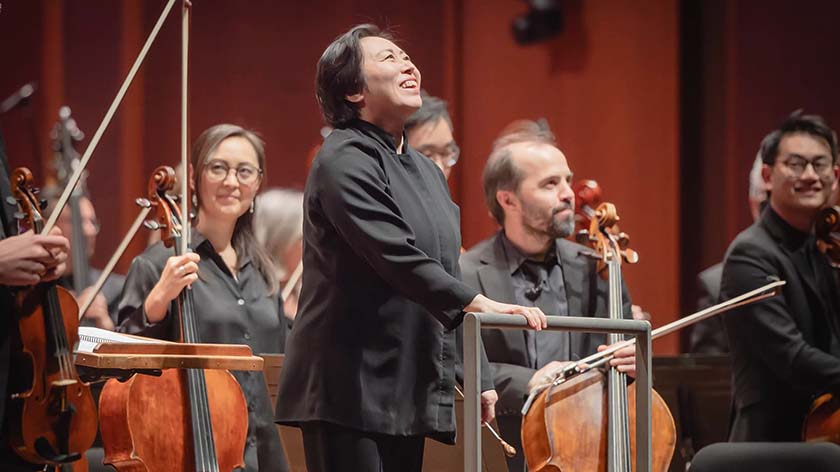
Xian Zhang with Seattle Symphony musicians; photo by Carlin Ma
Seattle Symphony has just announced its 2026–27 season, the second under music director Xian Zhang.
She describes the year as shaped by “two sources of inspiration… nature and community,” invoking Seattle as “a city embraced by mountains, water and forests.” The rhetoric frames a three-week spring festival devoted to “monumental works” inspired by landscape.
Beyond that framing, the season’s center of gravity lies in the late-Romantic and early 20th-century canon: Strauss, Tchaikovsky, Rimsky-Korsakov, Brahms, Wagner, Shostakovich and Mahler dominate the symphonic offerings, with Yuja Wang opening the season in Prokofiev’s Third Piano Concerto and appearances by Emanuel Ax, Gil Shaham, and Itzhak Perlman reinforcing a roster built on established appeal.
Zhang herself will lead twelve programs in all – including Tchaikovsky’s less frequently heard Manfred Symphony – and has cited Seattle artist Dale Chihuly as an influence on the season’s visual identity, another signal of her effort to root the orchestra’s presentation in local culture.
As for contemporary composers, the season includes co-commissions from Joe Pereira (a new concerto for timpani) and Steven Mackey – the latter now a recurring presence in the Symphony’s programming – alongside Samuel Adams, whose No Such Spring receives its Seattle premiere under Ludovic Morlot this fall, with soloist Conor Hanick. I’m especially interested to hear it in Benaroya Hall. Having studied the score around its world premiere by the San Francisco Symphony a few years ago, I know it’s a piece of real substance.
Adams’s presence extends into the Octave 9 series, where Conor Hanick joins percussionist Mari Yoshinaga and a quartet of Symphony musicians for Etudes and Devotions, featuring Adams’s Etudes for Piano and the U.S. premiere of his Devotions for String Quartet and Percussion.
The Elwha River project – a collaboration between flutist Claire Chase and composer Annea Lockwood inspired by the restoration of the Olympic Peninsula river – will be featured in April and stands out immediately to me as one of the season’s most compelling offerings. Adam Tendler’s Inheritances, built from commissions by Laurie Anderson, Missy Mazzoli, Nico Muhly, Pamela Z, Sarah Kirkland Snider and Devonté Hynes, also looks promising, and a centenary homage to György Kurtág is most welcome. (Why I’ve listed these in reverse chronological order is anyone’s guess.)
The series ranges further, from Pamela Z’s solo work for voice and electronics to a closing appearance by the Brandee Younger Trio (harp, bass, and drums).
The “community” emphasis also extends beyond the stage. The Symphony is set to reopen Benaroya Hall’s renovated public spaces at the start of the season, marking the completion of its Amplify capital campaign. The upgrades – new gathering areas, expanded concessions, and reconfigured lobby spaces — underscore an effort to position the hall as more than a performance venue at the outset of Zhang’s second year.
Music Director Xian Zhang and the Symphonic Series
Xian and James Ehnes (September 24, 26 & 27), featuring Bruch’s Violin Concerto No. 1 and Berlioz’s Symphonie fantastique.
Tchaikovsky’s First Piano Concerto and Zarathustra (November 12, 14 & 15), pairing Tchaikovsky’s Piano Concerto No. 1 with Strauss’ Also sprach Zarathustra.
Mozart’s Requiem with Xian (November 19, 21 & 22), presenting a Seattle Symphony co-commission and World Premiere of Joe Pereira’s Timpani Concerto, followed by Mozart’s Requiem with the Seattle Symphony Chorale.
Xian and Emanuel Ax (January 28 & 30), featuring Haydn symphonies and Mozart favorites, including his Piano Concerto No. 25.
Tchaikovsky’s Manfred with Xian (February 4, 6 & 7), with saxophonist Steven Banks performing a work by Ibert and his own composition, Come As You Are.
Xian Conducts the Sounds of Spain (February 11 & 13), spotlighting Lalo, Ginastera and Rimsky-Korsakov while featuring Concertmaster Noah Geller.
Xian Conducts Scheherazade (March 11 & 13), featuring Smetana’s The Moldau, Steven Mackey’s Concerto for Orchestra(a Seattle Symphony Co-commission and World Premiere) and Rimsky-Korsakov’s Scheherazade.
Grieg’s Peer Gynt with Xian (April 8 & 10), with music by Vaughan Williams, Webern, Scriabin and Grieg, and featuring Associate Concertmaster Helen Kim.
Beethoven’s Pastoral and Gil Shaham (April 15, 17 & 18), pairing Beethoven’s Symphony No. 6 with Dvořák’s Violin Concerto.
Pines & Fountains of Rome with Xian (April 22, 24 & 25), featuring Gabriela Montero’s Piano Concerto No. 1, “Latin” and Respighi’s Roman tone poems.
Xian Conducts Brahms (June 17, 18 & 20), encompassing Brahms’ Symphony No. 3 and his Violin Concerto.
Wagner’s The Ring Without Words (June 24 & 26), closing the season with Liszt’s Piano Concerto No. 2 and Wagner’s purely symphonic Ring cycle.
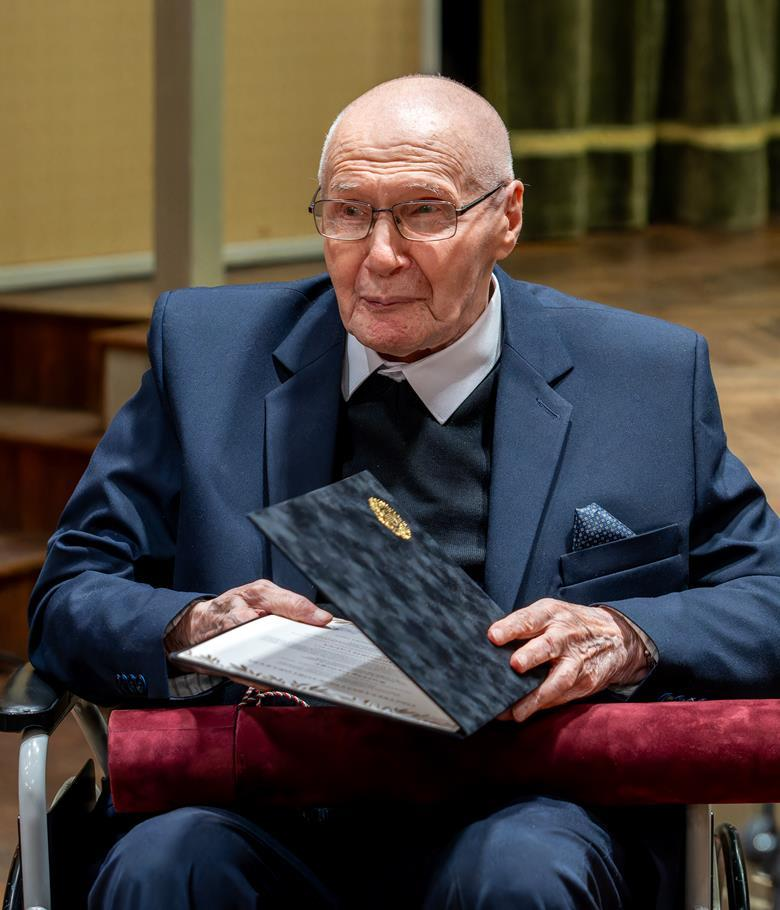
György Kurtág receiving honour from the Franz Liszt Academy in Feb 2026; photo: Andrea Webes Felvegi
In celebration of his centenary, The Stradrecounts György Kurtág’s musical upbringing and shares words from leading string players about their experiences with the composer and his music.
This holiday season, KUOW – Seattle’s public radio station – is offering listeners something gentler than the daily news cycle: a steady stream of seasonal classical music.
Through a new partnership with Classical KING, the Seattle-based classical music broadcaster, the KUOW appnow features Classical Christmas, the organization’s annual holiday stream. The stream appears as an additional listening option, separate from the station’s live radio broadcast.
Rather than create its own seasonal programming, KUOW has collaborated with an organization long associated with classical music in the region to create a digital-only offering that expands KUOW’s role beyond broadcast journalism.
“We are delighted to partner with KUOW,” said Michelle Maestas Simonsen, Classical KING’s Chief Engagement and Content Officer. “This seasonal collaboration is a reminder of what becomes possible when organizations with shared values work together. Whether someone wants a break from the news or simply loves holiday music, Classical Christmas is here for them.”
Classical Christmas is available throughout the holiday season in the KUOW app, where it can be streamed alongside KUOW’s regular live and on-demand programming. The stream is also accessible via Classical KING’s own app, website, and Alexa skills.
Rachell Ellen Wong and MOTS co-director James Garlick
Music on the Strait is giving itsfirst-ever concert on period instrumentson Sunday 14 December in Sequim on the beautiful Olympic Peninsula. This looks to be a lovely program, featuring Baroque violinist Rachell Ellen Wong, harpsichordist David Belkovski, and their Twelfth Night Ensemble in music by Telemann, Purcell, Vivaldi, Corelli, Johann Friedrich Fasch, and Francesco Durante.
The performance is Sun 12/14 at 4pm at Trinity United Methodist Church in Sequim:
Tickets starting at $5 with our Pay What Makes You Happy pricing
Telemann | Sonata No 4 in A Minor Henry Purcell | Suite from Amphitryon Antonio Vivaldi | Violin Concerto in E Minor, RV 278 Archangelo Corelli | Concerto grosso in G minor “Christmas Concerto” Johann Friedrich Fasch | Sonata No 5 in D Minor Francesco Durante | Concerto for 2 Violins, Viola, and continuo in G Minor Antonio Vivaldi | Sonata No. 12 in D Minor, RV 63, “La Follia”
Hiroka Yamashita and Ilse Eerens in Toshio Hosokawa’s Natasha; photo: Rikimaru Hotta
The New National Theatre Tokyo (NNTT) presents Toshio Hosokawa‘s new opera Natasha, conducted by Kazushi Ono and directed by Christian Räth, via global streaming. Premiered in August 2025, the production drew wide acclaim and was named a finalist in the World Premiere category of the International Opera Awards 2025.
From Friday, 12 December 2025 at 7:00 p.m. (CET) to Friday, 12 June 2026 at 12:00 p.m. (CET), audiences can experience Natasha for free on OperaVision and NNTT Stream. Running time: Approx. 2 hours 35 minutes.
Natasha is the first opera by Hosokawa to be staged at the NNTT since Matsukaze in 2018, as well as his second opera to be premiered by Ono Kazushi.
“Reconsidering the relationship between humans and nature, Hosokawa Toshio’s music is a kind of prayer or requiem. Especially after the 2011 Great Eastern Japan Earthquake, his works address humans’ repetitive history of destruction, drawing particular attention to nature’s fearsomeness and to the human arrogance of forgetting the awe nature deserves. Globally acclaimed author Tawada Yoko, who writes novels in both Japanese and German that examine the world from a German base and highlight themes of national borders and languages, is working on the libretto for the new work. The story focuses on an encounter between Natasha, a wandering immigrant driven out of her hometown, and a young man named Arato, as well as a Mephistopheles-like figure who shows and leads the pair through various scenes of human hells. Multilingual with Japanese, German and Ukrainian languages, the opera compares and contrasts the origins of modern civilization and humanity. The groans of the endangered earth resonate deeply throughout this opera that depicts destruction and hope with multiculturalism as the key to finding a path forward.
Hosokawa’s music resonates with meditative power—at once ritualistic and deeply human—evoking the cries of a wounded planet while offering a glimpse of hope.”
Creative Team Libretto by Yoko Tawada Composed by Toshio Hosokawa Conductor: Kazushi Ono Production: Christian Räth Set Design: Christian Räth, Daniel Unger Costume Design: Mattie Ullrich Lighting Design: Rick Fisher Video Design: Clemens Walter Electronic Sound Design: Sumihisa Arima Choreographer: Catherine Galasso Cast Natasha — Ilse Eerens Arato — Hiroka Yamashita Mephistos Enkel — Christian Miedl Frau A — Mari Moriya Frau B — Akiko Tomihira Businessman A — Tang Jun Bo Businessman B — Timothy Harris Saxophonist — Masanori Oishi Electric Guitarist — Gaku Yamada Chorus Master — Kyohei Tomihira Chorus — New National Theatre Chorus Orchestra — Tokyo Philharmonic Orchestra
UPDATE: The concert on December 4 will be livestreamed here at 7.30pm EST.
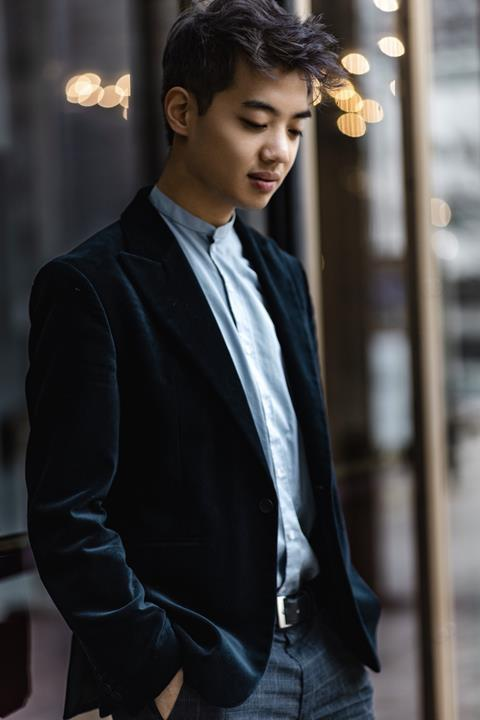
The Juilliard String Quartet gives its first New York performance with new violinist Leonard Fu on Thursday. I interviewed him for The Strad about joining the storied ensemble and about the program they will perform:
As the Juilliard Quartet makes its New York debut in its new formation, newly appointed second violinist Leonard Fu reflects on tradition, renewal and shaping the ensemble’s evolving voice… continue
After a dazzling performance of Prokofiev’s Third Piano Concerto, the 29-year-old French Canadian was named 2025 Honens Gold Laureate in Calgary last night. She takes home CAD $100,000 and a three-year career-accelerator program valued at more than $500,000. She also swept up the Audience Choice Award (worth $5,000 CAD).
The final round featured all three finalists, each in a different concerto, with the Calgary Philharmonic Orchestra led by Elias Grandy.
Hearty applause as well for Silver Laureate Carter Johnson (29) and to Bronze Laureate Anastasia Vorotnaya (30) – and for all seven semifinalists who made this year’s Honens an inspiring, memorable festival. They included Ádám Balogh (28), Elia Cecino (24), Giorgio Lazzari (25), Sandro Nebieridze (24), Chaeyoung Park (28), Derek Wang (27), and Yuanfan Yang (28).
With performances this bold and individual, the Honens ideal of the “Complete Artist” feels alive and well.



 Tickets starting at $5 with our Pay What Makes You Happy pricing
 free Livestream on the MOTS website at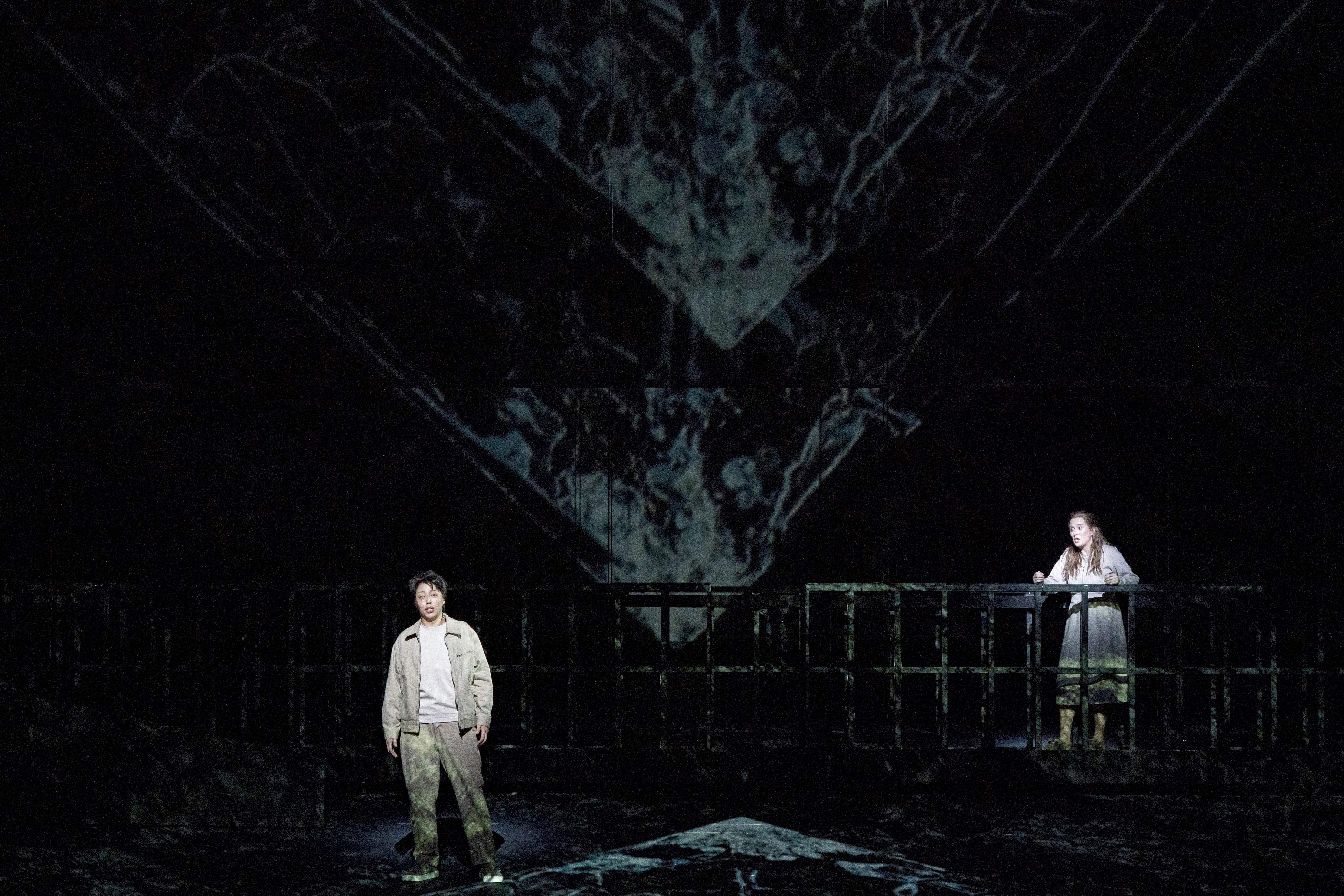


 MEMETERIA by Thomas May