MEMETERIA by Thomas May

Music & the Arts

The Bang on a Can Marathon Comes to Seattle

Bang on a Can All-Stars

Bang on a Can All-Stars: image (c) Peter Serling

Here’s a performance/happening you’re not going to be able to file away into one of the familiar musical categories. Is it classical (because, you know, strings and other traditional instruments, complicated scores being interpreted)? Experimental, maybe avant-garde? “Crossover” (whatever that‘s supposed to mean nowadays)? Let’s just call it a one-of-a-kind event: the first-ever Seattle edition of the annual Bang on a Can marathon. It takes over the Moore Theatre this Sunday, February 15, for six hours of blissful music-making.

You know how the phrase “classical music concert” used to imply a mostly predictable format? That’s no longer a safe assumption, thanks to the innovative thinking of orchestras like the Seattle Symphony and music director, Ludovic Morlot — thinking that involves not just the content of a concert but the venue where it’s performed.

By the same token, there once was a time when the prospect of a “new music” (aka “modern music”) program signaled a ritualistic exercise in high-toned concentration. Back in 1987, a trio of like-minded young composers — Julia Wolfe, Michael Gordon, and David Lang — put together a 12-hour marathon of adventurous music in a SoHo art gallery (when NYC’s SoHo was still SoHo). That one-off event was intended to attract curious ears to the energy and excitement and variety of music being composed in our time outside the commercial formulas of the pop industry — and outside the confines of the concert hall.

The inaugural marathon turned out to be the birth of a performing arts organization that’s now a major international force in the realm of contemporary classical music (another unsatisfactory term for a whole world of music that can’t be readily defined). More than a quarter century on, Bang on a Can remains “dedicated to the support of experimental music, wherever we would find it.” It commissions and records new works, develops programs to foster a new generation of audiences and musicians, and presents numerous events, including the annual Bang on a Can Marathon.

The appeal of the marathon format, according to co-founder and composer (and Dan Savage look-alike) Michael Gordon, is that it encourages people to “let down their guard. The event is aimed at people who are interested in broad listening, who come to listen with open hears. Many people know what they like and might come to the Marathon to hear that type of music. The next thing on the line-up will be completely different, something they would have never come across otherwise. Everything moves quickly and the sets are pretty short. So they start listening to things that they wouldn’t normally encounter. That’s basically the whole point: to broaden your listening and to have a good time with it.”

The venue is important for that context. Seattle’s Bang on a Can Marathon is being co-presented by Seattle Theatre Group and On The Boards at the Moore Theatre. Gordon refers to Bang on a Can’s MO of performing in “neutral spaces, audience-friendly spaces” that shed any of those lingering fears (however unjustified) of the concert hall as a place where only the musically initiated can feel comfortable. He points out that museums and public spaces like the Winter Garden in New York have served this purpose well.

Gordon also has praise for the Seattle Symphony’s recent initiatives under Ludovic Morlot: “They’re doing a lot of progressive work — not only reaching out into other communities but also by doing a lot of interesting commissioning. Orchestras have to change their attitudes. The SSO is on the forefront of finding a way to be relevant today.”

Bang on a Can’s Marathon will mix in work from adventurous Seattle-based or -associated composers and musicians with pieces by each of the organization’s co-founders. The whole event will be framed by new-music “classics” that have had a profound — and not always acknowledged — impact on the music world at large: Brian Eno’s ambient masterpiece, Music for Airports, and Music for 18 Musicians, one of Minimalist Steve Reich’s signature works.

“The Marathon is all about finding people who are pushing the boundaries of their kind of music and letting that be the thread that goes through each of the acts,” says Jherek Bischoff, who was asked to curate the Seattle festival. “Pushing boundaries is one thread.” Another is serendipity: “Someone might come for the hip-hop segment [featuring Shabazz Palaces] and then they’ll happen to hear some modern classical right next to it.”

Bischoff, who comes from a family of musicians, was raised on a sailboat and on Bainbridge Island. He began his career as a multi-instrumentalist: “I started with the saxophone, moved on to tuba and then to bass — and then things stated getting crazy with way too many instruments…” Not surprisingly, Bischoff channels his talents into myriad musical activities, from performing and composing to producing — and, now, curating.

“People I wanted to include sprang to mind right away,” Bischoff explains. “For me, it’s exciting to give them the opportunity to play at the Moore. One of those people is Morgan Henderson. He’s the perfect example of what Bang on a Can is doing, which is to take someone who totally goes under the radar and put them in the spotlight. Morgan is one of the most talented musicians I know. He plays bass in the hardcore band The Blood Brothers but then he also plays flute in the Fleet Foxes band — the exact opposite type of music and instrument.”

Jherek Bischoff

Jherek Bischoff

Another figure Bischoff was eager to add to the line-up is Seattle pianist Gust Burns. “He’s one of the most insanely technically proficient pianists I’ve heard, and at the same time he’s also a wonderful improviser. When you see him perform, you can’t believe that there’s just one person making all that sound with the piano.”

Bischoff, who moved to Los Angeles a few months ago, will also bring along his own recent efforts as a composer: “It’s ambient orchestral music that was inspired by my time out at the cistern in Fort Worden State Park [in Port Townsend], where I did a residency. The cistern is a two-million-gallon water tank underground that has a 45-second reverb. I improvised there for days and recorded the whole thing and ended up turning some of those improvisations into full-blown orchestral pieces.” The results will be performed by the Scrape Ensemble (strings) with Bischoff on bass and “a bunch of reverb piped in to give you a bit of a sense of that alternate space.”

Along with those mentioned above and the Bang on a Can All-Stars, other artists on the roster include the duo Jesssika Kenney & Eyvind Kang, Jim Knapp, Greg Campbell, and California-based red fish blue fish.

But isn’t four hours of musical discovery a bit overwhelming? Bischoff points out that it’s perfectly fine for the audience to weave in and out and take breaks — much as became the custom during performances of a mammoth work like Philip Glass’s Einstein on the Beach. “You can step out to get a drink. The Bang on a Can marathon I attended in New York took place in a big atrium and there was even a food court where you could go to eat and watch as the music played on.”

If you go: The Bang on a Can Marathon’s Seattle edition is being co-presented by Seattle Theatre Group and On The Boards at the Moore Theatre, Sunday, February 15, from 4 to 10 p.m. Tickets here.

(C)2015 Thomas May. All rights reserved.

Filed under: new music, preview, programming innovation
Transfiguring the Night: Music of Remembrance

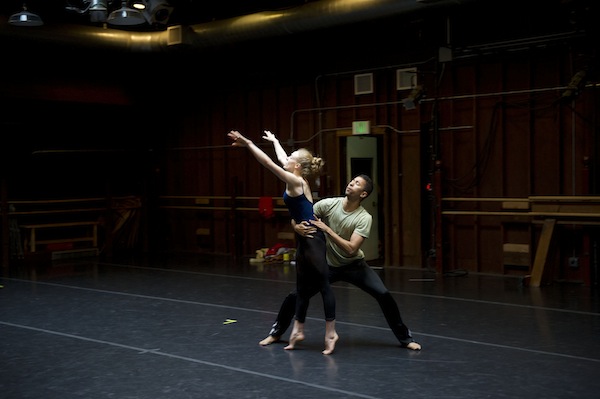
Rehearsal photos by Leo V Santiago photography.

Rehearsal photos by Leo V Santiago photography.

My preview of the upcoming world premiere by choreographer Donald Byrd for Music of Remembrance:

The event that Music of Remembrance (MOR) will commemorate at this Sunday’s fall concert at Benaroya Hall on Sunday, November 9, is a grim one: the 76th anniversary of Kristallnacht, the “Night of Broken Glass” during which the Nazis fomented a wave of violent pogroms targeting Jews across Germany and the recently annexed Austria and Sudetenland. But MOR’s focus has always been on the triumphant creativity of the human spirit that defies oppression and hatred — against the most terrifying odds.

Launching its 17th season with this Benaroya concert, the organization remembers the work of composers who were silenced by the Holocaust not only by presenting their music but through a vigorous commissioning program showcasing artists of the present. The result has been to build what founder and artistic director Mina Miller calls “ a living bridge between Holocaust artists and artists today.”

The lineup here is especially attractive, featuring the world premiere of Seattle-based choreographer extraordinaire Donald Byrd’s new dances created for Arnold Schoenberg’s Verklärte Nacht (“Transfigured Night”).

continue reading

Filed under: dance, preview

Passio: Light in Darkness

Karen Thomas

Karen Thomas

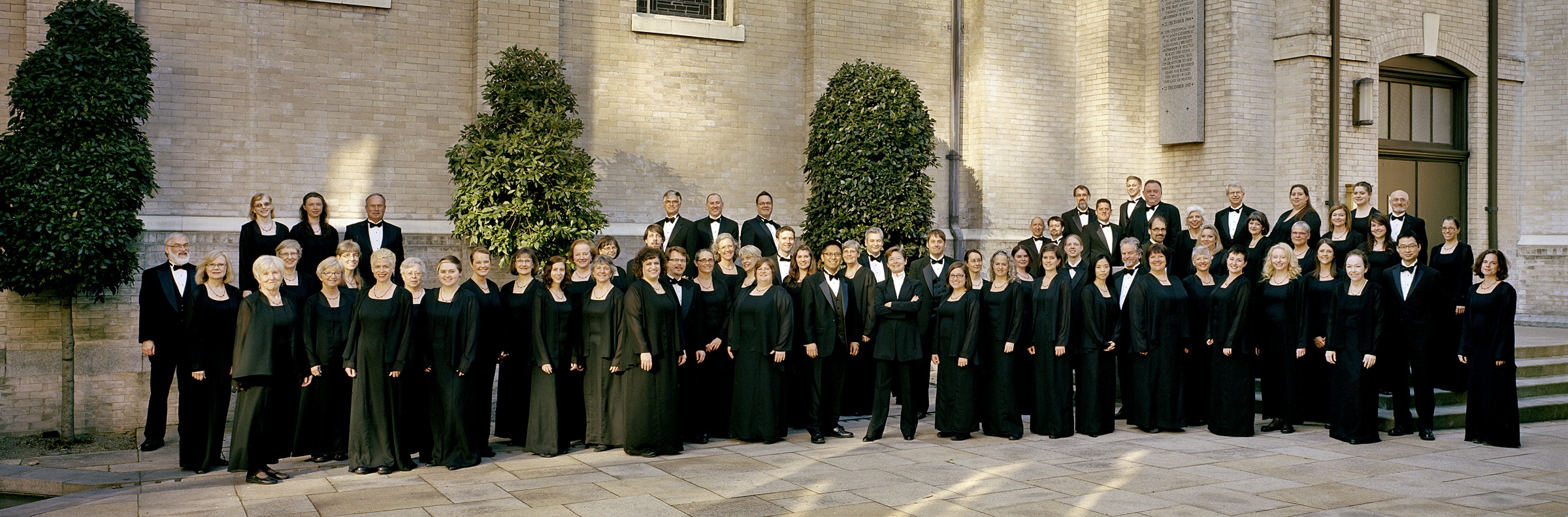
I’ve always admired the quality and imagination of Karen Thomas’s programming for Seattle Pro Musica, but their upcoming program, titled Passio: Light in Darkness, has me champing at the bit, to put it frankly.

“The concept for Passio is music related to Lent and the deep human emotions this season has inspired composers to explore,” says Thomas, who not only directs Pro Musica but is herself a composer. And that can also take the form of completely secular works like the little match girl passion by David Lang, which draws on models from Medieval mystery plays and J.S. Bach’s Passions to retell a children’s story of searing, tragic simplicity.

The fact that Pro Musica will be presenting match girl (in the area premiere of the choral version) is by itself enough of a sell: this just happens to be one of the most haunting and inspired choral compositions by an American composer in recent years. But the program also includes a “re-discovered” rarity from the Russian choral rep: Passion Week by Rachmaninoff contemporary Alexander Gretchaninoff (1864-1956). Plus, there will be sprinklings of music by Benjamin Britten, Thomas Weelkes, and living composers like Paul Mealor and Kay Rhie. All of these selections, in different ways, highlight the special strengths of Seattle Pro Musica — and of the smaller ensembles comprising the company.

Seattle Pro Musica

Seattle Pro Musica

Lang, an LA native now based in New York (and known as one of the co-founders of the innovative Bang on a Can new-music outfit), has fast forwarded the American maverick lineage into the 21st century. Lang is also an adventurous collaborator who has worked with the likes of photographer William Wegman and the film director Jonathan Parker (scoring the 2009 indie comedy (Untitled). But for the little match girl passion, which won the Pulitzer Prize in Music in 2008, Lang engages in a remarkably original “collaboration” with sources you don’t normally associate with each other. He uses the tradition of musical settings of the Christian Passion narrative as a model for his retelling of an incredibly poignant children’s story by fairy-tale master Hans Christian Andersen.

The root of the word “passion” is from the Latin term for suffering. Lang strips away the traditional religious associations of the Passion story but uses the narrative techniques that were pioneered and perfected by Bach — “commentary” passages interpolated into the ongoing story — to recount the suffering and death of the little girl in Andersen’s story who tries to sell matches on a street corner on a brutally cold New Year’s Eve. Or, another way to put it, as Lang himself does: “There is no Bach in my piece and there is no Jesus — rather, the suffering of the little match girl has been substituted for Jesus’, elevating (I hope) her sorrow to a higher plane.”

There have been many musical adaptations of Andersen’s tale — TV musicals, operas, a synthpop video by Erasure, a concept album by The Tiger Lillies. But nothing I know comes close to the gut-wrenching impact of Lang’s treatment. His post-Minimalist score is deceptively simple, in keeping with the story. Spare harmonies and other archaisms evoke the starkness of early Medieval chant (think Perotin — that far back); tiny gestures generate maximal emotional response.

“There’s an extremely intimate quality to it,” Thomas explains. “Lang’s music has an immediacy and at the same time a kind of emotional reserve about it, because of the way he writes for the voices to evoke the Evangelist in a Bach Passion or a Greek chorus. So there’s a certain coldness and detachment as well that makes the tragic story that much more poignant as a result.”

Over the past two weeks, in concerts featuring the same vocal soloists, I’ve taken advantage of the rare opportunity to experience and compare the two great Passions by J.S. Bach that survive. (Pro Musica also performed the St. John Passion two seasons ago.) So it should be especially fascinating to encounter Lang’s piece, which I’ve long treasured since on recordings, with this context fresh in mind. Yet on its own terms, match girl is an immediately gripping and effective work, a mix of modern morality play and music theater — but with none of the preachiness that can sometimes creep into, say, a performance of Brecht.

Alexander Gretchaninoff in 1910

Alexander Gretchaninoff in 1910

As for Gretchaninoff’s Passion Week, Karen Thomas points out that it will beautifully complement the pared-down sound of Lang’s little match girl passion by taking us to another extreme of lushness and blooming choral texture. Premiered in Russia in 1912, Passion Week sets texts from the Russian Orthodox liturgy that are used as prayers during the week that culminates in Easter. Gretchaninoff, a student of Rimsky-Korsakov, was part of the Renaissance of Russian choral music in the early 20th century that’s also represented by Rachmaninoff’s beloved Vespers (1915).

“In Gretchaninoff’s setting you can hear the influence of early Russian music and chant even more clearly,” says Thomas. “And he writes even more extensively for the low range of the basses than Rachmaninoff. This will sound especially compelling when heard in the acoustic space of St. James.”

Thomas adds that the prayers Gretchaninoff sets combine mystical and liturgical texts. They tend to be “more of a personal reflection” on the events of Good Friday, for example, than the librettos Bach set for his Passions. But this music fell into oblivion in the wake of the Soviet Union’s official crackdown on the Russian choral movement that had begun to take flight. Gretchaninoff himself stayed for a time but finally emigrated to the U.S. in 1939. His Passion Week wasn’t revived until the 1990s. Thomas believes these may be the first Seattle area performances.

An additional note: Yet another composer involved in the Russian choral movement — and another Rimsky student — will be in the spotlight next month when Cappella Romana presents the recently rediscovered Passion Week of Maximilian Steinberg, “the last major sacred work composed in Russia before Stalin’s 1932 crackdown (April 11 and 12).

And: Seattle Symphony is presenting a special symposium on March 22-23 on the theme Creative Diaspora: Émigré Composers from the Former USSR. Speakers will include no less than Russian music authority Richard Taruskin. The symposium is scheduled in conjunction with the U.S. premiere of Alexander Raskatov’s Night Butterflies Piano Concerto.

Seattle Pro Musica’s Passio – Light in Darkness concerts take place on Saturday and Sunday, March 8 and 9, both evenings at 8 pm at St. James Cathedral. Tickets here.

Thomas May

Filed under: choral music, new music, preview

Archive

Enter your email address to follow this blog and receive notifications of new posts by email.