MEMETERIA by Thomas May

Music & the Arts

Cav/Pag at Grand Théâtre de Genève

I realize it’s only the inertia of tradition that keeps Cavalleria rusticana and I Pagliacci glued together as a double-bill; otherwise they seem silly side by side, a forced pairing that makes no sense. Is it precisely this juxtaposition that makes Cav so difficult to direct? Or is it just the temptation to read too much into it, not accepting the naiveté and directness that are the essence of Mascagni’s opera?

I was thinking about this after seeing the current edition of the pair at Geneva Opera (in its pop-up temporary performance space at the Opéra des Nations). Each opera was divvied out to a separate director: Emma Dante for Cav, Serena Sinigaglia for Pag.

This Cav fell dramatically flat, while the Pag was thoroughly gripping and delivered its expected punch, plus some — the contrast in effectiveness all the more striking.

Cav had the burden of an overcooked dramaturgical conception, juxtaposing a re-enacted Passion scenario with the simple melodrama of jealous lovers and revenge, all set on a darkly-lit stage. A recurrent tableau ensemble showed Jesus on his way to the Crucifixion, hammering home an intended parallelism with Giovanni Verga’s narrative and its atmosphere of Gothic gloom, without the countervailing joy of the Easter celebrations in which it unfolds.

This dampened the built-in effect of the musical contrasts, despite the excellent work of the chorus prepared by Alan Woodbridge. The casting was weak, above all for the Turiddu (sung by Marcello Giordani, who sounded alarmingly strained at the top of his range).

I’d seen and admired Emma Dante’s Macbeth at Edinburgh International Festival last year, so the miscalculations here were surprising. New to me on the other hand was Serena Sinigaglia, who understood how to pace the interactions in Paglicacci for maximal impact. There was just one misstep, in my opinion: a prolonged meta-theater indulgence during the Prologue, with Stage Director and Co. frantically getting the set of forlorn wheat fields in place, which surrounded a simple wooden stage.

It wasn’t that cliché, but the power and intensity of the performers who brought home the ironic point that art and life literally bleed into each other. Maybe verismo isn’t the “slice of life” naturalism it’s so often claimed to be so much as an aesthetic given to its own kind of stylized artifice that tries to make sense of recurring human patterns. Certainly the presence of the crowd here felt more palpably pressuring, willing participants in this society of codes, than in Dante’s Cav.

Diego Torre delivered a genuinely terrifying Canio, and Roman Burdenko (had just sung a thrilling Alfio) gave Tonio an almost Jago-like infusion of malevolence. Nino Machaidze’s combined beauty and grit for a memorable portrayal of Nedda.

Conducting the house Orchestre de la Suisse Romande with dramatic flair as well as melting lyricism was Alexander Joel throughout the evening. He was especially attentive to the range of colorings in Leoncavallo’s more complex score.

Filed under: Geneva Opera, review
A Rousing Reunion for Esa-Pekka Salonen and the Los Angeles Philharmonic

76517-esa-pekka-salonen-benjamin-suomela

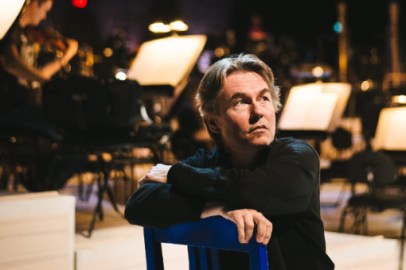
Esa-Pekka Salonen © Benjamin Suomela

Esa-Pekka Salonen’s return to Walt Disney Concert Hall highlighted his gifts as composer and conductor alike and underscored how an orchestra can sound genuinely 21st century.

continue reading

Filed under: Beethoven, Los Angeles Philharmonic, review, Salonen

Thomas Dausgaard and Seattle Symphony in an All-Brahms Concert

fdfca316-02e6-11e8-8fe2-2bdf8a8705d1-1334x891

Thomas Dausgaard conducts the Seattle Symphony in a Brahms program at Benaroya Hall. (Brandon Patoc)

My review of last night’s program for The Seattle Times:

For a glimpse of the music of the future in Seattle, head down to Benaroya Hall this weekend to experience Thomas Dausgaard in action….

continue reading

Filed under: Brahms, review, Seattle Symphony, Seattle Times, Thomas Dausgaard

Strange Beauty: The Berlioz Requiem in Seattle

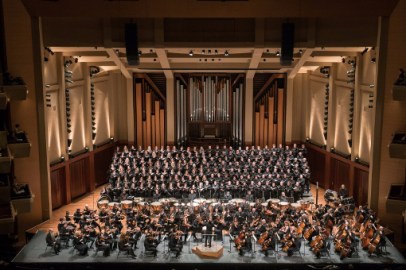
71199-bpatoc-berlioz-requiem-preview-0008-resized

(c) Brandon Patoc

My review of the Berlioz Requiem performed by Ludovic Morlot and Seattle Symphony:

Even for a composer as naturally original as Hector Berlioz, the Grande messe des morts stands apart for its wild uniqueness…

continue reading

Filed under: Berlioz, review, Seattle Symphony

Contemplating End Times with the Emerson Quartet

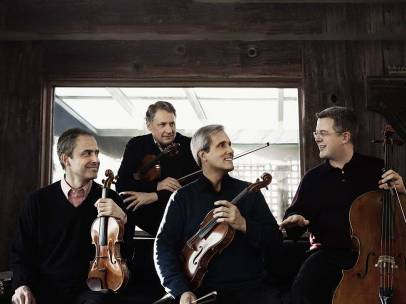
emersons

Emerson String Quartet Photo by Lisa Marie Mazzucco

My review of the Emerson Quartet’s performance for the White Light Festival at Lincoln Center for Musical America (paywall):

NEW YORK—“Conclusions are the weak point of most authors,” George Eliot famously declared, “but some of the fault lies in the very nature of a conclusion, which is at best a negation.” That may hold true for fiction, but composers glory in the powerful statements they can make when a piece approaches the double bar line. And, in the case of certain composers, music written when their own lives are nearing the end possesses a special mystique.

continue reading 

Filed under: Beethoven, Emerson String Quartet, Musical America, review, Shostakovich

Gidon Kremer with Seattle Symphony

69544-gidon-kremer---paolo-pellegrin---magnum-photos-7

Gidon Kremer; © Paolo Pellegrin

My review of Gidon Kremer’s visit with Seattle Symphony:

It’s entirely characteristic of Gidon Kremer to choose a discovery piece rather than a surefire crowd-pleaser for what was a rare appearance in Seattle…

continue reading

Filed under: Gidon Kremer, Ludovic Morlot, Mendelssohn, review, Schumann, Seattle Symphony

The Memorable Women at San Francisco Opera Continue, with La Traviata and Turandot

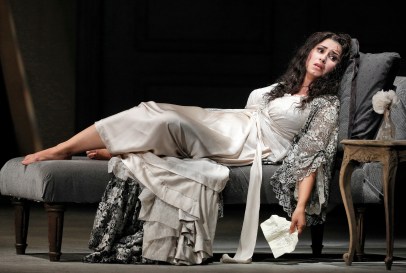
_B5A8477-X3

Aurelia Florian as Violetta Valéry in Verdi’s “La Traviata.” Photo: Cory Weaver/San Francisco Opera

Part two of my reviews of San Francisco Opera’s fall season is now posted on Musical America:

SAN FRANCISCO—Along with a sensational production of Elektra , San Francisco Opera’s lineup so far this season is spotlighting some of the art form’s most gripping female …

continue reading (behind Musical America‘s paywall)

Filed under: Puccini, review, San Francisco Opera, Verdi

High-Voltage Elektra at San Francisco Opera

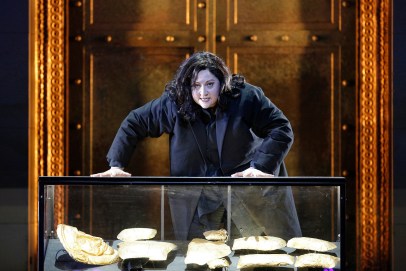
_B5A8670-X3

Christine Goerke; Photo: Cory Weaver/San Francisco Opera

New review for Musical America:
SAN FRANCISCO—“The museum is closing…” The Elektra presented as part of San Francisco Opera’s new fall season takes place in the midst of a fictional exhibition of Mycenaean-era artifacts. But this Keith Warner …

continue reading (paywall)

Filed under: review, San Francisco Opera

Protected: Thrilling Berlioz and Mahler with Guest Conductor Giancarlo Guerrero and Seattle Symphony

This content is password-protected. To view it, please enter the password below.

Filed under: Berlioz, Mahler, review, Seattle Symphony

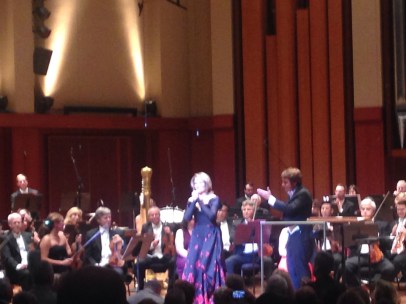
Seattle Symphony’s Captivating Season Opener with Renée Fleming

sso-opening

Seattle Symphony opening night, with conductor Pablo Rus Broseta and soprano Renée Fleming

On Saturday, Seattle Symphony kicked off its new season with special guest Renée Fleming. Associate Conductor Pablo Rus Broseta was on the podium, filling in for Music Director Ludovic Morlot (who was prevented by a leg injury from opening his seventh — and second-to-last — season helming the SSO).

Such affairs are often little more than a lightweight, pleasant upbeat to the season proper. But last night’s performance proved captivating throughout and contained several genuinely memorable moments.

Both halves of the program kept Fleming at the center of attention. The beloved soprano — who sang the National Anthem at the 2014 Super Bowl that brought the Seahawks victory — was in very fine voice indeed. To showcase different aspects of her artistry, she offered an unusual mixture that ranged from mid-century Samuel Barber to arrangements of songs by Björk and some little-known Italian gems from the late 19th century.

The Barber and Björk selections are paired on Fleming’s Distant Light album as well, released at the beginning of this year. Barber’s Knoxville: Summer of 1915 by itself became a compendium of Fleming at her most expressive: full tonal support, lush brushstrokes for sustained notes, and emotionally resonant phrasing were in generous supply, together with sensitivity to the nuances of James Agee’s text.

Drawing on all this, Fleming was able to shape the touching flashes of insight from a childhood recalled. Instead of the more comforting, lulling vision of bittersweet nostalgia for a vanished America, her account made it clear that this is a rare musical portrait of  innocence dissected — an innocence that, as the musical element reinforces, can only be ephemeral.

Fleming followed this with a foray into a pair of songs by  Björk, the adventurous, fantastically original Icelandic singer and songwriter.  She sang “Virus” (from Biophilia) and “All Is Full of Love” (from Homogenic), creating a rapturous glow in the second. But even using a mic (though from what I could tell, there was no instrumental amplification), her middle voice occasionally become drowned by the rather gentle ambient orchestration.

The concert’s second half went completely Italian. Fleming gave charming introductions to the fare, which featured sun-dappled lyricism for Licinio Refice’s Ombra di nube (from her Guilty Pleasures album) and Tosti’s delectable Aprile, as well as the swooning fatalism of the famous avalanche aria from Catalani’s La Wally (an operatic death teasingly described by the soprano).

The highlight here was Fleming’s full-throttle version of “L’altra notte in fondo al mare” from Arrigo Boïto’s Mefistofele. She made the misfortunate Margherita’s roller-coaster ride of a mad scene stunningly vivid and perturbing, peppered with featherweight trills that sounded downright eerie in the context, all the more so for their technical finesse.

Leslie Chihuly (in her final season chairing SSO’s Board of Directors) announced the lineup of seven (!) new musician appointments with the SSO:  Demarre McGill (returning as principal flute), John DiCesare (principal tuba), Emil Khudyev (associate principal clarinet), Andy Liang (second violin section), Danielle Kuhlmann (fourth horn), Christopher Stingle (second trumpet), and Michael Myers (fourth/utility trumpet).

All except McGill were able to participate in this concert, and there was a palpable sense of rejuvenating energy.  Having profiled this talented young conductor for Musical America a year ago, I wasn’t at all surprised by how splendidly Pablo Rus Broseta acquitted himself of this high-stakes assignment.

Framing each half of the concert with a substantial overture — Barber’s Overture to The School for Scandal and Verdi’s to La forza del destino — Rus Broseta showed a remarkable command of small details that make big differences, as in his calibration of the brass balance in the Verdi. It had such bite, I felt a sudden urge to see the entire opera, one of Verdi’s wildest creations.

Rus Broseta has a disciplined mind — tempered by his Modernist training — and never settles for the “showy” surface. And he was a sensitive partner with Fleming, allowing her to shine above all in the Barber and Boïto.

Extending the generous, positive spirit of the evening, Fleming returned for a set of three encores.  Lauretta’s “O mio babbino caro” from Puccini’s Gianni Schicchi, featuring her lustrous high A-flat, is an example, she suggested, of perhaps the perfect universal aria. With an invitation to the audience to join her in “I Could Have Danced All Night” from My Fair Lady, Fleming also gave a nod to one of her upcoming new ventures later this season, when she makes her Broadway debut in Carousel. And with a deeply felt “Song to the Moon” from Dvořák’s Rusalka, she acknowledged her own early years in opera.

Review by Thomas May (c)2017 – All rights reserved

Filed under: review, Seattle Symphony

Archive

Enter your email address to follow this blog and receive notifications of new posts by email.