MEMETERIA by Thomas May

Music & the Arts

Ravishing Ravel from Seattle Symphony

Ravel Opera

Michèle Losier as the Boy, with Delphine Haidan as the Dragonfly and Alexandre Sylvestre as the Tree; image (c) Brandon Patoc

I was able to catch the final performance (Saturday night) of this week’s Seattle Symphony program led by Ludovic Morlot: a fascinating semi-staged presentation of Maurice Ravel’s one-act opera L’enfant et les sortilèges, combined with a Mozart piano concerto and a bit of orchestral Bizet as appetizer.

The program would have sated most appetites perfectly with the second half alone, the Ravel, so it was a special added delight to have Mozart’s K. 271 Piano Concerto on the bill (the so-called — inaccurately — “Jeunehomme” Concerto).*

“Mozart is absolute beauty, perfect purity,” Ravel believed — in so doing, of course, describing his own aesthetic of perfectionism.  I’m always reminded of the Mozart-Ravel connection whenever I hear Jean-Yves Thibaudet perform the latter’s Concerto in G (as he has done more than once with Morlot).

I can’t say that was the case with the soloist in K. 271, Jan Lisiecki. The 22-year-old Canadian pianist, acclaimed especially for his Chopin, arrived on the scene as a prodigy and already commands an impressive resume of partnering with world-class conductors and ensembles. His performance of the Mozart exhibited some very sensitive playing, but to this taste, overall, left little of a lasting impression.

Well-executed passagework and spirited moments abounded, but I missed a strong point of view about what it can all add up to, as well as the — well, Ravel-like — iridescence that Mozart can evoke with even the simplest of phrases. 

But there was nothing lackluster in the account from Morlot and the SSO. Again and again, I marveled at being reminded of just what an astonishingly original score this pre-Vienna concerto is, composed at such an early stage — particularly the epic flair of the first movement and the window-framed dance interlude plopped right into the middle of a bustling finale.

The unusual choice of the minor key for the slow movement was underscored by the stirring pathos of this reading. Here Mozart is already transforming the keyboard concerto into substitute opera, which made the choice of K. 271 all the more appropriate for the Ravel.

Morlot  intoned the theme of childhood at the start with George Bizet’s Petite Suite from 1871  — a sequence of five numbers the composer orchestrated from a set of 12 miniatures originally written for piano duet (known as Jeux d’enfants and later choreographed by Balanchine). The SSO played with considerable polish, zest, and charm.

Ravel Opera

image (c) Brando Patoc

The semi-staged performance of L’enfant et les sortilèges in the second half of the program has to be accounted one of the season’s highlights. Ravel felt a deep kinship with children and with what he called “the poetry of childhood,” consciously tapping into his own memories of the fantasies of childhood for inspiration.

In fact, I’d say this sensitivity, when combined with his watchmaker-like precision and perfectionism, is among Ravel’s most fascinating aspects. 

Like the Bizet suite, his beloved Ma mère l’Oye (Tales of Mother Goose) actually began as a composition for piano duet (intended for the children of a couple that had befriended Ravel). 

L’enfant et les sortilèges — usually translated “The Child and the Spells” — is the second of the two operas Ravel managed to complete, each consisting of only one act. The first, the rarer L’heure espagnole, premiered in 1911; L’enfant, more prolonged in gestation, was conceived during the First World War and composed several years after. The initial idea was for a ballet, which eventually became a “fantaisie lyrique” in two parts — a fantasy opera, which was premiered in 1925 in Monte Carlo (with the young Balanchine providing choreography).

Both Ravel and his librettist Sidonie-Gabrielle Colette — the eminent French novelist known simply as Colette — were both deeply affected by their involvement in the war effort and by the loss of loved ones. This sensibility even seeps into the texture of L’enfant, on the surface such a disarmingly innocent and playful evocation of a child’s unbridled imagination.

The story recounts the “education” of a temperamental young boy (a trousers role, sung by mezzo). After being scolded by his mother, he experiences the aftermath of his temper tantrum: the objects of his rage come to life and confront the boy with the results of his behavior.

Morlot and the SSO enlisted a fantastic creative team for their first-ever presentation of an opera together on the Benaroya stage: director and production designer Anne Patterson, projection designer Adam Larsen, and costume designer Zane Philstrom.

Patterson, whose bio points out that she has synesthesia, conjured an appealingly surreal visual environment — sort of a cross between Lewis Carroll and Sendak in feeling, though with entirely original iconography. Her team conveyed the sense of wonder in Ravel’s music, thankfully steering free of unwanted cuteness or sentimentality, which have no place in this score.

The singers positioned mostly far downstage (though at times elsewhere in the hall), sometimes even occupying a corner of Morlot’s podium. Even within that confined space, with the cast acting in front of both the orchestra and several layers of dangling ribbons that formed a permeable, dreamlike screen, the story was engaging.

Ravel Opera

image (c) Brandon Patoc

Larsen’s beautifully changing light scheme and his projections of the animated objects as transient emanations offered a spellbinding counterpoint to Ravel’s exquisite score.

Philstrom’s large white head sculptures, worn by the objects that come to life, served as emblems to distinguish the very large cast of characters triggered by the boy’s theatrical imagination.

Morlot gathered a distinguished cast that would be just as home with this material in a full-scale opera house production. Especially outstanding were Michèle Losier as the Child, after her initial rampage passing through an enormous spectrum of emotions within the opera’s compact duration, and soprano Rachele Gilmore in the delirious coloratura roles of the Hearth Fire, the storybook Princess, and the Nightingale.

With her rich mezzo, Delphine Haidan morphed from the stern Mother to a broken china teacup (was some of the libretto’s “pidgin”  — offensive to today’s sensibilities — expurgated?) and, finally, a plaintive captured dragonfly.

Colette’s large cast calls for an armchair, a grandfather clock, a shepherd and shepherdess from the wallpaper pattern the feisty boy has ripped up, assorted animals and garden creatures, even the numbers from a math lesson come to life in a kind of Pythagorean nightmare … and much more.

Portraying multiple roles, the rest of the cast was uniformly strong, including sopranos Rachele Gilmore and Soraya Mafi, mezzo Allyson McHardy,  Jean-Paul Fouchecourt (a star of French Baroque opera, hilarious in his turns as the torn math book and the tree frog), baritone Alexandre Duhamel, and bass-baritone Alexandre Sylvestre.

On top of all this, the Seattle Symphony Chorale and Northwest Boychoir (both prepared by Joseph Crnko) were part of the cast as well, at times contributing a subtle wall of sound (with the Chorale positioned upstage behind the orchestra).

It was quite an ambitious array of forces for such a short work, yet not a moment felt superfluous. Morlot had his players basking in Ravel’s delectable score — one of those miracles of remarkably far-ranging stylistic references that transcends being merely “eclectic.”

There were far too many moments of superb musicianship to recount them all in detail — such as Demarre McGill’s (in a welcome guest return) flute solos to the storybook Princess’s lament of what could-have-been (Rachele Gilmore).

Best of all was the loveliness of the garden scene that takes over in the second part. This luminous and stirring music transports L’enfant onto an altogether different plane of magic and perception — childlike innocence as recaptured by the knowing adult’s memory.  And it was utterly stunning on Saturday night.

A downside to this adventure: just a little over a month since Morlot announced his plans to leave the SSO in 2019, the sense of joint accomplishment feels bittersweet, as it must with the knowledge that the clock is ticking away.

____________________________________________________________________________________________* I do wish the music biz would acknowledge the important work of scholars and get rid of the annoying faux-name “Jeunehomme” — and, along with it, the false history that is continually reiterated in program notes.

I’m referring here to the research of musicologist Michael Lorenz, who has brought to light the fascinating figure of this very specific female pianist –Victoire Jenamy (1749-1812) — for whom Mozart wrote this concerto.

The perpetuation of the musty old nonsense about poor “Mademoiselle Jeunehomme” being lost to history is the sort of thing that makes “classical music” appear so sadly out of step with the living, breathing reality. We still have plenty to learn about Mozart — all that is to be known has not been already revealed!

Review (c) 2017 Thomas May. All rights reserved.

Filed under: Ludovic Morlot, Maurice Ravel, Mozart, review, Seattle Symphony

Innovative Premiere by Music of Remembrance

img1975-copy

Mary Kouyoumdjian, composer. Photo credit: Dominica Eriksen

Last night’s Spring Concert presented by Music of Remembrance (MOR) featured the world premiere of an extraordinary collaboration: to open myself, to scream, a portrait piece inspired by the Holocaust survivor Ceija Stojka (1933-2013), with music by Mary Kouyoumdjian and visual design by Kevork Mourad.

The entire concert, titled Ceija, and presented at Benaroya’s Nordstrom Recital Hall,  was dedicated to the legacy of this Roma artist, writer, and musician who survived three concentration camps — though many members from her extended family did not.

Born to Catholic parents, Stojka traveled during summers with her Roma family across the Austrian countryside as a child — the family business involved horse trading — while they wintered in Vienna.

Only 12 by war’s end, Ceija Stojka took decades before she could even begin processing these traumatic memories through her painting and writing. (She was 55 when she began painting.) But she gained a following, also publishing a trio of autobiographies that broke ground in addressing the issue of the Nazi genocide of the Roma people — whose persecution hardly ended with the war. Vienna named a square inStojka’s honor following her death in 2013.

Kouyoumdjian is a young Brooklyn-based composer who has been commissioned by such distinguished ensembles as the Kronos Quartet.  In previous works she has addressed experiences of the Armenian genocide and the chaos of war, which directly affected her family.

This commission is very much in keeping with MOR’s commitment, in the words of founder and artistic director Mina Miller, to remind us of “the Holocaust’s urgent lessons for today, and of the need for vigilance and action in the face of threats to human rights everywhere.” MOR friends Marcus and Pat Meier, longstanding advocates for and collectors of Stojka’s art, had brought the artist’s story to Miller’s attention and sponsored the new commission.

Kouyoumdjian took her title from a speech Stojka gave in 2004 for the opening of a retrospective at Vienna’s Jewish Museum: “I reached for the pen because I had to open myself, to scream.”

Each of the four movements of to open myself, to scream is also titled after quotes from the artist. Kouyoumdjian says that she was drawn to Stojka’s “themes of longing for the past and coping with the aftermath of unimaginable trauma,” adding, “I hope to continue the conversation about how we sympathize with those who experience the unimaginable, and how we can pull from the past to move forward.”

That’s a tall order for any work, but Kouyoumdjian succeeds brilliantly in drawing us sympathetically into Stojka’s world. She makes us sense precisely these themes of longing and coping through art. What’s more, she does this without sentimental manipulation or a false glaze promising aesthetic redemption.

to open myself, to scream creates a bold, innovative soundspace using techniques of layering and multiple forms of dialogue among its unusual chamber configuration of clarinet, trumpet, violin, cello, and double bass (all played by Seattle Symphony musicians).

The most overt musical dialogue is between present and past. The players interact with an electronic soundtrack that samples and processes material they had previously recorded;  Kouyoumdjian also recorded vocal samples representing Stojka’s memories of her mother comforting her (she was in the camps with her daughter) — but these are filtered and distanced, so that the comfort offered always seems just beyond the horizon.

Overall, the effect is of a labyrinthine internal dialogue, a dialogue poised restlessly between contradictory impulses. The narrative framework implies a desire to revisit happy memories of childhood (evident particularly in folk-flavored idioms), which are accompanied and superseded by the trauma to which these are inevitably linked. Kouyoumdjian’s continually transforming soundscape conveys this harrowed consciousness, whose very sensitivity enhances the pain of memory.

Another significant dialogue is the one between music and visuals. The latter, working with the whole spectrum of Stojka’s paintings and ink sketches, were designed by Syrian-Armenian artist Kevork Mourad (a multi-media master who has collaborated with Yo-Yo Ma’s Silk Road Project among many others).

Projected onto a large screen behind the players, the paintings are animated into a filmic accompaniment to the score (rather than the conventional order of the reverse). Mourad’s remarkable animations underscore the music’s sense of memories and images being unrelentingly processed. In turn they establish their own varieties of dialogue and interchange: between figuration and abstraction, saturated colors and somber black-and-white, recognizability and ambiguity.

Particular figures are seen moving into or receding from the foreground. At times the “action” creates an illusion of the paintings trying to breathe, which anticipates one of Kouyoumdjian’s most startling gestures, at the end of her score. In conjunction, music and visuals reinforce the feeling of a struggle between the past and “moving forward.” A kind of anxious pedal point grounds many of the musical gestures, even at their most frenzied, until the piece ultimately builds to an overwhelming, unresolved climax.

What’s especially innovative here is the sense of emotional pulse Kouyoumdjian establishes: never linear or straightforward but always in motion, acting and reacting. The last movement is titled after one of Stojka’s most unforgettable statements: “Auschwitz is only sleeping. If the world does not change now … then I cannot explain why I survived …”

MOR’s program also presented the world premiere of new choreography by Olivier Wevers, artistic director o Seattle’s Whim W’Him company. The music was from Osvaldo Golijov’s score to the 2000 film The Man Who Cried, which depicts the story of a Roma man and his lover, a young Jewish woman, in Nazi-occupied Paris.

Featuring dancers Liane Aung and Karl Watson, Wevers’ choreography emphasized the passionate urgency of the lovers’ bond, their individuality facing powerful destructive forces. The sextet of SSO musicians gave a poetically touching account of Golijov’s music, with its blend of klezmer and Roma-folk elements.

The program also included a number of works by composers who either fled or fell victim to the Nazis. SSO violinist Mikhail Shmidt and pianist Jessica Choe offered a bit of needed relief between the emotionally gripping premieres: a dazzling performance of Mieczyslaw Weinberg’s 1949 Rhapsody on Moldavian themes, populist and wildly mercurial.

The first, relatively lighter half of the program included a nostalgic reverie of old Vienna in Karl Weigle’s Revelation for string quintet and Hans Gál’s Schubert-inflected Variations on a Viennese Melody, a youthful work from 1914.

Vocal music by Erich Wolfgang Korngold, who fled Europe to become a legendary Hollywood composer, filled out the rest of the program.  Catherine Cook‘s lush, resonant mezzo soprano was perfectly tailored to the arrangement (for piano quintet) of “Mariettas Lied” from Korngold’s 1920 opera Die tote Stadt.

While Hitler was in power, Korngold refused to write concert music or opera and turned to film music. One near-casualty of his career after fleeing the Nazis was a series of songs set to Shakespeare texts, some of which were lost when the family estate was confiscated; fortunately the composer was able to recreate them from memory in his new home in Los Angeles. With Mina Miller at the keyboard, Cook sang four of these, including Korngold’s folk-simple but piquant version of Desdemona’s “Willow Song.”

On May 24 MOR will perform Kouyoumdjian’s to open myself, to scream at the San Francisco Conservatory of Music. The rest of the program will include music by Hans Krása, Betty Olivero, and Lori Laitman.

(c) 2017 Thomas May. All rights reserved. 


Filed under: American music, commissions, Music of Remembrance, review

Stirring Season Finale from Seattle Pro Musica

seattlepromusica-fullchoirIn literature, it may be true that happy families are all alike, but Tolstoy’s principle doesn’t really apply to music.
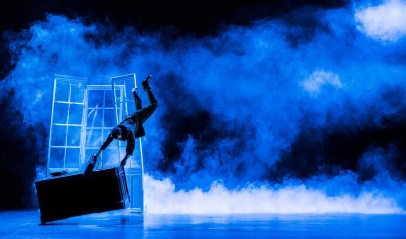
Composers know no limits when it comes to expressing conditions we aspire to — whether happiness, love, or peace and reconciliation. Far from being bland and samey, every harmony — metaphorical and literal — is, to tweak Tolstoy, harmonious in its own way.

That was one of the many strong impressions left by last night’s performance at St. James Cathedral by Seattle Pro Musica (SPM). The program, titled dona nobis pacem, brings SPM’s highly rewarding season to its close with a characteristically bold and stirring send-off (repeat performance tonight, May 20). Its themes of war and peace — timed just ahead of Memorial Day — feel as urgent as ever.

Artistic Director Karen P. Thomas structured the program around Ralph Vaughan Williams’ choral-symphonic masterpiece of the same name, which filled out the second half. The first half comprised a fascinating variety of pieces also centered around the yearning for peace and solace, as well as the grief caused by war and violence. “It is when these themes are addressed that the unmistakable power of music is often mostly keenly felt,” writes Thomas “–to give voice to emotions which are beyond words … and to lift up the human spirit with visions of a better world and a nobler humanity.”

The concert additionally offered a deeply satisfying “status report” on the state of SPM itself — in glowing, radiant health — while displaying its unique strengths across the vocal spectrum. Thus Thomas launched the program with the subchoir Orpheon (the men’s voices) in a rarely heard choral work by Nikolai Golovanov from just before the Bolshevik Revolution. Setting a part of the Orthodox liturgy of St. John Chrysostom — and one of the last surviving compositions of a sacred music tradition that the Soviets sought to wipe out — Mercy of Peace established a mood of supernal calm with exquisitely tapered dynamics.

Next up was the all-women’s Chroma section in a piece SPM commissioned in 2007 from American composer John Muehleisen: Da Pacem, which subtly weaves in references to motets by J.S. Bach. Chroma followed their impassioned  account with the ancient plainchant melody Muehleisen used as a basis.

The next subchoir, Vox (mixed voices), turned to the English composer Herbert Howells, familiar in choral circles mostly for his Anglican sacred music. Take Him, Earth, for Cherishing, setting a text by the 4th-century Roman Christian poet Aurelius Prudentius Clemens, is a profoundly poignant composition from 1964 dedicated to the memory of the slain J.F. Kennedy (programmed to mark the centenary of JFK’s birth this month). The sense of unforced flow and long-range breathing Thomas commanded from her singers was a textbook example of effective choral phrasing.

Another delight of SPM’s programs is the seamless “staging” of the program’s order. While Chroma sang the mesmerizing canonical repetitions of another Da Pacem chant setting (by the German Renaissance-to-Baroque composer and theorist Johann Christoph Demantius), the full SPM ensemble discreetly gathered to join in for the remainder of the program’s first half.

The beginning words of the traditional Latin Requiem Mass inspired American composer and scholar Peter Winkler to write his musical response to 9/11 for a cappella choir, making powerful use of anguished silences and unexpected breaks in the voices to highlight the sense of desperation.

Thomas’s rich program included several other musical discoveries, such as Canadian composer Eleanor Daley’s 1998 setting of parts of For the Fallen, a poem by Laurence Binyon associated with England’s grieving for its loss at the beginning of World War One. Zachary Lyman’s trumpet offered a touching counterpart to the simple, heartfelt piece.

All season Thomas and SPM have been participating in a season-long celebration of the legacy of the late Bernard Herbolsheimer (who died in January 2016). And what a compelling piece they chose for this program: …for they shall… unfolds as a remarkable harmonic “battle” between the instruments (trumpets and timpani) and the choir, with the former playing martial and aggressive, almost chaotic, passages in strikingly different keys from the singers’ placid recitation of the Beatitudes — two worlds of violently contrasting sound that eventually align on the same key for a brief moment of hope, which is soon undercut by the menace of the timpani.

The Herbolsheimer also served to foreshadow the culminating Vaughan Williams. Ending the first half was another breath of respite in the famous Nunc dimittis from 1915 by Vaughan Williams’ friend Gustav Holst. Thomas paced the music beautifully, making the luminous climax of the work, written for eight-part choir, a destination not just reached but earned.

For the Vaughan Williams, SPM pulled out all the stops, glorying in the powerful emotions, contrasts, and colorful sound worlds of a full-blown symphonic-choral score. It’s not often we get to hear them perform on this scale — and the results were nothing short of thrilling.

dona nobis pacem is a visionary cantata created during a period of worldwide political fear and dread. Vaughan Williams wrote it in 1936, before “the clever hopes … of a low dishonest decade” had expired, to borrow Auden’s phrase. Prime Minister Neville Chamberlain continued to stoke false hopes of appeasement, and Vaughan Williams’ cantata grew increasingly into a warning — another case of art lighting the way unheeded.

The concept behind the work is also advanced and would point the way to a later masterpiece of 20th-century English choral music: Benjamin Britten’s War Requiem for the reconsecration of Coventry Cathedral (bombed in World War Two).

Agnostic (or atheist) that he was, Vaughan Williams is responsible for some of the most beautiful “sacred” music of the last century, including the 1921 Mass in G minor (reflecting his own experiences on the French battlefields in the Great War). dona nobis pacem isn’t a liturgical work by any means, but it exudes a Requiem’s sense of grappling with loss, of coming to terms with grief.

For his text, the composer combined some Biblical texts with poetry by his beloved Walt Whitman (the inspiration for his much earlier A Sea Symphony as well) and a brief speech excerpt from a British politician warning against Britain’s involvement in the 19th-century Crimean War.

The singers were joined by a full orchestral ensemble for the c. 40-minute composition, which began with soprano Tess Altiveros’ moving solo plea for peace (from the Agnus Dei) — a universal plea that soon segued into the concrete terrors catalogued in Whitman’s Beat! Beat! Drums!

Especially in Vaughan Williams’ brass-and-percussion-heavy musical guise — with a few nods to Verdi’s Requiem — the poem’s depiction of “terrible drums” and “bugles” interrupting the peaceable life became a Civil War Dies Irae. (Never mind that a certain U.S. President recently proved to be clueless even as to the basic facts of a war that so profoundly shaped the nation passed down to us.)

Thomas obviously regards this score as a masterwork and had rehearsed the assembled forces in great detail. She also displayed a magnificent theatrical sensibility in the pacing and unfolding of these complex emotions. (I’d be eager to have a chance to hear her conduct for the stage.) The transitions between movements were notably effective, as was the immersive brass climax after “the strong dead-march enwraps me” (in the fourth movement, “Dirge for Two Veterans”).

Baritone solo Matthew Hayward sang with gripping emotion in the third movement (“Reconciliation”), which comes closest to the intimate intensity of Britten’s later War Requiem. Given the challenges of the Cathedral acoustics for combined forces of this size, Thomas judged balances well, allowing for maximum impact at the moment when all hell truly does break loose in the apocalyptic “The Angel of Death.”

From there to the solo soprano’s return at the end — again pleading, imploring for the seemingly unreachable peace — is the endless cycle of humanity’s struggle. But however familiar the pattern, this rousing performance engaged the listener in the urgency of the message, and the vision, in this our time.

One more performance, tonight at 8:00 pm, at St. James Cathedral. Information here.

Review (c) 2017 Thomas May. All rights reserved.


Filed under: choral music, review, Seattle Pro Musica

Seattle Symphony’s [untitled] 3: Wow!

Friday night brought the season finale of Seattle Symphony’s innovative — and always fun — late night [untitled] series. As usual, the affair offered a program of adventurous and far-ranging chamber music, here linked by the personalities of two powerfully individual artists who feel familiar yet who remain mysteriously unfathomable.

“I am deeply superficial,” goes one of the bon mots — or Warholian koans —  in Andy Warhol Sez, a collection of seven brief pieces for bassoon and piano by American composer Paul Moravec. Each is prefaced by the bassoonist reciting a quotation from Warhol, followed by bassoon-keyboard duets that either further ironize or contradict the statement — or perhaps have nothing to do with it at all.

Moravec wrote AW Sez for David Sogg, a bassoonist with the Pittsburgh Symphony, in Warhol’s native city, but it seemed tailor-made for SSO principal Seth Krimsky. His drily sardonic recitations gave way to spirited playing that conjured multiple personalities.

Cristina Valdés, who supplied theatrically appealing counterpoint from the keyboard, returned for the second work, Tinkling or killing time in an airport lounge (and being arrested) by Yannis Kyriakides, a composer now based in the Netherlands.  The inspiration here was a scene from the documentary Thelonius Monk: Straight, No Chaser, in which the jazz legend was found wandering around Logan Airport and taken by the police to the state hospital and released after a week of observation.

Elena Dubinets, SSO’s Vice President of Artistic Planning, explained that Kyriakides created a virtual mini-piano concerto, giving a demanding and prominent role to the pianist, who frames the piece, which is based on Monk’s song Trinkle Tinkle.  Valdés conveyed the hypnotic fascination of the writing flawlessly,  which certainly mirrors the composer’s description of the airport scene: “Monk [was] seen spinning around like a whirling dervish in an airport space.”] SSO Associate Conductor Pablo Rus Broseta, leading the chamber ensemble, allowed space for the most eccentric gestures to register without sacrificing rhythmic precision.

The rest of the program was filled out by a winning and generous “sample” of a larger work: Andy: A Popera, courtesy of the Philadelphia-based collective The Bearded Ladies Cabaret. This is not a “bio-opera” but a fanciful, whimsical, at times unexpectedly incisive music theater hybrid that loosely riffs on images of an artist who was all about riffing on images.

The score itself is characteristically unclassifiable, a seamless mingling of contributions by company member Heath Allen and Dan Visconti, to a libretto and direction by the insanely talented John Jarboe (Bearded Ladies’ artistic director).

Gender is merely one category that becomes dizzyingly fluid in this show, which resurrects the artist’s mother, Julia Warhol (Malgorzata Kasprzycka) and presents the Birth of a Legend as Andrei (Mary Tuomanen) emerges from a sealed cardboard box, wielding a little camera and pinpointing members of the audience at random for their (diluted) 15 seconds of fame.

As Candy Darling, Warhol’s meta-tragic Superstar, Scott McPheeters commanded attention across the multi-level set, dying a Dido-ish death and glorying in Rebecca Kanach’s flowing, billowing costumes.

The five-member chorus was first rate, backed by a mostly rock/pop-style band that also featured SSO violinist Mikhail Shmidt on viola. The confluence of pop and classical trained voices never jarred but sounded utterly convincing — a tool to ratchet up emotions just when needed.

The whole experience was so lively and enjoyable, it seemed to end too quickly. “An artist is somebody who produces things that people don’t need to have,” according to Andy Warhol. But, as he knew, who can also make people have the need.

(c)2017 Thomas May – All rights reserved

Filed under: Andy Warhol, new music, review, Seattle Symphony

Timeless Machiavelli, Timely Opera: A World Premiere from Mohammed Fairouz

Prince3

photo © Marco Borggreve

My review of the new opera by Mohammed Fairouz has now been posted on Seattle Vanguard:

There’s been a huge push in recent years for those involved in the performing arts to seem as “relevant” and “relatable” as possible. Nowhere more so than in the areas mistakenly perceived as “elitist” — above all opera and orchestral music.

But writing persuasively — with no special pleading needed — about issues and dilemmas that have a contemporary urgency seems to come naturally to Mohammed Fairouz, the acclaimed Emirati-American composer whose latest work, The New Prince, just received its world premiere in an impressive production directed by Lotte de Beer at Dutch National Opera in Amsterdam. Regarded as among the most forward-looking opera companies in the world, DNO commissioned The New Prince as part of its Opera Forward Festival initiative, which promotes new artists and fresh approaches to the art form.

continue reading

Fairouz, now 31, based his first opera, Sumeida’s Song (2011), on Egyptian writer Tawfiq al-Hakim’s play about the fatal conflict between unthinking tradition and enlightened progress. Zabur, a combination oratorio and war requiem (just out on the Naxos label), embodies his powerfully moving response to the situation in Syria that seeks hope amid its harrowing musical depiction of crimes  against humanity. Next year Pittsburgh Opera will present the opera Fairouz is currently completing: Bhutto, which focuses on the former Pakistani Prime Minister Benazir Bhutto (assassinated in 2007), the first woman to lead Muslim majority nation. The composer, who is also active as a commentator on foreign affairs, cowrote the libretto with the journalist and novelist Mohammed Hanif.

Meet the New Prince

The New Prince is characteristic of Fairouz both in the scope of its ambition and in being so effortlessly of our time. Set to David Ignatius’ clever libretto, The New Prince imagines Niccolò Machiavelli doing the time warp across the centuries as he faces the challenge of updating the work for which his name has become notorious — and profoundly misunderstood: Il Principe (The Prince).

The premise is that the Renaissance philosopher, writer, and diplomat has been reawakened in 2032 — 500 years after The Prince had been (posthumously) published — and must substantially revise his text to appeal to a changed marketplace. His lover and Muse, the goddess Fortuna, tells him he needs to account for world historical events in the intervening centuries. And he needs a “new prince” — a protege whom he can advise about how to wield power: Wu Virtu, the president of Amerasiopia, the troubled fusion nation of the near-future.

Prince2

photo © Marco Borggreve

This basic scenario borrows the structure Jacques Offenbach used in his Tales of Hoffmann, in which a sequence of self-contained episodes we see unfolding is unified by the presence of the writer and his muse. In a framing prologue and epilogue, we see the distressed Machiavelli  try to come to terms with his lot; by the end, as in Hoffmann, he is compelled to find solace by retreating into his inner creative world.

In The New Prince, the quickly moving episodes present famous figures from history caught up in various sorts of errors that will threaten their control of power — cautionary tales Machiavelli uses to illustrate his point, though the self-absorbed Wu Virtu only half-listens and has no interest in letting the lessons sink in.

We see examples of “why princes should beware of revolutions” in the figures of Savonarola (the fiery Florentine preacher from Machiavelli’s own time), Hitler, Chairman Mao, and the revolution-counterrevolution of contemporary Egypt. Next comes the lesson on “why princes should suppress (or hide) their human urges,” starting with the first U.S. sex scandal (a cheating Alexander Hamilton) and repeated in the Clinton-Lewinsky melodrama.

The last lesson addresses “why princes must avoid a ‘collision of civilizations.’” In the aftermath of 9-11, the figures of Osama bin Laden and Dick Cheney are seen to be alter egos in their rigid appeal to abstract “higher laws” at the expense of real human beings.

Prince1

photo © Marco Borggreve

David Ignatius is a veteran writer best known as a foreign policy expert (he’s an esteemed Washington Post columnist and editor) and also as the author of such bestselling espionage novels as the first-rate Body of Lies. But this is his debut venture as an opera librettist. Using the Hoffmann model as a guide was an inspired idea. Ignatius also seems to have had the tone of Stravinsky’s The Rake’s Progress in mind — his tight verse radiates a sardonic humor throughout, even in the most disturbing sections.

At times I was even reminded of a Brechtian Lehrstück in the “parable”-like line-up of events — though, of course, the lessons intended here are never learned. Thus the lack of character “development” — save for the negative enlightenment experienced by the hero — is inherent in the narrative fabric. Most of the characters are meant to be quick sketches, not fully fleshed out psychological portraits a la naturalism.

Ignatius adds a fascinating twist to the Tales of Hoffmann model. Machiavelli himself is assigned a “ghost-writer” in the form of that eminently modern Machiavellian (in the popular sense), Henry Kissinger — whom the Italian prizes as ideally suited to serve as his “scribe and jester.”

And in place of the evil personified by Dapertutto — Hoffmann’s arch-nemesis in Offenbach’s opera — The New Prince suggests persistently recurrent human foibles as the roadblock to effective rule. Despite believing he has “figured out, at last, the trick that makes the grand game work,” Machiavelli continues to wonder at the resistance of would-be “princes” throughout history to his wisdom: “Does anyone listen? Can any power bend the chain of princely error?”

Prince6

photo © Marco Borggreve

Strong Production Values

Fairouz has composed a delightfully fluid score that unites his gift for writing for the voice with his bold symphonic imagination. The orchestra isn’t particularly large — it had to be accommodated by the pit of the Stadsschouwburg Theatre, an alternate venue used by Dutch National Opera for some of its projects — but Fairouz paints a remarkable variety of soundscapes with economy.

The opening prologue in particular sets up the world of the opera with terrifying immediacy as we see Machiavelli undergoing strappado torture at the hand of the Medicis. The intermissionless New Prince ranges wildly across stylistic references (as it does across centuries) — curt Weill-like marches, Baroque gestures, touches of Broadway and cabaret, and simple but soul-searing melodies — but amid this cornucopia of musical imagery there erupts, always surprisingly, a sudden, live-wire interjection by the orchestra.

It seems to tap right into the violence that forms a perennial bedrock of human history — and that, for all his calculation, Machiavelli is never able to subdue or suppress. Fairouz also uses a recurring harmonic sequence as a metaphoric binding device. It’s reminiscent of Philip Glass, but Fairouz makes the gesture his own by recontextualizing it into his riotously eventful score.

With his large, expressive baritone and vivid stage presence, Joshua Hopkins excelled in creating the role of Machiavelli. Fairouz reserves most of the opera’s vocal highlights for him — especially the chastened beauty of the epilogue, after so much frantic activity, in which Machiavelli resigns himself and prepares to “enter the courts of the ancients.”

There’s also some terrific material for Fortuna (strikingly characterized by Karin Strobos), but I longed for more-extended treatments of several major characters. Simon Lim’s Wu Virtu was imposing, but the character ends up feeling too much like a blank slate to make his turning against Machiavelli at the end effective.

Prince5

photo © Marco Borggreve

The New Prince calls for a large cast of 13, and filling the roles was a mix of trained opera singers, actors involved in musical theater, and young artists from DNO’s training program. Thus Kissinger was played, with roguish style, by the Broadway performer Marc Kudisch. (It’s interesting to compare his characterization with that in John Adams’s Nixon in China from 1987, which as far as I know is the first — and only other — work to have brought the diplomat to the opera stage. In Nixon he has more of a comic relief function.)

In keeping with the opera’s core idea of the recurring patterns of human nature and history — a lesson that, we sense, makes Machiavelli suffer profound disillusionment in his 500+-year-old reincarnation — several cast members played multiple roles. Barbara Walsh, doubling as Eliza Hamilton and Hillary Clinton, exuded vulnerability, while Paulo Szot was true luxury casting for a combined Alexander Hamilton, Bill Clinton, and Dick Cheney. As a supremely cocky Cheney, Szot was especially memorable in his duet with the marvelous actor George Abud’s chillingly assured bin Laden.

DNO puled out all the stops in terms of production values. Lotte de Beer proved why she’s such a prized director, shaping a brand-new, heavily ensemble-oriented show into a thoroughly engaging theatrical experience.

Her urgent pacing, along with the choreography by Zack Winokur, was perfectly attuned to Fairouz’s busy score, abetted by Alex Brok’s almost hallucinogenic lighting design (with its occasional parodies of Broadway kitsch) and the time-traveling set and costume design by Clement & Sanôu.

Conductor Steven Sloane showed affinity for Fairouz’s highly theatrical score while also eliciting a symphonic attention to detail from the Residentie Orkest.

As a counterpart to the Cheney-bin Laden scene, Fairouz and Ignatius include an appearance by the late diplomat Prince Saud al-Faisal. It’s a bit too “straight” to fit in with the tone of the rest of the opera, but the message — that there can never be a “clash of civilizations between us … it is a contradiction in terms” — introduces a hopeful counterpoint to Machiavelli’s dictum that “if we must choose between being feared and loved, we should choose to be feared.”

Perhaps the new Machiavelli, in light of his latest experiences, will reevaluate that advice and discover a more reliable method to enlighten the ideal prince.

(c)2017 Thomas May. All rights reserved.

Filed under: American opera, commissions, Mohammed Fairouz, review

Timeless Machiavelli, Timely Opera: A World Premiere From Mohammed Fairouz

Prince2

photo © Marco Borggreve

My review of the new opera by Mohammed Fairouz has now been posted on Vanguard Seattle:

There’s been a huge push in recent years for those involved in the performing arts to seem as “relevant” and “relatable” as possible. Nowhere more so than in the areas mistakenly perceived as “elitist” — above all opera and orchestral music.

But writing persuasively — with no special pleading needed — about issues and dilemmas that have a contemporary urgency seems to come naturally to Mohammed Fairouz, the acclaimed Emirati-American composer whose latest work, The New Prince, just received its world premiere in an impressive production directed by Lotte de Beer at Dutch National Opera in Amsterdam. Regarded as among the most forward-looking opera companies in the world, DNO commissioned The New Prince as part of its Opera Forward Festival initiative, which promotes new artists and fresh approaches to the art form.

continue reading

Filed under: American opera, commissions, Mohammed Fairouz, new opera, review, Vanguard Seattle

Playing Dangerously

I finally had my first live experience of Patricia Kopatchinskaja and Teodor Currentzis, who brought his Perm-based musicAeterna to Lucerne’s Easter Festival last night for the first of two programs: early Mozart and Beethoven Eroica.

It very well might have been a new music evening: that’s how unexpected and full of discoveries the performance was. Currentzis has become something of a cult figure, and it’s easy to see why. A friend compared him visually to Hoffmann’s Kapellmeister Johannes Kreisler, with his spindly legs and tall, lanky figure. I wish I could have seen the expressions he was flashing, mirrored, I suspect, by his restlessly gesturing hands.

Currentzis seems to decide on the spur of the moment to fixate on a particular player or section, and then to stare them down, whip them up to further excitement, coax out a sudden swell or tamp it down to near inaudibility. No one knows when or where he’ll pounce: it’s all part of the electricity.

Mozart’s G minor Symphony K. 183 was full of shocks and epiphanies: the sort of thing we tend to privilege to the really big works like Eroica, but which are strewn about far and wide, and so unrecognized in so many other sources. I especially welcomed how Currentzis balances his spontaneous, red-hot, in-the-moment aura with carefully thought-through decisions (the articulation of the second theme reprise-time around, when it emanates a menacing despair;  tempo differentiation of the Minuet and the Trio).

Patricia Kopatchinskaja is a revelation, nothing less. The playing in her bare feet, the poses she strikes, the comic interplay with Currentzis: the things people like to focus on are just a part of her entire, fascinatingly refreshing outlook, and it’s rooted in brilliant insights about the source of invention, say, in the Mozart D major Violin Concerto (K. 218) she played.

Actually, Kopatchinskaja didn’t just  show up and “play” it, fulfill her contract, job done. It was such an unusual ratio of performance energy and creative expenditure to the Concerto’s part on the program.

It felt like an epic, and the audience seemed to learn far more than it had bargained for about what makes a concerto work, about how a soloist can interact with an ensemble of independent-minded players. Mozart’s folk song ploy in the finale became the key to Kopatchinskaja’s improvisational approach overall — the cadenzas she contributed wouldn’t have been out of place in Ligeti — and a bridge to her encores of Bartók and Enescu.

In their period-instrument Eroica, musicAeterna’s dangerous playing kept me on the edge of my seat throughout. I’ve never experienced in live performances of Beethoven’s Third such a powerful presence from the timpanist.  The impact of the drums in the Funeral March was at devastating as in Mahler’s Sixth finale.

A couple of wind players almost lost the reins in the finale when one clarinetist got so worked up he knocked a stand over– at first it looked like there might be a domino effect, just before a big solo for the oboe (so much a protagonist in this symphony!). Aside from an emanation of angst-waves — like watching a tightrope walker regaining balance — the music pushed ahead, and was the more intense for it.


Filed under: Beethoven, Lucerne Festival, Mozart, review

“More Light! More Light!” Morlot and the Seattle Symphony Tackle Beethoven’s Fifth

It would be interesting to know how many audience members comprising the very full house for this performance were hearing their first-ever live Beethoven Fifth. Even for aficionados, the encounter was unusual. Ludovic Morlot and the Seattle Symphony created a boldly original framework in which to present the Fifth Symphony, their account of which also marked the conclusion to a two-year cycle of the complete symphonies and piano concertos.

continue reading

Filed under: Bartók, Beethoven, review, Seattle Symphony

Dinner at Eight Fails to Sate the Appetite

My Musical America review of the new opera Dinner at Eight by composer William Bolcom and librettist Mark Campbell is now live (behind the MA paywall).

ST. PAUL, MN–Minnesota Opera has long had in place a vigorous program to promote the creation of contemporary works. Dinner at Eight is the latest of these and brings the tally of new operas that the company has produced to 45. For this project …

continue reading

Filed under: American opera, Minnesota Opera, Musical America, review, William Bolcom

A.J. Kernis’s Killer New Violin Concerto at Seattle Symphony

1617_Concerts_Kernis_Press-004

photo by James Holt

In last night’s Seattle Symphony concert led by Ludovic Morlot,  James Ehnes introduced a brand-new violin concerto written for him by one of today’s finest composers, Aaron Jay Kernis. This was the U.S. premiere; last week Ehnes gave the world premiere in Toronto (a co-commissioner with SSO).

Talk about making a great first impression! Despite — or even because of — its terrorizing challenges for the soloist, this is a concerto built to last: it’s so good and makes such an obviously satisfying contribution that I’d bet at least some of the more interesting virtuosos at work today will be intrigued to take it on.

I sometimes wonder whether we’ve been going through something of a concerto overload in recent years: too many composers relying on the supposedly built-in attractions of a structure that can feature a star protagonist while also benefiting from the color and horsepower of an orchestra (even if the latter is used merely for “atmospheric” painting rather than in a richer, symphonic way).

One of the many things that impress me about this new piece is that Kernis has really thought through the concerto idea and created something substantial and fresh without relying on esoteric novelties — without trying to reinvent the wheel.

In fact, an attempt at abstract description of the piece might make it sound almost old-fashioned, but it’s not. Like Brahms writing for Joseph Joachim (though Kernis himself studied violin as a youngster), he resorts (distantly) to Baroque forms in the outer movements — an intensely felt and gripping Chaconne for the first and a “Toccatini” (his play on the toccata) for the finale — with a soulful “Ballad” doing service as the aria at the center. And the profusion of little cadenza-islands amid the orchestral archipelago also underscores the concerto’s conventional identification with virtuoso prowess.

But Kernis animates all of these conventional elements with a marvelously contemporary spirit. The first two movements have deep emotional resonance, while the finale is so infectiously zippy (and outrageously hard to play) it leaves you with a buzz — a musical martini, as the composer jokes.

He’s often described as “eclectic,” but I don’t think that does justice to the distinctive personality Kernis conveys in his Violin Concerto. True, there are hints of, well, Brahms (in the emotional severity and fatalism of the first movement), Berg, Bach, Stravinsky for sure (in the finale), Messiaen (the wondrous tangles of sound in the “Ballad,” which is also cured with jazz and blues flavors). But instead of a random mishmash, Kernis amalgamates these idioms into a rich, compelling harmonic language and flow of ideas.

One could appreciate Kernis’s score on the level of its orchestral ingenuity alone: such interesting sounds and blends, which paradoxically erase the model of individual “versus” the orchestra — at least over long stretches of the piece. Paradoxically because, on the most obvious level, this concerto it is a virtuoso showpiece in the old school sense.

But with James Ehnes as the soloist, the clichés often signaled by “virtuosity” — mere dazzle, effects without causes — have no bearing. It’s clear that Kernis tailored the piece to display this unmatchable violinist’s musical intelligence, taste, and beautiful sound production above all incredible technical feats he calls for (of which this piece is essentially a violinist’s compendium).

Whether Ehnes was attacking a fearsome passage of double-stop chords with his signature elegance or deftly sprinkling a torrent of precisely placed pizzicati,  it was like watching  a veteran climber scaling a particularly brutal mountain face sans ropes.

But for all the thrills and escapades, the overall impression he left of the concerto — which Kernis has dedicated to Ehnes — was of a rich, many-colored, joyful composition that has something compelling to say, and that resonates afterward.

Again, this is all part of the extraordinary balance Kernis has achieved in his Violin Concerto, overriding binaries of dark/light, intense/carefree, Apollonian/Dionysian, “serious”/enjoyable.

Morlot — a big part of this success in the less obvious task of precision-engineering and calibrating Kernis’s complex orchestral apparatus — was a deeply  sympathetic collaborator in this premiere.

He opened the program with a youthful curiosity by Debussy from a student cantata (the “Cortège et Air de danse” from L’enfant prodigue). The second half brought Beethoven’s Sixth.

Morlot’s account of the Pastoral from several seasons ago has stayed with me as some of his best Beethoven. It’s fascinating to hear him continuing to develop his ideas of this piece. Connections between the movements (even between symphonies) emerged effortlessly — above all in the limber, serenely flowing string lines of the second and last movements, which were reminiscent of his vision of the Ninth’s slow movement at the beginning of the year.

Despite some ensemble untidiness, there was especially delectable work from the winds (Eric Jacobs’ clarinet as beguiling as the voice of Orpheus). Michael Crusoe’s timpani pulsed with dramatic thunder and lighting in a storm movement that sounded like a sketch for The Flying Dutchman: further evidence of the silliness of that persistent cliche about the “placid” even-numbered versus “revolutionary” odd-numbered Beethoven symphonies. Next week brings a further chance for comparison, when Morlot and the SSO close out their two-year Beethoven cycle with the mighty Fifth.

(c) 2017 Thomas May. All rights reserved.

Filed under: American music, Beethoven, commissions, James Ehnes, Ludovic Morlot, review, Seattle Symphony

Archive

Enter your email address to follow this blog and receive notifications of new posts by email.