MEMETERIA by Thomas May

Music & the Arts

Lawrence Brownlee, Tenor of Grace

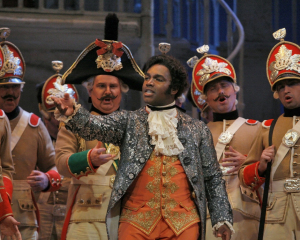
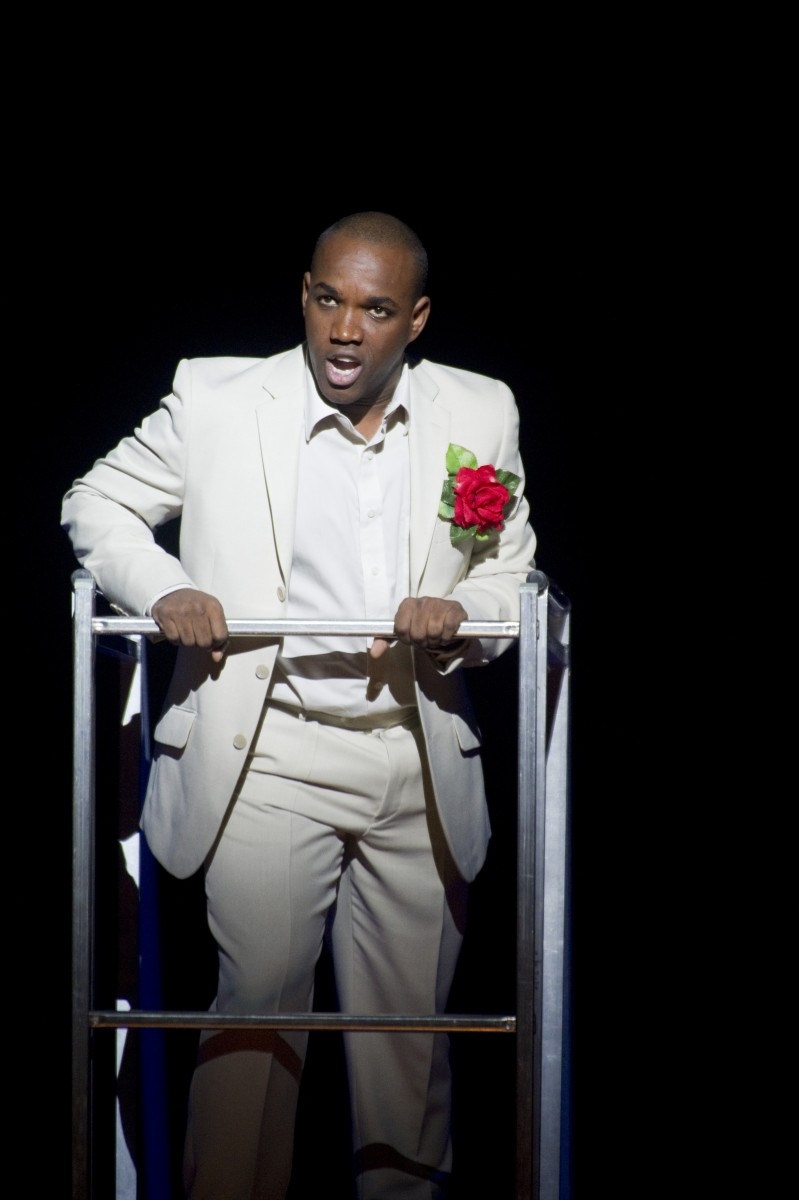
Lawrence Brownlee as Almaviva in Barber, one of his signature roles; photo by Ken Howard

Lawrence Brownlee as Almaviva in Barber, one of his signature roles; photo by Ken Howard

The marvelously gifted tenor Lawrence Brownlee makes his Los Angeles Opera debut as Tamino this coming weekend in the Barrie Kosky production of The Magic Flute. Here’s a profile I recently wrote about Larry for Seattle Opera, where he appeared last month as Tonio in The Daughter of the Regiment:

Nowadays no American tenor is more in demand than Lawrence Brownlee when it comes to the bel canto repertoire. And it’s easy to imagine the impression Brownlee’s voice—with its signature combination of sweetness, warmth, and flexibility—would have made on Gaetano Donizetti, or any of the bel canto composers. With their elegant melodies and deeply felt emotions, they were writing, it seems, specifically to Brownlee’s strengths, and he has proved that he has the versatility to excel in the distinctive styles developed by each member of bel canto’s famous triumvirate: Donizetti, Bellini, and Rossini.

“People always tell me I sound like an old-school singer,” Brownlee remarks, “but that’s not something I consciously try to do. That’s just the way my voice is made and constructed, so it naturally fits this repertoire…. I think of myself simply as a bel canto tenor.”

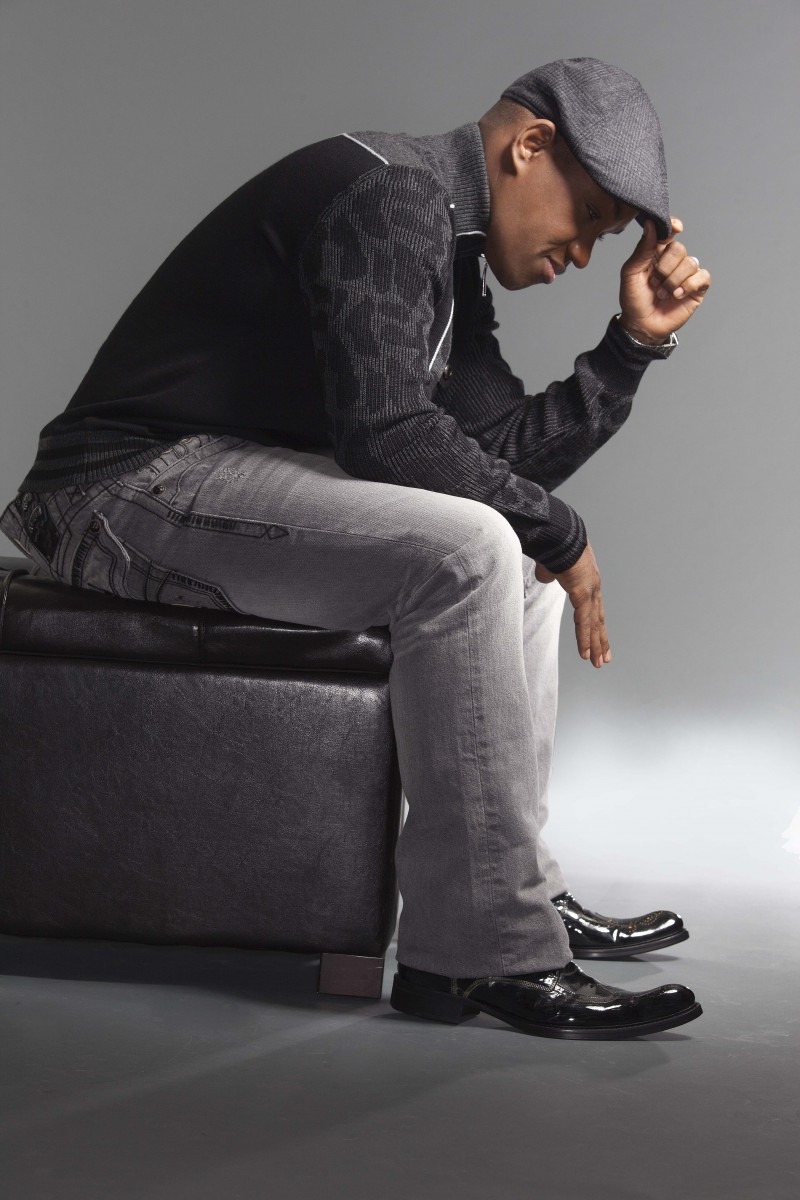
Larry offstage; photo by  Derek Blanks

Larry offstage; photo by Derek Blanks

The star tenor is speaking by phone from a hotel room in Berlin during a rare day off in late summer, before heading to Palermo to sing Rossini. His next stop: Seattle, to sing Tonio in The Daughter of the Regiment. Anyone who meets Larry Brownlee in person can attest to the down-to-earth, uncontrived modesty that likewise comes naturally to this son of the rustbelt city of Youngstown, Ohio.

While Brownlee’s international reputation is particularly associated with his interpretations of Rossini, Seattle audiences have had the opportunity to hear and see him put his stamp on major roles by Bellini and Donizetti as well.

Brownlee made his mainstage debut at Seattle Opera in 2002 in the opera buffa Don Pasquale as Ernesto, singing another of Donizetti’s lovestruck comic heroes. And his uncompromising rendition of the high-wire vocal line assigned to the male protagonist Arturo in Bellini’s I puritani in 2007—including a full-on F above high C, not falsetto—now belongs to company legend. This coming spring Brownlee will sing the role at the Met for the first time.


“You can’t even find that on records!” says General Director Speight Jenkins, whose capacious memory-archive of a lifetime of performances can rekindle the live excitement of those Bellini nights apparently at will.

Yet what’s really impressive here—as in Brownlee’s taking on the notorious “Everest” of nine high C’s his character Tonio must sing early on in The Daughter of the Regiment—isn’t just the technical ability to produce these notes with such reliable accuracy. That’s simply the starting point. The accuracy is one thing, Jenkins points out, “but rarely do you hear the beauty of those upper tones.”

“To be able to sing Tonio’s nine high C’s always amazes people, but that’s what the voice Donizetti was writing for is supposed to do,” explains the tenor, director, and teacher Peter Kazaras, who shares the stage with Brownlee in Daughter playing the haughty Duchess of Krackenthorp in drag in Seattle Opera’s production. “The reason people were so awed when Pavarotti did it [in his career-defining performance at the Met in 1972] is that he was a lyric tenor, not the light, leggiero tenor these roles were conceived for. There are a few people who can sing this kind of repertoire, but what sets Larry apart is that he sings it and the voice is actually beautiful.”

Brownlee as Tonio in the Met's Daughter of the Regiment; photo by Ken Howard

Brownlee as Tonio in the Met’s Daughter of the Regiment; photo by Ken Howard

Jenkins, renowned for his ability to recognize the potential in young singers with startling accuracy, remembers the thrilling experience of hearing Brownlee in a rehearsal room back in his days in the company’s Young Artists Program, which he joined in 2000. It became immediately clear to Jenkins that the tenor (at the time only in his late 20s) could have a major international career.

“So many things happened for me as a result of going to Seattle early on,” Brownlee says. “I do consider Seattle my home away from home. Speight opened up a lot of doors for me and really invested in my career. Seattle Opera has given me a chance to do such a range of roles, from traditional productions to modern things like [Daniel Catán’s] Florencia en el Amazonas.”

Brownlee with Renée Fleming in Rossini's Armida at the Met; photo by Ken Howard

Brownlee with Renée Fleming in Rossini’s Armida at the Met; photo by Ken Howard

To this day, Brownlee—himself a very young-looking 40—thinks of Seattle Opera as a place that attracts a vibrant young audience. When he was here, he became especially attuned to the presence of a young audience the company fosters through its BRAVO! Club and innovative social media networks. “I’ve gotten a chance to interact with them quite a bit, and many of those people I still keep in touch with via Facebook. They knew me before I started to do other high-profile things like singing opposite Renée Fleming [in Rossini’s Armida at the Met] and they really care about me.”

The Seattle production of Daughter presents the opportunity for a family reunion of sorts. Peter Kazaras had directed Brownlee in the 2011 The Barber of Seville, and Sarah Coburn, as Marie in Daughter, once again plays the object of Brownlee’s determined love. The two also appeared together in the Seattle Opera Young Artists Program’s La Cenerentola in 2002 and in the 2011 Barber, with Brownlee singing his signature role as Rossini’s Count Almaviva.

“I feel honored and blessed each time I have the opportunity to sing with Larry,” says Coburn. “I have also come to consider him a good friend and mentor. He has given me fantastic advice many times and has the added perspective of work-family balance. He understands the challenges of family life, especially in light of constant travel.”

Brownless and Coburn as Tonio and Marie in Daughter at Seattle Opera; photo by Elise Bakketun

Brownless and Coburn as Tonio and Marie in Daughter at Seattle Opera; photo by Elise Bakketun

As a husband and father of two small children (Zoe and Caleb), Brownlee says family life “keeps me grounded. I love my job and am grateful to have the chance to perform, but my family makes me realize that it’s not all about that—everything else is relative.”

“This isn’t an easy business—I don’t know how people did it before Skype. My wife, Kendra, and I spend hours together with our Skype turned on, just to be able to share in the unsaid things of daily life.” Brownlee registers his excitement about being able to have the whole family in Seattle for Daughter, along with an extended circle of relatives.

Brownlee, who grew up with six siblings in a tight-knit working-class family, doesn’t hesitate to single out the central role they play in his life. He loves to quote pieces of homespun wisdom from his father, a retired GM auto factory worker and army veteran: “Like him, I’m a ‘glass half-full’ guy, and I’ve learned from him to worry about the things you can control: things like my weight, or how musical and expressive I can be as a performer.”

Brownlee in Rossini's L'italiana in Algeri at the Opéra de Paris

Brownlee in Rossini’s L’italiana in Algeri at the Opéra de Paris

Brownlee’s positive attitude helped him bypass what he was told by some would pose serious stumbling blocks. Though no longer so blatantly tainted by racism as it once was, the mostly-white opera world can still throw up less explicit barriers to African-American performers. Brownlee, who appears incapable of harboring grudges, refuses to dwell on the fact that he was told by some that his ethnicity would keep him from being cast in leading roles. Concerns were similarly expressed that the tenor’s stature—at 5 feet six inches—would inevitably hamper his career, no matter how extraordinary were the gifts he had to offer as a performer.

Thankfully, Brownlee refused to listen to any nay-saying. Seattle provided his first platform, and it was from this region that he was selected one of the winners—along with Sarah Coburn—of the Metropolitan Opera National Council Auditions. Only a year later, when he made his professional stage debut, he was invited to perform at La Scala, and his career kept accelerating, with major European bookings filling out more and more of his calendar.

Brownlee prefers to focus on his gratitude to all those who have inspired him on his path: from courageous pioneers like the tenor George Shirley, who paved the way for Brownlee’s generation —and whom Brownlee reveres as one of his mentors—to the colleagues he regularly refers to as if they’re all part of an extended family.

Here in Seattle, Maestro Yves Abel is also pleased about this chance to reunite with Brownlee, whom he has conducted in Europe and at the Met’s well-known current production of Daughter (relocated to World War One). “Larry is a superlative artist, extremely musical and sensitive, with an innate and varied sense of style, excellent language skills, and a doll to get along with.”

Certainly Brownlee left indelible memories of his last venture in Seattle. Along with the ravishing vocalism of that Barber production, it amply demonstrated the tenor’s considerable comic talents—his turn as Rosina’s music teacher incognito ranks as the most hilarious I’ve yet seen—and his capacity to bring out a character’s essence.

“When I was directing him as Almaviva,” says Kazaras, “I was developing a carefully choreographed language all the way through the piece for each character, and I knew I could get Larry to use his talent as an accomplished salsa dancer.” Playing on one of the Italian phrases for his type of voice (tenore di grazie), Kazaras continues, “With Larry, the watch word is graceful. He is graceful in his singing, in his stage presence, and in his life.”

But Tonio in Daughter—a role Brownlee has performed at the Met, and in Cincinnati and Hamburg—is a different kind of person from Count Almaviva. How does Brownlee strive to make such a simple comic character come to life onstage? “The most important thing is to make him come across as sincere and heartfelt. Of course, everyone thinks of the high C’s in ‘Ah, mes amis!’ when he’s on top of the world. But you have to be able to show his real pain and disappointment as well.”

“A lot of people may not realize the more difficult aria is actually the second one—‘Pour me rapprocher de Marie’—where Tonio tells the Marquise what Marie means to him. You really have to think about musicality and phrasing here and make sure not to blow it all on the first aria. I hope it will be so beautiful that people will almost forget ‘Ah, mes amis!’—but I don’t want them quite to forget it completely!”

Brownlee and  Joyce Castle (Marquise) in Daughter at Seattle Opera; photo by Elise Bakketu

Brownlee and Joyce Castle (Marquise) in Daughter at Seattle Opera; photo by Elise Bakketu

Inevitably, Brownlee’s approach to these roles is compared to that of his almost-exact contemporary, the Peruvian tenor Juan Diego Flórez. (On YouTube you can easily find a video juxtaposing clips of Brownlee, Flórez, Pavarotti, and Alfredo Kraus singing Tonio, while heated discussions over their relative merits transpire on numerous blogs and listservs.) But when he mentions Flórez, it’s impossible to imagine one of the old-fashioned singer rivalries playing out. “Juan Diego is a friend. I also think he’s a great artist, and we have mutual respect for what each other does.”

Later this season Brownlee will be back in Europe to sing Donizetti at the Vienna Staatsoper (Nemorino in L’elisir) and Rossini in Munich (for Il turco and Cenerentola). His newest recording, Spiritual Sketches, meanwhile represents an entirely different direction that he hopes to pursue further. A set of ten arrangements of traditional spirituals for voice and piano by one of Brownlee’s friends, this latest release reveals what will sound like a whole new dimension to the tenor’s art to those who know him as a bel canto expert. Yet here Brownlee looks back affectionately to his musical beginnings, recalling his boyhood singing in the church gospel choir with his family.

On the heels of his Seattle engagement, Brownlee will be making both his role and company debuts as Prince Tamino at Los Angeles Opera in the Suzanne Andrade-Barrie Kosky production of The Magic Flute, described by The Guardian as “a perfect mixture of … silent films, the cabaret of the Weimar Republic, David Lynch, and the brothers Grimm.”

“It’s my first professional role in German,” says Brownlee, “and I also hope I have some more Mozart in my future. It’s nice to do that in addition to the Italian bel canto. The goal is to continue to grow as an artist. Hopefully I’m still at the beginning of my journey and will try to keep getting better and enjoy the ride.”

(C) 2013 Thomas May. All rights reserved.

Filed under: artist profile, bel canto, opera, Seattle Opera

Legacy of a Ringmaster: Speight Jenkins and Seattle Opera

speight_jenkins
This week brings the final Ring cycle in Speight Jenkins’s 30-year reign as general director of Seattle Opera. Here’s my new feature reflecting on how the Ring became the company’s signature production and the twilight of the Jenkins era:

Speight Jenkins remembers a lot of violent, hostile booing. What made it all the more shocking is that Seattle audiences and booing don’t exactly a typical match make – as everyone knows in this city of the polite Obligatory Standing Ovation immediately followed by the Hasty Exit.

But whenever he refers to that night in hindsight, Jenkins explains why it ranks among the most treasured memories of his career as head honcho at Seattle Opera: “That night – July 28, 1985 – made this company. The controversy it excited was absolutely vital to Seattle Opera

read on

Filed under: Seattle Opera, Wagner

Burning Down the House: Seattle’s Götterdämmerung

Image
Richard Paul Fink (Alberich) and Daniel Sumegi (Hagen); photo ©Alan Alabastro

Talk about a buildup: I can’t think of any other work of art, let alone opera, that stokes our sense of anticipation with such prolonged intensity as the Ring’s grand finale. The whole shebang came about, after all, because Wagner wanted to fortify the emotional payoff of what became Götterdämmerung.

Providing the back stories leading up to his depiction of Siegfried’s downfall and Brünnhilde’s final enlightenment isn’t the only thing the first three Ring operas are supposed to do. They’re meant to give these events a dramatic and musical weight that’s only possible if the audience is persuaded to commit itself over the Ring’s vast scale. And that’s what ultimately can make the cycle feel so “cosmic” – not its mythic congeries of mermaids, gods, giants, dwarves, et al.

On Friday night Seattle Opera arrived at the conclusion of its signature Ring – the first of three cycles being given in this Wagner bicentennial year, as well as in the final season of general director Speight Jenkins’ long tenure.

Which is to say, there’s an additional layer of significance to this Ring for Seattle audiences and for the impressive percentage of non-local fans who’ve made the pilgrimage from afar for what may be their last chance to see this production.

I’ve found this round of the Seattle Ring immensely satisfying as a whole. For those who have had the fortune to see earlier iterations since it was unveiled in 2001, this latest encounter delivers a special cumulative effect of its own by way of comparison with the previous versions. An important factor here is the readjustment of the chemistry of the performing forces, with both a conductor and key members of the cast new to the production.

Die Walkure
Die Walküre: Alwyn Mellor (Brünnhilde), Greer Grimsley (Wotan); photo ©Elise Bakketun

One of these is the British soprano Alwyn Mellor, whose portrayal of Brünnhilde in Die Walküre had the dramatic range to match her enthralling vocal presence. It’s been said that the Ring contains three Brünnhildes, but already in this opera Mellor homed in on different layers of her character beyond the exuberant war cry that first introduces her – above all in the Death Annunciation scene, where she learns compassion from the doomed Wälsung twins, but also in the bewilderment displayed in her last confrontation with Wotan. More than ever before, I was riveted by the “gulf of misunderstanding” that tragically separates her from the “warfather” god – but that will set her on the path to her own liberation.

Unfortunately Mellor fell prey to an ailment and had to bow out of the rest of the cycle. If Lori Phillips, the cover for Brünnhilde, saved the night with her passionate and well-acted performance in Siegfried’s final scene, her ability to step in the spotlight at the last-minute for the brutal demands of Götterdämmerung was little short of miraculous. Both the “continuation” of her love duet on the rock with Siegfried and Brünnhilde’s scene with Waltraute were highlights of the evening. Given the circumstances, it’s hard to fault Phillips for being less convincing in her character’s volatile transformation in the second act. There was a further loss of emotional complexity in the Immolation Scene, where the toll on her upper range became most apparent.

Götterdämmerung 2013
Götterdämmerung: Stefan Vinke (Siegfried), Daniel Sumegi (Hagen), and Markus Brück (Gunther); photo ©Alan Alabastro

I suspect this sudden change in the partner he had rehearsed with most closely may account, in part at least, for a less satisfying rendition of the mature Siegfried by the German tenor Stefan Winke (also new to the production) than the young hero he had managed to make so compelling two nights before.

But another part of the “Siegfried problem” is beyond any individual performer’s control. Let’s face it: Wagner’s actual presentation of Siegfried in Götterdämmerung is deeply flawed. No sooner does Brünnhilde send him off to perform great “new deeds” than he is duped by Hagen and the scheming Gibichungs. He’s not only passive but (rather like Wotan) perfectly willing to compromise himself morally – and this on his own accord – to get what he wants (Gutrune); and like Mime, he fails to learn what he needs to know when he has the chance to from the Rhinedaughters.

Stefan Vinke in Siegfried’s “Forging Song”

At any rate, Vinke’s singing still produced thrills (including a daringly sustained high C in his response to the hunting party soon before his death). But apart from his eerily shaded voice as he sang from within a cave to Gunther’s onstage lip-syncing for the abduction of Brünnhilde, there was far less variety of phrasing than Wednesday night; Vinke tended toward a more one-size-fits-all projection and, most problematically for me, failed to convey the sense of Siegfried’s sudden, harrowing realization of what has been lost in his final, “undrugged” recall of Brünnhilde before he dies.

Still, the massive prelude-plus-first act (nearly comparable in length to the whole of Rheingold) was among the most memorable segments of the cycle. It almost seemed to play out in one sustained arc of thoroughly riveting theater.

Götterdämmerung 2013
Götterdämmerung: Alwyn Mellor (Brünnhilde) and Stephanie Blythe (Waltraute); photo ©Alan Alabastro

Stephanie Blythe’s contributions to the Seattle Ring are pretty much exaggeration-proof. As Fricka in the first two operas, her complex but loving relationship with the excellent Greer Grimsley’s Wotan have been a defining feature of director Stephen Wadsworth’s interpretation since it premiered. As if that weren’t enough, her sculptural phrasing and vocal phrasing also added texture and atmosphere to the Norns (joined by Luretta Bybee and Margaret Jane Wray, who delivered such a moving Sieglinde). And Blythe’s Waltraute, with its “preview” of the Immolation Scene summing-up, actually eclipsed the latter on this occasion. Particularly in this staging, it is this scene that represents the point of no return (rather than the Rhinedaughters’ last-ditch plea later in act three).

I was also extremely pleased with newcomer Wendy Bryn Harmer. She’d also appeared as one of the Valkyries and as a distraught Freia (a great addition to the roster of gods, as was the demigod partially responsible for her plight, Loge, given a mesmerizing performance by Mark Schowalter). Her Gutrune for once had some depth rather than being a mere pawn – uncannily reminiscent of Sieglinde as the victim of a hostile men’s world, but also pathetically desperate at her chance for love, even if it’s cheating, with Siegfried. But to my taste, fellow Seattle Ring newbie Markus Brück remained too constrained by the passivity of his character as the ineffectual Gibichung ruler Gunther.

Die Walkure
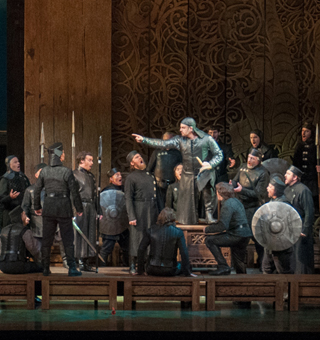
Götterdämmerung: Daniel Sumegi (Hagen) and the Vassals; photo ©Elise Bakketun

Making up for this – and grounding a sense of the “real world” power struggle into which Siegfried blithely blunders – was Daniel Sumegi’s Hagen, in a portrayal of spine-chilling menace and cold-blooded calculation. So weighty is the evil this Hagen incubates (manifested with peals of darkly rolling vocal thunder) that even he appears troubled by its implications, as we see in another highly successful scene: the dream-encounter with Alberich. As one of the leading exponents of the latter singing today, Richard Paul Fink has been intensifying his spiteful phrasing and physical acting to such a point that you worry a little he won’t be able to snap out of character.

Yet after this scene and the superb first act, I did feel a kind of dwindling, anti-climactic effect, above all in the conclusion of the cycle. The visual staging of the post-Immolation cataclysm – is there a more impossible design challenge in the theater? – has at least arrived at a reasonably effective compromise (which, for the sake of those still intending to see it, I won’t give away here).

I’ve decided this sense of anti-climax results from a mix of the Ring’s inherent weaknesses which Wagner was never able to sort out and specific choices of this production, compounded with things being thrown off balance owing to the last-minute unavailability of Mellor’s Brünnhilde.

Die Walkure
Das Rheingold Markus Brück (Donner), Andrea Silvestrelli (Fasolt), Wendy Bryn Harmer (Freia), Greer Grimsley (Wotan), Stephanie Blythe (Fricka), Ric Furman (Froh), and Mark Schowalter (Loge); photo (c)Elise Bakketun

While the scenically realistic, Pacific Northwest-inspired look of the fabulous sets designed by Thomas Lynch is largely responsible for the moniker “green” Ring, Seattle Opera’s production isn’t really about imposing some sort of environmental concept. But those who refer to it as a “traditional” Ring are sorely mistaken. This notion has been kicking around because of the tastefully archaic aura of the late Martin Pakledinaz’s costumes or perhaps because of the plausibly mythical zone in which everything plays out (as opposed to, say, the rundown motel on Route 66 for Rheingold in the much-scorned new Bayreuth Ring directed by Frank Castorf).

Die Walkure
Das Rheingold: Jennifer Zetlan (Woglinde), Cecelia Hall (Wellgunde),Renée Tatum (Flosshilde), Richard Paul Fink (Alberich); photo (c)Elise Bakketun

Yet Seattle Opera’s Ring, too, is strongly rooted in a vivid directorial concept. The brilliance of director Stephen Wadsworth’s vision, which centers around an almost Chekhovian psychological realism, is that he has evolved this both from a deep knowledge of Wagner’s text (the combine of words and music, that is) and from obsessively detailed, prolonged rehearsals with the cast to ensure an organically coherent portrayal of the characters and their interactions.

Thus, as mentioned, there’s genuine love between Wotan and Fricka, which underscores the sense of personal tragedy in the god’s dilemma in Die Walküre and its fallout. This does of course mean giving precedence to some elements in the Wagnerian text and overlooking others (such as Wotan’s harsher persona as “war father”). It also means inserting things into the text that aren’t there in the first place so as to draw out an implication: we see Fricka suddenly appear for the hyperintense conclusion to act two of Die Walküre to greet Hunding, only to be dumbstruck when Wotan slays him (an effective and justifiable choice, I thought, to make us think of the future she, too, has to face; otherwise she simply disappears from the cycle after her earlier confrontation).

Die Walkure
Die Walküre: Stephanie Blythe (Fricka), Greer Grimsley (Wotan); photo (c)Elise Bakketun

Wadsworth’s essential approach is to humanize Wagner’s mythical characters and their behavior. This perspective pays its richest dividends in Die Walküre and Siegfried, which, for me, are the two most impressive successes of the Seattle Ring. In fact, often though we’re told that the Ring is a vast epic containing the history of the world, a significant proportion of the cycle (the middle two operas, more or less) actually centers around scenes of intimate dramatic communication between two characters. Wadsworth’s style and concept are ideally suited to these. His humanizing also touch goes a long way toward animating the expository stretches of Das Rheingold, with its much larger ensemble.

Wadsworth
Stephen Wadsworth in rehearsal

The Achilles heel seems to be in the crowd scenes of Götterdämmerung and in the old-fashioned, grand opera style “Lohengrinizing” (as G.B Shaw called it) that makes these parts of the last Ring opera sometimes seem such a throwback. There’s a lot of rustling about from the chorus of Vassals in the second act in response to Hagen’s summoning (where, musically, Wagner seems to nod), but it doesn’t convey the accumulation of menacing tension, the sense of a whole society on the verge of collapse despite the distractions of wedding celebration.

A similar situation lessens the impact of the third act. A comic turn in the Rhinedaughters’ reappearance at the top of the act which has them horsing around is presumably meant for relief, but that choice has always struck the wrong note for me. Wadsworth’s forte is evoking the intimate and personal, but the atmosphere of apocalypse remains absent in the scene of Siegfried’s murder and in the final scene. And it’s a problem that goes beyond this particular production, affecting many others. Wagner himself acknowledged the challenge when he suggested that all the knots are really worked out in what the final music tells us.

Turondot
Maestro Asher Fisch

As the production’s new conductor, Asher Fisch (for whom Daniel Barenboim was an important mentor), proved to be a key asset in making this latest edition – neatly fine-tuned by Wadsworth in increasingly subtle ways – the most successful run since the premiere of Seattle’s Ring production in 2001. Fisch coaxed the most ear-catching collections of sounds and color from this orchestra that I’ve ever heard in their Ring playing.

There was some unevenness, to be sure: Siegfried’s Funeral March sounded inexplicably hollow, and moment after glorious moment of the final scene was thrown away, like an actor so afraid he’ll forget the words of a great Shakespeare monologue he rattles them off without trying to create an interpretation.

Overall, what Fisch sacrificed in sheer dramatic tension (not to mention Soltiesque playing to the gallery) through his often measured tempo choices was compensated by the continual unfolding of layers of the score that often lie buried. The woodwind writing in the last scene of Die Walküre, for instance, bloomed with breathtaking beauty, while Siegfried’s second act was shot through with almost psychedelic streaks of color – growling low brass and electrifying string figurations.

And for the most part Fisch succeeded in integrating the singers into the total fabric of sound and in contouring the ensemble to the dramatic dimension. (One strange quirk of Wadsworth’s stage direction, which posits the characters often “hearing” the music from the orchestra, has them react in stylized, silent-film-type gestures to musical accents.) The result made an incalculable contribution to the gathering theatrical effectiveness of the cycle as each evening progressed.

At the conclusion of this first of three cycles to be performed in August, Speight Jenkins briefly addressed the audience, calling attention to the incredible efforts of everyone involved in what he termed “the biggest collaboration there is in all art.” And he pointed out that this is the valedictory Ring under his long tenure with the company, which has been defined by its Ring productions. It’s hard to imagine a more moving or memorable way to leave the stage.

–Thomas May

Filed under: opera, review, Ring cycle, Seattle Opera, Wagner

Du sollst mich nicht lieben! Siegfried in Seattle

Die Walkure

One of the most-anticipated new elements in the current revival of Seattle Opera’s Ring cycle is the appearance of German tenor Stefan Vinke as Siegfried: the character who initially attracted Wagner to the potential of this material. (The Ring, incidentally, is in the end a myth Wagner made up – not, as sometimes asserted, merely a narrative simplification of actual Nordic myths: several of the key pieces he used to construct it have no relation to each other in their original context.)

Apart from the role’s notoriously wicked vocal demands, the brave soul who takes on Siegfried has to try to gain the audience’s sympathy despite playing an annoying, intensely dislikeable character. Productions can only get so far by retreating into fairy-tale escapism or, at the other extreme, by amping up Siggy’s repulsively thuggish side and hence the ironic distance between the character we see onstage and Wagner’s outsize vision of the hero. (To sing an antihero, do you need an anti- or a counter-heldentenor?)

I admit that, like many, I tend to find Siegfried‘s first two acts contain the weakest links in the entire Ring. But Wednesday night’s performance of Cycle I at Seattle Opera awakened me to the real brilliance of the Ring‘s “second” evening (counting trilogy-wise).

I don’t recall ever being so drawn in by the young Siegfried or being made to feel his mix of curiosity and profound loneliness beyond all the ADHD and nasty treatment of Mime. I don’t just mean that Stefan Vinke somehow “looked” the part (at least more than is usually the case). For me Vinke plausibly depicted a youth in conflict and capable of emotional depth, especially in the anguish he shows when thinking of his mother’s death from childbirth during the “Forest Murmurs” scene. The production’s emphasis on nature is so in sync with its psychological realism here that this scene is one of the highpoints of the Seattle Opera Ring.

Vocally, Vinke veers ever so slightly flatward from time to time (I can’t stop Stab-reiming!), and his enormous voice in general makes an impression with size, not with beauty of tone. His stamina alone is reminiscent of Jane Eaglen in Rings past. The cliche about Siegfried having to face a Brünnhilde who is “fresh as a daisy” just as he’s worn out from hours of singing didn’t even come to mind this time.

But Siegfrieds who have nothing but stamina to offer bore me precisely because it ends there, with stamina – and just reinforce the stereotypes of the role. I thought Vinke was able to give dimension to this phase in the hero’s life, which is otherwise so cartoonish. He really seems to get inside the music, to make it work dramatically and to act convincingly with his voice.

Seattle’s new Brünnhilde, Alwyn Mellor, had to cancel appearing in her one scene in Siegfried because of an allergy attack that morning – and to (we fervently hope) preserve her voice for the massive finale. Speight Jenkins was fortunate to be able to count on soprano Lori Phillips as Mellor’s cover. As with her Turandot, which I heard here last year, I found Phillips has a problematic top but a beautiful voice and genuine stage presence. (Puccini, as it happens, set up a dramatic situation at the climax uncannily reminiscent of the Siegfried-Brünnhilde meeting but died before he could complete the score.) And she had the acting style Wadsworth has been cultivating down completely: the psychodynamics between her and Siegfried, where she can’t quite say goodbye to the old way of life, were riveting.

Crucial to this production and its reimagining of Siegfried are the “kindler, gentler” Mime in a richly crafted performance by Dennis Peterson and Greer Grimsley‘s subtlest portrayal among his three Wotans (as The Wanderer).

Of course a lot of the credit for such a persuasive Siegfried goes to the incredibly detailed staging by Stephen Wadsworth and to the ear-opening, sumptuous attention to color from conductor Asher Fisch. His work in the second act reminded me Mahler’s particular fascination with this score – Mahler conducted Siegfried four times during his stay in London – especially its trippy contrasts. More reflections on Wadsworth and Fisch to come. Now that Vinke has given us a clearer sense of the young Siegfried’s identity, I’m eager to see how he’ll carry it through in Götterdämmerung.

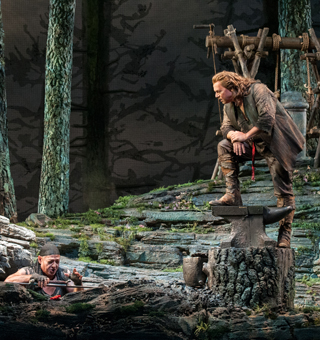
(Image: Seattle Opera’s Siegfried: Dennis Peterson (Mime), Stefan Vinke (Siegfried). Photo © Elise Bakketun.)

Filed under: review, Ring cycle, Seattle Opera, Wagner

O Tell Me the Truth about Love

Die Walkure

The renunciation of love is what spins the entire Ring cycle into dramatic motion – yet there’s precious little evidence of what love actually is in Das Rheingold (the preludial opera, as Wagner conceived it, with the three longer operas that follow constituting a trilogy on the model of ancient Greek tragedy).

What unfolds before us onstage (and in the pit) is, instead, a brutal cosmos in which rape, violent coercion, deception, and theft hold sway. Is Alberich really giving up all that much when he curses love to access the gold? You have to wonder, in a world where Freia, the goddess of love, is held as sexual ransom to pay for Valhalla per Wotan’s deal with the giants who constructed it.

So it’s not surprising that Die Walküre has always tended to be the most popular work of the cycle: love, and spring, and humanity all enter in with that miraculous first act – an act which, after all, is basically a digression from the main narrative line. And Wagner’s music warms up as well after Rheingold‘s abstractions and muscular assertions.

Die Walküre benefits especially from director Stephen Wadsworth’s obsessive attention to the nuances of character interactions in Seattle Opera’s Ring cycle. Sure, it’s easy to milk the audience’s sympathy for the Wälsung twins in their passion and plight – does anyone actually ever get worked up these days about the incest taboo? – but this production delineates with tremendous subtlety how love affects the gods: above all Wotan’s love for Fricka (hardly “traditionalist” but a directorial conceit, however persuasive), and how this love sets up inescapable conflicts with his love for his son and for Brünnhilde. Love, not its renunciation, is the source of his pain.

Whenever you grapple with the Ring, the mushy term “redemption by love” gets tossed around as predictably as the sun will set. But “love” – by which Wagner, in the Ring text’s early stages, clearly had physical, sexual expression in mind – is elusive and ultimately contradictory in the Ring cosmos. Its meaning is as slippery as the rocks at the bottom of the Rhine are to the frustrated, grasping Alberich when he tries to seize love like catching a fish.

On Monday night, when I heard Margaret Jane Wray pour out that glorious arc of melody [1:26] in the pivotal moment when the just-widowed Sieglinde suddenly learns she is pregnant with Siegfried, I was thinking of how this is a kind of reverse Annunciation scene: Brünnhilde bears the joyful news, but the music is Sieglinde’s as she praises the Valkyrie.

This is the music that has become so misleadingly tagged as the “redemption by love” theme when it is heard again at the very end of the Ring. And the words which are “imprinted” with this melody are “O hehrstes Wunder! Herrliche Maid!” (“O miracle most sublime! Glorious maiden!”).

In other words, as Sieglinde rejoices in this new hope, she glorifies Brünnhilde the virgin warrior. But the love the goddess maiden-turned-human lover experiences with Siegfried is what sets in motion the final tragedy, just as inevitably as Alberich’s theft of the gold as a substitute for love launched the cycle in the first place. So where has love gotten us?

(Image: Seattle Opera’s Die Walküre: Stuart Skelton (Siegmund), Greer Grimsley (Wotan).
Photo © Elise Bakketun.)

Filed under: opera, Ring cycle, Seattle Opera, Wagner

Into the Ring

Image

Seattle Opera’s famous “green” Ring production – celebrated for highlighting the prominent role nature plays in the cycle, but also for its psychological focus – returns this month for the fourth time since it first debuted in 2001. A particular highlight for me will be the contribution of Asher Fisch, who for the first time takes on the role of conductor of this production.

Among the things I’ve been reading to prepare, Nicholas Spice’s recent essay in the London Review of Books (“Is Wagner Bad for Us?”) is rich in food for thought:

Debussy said that it was ‘hard to imagine the state to which the strongest brain is reduced by listening for four nights to the Ring … It is worse than obsession. It is possession. You no longer belong to yourself.’ Returning from a Wagner performance in January 1917, Otto Klemperer said to his sister: ‘When I like Wagner, I do not like myself.’ I think one can go a step further and say that even disliking Wagner is not straightforward. There are many composers we may not particularly care for, but this poses no problem because we experience their music as separate from us, as other. They do not tamper with our sense of self. In possessing us, Wagner restricts our freedom to dislike him, since in disliking him, we can find that we end up disliking bits of ourselves. And this, after all is what he set out to achieve: he wanted his listener to abandon himself unresistingly to the work, so that he ‘involuntarily assimilates even what is most alien to his nature.’

(Image: Das Rheingold at Seattle Opera, Jennifer Zetlan (Woglinde), Cecelia Hall (Wellgunde),Renée Tatum (Flosshilde), Richard Paul Fink (Alberich). Photo © Elise Bakketun.)

Filed under: opera, Ring cycle, Seattle Opera, Wagner

Archive

Enter your email address to follow this blog and receive notifications of new posts by email.