MEMETERIA by Thomas May

Music & the Arts

Music For Saxophone Evokes Emotional Swirl Summoned By The Wind

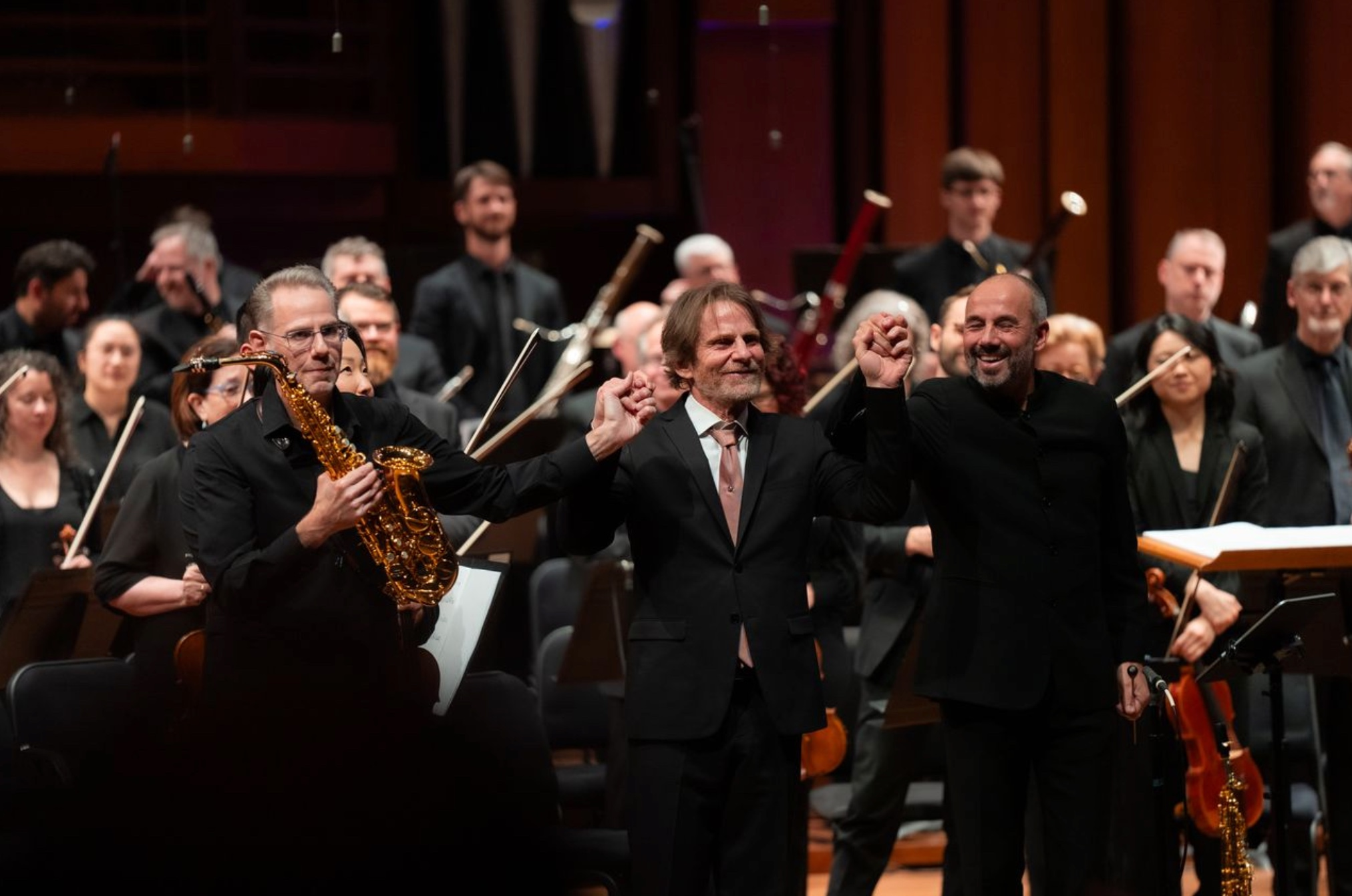
Saxophonist Timothy McAllister, composer Steven Mackey, and conductor Lawrence Renes take bows; photo: Jon Pendleton

A wonderful new saxophone concerto by Steven Mackey featuring Timothy McAllister and some classic John Adams from Seattle Symphony – my review for Classical Voice North America:

SEATTLE – Rather than propose a grand narrative of American music, the Seattle Symphony’s all-American program on Nov. 20 with guest conductor Lawrence Renes set three sharply contrasting voices side by side: Copland’s atmospheric Quiet CitySteven Mackey’s brand-new saxophone concerto Anemology, and John Adams’ ever-astonishing Harmonielehre — a lineup that underscored how differently American composers have approached the orchestra over the past century….
continue


Filed under: American music, commissions, John Adams, review, Seattle Symphony

Gabriella Smith’s “Lost Coast” at Seattle Symphony

Gabriella Smith recording “Lost Coast” with cellist Gabriel Cabezas at Greenhouse Studios in Iceland. (Sandro Manzon)

Here’s my Seattle Times profile of the remarkable young composer Gabriella Smith. This week’s Seattle Symphony concerts will feature her innovative cello concerto Lost Coast, with Gabriel Cabezas as the soloist:

Her official bio reads like a manifesto: “Gabriella Smith is a composer whose work invites listeners to find joy in climate action.” The 33-year-old has built a creative world around that idea — one where music and environmentalism are inseparable…

continue

Filed under: American music, cellists, cello, Seattle Symphony, Seattle Times

Baroque Vitality in Motion: Ivars Taurins Leads the Seattle Symphony

Ivars Taurins conducts the Seattle Symphony; © James Holt | The Seattle Symphony

The Seattle Symphony turned agile chamber band for its all-Baroque evening under guest conductor Ivars Taurins, joined by resident organist Joseph Adam. With the Seattle Opera season opening across town – the company orchestra comprises Seattle Symphony musicians – the program made a virtue of proportion and dramatic resourcefulness….
continue

Filed under: Handel, review, Seattle Symphony

Ludovic Morlot Returns to Lead Seattle Symphony’s Season-Closing Showcase

Ludovic Morlot conducts the Seattle Symphony, with soloist Demarre McGill

With Seattle Symphony on the cusp of a new chapter – music director designate Xian Zhang takes the reins in September – this season-closing program offered a vivid snapshot of the ensemble’s artistic breadth. …

continue

Filed under: Ludovic Morlot, Maurice Ravel, review, Seattle Symphony

Fire, Water, Secrets, and Memory: Tan Dun Returns to Seattle Symphony

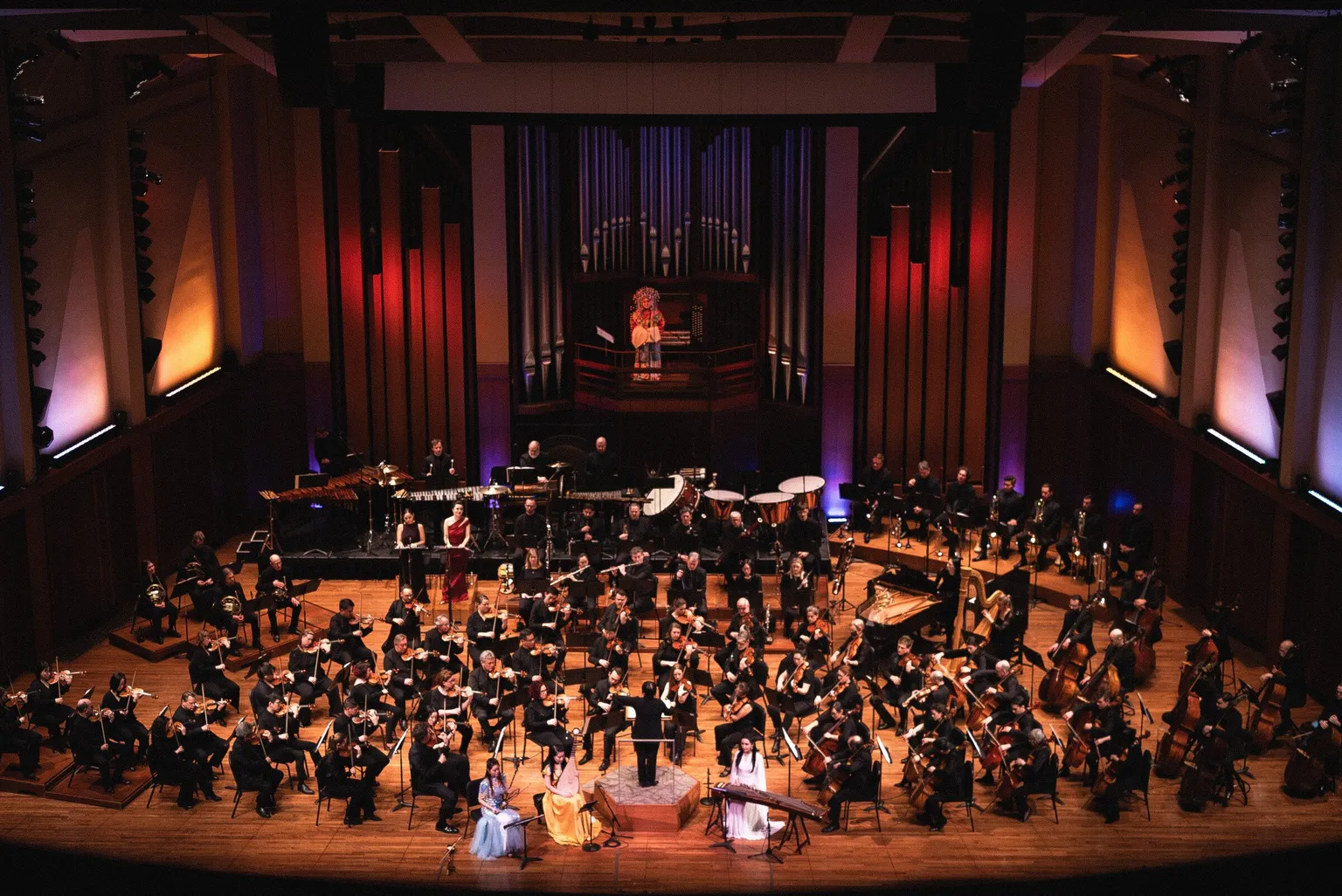
Tan Dun conducting Seattle Symphony, with harpist Xavier de Maistre; photo (c) James Holt / The Seattle Symphony. 

A concert built around the artistry of composer, conductor, and cultural connector Tan Dun offers no shortage of conceptual fascination. This week’s concerts mark his turn to the Seattle Symphony podium after a memorable debut here two and a half years ago, when he led his monumental Buddha Passion.

Raised in a remote village in China’s Hunan province and shaped equally by Western classical forms and ancient Chinese traditions, Tan – who since 1986 has been based in the US – brings a theatrical imagination and a deep sense of ritual to the concert stage. He framed last night’s program with a pair of short but intensely colorful works by two early 20th-century composers he admires, serving as explosive preludes to two large-scale pieces from his own catalog.

A vivid reading of Manuel de Falla’s Ritual Fire Dance, from his 1915 ballet El amor brujo, crackled with rhythmic energy and flared with instrumental color, setting one element against another as water came into protracted focus in the ensuing Concerto for Water Percussion and Orchestra, composed by Tan in 1998 and dedicated to Tōru Takemitsu. 

Tan draws out music’s ritual origins in intriguing ways. Percussionist Yuri Yamashita not only performed the solo part but dominated much of the piece with an almost shamanistic stage presence – from the way she mindfully released droplets from her fingers to the immersive sound world she conjured using bowls of wood or glass, as well as gongs dipped mesmerically into one of two large water bowls over which she presided. 

At some moments she even softly vocalized, as if engaged in a conjuring. Enhancing the theatrical experience were three video screens suspended above the orchestra –- one large at center and two smaller flanking it – which projected close-up footage of the bowls and the rippling water, inviting the audience into the tactile, elemental, organic world of the piece.

The orchestra functioned as a kind of elemental chorus, not so much a counterpart as a kaleidoscopic resonator. Specific voices occasionally emerged from the fabric – most memorably in a luminous duet between Yamashita and principal cellist Efe Baltacıgil, whose tone seemed to bloom out of the water’s surface. A long, improvisatory cadenza captivated with its focus on the physicality of sound.

Still, the Water Concerto’s meditative pacing and episodic structure began to feel diffuse over the span of the piece – though whether this observation reflects a Western bias about form or a real imbalance in proportions is a fair question. In any case, this was a welcome opportunity to hear the work in live performance. 

After intermission came a brisk, glittering account of Stravinsky’s Feu d’artifice (Fireworks), a four-minute burst of orchestral color dating from a little before the young Russian’s leap to international fame with The Firebird.

To this taste, the highlight of the program was Nu Shu: The Secret Songs of Women – a 13-part multimedia concerto that unfolded with greater emotional clarity and formal cohesion than the Water Concerto. Nu Shu originated as a commission for a harp concerto from the Philadelphia Orchestra but, inspired by Tan’s immersive research into a little-known linguistic and social tradition from his native Hunan Province, grew into a sui generis fusion of concerto, orchestral narrative, and ethnomusicological-sociological documentary.

The “secret songs” in question have to do with the vanishing Nüshu tradition — a secret, invented language once used by women in rural Hunan to communicate among themselves in calligraphy and through chanting and song. Tan painstakingly researched the small community of remaining Nüshu speakers, capturing their voices and stories in multiple videos. 

Nu Shu unfolds in 13 short video portraits created by the composer and his team – shown on the three screens above the stage – each anchored in the landscapes of the women’s daily lives and their stories of isolation and solidarity, which are shared from generation to generation.

For Tan, the harp represents “the most feminine of instruments,” writes Esteban Meneses in his excellent program note, and serves as “an intermediary between what the composer imagines as the future – the Western orchestra – and the past, represented by the microfilms.”

Xavier de Maistre was the eloquent soloist, playing a kind of bard who mediates these stories and showing remarkable dynamic and expressive range. Tan likewise assigns a crucial narrative role to the orchestra, which acted as a bridge translating memory into something shared and immediate.

Repeat performance on Friday, May 16, at 8 pm.

(c)2025 Thomas May

Filed under: review, Seattle Symphony, Tan Dun, , , ,

A Dance, a Dream, a Riot of Color

Dalia Stasevska and Augustin Hadelich with Seattle Symphony; (c)Jorge Gustavo Elias

Dalia Stasevska has returned to guest conduct Seattle Symphony this week with a relatively brief but refreshing program. Thursday night’s performance offered plenty of dazzling energy, albeit a curious combination of early Prokofiev sandwiched between two vibrant Latin American works. 

Alberto Ginastera’s Malambo from the 1941 ballet Estancia — music that put him on the international map – launched the concert with such kinetic force that it reminded me what a crime it is that his music remains so rarely programmed in the US. (Bravo to the Miró Quartet for recording the entire Ginastera string quartet cycle, forthcoming later this year as part of the ensemble’s 30th-anniversary celebrations.) Stasevska articulated the layered rhythms and boldly strident dissonances of Ginastera’s dance with razor-sharp clarity. Even at just a few minutes in duration, it left the audience breathless.

So did violin soloist Augustin Hadelich — though in a very different way. A Seattle favorite – he gave a deeply memorable account of the Britten Violin Concerto on his last stop with the orchestra two years ago – Hadelich brought his signature artistry Prokofiev’s precocious Violin Concerto No. 1. 

From his first phrases, which open the concerto, Hadelich astonished with the sheer beauty of his sound, caressing Prokofiev’s melodic line as if entering into a dream. Phrasing glissandi with effortless sprezzatura, he brought a transportive intensity to his account that was never schmaltzy. Hadelich embraced the concerto’s oneiric, fairy-tale character with personal warmth. Stasevska created a more integrated, immersive orchestral blend by positioning the brass stage right and offered sensitive, fluid support. 

Hadelich then delighted with an encore that nodded to the evening’s Latin American framing: his own arrangement of Carlos Gardel’s Por una Cabeza, proving, with wryly elegant melancholy, that it doesn’t always take two to tango.

The concert’s second half was devoted to Mexican composer Silvestre Revueltas’s La noche de los Mayas, a quasi-symphony fashioned from his score for the now-forgotten 1939 film of the same name, which uses a tragic love story to romanticize pre-Columbian Mayan culture. Stasevska underscored the piece’s rhythmic elan and churning colors, along with its touches of chaos a la Stravinsky Rite

The musicians seemed to thoroughly enjoy giving their all to the score – whether in the weighty brass chords evoking solemn ancient rituals, the mixed meter and collective revelry of a nighttime fiesta, or a  touching Mayan serenade duet for flute and percussion.

The last movement opened up into a tour de force spectacle for a massively expanded percussion section that calls for an orchestra-within-the-orchestra, complete with rattles, güiro, and conch shells. I came way impressed by Stasevska’s versatility—a world away from the Sibelius of her last Seattle appearance, and wholly in the spirit of the evening’s exuberance.

(c)2025 Thomas May

Filed under: conductors, Prokofiev, review, Seattle Symphony, violinists, , , , ,

Xian Zhang Returns to Seattle Symphony

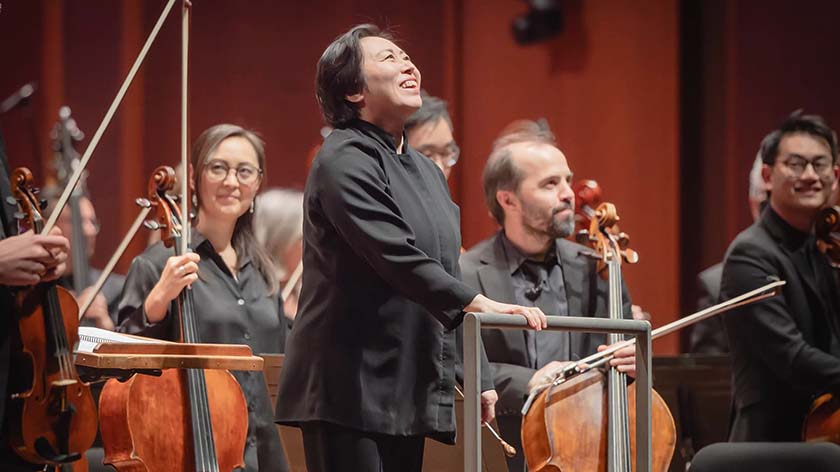
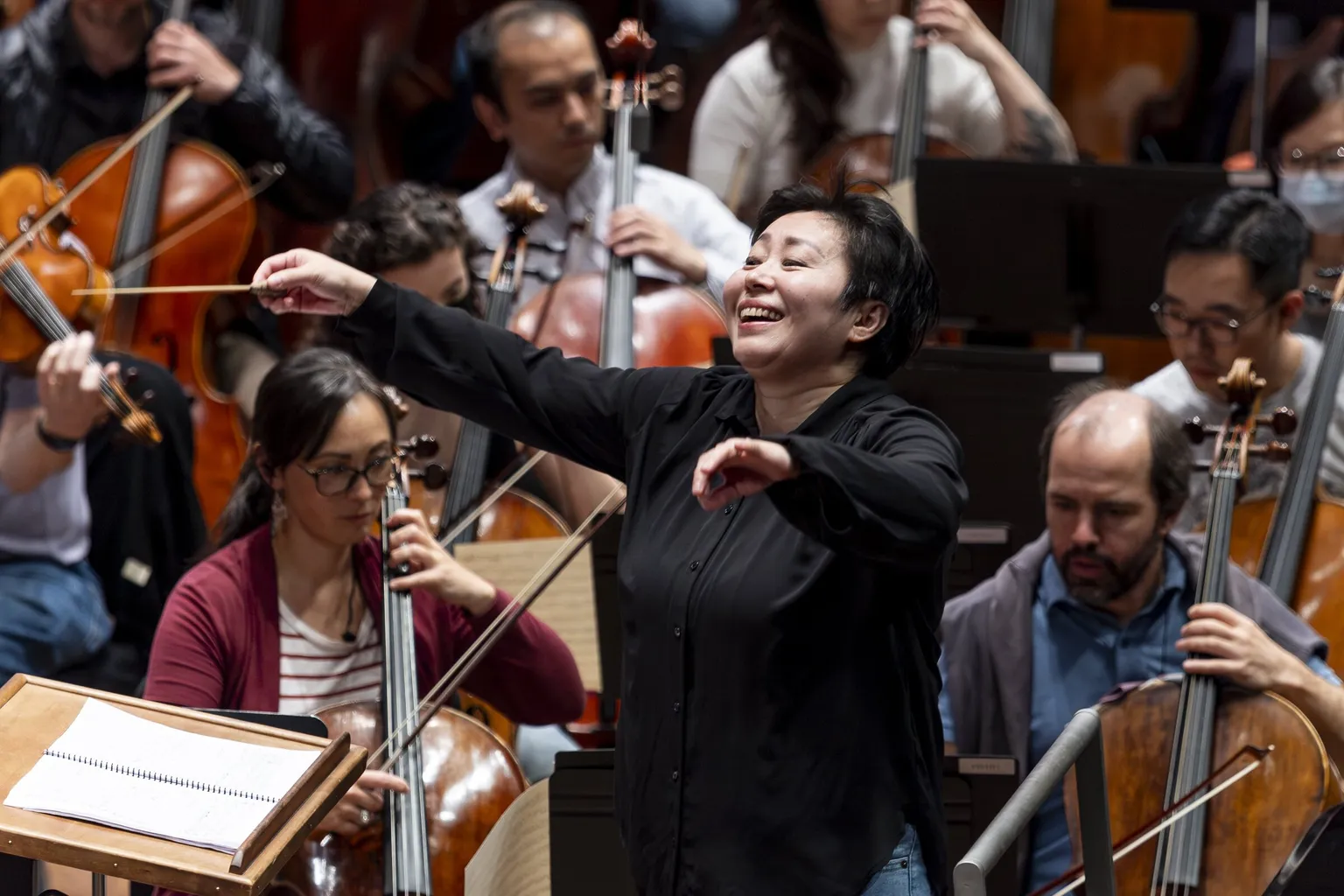
Xian Zhang, Seattle Symphony music director designate, conducts the Symphony in its “Holst: The Planets” program March 27. (James Holt / Seattle Symphony)

I reviewed Xian Zhang’s first concert with Seattle Symphony since being named music director designate :

With just a few gestures, Xian Zhang began conjuring a cosmos.

Returning to Benaroya Hall for her first full program since being named Seattle Symphony’s incoming music director, Zhang drew the nearly sold-out concert hall Thursday night into her orbit with her focused, magnetic conducting.

continue

Filed under: new music, review, Seattle Symphony, Xian Zhang

Ludovic Morlot’s Month in Seattle

Ludovic Morlot’s return to Seattle Symphony during the first month of this already profoundly troubled year has been a balm, offering some reassuring proofs of music’s ability to uplift in times  of uncertainty and upheaval. Earlier in January, he led members of Seattle Symphony  at Seattle Opera in an immersive account of the second part of Les Troyens, the grandest and yet most personal of Berlioz’s masterpieces at Seattle Opera. 

Even without full staging, this performance of the “Carthage” part of the epic opera was spellbinding from start to finish. Incredibly, Seattle Symphony’s conductor emeritus insisted on continuing with the engagement despite losing his home and entire musical archive to the recent wildfires in the LA region.

The connection they made with Berlioz’s multi-dimensional score turned out to be the perfect preparation for this weekend’s all-French program back in the concert hall. Fauré’s Suite from Pelléas et Mélisande instantly brought back treasured memories of Morlot’s early years with the orchestra. (They recorded it on their all-Fauré album on Seattle Symphony’s in-house record label in 2014.) 

Morlot also reminded us of his commitment to contemporary composers. It’s always a risk-taking venture, but one that during his tenure resulted in some wonderful new music by John Luther Adams, for example. He led pianist Jean-Yves Thibaudet and principal harp Valerie Muzzolini in the world premiere of Hanoï Songs, a duo concerto commissioned from French composer Benjamin Attahir that strives for a Ravelesque combination of fantasy and meticulous clarity.

The best part of the program was the all-Ravel second half. Introduction and Allegro, written as a showpiece for the double-action pedal harp, benefited from Morlot’s gently fluctuating sonic choreography, subtly balancing ensemble and soloist. Muzzolini, now fully in the spotlight, played with luminous charm. 

Morlot then led the orchestra in the complete Mother Goose — not just the suite but the expanded ballet score that Ravel fleshed out with connecting material to create a more coherent sense of narrative. It was sheer bliss to experience how deftly Morlot conjured each atmosphere, leaning into exquisite sound colors that were both transparent and intricate while articulating the score’s rhythmic subtleties with grace. The musicians played with rapt attention and obvious enjoyment.

Much more than an endearing string of fairy-tales, Morlot’s Mother Goose conveyed an opera’s worth of emotions, along with a sense of tonal refinement that has deepened and matured. The concluding “Enchanted Garden” at times even radiated an almost “Parsifal”-like serenity that, for some precious minutes, kept the chaos outside at bay.

Filed under: Berlioz, Ludovic Morlot, Maurice Ravel, review, Seattle Symphony, , , , ,

Krishna Thiagarajan to Depart Seattle Symphony

Seattle Symphony released a bombshell announcement this afternoon:

The Seattle Symphony and Benaroya Hall today announced that Dr. Krishna Thiagarajan, President & CEO, will resign after six and a half years of dedicated service to the organization. His last day will be April 30, 2025.   

“It’s been a deeply fulfilling experience to work with all the talented and dedicated people at the Seattle Symphony, Benaroya Hall and its foundation,” stated Dr. Thiagarajan. “Leading the organization through COVID, the rebuilding of audiences and the historic appointment of Xian Zhang as the first female and woman of color Music Director have been some of the highlights of my time here.”   

… The Symphony board of directors is forming a search committee to launch an international search for Dr. Thiagarajan’s successor. While the Seattle Symphony begins its search for its next President & CEO, Maria Yang, Chief Development and Project Officer, will serve as Acting CEO to ensure a smooth transition. 

Filed under: music news, Seattle Symphony, , , , ,

8 Seattle Classical Music Picks To Look Forward to in 2025

In March, Xian Zhang will conduct Seattle Symphony in Gustav Holst’s “The Planets” — her first program with the orchestra since she was announced as its next music director. (Courtesy Seattle Symphony)

Here’s a brief list of suggestions — far from exhaustive — for Seattle area music lovers for the first months of 2025:

Stepping into a new year means embracing its promises but also facing its challenges. Fortunately, the performing arts offer a reliably inspiring source of motivation. Following are some recommendations — by no means exhaustive — of classical music events to mark on your calendar for the coming months. May you find them inspirational in the new year….
continue

Filed under: early music, music news, Seattle Symphony, Seattle Times

Archive

Enter your email address to follow this blog and receive notifications of new posts by email.