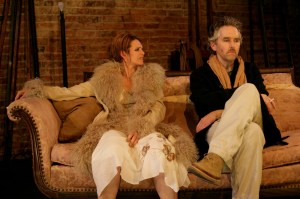
MEMETERIA by Thomas May

Music & the Arts

A View from the Bridge at Seattle Rep


Seeing the excellent production of A View from the Bridge currently running at Seattle Rep, I was reminded of Arthur Miller’s genius for distilling his themes and situations into pared-down forms that are unrelentingly direct.

But the straightforwardness is deceptively simple: Miller’s plays make their stunning impact with the resonance of myth and archetype. Seattle Rep’s production certainly delivers that one-two punch: directed by Braden Abraham, the pacing is as tightly wound as the boxing lesson Eddie Carbone gives Rodolpho. (It’s fascinating to contrast Miller’s emulation of Greek tragedy with that of Eugene O’Neill or of his contemporary Tennessee Williams.)

Mark Zeisler’s gruff but not uncharming Eddie sounded the right note of insecurity that is the character’s fatal flaw (a bit overdetermined, perhaps, in Miller’s hint of a homoerotic attraction to Rodolpho in addition to Eddie’s jealousy over his niece Catherine — but Zeisler downplays the former in any case).

In much of the first act (does anyone perform the original free-verse one-act version anymore?) it seemed some of the audience wanted to defang what was making them uncomfortable about Eddie by trying to view the play as a comedy — Eddie as an Archie Bunker type they could easily mock. But Miller is no sit-com, and fortunately the isolated outbursts of giggles and snickering soon died out.

Amy Danneker makes a compellingly conflicted Catherine, gradually finding her way toward self-determination, with prodding from her Aunt Bea (played with great sympathy by Kristen Potter). Frank Boyd brings an interesting mix of passion, goofiness, and naivete, to Rodolpho. As his brother Marco — and fellow “submarine” (hidden illegal immigrant), Brandon O’Neill hides his simmering desperation uncomfortably until it inevitably comes to a boil at the play’s climax.

Leonard Kelly-Young is all gruff 1950s noir as the lawyer Alfieri, Miller’s take on the ancient chorus. Yet his final speech, about “settling for half,” delivers possibly the play’s most searing moment: “And so I mourn him — I admit it — with a certain…alarm.”

But back to the mythic/archetypal aspect of Miller’s dramaturgy. At the same time, View is deeply rooted in its 1950s setting, politically, socially, culturally. This fusion of place and realism with the archetypal reminded me of Edward Hopper, as did the superb work of the design team: Scott Bradley’s sets, Rose Pederson’s costumes, Geoff Korf’s lighting.

And that combination of realism and archetypes of course brings to mind the verismo aesthetic. So it’s no surprise View has been made into an opera (in fact, more than once): most famously, into a work of American verismo by William Bolcom.

One of the several reasons André Previn’s opera A Streetcar Named Desire is so unsatisfying, in my opinion, is the superfluous prospect of translating Tennessee Williams’s theater, inextricable from his language, to this medium. But Miller offers a composer more genuinely operatic possibilities.

Reviewing Lyric Opera of Chicago’s world premiere production of the Bolcom opera in 1999, the critic Philip Kennicott makes some thought-provoking observations:

If you believe what seems to be a growing consensus in American opera–that pursuing stylistic and dramatic originality is a dead end–then this can be judged a truly great American opera. Bolcom mixes it up–barbershop quartets, jazz, Broadway flourishes and Puccini–creating an unapologetic and dizzying stylistic mix. Had this opera been written while Bernstein was at his peak, reviewers would have proclaimed a new genius to rival the master.

If you believe that new opera need offer only a good evening of musical entertainment, stylistic and musical originality be damned, then Bolcom’s opera will seem like a mongrelized family portrait of the last century of operatic history.

[…]

Bolcom … seems to argue that this opera isn’t just more mix-it-up postmodernism but a genuine American verismo work that just happens to have been written in 1999 (and is meant to sound like 1955).

I expect that many listeners will have exactly the same reaction to this paradox of late-20th-century opera–is it really indistinguishable from the music theater we love from an earlier era?–as I did. They will enjoy it yet question the artistic integrity behind it.

Nonetheless, Bolcom’s new work has a feeling of tragic grandeur to it, and the Lyric Opera production spares no effort to underscore it.

Filed under: Arthur Miller, opera, review, theater

Time Keeps on Shifting: Bloomsday at ACT

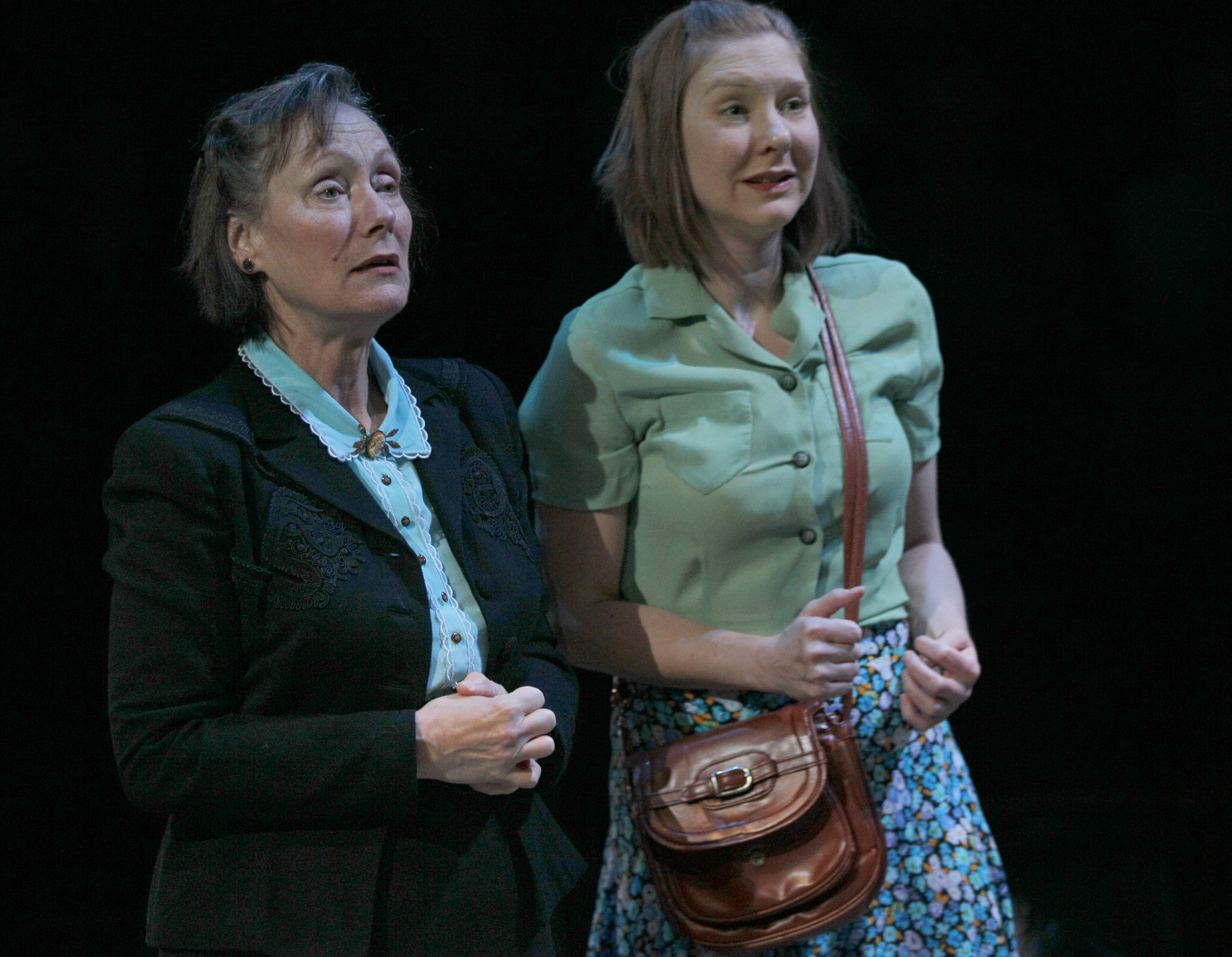
Marianne Owen and Sydney Andrews; photo: Chris Bennion

Marianne Owen and Sydney Andrews; photo: Chris Bennion

“Wait, I wanted to. I haven’t yet.”

In Ulysses‘ “Hades” chapter, this terse formula spontaneously occurs to Leopold Bloom: part of the copious flow of thoughts rippling through his mind as he thinks about what it’s like to die.

They could also serve as the elevator pitch for Bloomsday. Steven Dietz’s new play at ACT Theatre is an ode to the ache of regret.

Watching the burial of Paddy Dignam, Bloom ponders what the poor man must have felt at the moment he knew it was all over. The sight of his coffin prompts Bloom to embark on an internal monologue filled with such alas poor Yoricking.

“Wait, I wanted to. I haven’t yet”: those seven words “sum up” the whole mystery of life, according to Robert in one of Bloomsday‘s most poignant moments.

A 55-year-old American and a professor who has taught James Joyce for decades, Robert has ultimately arrived at a jaded view of Ulysses: as far as he’s concerned, that phrase of graveyard musing is the only bit of worth to be gleaned from what he now considers “a piece of drivel,” best used as a doorstop.

But Robert is projecting his own bitterness and regret onto Ulysses. The fear-inducing modernist classic was the topic responsible for bringing Caithleen into his life 35 years ago.

Back then Caithleen, a 20-year-old Irish loner, had a gig leading a walking tour around the Dublin spots Joyce immortalized in Ulysses. These are the locations where the novel’s external events unfold within the span of just one day, June 16, 1904, now internationally celebrated as “Bloomsday” by fans of Joyce.

Also 20, Robbie (the name Robert went by in his youth) was a greenhorn American abroad with lots of time to think about what to do with his life. Young Robbie had no clue about Joyce and was blissfully ignorant of Ulysses, a book he hasn’t even heard of.

But his attraction to Caithleen when he happened to run into her — as instant as Dante’s for Beatrice — motivated Robbie to follow along on the tour to try his chance at romance. But, as the mature Robert announces with a shudder of self-disgust, “I am made of something cold.” He let the chance slip away.

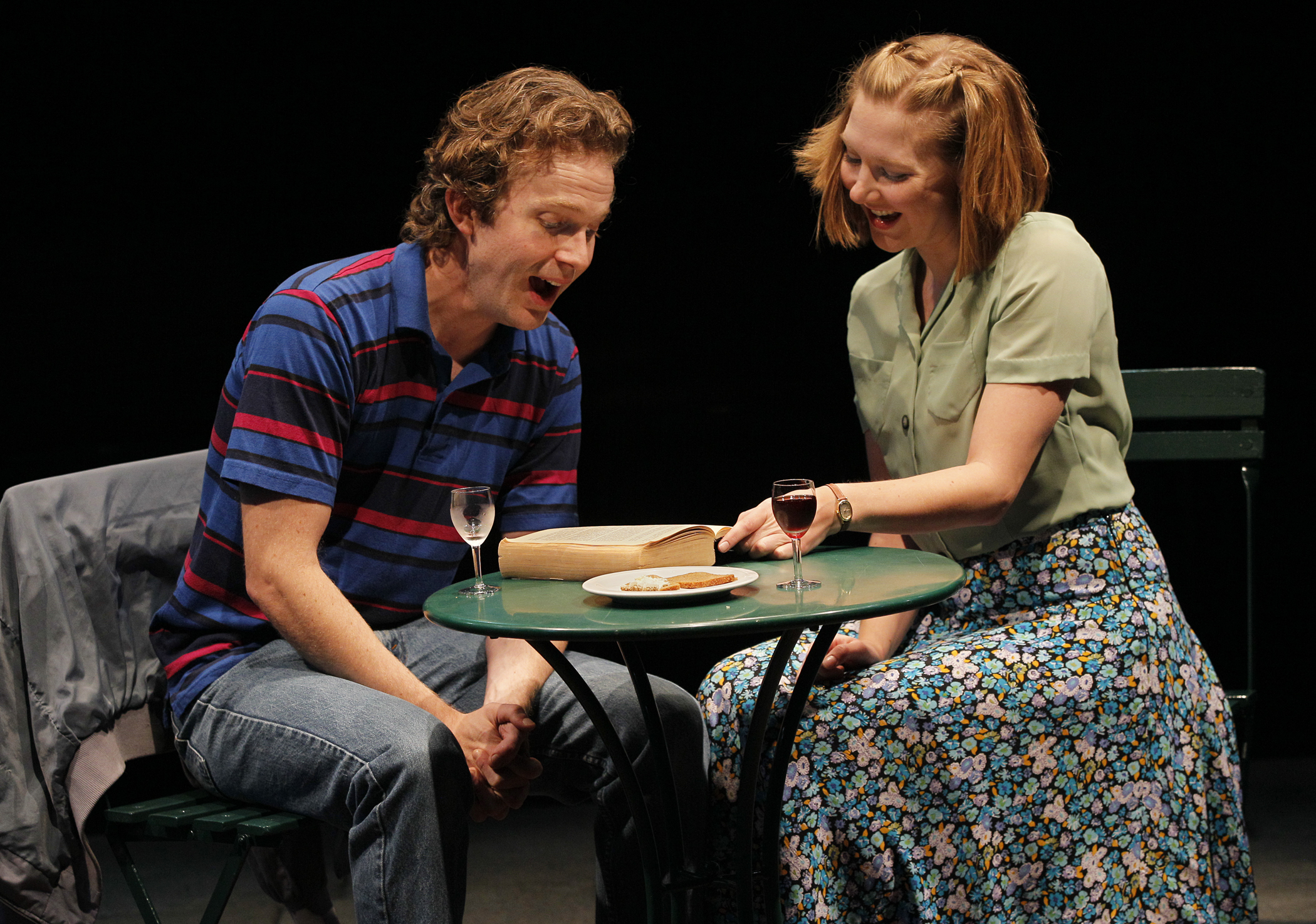
Eric Ankrim and Peter Crook; photo: Chris Bennion

Eric Ankrim and Peter Crook; photo: Chris Bennion

Bloomsday involves only these two characters, but it requires a cast of four: two actors each to play Robert and Caithleen during two phases in their lives, 35 years apart. Dietz dramatizes and puts onstage what is past tense to the middle-aged Robert and Cait (the name the older Caithleen prefers).

The play’s dramaturgical conceit is that Robert has come back to visit Cait after this long hiatus. In the process they watch and interact with their younger selves, who are reliving the day when they first met — a day that might have gone in a very different direction.

On the surface, it sounds like the makings of another formulaic rom-com, bittersweet variety, using a time-loop setup that might bring to mind Groundhog Day or even Dickens’s A Christmas Carol, with a dash of Our Town.

What Dietz actually does is to lure us into thinking we’re getting something familiar in the first act, only to push us out of that comfort zone into a deeply moving meditation on lost time, on the painful dissonance that comes with memory.

In one of the play’s most trenchant images, Robert contrasts the experience of time as a sequence of notes — the way we normally experience it, moment to moment — with time as a chord, where “all the notes are played at once.”

Bloomsday is a time-chord that pits recrimination against the yearning for resolution. The wonder of Dietz’s achievement here is to dramatize both sides so effectively, without resorting to easy sentimentality or mushy nostalgia. Robert’s existential esprit de l’escalier brushes up against Cait’s gentle acceptance of the past.

Peter Crook vividly embodies Robert’s mix of despair and cynical humor vis-a-vis his younger self and compassion for the mature Cait, whom he learns to know in a very different light.

As the latter, Marianne Owen uses gesture and understatement to imply the silent agonies and loneliness her character has lived through in the interim with haunting effect.

Dietz offers a less interesting, less developed characterization of the young Robbie — perhaps intentionally, to underscore how he is a “blank slate” at this point in his life — but Eric Antrim touches on an appealingly varied spectrum of notes, from naivete to Robbie’s dawning awareness of possibilities he hadn’t previously imagined.

Sydney Andrews gives a stunning, beautifully textured performance as Caithleen, the character Dietz develops most richly. Her Caithleen initially creates the impression of a strong-willed, confident young woman, yet we come to see her deep-rooted anxiety take hold.

Caithleen experiences time as a distressing “chord” of overlaid moments. While Dietz leaves the issue of her inherited mental condition vague — it’s meant to be both realistic and metaphorical at the same time — Andrews makes her unease and her contradictions touchingly palpable without resorting to melodrama.

Eric Ankrim and Sydney Andrews; photo: Chris Bennion

Eric Ankrim and Sydney Andrews; photo: Chris Bennion

The design work is admirably integrated: Robert Dahlstrom’s simple, efficient set of cobbled street surfaces provides the backdrop for the play’s instant shifts of scene and mood, which are enhanced by Duane Schuler’s subtle lighting and Chris Walker’s sound design.

Catherine Hunt’s costumes visually rhyme with the subtle irony of Dietz’s time-loops and overlays: the older couple is nostalgically attired in the Edwardian period dress of the fictional turn-of-century Bloomsday, while young Robbie and Caithleen carry on in “normal” clothes.

Bloomsday is the last production Kurt Beattie is directing at ACT before ending his long and fruitful tenure as the company’s artistic director. His long-term partnership with Dietz is clearly evident in the graceful, emotionally resonant cadence and tempo of his staging. (This is the 11th play by Dietz to have been premiered/produced at ACT.)

As a variation on the memory play, Bloomsday is also a strikingly fitting farewell gesture for Beattie. Dietz’s theatrical poetry, enacted by this well-knit cast, captures the intensity of experiences that pass by fleetingly and that at the same time can leave an indelible mark: the essence of theater itself.

Steven Dietz’s Bloomsday runs through October 11 at ACT Theatre, 700 Union St., Seattle (206-292-7676 or here to buy tickets online).

–(C)2015 Thomas May. All rights reserved.

Filed under: ACT Theatre, review, theater

The Coming-Soon-Park: Philippe Quesne at On the Boards

What a delightful way to launch the new season: over the weekend, On the Boards presented La mélancolie des dragons, a visual-theatrical tone poem by the Paris-based theater artist Philippe Quesne featuring his Vivarium Studio.

I’d only read about Quesnes before, having missed his previous appearance at On the Boards over four years ago in L’Effet de Serge. Once you’ve experienced his work live, en personne, it’s even more obvious that, like music, it really can’t be captured by the proxy of words.

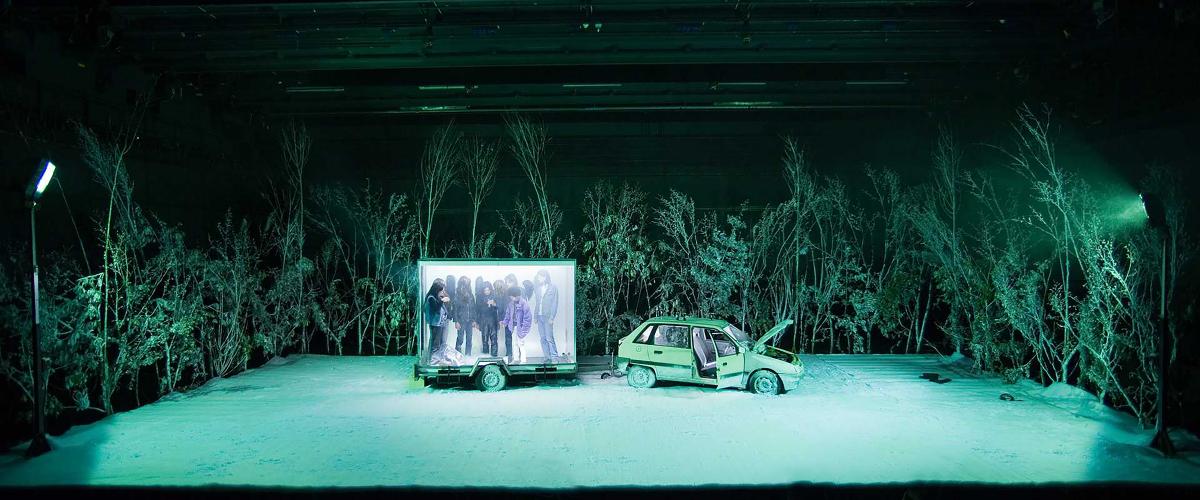
The mise en scène initially signals that a hyper-realistic play is perhaps about to unfold: a run-down VW Rabbit sits stranded on the stage, as if exhausted from hauling a mysterious trailer. The wintry landscape is framed by snow-covered trees that are part-Chekhov, part-Stephen King: as the audience visibly shivers settling into their seats, you half wonder whether some menacing interloper would come stalking through the treeline.

But it all turns out to be the setup for a gracefully quirky homage to the evocative power of theater. The “realistic” stage picture opens up a world of surprising invention whose only unifying story line riffs on the magical connection between performer and audience.

Audience in this case enters into the picture in the figure of Isabelle, the far-from-menacing interloper who happens upon the stranded Rabbit and its inhabitants and offers to help. Though apparently a chance encounter, she is greeted warmly by a band of seven men on the road touring their “show.”

Before that comes a lengthy preludial section: the lights come up on four of these guys sitting in the car (all sporting metal-style, shoulder-length hair), sharing a bag of chips, drinking cans of Rainier beer, and rocking out to an ADD-driven setlist of AC/DC and The Scorpions.

No words, just a silent theater of gestures and movement accompanied by music. In fact, though the VW’s in dismal shape (Isabelle pokes beneath the hood, liberating alarming puffs of smoke), the sound system carries on unperturbed. Music is an integral component of Quesne’s vivarium, and later in Mélancolie the soundtrack makes way for some very apt Haydn.

Once all the characters have been revealed, spoken dialogue is introduced. We learn that these men have been peddling their nameless show: a sort of mobile, minimalist amusement park on wheels. “Really?” exclaims Isabelle in wonder. “Can you show me?”

Which is of course both Mélancolie‘s theme and process: the show-me part of theater that makes us sit up and eagerly watch, casting aside the drive for interpretation — whether that means fitting it all into a coherent plot or getting to the bottom of some putative motivation. Image is message in the world of Quesne.

Mélancolie2

Or rather, images and their enjoyment. Isabelle, and we, are treated to a parade of sometimes silly, sometimes buoyant “acts”: dancing wigs, a machine that blows bubbles, a tub of water made to spew in a “geyser,” enormous pillow-like balloons that are gathered into an installation, like a zany, tripped-out Stonehenge.

Isabelle’s reactions, and the reactions of her entertainers to her reactions, are just as fun to watch as what’s being displayed. At the climax, the varied attractions are mixed together into a lighter-than-air Gesamtkunstwerk.

Amid all the frothiness, Quesne does weave in some clever metatheatrical commentary, poking gentle fun at that logocentric need to make it all make sense.

When Isabelle is being introduced to the “installation” of books, Quesne humorously harps on an anthology of writings on melancholy and a children’s book about dragons. Aha! So that’s what it’s about!

“We are…autonome!” declared one of the entertainers, lauding their DIY inventiveness but also suggesting the best attitude for watching the show.

There’s also some delicious banter about texts versus images, and Antonin Artaud gets name checked, as if to seal the piece with experimental-theater cred. All very sweetly tongue in cheek.

Quesne’s theater artistry is rooted in his work as a visual designer for opera, theater, even exhibitions. He also likes to compare his sensibility to that of an entomologist. (He began studying insects as a hobby when he was a kid.)

But while much of the amusement of this show emerges from observing the naive, childlike wonder of Isabelle and the showmen, Quesne steers clear of any tone of mockery or superciliousness. It’s a subtle balancing act: and therein lies Mélancolie‘s real magic.

–(C)2015 Thomas May. All rights reserved.

Filed under: On the Boards, review, theater

“What Kind of a God Lets Others Fight for Him?”

I’m still processing my reactions to the Deutsches Theater’s production of Nathan the Wise, the Enlightenment masterpiece from 1779 by Gotthold Ephraim Lessing.

“Provocative” would be an understatement — though provocation (or at least the semblance thereof) is mother’s milk in this theater scene by comparison with the usual fare in the English-speaking world.

At least it can’t be denied that director Andreas Kriegenburg, along with his designers Harald Thor (sets) and Andrea Schraad (costumes), has created a visually arresting production: inspired by the enigmatic monolith at the opening of Stanley Kubrick’s 2001: A Space Odyssey, it’s dominated by a large wooden cube — here, a ramshackle, hut-like structure that comically, unpredictably, moves back and forth on the stage.

The Kubrickian impetus is also apparent in a lengthy pantomime-prelude that has nothing to do with Lessing. Kreigenburg shows two “clay figures,” man and woman after the moment of their creation in the process of discovering each other, but then enters in original sin…by way of a primeval “us against them” pattern the cast enacts. And then a childish voice reminds everyone: “But what about the Lessing?” — and the “play” begins.

The comedy is the thing here: Kriegenburg has dared to radically rethink this sacred text of Enlightenment tolerance as an “archaic comic strip” in which the characters — still decked out in their primordial clay but adorned with cliched bits of dress and props to signify their religious affiliations — waddle about in the comic style of silent films, recalling Charlie Chaplin and Harold Lloyd in their gestures. (Some of their stage movement also called The Walking Dead zombie dramaturgy to mind, though I couldn’t tell whether that was intentional.)

Jörg Pose (Nathan), Bern Moss (Saladin), and Elias Arens as the arrogant young Templar play out their roles, but their gestures and even declamation of Lessing’s poetic text are riddled with an eccentric, frequently strained, range of comic moves. The shtick at times gives way to the crudest potty humor, as when the Patriarch — (Natali Seelig, outfitted in a grotesque fat suit) — holds his conference with the naive Templar while on the can. And all of this is accompanied by an almost ceaselessly piped-in soundtrack of clownish music, as if these were routines they had performed over and over.

The dramaturgical notes for the production speak loftily of the relation between comedic form and the “supremely serious” content of Lessing’s text. But is Kriegenburg merely underscoring a profoundly cynical understanding of Lessing’s vision as not only a marvelous “fairy-tale” with a “utopian conclusion” but, literally, a farce in the face of historical — and present-day — reality?

Does this explain his avoidance of allusions to gravely serious issues in the news today, to which an “earnest” director would clearly want to relate Lessing’s play — from the refugee crisis to the atrocities of Daesh? Such topical allusions as do appear are treated as jokes.

And yet, in the scene Nathan’s recitation of the famous Ring Parable, the tone changed, perhaps even in spite of the context. Much of the critical reaction I’ve seen has been pretty vehemently negative, but I can’t say my own experience was. At times I was reminded of the eccentric, apocalyptic humor of Ligeti’s Le Grand Macabre, at others of the craziness of Charles Ludlam and the Ridiculous Theater, where iconoclastic absurdity can suddenly trigger a shocking reversal into something profound.

Perhaps it was just the chance to encounter Lessing’s magnificent text again (in English here), however distorted.

(c)2015 Thomas May — All rights reserved.

Filed under: directors, Enlightenment, Lessing, theater

All the World’s a Stage

stageworld

There’s breaking the fourth wall, and then there’s this:

Actress Christine Sherrill was waiting backstage to make her entrance in Signature Theatre’s production of The Fix when the doors through which she was supposed to make her entrance suddenly burst open the wrong way.

A woman stood there and delivered a dramatic request, “Where is the bathroom? I have to pee.”

All the world really is a stage.

Filed under: theater

The Dangerous God

Currently running at the Almeida as part of its “Greeks” season is a riveting production (in Anne Carson’s version) of the disturbing, tirelessly fascinating Euripides tragedy Bakkhai — as the company prefers to transliterate the title.

I agree to an extent with Dominic Cavendish’s assessment that the chorus of female bacchantes is a major weak spot as staged by James Macdonald in this production. As Cavendish puts it: “Even with the ten Bacchants on all fours, faces animal-painted, banging staves, the effect is more WI tea-party than wild tribal gathering.”

I’d also add that the humdrum music they are given by Orlando Gough — spiced with raw Balkan harmonies but never actually ecstatic — bears much of the responsibility for this weakness. That, and a shade too much ensemble gesticulation with kitschy echoes of the Macbeth witches (expanded from three to ten).

But there’s plenty of wonderful work here which more than compensates — including a staging of the early encounter between the blind seer Tiresias and old Cadmus that has a dash of Samuel Beckett’s humor. The big name draw has been the casting of Ben Whishaw as Dionysus — and he’s good at conveying the god’s savage contradictions and self-doubting.

The famous Apollonian-Dionysian dualism appears here broken down and recombined within in myriad ways: Dionysus is boyish, epicene, a smooth talker, a trickster, but, most memorably, the god does a volte-face after he’s gotten his revenge and, during the scene with Agave and Cadmus, viciously rubs it in. This is the nightmare that atheists turn to over and over to warn of the hideousness of our projections of divine entities.

So, too, Bertie Carvel undergoes a criss-cross, chiasmos transformation from stern, disciplined, “logocentric” ruler to a creature overcome by fatal curiosity — and the dissolution of borders. He trades his alpha male suit to put on campy drag, which is followed by his turn as Agave. This was far more than camp: I could have sworn I heard a kind of collective gasp in the final scene as Agave comes down from her high, in the moment when recognition dawns — their moment of catharsis.

Daniel Mendelssohn reminds us that with Bakkhai Euripides “won a posthumous first prize at that year’s [405 BCE] annual dramatic competition, an accolade that had so often eluded the irreligious and daringly experimental playwright during his lifetime.”

Of course the achievement of Euripides in Bakkhai continues to be rediscovered by each new age, reassessed according to its needs and … blinders. The enthusiasts of the 1960s found Dionysus a figure of liberation, of sexual and creative joy in the face of repression. Does our current reckoning with the consequences of religious mania make Pentheus a more sympathetic character? And what about Cadmus, grandfather to the god and worshiper, who is forced to endure seeing his descendants suffer this fate?

The final chorus of the tragedy:

The gods appear in many forms,
carrying with them unwelcome things.
What people thought would happen never did.
What they did not expect, the gods made happen.
That’s what this story has revealed.

Filed under: review, theater, tragedy

Some Rarities from Tennessee

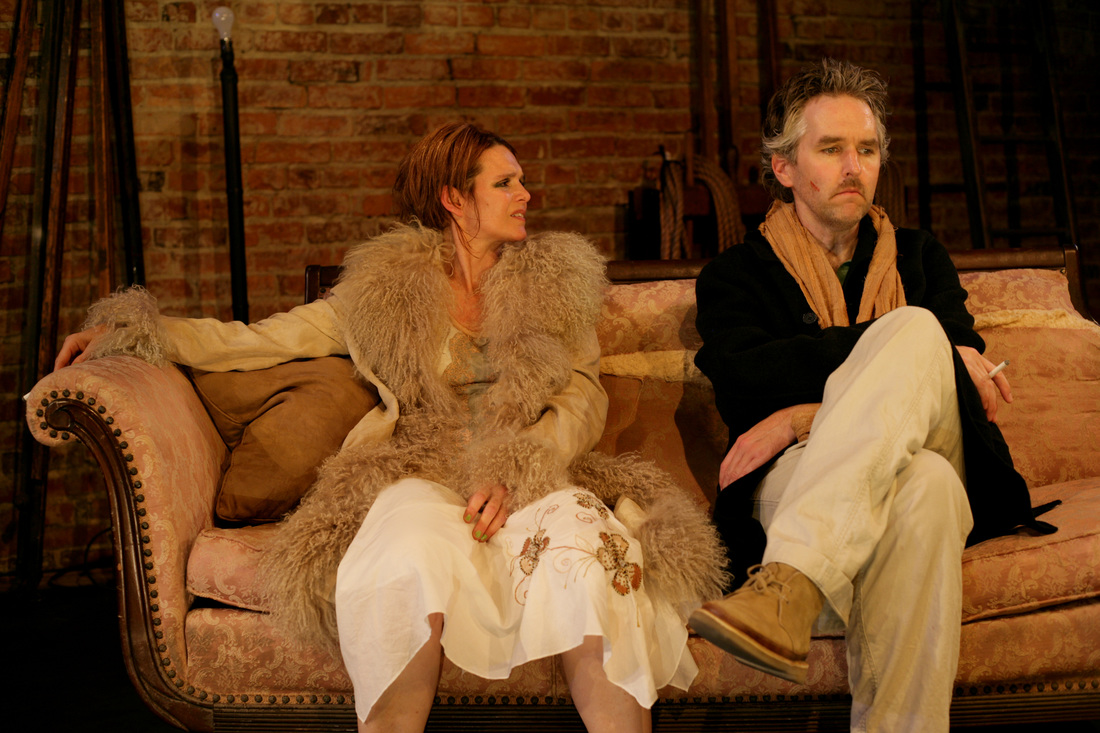
Robin Jones and Sam Read; photo (c) Mike Hipple

Robin Jones and Sam Read; photo (c) Mike Hipple

It happens that two rarely produced plays by Tennessee Williams have been presented this summer in Seattle — and merely by coincidence, as far as I know, by two entirely different groups. They follow on director Kurt Beattie’s staging of Cat on a Hot Tin Roof for ACT’s 50th anniversary season in spring, which emphasized the bigness of the play.

If the set design’s hints of Big Daddy’s generous portion of land — the irretrievable Eden — suggested those larger, mythic themes amid the naturalistic ambience of the Cat production, Orpheus Descending ventures much further out in that direction, employing a diffuse, associative narrative strategy that makes its stretto-like moments of tension all the more melodramatic (on the surface, that is).

The 1957 Orpheus is a bold choice for Intiman Theatre to launch the 2015 Festival — particularly in director Ryan Purcell’s staging at 12th Avenue Arts (closes August 2), which refuses to smooth over but actually underlines how Williams’s stagecraft here flouts conventions and flirts with excess. (After all, the play’s earlier incarnation as Battle of Angels was a famous flop for the playwright back in 1940, before his breakthrough arrived with The Glass Menagerie.)

Purcell focuses his attention sharply on the issues related to the construction of identity in the suffocating small-town Southern atmosphere in which Orpheus plays out: with real payoff when it comes to the miasma of racism that is hardly dated from Williams’s 1950s.

Here, the actors’ gender and race don’t necessarily align with those of the characters they represent — to powerful effect for the pivotal role of Lady Torrance, who is mprisoned in her marriage to the murderous racist Jabe (Max Rosenak, toxic even as an ailing old man). Lady is played by the wonderful Ugandan-born actress Kemiyondo Coutinho with a haunting blend of sass and fatalism.

She and Elise LeBreton (as another town outcast, Carol Cutrere) are especially outstanding in conveying an impression of deeply individual personalities struggling not to be entombed by their surroundings. The cast also works well as an ensemble to project the community’s palpably malignant aura, their gossip generating a never-ending hum of suspicion and resentment.

There’s a fundamental weak link, though, in Charlie Thurston as the invading Orpheus figure who shakes up the town and rekindles Lady’s hopes for liberation. He projects a personality too sensitive and withdrawn to account for the electric effect the Elvis-like Val is seen to have when he arrives. And too much of the substance of Williams’s great arias gets thrown away for an effect here or there: the famous legless bird speech never really takes off.

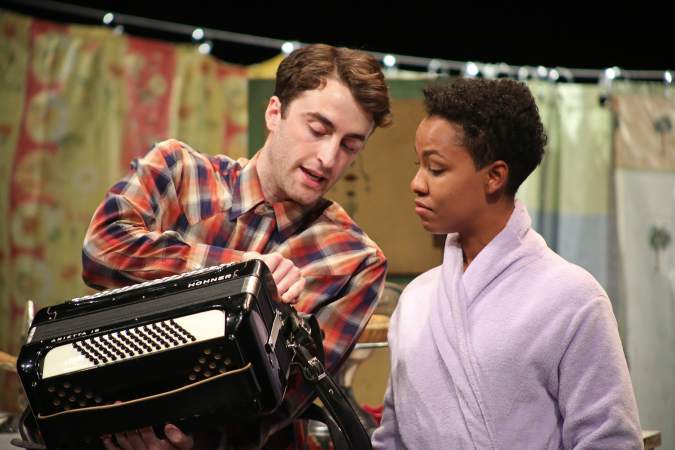
As an amusing side note, Purcell’s choice to substitute an accordion for the guitar with which Williams arms his hero seems to have baffled some as “illogical” — but it seems fairly clear that this is just another bit of commentary on the way roles are created, the semiotic dissonance further highlighting Williams’s exploration of how identities and patterns get collectively reiterated.
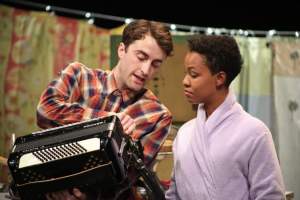
Charlie Thurston as Val Xavier and Kemiyondo Coutinho as Lady; photo by Jeff Carpenter

Charlie Thurston as Val Xavier and Kemiyondo Coutinho as Lady; photo by Jeff Carpenter

Purcell likewise seeks to recalibrate audience perceptions by encouraging movement to new vantage points in the three-quarter seating arrangement (which for the third act include a center platform around which spectators were invited to sit). The conventions of the theatrical experience get further spotlighted just as Williams’s dramaturgy begins to tighten into a more “conventional” plot knot and crisis (which does involve some questionable rewriting of the actual script for the horrific conclusion).

All told, it’s a thought-provoking, often moving experience that works only partially but is mindful of Williams’s experimental audacity — an aspect that often gets short-changed when evaluating this playwright, and that caused no end of misunderstanding from critics and audiences during his life.

Purcell has a smart and sensitive grasp of the richness of Williams, so I’m eager to see what he and his Williams Project do in their next adventure.

Orpheus is at least better known than The Two-Character Play, so of course I jumped at the chance to see the latter as staged by Civic Rep (at the New City theater space until August 1). Like Orpheus, The Two-Character Play stretches across a long span of Williams’s life and was presented in two different versions onstage as he continued to struggle with the material.

The cliché — which has been predictably repeated in a few reviews I’ve seen — would have us believe that poor Tennessee was too boozed up, drugged out, and just too damn depressed in his final decades, that he couldn’t match the earlier masterpieces: the old “there are no second acts” charge (as the frequently misused Fitzgerald phrase goes).

And The Two-Character Play (eventually premiered as such in 1975) is an unfortunate example of an aging, addicted, angst-ridden playwright who’d lost his touch — so goes the conventional wisdom.

In fact, for all its flaws — and flaws seem to be essential to its underlying philosophy of drama — The Two-Character Play actually has links back to the white-hot period of Williams’s creativity in the 1950s and, more importantly, manifests his restless search for new dramatic forms and modes of revelation. Williams himself deemed it his “most beautiful” play after Streetcar.

Much of what people complain about with the “he was too drunk and high” line comes down to the fact that Williams refused to repeat past formulas here, that he wasn’t trying to write another Streetcar (which Civic Rep staged as their inaugural production in January — and which I unfortunately missed). Civic Rep’s approach to The Two-Character Play, directed by L. Zane Jones, honestly tackles the difficulty of a piece of theater that denies the easy entrée of naturalism, of a storyline and characters with whom we can readily identify.

Sister and brother Clare and Felice are also trapped by roles and patterns, as in Orpheus — but now the focus is entirely internalized, a hell of the individual psyche. They are presented as actors who increasingly lose control as they attempt to control the success of their upcoming performance during a tour — a performance of a show titled The Two-Character Play.

Williams crafts a mise en abyme of identity, framing this piece of metatheater as a metatheatrical reflection — which is nicely captured by Thorn Michaels’ ghostly lighting and Angie Harrison’s “behind the curtains” design with its real and imagined entrances and exits. Audience “involvement” is encouraged in this case by Jones’s placement of the spectators on opposite sides (sidewise) of the action, so that reactions from other audience members become an integral part of the staging: yet another type of mirroring. Andy Swan’s sound design evokes hazy memories that jumble uneasily together.

By still further coincidence — or is it synchronicity? — a third group, Seattle Theatre Works, just closed its run of Luigi Pirandello’s Six Characters in Search of an Author, as adapted and directed by Daniel Tarker. The aims and world views of both playwrights differ profoundly, though there is a shared flash of Twilight Zone weirdness in the way the situations are set up in both (more so in the Pirandello).

But both deal with characters trapped by roles they are somehow forced to play. The six characters who appear suddenly in Pirandello are condemned to a kind of eternal return, replaying the tragedy that has been imagined for them, but knowing what is to come now each time they replay it. In his intricate reflections on the play and production (well worth reading), the Seattle writer Omar Willey remarks that points to “an unevenness of tone in the production” as to whether the play is ultimately a comedy or a tragedy or “somewhere between.”

A similar issue of tone — how much is camp, how much is “real emotion” — arises with performing The Two-Character Play. Making it even more challenging for the cast of two, there is no countervailing group of people from “normal reality” (Pirandello’s theater company members) as a sort of gauge.

As the two characters, Robin Jones and Sam Read sustain the suspense of gradual revelation of the past trauma that has scarred them, playing out a fugue of despair as relentlessly encroaching as the coming dusk. The sense of an ending — an ending dreaded and yet desired — hovers throughout in Williams’s text of this, his final full-length play.

In her earlier moments, Jones plays amusingly but also provocatively with the “type” of the volatile actress ready to fly off into a rage, while Read is reminiscent of a tormented figure from Edgar Allan Poe. They seek to escape their condition, as Page declares, “There’s no such thing as an inescapable corner with two people in it.” In The Two-Character Play the redeeming Eros of Orpheus has been replaced by the shared tragic connection of a pair of siblings. Or is hell really “les autres”?

“To think of The Two-Character Play as belonging to the tradition of a play-within-a-play would be a mistake,” observes dramaturg Thea Cooper in her lucid program note. “This play is more along the lines of an authorial confession than a demonstration of clever literary architecture. It shares more artistic DNA with Ionesco and Albee than with Shakespeare or Shaw. It may be the least contrived of all of Williams’s work, more about unmasking than masking…. Ultimately, this is a play about questions rather than answers. Like life itself, it is a narrative that one experiences rather than understands, at least in the moment.”

(c)2015 Thomas May. All rights reserved.

Filed under: review, Tennessee Williams, theater

Kafka’s The Trial in Seattle’s Ellis Island

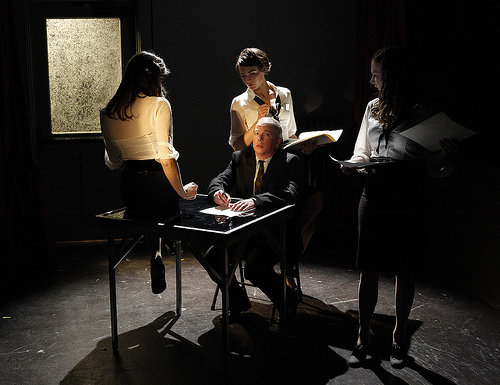
Greta Wilson, Sara Mountjoy-Pepka, Sydney Andrews, and Darragh Kennan in The Trial; photo credit: Chris Bennion/New Century Theatre Company

Greta Wilson, Sara Mountjoy-Pepka, Sydney Andrews, and Darragh Kennan in The Trial; photo credit: Chris Bennion/New Century Theatre Company

Coming up early next month is a workshop of a new chamber opera by Sarah Mattox, Heart Mountain, presented by Vespertine Opera Theater. This will take place in the site-specific space of the repurposed INS building in Seattle. Here’s a piece I wrote a couple years ago about another theater work that made use of that space for an adaptation of Kafka’s The Trial:

Arbitrary, inscrutable bureaucratic authorities with the power to determine individual fates. The tension of not knowing. The cruelly frustrating uncertainty of the whole process. In spite of the trappings of reality, life’s daily rituals twisted into a surreal waiting game.

That’s an impressionistic précis of Franz Kafka’s The Trial in the brand-new theatrical adaptation currently being presented by New Century Theatre Company. But it could also describe what generations of immigrants who hoped to become U.S. citizens experienced while being detained in the former Immigration and Naturalization Service (INS) Building located south of the ID and east of Century Link Field.

continue reading

Filed under: review, theater

Glas Reflections: Akropolis Performance Lab

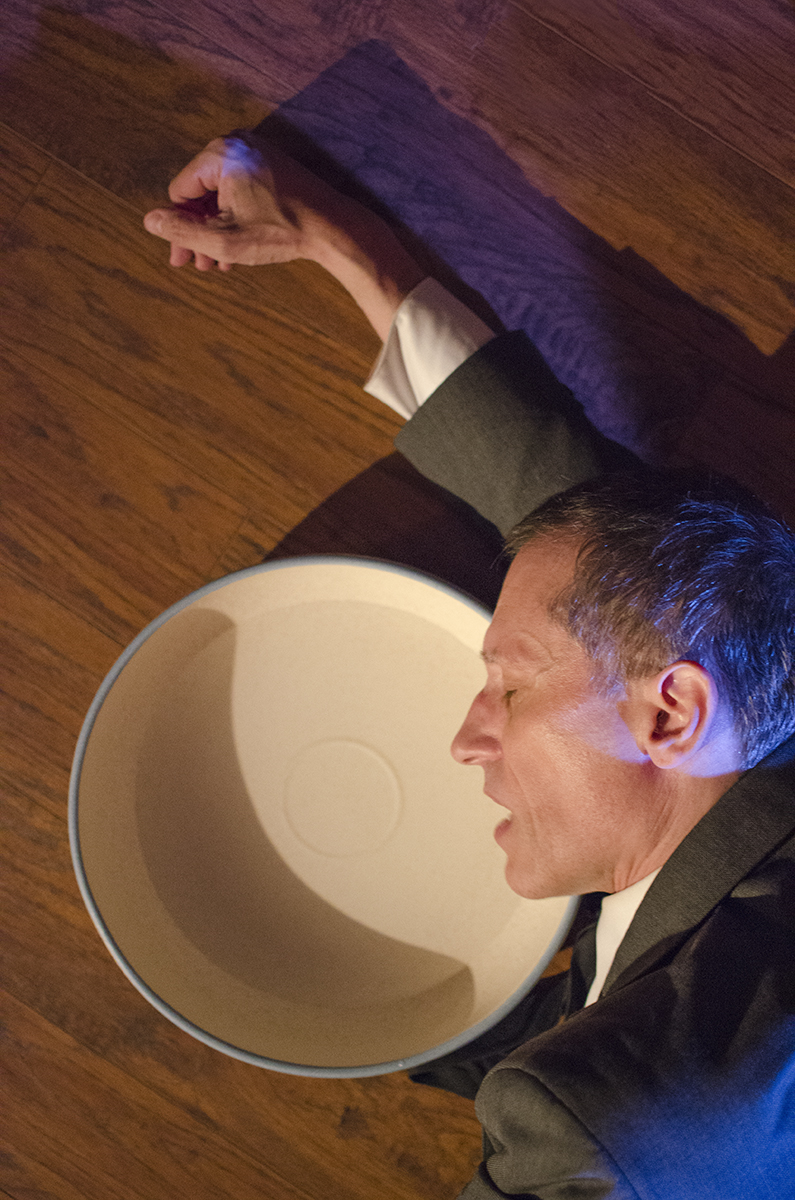
Joseph Lavy; photo (c)  Joe Patrick Kane

Joseph Lavy; photo (c) Joe Patrick Kane

It takes a little more effort than usual if you want to arrange to see the current offering from Akropolis Performance Lab: but then, APL is hardly your regular evening of theater. Founded by Joseph and Zhenya Lavy in 2000, APL draws inspiration from the experimental legacy of Jerzy Grotowski and the like. And that bit of extra effort, in my opinion, is certainly worth making.

Now playing at APL is a peculiarly fascinating piece titled The Glas Nocturne. Instead of relying on conventional marketing, APL has allowed news of the production to spread by word of mouth and social media — in fact they’ve generated buzz by keeping the performance location “undisclosed” to the public.

You have to visit their website and express interest in being one of ten (max) lucky audience members to be invited for a given performance, which APL describes as “a speakeasy-styled adventure.” (It’s up to the invitees to choose whether to make a donation as well.) As of today, my understanding is that the run has been extended until 7 June.

The Glas Nocturne is co-artistic director Joseph Lavy’s dramatic adaptation of the scandal-causing, much-abused novel Doktor Glas, which Swedish writer Hjalmar Söderberg published in 1905. Lavy and Annie Paladino are the show’s co-directors. The novel, written as a first-person narration/confession, revolves around the ethical dilemma the eponymous physician faces when a beautiful young patient — with whom Dr. Glas has fallen in love — confesses her disgust for her repulsive older husband, the Reverend Gregorius. And, as Margaret Atwood remarks in her introduction to an English translation of Söderberg’s novel, the tormented narrator knows all too well that he’s “the last person on earth who should have been a doctor.”

The scene is of course set for a murder, but that’s only one of the issues confronted in Lavy’s fine-spun, suspenseful condensation of the novel’s musing on moral codes, eros, the longing for transcendence (Dr. Glass’s first name is Tyko — as in Tycho Brahe), and the oppression of women.

The resulting 90-minute monologue mixes Freudian psychology with the painfully refined decadence of Huysmans — all garnished with a taste of Ingmar Bergman-tinged despair. It makes for a dangerously riveting cocktail. (And if you do go, and are served one of Lavy’s personally crafted “Norwegian Blonde” cocktails after the performance, don’t be surprised if you eye the tempting potion with a barely perceptible tiny shiver of anxiety.)

Physical acting is a crucial aspect of Grotowski’s theatrical technique, and Joseph Lavy builds a good deal of his character interpretation from non-verbal cues and gestures: the way he washes his face in a pitcher of freshly poured water, convulses in an agony of sexual despair, or — most chillingly of all — indicates his faked reading of a grave heart condition when Dr. Gregorius pays him a visit.

Joseph Lavy; photo (c)  Joe Patrick Kane

Joseph Lavy; photo (c) Joe Patrick Kane

As for the text, Lavy commands the art of transition in gating the audience through Dr. Glas’s abrupt mood swings, his high intelligence leavening the potential heaviness with the kind of black humor Dostoevsky exploits in Notes from the Underground. Like many a narcissist, Dr. Glas is also an artist manqué, and his odes to nature and childhood are strewn with just enough self-consciousness to inject a slight note of parody.

Punctuating Lavy’s ruminations and rituals is the musical commentary supplied by an ensemble of women. Their “choral” interpolations give voice to the soundtrack of Dr. Glas’s raving mind, for which Zhenya Lavy has devised a neat succession of traditional Scandinavian folk songs and a handful of piano nocturnes she herself plays.

Much of the fun comes from sharing this experience on such on intimate level, with a very small group of fellow guests. Is it just coincidence that another of my most resonant theatrical experiences of late in Seattle involved an audience of at most 20 viewers?

At any rate, I’m now hooked and can’t wait to see APL’s next major production, which is reported to be an original work based on the Faust myth as retold by Marlowe, Goethe, and Thomas Mann (Ecce Faustus). Stay tuned to see this in February 2016.

If you miss the run of The Glas Nocturne, APL plans to bring the piece back for periodic showings over the course of the next year (with showings planned in October and in December as well).

September promises a remount of their re-worked version of Pomegranate & Ash. And APL additionally offers a series of quarterly Sunday Salons — the next one is planned for July 26.

The Glass Nocturne, adapted by Joseph Lavy and co-directed by Lavy and Annie Paladino, plays until June 7. Information on how to apply for an invitation here.

(c) 2015 Thomas May – All rights reserved.

Filed under: review, theater

Primal Ooze: María Irene Fornés at New City Theater

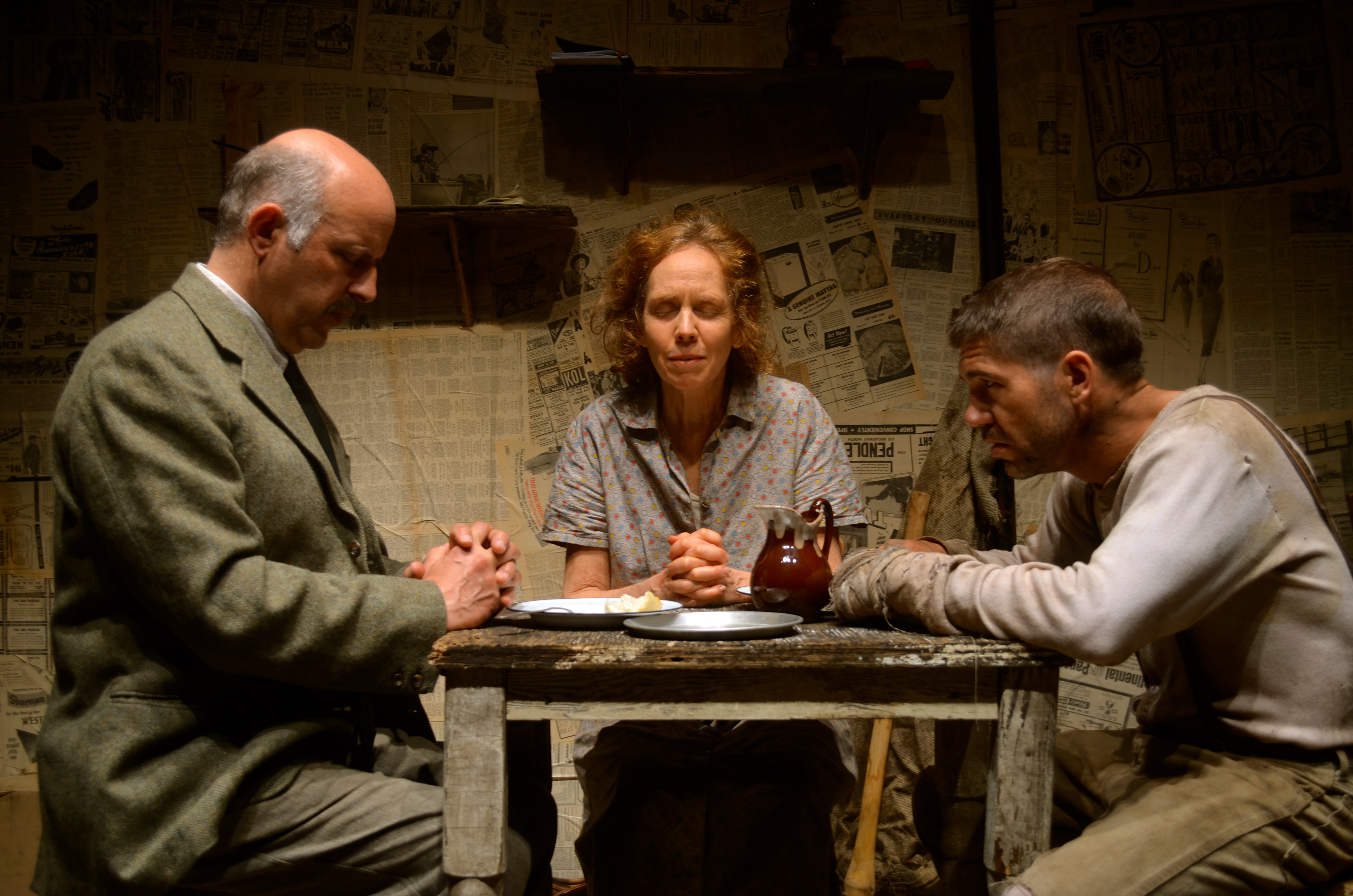
 George Catalano, Mary Ewald, and Tim Gouran in Fornes's Mud; (c) Anya Kazanjian

George Catalano, Mary Ewald, and Tim Gouran say grace in Fornes’s Mud; (c) Anya Kazanjian

Theater done New City style tends as a rule to be remarkably intimate: its current production of MUD is staged with an unflinching up-closeness. With just one row of seats that can accommodate 20 audience members tops, you’re positioned on the same level as the performance space, separated only by a few feet and a fine mesh screen from MUD‘s primal misery.

Written in the early 1980s by María Irene Fornés (now 85) — who collaborated several times with New City in the late 1980s/early 1990s — this grimly concentrated one-act drama spans but a little over an hour yet feels as exhaustive as a classical Greek tragic trilogy in New City director John Kazanjian’s searing production.

The simple-looking but intricately detailed set co-designed by Nina Moser and Kazanjian is a claustrophobic hovel, a roughhewn, comfortless, rural outpost in which Mae (New City co-founder Mary Ewald) longs for “a decent life.” There she ekes out a caged existence with her mysteriously ailing “mate” Lloyd, who had been adopted into the family by Mae’s deceased father as a younger boy. Lloyd’s arrested development has made him a bitter parasite on Mae’s drudgery, and he stinks with resentment against her attempts to improve herself through education.

Into this dire menage enters the more refined-seeming Henry (George Catalono), whose relative (but in fact quite limited) literacy and manners suggest a beacon of civilized hope for Mae. She takes Henry on as her new lover, while the further demoted Lloyd stews in bitterness, rage, and self-pity. Nina Moser’s costumes draw maximal impact from the contrast of Henry’s modest suit and tie with Lloyd’s dirt-encrusted bare feet and soiled rags.

Mae has staked her hopes on an illusion, though, and Henry doesn’t fail to disappoint with his petty behavior when Lloyd steals his money to buy desperately needed medicine. Rendered an invalid following a sudden accident, Henry soon becomes an additional drain on Mae’s resources — even less articulate than the brutish Lloyd. Fornés’ script, filled with poetry of a severe, forlorn beauty, draws metaphorical connections between animals and these hapless humans (making memorable use of an image of the shelter-seeking hermit crab).

Kazanjian gets his superb cast to fathom the many angles of this dark parable by the Cuban-born Fornés, including its registers of black humor. Gouran play Lloyd as a sulking American Caliban but finds variety in a character who can too easily come across as a nasty stereotype. Physical gestures juxtapose his listless impotence in the first scenes against Lloyd’s savagely dancing joy over his rival’s downfall. Catalono brings out Henry’s self-important pomposity as well as his rage over being driven to rage by Lloyd’s theft — Henry knows this undoes his facade.

Mary Ewald is one of the too-little-sung gems of Seattle acting. I was deeply impressed by her portrayal of Hamlet at New City last fall — a prince tormented by his tendency to idealize — and she is a legendary interpreter of avant-garde roles. Ewald sets the tone for the shades of despair and longed-for hope with which Fornés structures her play. Her Mae is trapped but determined not to play the role of victim. She declares that she intends to “die clean” in a hospital. “in white sheets” — not in the filth Lloyd seems content to fester in. All of which intensifies the horror of the otherwise rather predictable denouement.

With snapshot-like black-outs punctuating each of Mud‘s brief 17 scenes, Lindsay Smith’s lighting — along with Smith’s sound design of elegant snippets from J.S. Bach — creates a subtle distancing effect that is crucial to Kazanjian’s production. For all the Dust Bowl social realism of its surfaces, Mud comes across not as documentary critique but as a dark modernist myth of struggle and abandon.

Mud, by María Irene Fornés, until June 13 at New City Theater, 1406 18th Ave., Seattle; tickets here.

(c)2015 Thomas May — All rights reserved.

Filed under: review, theater

Archive

Enter your email address to follow this blog and receive notifications of new posts by email.