MEMETERIA by Thomas May

Music & the Arts

Happy 101st, Randolph Hokanson!

Yesterday’s birthday recital was incredible. Here’s the “set list” Mr. Hokanson played:
Mendelssohn/Three Songs without Words
Schubert/Two Impromptus (G-flat and E-flat major)
Schumann/Two Fantasiestücke Op. 12 (Des Abends and In der Nacht)
Hokanson’s own compositions: two new songs: “Elegy” (Tennyson) and “Nightingales” (Robert Bridges)
Brahms Two Op. 119 Intermezzi (B minor and C major)
Chopin Mazurka in A minor Op. 59, no. 1
Debussy “Beau Soir” in Heifetz transcription
Albeníz tango in Kreisler transcription
Gershwin “It Ain’t Necessarily So” and Prelude for Piano 3 transcriptions by Heifetz
Guest soloists: mezzo Sarah Mattox and violinist Marjorie Kransberg-Talvi

Thomas May's avatarMEMETERIA by Thomas May

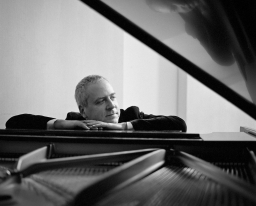
hokanson Randolph Hokanson with pianist Judith Cohen – a day before he turned 100 (photo by Thomas May)

This is a belated birthday salute, as Mr. Randolph Hokanson’s actual birthday happened on 22 June. He’s now into his second century. Today I’ll be attending a recital by Mr. Hokanson. In honor of the occasion, here’s a profile I wrote a couple of years ago about this remarkable pianist (also at work as a composer these days):

“I’ve seen it all!” announces Randolph Hokanson before losing himself in a mischievous gale of laughter. With someone else, you might be tempted to indulge that as hyperbole. With Hokanson, who was born in 1915 in Bellingham, it’s tempting to take it literally.
This gifted pianist and teacher has witnessed almost a century of not just ceaseless but accelerating change: epochal shifts in technology, in education, in how music and the arts are valued.

continue reading

View original post

Filed under: Uncategorized

Hell, Paradise, and Parody

Getting in the mood for Seattle Opera’s upcoming Dutchman production.

Thomas May's avatarMEMETERIA by Thomas May

The Flying Dutchman by Albert Pinkham Ryder (c. 1896)The Flying Dutchman by Albert Pinkham Ryder (c. 1896)

Here’s a piece I wrote for San Francisco Opera’s new production of The Flying Dutchman – a look into Wagner’s attraction to the source material he used for his breakthrough opera:

“…[T]he faithful woman hurls herself into the sea and the curse on the Flying Dutchman is lifted, he is redeemed, and we see the ghostly ship sinking to the bottom of the sea. The moral of this piece, for women, is that they should beware of marrying a Flying Dutchman; and we men should draw from it the lesson that women, at best, will be our undoing.”

It might not be unreasonable to assume this quotation comes from a critic hostile to Wagner. Or perhaps it represents a merry ribbing of the unintended absurdities that never seem far from the surface in his operas, a la Anna Russell? (“The scene…

View original post 1,250 more words

Filed under: Uncategorized

Opera Without Words

tp

Under Christoph Eschenbach, the National Symphony recently premiered Tobias Picker’s Opera Without Words — his first major orchestral composition in years. The perceptive critic Hilary Stroh gave a sensitive review for Bachtrack.

Here’s the program essay I wrote for the NSO world premiere:

Tobias Picker, described as “displaying a distinctively soulful style that is one of the glories of the current musical scene” by BBC Music Magazine and “a genuine creator with a fertile unforced vein of invention” by The New Yorker, has drawn performances and commissions by the world’s leading musicians, orchestras, and opera houses.

continue reading


Filed under: American music, commissions, new music, Tobias Picker, Uncategorized

András Schiff on Bach

Thomas May's avatarMEMETERIA by Thomas May

“Each day when I get up (and if there’s a piano) I have to play Bach for an hour. That’s how my day begins.”

View original post

Filed under: Uncategorized

Lacrimae Rerum

Thomas May's avatarMEMETERIA by Thomas May

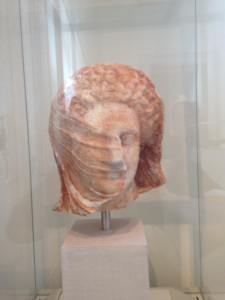
veiled

Yet however much we may like
The stoic manner in which
The classical authors wrote,
Only the young and the rich
Have the nerve or the figure to strike
The lacrimae rerum note.

–fromA Walk After Dark, W.H. Auden

View original post

Filed under: Uncategorized

Jeremy Denk’s “iPhone Shuffle about Syncopation”

JeremyDenk

UPDATE: This morning (16 March) I was informed that Mr. Denk — not uncharacteristically — has announced a last-minute change of program. The first half remains the same; the second half (originally Haydn, Beethoven, and Schubert/Wanderer Fantasy) will be replaced by the Goldberg Variations.

Here’s my latest story for the Seattle Times:

He’s got rhythm — “fascinatin’ rhythm,” as Ira Gershwin might say.

Toes will inevitably tap when pianist — and New Yorker contributor — Jeremy Denk returns to Seattle to perform at Meany Hall on Friday evening, March 18. For his recital, which concludes the President’s Piano Series at the University of Washington this season, Denk has programmed a dim sum of pieces to illustrate the way composers across the centuries have played with the beat.

continue reading


Filed under: pianists, preview, Seattle Times, Uncategorized

A Gorgeous Chamber Music Première in Seattle

In memoriam Steven Stucky (1949-2016), whose passing was announced today.

Thomas May's avatarMEMETERIA by Thomas May

Steven Stucky; photo (c) 2005 Hoebermann Studio Steven Stucky; photo
(c) 2005 Hoebermann Studio

Along with its mix of well-known and unusual repertoire, the Seattle Chamber Music Society annually commissions a brand-new work for its Summer Festival. Monday evening’s programme unveiled the selection for 2015: Cantus by the Pulitzer Prize-winning composer Steven Stucky, who has gained prominence primarily as an instrumental and choral composer. (His first opera – a brilliantly witty yet at the same time touching one-act buffa to Jeremy Denk’s libretto improbably “dramatising” Charles Rosen’s The Classical Style – will receive its full stage première next week at the Aspen Festival.)

continue reading

View original post

Filed under: Uncategorized

Another Layer to Berlioz

Thomas May's avatarMEMETERIA by Thomas May

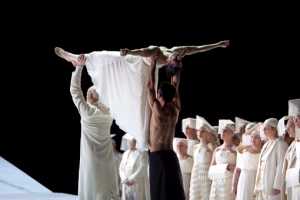
image ©Bernd Uhlig image ©Bernd Uhlig

Hector Berlioz’s treatment of the beloved Shakespeare tragedy in Roméo et Juliette, his “dramatic symphony” premiered in 1839, stands apart for its radical approach to narrative and musical story-telling.

It transforms the (still very recent, still-being-digested) Beethovenian legacy of the choral Ninth Symphony into something even less conventional in how it negotiates the relation between words and instruments, text and “programmatic” music.

Not the least unusual choice is the oblique way of recounting the famous story using not Shakespeare’s words but instead a libretto by Emile Deschamps that actually eliminates the figures of Romeo and Juliet themselves. They’re only spoken of in the text, whereas their big scenes are depicted by the orchestra alone.

So I was especially intrigued to see what Berlin-based choreographer (and aptonym!) Sasha Waltz does with one of my favorite scores. Her choreographed version of Roméo et Juliette premiered at Paris Opera…

View original post 522 more words

Filed under: Uncategorized

The Miró Quartet’s “Transcendent” Project

Thomas May's avatarMEMETERIA by Thomas May

miro1.jpgTo celebrate its 20th anniversary year, the Miró Quartet has been pursuing some characteristically innovative and ambitious projects. This week the group announced the winner of its Transcendence Education Project: the Fox Chapel Area High School Orchestra in Pittsburgh, Pennsylvania. Entrants had been invited to submit a 30-second video on the topic of ‘musical transcendence’ with prizes including a free masterclass and other chances to interact with the Miró Quartet.

continue reading

View original post

Filed under: Uncategorized

Ivesian Revelations from Morlot and the Seattle Symphony

Looking back over last year’s review, now that the SSO and Morlot’s recording of Ives 4 has been released.

Thomas May's avatarMEMETERIA by Thomas May

page from score of Ives/4th Symphony page from score of Ives/4th Symphony

The last time Ludovic Morlot led the Seattle Symphony in a Charles Ives symphony (the Second), he paired it with Rachmaninoff’s Third Piano Concerto (and got pulses running with the Overture to Leonard Bernstein’s musical Candide as a curtain raiser).

I can’t say I get the connections he apparently sees between the conservative Russian and his maverick American contemporary. Maybe the idea is to add still another layer of meta-contrast on top of the already explosively varied mixtures that comprise Ives’ sound world. In any case, this week’s program brings another Rach-Ives pairing.

It was heartening to encounter such an unpredictable interpretation of Rach 3 in last night’s performance (I believe the third time in as many years that Morlot has conducted the work here). Though the previous Rachmaninoff-meets-Ives effort (back in June 2012) had featured the ever-fascinating Stephen Hough as the soloist, the…

View original post 1,231 more words

Filed under: Uncategorized

Archive

Enter your email address to follow this blog and receive notifications of new posts by email.