Lucerne Festival’s three-day fall edition devoted to contemporary music starts today. The opening program of Forward takes place at the Swiss Museum of Transport planetarium and is centered around the Swiss premiere of Anna Thorvaldsdottir’s Enigma for string quartet, featuring with 360-degree video by Sigurður Guðjónsson.
Telescope meets microscope: let’s shake up the relationship between outside and inside, between macrocosm and microcosm! Under the massive planetarium dome at the Swiss Museum of Transport, you will zoom into the infinite expanses of the universe, accompanied by improvisations. Sigurður Guðjónsson’s immersive 360-degree video Enigma also makes visible what is normally hidden from the human eye: with the help of an electron microscope, Guðjónsson scans the surface of a carbon fragment – suggestive images reminiscent of Martian landscapes. In tandem with the sounds of Anna Thorvaldsdottir, which oscillate subtly between flow and fragmentation, they combine to form a hypnotizing Gesamtkunstwerk.
As a tribute to the phenomenon known as Daniel Barenboim, here’s a collection of memories from his decades at Lucerne Festival.
On 25 August 1966 – the very same year as two other artists who have left a deep impression in recent decades, Bernard Haitink and Claudio Abbado – Daniel Barenboim appeared for the first time before the Festival audience in Lucerne. He was only 23 years old at the time, and yet he confidently played a double role: in piano concertos by Mozart (Jenamy) and Beethoven (Piano Concerto No. 2), he not only appeared as the soloist with the English Chamber Orchestra but also conducted from the keyboard, and he also took to the podium to conduct Bartók’s Divertimento for String Orchestra….
Seattle Pro Musica continues its 50th-anniversary season with Songs for the People, the second of its New American Composers concerts. The program features composer Melissa https://melissadunphy.com/about.phpDunphy, an award-winning and acclaimed composer specializing in vocal, political, and theatrical music.
SONGS FOR THE PEOPLE features five choral works by Melissa Dunphy, including the world premiere of her commissioned work, Songs for the People, set to poetry by the poet and anti-slavery activist Frances Ellen Watkins Harper. Her other works on the concert address issues of immigrant rights and women’s rights. Melissa will present a pre-concert talk at 7:00 pm.
Also on the program are works by Dale Warland, Pärt Uusberg, and Eric Tuan.
The concert takes place at Seattle First Baptist Church, at 7:30 pm, November 12.
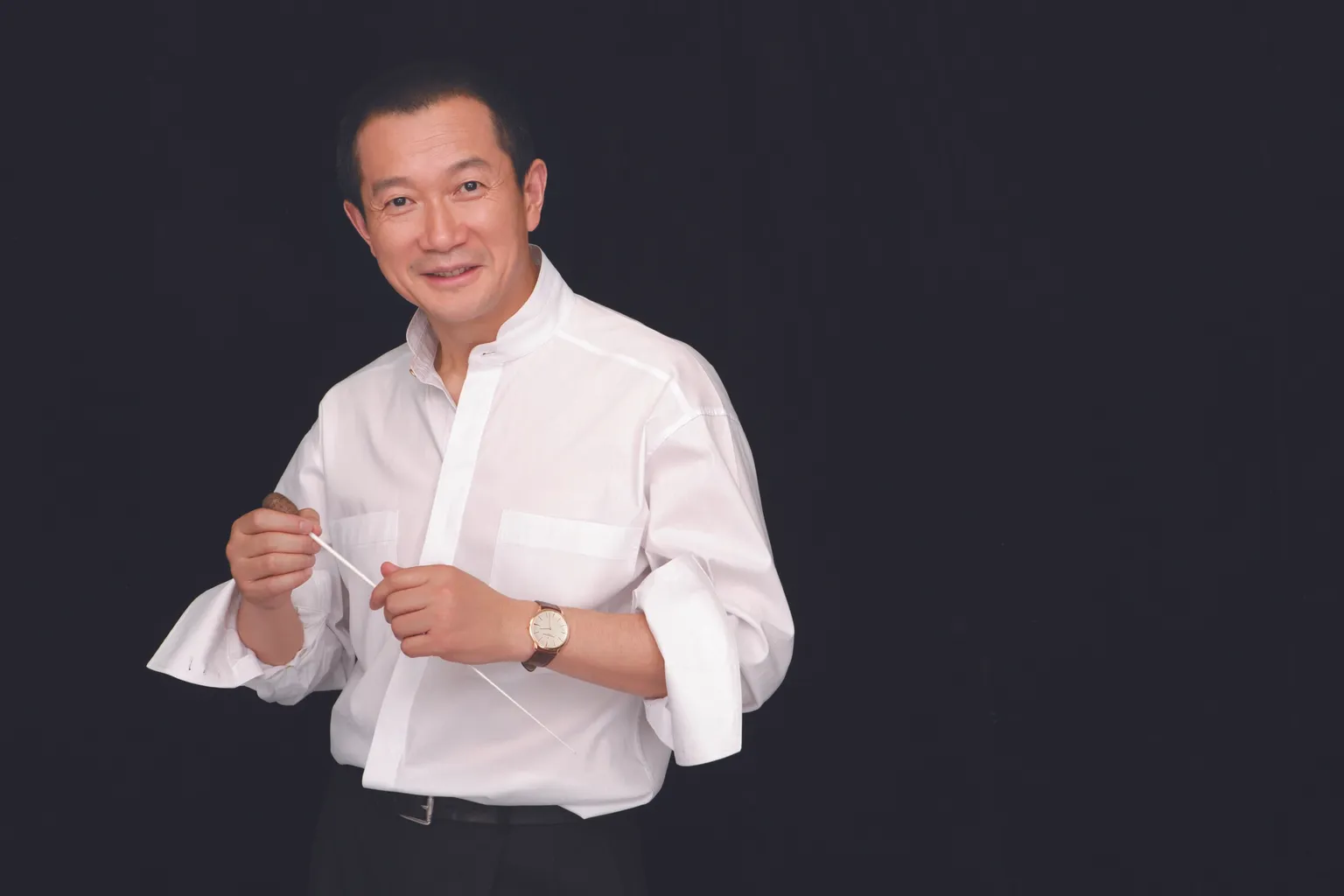
I wrote in advance about this week’s visit to Seattle Symphony by Tan Dun. Thursday night he conducted the Seattle Symphony, Seattle Symphony Chorale, Northwest Boychoir, and guest soloists in a moving performance of his Buddha Passion.
Here are excerpts from my review of the US premiere of Buddha Passion, performed by the Los Angeles Philharmonic under Gustavo Dudamel in 2019:
LOS ANGELES—A signature of Tan Dun’s most successful compositions is his gift for mixing putatively disparate elements into powerfully original amalgams. To make that happen means being able to take serious risks—and the premise behind Buddha Passion is nothing if not bold. The audience’s euphoric reaction at Walt Disney Concert Hall, where the Los Angeles Philharmonic and a cast of guest performers under Gustavo Dudamel gave the United States premiere on February 8, confirmed the tangible impact of Tan’s wildly imaginative gamble here.
Buddha Passion uses the rough outlines of the Christian Passion oratorio as a vehicle to explore the life and teachings of the Buddha. Tan drew inspiration specifically from the Mogao Caves outside the northwestern Chinese city of Dunhuang. These encompass over a millennium’s worth of murals and sculpture relating to Buddhism as well as artifacts that even contain evidence about the music of this period.
It’s fitting that Dunhuang was an ancient Silk Road outpost, since, on multiple levels, Buddha Passion stages a meeting place for diverse cultural phenomena: not only between the Passion format of the Christian West and Buddhism but between the Western orchestra/chorus and a Chinese-inflected soundscape, populist folk idioms and innovative “high art,” music, theater, and visual art.
Tan’s Water Passion from 2000 responded directly to the Christian model, representing a millennial, global perspective on Bach’s St. Matthew Passion. In my view, Buddha Passion’s looser connection to the Passion idea—the composer also conceives of it as an opera—has resulted in a much more compelling work of art that transcends surface novelty and achieves a moving coherence on its own terms.
Over its two hours (including one intermission), Buddha Passion unfolds in six “acts,” each using a famous story associated with the Buddha himself or his teachings and sharing a core message of compassion, underscored by a recurrent chant motif. Tan distributes the voice of the Buddha among his various soloists and the chorus. In the first act, for example, the death of a bird leads Little Prince (sung by mezzo Huling Zhu) on his path to enlightenment. The stories share the clarity and directness of folk tales—such as the Deer of Nine Colors (soprano Sen Guo), a benevolent force who is killed by a man she has saved from drowning (tenor Kang Wang), or a contest of minds in the Zen tale of a woodcutter (bass-baritone Shenyang) whose wisdom awes the Master Monk. Yet from such simple elements and easily recognizable music gestures, Tan has constructed a monumental and richly complex work.
His instrumental resources blend the Western orchestra with an expanded percussion section including Tan’s hallmark “organic” sound sources from water and wood. In one scene, the fantan pipa virtuosa and dancer Chen Yining enchanted by setting the scene for a magnificent palace.
Tan crafted his own libretto from original sources (a few bits in Sanskrit, the majority in Mandarin), and the LA Master Chorale as well as LA Children’s Chorus were also called on to incorporate Chinese techniques, including extensive glissandi.
Paradise seems never to be as conducive as the stumbling blocks to get there when it comes to inspiring art, and at moments I worried that Tan’s mellifluous, long-limbed melodies would become too syrupy. But context is everything here, and I found the sincerity of these gestures to be enhanced by the enormous variety of stimuli—not only musical—with which Buddha Passion teems, so that these moments served an emotional purpose similar to the directness of the narratives.
The most powerful foil to potential sentimentality came in the indelible fifth act (“Heart Sutra”), which recounts the tragic meeting between a minstrel monk and Nina, a woman from the West who dies in his arms. With contributions by two indigenous artists taking center stage here—the Mongolian throat singer and Batubagen, also playing erhu, and the singer-actress Tan Weiwei—the intensity of this section made it stand apart as an opera-within-the-passion. Yet it was also brilliantly integrated into the narrative flow Tan had established.
This passage also underscored the success of another facet of the composer’s fusion in this work: the ability to weave ancient, folk-based music and traditions into his unique language. Elsewhere in Buddha Passion we heard dense harmonic clusters radiating an Ivesian aura while, punctuating the finales of both parts (acts three and six), vibrant, tumultuous dithyrambs of rhythmic energy. This Buddha, when awakened, is not one to go gently into that good night.
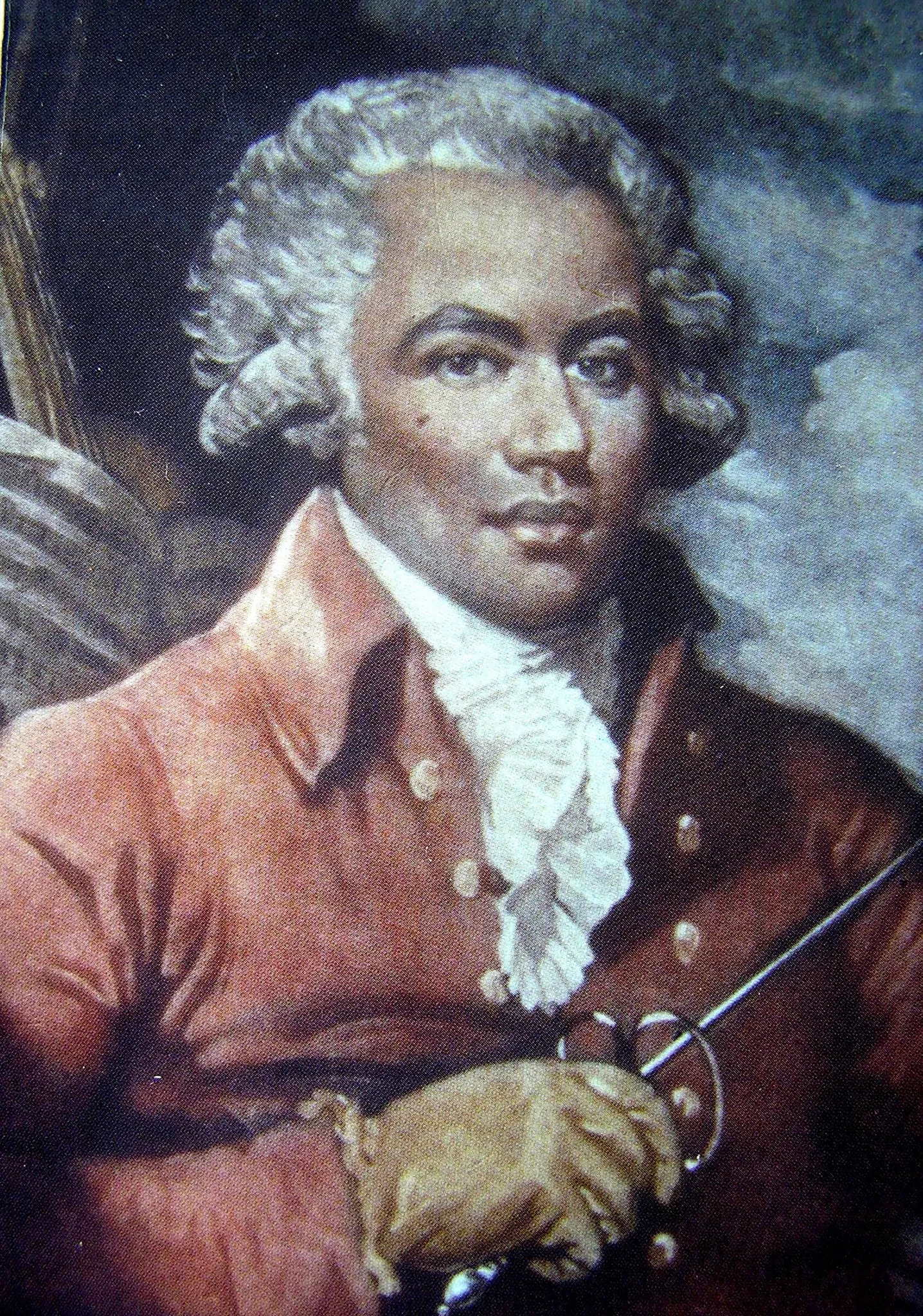
Joseph Bologne, Chevalier de Saint-Georges, posing with his fencing rapier, painted by Mather Brown, in 1787. (Public domain)
Here’s my Seattle Timesstory for Seattle Baroque Orchestra’s upcoming concert devoted entirely to music by Joseph Bologne, Chevalier de Saint-Georges:
Joseph Bologne, Chevalier de Saint-Georges, defies easy categorization.
For Seattle-based violinist, professor and filmmaker Quinton Morris, Bologne (1745-1799) combined “the entertainment appeal of Michael Jackson and the athleticism of Michael Jordan.” Morris’ award-winning film and performance project “Breakthrough,” which he has taken on tour around the world, presents Bologne’s many-layered story through a contemporary lens.
Pekka Kuusisto was the soloist in Enrico Chapela’s ‘Antiphaser,’ a concerto for electric violin and orchestra, with the Seattle Symphony under Andrew Litton. (Photos by Brandon Patoc)
My review of Enrico Chapela’s new violin concerto, Antiphaser, which Pekka Kuusisto premiered on Thursday with the Seattle Symphony under guest conductor Andrew Litton:
It’s been nearly a year since Thomas Dausgaard’s abrupt departure as the Seattle Symphony’s music director, but the projects initiated under his tenure and delayed by the pandemic continue to make their way to the Benaroya Hall stage. The latest of these is Antiphaser, a concerto for electric violin and orchestra by the Mexican composer Enrico Chapela. Trading his 1709 “Scotta” Stradivari for an electronically amplified instrument, Pekka Kuusisto joined the orchestra to perform the world premiere under the baton of Andrew Litton on Nov. 3….
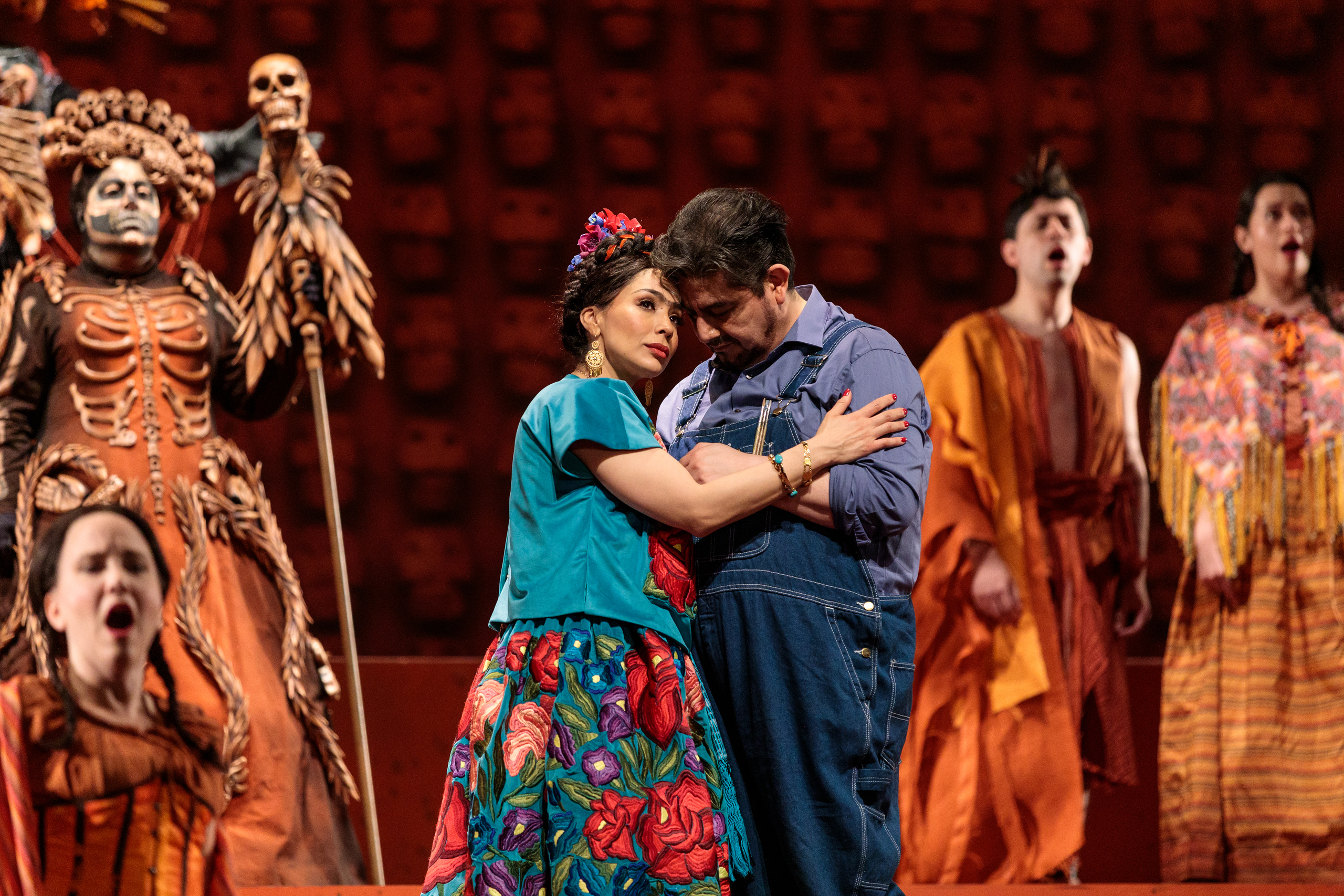
Guadalupe Paz as Frida Kahlo and Alfredo Daza as Diego Rivera; photo credit: Karli Cadel
My review of the world premiere of Gabriela Lena Frank’s new opera about Frida Kahlo and Diego Rivera, which sets a libretto by Nilo Cruz, is available here at Musical America (no paywall through the weekend):
SAN DIEGO — At the center of El último sueño de Frida y Diego (The Last Dream of Frida and Diego), Frida Kahlo decides to cross over from the underworld and return to the realm of the living. It’s a conceit that cries out for operatic treatment, and composer Gabriela Lena Frank and librettist Nilo Cruz oblige with an inspired fusion of music and poetry.
My Seattle Timesstory on Tan Dun and his upcoming appearances next week with Seattle Symphony:
A transformative encounter in cave temples inspired Tan Dun, who will conduct his epic Buddha Passion as part of a Seattle Symphony mini-festival of his works Nov. 3-13.
Congratulations to cellist Zlatomir Fung, Musica; America’s New Artist focus for November. I had the pleasure of hearing his New York Philharmonic debut last summer at the Bravo! Vail Festival. Here’s my profile:
Competing with nature’s own surround-sound orchestra, open-air performances aren’t the optimal context in which a soloist can shine. But Zlatomir Fung kept me riveted at this past summer’s Bravo! Vail Festival, eager not to miss a single nuance from the moment…
To launch this milestone season, Music of Remembrance (MOR) founder and artistic director Mina Miller has curated a remarkable program that will take place at Benaroya Hall on Sunday, 30 October, at 5pm. The centerpiece is a new production of Josephine, Tom Cipullo’s one-act monodrama by based on the life of the legendary singer and dancer Josephine Baker, who found fame and success in France as an artist, a French Resistance hero, and a civil rights activist after escaping racism in America.
“Josephine tells a story that resonates with all of us today,” comments artistic director Mina Miller, “a story about a woman with the courage to fight back against prejudice and discrimination, and stand up for her art and ideals to make a difference in the world.” Starring sopranoLaquita Mitchell in the title role, the production is directed by Erich Parce and conducted by Geoffrey Larson.
Also a highlight will be the world premiere of Wertheim Park, a setting of the poetry of Susan de Sola by composer Lori Laitman, which was commissioned by MOR. Soprano Alisa Jordheim interprets this haunting song, a deeply moving elegy for the Dutch Jews lost to the Holocaust.
In addition, the program includes chamber works by two Holocaust-era composers. Erwin Schulhoff’s virtuosic Concertino for Flute, Viola and Double Bass showcases two of the Seattle Symphony’s principal chairs, violist Susan Gulkis Assadi and flautist Demarre McGill, along with double bassist Jonathan Green. The concert opens with the elegiac Lamento for viola and piano by Dutch composer Max Vredenburg. Vredenburg sought haven in the Dutch East Indies only to endure years of captivity there under Japanese occupation; Schulhoff perished in a Nazi prison camp.
MOR’s stellar instrumental ensemble, drawn from the Seattle Symphony Orchestra, features flutist Demarre McGill, clarinetist Laura DeLuca, violinist Mikhail Shmidt, violist Susan Gulkis Assadi, cellist Walter Gray, double bassist Jonathan Green, and pianists Jessica Choe and Mina Miller.
For a quarter century now, MOR remembers the Holocaust through music and honors the resilience of all people excluded or persecuted for their faith, nationality, ethnicity, gender or sexuality. In addition to rediscovering and performing music from the Holocaust, MOR has commissioned and premiered more than 30 new works by some of today’s leading composers, drawing on the Holocaust’s lessons to address urgent questions for our own time.
Lamento (1953)
Max Vredenburg
Susan Gulkis Assadi, viola
Jessica Choe, piano
Wertheim Park (2022)
Music by Lori Laitman Poetry by Susan de Sola
World Premiere
Commissioned by Music of Remembrance
Alisa Jordheim, soprano
Laura DeLuca, clarinet; Mikhail Shmidt, violin; Jonathan Green, double bass; Mina Miller, piano
Concertino for Flute, Viola and Double Bass (1925)
Erwin Schulhoff
Demarre McGill, flute; Susan Gulkis Assadi, viola; Jonathan Green, double bass
Josephine (2016)
Music and Libretto by Tom Cipullo
A Monodrama in One Scene
Laquita Mitchell, soprano
Music of Remembrance Instrumental Ensemble
DeMarre McGill, flute; Laura DeLuca, clarinet; Mikhail Shmidt, violin; Walter Gray, cello;





 MEMETERIA by Thomas May