

With Götterdämmerung – billed by Atlanta Opera in English as Twilight of the Gods – the company completed the first Ring cycle in its history. The milestone also appears to mark the first fully staged Ring in the U.S. Southeast. Having missed the earlier installments, I can’t speak to the arc of the cycle as a whole. But taken on its own terms, this final drama was a formidable achievement: not only ambitious but lucidly told and gripping throughout. I could hardly imagine more persuasive evidence of the company Atlanta Opera has become under its general and artistic director Tomer Zvulun.
Earlier that day, to members of the Music Critics Association of North America gathered for their annual conference, Zvulun described the Ring as the kind of summit goal that “jolts the whole organization into a different metabolism.” On this evidence, the jolt has taken. This was hardly a matter of a company checking off the institutional trophy box.
The production had an added charge in that it was dedicated to the memory of Speight Jenkins, the former general director of Seattle Opera, who had died on May 30, opening night — a striking coincidence, given Jenkins’s deep association with Wagner and his importance as the mentor Zvulun credits with introducing him to that world. Atlanta Opera was thus marking its own arrival as a Wagnerian force while honoring one of the figures who helped define what Wagner performance could mean in this country.
Zvulun’s own relationship to Wagner is deeply conflicted. He described the music as something “spiritual,” “like a portal that opens up,” while also acknowledging his ambivalence as an Israeli Jewish artist confronting Wagner’s anti-Semitism. This was not reverential Wagner worship but Wagner understood as dangerous inheritance.
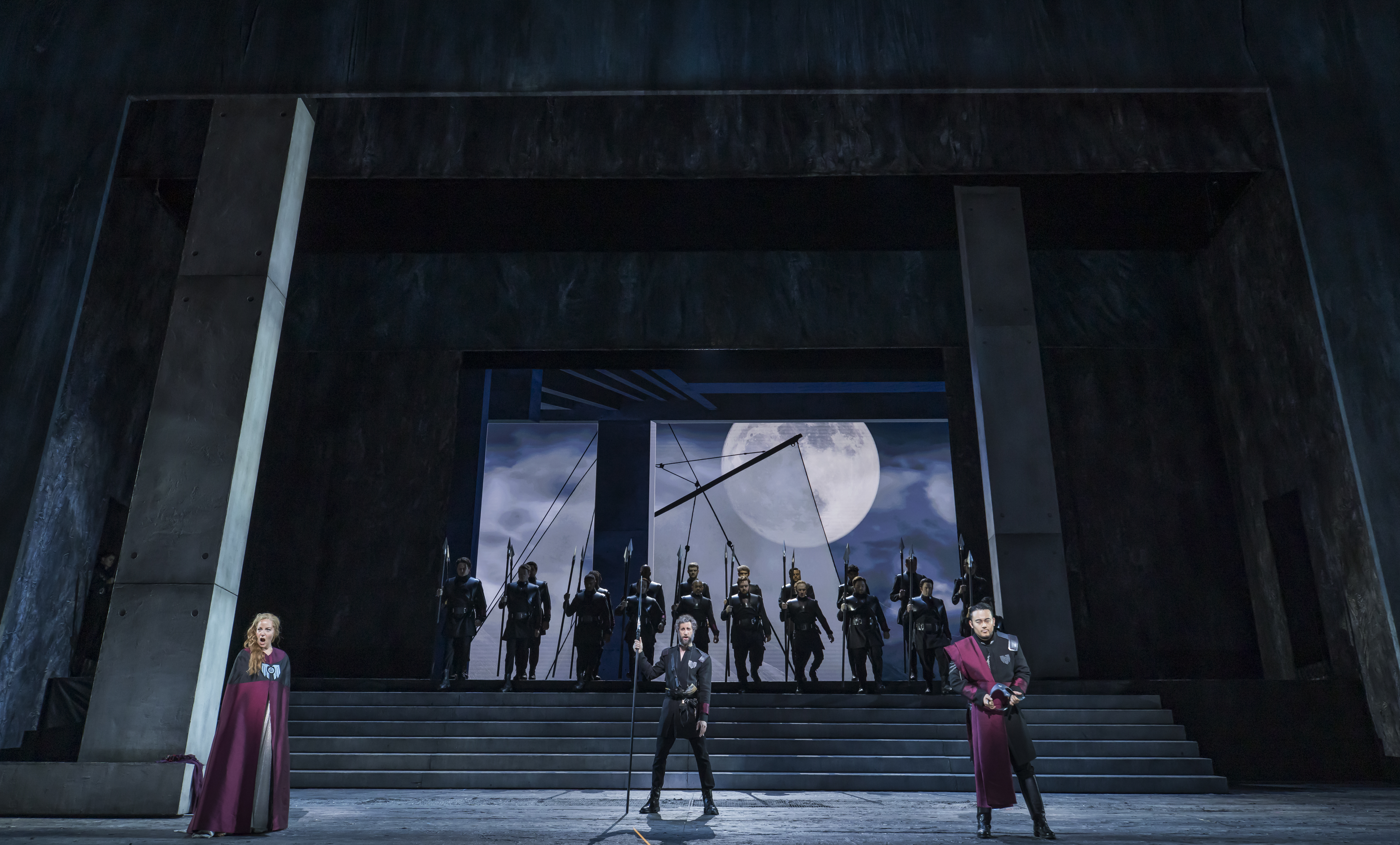
Erhard Rom’s scenic and projection design, with costumes by Mattie Ullrich and lighting by Robert Wierzel, imagined the Gibichungs’ world as sterile and oppressive, with overtones of fascism but without reducing the proceedings to a preachy, one-note allegory.
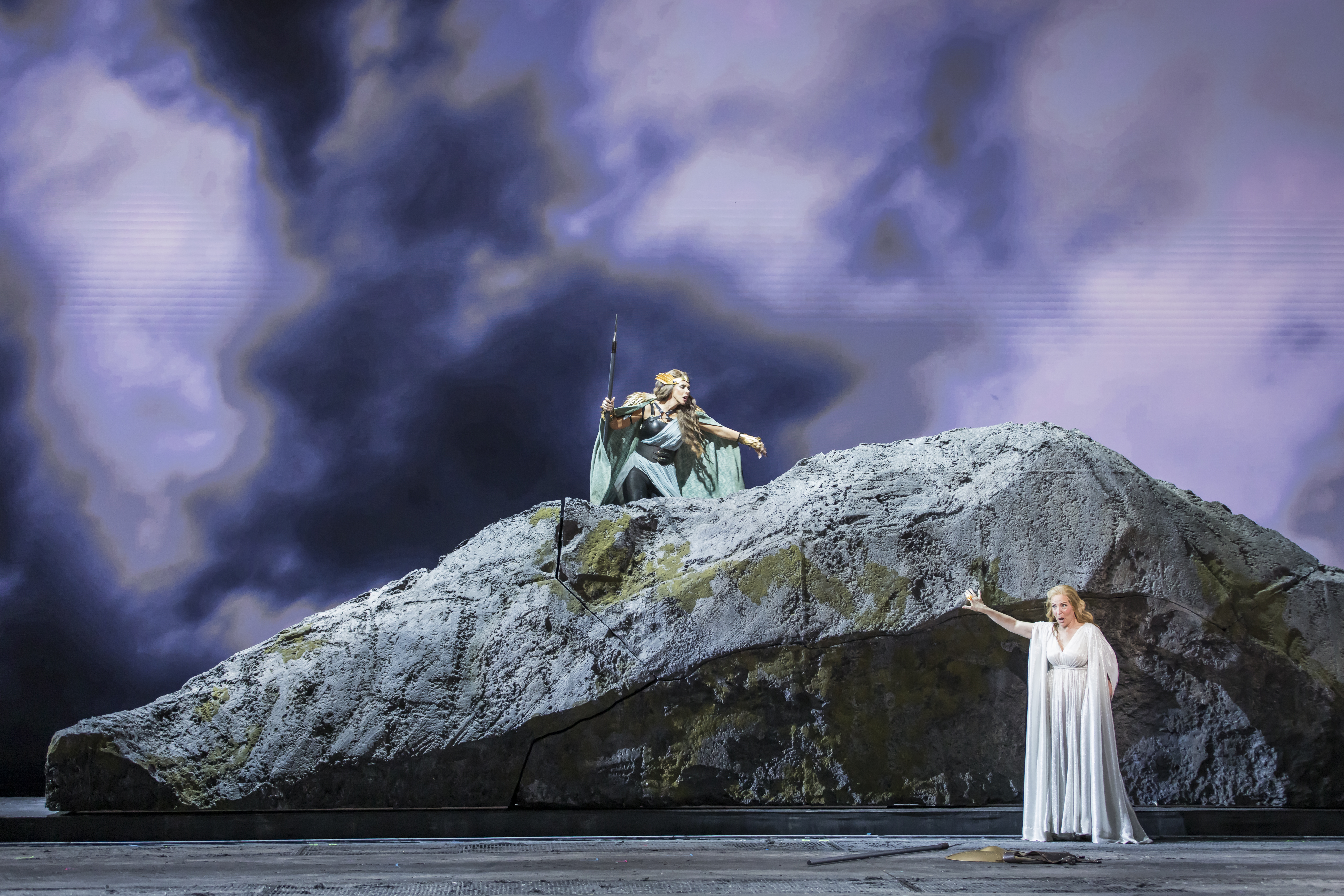
The integration of physical scenery with an 80-by-40-foot LED wall was impressively persuasive in using digital space to extend the spare theatrical architecture. The Norns scene unfolded amid pale, ruin-like forms suggesting a collapsed library or archive, as the rope of fate merged with the Norns’ own streaming hair. Brünnhilde’s rock was conceived in a more literal mythic register: a hulking crag before a cloud-churned LED sky.
Especially effective was the cold and coercive atmosphere of the Gibichung palace. Massive physical piers and blackened framing opened onto projections of receding slabs, catwalks, windows, and voids. Hagen’s nocturnal scene acquired a chamber-horror intimacy, with Alberich creeping out of the upstage shadows. In Act III, the Rhine seemed to return as an underworld, bathed in yellowish light and now degraded almost beyond hope.
Zvulun’s chief strength as stage director is narrative clarity. He did not solve every dramaturgical knot in Götterdämmerung – as if that were possible – but he made its contradictions feel active rather than embarrassing.
The pivotal deception at the end of Act I, for instance, is often simply taken at face value. Siegfried, supposedly the uncorrupted hero, participates in a grotesque fraud against Brünnhilde, even if “under the influence” of a magic potion. Gunther agrees to the scheme, then finds himself humiliated by it. Gutrune, often reduced to a naïvely willing participant, becomes implicated in a crime she only partly understands.
Zvulun’s staging treated these contradictions not as plot problems to be explained away, but as evidence of a world already morally compromised. Brünnhilde’s devastating humiliation brings the drama’s moral rot into the open as shame.
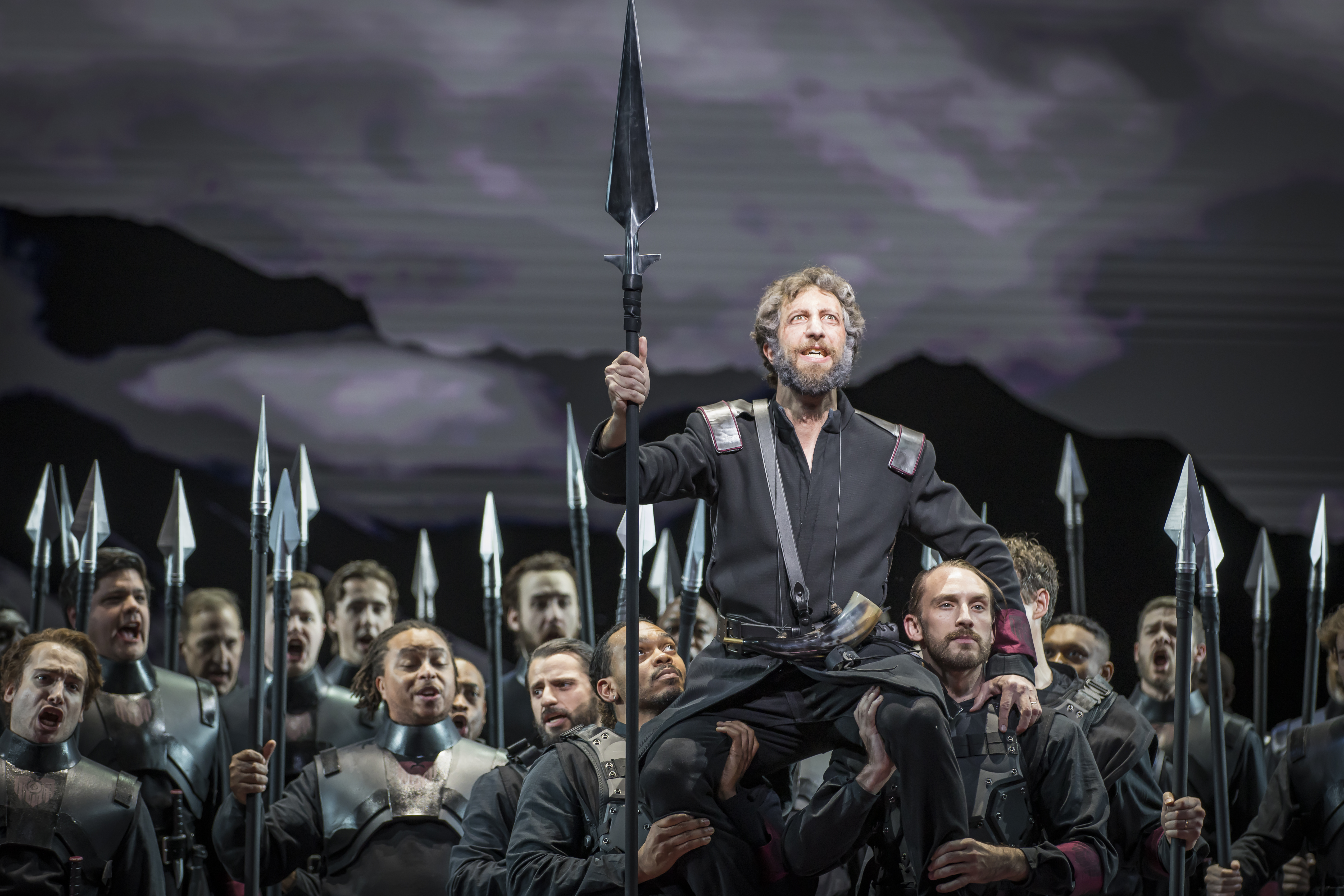
But shame is only one part of the machinery. Around it, Zvulun traced a wider system of grievance and revenge: Gunther’s sexual and political disgrace, Gutrune’s dawning recognition that she has been both agent and pawn, Alberich’s hatred still seething through the next generation, and Hagen’s poisonous need to act on it. In the Ring, greed for power is the great motivating force set against love. Here, though, vengeance felt even more combustible: power’s most intimate, poisoned form – made literal in the revenge motive that binds Alberich’s command to Hagen’s obedience.
Zvulun emphasized this by giving Act II a faint revenge-tragedy charge. Alberich’s nocturnal apparition to Hagen already has a Hamlet-like structure: the father’s ghostly command, the son’s burden of vengeance, the inheritance of an old grievance. With Hagen cradling a metallic orb that inevitably suggested Yorick’s skull, Zvulun made the parallel hard to miss. David Leigh’s Hagen had the right physical profile for this idea – tall, thin, watchful, exuding sadistic glee – he even snarled with a nihilistic laugh after Siegfried’s murder, echoing Alberich’s spiteful laugh upon grabbing hold of the gold in Das Rheingold‘s opening scene. Vocally, however, I wanted just a bit more weight and color in the depths, though he effectively projected an almost charismatic menace.
The acting was often unusually detailed. Stefan Vinke’s Siegfried was vocally the real thing: tireless, bright, fearlessly energetic, and with an exceptionally extended high C in the Act III hunting scene that seemed to confirm the character’s fatal confidence. His death scene, for once, seemed less stagey, a careful diminuendo of the life force as he continued his memory of awakening Brünnhilde.
Lise Lindstrom, who impressed me with her recent Dallas Brünnhilde (just released on Delos), offered a multidimensional portrayal. In the Prologue, she gave the reawakened Valkyrie’s love a sensual warmth without making it merely private. Costumed in white against the darker world around her, she suggested something more elemental: a primal, nurturing force whose devotion still had the power to change history. In Act II, even at her angriest, Lindstrom did not reduce Brünnhilde to vengeance. Her fury was shadowed by disbelief and grief, as if some part of her still could not accept what had happened and did not truly want to betray Siegfried in return. The Immolation was surprisingly intimate rather than merely monumental. If there were moments when the voice was submerged, the performance’s psychological concentration held.
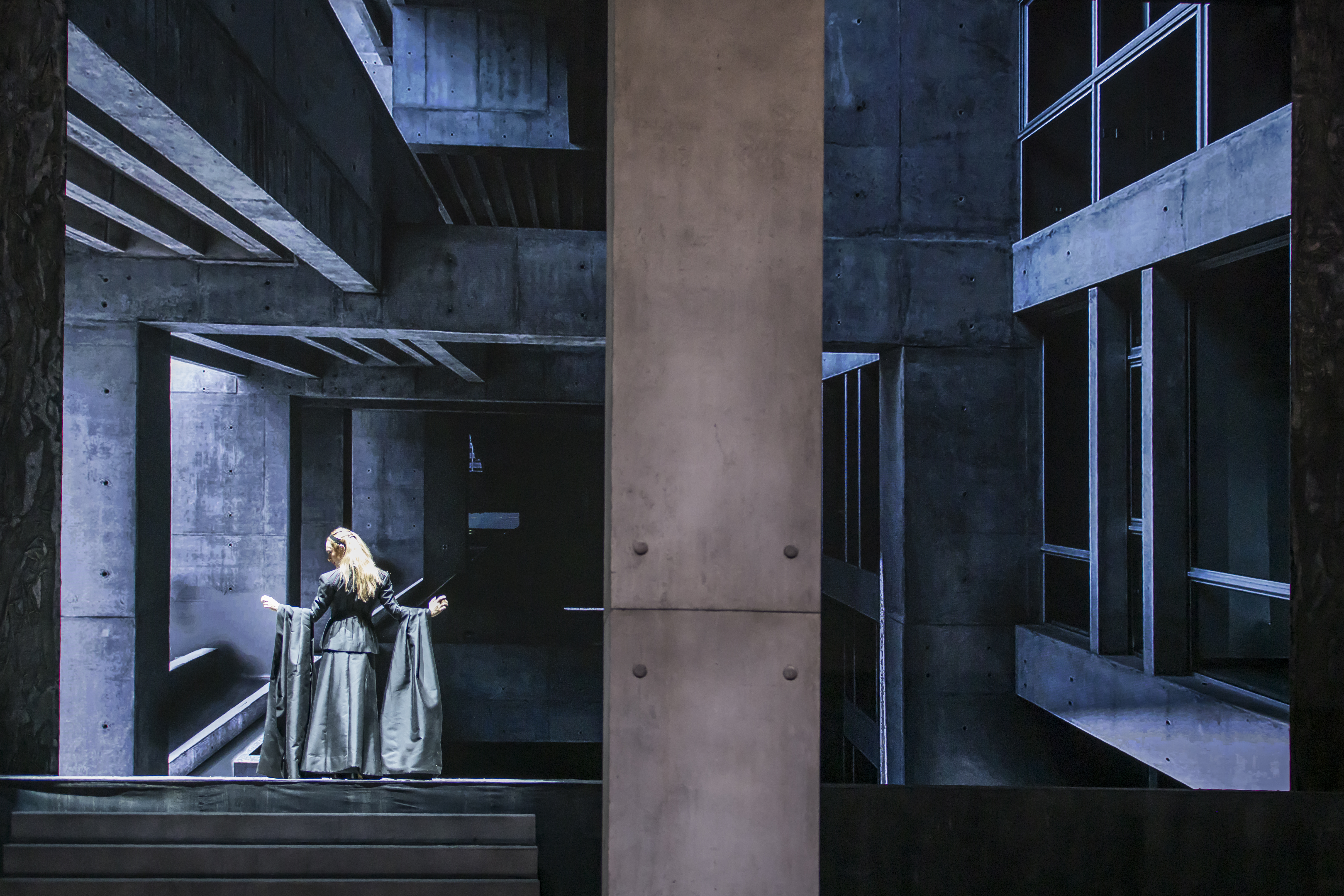
Among the Gibichungs, Sylvia D’Eramo was a revelation as Gutrune, singing with a poignant vulnerability that made the character’s moral trajectory unusually clear. In Zvulun’s staging, she was naïve and susceptible at first, then increasingly aware that she had been used as an instrument in a catastrophe. Her third-act solo scene waiting vainly for Siegfried’s return became one of the evening’s unexpected highlights – a study in suspended dread. As brother Gunther, Le Bu had vocal thunder, though dramatically he remained too fixed in grim solemnity; the scowl told us something, but not everything.
The Norns became strongly differentiated personalities rather than blending into generic fate machinery, with Tamara Mumford’s First Norn especially striking. As Waltraute later on, she and Lindstrom did not quite ignite the scene’s desperate sibling chemistry, though the encounter still clarified Brünnhilde’s frighteningly absolute devotion to Siegfried.
As for the Rhinemaidens, their scene ranks among the finest staged versions I have seen. Instead of functioning as a perfunctory attempt to pry the Ring from Siegfried, it became a reversal of the original seduction game from Rheingold. Each step mattered, and Siegfried’s inability to understand what was being offered – or what he was refusing – became another stage in his doom.
Zvulun’s staging was strongest when it trusted such consequences to accumulate. The gradual darkening of Act III, with Siegfried’s narration closing in under a full moon, gave his murder and the Funeral March a satisfying inevitability. A particularly effective touch came when Hagen’s own men began to recoil following the murder, sadly joining the march as if only then grasping the enormity of what their leader had led them into.
The production was less persuasive when it tried to add apocalypse from the outside. There were occasional projection glitches — odd white-noise or hallucination-like eruptions in a corner of the LED wall – and the added catastrophic sound effects in the Immolation felt like blockbuster-trailer overkill, covering the orchestra at exactly the wrong moment. Wagner needs no help sounding apocalyptic.
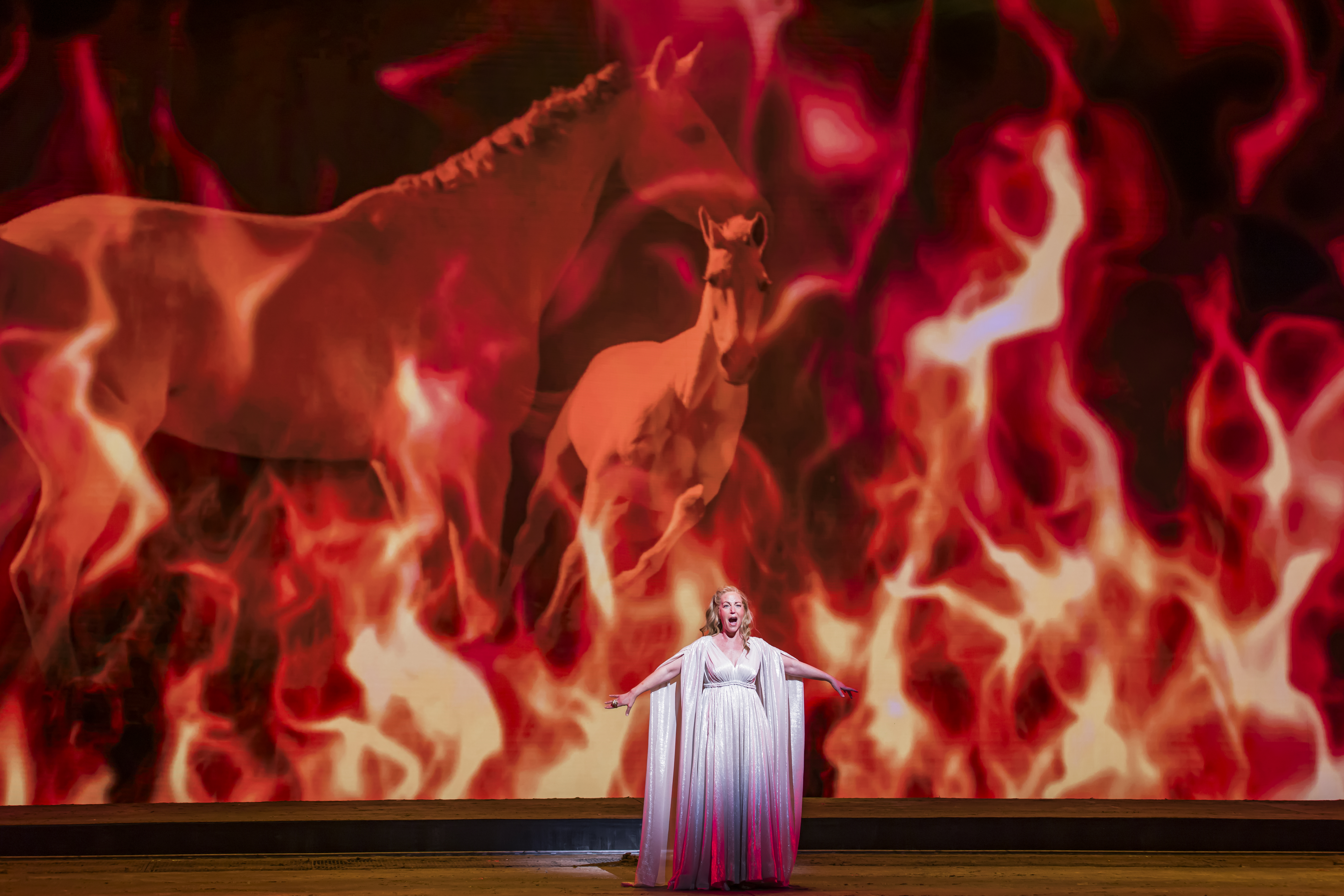
Roberto Kalb conducted with clarity and sensitivity, and he delineated the narrative with admirable, unfussy directness, drawing excellent playing from the orchestra. Yet I sometimes wanted more darkness, more ominous attack – especially in Hagen’s music, where the tension could feel undercharged – and more elasticity. The Cobb Energy Performing Arts Centre’s acoustics did not always help; a persistent mechanical whir, apparently from the video cameras, intruded at quiet moments and added an unwelcome layer of noise. Still, Kalb understood the architecture, and the final return of Brünnhilde’s glorification motif possessed real force.
Zvulun’s staging told the story with unusual confidence, making the drama’s moral and symbolic structures legible without flattening them. This Twilight of the Gods registered like a company expanding its own imagination through Wagner.
Review (c) 2026 Thomas May – All rights reserved
Filed under: Atlanta Opera, conductors, directors, Ring cycle, Wagner, classical-music, music, opera, richard-wagner, Wagner
 MEMETERIA by Thomas May