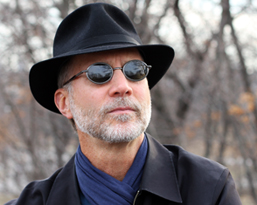
A birthday salute to the marvelous composer John Luther Adams, who was born on January 23, 1953 — and who was named Musical America’s Composer of the Year for 2015 — on the heels of winning last year’s Pulitzer Prize in Music for Become Ocean.
He also recently garnered Columbia’s William Schuman Award for Lifetime Achievement, it was announced last month.
My feature on JLA and the Seattle Symphony commission of Become Ocean appears in last fall’s issue of Listen magazine — but behind a paywall, so I can’t post the whole thing here.
The full opera staging of John Adams’s The Gospel According to the Other Mary premieres tonight at English National Opera in London, in a production directed by the brilliant Peter Sellars (recently named Musical America’s Artist of the Year).
Here’s a clip with Peter Sellars and John Adams discussing the work:
I had the fortune of spending an afternoon with the composer John Luther Adams in New York City last May, shortly after his Pulitzer Prize-winning orchestral work Become Ocean received its New York premiere at Carnegie Hall. (My article on this Seattle Symphony commission appears in the current issue of Listen magazine.)
And now the SSO’s recording with music director Ludovic Morlot has been released on Cantaloupe.
The spatial conception that informs JLA’s music really needs to be experienced in live performance, but you can get a decent impression of his aesthetic from the recording. This week NPR is making it available to listen to online for free.
The composer John Luther Adams has been very much on my mind since I conducted a lengthy interview with him shortly after Seattle Symphony brought his Pulitzer Prize-winning Become Ocean to Carnegie Hall in May.
(Stay tuned for my feature devoted to that commission and the world of JLA in the upcoming fall issue of Listen magazine.)
I couldn’t make it to the recent world premiere of JLA’s site-determined piece Sila: The Breath of the World co-presented by Lincoln Center Out of Doors as part of the Mostly Mozart Festival, but I’m eager to encounter it next spring when it will be performed in my old hometown by co-commissioner Washington Performing Arts.
Here’s a vicarious take on Sila from a roundup of reviews I’ve seen:
In “Sila,” as in many such happenings, music is less a finished product than an activity; it both interacts with and creates a space. In the limpid air of a New York summer, it was a sound garden, embracing a multiplicity of narratives as people variously sat in the dappled shade of a stand of trees, or sipped drinks under cafe umbrellas, or talked quietly, or played with their kids, or paced the plaza looking for new viewpoints and that elusive orchestral balance.
The composer translates the Inuit title of the piece this way: “Sila is the wind and the weather, the forces of nature. But it’s also something more. Sila is intelligence. It’s consciousness. It’s our awareness of the world around us, and the world’s awareness of us.” Even with the buzz of Manhattan so close, Adams and his musicians created a work of music, and of theater, that encouraged listeners to look both deeply inward and out into an imaginary expanse far beyond Hearst Plaza.
[A]s the music evolved, it gained in body and density, though not exactly volume. Choirs of reedy woodwinds and delicate, sometimes scratchy string sounds permeated the space. At times “Sila” was like music depicting continental drift. Halfway through, melodic fragments seemed to emerge, though these were often just instruments rising up the harmonic series.
In endeavoring to have the music become part of nature, and vice versa, Mr Adams encourages an open-minded and thoughtful kind of listening. The listeners sat on the ground between and in front of the musicians and, farther back, underneath a grove of trees. A garbage truck growled in the distance; birds chirruped nearby. These unscheduled sounds mingled with Mr Adams’ clouds of sound as they gradually merged and evaporated and grew, letting some motifs imprint themselves and fossilize in our minds.
JLA’s focus on the note B-flat and its overtones is a fascinating choice. Apparently B-flat has the honor of representing “the lowest note in the universe”, according to the astronomer Andrew Fabian at the Institute for Astronomy at Cambridge University in England in this 2003 report from Dennis Overbye:
Astronomers say they have heard the sound of a black hole singing. And what it is singing, and perhaps has been singing for more than two billion years, they say, is B-flat — a B-flat 57 octaves lower than middle C.
I’ve been working on a note for Howard Hanson’s most-popular composition — the Symphony No. 2 (“Romantic”) from 1930, a Boston Symphony commission (same vintage as Stravinsky’s Symphony of Psalms).
And this is an earworm I cannot dispel (the second theme from the first movement, which cycles back several times later on):
This summer’s 65th anniversary season of the Aspen Music Festival is keyed to the theme of “The New Romantics.” Here’s the feature essay I wrote on current manifestations of “New Romanticism”:
In the summer of 1983, the composer Jacob Druckman triggered something of a mild shockwave in the musical world by programming a festival interrogatively titled “Music Since 1968: A New Romanticism?” This would be the first of two annual new-music festivals that Druckman curated around the rubric of “New Romanticism.” Both were given by the New York Philharmonic during his tenure as the orchestra’s composer-in-residence.
Druckman’s manifesto-like essay introducing the program declared that “the tide began to change” among composers during the mid-1960s, and that amid the profusion of recent new works could be discerned “a gradual change of focus, or spirituality, and of goals.”
He adapted Friedrich Nietzsche’s famous dichotomy of the logical, rational “Apollonian” versus the ecstatic “Dionysian” as representatives of the polar impulses driving creativity (both gods, it’s perhaps helpful to recall from ancient Greek mythology, being sons of Zeus and thus half-brothers). The recent tidal shift, argued Druckman, was toward the “Dionysian qualities” of “sensuality, mystery, nostalgia, ecstasy, transcendency. Whether this new music will be called ‘Neo-Romantic’ or some other term is yet to be seen….”
The National Youth Orchestra of the United States of America has just launched its second season. Tomorrow brings the NYO to Carnegie Hall for its official debut there, with a program of music by Bernstein, Britten (Gil Shaham soloing in the Violin Concerto). Mussorgsky, and a newly commissioned orchestral piece by Samuel Adams. David Robertson is serving as the NYO’s conductor this year.
It’s a ploy that always generates controversy: announce the death of “classical music” (however you define it), furnish your obituary with a sauce of ominous statistics and watch your site traffic explode. Another death knell hit the blogosphere and Twitterverse this January, courtesy of a Slate article titled “Requiem: Classical Music in America Is Dead,” which came illustrated with a gray-haired conductor stationed in front of a tombstone. Predictably, the piece triggered a raft ofindignant but thoughtful counterarguments in response.
Seattle really is the place to be when it comes to envisioning the future of the American orchestra. The future, as in: not another whine-fest of grumpy old men (or ill-informed hipster “observers”) bewailing “the death of classical music,” but the future as a challenge to rethink the “binaries” that shackle the art, that limit how we conceive the culture of performance.
That’s the message enticingly floated by flutist extraordinaire, new music advocate, innovative entrepreneur, and MacArthur genius Claire Chase, who gave the keynote speech for this year’s edition of the League of American Orchestras Conference: “Critical Questions, Countless Solutions.”
The 2014 Conference has just gotten under way, and the choice of Seattle is especially fortuitous. The Seattle Symphony under Ludovic Morlot is gaining wider recognition as an engine for smart orchestral innovation. Their major commission of music by John Luther Adams won this year’s Pulitzer Prize in Music. And the Symphony did something more than hit a home run with its Carnegie Hall performance last month, which inspired Alex Ross to write (and League President and CEO Jesse Rosen to quote during his presentation yesterday at Benaroya Hall): “When conductor, players, and administrators are of one mind, an orchestra can become a singularly vital beast.”
The opening session got a nice launch with a brief concert by the Seattle Youth Symphony Orchestra under Stephen Rodgers Radcliffe: Joshua Roman contributed the solo cello part to Aaron Jay Kernis’s Dreamsongs for Cello and Orchestra, which was followed by a Wagnerian excerpt (Dawn and Siegfried’s Rhine Journey). Deborah Rutter, incoming new President of the Kennedy Center (and a major force in making this concert hall a reality back in the 1990s), gave a heartfelt and quite moving tribute speech to Wayne S. Brown. Brown then appeared onstage to accept the League’s prestigious Golden Baton Award.
Ending the afternoon was a duo session by Joshua Roman and Gabriel Prokofiev (performing the latter’s Cello Multitracks, which mixes live acoustic playing with “electronica” to effect a cello nonet). Claire Chase introduced herself with a superb performance of a piece she says changed her life: Edgard Varèse’s Density 21.5.
Note the prominence of non-orchestral music here. It might seem odd for the opening session of an orchestral conference, but the point seemed to be that the standard model of full-scale orchestral performances can benefit from a flexible context of solo and chamber playing, a dialogue with other forms of music-making.
Chase waxed on about her hero Varèse’s pronouncement that “music, which should pulsate with life, needs new means of expression.” There were a lot of heady suggestions drawing on her experiences spearheading the contemporary music ensemble ICE, but this was primarily a mood setter. Some will say it’s just another variant of the standard pep talk self-congratulation. One friend and colleague points out that you can’t just leap-frog past ingrained traditions of performance, not to mention the nitty-gritty of musicians’ contracts that are in place, to will new models into being.
At the other extreme, the promise of “countless solutions” can, after all, lead nowhere: if there are too many options, how is any to have a lasting, meaningful impact? But what I heard in Chase’s remarks was a provocative invitation to do more than daydream about a promising future. Let’s see what concrete suggestions emerge from the next few days of sessions, brainstorming, and conversation.
An update: Here’s another (unnumbered) volume in the Albany Records series featuring George Walker‘s music. (The label also has a series focusing on Mr. Walker as pianist.
Highlights are Music for 3 (1971) and his Piano Sonatas No. 3 (1976) and No. 5 (2003), along with several songs to the poetry of Emily Dickinson, Paul Lawrence Dunbar, Robert Burns, and others.
Albany Records has added a fourth volume to its laudable series of recordings of music by George Theophilus Walker. At 92 (going on 93), Mr. Walker remains an active composer and was recently nominated for New Jersey’s Hall of fame — he resides in Montclair — and if he wins, it would make a lovely addition to his accolades. They just happen to include a slew of honorary doctorates, AASCAP’s Aaron Copland Award, induction into the American Classical Music Hall of Fame … oh, and a Pulitzer, which he received in 1996 for his Whitman-inspired Lilacs.
These are sensitive but rigorous performances and give a wonderful spread of Mr. Walker’s career, from Antifonys for String Orchestra (love the title), originally composed in 1967 for double string quartet, and the Pulitzer-winning Lilacs for Voice and Orchestra to several compositions that prove Mr. Walker’s creative energy has not dimmed.
I’m especially attracted to the 2012 work Sinfonia No. 4 (“Strands”), which I recently heard as part of the National Symphony’s innovative New Moves series. (My notes on the piece are here.) To be honest, the account on this CD is a good deal richer and more compellingly shaped than what I heard in the live performance. Conductor Ian Hobson, leading Poland’s Sinfonia Varsovia, not only gets the solemnity and idea-dense intricacy of this music but knows how to articulate its drama, its transitional energy.
Mr. Walker explains that the guiding idea behind the title “Strands” involves an “interplay” of thematic material that’s both severely compact and, with the subtle introduction of two quotations from spirituals, visionary and affirming. Given the task of writing a short “concert opener” with this commission, he chose a complex, densely argued soundscape over an easy crowd-pleasing rouser. It’s powerful stuff.
I hadn’t realized Mr. Walker originally wrote Lilacs with Vinson Cole in mind. Mr. Cole has had an illustrious career at Seattle Opera — I’ve heard his exquisite tenor on several occasions — but he was “unable to sing the part” at the world premiere in 1996 by the Boston Symphony under Seiji Ozawa. They had commissioned Lilacs as a brief work for a concert to commemorate the legendary tenor Roland Hayes. Mr. Walker therefore was asked to reconfigure the piece for a soprano, Faye Robinson, who sang the solo part in the premiere. (Geoff Gehman has the whole story here.)
On this recording Albert Rudolph Lee provides the originally intended tenor solo, singing this demanding, high-lying part with emotional fervor and conviction. As for the “eight minutes” originally stipulated by the commission, we’re fortunate that Mr. Walker followed his muse and composed a characteristically eloquent piece of 14 minutes (divided into four sections), the whole packed with gripping ideas and fragrant sound colors.
Further evidence of Mr. Walker’s phenomenal creative drive at an advanced age is found in Movements for Cello and Orchestra, another product of his 90th year (2012). Dmitry Kousov is the splendid protagonist in this inventive rethinking of the cello concerto format.
For more information on this American treasure, Ethan Iverson has conducted an interview at dothemath.