
Played by Kenneth Gilbert on harpsichord with scrolling score:
Played on piano by Samuel Feinberg with scrolling score:
Filed under: Bach

January 4, 2016 • 8:49 am Comments Off on Scrolling Well-Tempered Clavier Book I
Played by Kenneth Gilbert on harpsichord with scrolling score:
Played on piano by Samuel Feinberg with scrolling score:
Filed under: Bach
December 24, 2015 • 8:20 pm Comments Off on Bach’s Christmas Oratorio
December 10, 2015 • 11:02 pm Comments Off on A Chair and a Cello: Yo-Yo Ma Shows What Matters
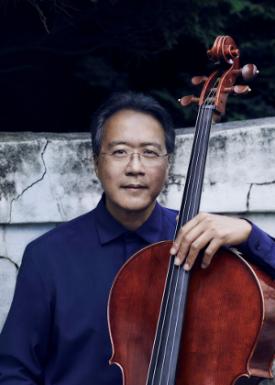
Yo-Yo Ma © Jason Bell
One irony of a musician operating at peak level is that the technique enabling this, the virtuosity that otherwise attracts so much attention, is reduced to secondary interest. It becomes a given and retreats into the background, eclipsed by the purely musical values that a less-confident technique would obscure. At least that’s the case when the musician is Yo-Yo Ma performing a solo recital as profoundly satisfying as he did on his latest visit to Seattle.
Filed under: Bach, review, University of Washington
October 1, 2015 • 7:42 am Comments Off on András Schiff on Bach
September 7, 2015 • 11:58 pm Comments Off on Yo-Yo Ma and the Bach Cello Suites
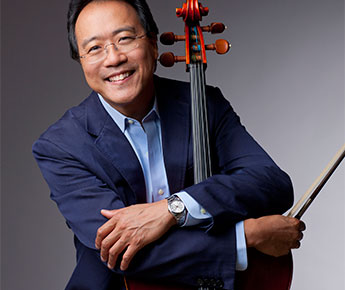
The superstar cellist’s performance from last week at the BBC Proms can still be streamed here:
David Karlin gave Ma a five-star review on Bachtrack:
One man. Four strings. Thirty-six dance movements. Five thousand listeners, perfectly hushed, many of them having queued for hours and rushed to fill the promenade space of the Royal Albert Hall as soon as the ushers let them out of their starting blocks. Yo-Yo Ma’s late night Prom – a performance of all six of Bach’s unaccompanied cello suites – was an eagerly anticipated event and a giant undertaking. Many of the audience were cellists (two and half hours of unaccompanied cello is a tall order for anyone else) and the atmosphere in the hall was electric.
Alexandra Coghlan at The Arts Desk:
This humility serves Ma well in music that holds a mirror up to any performer, exposing affectation or excess just as clearly as coldness or humourlessness. His Bach is intimate but not introverted, free and improvisatory in spirit but meticulously prepared and understood. He began as he meant to go on, with a G major Prelude so casual and direct it was as though we were joining a conversation in mid-flow. It was the only possible start to a musical epic – just the right degree of bathos, reminding a crowd bedding down for a long evening of serious music of the wit and overflowing good humour also be found here.
John Allison at The Telegraph:
Post-concerto encores drawn from these suites are, of course, common at the Proms, but this was the festival’s first complete performance. The bucolic Prelude to the Suite No. 1 in G major signalled what was to come, a performance full of dynamic shading and carried on warm tone quivering with life. The solemnity with which he placed the low, phrase-ending notes in the Sarabande pointed towards the evening’s more profound moments, several of them encountered in the tragic-sounding D minor suite, though even here he found wild abandon in the closing Gigue.
From George Hall’s review
During a magisterial survey of these complex, subtle compositions, Ma’s attention to detail was as notable as his grasp of the bigger picture. The playing was at times tender and introverted, at others bold and sonorous. Throughout, Ma held the measure of Bach’s organic, largely abstracted dance movements and unfolded them before the audience in a way that was intellectually satisfying and heartfelt.
June 22, 2015 • 12:38 pm 1

Randolph Hokanson with pianist Judith Cohen – a day before he turned 100 (photo by Thomas May)
Amid all the horrible news of late, it’s comforting to be able to cheer something unequivocally positive: today, 22 June 2015 – a day after the solstice – marks the 100th birthday of Mr. Randolph Hokanson.
And this living legend — a gifted concert pianist, teacher, composer, and writer — is still sharing his music with us. Yesterday I had the privilege of hearing him give a recital to an enthusiastic crowd of fans. Mr. Hokanson offered poetically insightful performances of excerpts from Bach’s Well-Tempered Clavier (I’ll never forget his take on WTC I’s E-flat minor Prelude), a movement from the Italian Concerto, and some Chopin Preludes — and was joined by the violinist Marjorie Kransberg-Talvi for Mozart’s Violin Sonata in G, K. 379.
During his many years at the University of Washington, Mr. Hokanson taught and influenced generations of pianists and other musicians, and it was touching to see quite a few of these along with extended family in the audience on a glorious Sunday afternoon.
Here’s a profile I wrote about Mr. Hokanson back at the beginning of 2014:
“I’ve seen it all!” announces Randolph Hokanson before losing himself in a mischievous gale of laughter. With someone else, you might be tempted to indulge that as hyperbole. With Hokanson, who was born in 1915 in Bellingham, it’s tempting to take it literally.
This gifted pianist and teacher has witnessed almost a century of not just ceaseless but accelerating change: epochal shifts in technology, in education, in how music and the arts are valued.
Filed under: anniversary, Bach, pianists
April 5, 2015 • 10:16 am 2

For this Easter weekend, you can stream the Good Friday performance of Scottish composer James MacMillan’s St. Luke Passion from King’s College, Cambridge (the compose conducts).
In a recent interview with Boosey & Hawkes, MacMillan speaks about the work:
I’ve always enjoyed a fruitful fascination with the Passion story, and there are deep reasons through history why artists and composers have been attracted to it, right up to our own times. The story is compelling and the images are powerful, prompting a variety of responses. Each time I return to it I try and find different perspectives. Some works are purely instrumental reflections following Haydn’s example, such as my Fourteen Little Pictures for piano trio, or the Triduum of orchestral works written in the mid-90s. Others follow more familiar formats with choir, such as the Seven Last Words from the Cross or the St John Passion.
As to why he chose the narrative found in Luke’s gospel:
My setting of the St John Passion took a particular approach, examining the human drama, and was almost operatic in impact. So returning after a five-year interval I wanted to take an alternative direction. St John stands apart from the other three so-called synoptic Gospel writers who share structure and common material and, of those three, St Luke has a special appeal for me. As well as relating Christ’s life and teachings, Luke is concerned with the idea of the Kingdom of God which points forward to the same author’s Acts of the Apostles. This started me thinking about a more spiritual, inward, and pared-back approach to create a focused work about an hour long.
Meanwhile, here is the incomparable Jordi Savall conducting Bach’s St. Matthew Passion (featuring Le Concert des Nations at the Palau de la Música Catalana, Barcelona).
Not to be missed, even if not specifically Holy Week-related: Bach’s Mass in B minor from Sir John Eliot Gardiner’s recent tour with the English Baroque Soloists and Monteverdi Choir (which included a stop at the Lucerne Easter Festival; this performance is from the Paris Philharmonie.
For good measure, here’s Johann’s son Carl Philipp Emanuel Bach’s cantata on the Resurrection and Ascension of Jesus, Wq240:
The culmination of Mahler’s Symphony No. 2 (“Resurrection”), a composition tailor-made for Leonard Bernstein:
Finally, from John Adams’s The Gospel According to the Other Mary (Act 2, scene 5 (“Burial/Spring – Mary Awakens on the Third Morning”):
Filed under: Bach, Easter, John Adams, new music, spirituality
March 21, 2015 • 8:54 am Comments Off on Master Johann Sebastian
No words, just the music:
Filed under: Bach
March 17, 2015 • 10:10 am Comments Off on Latin: Quo Vadis, Quo Vasisti?

The history of Latin as a world language, in Jürgen Leonhardt’s excellent account, involves a surprisingly diverse range of topics — many of which have an ongoing relevance that extends far beyond the use of Latin for educational purposes: the effects of globalization (ancient and contemporary) on the development of a language, the “diglossia” of literary and spoken languages, the interplay of emerging European nationalism with the status of Latin (not as linear as you might expect), the unexpected twists and turns of canon formation — and dissolution (likewise not a simple linear development). And, ultimately, the issue of cultural extinction and the inaccessibility of a vast fund of accumulated knowledge.
Indeed, the book is replete with information that seems even counterintuitive. The entire corpus of extant ancient Latin literature from the Roman period, for example, comprises “less than 0.01% of all extant Latin texts.” This is because Latin continued to be used for all manner of documents by, for example, cities and other seats of government. (In Hungary Latin was the language used for administration until the mid-nineteenth century.) Leonhardt estimates that, contrary to the widespread notion that scholars have only a limited field of Latin letters to keep combing over, “90% of all Latin texts are either completely unknown or known only by their title,” while “99% of all texts are unavailable in modern editions and 99.9% of these texts have never been translated.”
Leonhardt’s Latin: Story of a World Language includes an especially useful investigation of Latin’s fate in the period between the fall of the Roman Empire and the first twinklings of the Renaissance. This topic, too, yields fascinating insights into the cultural history of the Middle Ages and contains important correctives to the Renaissance-centric narrative that tends to get repeated.
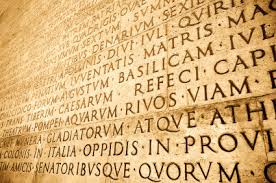
I was delighted to find a spotlight given to J.S. Bach. Leonhardt uses the example of his being hired for the position of cantor in Leipzig as an emblematic story of the quickly changing status of Latin in German-speaking lands during this period. He details the role competence in Latin played in the city council’s interview process when they had to decide which candidate to hire in 1723. “In 1700, Germany was the most Latin of all central European countries; by 1850, active use of Latin had been pushed aside,” writes Leonhardt.
Johann Heinrich Ernesti (1652-1729), the rector of the Thomasschule in Leipzig, “was completely a man of the scholarly Latin culture of the seventeenth century” — an exemplar of the kind of Latinity that was rapidly being swept aside. A distant relative, the philologist Johann August Ernesti (1707-1781), would later become rector. The second Ernesti was an educational reformist; though a staunch champion of the Latin classics, he was “of the opinion that Latin no longer had a role to play in everyday life and that it was better to write good German than bad Latin.” In 1736 Bach would have a notorious clash with Ernesti, who is usually portrayed as disparaging music.
Back to 1723: the duties of the position Bach was applying for included teaching Latin for four hours per week, just as his cantor predecessor, Johann Kuhnau, had done. Although he had not attended university, Bach actually had excellent Latin credentials (he even had to pass an oral exam in Latin on the tenets of Lutheranism). Still, they weren’t enough to satisfy what the Leipzig city councillors were looking for: “According to the extant documents,” Leonhardt remarks, “the deliberations about whether to appoint [Bach] cantor revolved around precisely this question.”
The offer went to Georg Philipp Telemann, who rejected it, as did Christoph Graupner; both composers were well-skilled in Latin. Eventually the council unanimously approved the vote for Bach, allowing him to hire another individual to take over the Latin classes so he could spend more time with his music. (Bach had to pay him out of his own salary: about 8%.)
“By hiring Bach in 1723,” concludes Leonhardt, “the Leipzig city council essentially set a precedent… In many areas, Latin was no longer indispensable; thus music and Latin were no longer as ‘linked’ as Telemann had believed in 1718. Even taking into account the personal nature of the dispute between Bach and [Johann August] Ernesti, it also signaled that an era had come to an end.”
Leonhardt offers intriguing observations about the shifting fortunes of Latin amid developments in nineteenth-century Germany. One has to do with the conflicting philhellenism that so marked the German neohumanists. (Think Friedrich Hölderlin or Eliza Marian Butler’s controversial 1935 book The Tyranny of Greece Over Germany.) “The proponents of neohumanism…tended to view Greek as the ‘original’ and the Latin culture of the Romans as a mere copy,” writes Leonhardt. “As a result, they accorded Greek art, language, and literature pride of place.”
![4 T UMAX PL-II V1.5 [4]](https://memeteria.com/wp-content/uploads/2015/03/commentarii_de_bello_gallico.jpg)
The enthusiasm for the scientific study of languages, he argues, led to the new concept of Latin’s very “nonutility” in the modern world as a positive value: “Humboldt believed that, because Latin and Greek were fully developed and their evolution complete, they were especially well-suited to contribute to the elevation of the human spirit by affording us insight into the nature of language.”
Incidentally, Leonhardt makes a point that undermines the commonplace objection today to bringing Latin back into the schools (that this would merely mark the return of “privilege” and “tradition”): “This turn toward historical languages around 1800 should not be mistaken for traditionalism… It represented a modern, questioning type of history, well before historicism became the driving force in historical thought during the first third of the nineteenth century.”
The familiar argument of another kind of utility — more abstract benefits in language skills and in logical thinking — emerged in this context as well. The impetus of historicism and the enhanced status of natural science led to a new focus on syntax and codification of abstract grammatical models.”Our image of Latin as a logical language that sharpens thinking reflects precisely the analytical perspectives that went into writing these grammars.”

Alexander von Humboldt
Another impact on music history: “This was also when systematic harmonics was developed in music, first in the form of ‘terraced harmony,’ later the ‘functional harmony’ of Hugo Riemann (which introduced the terms tonic, dominant, and subdominant). Significantly, Riemann’s most important publication was titled Musikalische Syntax (1877). Mozart and Schumann managed quite well without it.”
In his concluding chapter, Leonhardt suggests that Latin today has arrived at “a watershed moment” that “may be comparable to that reached around 1800.” And Latin is only one piece of a much vaster cultural outlook that is in serious decline owing to three factors, in Leonhardt’s analysis: the demise of historicism (“as things stand now, we are not far removed from the premodern era up to 1800, when no attention was paid to any of the historical languages”); the devaluing of the “literary and artistic canon of the educated middle classes” in general education; and the demotion in status of philology and historical linguistics.
Drawing an analogy to early music and the flourishing of the historically informed performance practice movement, Leonhardt ends with some speculations about a potentially positive future development in our relation to Latin: “The extreme theoretical approach to Latin and mathematics, which reached a high point in the nineteenth century, is slowly giving way to a rediscovery of Latin as a real language.”
POSTSCRIPT
Here’s a Latin poem written to commemorate the 4th of July, which Leonhardt cites as an example of the valued status of reading and writing Latin (including verse) in the early years of the American Republic. This is by one Samuel Wilson, from c. 1800 (modeled on Horace’s Carmen saeculare):
En superbis regibus et fugata
cara Libertas oriente ab ora
advenit exul, simul inferensque
Palladis artis.Sacra nunc Phoebo melicisque Musis
templa fundantur: nucibus relictis
imbibunt haustus dociles alumni ex
fonte perenni.Floreas longum, America o beata,
libera et felix vigeas in aevum
filii juncti et maeant Columbi
unanimesque.
(c) 2015 Thomas May. All rights reserved.
Filed under: Bach, books, languages, music history
December 24, 2014 • 5:51 pm Comments Off on Jauchzet, frohlocket, auf, preiset die Tage
J.S. Bach’s Christmas Oratorio, BWV 248
Filed under: Bach
 Arts & Culture Stories from NPR
 MEMETERIA by Thomas May