MEMETERIA by Thomas May

Music & the Arts

Queer Baroque: Sound Salon Explores Identity in Baroque Music

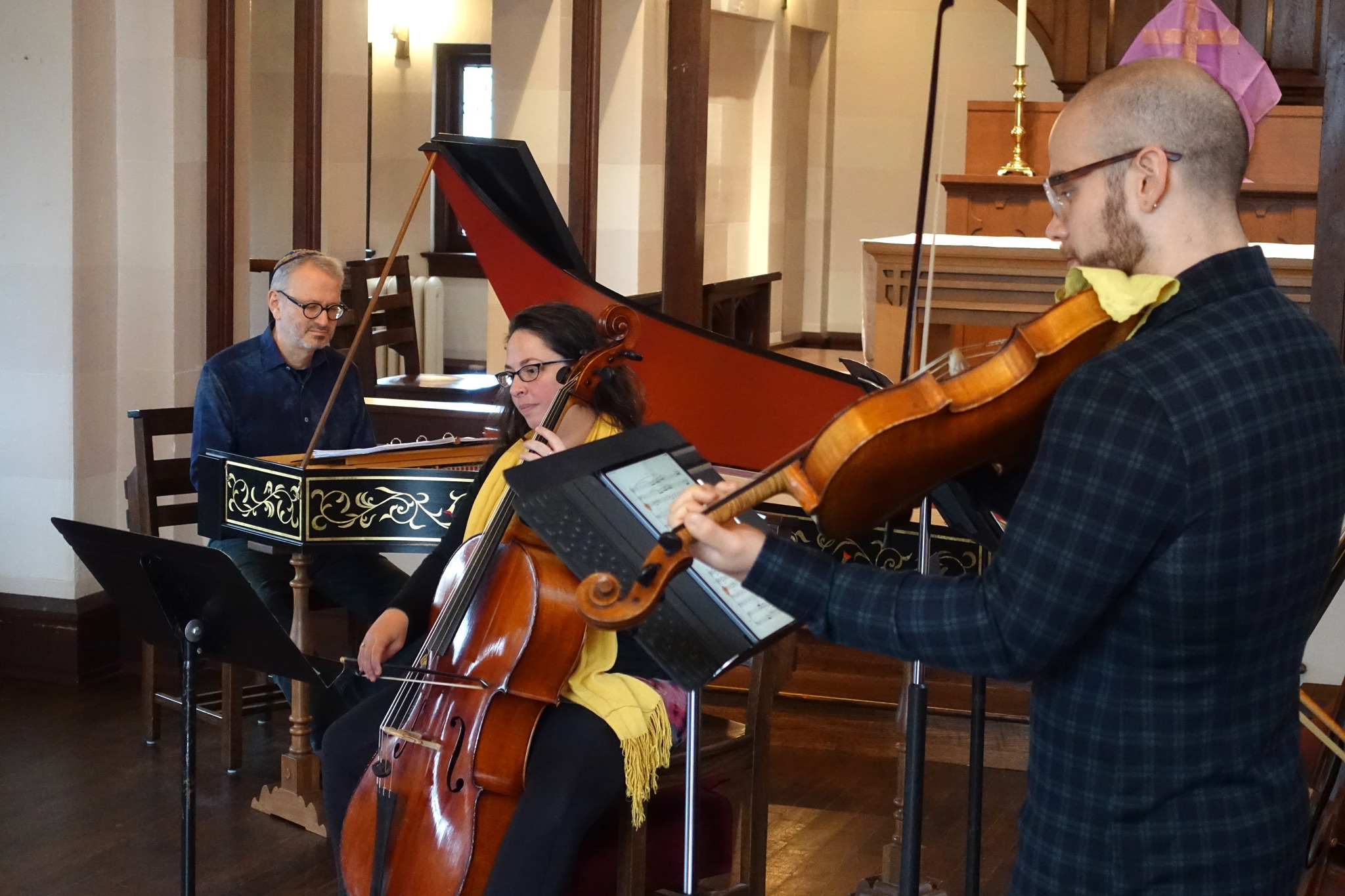
Byron Schenkman, founder and artistic director of Sound Salon; photo (c) Shaya Lyon

Queer Baroque, the final program of Sound Salon’s season, salutes Pride Month with a blend of 17th-century drama and 21st-century insight to celebrate musical and personal otherness. Two performances: May 30 at 7.30pm at the Royal Room (5000 Rainier Ave S.) and May 31 at 7.00pm at the Good Shepherd Center (4649 Sunnyside Ave N.); tickets are “pay-as-you-wish, “with a suggested price of $36 and a minimum of $1.

Baroque music thrives on extremes. For harpsichordist Byron Schenkman, its emotional volatility and theatrical flair – hallmarks of a musical language that flourished in 17th- and early 18th-century Europe – hold special resonance for contemporary audiences and performers alike.

That belief underpins Queer Baroque, the final program of the season for the chamber music series Sound Salon, which Schenkman (they/them) founded and directs. They will be joined by multi-instrumentalist and composer Niccolo Seligmann (they/them) and male soprano Elijah McCormack (he/him) for two performances to mark the start of Pride Month with an imaginative – and often playful – exploration of identity and otherness through the lens of Baroque music.

The concept for the program goes back to the mid-1990s, spanning a period of profound cultural shifts – both in Seattle’s LGBTQ+ community and in the broader evolution of how queerness, and those who embody it, are seen, represented and understood.

“Thirty years ago, I helped plan a concert called ‘Queer Baroque,’ featuring musicians from Seattle Baroque Orchestra – and it nearly got canceled,” Schenkman recalls. When the presenting board at the time asked them to change the name in order to receive funding, they refused. “It generated so much buzz that the concert ended up being packed and was a big success. But one of the board members resigned over it.”

About a year and a half ago, as Schenkman began planning a version of the program updated to reflect a more expansive understanding of queerness, they assumed the moniker “Queer Baroque” no longer conveyed the edginess it once had. But in light of rising anti-LGBTQ+ rhetoric, particularly targeting trans communities, the title – and the conversation around it  –  feels urgent again.

Elijah McCormack

“At a time when we see ‘deviants’ scapegoated for so many social ills, I think this is an important program,” says McCormack, a transgender singer who specializes in early music. “Queer identities have been medicalized and classed as inherently disordered. It’s not new for these things to be pathologized or demonized.”

The program combines vocal and instrumental music from the 17th and 18th centuries to consider what it means to be seen as “other.” In the Baroque era, that otherness was often manifested in portrayals of madness in songs and stage works.

“This fascination with madness in the 17th century reflects a change in society’s attitude that led to people perceived as ‘crazy’ being put into institutions – behind bars – where the ‘normal’ people would come to look at them,” says Schenkman, who describes themself as “a queer Jewish keyboard player and scholar.”

By the 19th century, they add, “the idea of madness had become entangled with gender and sexuality: to be overly emotional, feminine or sexually expressive was often pathologized as insanity. Being queer, being feminine and being ‘crazy’ were increasingly seen as overlapping.”

That entanglement between emotional excess and perceived deviance plays out in several of the program’s vocal works. Barbara Strozzi’s cantata L’Astratto is a comic mad scene in which the singer cycles unpredictably through emotions and musical styles, unable to settle on one. “It’s also a kind of self-portrait of someone trying to locate themselves through art,” Schenkman says.

For McCormack, the piece culminates “in a touching sort of lament about the perils of losing yourself, even your own mind, in the love of someone else.”

He also performs Élisabeth Jacquet de la Guerre’s cantata Susanne, a retelling of the biblical story of Susanna and the Elders. “It’s so common for women – and people perceived as women  – to be punished for maintaining agency over their own bodies,” McCormack says. “I imagine that, for Jacquet de la Guerre, it was powerful to set a text about a heroine who defies the entitlement of men in authority. It’s still powerful today.”

Another vocal highlight is Henry Purcell’s From Rosy Bowers, a theatrical song in which a chambermaid feigns madness to trick Don Quixote. “Here we have a woman pretending to be crazy to manipulate a character created by a male writer and composer,” Schenkman says. “It’s like putting on a drag show: playing with the stereotypes and tossing them on their heads. Some of that happens musically as well.”

Not all of the program’s queerness is textual or narrative. Some of it lies in performance choices themselves – like Seligmann playing a movement from one of Jacquet de la Guerre’s violin sonatas on the bass viol, a bowed, fretted string instrument from the Baroque era that’s typically used for lower lines. Schenkman likens the transposition to subverting gender expectations: “What’s a high voice supposed to do? What’s a low voice?”
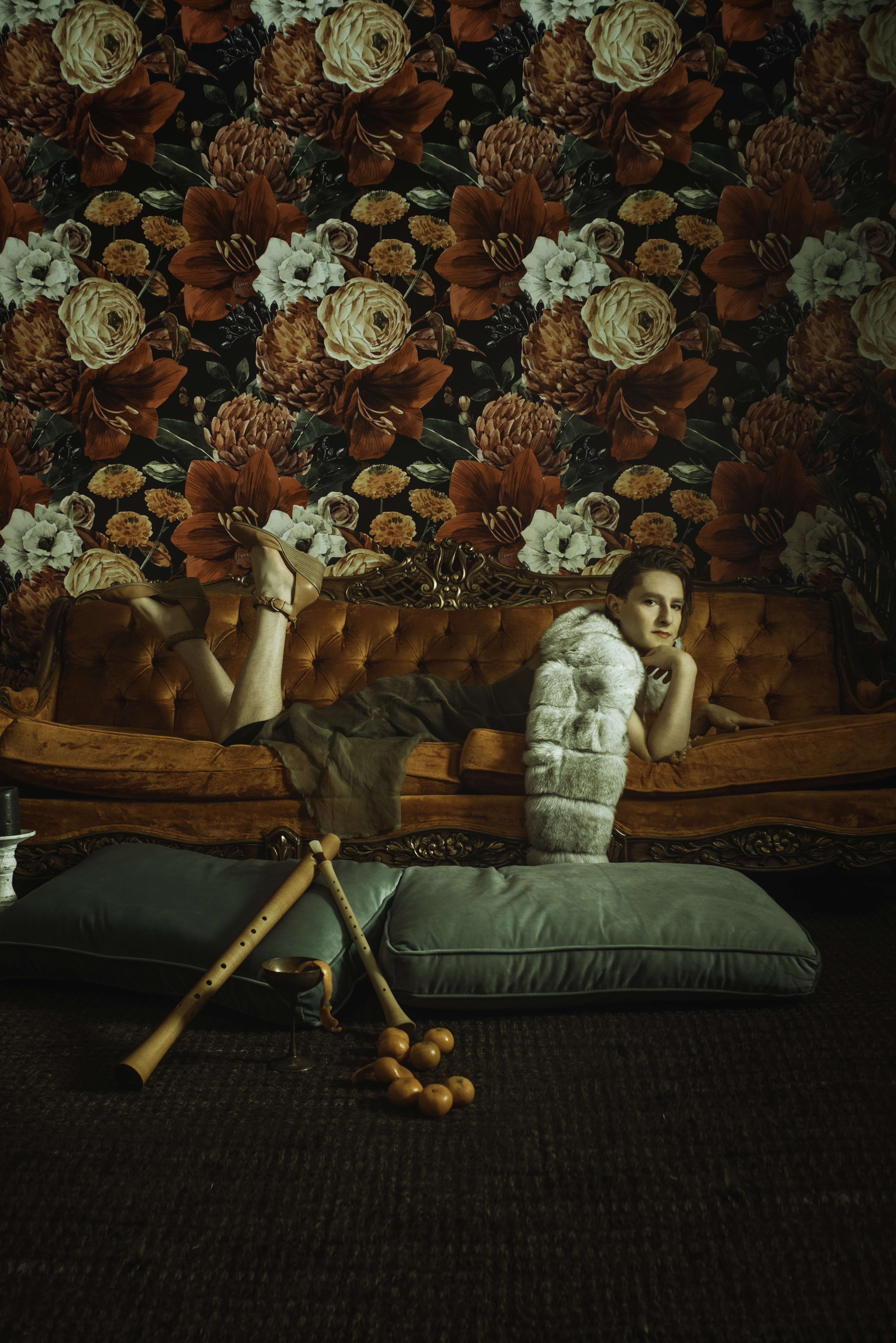
Niccolo Seligmann; photo: Anna Schutz

“This program uses Baroque music to celebrate that queerness is not just one thing,” Seligmann says. “It’s a rich panoply of experiences that intersect with other axes of identity, including the time period.”

Seligmann, whose playing has been widely heard both in live concerts and on soundtracks like the Netflix series The Witcher, also contributes an example of their work as a composer. McCormack will sing a scene from Seligmann’s Julie, Monster: A Queer Baroque Opera, inspired by the life of Julie d’Aubigny (1673-1707), a genderfluid opera diva and swordfighter. Seligmann describes the excerpt as “a queer seduction aria that proposes more egalitarian ways of sharing intimacy,” connecting Julie “with a herstory of gender rebels” and today’s audiences “with queer ancestors for us to honor and celebrate.”

For Schenkman, who has long blended scholarship with activism, the concept of “Queer Baroque” continues to resist classification. “We’re all a little queer, and a little not,” they say. “The problem isn’t difference. The problem is pretending there’s only one normal way to be. I want whoever’s in the room to enjoy looking at different ways people diverge from norms – and celebrate it.”

Filed under: Baroque opera, Byron Schenkman, early music, gay, queer, , , ,

Sound Salon: Sweeter than Roses

Sound Salon (the series formerly known as Byron Schenkman & Friends) has a lovely program coming up Sunday evening: English Baroque love songs for voice, oboe, viol, and harpsichord. Sweeter than Roses (the title of the program, taken from a Henry Purcell song), presents soprano Grace Srinivasan, oboist Curtis Foster, Adaiha MacAdam-Somer on viol, and artistic director Byron Schenkman on harpsichord in music not only by Purcell and Handel but by such less-familiar figures as Elisabetta de Gambarini, John Stanley, and William Babell (all associated with Handel’s work), as well as by Thomas Arne and  Ignatius Sancho, who escaped enslavement and became “a successful businessman, published author and composer, and champion for the abolition of slavery,” as Schenkman notes.

The concert is on Sunday 11 February at 7 pm at Benaroya Hall.

Program


George Frideric Handel:

Sonata in C Minor for oboe and continuo

Elisabetta de Gambarini:

“Behold and listen” from op. 2

John Stanley:

“I feel new passions rise” from op. 9

Thomas Arne:

“Come away death”

Ignatius Sancho:

The Complaint “Take, oh take, those lips away”
Hornpipe in B-flat Major
“Sweetest Bard”

Henry Purcell:

“Oh let me weep”
Suite in D Minor for harpsichord

William Babell:

Sonata no. 1 in B-flat Major for oboe and continuo

Henry Purcell:

“Sweeter than roses”
“Halcyon days”

Filed under: Byron Schenkman, early music, music news

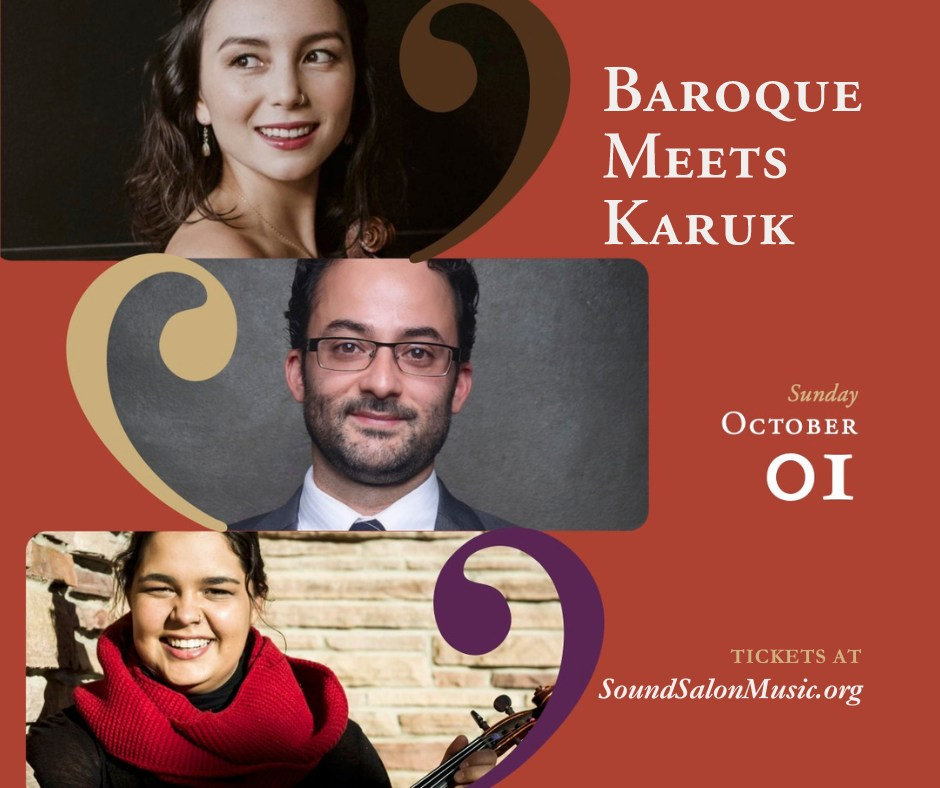
Baroque Meets Karuk at Sound Salon

Sound Salon, formerly known as Byron Schenkman & Friends, launches a new season — and a new decade — Sunday evening with a program titled Baroque Meets Karuk. One of my fall picks for The Seattle Times, the concert begins at 7pm on 1 October at Benaroya Hall.

The chamber series has rebranded itself but remains committed to engaging and thought-provoking programs that encourage re-examining assumptions and, even more, making welcome discoveries.

This opening program, for example, will juxtapose pieces by 17th-century European composers with music from the Karuk tradition of the North American Pacific Coast, exploring connections between Spain, Italy, Austria, and the colonization of Turtle Island (now known as the North American continent). 

Notes on the Program

By Byron Schenkman


We open our season with festive music from 17th-century Europe and from the Karuk tradition of what is currently known as northern California. Baroque composers of the 17th century learned from the music of diverse nations and cultures, whether by traveling themselves or by exposure to travelers.

Johann Heinrich Schmelzer likely studied in Italy before settling in Vienna where he was employed for many years as a violinist at the Habsburg court. The Spanish bassoonist Bartolomé de Selma y Salaverde was employed in Innsbruck and published music in Venice. Andrea Falconieri led the music at the Spanish court in Naples. The violinist Biagio Marini was born in Brescia and died in Venice, but also worked in Brussels and in various German and Italian cities.

Salamone Rossi was a Jewish violinist employed as concertmaster at the court in Mantua. He published many volumes of secular Italian vocal and instrumental music including the first trio-sonatas for two violins and continuo, a genre which would become standard for composers all over Europe for about 150 years. He also published a rare collection of Jewish polyphonic sacred music, starting a potential tradition which was wiped out by the destruction of the Jewish ghetto in 1630.

Like many of the women who published music in 17th-century Italy, Claudia Rusca and Isabella Leonarda were both nuns. Rusca published just one volume of sacred vocal music which also contains two short instrumental works. Leonarda was an exceptionally prolific composer who published hundreds of works including twelve instrumental sonatas.

Henry Purcell never left his native England yet his music was influenced by various international styles. Purcell’s royal employer Charles II spent his years of exile in France and much of Purcell’s theater music, including the Chaconne from “King Arthur,” is closely modeled on French music of the time. The French chaconne had its origins in an indigenous dance brought to Spain from what is now South America.

Duwamish Land Acknowledgement

Sound Salon would like to acknowledge that we are on the traditional land of the first people of Seattle, the Duwamish People past and present, and honor with gratitude the land itself and the Duwamish Tribe which has stewarded the land throughout the generations.

Filed under: Byron Schenkman, early music

Byron Schenkman & Friends: Season Finale

To celebrate their 10th anniversary, Byron Schenkman & Friends have been offering an extraordinary season of new music, revealing juxtapositions, and, simply, great music making. On Sunday evening, 14 May at 7pm, they will give the season finale. The Jasper Quartet joins Schenkman for this program of Romantic gems by Antonín Dvořák, Alexander Glazunov, and Florence Beatrice Price. See below for program details. Tickets are available here.

Recognized as one of the leading American string quartets on the performance stage today, the Jasper String Quartet has been described by Gramophone as “flawless in ensemble and intonation, expressively assured and beautifully balanced.”

Byron Schenkman is a queer Jewish keyboard player and scholar with a background in historical performance and a passion for connecting people through music. In addition to performing live on piano, harpsichord, and fortepiano, Byron can be heard on more than forty CDs, in numerous online and in person performances with Byron Schenkman & Friends. 

Now in its tenth season, Byron Schenkman & Friends brings a diverse set of 21st-century perspectives to artistically excellent ensemble music, inspired by European traditions of the 17th through 19th centuries. 

Website: http://www.byronandfriends.org/    

YouTube: https://www.youtube.com/c/ByronSchenkmanFriends/    

Facebook: https://www.facebook.com/byronschenkmanandfriends/    

Twitter: https://twitter.com/friendsbyron/    

Instagram: https://www.instagram.com/byronandfriendschambermusic/    

Program


Alexander Glazunov (1865-1936):

Elegy in G Minor, op. 44, for viola and piano

Florence Price (1887-1953):

String Quartet no. 2 in A Minor 

Moderato 
Andante cantabile 
Juba 
Allegro

Antonín Dvořák (1841-1904):

Quintet in A Major, op. 81 

Allegro, ma non tanto
Dumka: Andante con moto 
Scherzo (Furiant): Molto vivace – Poco tranquillo 
Finale: Allegro 

Filed under: Byron Schenkman, music news

Caroline Shaw with Byron Schenkman & Friends

Byron Schenkman has long been a vital force in Seattle’s musical life. Here’s my Seattle Times story about the legacy of Byron Schenkman & Friends, which he founded ten years ago, and their latest project, a newly commissioned harpsichord concerto by Caroline Shaw. The world premiere takes place on tonight’s concert at 7pm:

You need to engage with the present if you really want to appreciate the musical past.

That, in a nutshell, is the premise underlying the latest program that the Seattle-based chamber music series Byron Schenkman & Friends will present on Sunday, March 26 at Benaroya Hall. Instead of merely repeating baroque masterpieces by J.S. Bach, the concert includes a contemporary counterpart tailor-made for Schenkman and his colleagues by the acclaimed American composer Caroline Shaw.

continue

Filed under: Bach, Byron Schenkman, Caroline Shaw, early music

Byron Schenkman & Friends: Beethoven, Carlos Simon, and more

Byron Schenkman & Friends continue their 10th-anniversary season with a program on Thursday, 29 December (at 7pm at Benaroya Hall), juxtaposing the piano trio format with lieder. Beethoven’s Archduke Trio, a pinnacle of the piano trio from 1810-11, will be heard alongside 2021 Sphinx Medal of Excellence winner Carlos Simon‘s luminous be still and know, a composition from 2015 inspired by an interview with Oprah Winfrey. Filling out the program are songs by Beethoven, Mozart, and Schubert featuring vocalist Martin Bakari, winner of the 2018 George London Competition.  

The complete program is as follows:

Carlos Simon (b. 1986): 

be still and know for piano trio

Wolfgang Amadeus Mozart (1756-1791): 

Abendempfindung (“Evening Thoughts”) (K. 523)
Zufriedenheit (“Contentment”) (K. 473)

Franz Schubert (1979-1828):

Du bist die Ruh (“You are Repose”) (D. 776)

Ludwig van Beethoven (1770-1827): 

Adelaide, op. 46

Ludwig van Beethoven:
Trio in B-flat, op. 97  

Allegro moderato
Scherzo
Andante cantabile, ma però con moto
Allegro moderato

Filed under: Byron Schenkman, chamber music

Byron Schenkman & Friends Launches 10th Season

On Sunday, Byron Schenkman & Friends marks the beginning of their 10th season of imaginatively curated concerts — an essential contribution to Seattle’s musical life. The program, titled Vivaldi and the Forty (Four) Seasons, is their most ambitious undertaking to date, involving the largest gathering of performers Schenkman has ever brought together on the stage.

And it’s a signature Schenkman program, shedding new light on the familiar and encouraging discovery of underrepresented, marginalized voices. In this case, they will pay homage to Indigenous Peoples’ Day (October 10). Violinist Anna Okada leads an ensemble of Baroque strings, with Byron Schenkman at the harpsichord.

The premise is to juxtapose Antonio Vivaldi’s beloved, evergreen concertos — which were, after all, remarkably innovative when he wrote them — with Indigenous voices. Yakama tradition recognizes as many as 44 distinct seasons, so Schenkman & Friends will intersperse Vivaldi’s four with stories from the Yakama tradition presented by the scholar and master storyteller, writer, and educator Dr. Michelle M. Jacob.

Also being featured is the work of acclaimed artist Fox Spears, a Karuk tribe member, and BS&F Board member. The opening celebration will include pieces by Spears on display in the Nordstrom Recital Hall lobby. “All the work I make is a deliberate continuance of Karuk culture,” says Spears. “Regardless of my motives, the creation and presence of my art is an inherent act of resistance against colonial assimilation. My art is made with these intentions: to thank and honor my ancestors, to acknowledge and heal historical trauma, and to help build new Indigenous futures.”

Spears’s Karuk Louis Vuitton Drum was recently purchased by the National Music Museum in Seattle and will be on display when the permanent collection exhibits reopens. His current work is continuing a theme from this drum at his printmaking residency at Crow’s Shadow Institute of the Arts.

His artwork will be on display in the lobby before and after the concert. The first print purchased is $300, and additional prints are $150 each.

Filed under: Byron Schenkman, Indigenous Peoples, Vivaldi

A Double Portrait: Johannes Brahms & Jonathan Woody

Here’s an online concert well worth taking the time to enjoy. Byron Schenkman & Friends, presents A Double Portrait: Johannes Brahms & Jonathan Woody, a program that includes the world premiere of Jonathan Woody’s nor shape of today to celebrate the LGBTQ+ community (first performed on 22 May 2022).

Also the first commission by Byron Schenkman & Friends, Woody composed nor shape of today to a text by Raquel Salas Rivera, a queer Puerto Rican and Philadelphian of non-binary gender. His new work is a response or companion piece to Brahms’s Op. 91 songs for alto, viola, and piano.  

Jonathan Woodley has provided this commentary on his new work: “In composing this piece, I very much wanted to consider it a companion to Johannes Brahms’s Two Songs for Voice, Viola and Piano, op. 91. The Brahms songs deal with longing–the longing for stillness, for respite from the tormented mind, and in the case of the second Brahms song, Geistliches Wiegenlied (Sacred Lullaby), the longing of Mary to protect her child from the tribulations he eventually must face. In our twenty-first century existence, many individuals still experience a longing for a place to belong, and I was struck by the similarity between these Romantic sentiments and the experience of trans and non-binary individuals, who face relentless pressure to conform to outdated norms surrounding gender and identity in our supposedly modern world. The poet Raquel Salas Rivera writes in a deeply moving and eloquent way about these experiences, and his poetry struck me as perfectly situated to answer the Brahms songs on poems by Rückert and Geibel (a paraphrase of a poem originally in Spanish by Lope de Vega). Rivera writes in both English and Spanish, and the fluidity between the two languages was an inspiration to me in creating this song. I attempt to emulate Salas Rivera’s fluidity in gender and language by incorporating a fluidity in musical idiomatic expression; at times nor shape of today sounds like Romantic music, like Baroque music, and like music of the 21st century. While I don’t share the experience of those with trans and non-binary identities, I hoped to capture the sense of longing that so many human beings feel to belong, to be loved, and to be safe.”

Complete Program:

Intro 1:10 – Jonathan Woody: stone and steel 8:45 – Johannes Brahms: Sapphic Ode, Op. 94, no. 4 11:53 – Franz Schubert: Song of Old Age, D. 778 17:20 – Johannes Brahms: Intermezzo in A, Op. 118, no. 2 24:01 – Johannes Brahms: Lullaby, Op. 49, no. 4, for voice and piano 26:21 – Johannes Brahms: Two Songs for voice, viola, and piano 39:14 – Jonathan Woody: nor shape of today.

Filed under: Byron Schenkman, chamber music, commissions

Bryon Schenkman & Friends Premiere Jonathan Woody’s nor shape of today

Another Jonathan Woody composition: Nigra Sum Sed Formosa: A Fantasia on Microaggressions

For their end-of-season program, Byron Schenkman & Friends juxtapose a world premiere by composer and bass-baritone Jonathan Woody with 19th-century music by Maria Szymanowsk, Francisca Gonzaga, Clara Schumann, Joseph Joachim, and Johannes Brahms. The concert takes place Sunday, May 22, 2022, at Illsley Ball Nordstrom Recital Hall at Benaroya Hall, at Third and Union in downtown Seattle, beginning at 7:00  P.M.  (Prices range from $48 for Regular Price, $41 for Seniors, and $10 for Youth and Students with ID.

Woody’s nor shape of today, a BS&F commission, sets a text by Raquel Salas Rivera and was written, according to the composer, as “a companion to Johannes Brahms’s Two Songs for Voice, Viola and Piano, op. 91.” Woody writes: “In our 21st-century existence, many individuals still experience a longing for a place to belong, and I was struck by the similarity between these Romantic sentiments and the experience of trans and non-binary individuals, who face relentless pressure to conform to outdated norms surrounding gender and identity in our supposedly modern world…. I hoped to capture the sense of longing that so many human beings feel to belong, to be loved, and to be safe.”

The program will feature performances by soprano Hailey McAvoy, violist Andrew Gonzalez, and pianists Charles Enlow and Byron Schenkman. 

Complete Program:

Johannes Brahms: 16 Waltzes, op. 39, for piano
Maria Szymanowska: Polonaise in C (c.1820) for piano
Francisca “Chiquinha” Gonzaga: Tango in F Minor “Sospiro” (c.1881) for piano
Jonathan Woody: nor shape of today for mezzo-soprano, viola, and piano
Clara Schumann: Romance in A Minor, op. 21, no. 1 for piano
Clara Schumann: Impromptu in E Major (c.1844) for piano
Joseph Joachim: Hebrew Melody in G Minor, op. 9, no. 1 for viola and piano
Johannes Brahms: Lullaby, op. 49, no. 4, for voice and piano
Johannes Brahms: Two Songs for alto, viola, and piano, op. 91

Tickets available here.

Filed under: Byron Schenkman, commissions, music news

Byron Schenkman & Friends: Schumann Fairy Tales & Fantasies

Tonight at 7pm, Byron Schenkman is joined by clarinetist Thomas Carroll and violist Jason Fisher in a program celebrating the Romantic imagination. Here’s the menu:

R. Schumann:

Fairy Tales, op. 132,  for clarinet, viola, and piano

Marie Elisabeth von Sachsen-Meiningen:

Romance for clarinet and piano

Luisa Adolpha Le Beau:

Three Pieces, op. 26, for viola and piano

Max Bruch:

Romanian Melody, op. 83, no. 5, for clarinet, viola, and piano

R. Schumann:

Robert Schumann: Dreams, op. 15, no. 7, for piano 

R. Schumann:

Fantasy Pieces, op. 73, for clarinet and piano

Max Bruch:

Night Piece, op. 83, no. 6, for clarinet, viola, and piano

Filed under: Byron Schenkman, music news, Schumann

Archive

Enter your email address to follow this blog and receive notifications of new posts by email.