MEMETERIA by Thomas May

Music & the Arts

RIP Wolfgang Rihm (1952-2024)

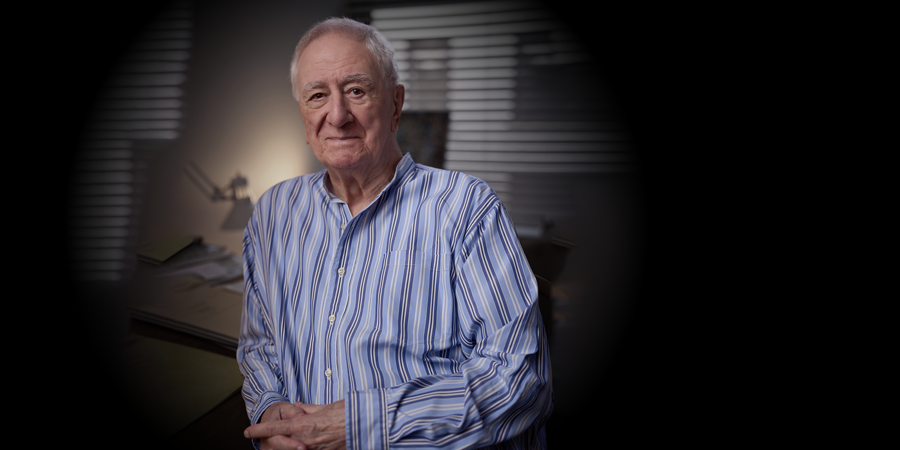
Wolfgang Rihm giving an introductory speech at a museum concert, 2019 © Priska Ketterer / Lucerne Festival

The eminent German composer Wolfgang Rihm, one of the most frequently performed contemporary composers in Europe and a longstanding pillar of the Lucerne Festival Academy, has died.

From Lucerne Festival’s obituary:

“It is with sadness and at the same time with deep gratitude that we take leave of one of the greatest artists of our time and of one of Lucerne Festival’s most influential companions. Wolfgang Rihm was closely associated with Lucerne Festival not only as a composer but, since 2016, as Artistic Director of the Lucerne Festival Academy as well….”

And from Rihm’s publisher, Universal Edition, comes this tribute to the artist:

“With Wolfgang Rihm, the music world loses not only a gifted composer, but also a universal scholar, who was as concerned with the promotion of young talent as he was about his personal commitment to cultural policy…”

Music resembles life, is a reflection of its processes.“– Wolfgang Rihm


Filed under: composers, Lucerne Festival, Lucerne Festival Academy, music news

James Díaz: Musical America’s New Artist of the Month

Credit: Mariangela Quiroga fotografia

Congratulations to composer James Díaz, Musical America’s New Artist of the Month for May 2023. My profile:

When he was 14, James Díaz started taking keyboard lessons thanks to the toss of a coin. His parents wanted to have one of their two sons receive training so as to be able to play in the local church. Díaz, born in 1990, would commute every day from his working-class district on the outskirts of Bogotá. …

continue

Filed under: artist profile, composers, Musical America

Musical America’s New Artist of the Month: Nina Shekhar

Nina Shekhar; image (c) Shervin Lainez

I wrote about the fantastically talented composer Nina Shekhar for this month’s Musical America column:

Questions involving identity have fascinated Nina Shekhar since she can remember. Coming of age as a first-generation Indian American has meant learning to navigate different cultural expectations not only in her personal life but also in her priorities as an artist. “A lot of my work is identity driven,” the composer explained in a recent conversation via Zoom. “Music was always a way of understanding my relationship to myself and to my environment.”

continue

Nina Shekhar: rockabye-bye (2020), commissioned by Lyris Quartet and the HEAR NOW Music Festival

Filed under: composers, Musical America

Screen Test

JAC_Redford

The new issue of LISTEN Magazine contains my profile of composer and film music veteran JAC Redford, who just orchestrated Thomas Newman’s music for the upcoming James Bond film (Spectre):

THE WHOLE PICTURE is what counts; and the composer must see it not as a composer but as a man of the theater,” wrote Leonard Bernstein, reflecting on composing the score for On the Waterfront.

Bernstein’s adventure into film scoring — marred by creative scrapes with the film’s director Elia Kazan — was unpleasant for him, and marked the conductor–composer’s first and last time writing film music (not counting already existing scores that were adapted for film) — anomaly in an otherwise naturally collaborative career. But for many composers, there’s something perpetually alluring about the medium of film.

Like a particular scent, the simplest chord progression or snatch of soaring melody from a beloved score can instantly trigger a flood of memories—both personal and cultural.

continue reading [opens as pdf]

Filed under: composers, film music, James Bond, profile

A Touch of Ghosts

I can’t wait for the new production of John Corigliano’s The Ghosts of Versailles coming in January at Los Angeles Opera — part of the company’s upcoming Figaro Trilogy that will include the iconic Mozart and Rossini operas based on the plays of Beaumarchais.

The composer on style, from an extensive interview with Bruce Duffie:

I don’t write in any one style. That is important. I feel I do not approach a piece thinking of any style at all, but I evolve the style when I know what I have to write for that piece. If you listen to the “Pied Piper” and the Clarinet Concerto and the Oboe Concerto — which are three woodwind concertos — you’ll see that they’re totally and completely different from each other. I use style in a different way. I tend to think of style as a variable. I do have stylistic things that come back — certain intervals, certain kinds of progressions, certain sonorities, that I use because they’re part of me. That is an unconscious style. But as far as the idea of style as it exists in music today, in which one associates a sonority or a sound or a total piece with somebody, and he writes the next piece in that style and the next piece in that style, as Brahms did, I don’t feel I’m that kind of composer.

Here’s a little teaser of costume sketches.

Filed under: aesthetics, American opera, composers, Los Angeles Opera

George Walker as Pianist

The remarkable American composer George Walker started out his career with the intention of becoming a concert pianist, but the racism of the era hampered those plans.

And more’s the pity, given the evidence captured on Albany Records’ ongoing series of releases of Walker as composer and performer.

Here are some more YouTube uploads where you can sample Walker’s artistry at the keyboard:

Chopin: Polonaise in A-Flat Major, Op. 53:

Robert Schumann: Fantasia in C, Op. 17- First Movement:

Filed under: composers, piano

A German Maverick: Lachenmann’s Concertini


Getting to encounter the latest crop of Lucerne Festival Academy students is always inspiring, but tonight’s concert included an especially thrilling discovery. With the composer in the house, the Academy players performed Helmut Lachenmann’s Concertini, which was given its world premiere at Lucerne nine years ago.

In a brief interview with Mark Sattler, the Festival’s new music dramaturg, Lachenmann made some very interesting observations, his Swabian accent reinforcing the no-BS, down-to-earth perspective of this genuine German maverick. He noted the difference between safe, unchallenging “listening” (when we’re looking for the same old dependable emotional reactions in a piece of music) and actively “observing” a musical landscape — which also leads us to observe something about ourselves. And he declared he doesn’t think of himself as a poet but as someone working with instruments and sounds as “objects.”

The phrase “risk-taker” gets thrown around a lot in new music circles, to the point of irrelevance, but Lachenmann is a great model for the guts behind that overused label. Though they are several universes apart, in a way his attitude reminds me of the radicalism of Harrison Birtwistle.

About the aesthetic principle in works like Concertini, Lachenmann writes:

From the beginning I have been concerned not just with ‘noisiness’ and alienation but with transformation and revelation, with real ‘consonance’ in the widest sense, so that rhythm, gesture, melody, intervals, harmony — every sound and everything sounding — is illuminated by its changed context.

The concertante arrangement allows an ever-shifting balance between accompanying, disguising, covering, uncovering, counterpointing, how and where transformation occurs, every aspect of this ad hoc collection of sound categories: explorers in a self-perpetuating labyrinth, yet fixed in a rigid time-frame; searching an overgrown garden for …

Filed under: composers, education, new music

A Salute to Tobias Picker

Tobias Picker

The American composer Tobias Picker turned 60 this month — another to add to the list of composers born in July (Henze, Gluck, Janáček, Mahler, Unsuk Chin, Birtwistle).

The revised version of his opera An American Tragedy opened on Sunday in a new production directed by the wonderful Peter Kazaras — not a bad way to celebrate a milestone birthday.

I had the privilege of writing the program essay for Glimmerglass:

In an interview from 1927 — two years after “An American Tragedy” was published —Theodore Dreiser’s fellow mid-Westerner F. Scott Fitzgerald praised the novel as “without doubt the greatest American book that has appeared in years.” It’s a judgment that Tobias Picker’s father Julian heartily affirmed when the composer was growing up. “This was his favorite book by his favorite writer,” recalls the composer. “My father even had a signed original edition from 1925.”

continue reading

Since no videos of the revised version are available yet, here’s a taste of the Met premiere from 2005:

Filed under: American opera, composers

Birthday Salute to Sir Harrison Birtwistle

And so Sir Harry turns 80! Harrison Birtwistle has created some of the most strangely arresting soundscapes among the composers of our time. It’s extremely difficult music to write about, as I’ve discovered with various assignments over the years. Music that defies even more than most the feeble attempt to circumscribe it with mere words — it makes mincemeat of those who try — but that can strike you as uncannily direct and visceral. (See what a knot he just got me caught up in?)

Among my favorites of his “satellite” works are Earth Dances, The Shadow of Night, and Night’s Black Bird — disturbing and thrilling works Birtwistle conceives as orchestral “processions” and “imaginary landscapes.”

All of these seem to be parts of a vaster, labyrinthine work-in-progress, with a number of threads interwoven among them. Chief among these is a tension between linear and circular patterns, between an “ordinary” sense of chronological time and a heightened awareness of other kinds of times.

Tom Service offers this lovely, user-friendly intro to the utterly distinctive world of Sir Harrison Birtwistle, including Panic, The Cry of Anubis, Secret Theatre, Earth Dances, and the Violin Concerto.

In his excellent series of guides to contemporary composers, Service writes:

So where was the crucible of Birtwistle’s creative imagination? Manchester in the 1950s. Born in Accrington in 1934, and growing up as a clarinetist playing in local theatre bands, Birtwistle studied in the north west with what would become an (in)famous group of composers and musicians: Alexander Goehr, Peter Maxwell Davies, pianist John Ogdon, and trumpeter, conductor, and composer Elgar Howarth.

The usual story about what this “Manchester school” achieved was that they ripped up the rule book, and made British music confront contemporary continental modernisms that previous generations and the establishment had been frightened of. That’s true, to the extent that Harry, Max, and Sandy did engage with and devour everything they could get their hands on by Schoenberg or Webern or Stravinsky, and one of the pieces that changed Birtwistle’s life was Boulez’s “Le marteau sans maître.”

But just as there was a move to the modern, there was an equivalent excavation of the musical and mythical past, as Max and Harry delved into medieval music, into plainchant and polyphony, to find new-yet-old ways of structuring and thinking about what music could be.

Filed under: anniversary, composers, new music

Fraudulent Composers

Add another one to the list: Mamoru Samuragochi, hyped as the “Japanese Beethoven,” is apparently neither deaf nor the composer of the works that were praised as creations of a “digital-age Beethoven.” The story of his scam broke this week. According to Martin Fackler in The New York Times:

It was unclear exactly how Mr. Samuragochi duped the world since asserting he went deaf in the late 1990s. No one, it seemed, suspected the onetime child music prodigy had not composed his own work. But in past interviews with the news media, Mr. Samuragochi gave an explanation that might explain why no one ever doubted his hearing loss: He said he was completely deaf in one ear, but had some hearing in the other that was assisted by a hearing aid…. Much of Mr. Samuragochi’s appeal seemed to lie in his inspiring life story, especially for a country so fascinated by classical music.

Probably the most-famous example of ghost-writing in music is Mozart’s Requiem, paid for in advance by Count Franz Walsegg-Stuppach, a nobleman and dilettante who wanted to pass off the score as his own creation, written in memory of his wife.

There’s also a famous anecdote (which of course has its skeptics) that Mozart did his Salzburg buddy Michael Haydn (a younger brother of Joseph) a favor by pitching in to complete a project. The story goes that he dashed off the Duos for Violin and Viola (K. 423-24) to help the ailing Michael complete a set of six requested by Wolfgang’s hated former boss (the Archbishop of Salzburg).

But Michael Haydn was a bona fide composer himself — his own Requiem in C minor from 1771 left a deep impression on his younger colleague, which you can easily trace by comparing it with the Requiem Mozart undertook two decades later.

The film music industry is said to be rife with mis- or non-attributed composers. And in the world of literature we have the harrowing Doctor Faustus by Thomas Mann, whose protagonist, the tormented composer Adrian Leverkühn, “sells his soul” to write works of genius. But merely paying off a ghost-writer to con the public certainly belongs to a less-extravagant category.

What other composer-frauds do you know of?

Filed under: composers, music news

Archive

Enter your email address to follow this blog and receive notifications of new posts by email.