MEMETERIA by Thomas May

Music & the Arts

Ehnes Quartet Review

Ehnes-Quartet

My review of the Ehnes Quartet and their Beethoven cycle from this summer’s Seattle Chamber Music Society Festival has been published in the current issue of String magazine. A link to it is here (pdf).

Filed under: Beethoven, chamber music, James Ehnes, review, Seattle Chamber Music Society

An Unusual and Moving Evening at Seattle’s Summer Chamber Music Festival

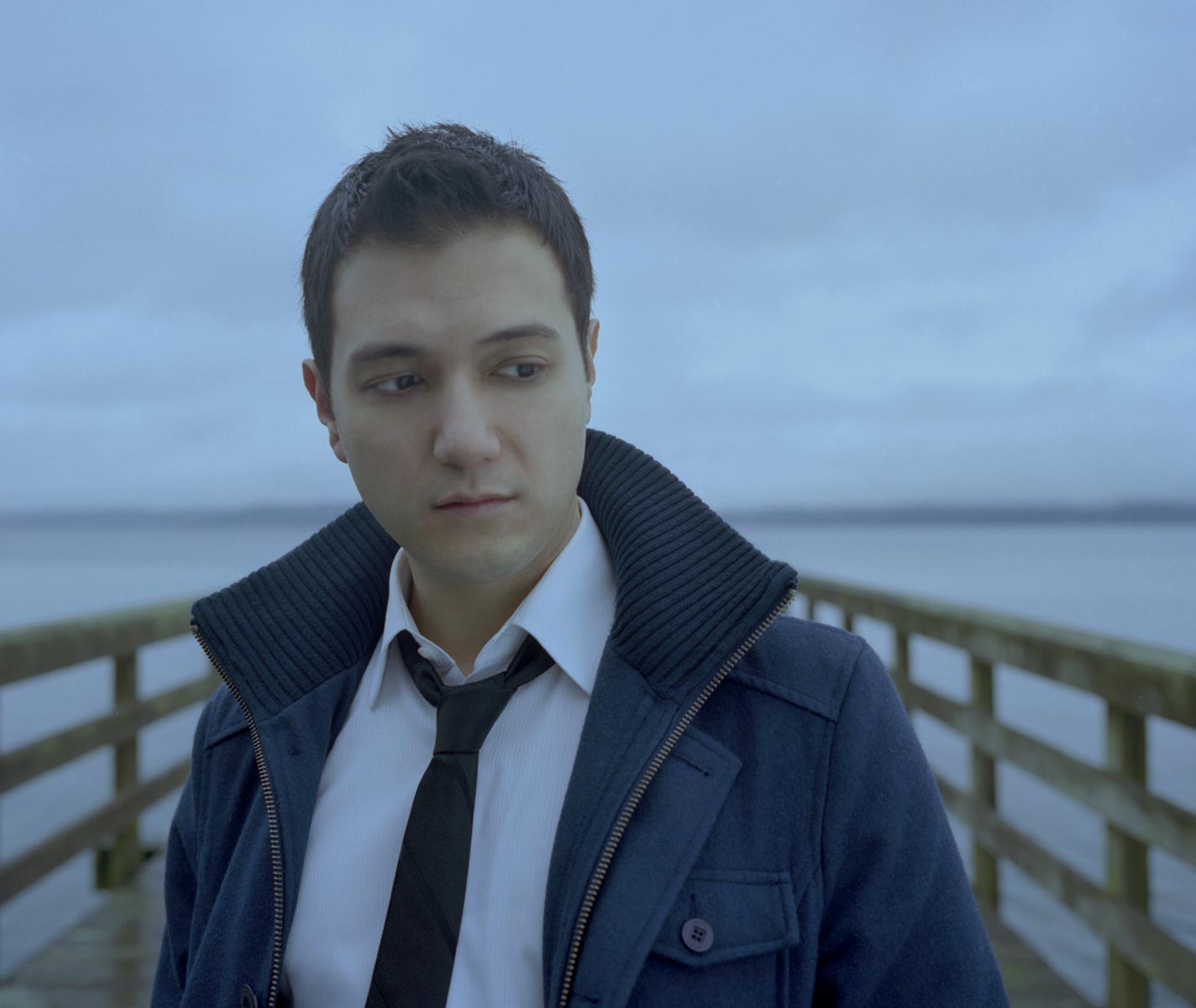
Nicholas Phan

Nicholas Phan

New Bachtrack review:

The second week of the Seattle Chamber Music Society’s month-long Summer Festival concluded with a programme that – as the two earlier concerts that week had similarly done – expanded perceptions of the notion of chamber music itself by including works that cross over the instrumental divide and call for voice.

continue reading

Filed under: Britten, chamber music, James Ehnes, review, Seattle Chamber Music Society, Strauss

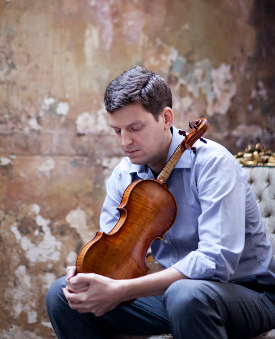
James Ehnes on His “Other” Life as a Chamber Musician

photo © Benjamin Ealovega 2012

photo © Benjamin Ealovega 2012

Here’s my piece for The Strad about violinist James Ehnes and his string quartet, who recently opened Seattle Chamber Music Society’s 2015 Summer Festival:

James Ehnes has long been a familiar presence on the international circuit, but he remains known to many music lovers primarily as a solo violinist — a virtuoso who, armed with a stunning technique, also has something compelling to say. When he does appear in chamber programmes, it’s often been with a piano partner or in varying chamber formations.

continue reading

Filed under: Beethoven, chamber music, James Ehnes, Seattle Chamber Music Society

Chamber Seattle

This evening brings the opening of the month-long Summer Festival presented by the Seattle Chamber Music Society. James Ehnes, director of SCMS, will be here with the Ehnes Quartet to perform a mini-Beethoven festival of three string quartets tonight, Wednesday, and Friday.

The YouTube sample here is of the Ehnes Quartet from their recording of Shostakovich’s String Quartet No. 8.

Later in the month (20 July) SCMS will present the world premiere of this year’s commissioned work: Cantus by the wonderful Steven Stucky (whose first opera, The Classical Style receives its first-ever full staging later this month at the Aspen Festival.

Filed under: chamber music, James Ehnes, Seattle Chamber Music Society

Seattle’s Chamber Music Summer Festival: Review

James Ehnes; ©Benjamin Ealovega

James Ehnes; © Benjamin Ealovega

Tomorrow will mark the first anniversary of Memeteria. I wouldn’t believe it if I didn’t have the archives to the right to prove it — this year has been a whirlwind. A huge thanks to all my readers for taking the time to visit. I hope you will continue to come back and would love to hear from you.

And how’s this for unplanned synchronicity: my very first piece was a report on the opening of the Seattle Chamber Music Society’s Summer Festival. And my latest offering is a review of one of the 2014 Summer Festival’s concerts. To wit:

For 33 summers now, the Seattle Chamber Music Society (SCMS) has been presenting an extensive festival that now ranks as a particularly desired destination for musicians on the summer chamber circuit across North America. This latest edition is off to an especially invigorating start. For their part, the audiences tend to be uniformly enthusiastic and devoted, but last night’s performances met with vociferous approval that reached the extreme end of the applause-meter.

The unusual programme design – juxtaposing Stravinsky’s infrequently heard Octet for Winds with bread-and-butter classics by Mendelssohn and Beethoven – is a signature of James Ehnes, now in his third year as SCMS’s artistic director.

continue reading

Filed under: chamber music, James Ehnes, review

A Homecoming and a Debut in Seattle

James Ehnes

James Ehnes

My latest Seattle Symphony review is now live on Bachtrack:

Not until the morning of the day before their concerts this week with the Seattle Symphony did conductor and soloist meet for the first time, yet the shared sympathy and depth of understanding they together brought to their interpretation of Béla Bartók’s Violin Concerto no. 2 made this the richly satisfying highlight of the Seattle Symphony’s program.

continue reading

Filed under: Bartók, James Ehnes, review, Seattle Symphony

Opening the Door into Bartók

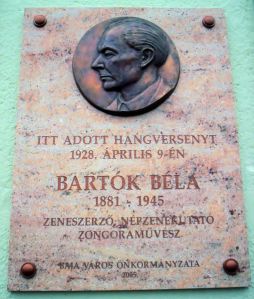
Bartok

Hearing a super-charged performance of Béla Bartók’s Third String Quartet by the Ehnes Quartet on Sunday – a condensed cosmos of formal and tonal experimentation – reminded me of why this composer’s quartets are genuinely comparable to what Beethoven achieved with the medium.

By happy coincidence, my friend Philip Kennicott, one of the most brilliant critics writing today, had just been immersed in the entire Bartók cycle on the other coast, back in my old hometown. The performers were the Takács Quartet. (I’d heard their two-evening Bartók cycle in D.C. back in the ’90s.)

In his reflections on the experience, Kennicott makes a very important point about the much-misunderstood presence of “folk elements” in Bartók’s music: “The turn to folk music was not, for Bartók, nostalgic, but rather a way forward. What he found there wasn’t simplicity, but density, and in that density was a modernity as vital as anything hatched in the musical systems of Paris and Vienna.”

And on Bartók’s sense of an ending:

So the music is always anxious, always driving forward, which is both exhausting and exhilarating, and perhaps that’s why Bartók’s endings—ironically anticlimactic, humorously flippant, pompously emphatic—are so appealing. By the time Bartók ends something, no honest listener could claim to want to hear more. The idea, the gesture, the mood has been wrung out, used up, finished off. And then it’s on to the next thing, with renewed energy and relentlessness.

Kennicott then works George Steiner’s interpretation of the door metaphor in Bartók’s Bluebeard’s Castle into his discussion:

We open successive doors in Bluebeard’s castle because “they are there,” because each leads to the next by a logic of intensification which is that of the mind’s own awareness of being. To leave one door closed would be not only cowardice but a betrayal—radical, self-mutilating—of the inquisitive, probing, forward-tensed stance of our species.

This was Steiner’s best hope for hope, after the brutality of World War I, the obscenity of Hitler, ages of anti-Semitism, and the terrors of the post-war age, especially its predation on what was once called, without embarrassment, Culture. It is also a perfect description of the powerful, dutiful, heroic denial of self in Bartók’s string quartets, which also proceed by a logic of intensification, and which leave the listener grasping at “the mind’s awareness of being.”

Filed under: aesthetics, Bartók, chamber music, James Ehnes, music writers, string quartet

The Ehnes Era in Seattle: Season Two

James_Ehnes_c_B_Ealovega_fit_300x300

My take on the opening week of the Seattle Chamber Music Society’s Summer Festival, now underway (from crosscut):

Everyone has their individual barometer when it comes to deciding whether summer has actually “arrived” in our fickle city. But for many local music lovers, Seattle Chamber Music Society’s (SCMS) summer festival clearly marks the cultural solstice…

continue reading

Filed under: chamber music, James Ehnes, ,

Archive

Enter your email address to follow this blog and receive notifications of new posts by email.