My new feature on Jeremy Denk and his recording of the Goldberg Variations is now available in the Spring 2014 issue of Listen magazine. This one is limited to subscribers, so I can include only the teaser here:
Freezing a Moment of Infinite Possibility
Pianist Jeremy Denk on the stakes of recording Bach’s Goldberg Variations
In his first article for The New Yorker (“The Flight of the Concord,” February 6,
2012), pianist Jeremy Denk distilled the maddeningly quixotic experience of committing his interpretation of Charles Ives’ “Concord” Sonata to disc. Recordings, he mused, are really “manicured artifacts, from which the essential spectacle of human effort has been clipped away.”
One aspect of classical music that can puzzle newcomers is the enormous library of competing versions of the same blockbusters that have been — and continue to be — recorded.
What a refreshing listen: I’m getting quickly addicted to the Taiwan-born pianist Jenny Lin’s new release, which is the latest to come out on Arkiv Music’s Steinway & Sons label. It’s devoted to Stravinsky’s music for solo piano — along with a delightful mini-Firebird suite of three movements arranged by Guido Agosti for keyboard.
Yes, over the past year my ears have been oversated and oversaturated with Stravinsky’s orchestral music, especially the three big Russian ballets. But Lin has put together a nifty program that brings a fresh focus to the Russian’s musical thinking and evolution.
Lin’s crisply incisive attacks and sheer sense of fun are all part of a style shaped by musical intelligence and determination. And her playing shines light on Stravinsky’s concept of counterpoint as well as the ingenuity of his rhythmic inventions.
In his excellent booklet essay, Ben Finane quotes Stravinsky on his first forays into the jazz idiom, as manifested in the delirious Ragtime for 11 Instruments (1918), included here in a version transcribed by the composer:
My knowledge of jazz was derived exclusively from copies of sheet music, and as I had never actually heard any of the music performed, I borrowed its rhythmic style not as played, but as written. [so much for oral versus literary tradition.] I could imagine jazz sound, however, or so I like to think. Jazz meant, in any case, a wholly new sound in my music, and ‘L’Histoire’ marks my final break with the Russian orchestral school in which I had been fostered.
Pieces like the Piano Sonata of 1924 offer a fascinating glimpse into Stravinsky’s rethinking of Baroque and Classical elements — not just by way of cheeky “allusion,” but as knowingly perverse swervings from the paradigm. So, too, with his quasi-Bachian counterpoint and ornamentation that, to borrow Finane’s apt phrase, are “tempered with a saboteur’s delight.”
My ears and nerves are still buzzing from the excitement of last night’s recital by the always-dependable Garrick Ohlsson (at the University of Washington’s Meany Hall). What generous programs he offers: Beethoven’s Op. 109 Sonata, Schubert’s Wanderer Fantasy (D760), a triptych of selections by Charles Tomlinson Griffes, and Chopin’s Third Piano Sonata in B minor. And as if that weren’t enough, two superbly characterized Chopin waltzes for encores: the Op. 18 Grand Valse Brillante and the Waltz in C-sharp minor (Op. 64, no. 2).
I tend to think of Ohlsson as one of today’s least pretentious and fussy pianists, an artist to be counted on to give performances that are filling and satisfying. Of course that’s possible only because of his utterly confident technique — that left hand! — and his deep knowledge and love of the repertoire. What seems at times to be a “straightforward” approach turns out to reveal subtle insights. In the miracle of late Beethoven, for instance, he was able to explore different facets of the last movement’s variations (the new angle on the ultra-minimal two-note motif over which Beethoven obsesses in the first movement) without seeming to short-shrift the larger architecture beauty.
The Schubert Fantasy emerged as it should: a virtuoso showpiece on the surface, sure, but far more exhilarating for its sheer scope of invention and the pleasure Schubert takes in the powers of transformation of a basic idea. Ohlsson left no doubt as to why the next generation of Romantics fell so deeply in love with this spectacular but anomalous example of Schubertian ambition.
The Chopin Sonata may have been the most satisfying interpretation among these three well-known works. What struck me as especially successful was Ohlsson’s understanding of Chopin’s rhythmic articulation, both in his swooningly beautiful skeins of melody and in the robust, hell-bent momentum of the finale. But this didn’t come across as an affected exaggeration, or at the expense of those other aspects essential to this magnificent score. The whole picture is always in view – it’s just that it resembles getting a higher resolution, more dpi for clarity and detail.
Charles Tomlinson Griffes (1884-1920)
And then there were the pieces by the early-twentieth-century American composer Charles Tomlinson Griffes. Two of the Roman Sketches, Op. 7, from 1916 (“The Fountain of the Acqua Paola” and “The White Peacock”) and the Scherzo from his Op. 6 Fantasy Pieces (1913). I found these to be an utterly delightful discovery. Hints of Griffes’s infatuation with then-new French music abound, but there’s something fresh about it all. The killer-energy Scherzo made for a nice cross-link with the Schubert.
Ohlsson recently released a recording devoted to this fascinating artist who died very young, a victim of the influenza pandemic. A gay man from Elmira, New York, Griffes was still of the generation when studying abroad was the done thing to gain any cred as a “classical music” composer.
Here’s what Aaron Copland had to say about this predecessor (in 1952, 32 years after Griffes’s death):
Charles Griffes is a name that deserves to be remembered … What he gave those of us who came after
him was a sense of the adventurous in composition, of being thoroughly alive to the newest trends in
world music and to the stimulus that might have derived from that contact.
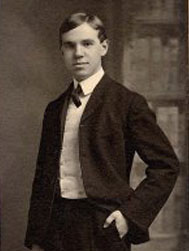
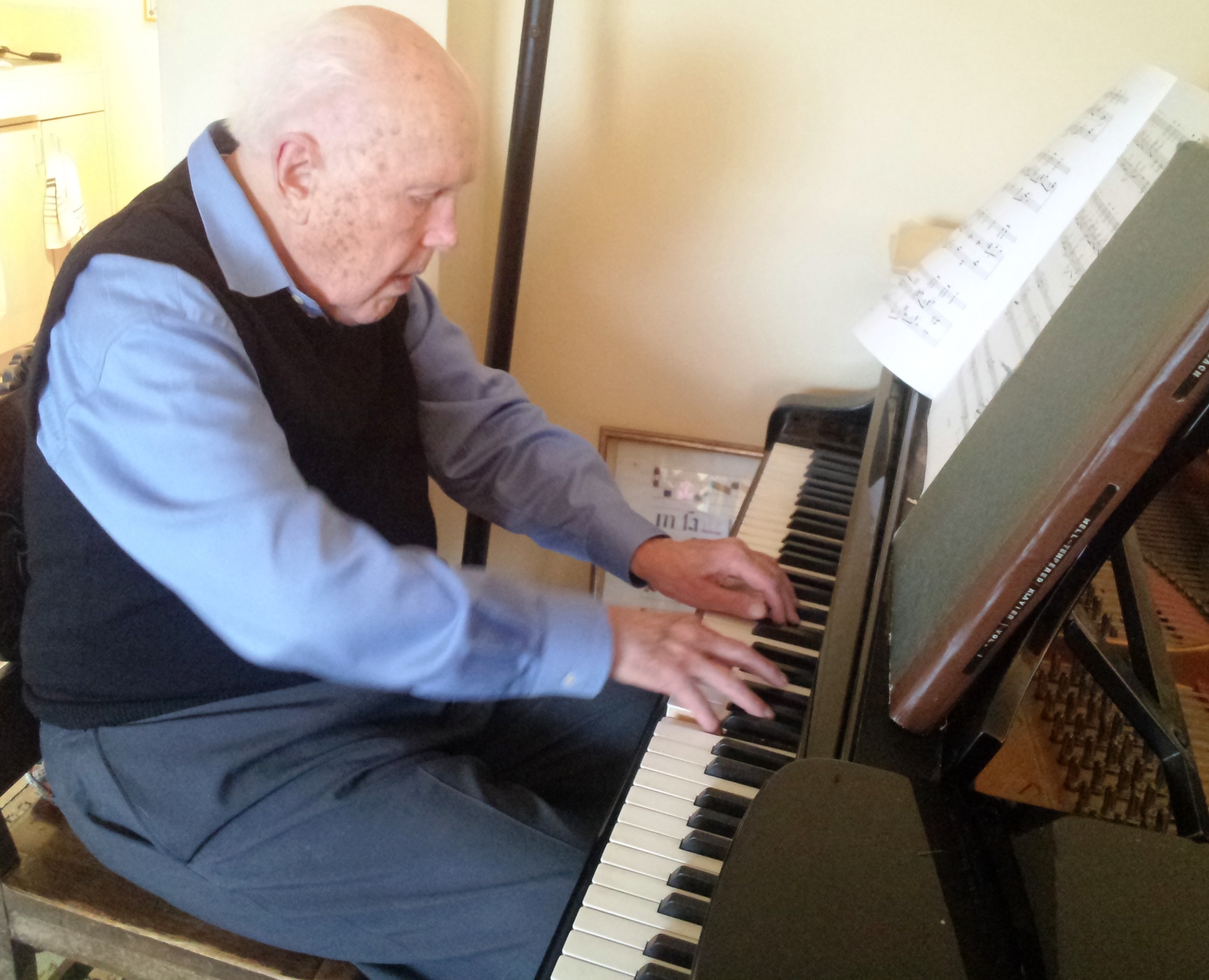
The pianist, composer, and sage Randolph Hokanson is a font of wisdom and a remarkable human being — with much to teach us as he approaches the age of 99 this June. Here’s my new profile of the artist for Crosscut:
“I’ve seen it all!” announces Randolph Hokanson before losing himself in a mischievous gale of laughter. With someone else, you might be tempted to indulge that as hyperbole. With Hokanson, who was born in 1915 in Bellingham, it’s tempting to take it literally.
This gifted pianist and teacher has witnessed almost a century of not just ceaseless but accelerating change: epochal shifts in technology, in education, in how music and the arts are valued.
Yet underneath the maelstrom, the things that really matter have managed somehow to endure.



 MEMETERIA by Thomas May