

Stravinsky’s Firebird took on a conspicuous double life in Seattle this weekend, appearing both on the Seattle Symphony’s program and in Pacific Northwest Ballet’s first revival of its iconic Kent Stowell production of the complete ballet in two decades.
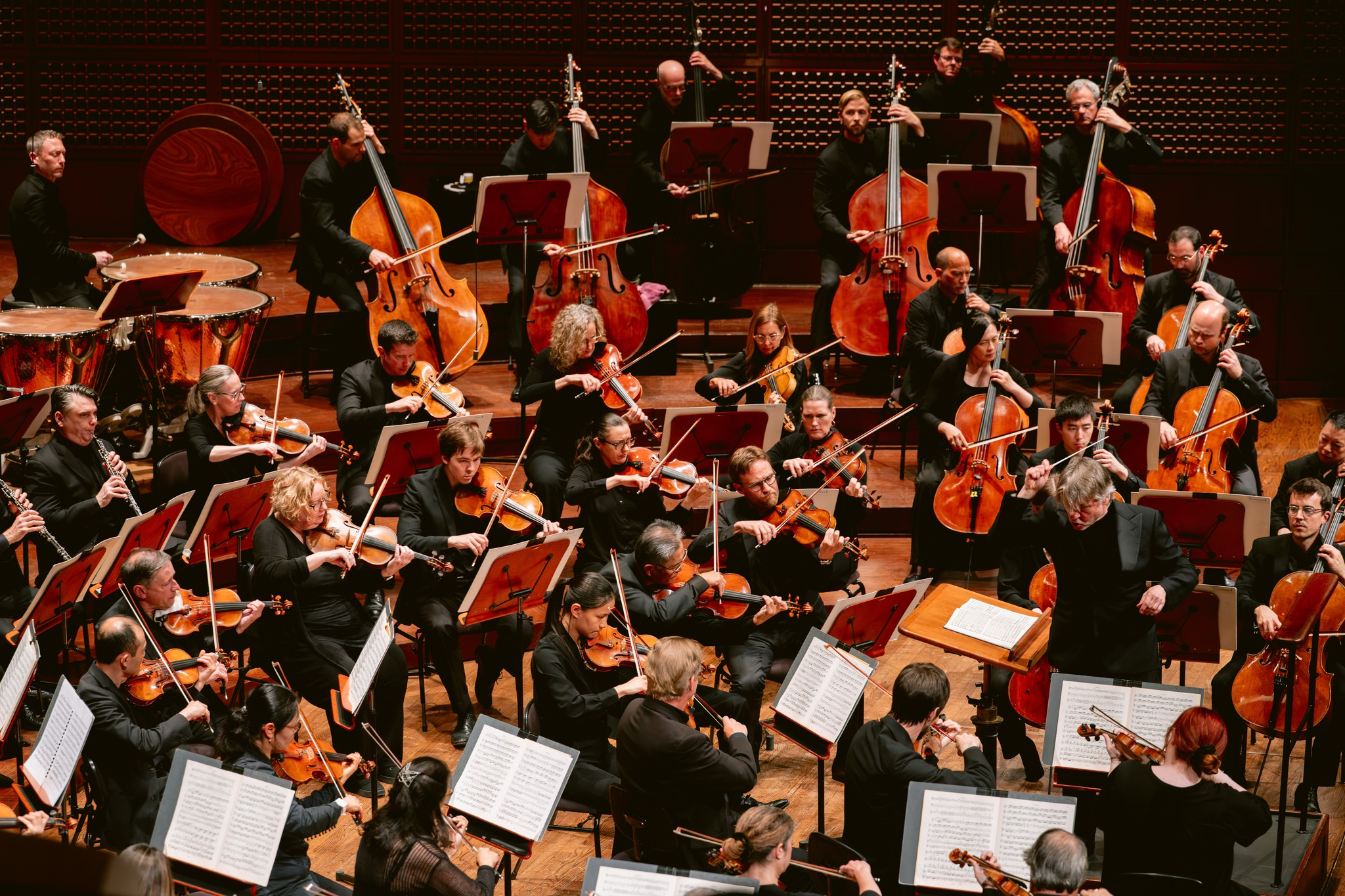
At Benaroya Hall, guest conductor Andrew Litton led the orchestra in the suite from 1945 – the last and most expansive of the three concert suites Stravinsky fashioned from his breakout ballet for Diaghilev’s Ballets Russes company from 1910. The performance on Saturday felt fresh, gorgeously detailed, and unapologetically theatrical.
Litton leaned into the ballet’s contrasts. The more he coaxed the musicians to luxuriate in its moments of late-Romantic lushness and scintillating Impressionist atmosphere – the introductory music and Firebird dance, the hazy suspense of the mass hypnosis into which the evil wizard and his monsters are lured (featuring a moodily spellbinding bassoon solo from Luke Fieweger) – the more sharply its modern edges came into relief, especially in a jaggedly propulsive account of the Infernal Dance.
The same ear for contrast extended to dynamics under Litton, from the most delicate brushes of strings to the shattering volume of the Infernal Dance and the blazing brass of the wedding apotheosis.
After my experience of the full ballet at PNB the night before (vividly conducted by Emil de Cou and with Ashton Edwards making the Firebird’s ornateness feel natural), the suite registered differently than usual. It felt less abstract, more pointedly mimetic. Stravinsky’s astonishingly precise tracking of the stage action remained unmistakable. Take the Round Dance, with its graceful lyricism enhanced by the poignant interplay of cello and clarinet. Not just “lyrical contrast,” but a precise dramatic beat, inseparable from the princesses’ circling dance.
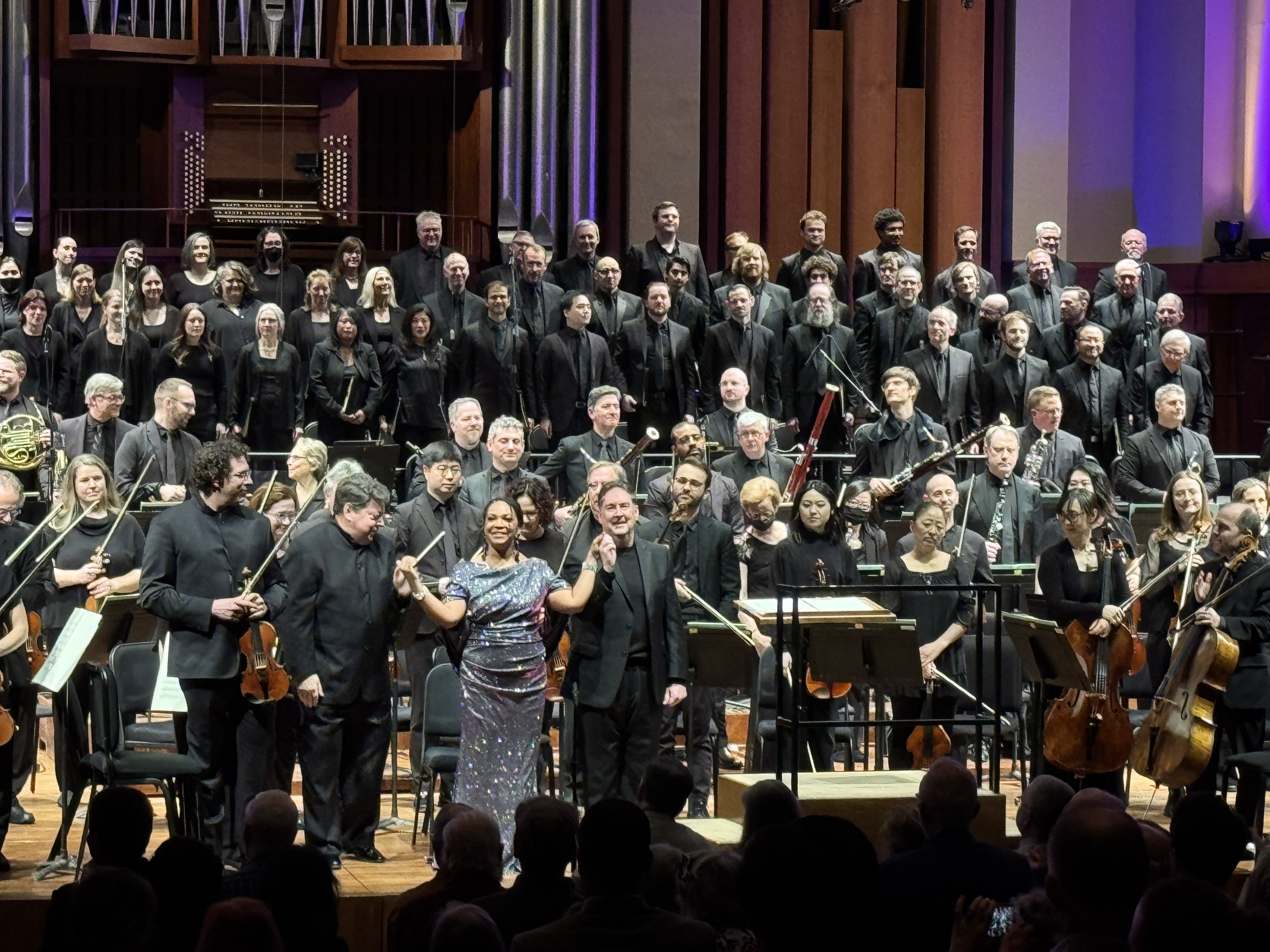
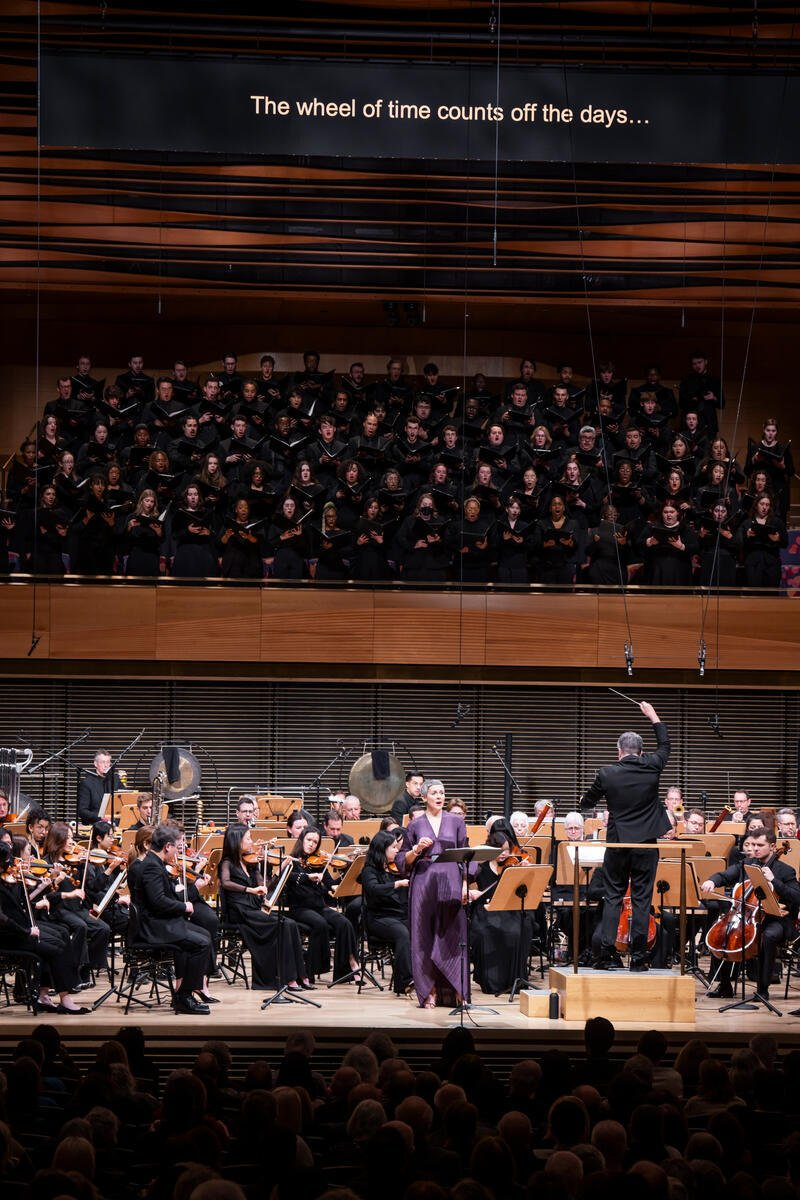
For all the impact of this Firebird, it was Poulenc’s Stabat Mater – astonishingly, the first appearance in Seattle Symphony’s repertory of this sacred choral work from 1950 – that made the strongest impression of the evening, and not just because of its rarity. Here, too, contrasts were paramount, if of a very different order. The twelve sections unfolded like panels of an altarpiece, their distinct characters left exposed and unsmoothed.
The stern pathos of the opening chorale gave way abruptly to the stabbing violence of “Cujus animam gementem,” with moments of unexpected serenity later intervening. Litton let these tensions accumulate side by side, like a mosaic, so that the uneasy balance Poulenc sustains – between suffering and the promise of consolation – stood out with real force.
There was no sentimental resolution here. Poulenc illuminates the prayer’s central paradox, with its scenes of gruesome suffering set alongside images of victory palms and paradise. Litton seemed fully attuned to that tension, with a real flair for Poulenc’s harmonic language – those turns that unsettle just as they begin to reassure – and a compelling sense of the overall sonic picture.
Soprano Janai Brugger sang with heartfelt, stirring beauty, her top register especially appealing—you just wish Poulenc had given her more to do. But he uses the part sparingly, allowing the soloist to emerge from and return to the choral texture. It’s an approach that was well served by the Seattle Symphony Chorale. Excellently prepared by Joseph Crnko, the chorus was as capable of Day-of-Judgment fury as hushed a cappella wonder.
A different strain of French music came with the opening account of Ravel’s orchestrated Le tombeau de Couperin, where the balance between elegance and loss is more delicately poised. Here, though, that poise proved elusive. Where Poulenc thrives on stark juxtaposition, Ravel’s more elusive paradox—the bright, even playful music of the Rigaudon shadowed by wartime loss—felt rather flattened.
Litton’s reading came across as polite but bland – beautifully played, but missing the suppleness and lift this music needs. The Forlane in particular feeling drawn out where I would have preferred a little more rhythmic flexibility. Still, there was fine playing to enjoy, not least Mary Lynch VanderKolk’s poignant oboe lines.
Filed under: Francis Poulenc, Maurice Ravel, review, Seattle Symphony, Stravinsky, art, classical-music, Maurice Ravel, music


 MEMETERIA by Thomas May