Santa Fe Opera’s joyous new production of Mozart’s beloved opera restores its sense of wonder and sheer fun. My review for Opera Now:
Being so familiar and beloved makes The Magic Flute unusually difficult to encounter free of the clichés and received ideas that have accumulated around it. The real magic of Christopher Luscombe’s new production at Santa Fe Opera lies in how effectively it recovers what makes the opera special in the first place.
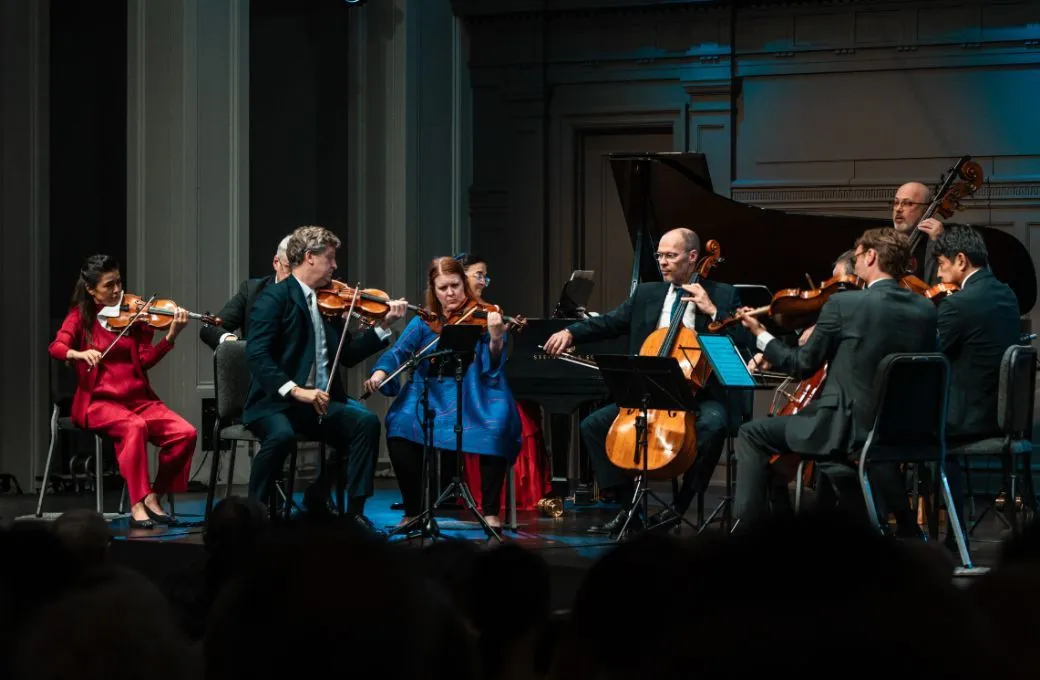
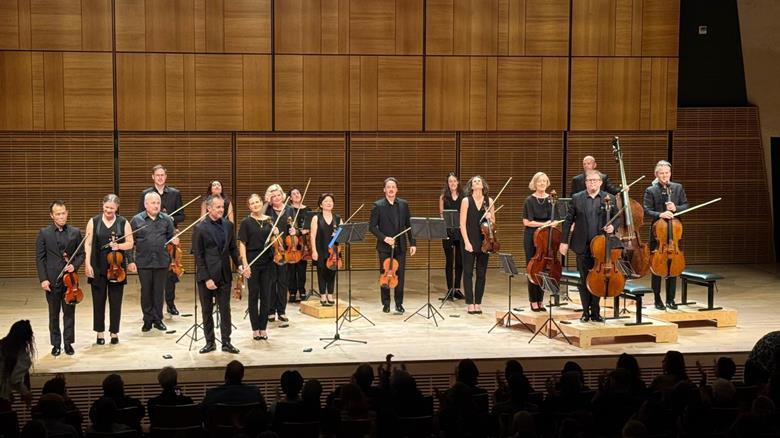
And thus ends what Seattle Chamber Music Society bills as “the world’s largest chamber music party” – some thoughts for Bachtrack on the final concert of the 2026 Summer Festival:
The final concert of Seattle Chamber Music Society’s 2026 Summer Festival capped an unusually eventful stretch. Owing to summer renovations at Benaroya Hall, its usual venue, the organisation found a number of alternate spaces to perform in, while also expanding its reach through free events in parks and other public spaces across the region…
Seattle Chamber Music Society’s month-long summer ritual began in the familiar place – the intimate, 536-seat Nordstrom Recital Hall inside downtown Seattle’s Benaroya Hall. Also familiar was the air of anticipation in the packed room, filled with listeners eager for the kind of high-level chamber music-making that violinist and artistic director James Ehnes continues to assemble in Seattle.
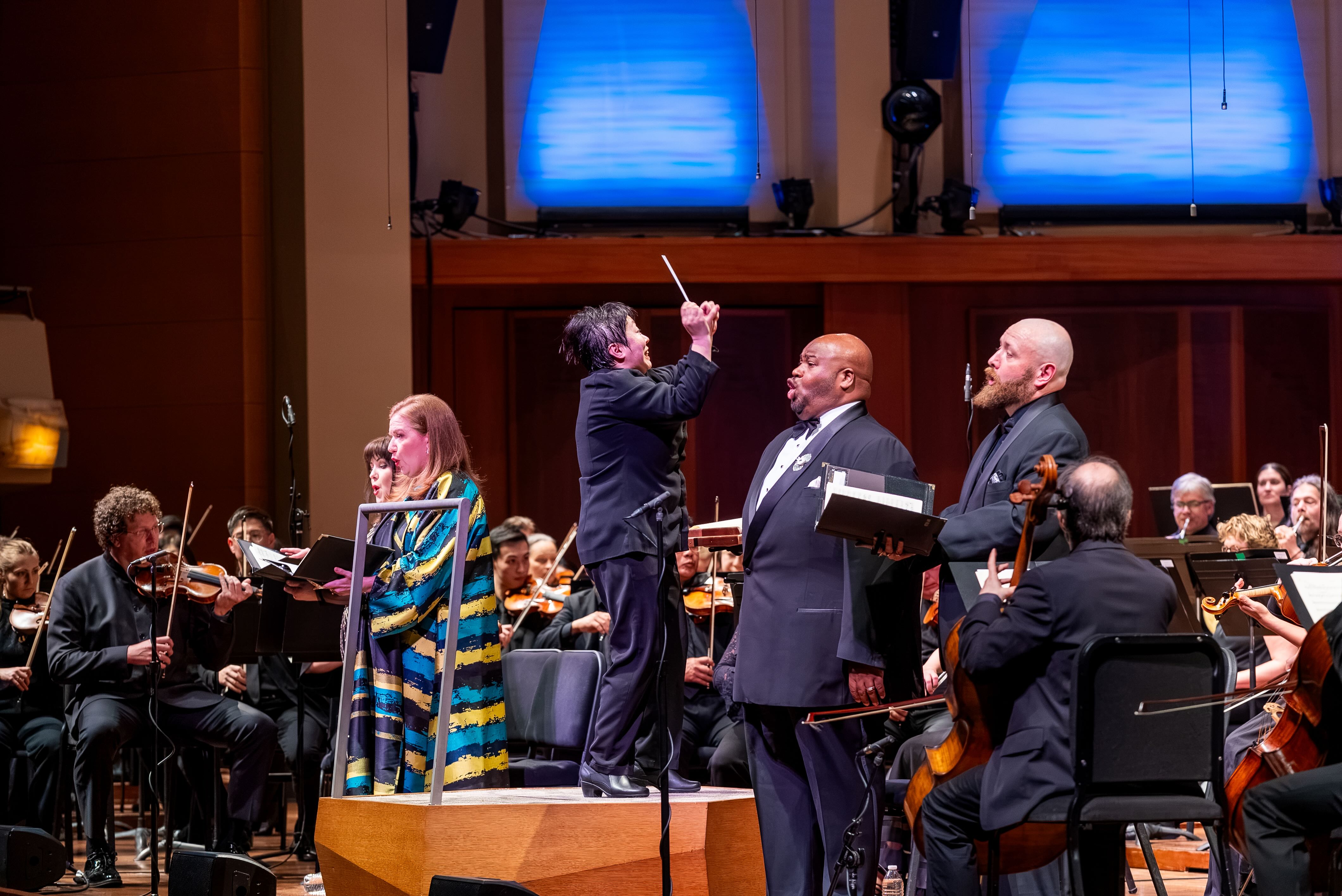
Xian Zhang, Seattle Symphony, and soloists; photo (c) James Holt
My Musical America review of Xian Zhang/Seattle Symphony and James Gaffigan/San Francisco Symphony in two very different West Coast encounters with the choral symphony:
SEATTLE AND SAN FRANCISCO—Call it the Ninth, times two. Last week, two major West Coast orchestras ended their seasons with Beethoven’s choral symphony, reminding us that this familiar ritual need not be merely routine.
In the Pacific Northwest, it marked the close of Xian Zhang’s inaugural season as music director of the Seattle Symphony, preceded by onstage tributes to three longtime orchestra members whose retirements were announced. At the San Francisco Symphony, the season-ending program unexpectedly acquired a memorial charge following Michael Tilson Thomas’s recent death, with musicians wearing blue ribbons—MTT’s favorite color—as a token of remembrance….
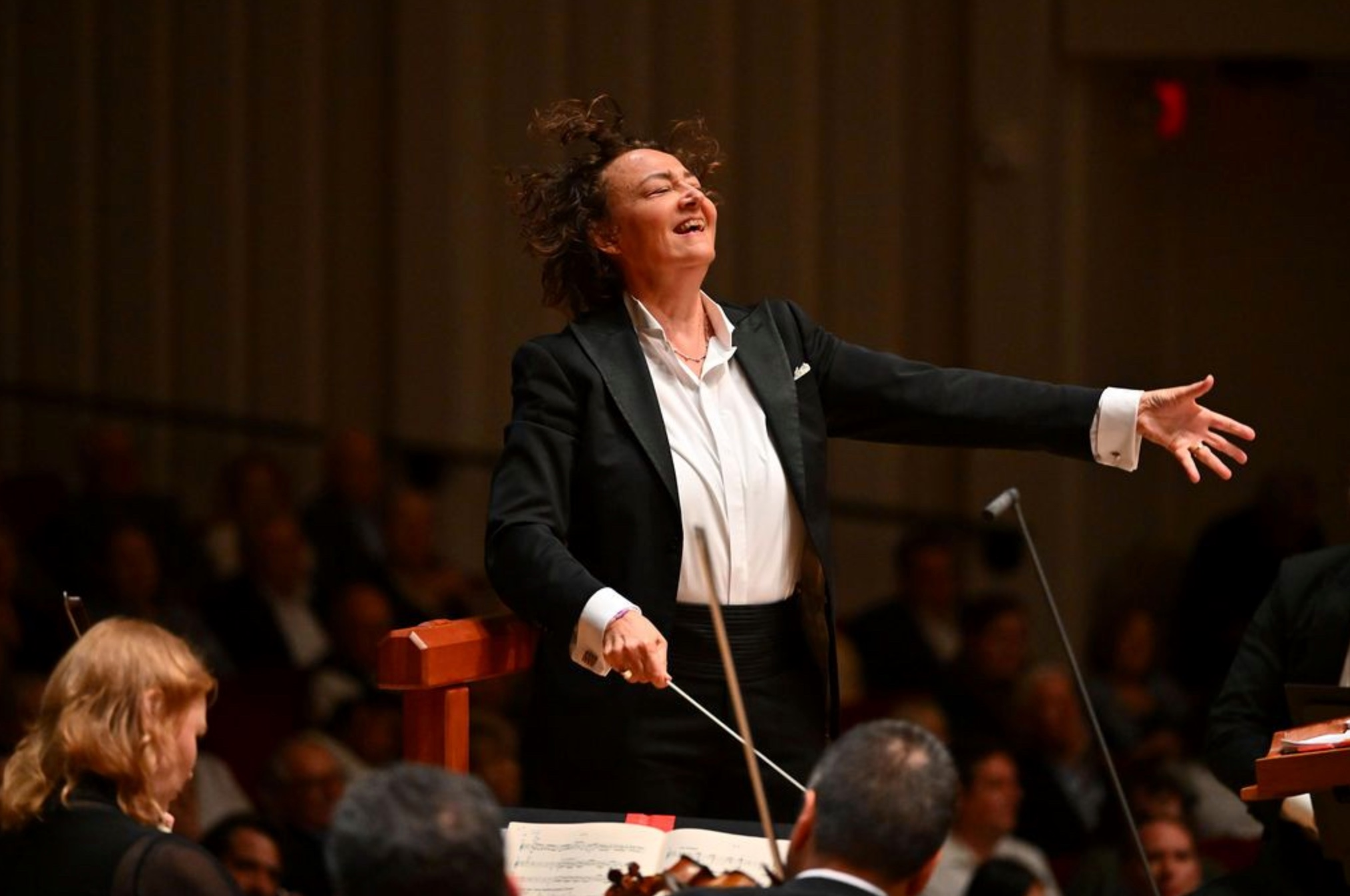
Nathalie Stutzmann’s reading of Mahler’s Second Symphony was charged above all by a layered sense of anticipation. (Photos by Adam Hagy, Atlanta Symphony Orchestra)
Along with Atlanta Opera, my evening at the Woodruff Arts Center provided another memorable experience during last weekend’s annual Music Critics Association of North America conference. Here’s my review of the season-closing ATLANTA — Even before the funeral drama had been established, the opening violin-viola tremolos in Nathalie Stutzmann’s account of Mahler’s Second Symphony seethed with a fearsome intensity, as if the music were running for its life. The echo of Die Walküre’s Prelude, with its life-and-death urgency, was unmistakable: a crisis already in motion. Mahler Second performed by Nathalie Stutzmann and the Atlanta Symphony Orchestra and Chorus….
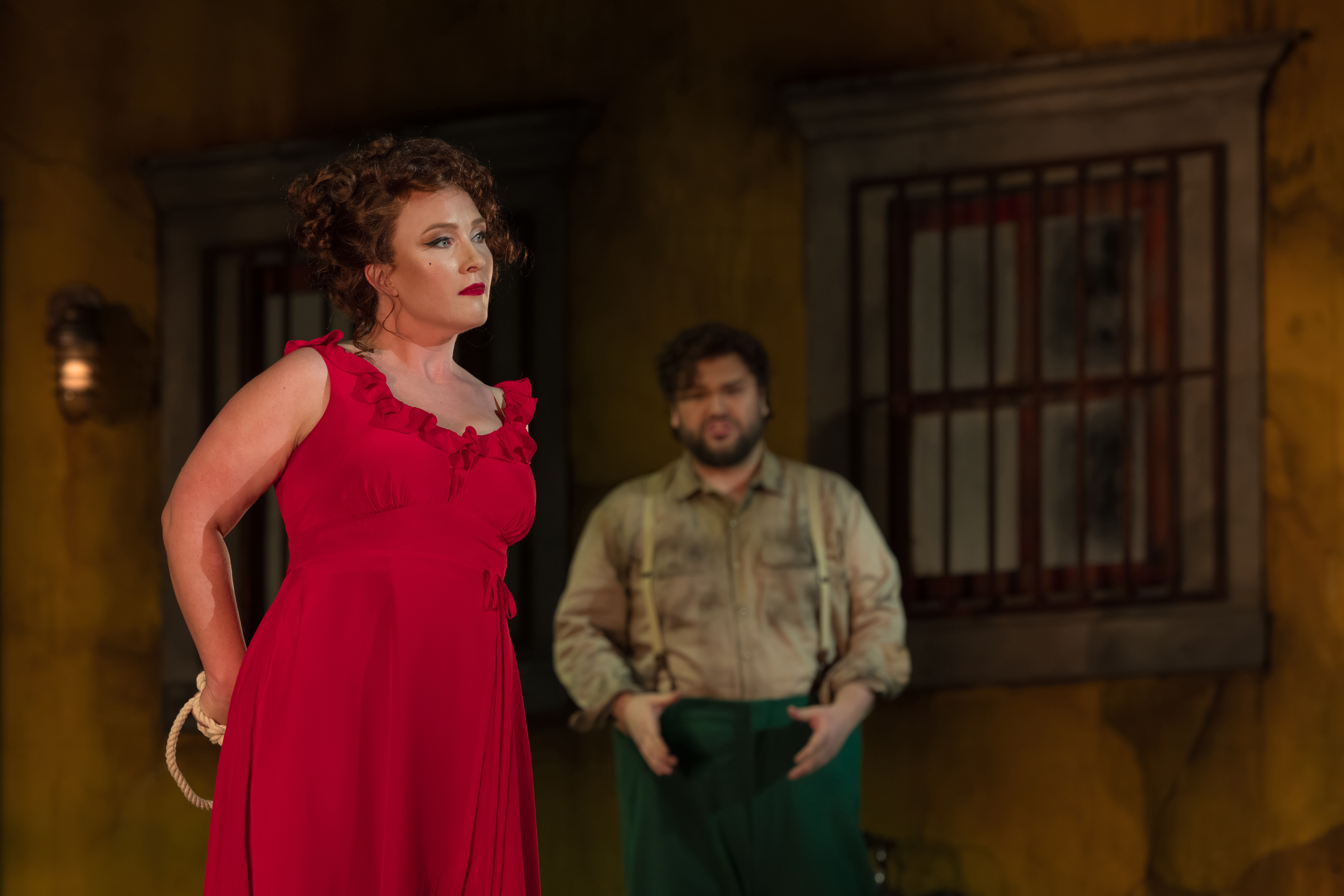
Sasha Cooke (Carmen) with Matthew Cairns (Don José) in Carmen at Seattle Opera. Photo: Sunny Martini.
Sasha Cooke is making her role debut in Seattle Opera’s revival of its Carmen production. Some thoughts for Bachtrack:
For its season-closing revival of Paul Curran’s production of Carmen, Seattle Opera is presenting alternating casts headed by Sasha Cooke and J’Nai Bridges in the title role. Cooke’s much-anticipated role debut reveals an intelligent, tightly controlled interpretation that resists many familiar clichés surrounding the character while never fully igniting the opera’s destructive energies.
Australian Chamber Orchestra at Carnegie Hall; photo (c) Jorge Gustavo Elias
Another remarkable concert during my recent New York trip: on its current 50th-anniversary tour, the Australian Chamber Orchestra stopped at Carnegie Hall with a substantial program including the world premiere of John Luther Adams’s complete Horizon for string orchestra. Here’s my review for The Strad:
For its 50th-anniversary tour stop at Carnegie Hall, the Australian Chamber Orchestra (ACO) made a notably bold move. Rather than rely on safely familiar repertoire spiced with a token contemporary addition, the ensemble devoted half the programme to the world premiere of Horizon by John Luther Adams, a two-part composition that spans some 40 minutes, in which change registers in minute, often barely perceptible shifts….
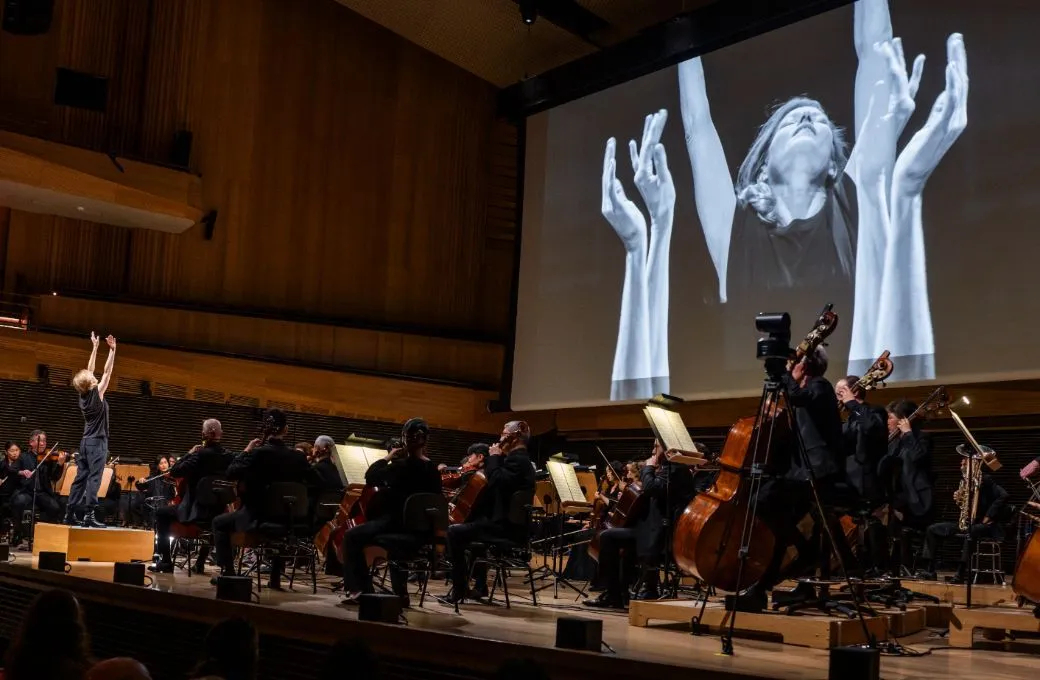
Conducting and singing the single role in La Voix humaine simultaneously might run the risk of turning Francis Poulenc’s harrowing monodrama from 1958 into a self-conscious gimmick of virtuoso multitasking. In her New York Philharmonic performance, however, Barbara Hannigan forged not only those roles but acting, stage movement and live video into a single, tightly controlled dramatic line that held the hall in tense silence, punctuated by uneasy laughter. …
In town this week to guest with the Seattle Symphony, Nicholas McGegan – widely admired for his work in the world of historically informed performance – showed how well those instincts translate to Mendelssohn with a modern symphony orchestra.
Last night’s fabulously entertaining program opened with ‘Die schöne Melusine’ and a set of rarely heard motets – a highlight in their own right – before moving into the long second half devoted to the complete incidental music to ‘A Midsummer Night’s Dream.’
Mendelssohn’s overture from 1834, inspired by the legend of a shape-shifting water spirit bound to an unhappy fate – her better-known counterparts include Rusalka and Ondine – ripples with refined wind writing and lively string figurations that were handled by the musicians with agility and precision. For all its structural looseness, McGegan kept it flowing, shaping its contrasts with a sure sense of character without trying to force it into a tighter mold.
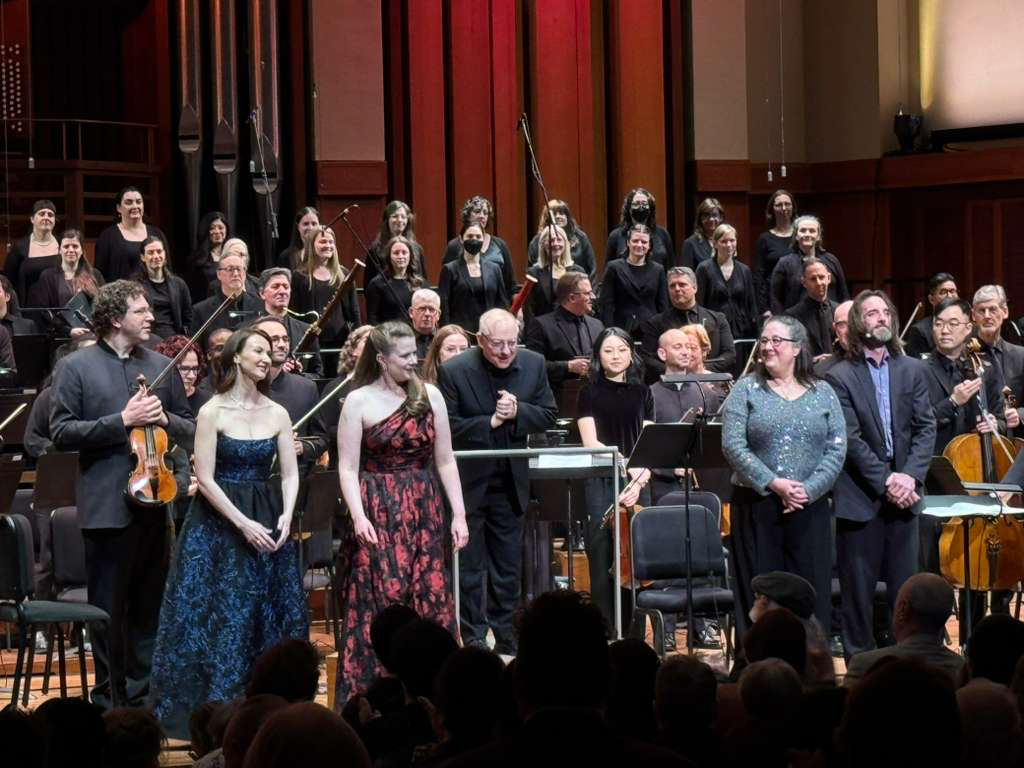
A real discovery was Three Motets, an early work inspired by Mendelssohn’s first trip to Rome in 1830, which brought in the upper voices of the Seattle Symphony Chorale, joined by soprano Ksenia Popova and mezzo-soprano Sarah Larsen. His experience of the French nuns at the Trinità dei Monti atop the Spanish Steps, singing unseen behind a screen, inspired this three-panel setting of Latin sacred texts.
Each of the motets explores a distinct style and mood: contemplative and restrained in pathos in Veni Domine; serene and closely interwoven, with echoes of Handel and Bach – especially the B minor Mass – in Laudate pueri; and dramatic and joyful in Surrexit pastor bonus, which unfolds almost like a mini-cantata. Its central duet, featuring the exquisitely interwoven voices of Popova and Larsen, suggests Mary Magdalene at the tomb, comforted by an angel, before the chorus concludes with a buoyant Alleluia of overlapping voices.
Originally written for voices with organ accompaniment, the motets were heard here in McGegan’s own orchestration, which showed real sensitivity to the vocal textures and shifts of mood. Veni Domine used winds alone, before opening out to a fuller orchestral palette in the other motets, without overwhelming the singers. The Chorale showed some unevenness in the a cappella sections, with dynamics and steadiness of line not always consistent across the ensemble, but the motets came across with grace and beauty.
The second half shifted gears from concert performance to a thoroughly enchanting hybrid of music and theater: narration, lighting, and Mendelssohn’s score interwove with excerpts from Shakespeare’s comedy, equal parts mischief and poetry. The orchestra, chorus, and vocal soloists shared the stage with narrators Julie Briskman and Ryan Higgins, who took on multiple roles.
McGegan was fully in his element here, with nimble, characterful gestures to shape the fairy music while broader motions brought out the comedy. He made a strong case for the unity of Mendelssohn’s score, linking the overture, a work of teenage genius, with the incidental music written sixteen years later so that it all felt of a piece.
Contrasts were deftly handled: skittish fairy music, quicksilver and pointed; the Nocturne, warmly Romantic, with fine phrasing from principal horn Jeff Fair; and the Wedding March, heard in context, surprisingly fresh and rousing. McGegan’s energy on the podium was infectious as he seamlessly navigated sudden shifts between spoken excerpts and orchestral color with the ease of scene changes in film, without breaking the flow.
The musicians leaned convincingly into the theatrical side, and the narrators carried much of the momentum. Julie Briskman stood out, bringing both a touch of tenderness and comic sparkle to Titania, and, as Flute the Rude Mechanical, delivering an outrageously over-the-top Thisbe, sprawling onto the podium in exaggerated death throes at Nicholas McGegan’s feet before being shooed away. Among his varied roles, Ryan Higgins brought an especially energetic presence to Oberon. Simple but effective lighting – uncredited in the program – added just the right touch without becoming fussy.
Near the end, when the chorus sings Oberon’s speech (“Through the house give glimmering light”) over the E minor fairy music of the Overture, Mendelssohn’s instrumental writing suddenly joined Shakespeare’s poetry from the 1590s, now composed into a fresh context sixteen years later, in a way that felt both surprising and somehow inevitable.
A hugely enjoyable and inventive performance, which will be repeated on Saturday and Sunday.