MEMETERIA by Thomas May

Music & the Arts

Fiery and Apocalyptic, with a Melancholy Interlude: This Week’s Seattle Symphony

Alina

Alina Ibragimova

Thursday night’s concert offered the first chance I’ve had to hear Ludovic Morlot in action so far this season with Seattle Symphony, and my reward was a thrilling, full-bodied program. The first half included a fiery account of Bartók’s 1927 Miraculous Mandarin Suite (about two-thirds of the score from his earlier ballet, responsible for one of the scandal-premieres of European modernism).
Morlot focused on the score’s lurid colors and unsettling, suspenseful atmospheres, abetted by characterful wind solos (the “decoy music” on clarinet, for one) and superb string ensemble. (The choice of Noah Geller as new concertmaster has clearly been paying dividends.) Some conductors emphasize the influence of Stravinsky’s Rite, but Morlot seemed more interested in the surreal aspects of Bartók’s score, especially in how the ironic, decadent waltz of seduction emerges.
A wonderful match of soloist and concerto followed, with the 33-year-old Russian-British violinist Alina Ibragimova proving herself to be a deeply sensitive, account of the Op. 129 Concerto in C-sharp minor, the second of Shostakovich’s violin concertos.
The violinist is called on to maintain a virtually continual presence in this score, and Ibragimova held me spellbound, mining the varied facets of melancholy and sorrowing desperation embedded in this late-period work. Her tone was rich but unforced, and above all achingly expressive.
Morlot effectively stage-managed the prominent duologues of the soloist with the winds, though coordination went somewhat awry in the finale. Still, it was a moving, substantial performance — far more welcome than a flashy and breezy rep staple would have been, since Seattle Symphony has dedicated this week’s performances to victims of hate crimes: “to the lives lost and all those affected by recent hate crimes brought on by racism and bigotry, particularly those who died in the recent tragic shootings at the Tree of Life synagogue in Pittsburgh, Pennsylvania, and while grocery shopping in Jeffersontown, Kentucky.”
Filling the second half was Brahms’s mighty, promise-fulfilling First Symphony, which premiered just a few months after the first complete Ring cycle, in 1876. (I’ve always found that coincidence especially fascinating.) Morlot seemed to pick up on some of the fiery, driven energy from the opening Bartók, conjuring a passionately dramatic vision of the First.
This came at the cost of some clarity, I found, in the first movement above all, whose overarching architecture was occasionally obscured. The Adagio radiated emotional complexity and a touching sense of Brahmsian harmonic color; it only needed, again, a more transparent elucidation of the composer’s dramaturgy of light and shade. I wanted more time for the music to breathe.
Morlot was more convincing with the rest of the work: the third movement served as a brief shot of optimism, an interlude that tees off the apocalypse and triumph of this finale-centered score. Here, Morlot paced events with confidence and focus, acting as a kind of film director to ensure that each episode carried weight.

The program is repeated on Saturday 3 November at 8pm.

Filed under: Bartók, Brahms, review, Seattle Symphony, Shostakovich, Uncategorized

Sheku Kanneh-Mason Makes His American Orchestral Debut

Beethoven Symphony #1 & Tchaikovsky

Sheku Kanneh-Mason, cello, with Ruth Reinhardt conducting the Seattle Symphony Orchestra; photo (c) Brandon Patoc

My review of Skeku Kanneh-Mason’s appearance with Seattle Symphony led by Ruth Reinhardt is now live on Musical America‘s site:

SEATTLE, WA—Last May, when he performed three pieces at the Royal Wedding of Prince Harry and Meghan Markl, the cellist Sheku Kanneh-Mason enchanted a global audience, piquing the interest of many listeners new to classical music. That engagement compelled him to cancel a previously scheduled appearance with the Los Angeles Chamber Orchestra, with the result that his American orchestral debut was postponed until last Thursday (October 18), when he appeared with the Seattle Symphony under guest conductor Ruth Reinhardt.

continue [paywall]

Filed under: Musical America, review, Seattle Symphony

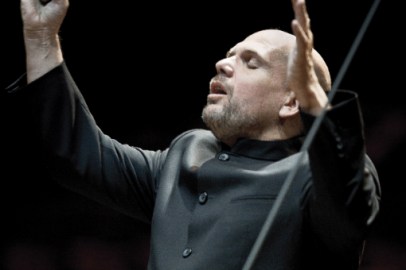
Apocalypse Not Yet: Jaap van Zweden and the NY Phil Combine New Work with Bruckner 8

91030-jaap-van-zweden---credit-hans-van-der-woerd

Jaap van Zweden; image (c) © Hans van der Woerd

Here’s my review of Jaap van Zweden and the New York Philharmonic in their recent program of a new work by Conrad Tao and Bruckner:

It’s been a month of firsts for the New York Philharmonic: along with the start of its inaugural season with music director Jaap van Zweden, each programme since the opening gala has included a world première…

continue

Filed under: Jaap van Zweden, New York Philharmonic, review

Proving Up in Omaha

phOc9Y-g

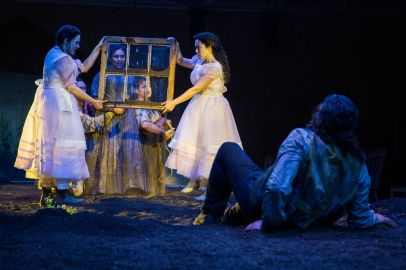
Opera Omaha production of Proving Up, photo (c) Emily Hardman

Missy Mazzoli’s opera Proving Up, which just opened at Columbia University’s Miller Theater, made a strong impression on me when I got to see the premiere staging by James Darrah at Opera Omaha’s ONE Festival in the spring. Here’s what I wrote for Musical America:

April 27, 2018
Proving Up both opened and closed ONE Festival—I saw the final performance, on April 22—and the production was specially tailored to its non-traditional location in a gallery space at KANEKO, a set of warehouses in Omaha’s historic Old Market district that have been converted into the headquarters of the artist Jun Kaneko.
In this followup to their acclaimed collaboration Breaking the Waves (also directed by Darrah), Mazzoli and Vavrek have again hit pay dirt, crafting a suspenseful, gripping, and unsettling work of music theater. In the synergy achieved at ONE with an imaginative design team, a first-rate cast, and the International Contemporary Ensemble (ICE) led with complete commitment by Christopher Rountree, they have also created another durable proof of the vitality of contemporary opera.
Proving Up draws on material notably different from the Lars von Trier-inspired Breaking the Waves. Mazzoli remarked in a talkback discussion after the performance that she wanted to explore the impact of the American Dream on those who have been motivated to follow its promise but ended up failing. The mortgage crisis and Occupy Wall St. movement provided initial impulses, but the last U.S. presidential election—and the questions it raised about American values and myths—naturally left an imprint on Mazzoli’s and Vavrek’s ideas.
The opera adapts a short story published by the American writer Karen Russell in her 2013 collection Vampires in the Lemon Grove. Set “somewhere in the plains of the young State of Nebraska” just after the Civil War, Proving Up centers around the ordeal of the Zegner family, who have taken the risk of leaving the settled East Coast behind to claim their parcel of land according to the promise of the Homestead Act.
Actual ownership can only be gained after a five-year period by following a set of stipulations, including the (fictive) requirement to have a home with a glass window. Pa Zegner has managed to obtain this holy grail and agrees to share it with his neighbors so that together they can “prove up” and obtain their deeds from the awaited government inspector. How he came by the coveted window is the dark counterstory, suggesting an array of related but inconclusive narratives of retribution, vengeance, or patterns of a fateful curse.
On the surface, it operated like a gothic horror tale; but thanks to Vavrek’s well-constructed libretto and Mazzoli’s memorable characterizations—as well as the pacing and deft use of symbolism in Darrah’s staging—Proving Up had a compelling mythic resonance.
For the KANEKO space, Adam Rigg designed a 72-foot-long runway box filled with dirt as the stage—a vast grave encompassing the two small graves of the Zegner daughters. This stage divided the audience, which sat on a motley collection of old chairs, into two halves facing each other.
Wooden panels at one end formed the house and, at the other, made a sculptural formation hinting at the distant horizon. The ICE players were seated in full view on the latter side, with Rountree facing the singers (and audience). Pablo Santiago’s lighting was especially outstanding: following the spirit of the production as a whole, he recalibrated its traditional mood-setting role, making it an active character that refracted the narrative’s sustained sense of foreboding.
Mazzoli’s score for a Turn of the Screw-like chamber ensemble (three winds, two brass, a percussionist, piano/harpsichord, harp, and strings, with vernacular sonorities like harmonica used in unexpected ways) proved resourceful, original, and effective. She evoked various aspects of the natural landscape—above all a sense of dryness corresponding with the drought that contributes to the Zegners’ doom—but also convincingly depicted the extreme emotional states to which this small cast of characters is driven.
Mazzoli showed a gift for giving her characters personality with her vocal writing, using exaggerations of range to powerful effect for the terrifyingly mysterious Sodbuster (Andrew Harris) who looms in the final scenes. John Moore conveyed the ruthless drive of the patriarch but also made him pitiable, while Talise Trevigne covered a vast emotional spectrum in solos that laid bare Ma Zegner’s anguish and anger alike. In a multilayered performance, Michael Slattery captured the mixture of innocence, curiosity, and fear of the youngest son Miles, who is entrusted with the task of sharing the window. Abigail Nims and Delaram Kamareh sang in haunting harmonies as the ghostly Zegner daughters, and Sam Shapiro acted the non-singing role of the incapacitated older son.
The story’s local color has obvious relevance for audiences in the American heartland who may have descended from 19th-century homesteaders. But Proving Up is made with the imagination and purpose to speak to anyone capable of being moved by the larger questions it raises. The production’s next stop will be in New York in September; redesigning it for the Miller Theatre space promises to be an epic challenge in itself.

Filed under: American opera, Missy Mazzoli, Musical America, review

Olga Neuwirth’s Lost Highway at Oper Frankfurt

3666_losthighway03_gross

left to right: Steffen Ahrens (Ensemble Modern), Elizabeth Reiter (Alice), and John Brancy (Pete); photo (c) Monika Rittershaus

My review of Olga Neuwirth’s extraordinary video-opera, directed by Yuval Sharon at Oper Frankfurt, is now online at Musical America:

FRANKFURT, Germany—Questions give rise to more and more questions in Lost Highway, including one that kept recurring to me as I became increasingly entangled in the performance: Why is Olga Neuwirth still so woefully underrepresented in America’s new music scene? The evening I spent with Oper Frankfurt’s production (September 19) proved to be so engrossing, so provocative in all the right ways, that the neglect of her fascinating body of work seems all the more outrageous—and our loss all the more to be pitied, until it’s remedied.

continue

Filed under: Musical America, new opera, Olga Neuwirth, Oper Frankfurt, review, Yuval Sharon

Porgy and Bess in Seattle

An unforgiving work overload is keeping me from covering Seattle Opera’s just-opened Francesca Zambello production of Porgy and Bess, an opera I love. I did cover it the last time the company presented Gershwin’s work, in 2011, in a version directed by Chris Alexander — well before I had launched this blog, so I hope you will forgive me for posting that
piece here. Two of the singers cast in 2011 are back onstage for the current production: Mary Elizabeth Williams and Jermaine Smith):

Seattle’s version admirably digs beneath the surface of this elusive classic of American identity. It avoids sentimentalizing Porgy into a saint and brings more human focus to characters who can often become caricatures. But some pivotal moments are under-emphasized….

continue

Filed under: George Gershwin, review, Seattle Opera

Santa Fe Opera 2018: Ariadne, L’italiana, and Butterfly

MB

ANA MARÍA MARTÍNEZ (MADAME BUTTERFLY) AND JOSHUA GUERRERO (F.B. PINKERTON). PHOTO CREDIT: KEN HOWARD FOR SANTA FE OPERA, 2018

Here’s my report on the rest of the 2018 summer season at Santa Fe Opera* for Musical America. I write about Ariadne auf Naxos, L’italiana in Algeri, and Madama Butterfly. My review of the company’s new production of Doctor Atomic is here.

Santa Fe, NM—-During the long reign of founder John Crosby, Santa Fe Opera cultivated its reputation as a “Strauss house.” Yet only three of the composer’s operas had been presented under the company’s third general director, Charles MacKay, before he decided to include a brand-new production of Ariadne auf Naxos as a key attraction of his farewell season.

continue
[PDF here: Santa Fe 2018 MA reviews]
*Apart from Candide, the one production I had to miss.

Filed under: Musical America, Puccini, review, Rossini, Santa Fe Opera, Strauss

A New Doctor Atomic at Santa Fe Opera

doctor-atomic

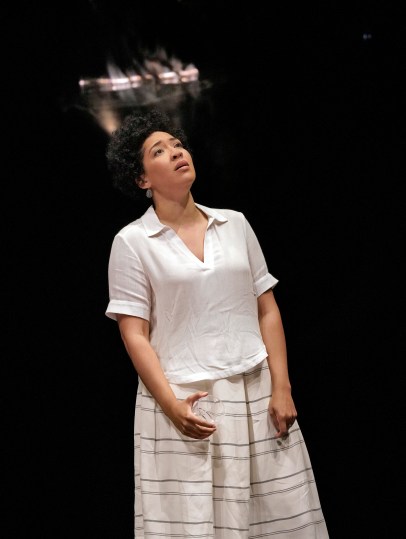
JULIA BULLOCK (KITTY OPPENHEIMER). PHOTO CREDIT: KEN HOWARD FOR SANTA FE OPERA, 2018

Here’s my review for Musical America of the new production of John Adams’s Doctor Atomic, which Peter Sellars directed for Santa Fe Opera:

SANTA FE, NM—As with any classic tragedy, from the outset we already know the denouement of Doctor Atomic: The world’s first atomic bomb will be successfully detonated in the New Mexican desert at dawn on July 16, 1945—a prelude to the atrocities of its use less than a month later on Hiroshima and Nagasaki.

Review here:
Doctor Atomic-Musical America-review

Filed under: John Adams, Musical America, Peter Sellars, review, Santa Fe Opera

A Weekend at Tippet Rise

DSC01943

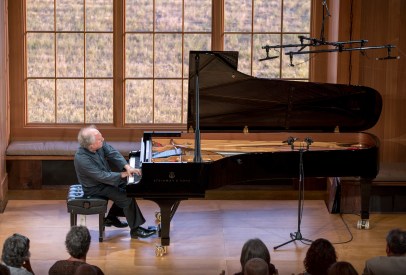
Jeffrey Kahane playing the “Goldberg” Variations. Credit: photo is by Emily Rund, courtesy of Tippet Rise Art Center

My report for Musical America on my recent trip to the Tippet Rise Art Center for a weekend of chamber music, sculpture, and nature has now been posted. PDF version here: Tippet Rise-pdf-07.30.18_MusicalAmerica

FISHTAIL, Montana–Lots of music festivals beckon with the prospect of a temporary retreat from the mundane. Tippet Rise Art Center takes this to a remarkable extreme, thanks to its geography. Located on a 10,260-acre working ranch in rural south-central Montana, Tippet Rise requires nothing less than a pilgrimage just to take in one of the musical weekends of this year’s summer festival season, spread over eight weeks between July and September.

Filed under: Bach, John Luther Adams, Musical America, pianists, review, travel

Götterdämmerung Caps Triumph of SFO Ring

Götterdämmerung-SFO

Iréne Theorin as Brünnhilde with members of the San Francisco Opera Chorus in Wagner’s “Götterdämmerung.” Photo: Cory Weaver/San Francisco Opera

Here’s the final installment of my coverage for Musical America of San Francisco Opera’s extraordinary Ring cycle.

SAN FRANCISCO—If Siegfried highlights Zambello’s ability to tease out vital, three-dimensional characters from a deceptively simple surface, Götterdämmerung shows her clarifying the most complex component of the entire cycle–an installment which introduces an entire generation of characters new to the Ring–with a gripping theatrical momentum. The night/day dichotomy of the Prologue aptly summed up the diametrical viewpoints of this staging…

continue

Ring review: Part 1

Ring review: Part 2

Ring review: Part 3

Filed under: directors, Musical America, review, Ring cycle, Runnicles, Wagner

Archive

Enter your email address to follow this blog and receive notifications of new posts by email.