MEMETERIA by Thomas May

Music & the Arts

Kosky & Co. Recharge the Magic of Flute at LA Opera

MagicFlute-LA

Musical America has posted my review of the Barrie Kosky/Suzanne Andrade-directed Magic Flute (behind a paywall):

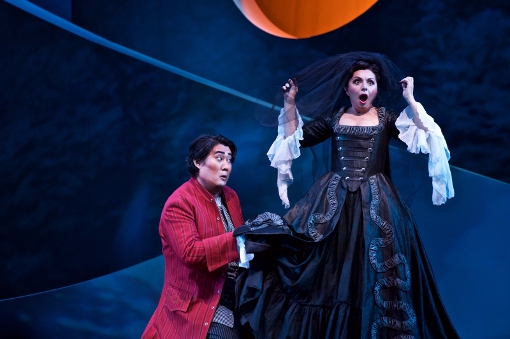
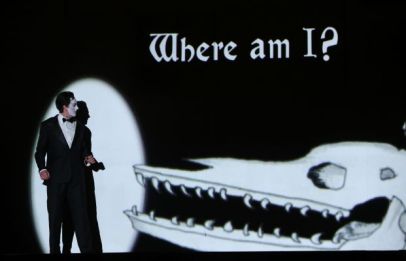
LOS ANGELES— Singspiel meets silent film in this genuinely innovative production of The Magic Flute directed by Barrie Kosky and Suzanne Andrade. Initially created in 2012 for the Komische Oper Berlin …

continue reading

Filed under: Los Angeles Opera, Mozart, review

A Bright Mahlerian Cosmos from Dudamel and the LA Philharmonic


gustavo003-950My review of this weekend’s Mahler 3  by Gustavo Dudamel and the Los Angeles Philharmonic is now posted on Bachtrack:

No work is more emblematic of Mahler‘s symphonic philosophy than the Third. Or at least that version of his philosophy filtered by Sibelius, who recollected Mahler’s words decades after their meeting in 1907, long after his colleague’s death: ‘The symphony must be like the world. It must embrace everything’.

But it was another Mahlerian statement that Gustavo Dudamel’s interpretation with the Los Angeles Philharmonic brought to mind – a statement reported by his confidante Natalie Bauer-Lechner referring specifically to the Third Symphony when it was still a work in progress: ‘To me, “symphony” means constructing a world with all the technical means at one’s disposal’.

continue reading

Filed under: conductors, Gustavo Dudamel, Los Angeles Philharmonic, Mahler, review

Five Not-So-Easy Pieces: Prokofiev at BAM

Marrinsky / Prokofiev at BAM

New York, NY – Feb. 24, 2016 — The Mariinsky Orchestra, lead by conductor Valery Gergiev, performs Prokofiev’s Piano Concerto No. 3: Daniil Trifonov soloist, at BAM’s Howard Gilman Opera House. (credit: Robert Altman)

My review of Folk, Form, and Fire: The Prokofiev Piano Concertos — Prokofiev marathon with Gergiev and the Mariinsky Orchestra —  has now been posted on Musical America (behind a paywall):

The Mariinsky Theater and its director Valery Gergiev launched their recent five-day residency at BAM February 24 with an ambitious orchestral program comprising the five piano concertos of Prokofiev. Trading the windswept rain … »Read

Filed under: piano, Prokofiev, review

Eros and Beauty in Juilliard’s La Calisto

1602_calisto_20154016bfinal2Adam Charlap Hyman’s scenic design for Calisto

When was the last time you had a chance to see La Calisto, an opera from the early Baroque by Francesco Cavalli/aka Francesco Caletti-Bruni (1602-1676)?

Leave it to Stephen Stubbs and colleagues to make us realize how much we’ve been missing.

The Seattle-based conductor, lutenist, and early music expert was asked by Juilliard to lead their recent production of La Calisto, which just concluded a brief run of three performances in the school’s intimate Rosemary and Meredith Willson Theater (seating for a maximum of 100).

The result was far more than musical archeology. It also went beyond presenting a platform for talented young Juilliard artists. This was a fully engaging theatrical and musical experience,  one that proved — vividly and gracefully — the undiminished appeal of this material.

La Calisto dates from a fascinating period in early opera, when the newish art form was migrating from private courts into the public theaters of Venice in the mid-17th century. The surprise at Juilliard was how fresh and resonant the work can be when experienced in such a smart, tasteful production. The version of La Calisto presented had been adapted and arranged by Stubbs and director and choreographer Zack Winokur, featuring members of Juilliard Opera and Dance.

Cavalli’s opera of 1651, to a libretto by Giovanni Faustini, repurposes one of the mythic stories of love gone astray from Ovid’s Metamorphoses, fusing it with the (normally unrelated) legend of the handsome shepherd Endymion (Endimione).

What’s most remarkable about the conflation of sources here is the mingling of comic, even ribald, elements with pathos — and this is exactly what Winokur negotiated so effectively and with such winning imagination.

Well before Mozart and da Ponte would hit upon a similarly ambiguous admixture of seria and buffa tonalities in Don Giovanni, Cavalli and Faustini dramatize scenes of lofty emotion and longing side-by-side with the grotesque and sometimes crudely humorous spectacle of gods and demigods crazed by uncontrollable lust.

The latter isn’t limited to the randy half-goat Pan and his merry band of satyrs but extends to Jove himself. We encounter the chief of the gods overcome by desire at first sight of the virgin archer Calisto [one “el” in the Italian, rather than the English “Callisto”].

A follower of the moon goddess and huntress Diana and hence pledged to chastity, Calisto rejects his advances — the libretto includes a witty aside about the pesky side-effects of the free will that Jove has granted his creations — so the god resorts to a transgender disguise as Diana  to con his way. There’s a subtler layer of humor as well, as the hypocrisy of the gods is put on full display.

The opera is framed by a narrative of cosmic happenings, beginning — as if the day after Götterdämmerung — with a visit by Jove, accompanied by Mercury, to check up on an earth devastated by Apollo’s son Phaeton (who, having lost control of the reins of papa’s sun-chariot, had accidentally set the planet on fire).

At the end of the opera, Calisto undergoes an apotheosis into one of the constellations in the heavens. (In Ted Hughes’ rendering of Ovid’s Latin, Calisto — from the Greek for “most beautiful” — is “the Arcadian beauty.”)

But within that framework the opera explores the maddening effects of Eros on humans, demigods, and immortals alike. Jove’s frankly sexual passion for the innocent titular heroine sets in motion the main narrative.

Along with a subplot about Diana’s own weakness for the male counterpart of Calisto — the beautiful shepherd Endimione — it involves a comedy of mistaken identities, confused longing, sexual aggression and rejection — and of course the inevitable blowback from jilted lovers who channel their passion into a lust for vengeance.

At the opera’s midpoint, for example, Jove’s official spouse Juno descends from Olympus to discover hubby’s latest infidelity. Enraged — though Calisto has been the unwitting object of Jove’s desires — Juno cruelly transforms her rival into a bear; physically, though, Calisto retains her human awareness. (“Her lament/Was the roar of a bear – but her grief was human,” in Ted Hughes’s version of Ovid.) Calisto’s second transformation into a heavenly body is Jove’s way of repairing the damage he has caused.

“It seems to me that [librettist Faustini] set out to fashion a show that a modern promoter might describe as ‘a sexy romp’ — with all the tools that he and Cavalli had developed in their previous works. Sexuality and sensuality pervade every corner of the libretto,” notes Stephen Stubbs.

This was Stubbs’s first collaboration with Juilliard students, working a magic similar to what he has achieved in his stagings with University of Washington students (as in Handel’s Semele and Mozart’s The Magic Flute).

Indeed, Winokur’s staging and pacing underscored the playful erotics  — with an arch nod to contemporary sexual politics, but avoiding predictable camp. This was the polar opposite of “stand and sing” opera, of absurdly monumental gestures.

Stage movement was brisk and varied, at times wittily stylized into dance — and in marvelous sync with the lively tempi Stubbs elicited.

The conductor led mostly from the harpsichord, working with a small but colorful and dynamic ensemble comprising a pair of violins and a continuo mixture (lutes, bowed basses, etc.), plus a touch of percussion. The players were members of Juilliard415, the school’s period-instrument ensemble.

La Calisto unfolds place amid a pastoral scene that has just begun to be restored. The setting was elegantly visualized by the design team of Adam Charlap Hyman and Andre Herrero, with landscape painting by Pilar Almon and suggestive lighting by Marcus Doshi.

The energetic cast had been well prepared in the musical rhetoric of Cavalli’s idiom, which quickly (almost unnoticeably) morphs from recitative to arioso to aria or duet — the score features a wealth of duets — with terrific economy. Modest gestures were telling and made their mark.

Particularly outstanding were the Polish countertenor Jakub Józef Orliński as Endimione in the subplot of Diana’s own naughty dalliance. He did justice to what is probably the score’s single most gorgeous piece of music: his praise of Diana in “Lucidissima face.” (Endimione and Diana are the opera’s only couple to enjoy a case of requited love.)

Samantha Hankey amazed with a commanding stage presence and with her ability to persuasively differentiate Diana as lover from the severe Diana who is horrified by Calisto’s confession of love. As Calisto, Angela Vallone sang with unaffected beauty, suggesting the awakening of sensual awareness when her innocent character is duped by Jove in disguise.

Julia Wolcott used her large voice to imposing, regal effect as Juno, hinting at a mesmerizing fusion of an angry Donna Anna with the Queen of the Night. Her appearance — accompanied by a retinue of Furies — inspired the most memorable of Austin Scarlett’s delightful costumes, her towering dress an object of awe in itself.

Excellent contributions were made as well by Xiaomeng Zhang as the sex-starved Giove, while spot-on comic timing was provided by Michael St. Peter as his sidekick Mercurio, who eggs him on to pursue his desires.  Don Giovanni once again came to mind, with Giove as a precursor to the amoral seducer, the procuring messenger god his Leporello.

Shades of A Midsummer Night’s Dream likewise were evoked, though La Calisto concludes not with a smoothing out of the erotic misalliances, but rather with a sublime ensemble ode to the transformed heroine.

–(c)2016 Thomas May. All rights reserved.

Filed under: Baroque opera, Juilliard, review, Stephen Stubbs

The Seattle Symphony’s Electrifying Eroica

Ludo_559x660

Ludovic Morlot

The title of my  review is actually only part of the story of last night’s  performance by the Seattle Symphony and Ludovic Morlot. The program — which I recommend highly as one of the highlights of the season to date — will be repeated Saturday and Sunday. The Beethoven alone would be enough to justify my enthusiasm, but let me get to the other parts of the story first.

Also worth the price of admission is the chance to hear the mellifluously named French pianist Jean-Efflam Bavouzet in Bartók’s Third Piano Concerto and the relatively rare Three Places in New England of Charles Ives.

I suspect some of the remarkably palpable energy the players manifested last night has to do with a sense of anticipation regarding the 2016 Grammy Awards coming up Monday: the SSO nabbed three nominations for the second volume of their ongoing Henri Dutilleux series on the in-house label (including for Best Orchestral Performance).

What was particularly striking in the Ives — deeply challenging pieces, despite the sudden appearance of fragments of folk Americana that momentarily give the illusion of familiar reference points — was the refinement of detail within the most opaque, thickly laden textures of this score. The boisterous energy Morlot summoned for the famous clashing marches of the second place (“Putnams’ Camp”) was all the more startling on account of that refinement — a trait that reminded me of how the conductor searches for the right detail, le ton juste, inside one of Dutilleux’s intricately wrought orchestral canvases.

It was fascinating to hear the Ives so soon after last week’s rendition of Luciano Berio’s Sinfonia. You couldn’t help comparing the method of intrusive quotations, unprepared and free-associative, and wonder at the American maverick angle that leavened Berio’s European avant-gardism. Both composers resort to a collage aesthetic that seeks to replicate the complexity and porousness of musical memory — free of irony and mind games.

Indeed, at times Morlot elicited a curious innocence and tenderness from Ives’s decidedly unsentimental memory-soundscapes. Those qualities also came to mind in the Bartók concerto. On the surface this piece can almost be read as a kind of regression or longing for simpler procedures, a revocation of the composer’s Modernist street cred.

But Bavouzet’s enchanting, subtle interpretation had a cleanness of focus that suggested a mature master taking stock and paring away the inessential. Bartók knew he was dying when he composed the Third Concerto, and in this score the musical past returns not by way of collage and quotation but as acts of allusive, loving homage (above all to Bach and Beethoven — and of course to the rich loam of folk culture that Bartók accessed in a way so unlike the Romantics).

This was especially effective in the profoundly stirring central movement (“Adagio religioso”), where the pianist gave exquisite weight and voicing to Bartók’s harmonies and crisp, wonder-evoking articulation to the birdsong. Bavouzet — who had an opportunity to study with the pianist who premiered this work, György Sándor — projected winning charm along with a clear sense of purpose in the outer movements.

He returned for a most unusual encore (playing, incidentally, the new Steinway recently purchased for the SSO): three of the Notations by a 19-year-old Pierre Boulez, composed right around the time Bartók was working on his final concerto. Bavouzet played with Zen-like presence, or like a curator displaying a set of particularly rich gems, holding them up to glisten and sparkle in the light. This week’s concerts are being dedicated to the memory of the late Boulez.

So on to the Third Symphony of Beethoven. Morlot chose this work for his very first subscription concert after stepping to the podium as the SSO’s music director in September 2011 (pairing it on that occasion, curiously enough, with Dutilleux and a Frank Zappa piece Boulez himself had conducted).

Certain aspects echoed what lingers in my memory from that performance: above all, the historically informed performance touches that conferred a certain athletic fleetness and sharper focus. These were even more apparent — and more paradoxically “radical” in brushing aside the dust from overfamiliar passages — without determining every contour of the conductor’s approach.

I’d say that’s evidence of an increased confidence and interpretive vision Morlot is bringing to this score. The hammer blow chords at the end of the first movement’s exposition, for example, were genuinely shocking, while the use of a solo string quartet to voice one of the variation passages in the introductory section of the finale underscored the idea that textural transformations are just as crucial to Beethoven’s thinking as the thematic/harmonic ones that usually command attention.

Above all, the sheer energy of collaborating with the SSO on moment-by-moment decisions in the score gave this performance the stamp of authenticity that really matters, resulting in an electrifying Eroica. Not all those decisions worked: some of the rhythmic articulations of the Funeral March were sloppy, and the volcanic whirlwind that should launch Beethoven’s extraordinary finale (is there anything about the Eroica that isn’t extraordinary?) sounded curiously listless. But Morlot and the SSO sustained an edge-of-your-seat intensity across the work’s epic span, liberating it from any trace of the routine.

And Morlot inspired much fine, indeed heroic, solo work from the players, including Mary Lynch’s achingly expressive oboe solos (a key leitmotif of the Eroica) in the Funeral March and Jeff Fair’s fearless, flawless spotlights in the famously fear-inducing trio of the Scherzo.

Really, what more can you ask of a symphony program?

–(c)2016 Thomas May. All rights reserved.

Filed under: Bartók, Beethoven, Ludovic Morlot, pianists, piano, Pierre Boulez, review, Seattle Symphony

O Berio

Berio

photo (c)Brandon Patoc

You couldn’t come away from last night’s Seattle Symphony concert without a feeling that you’d been privy to a major occasion — a genuine historic moment for the orchestra, for music director Ludovic Morlot, and for audiences both longterm and new to the art.

The occasion was the SSO’s first time tackling Sinfonia, the Luciano Berio masterpiece that is simultaneously viewed as an icon of the end of the modernist era and as a template for postmodernism and today’s aesthetic of collage. Indeed, Berio’s project can arguably be described as a rebuttal of the main tenets promulgated by his colleagues Boulez and Stockhausen — rather as Ligeti likewise represents a powerful refutation. Even so, all of these composers are sometimes clustered together as “Modernists.”

Keep in mind that Sinfonia was composed for the New York Philharmonic’s 125th anniversary under the tenure of its dedicatee Leonard Bernstein, before the Pierre Boulez era there. A very different kind of “modern music,” in other words.

The smart thing is just to set the labels aside and recall that Berio earned a powerful reputation as a rare (at that time) contemporary “classical” composer who managed to bridge the divide between far-flung experimentalism and an apparent willingness and capacity to communicate with audiences.

His outlook was all-embracing, which, for Berio, meant a passionate conviction that music had to be intimately connected to all aspects of the surrounding cultural context. And the context of Sinfonia‘s composition, in 1968-69 — the “heavy” years of the 1960s, a time of revolution, confusion, and upheaval — still reverberates.

The SSO’s performance  — the Berio occupied the second half of the program –was prefaced by a dramatic darkening of the house and a brief, wonderfully personal video introduction from Morlot, projected onto a screen. Just enough to set the mood for a taste of that context, with a mix of musical and political reference points.

Playing to what appeared to be close to a packed house, Morlot and the SSO  were joined by the vocal ensemble Roomful of Teeth (for a contemporary updating of sorts of the role played by the group Berio originally had in mind — the Swingle Singers). The orchestra itself swelled across the stage, massively enlarged, with speakers placed downstage;  the amplified Roomful singers were discreetly “embedded” in their ranks  (I couldn’t tell what other elements may have been slightly amplified).

In his intro, Morlot referred to his initial experience of Sinfonia, to how hard it seemed to figure out what was happening in this music. And the sense of being inducted into a bafflingly unanticipated world drove this performance. It was irresistibly present in the opening gestures — the mysterious, almost atavistic summons from the tam-tam, which passes on to the seemingly disembodied voices of the octet.

[Boulez himself conducting Sinfonia]

From that moment forward, it was as if Morlot and the ensemble had set off sailing down a daunting, mythic river. Earlier in the week Morlot had led the Curtis Institute Symphony Orchestra in Sinfonia at Carnegie Hall, yet there was never an impression of neatly worked-out solutions and answers to Berio’s unprecedented challenges. Rather, much of the thrill came from sensing that everyone was out on a limb, unsure of how — or even whether — it would all work out.

“I think Berio’s music has inspired a lot of us to treat instruments in a virtuoso way that is nevertheless humane,” observes the composer Steven Stucky. “I mean both humane to the performers and humane to the listeners, a kind of friendly, Italian virtuosity…” For me, Morlot tapped successfully into this idea of virtuosity and complexity. Berio’s strategies came across as much more than technical adventures to be surmounted.

And the capacity of this music to shock, in a post-Rite of Spring world (the Stravinsky is of course part of Berio’s collage-scape), was in this performance also remarkable. For example, in passage where Berio isolates a gesture like a sforzando and exaggerates it through repetition, Morlot elicited a savage intensity of accentuation that suggested the struggle for a new kind of musical speech.

Much is made of the “overwriting” on the canvas of the scherzo from Mahler’s Second Symphony (in the pivotal third movement of Sinfonia). But a highlight for me was the apocalyptic “panic chord” from Mahler’s Third that also surfaces — a moment of awareness in nature, before the arrival of human consciousness, as Mahler construes it. In this reading Berio’s commentary and contextualization seemed to pinpoint the arrival of in surmountable despair, from which Sinfonia has to work out a “breakthrough” of its own.

Overall, Morlot’s account paid special heed to Berio’s interrogation of the intersection between instruments and voices, between words as purely “musical” melismas and as intelligible signifiers. The fine line dividing chaos/noise from musical sense is being renegotiated by Berio in a new social contract.

A contract that was rudely shredded by a cell phone in the row ahead of me cruelly timed to ring as accompaniment to Sinfonia‘s final measures — not a mere errant ring followed by an awkward silencing,  but the entire cycle of rings, the owner of the device displaying not the slightest degree of concern over inflicting this on his fellow humans.

Certainly the solutions of ultra-programmatic music offered by a Richard Strauss were no longer viable. Which may be why, in part, I was rather unsatisfied with the concert’s opener, the early tone poem Don Juan. Or that may just be down to the somewhat ruffled ensemble from the strings.

Morlot brought a few intriguing ideas to the score, pumping up the opening with an adrenaline rush and lingering over the tender passages with surreal, stop-motion gazes — abetted by  Mary Lynch’s glorious oboe solos and Jeff Fair’s rich, glowing horn. Some of it, though, felt like special pleading. Call it a moment of crisis, but I found myself growing impatient with Strauss’s tricks and poses.

It was delightful to hear the underrated Beethoven Second Piano Concerto in such a thoughtful, finely chiseled account — continuing Morlot and the SSO’s success with their Beethoven concerto series (the First, last October, was spellbinding).  Soloist Yefim Bronfman’s restraint, bordering even on understatement, surprised those familiar with his stentorian keyboard presence  — a quality he confirmed in a thundering encore of the scherzo from Prokofiev’s Second Piano Sonata.

One more chance to catch this program: Saturday 6 February at 8pm: go here for tickets.

–(c)2016 Thomas May. All rights reserved.


 r

Filed under: Beethoven, Luciano Berio, Ludovic Morlot, review, Richard Strauss, Seattle Symphony

Before … and After … and Now: Rabih Mroué’s Riding on a Cloud

On the Boards_Rabih Mroue

Fans of experimental theater and performance art are likely to already have Rabih Mroué’s latest show on their radar: titled Riding on a Cloud, it opened last night at On the Boards and plays through Sunday. But anyone interested in the issues that theater is so ideally suited to explore should see this unclassifiable performance. Anyone interested in the paradoxical truce between fiction and reality that underlies the very impulse to make art.

The Beirut-based Mroué wields a beguiling mixture of provocation and poetry, using his medium to pose fundamentally human questions about the identities we invent and the stories we fabricate to make sense of our past and present reality.

In Riding on a Cloud Mroué turns to the story of his own family– specifically of the youngest sibling, Yasser. Near the end of the Lebanese Civil War, in 1987 (when he was 17), Yasser was shot in the head by an urban sniper. He survived improbable odds, forced to slowly relearn as a young adult the lessons he had tackled in kindergarten.

Along with aphasia, one side effect of Yasser’s injury is the loss of his ability to process representations: he could no longer recognize the image of a person or thing (say, in a photograph) when abstracted from the reality — even including photographs of himself.

But the story that Riding on a Cloud seeks to tell isn’t the story of the war’s endless cycles of violence and suffering. Aside from a few specifically political references, Mroué shows no interest in dissecting blame for the war in this piece. (Some of his other theater works address different aspects of the conflict.) Most importantly, Riding on a Cloud does not offer a feel-good dramatization of “the human condition” and our capacity to heal; it’s not an entertainment to stir up emotions and then offer redemptive resolution.

Mroué works with fragmentary scenes, stringing them together by way of loose associations rather than linear narrative logic. There are many narrative tangents — the coincidence of his grandfather, Hussein Mroué (a significant Arab-Marxist philosopher), being assassinated by fundamentalists on the same day Yasser is shot by the sniper, or the sexual kindness a Soviet nurse shows Yasser when he is recovering — but before we can become too invested in any one of them, Mroué shifts his focus to provoke a fresh set of questions.

Moreover, he frames the entire piece so that we’re continually reminded of the divergence between what we’re seeing and what it seems to represent: Mroué’s dramaturgy, in other words, seeks to mirror Yasser’s Oliver Sacks-like condition — to see in it a kind of metaphor for the condition of art.

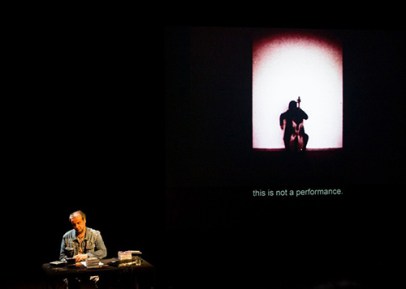
Rabih Mroué has written the script that Yasser actually performs — in Arabic, with subtitles and accompanying visuals on a large screen centerstage. Both language and visuals serve as the playwright’s tools to undermine the naive unification of what is represented with reality.  To what extent are these Yasser’s autobiographical memories, in sync with the “I” onstage who re-enacts them through narrative?  Should we understand Yasser to be representing or playing “himself”? How much is fantasy?

Through most of the show, Yasser is stationed at a desk downstage right (reminiscent of Spalding Gray). From there, casually dressed, he operates a complicated regimen of discs and tapes: a turntablist spinning memories. His voice is beautifully hypnotic, his Arabic flowing with elegant rhythms and poetic clarity. (The title Riding on a Cloud apparently comes from one of Yasser’s poems.)

But on occasion Yasser unpredictably abandons the role of performer and walks behind the screen, reappearing as a spectator of its images, of the stage. This juggling act between inside-out, role playing and reality, gives Riding on a Cloud a subtle, quizzical tone that’s best reflected by the often silent, attentive audience. We are given no cues to guide us to the “appropriate” response (which, in theater-as-entertainment typically manifests in the catharsis of corporate laughter as a relieving signal that “we get it”).

Throughout the piece are woven more abstract, non-narrative segments that give a taste of Mroué’s other projects as a video and installation artist. (Riding on a Cloud just appeared at the Walker Art Center in Minneapolis and was performed last year at MOMA in New York City, which earlier exhibited his pigmented inkjet prints The Fall of a Hair: Blow Ups drawing on cell phone images of violence.)

We see a sequence of TV screen snow shots, all the more mesmerizing in their variety: random “noise” usually left to be ignored, that here suddenly seems to offer an important clue, if only we could unlock its meaning…. Is this the image of the representations Yasser confronted after his injury?

In another memorable image, a video close-ups on a piano keyboard as five fingers painstakingly pluck out a slow melody. Its simplicity evokes the radical concentration of Arvo Pärt.

By its nature Riding on a Cloud provokes an uneasiness — the show is driven by a series of questions that beget more questions in their wake — but Mroué leavens this remarkable material with a welcome blend of warmth, humor, and humility.

The effect overall is marvelously liberating: as the artist points out in a recent interview, when we are forced to question everything, to meet reality (including ourselves) as a stranger, that means we have to abandon cliches and stereotypes as well. “You have to introduce yourself to yourself again.”

(C)2016 Thomas May. All rights reserved.


Filed under: On the Boards, review, theater

Arresting Aristos Make for a Fine Figaro

Shenyang (Figaro) and Nuccia Focile (Susanna) (c) Jacob Lucas

Shenyang (Figaro) and Nuccia Focile (Susanna)
(c) Jacob Lucas

Aidan Lang, head of Seattle Opera, reveals his talents as a stage director in a fresh and engaging interpretation of Mozart’s comic masterpiece. 

The buzz around Seattle Opera’s new Figaro is that it offers audiences here their first chance to see company chief Aidan Lang in his guise as stage director. This production originated to much acclaim in 2010 at New Zealand Opera, which Lang helmed until 2013. The current season is his second since succeeding Speight Jenkins as general director at Seattle Opera.

continue reading

Filed under: Mozart, review, Seattle Opera

Guest Review: Salzburg Christmas Concert

250px-Paul_Hindemith_1923                

Paul Hindemith

London- and Seattle-based Tom Luce contributes the following review:

Faith, Despair, and Blasphemy: An Interestingly Different Salzburg Christmas Concert

Though Salzburg, Mozart’s birthplace, ultimately drove the young composer away, the city has built a major tourist industry on its connection with him. Wherever you go, there are chocolate Mozarts and much touting of concerts of his music, even outside the prestigious Summer Festival or the “Mozart Week” each January.

In the run-up to Christmas in Salzburg, however, Mozart has to compete with two other icons. Most prominently, of course, there is the founder of the feast whose birth is celebrated with the full traditions of Austrian Catholicism — services, carols, and readings in the many churches and Christmas markets in every available city square. But, because he too hailed from the locality, there is also Joseph Mohr, author of the iconic carol “Stille Nacht, heilige  Nacht.’’  

It is this carol, usually sung with feeling, musical finesse, and at moderate volume levels, which dominates Christmas music in Salzburg’s public places. Those who in the festive season need constant and much louder reminders of jingling bells, reindeers with unusual aids to navigation, and White Christmas fantasies would be badly deprived in this city: For others it is a welcome refuge.

But on a visit a few days ago, it was music of a different stamp which provided my wife and me with our most profound cultural experience. We discovered — by chance because there seemed to be little publicity — that the student orchestra and vocal students from the Mozarteum, the distinguished local music conservatory, were  to give a concert (on 11 December) featuring music by Frank Martin, Alban Berg, and Paul Hindemith.

The programme was seasonal in being throughout concerned with the Christian religion, but hardly in a predictable way. It got off to a doctrinally orthodox start with Martin’s Six Monologues for Baritone and Orchestra, composed to texts from Jedermann — a reworking by Hugo von Hofmannsthal of the medieval English mystery play Everyman. This moving sequence takes a searching soul from fear of death through repentance to forgiveness through faith. It was followed by Alban Berg’s Three Fragments from Wozzeck (Marie’s admiration of the Drum Major in Act 1, her despairing invocation to the Virgin Mary in Act 3, and the opera’s concluding tragic passacaglia and bleak ending with her poor child abandoned). Finally, we had a semi-staged performance of Hindemith’s one-act opera Sancta Susanna, the story of sex in a nunnery which ends with the heroine snatching the loincloth from the figure of the crucified Christ and, to cries of “Satan” from her horrified conventual sisters, inviting eternal punishment. This iconoclastic work, in spirit as well musical style the opposite of Puccini’s saccharine Suor Angelica, created a great scandal when first given in 1922 and drew from the Vatican a complaint of blasphemy.

The programme was given to a very high standard. The orchestra’s delivery of these extremely demanding scores displayed great accomplishment. The vocal parts were sung with distinction: Fernando Araujo was the fine baritone in the Martin piece, Meredith Hoffmann Thomson made a deeply moving Marie, and Elizabeth de Roo and Julia Rath very successfully took the two main parts in the Hindemith opera. Hans Graf, formerly Music Director in Houston and now the Mozarteum’s chief conducting professor, presided inspirationally. The concert was to be repeated the next day, with student conductors and different student soloists.

On the showing of this ambitious concert, programmed with brilliant originality and superbly performed, the City of Salzburg, or at least its conservatory, maintains and continues to develop a musical culture of formidable professionalism, breadth of outlook, and openness of mind which may be truer to the legacy of its most-famous musical son than most casual tourists would realise when contemplating the conventionally bewigged and elegant figure represented on the chocolate Mozart wrappings.

–Tom Luce

Filed under: review

Aurora chorealis: Seattle Pro Musica

Encountering a concert as imaginatively programmed as this makes you wonder why so many resign themselves to the same old boring, predictable holiday music rituals year after year. Leave it to Seattle Pro Musica (SPM) to design a yuletide concert replete with ear-opening discoveries. Billed as Northern Lights, the programme celebrated the winter spirit with a survey of choral music from Scandinavia and the Baltic countries, much of it by contemporary composers.

continue reading

Filed under: choral music, review

Archive

Enter your email address to follow this blog and receive notifications of new posts by email.