MEMETERIA by Thomas May

Music & the Arts

Seattle Opera’s Nabucco Falls Flat

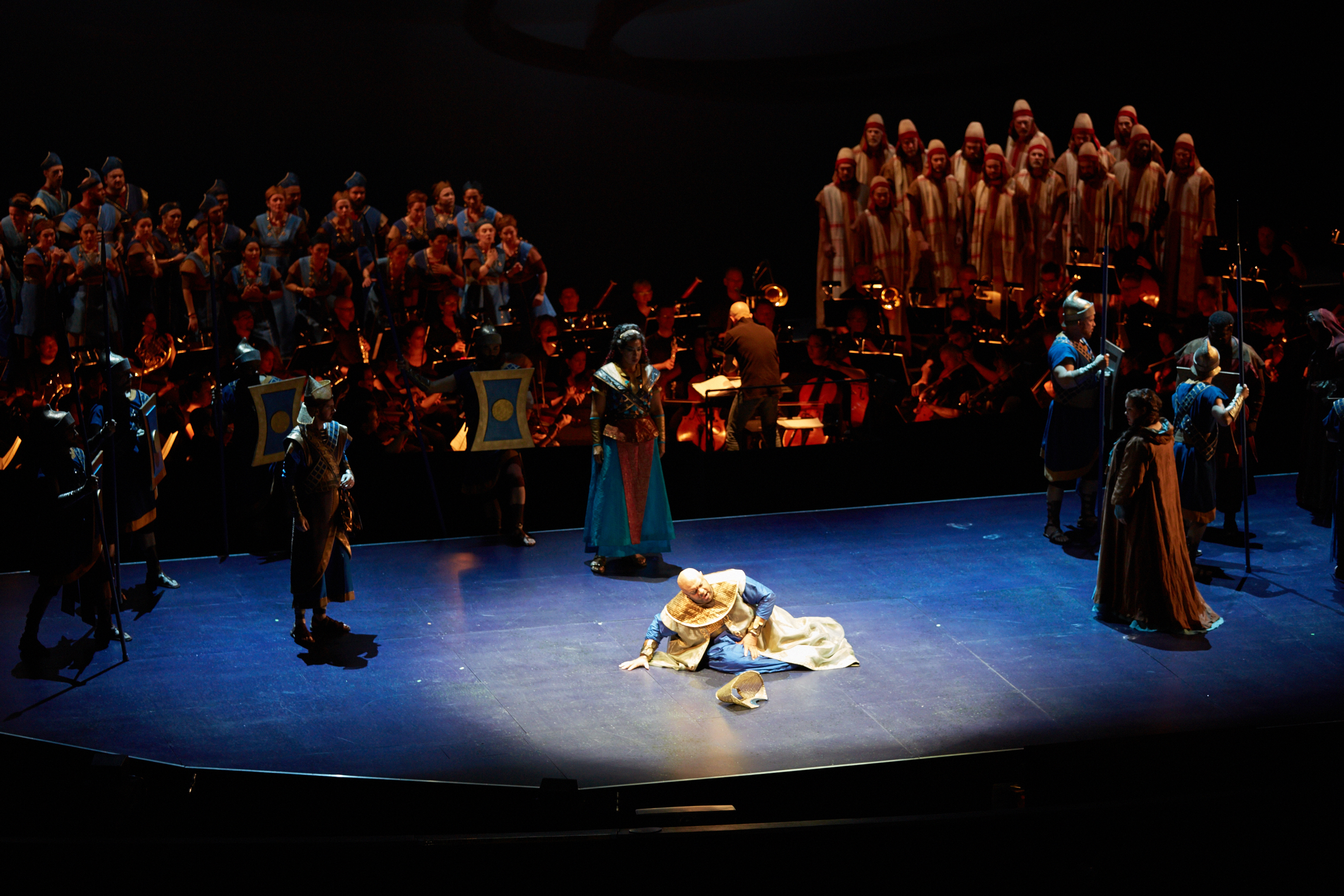
The cast and orchestra of Seattle Opera's Nabucco. © Philip Newton

The cast and orchestra of Seattle Opera’s Nabucco. © Philip Newton

My Bachtrack review is now live.
(I think I managed to catch all the autocorrects that
were turning “Nabucco” into “Nabisco.”)

On paper, Seattle Opera’s new production of Nabucco sounded enticing. General Director Aidan Lang generated buzz about the ‘innovative staging concept’ we should anticipate for the company’s first-ever presentation of Verdi’s third opera. Seattle Opera had meanwhile undertaken a rebranding effort that included a design facelift of its website to emphasise large, bold visuals — with billboard-style tags announcing Nabucco: ‘BETRAYED’ ‘TWISTED’ “EPIC’.

continue reading

Filed under: directors, review, Seattle Opera, Verdi

The Standard Rep at Santa Fe Opera: Summer 2015

Alex Penda as Salome; photo © Ken Howard for Santa Fe Opera, 2015

Alex Penda as Salome; photo © Ken Howard for Santa Fe Opera, 2015

Along with my Cold Mountain coverage, here’s the round-up review of three opera productions I wrote for Musical America, in the order in which they impressed me: Salome, Rigoletto, and The Daughter of the Regiment). (Sorry for the paywall, which prevents me from presenting the whole text here.)

SANTA FE — With the world premiere of Cold Mountain and the announcement of a newly commissioned opera about Steve Jobs by Mason Bates, Santa Fe Opera has been in the media spotlight over the past week. The company is also emphasizing its versatility in this summer’s three productions of familiar fare.

continue reading

Filed under: directors, Donizetti, review, Richard Strauss, Santa Fe Opera, Verdi

Cold Mountain Almost Reaches the Top

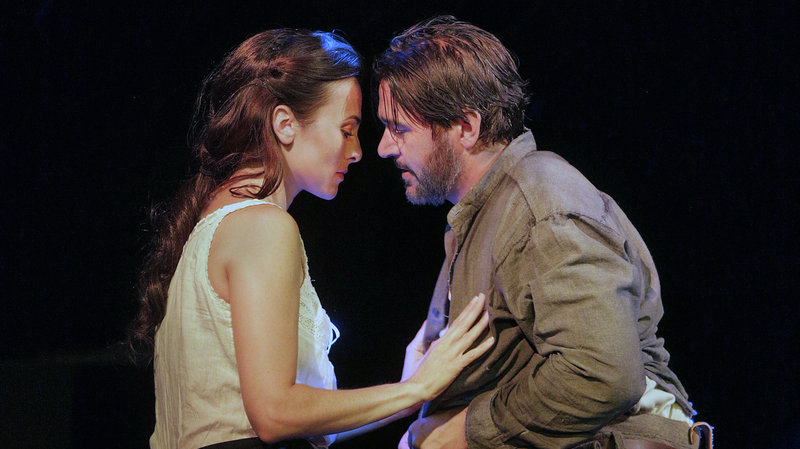
Isabel Leonard (Ada) and Nathan Gunn (Inman); photo by Ken Howard/courtesy of Santa Fe Opera

Isabel Leonard (Ada) and Nathan Gunn (Inman); photo by
Ken Howard/courtesy of Santa Fe Opera

The world premiere of the opera Cold Mountain by composer Jennifer Higdon and librettist Gene Scheer took place this past Saturday at Santa Fe Opera. My review has now been posted on Musical America. I can only give a brief snippet of the review here, which is behind Musical America‘s paywall:

SANTA FE — The event that’s been generating the biggest buzz this summer at Santa Fe Opera is Cold Mountain, which received its world premiere over the weekend. For Jennifer Higdon’s debut opera, set to veteran librettist Gene Scheer’s adaptation of the much-acclaimed Charles Frazier novel, the company has assembled a thrilling cast of principals and a first-rate production team.

continue reading

Filed under: Jennifer Higdon, librettists, new opera, review, Santa Fe Opera

Some Rarities from Tennessee

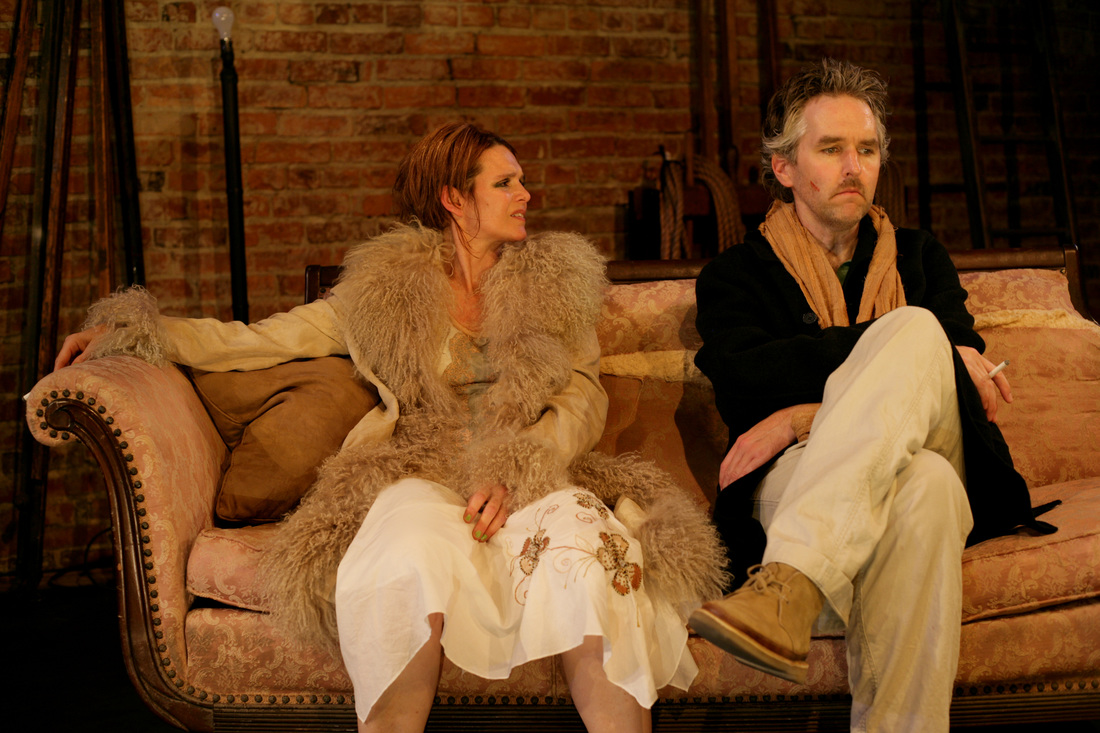
Robin Jones and Sam Read; photo (c) Mike Hipple

Robin Jones and Sam Read; photo (c) Mike Hipple

It happens that two rarely produced plays by Tennessee Williams have been presented this summer in Seattle — and merely by coincidence, as far as I know, by two entirely different groups. They follow on director Kurt Beattie’s staging of Cat on a Hot Tin Roof for ACT’s 50th anniversary season in spring, which emphasized the bigness of the play.

If the set design’s hints of Big Daddy’s generous portion of land — the irretrievable Eden — suggested those larger, mythic themes amid the naturalistic ambience of the Cat production, Orpheus Descending ventures much further out in that direction, employing a diffuse, associative narrative strategy that makes its stretto-like moments of tension all the more melodramatic (on the surface, that is).

The 1957 Orpheus is a bold choice for Intiman Theatre to launch the 2015 Festival — particularly in director Ryan Purcell’s staging at 12th Avenue Arts (closes August 2), which refuses to smooth over but actually underlines how Williams’s stagecraft here flouts conventions and flirts with excess. (After all, the play’s earlier incarnation as Battle of Angels was a famous flop for the playwright back in 1940, before his breakthrough arrived with The Glass Menagerie.)

Purcell focuses his attention sharply on the issues related to the construction of identity in the suffocating small-town Southern atmosphere in which Orpheus plays out: with real payoff when it comes to the miasma of racism that is hardly dated from Williams’s 1950s.

Here, the actors’ gender and race don’t necessarily align with those of the characters they represent — to powerful effect for the pivotal role of Lady Torrance, who is mprisoned in her marriage to the murderous racist Jabe (Max Rosenak, toxic even as an ailing old man). Lady is played by the wonderful Ugandan-born actress Kemiyondo Coutinho with a haunting blend of sass and fatalism.

She and Elise LeBreton (as another town outcast, Carol Cutrere) are especially outstanding in conveying an impression of deeply individual personalities struggling not to be entombed by their surroundings. The cast also works well as an ensemble to project the community’s palpably malignant aura, their gossip generating a never-ending hum of suspicion and resentment.

There’s a fundamental weak link, though, in Charlie Thurston as the invading Orpheus figure who shakes up the town and rekindles Lady’s hopes for liberation. He projects a personality too sensitive and withdrawn to account for the electric effect the Elvis-like Val is seen to have when he arrives. And too much of the substance of Williams’s great arias gets thrown away for an effect here or there: the famous legless bird speech never really takes off.

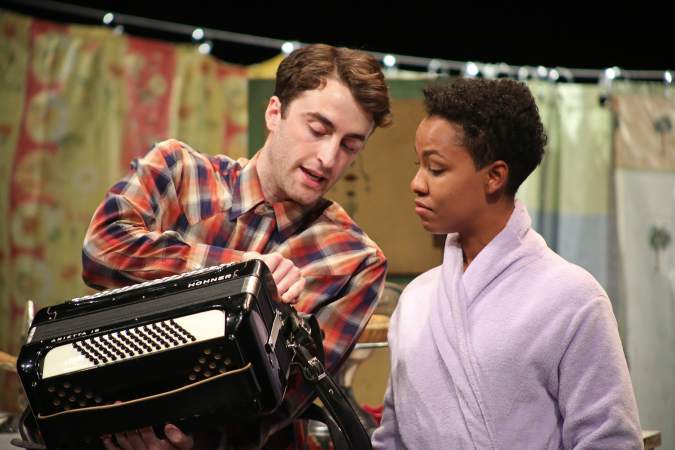
As an amusing side note, Purcell’s choice to substitute an accordion for the guitar with which Williams arms his hero seems to have baffled some as “illogical” — but it seems fairly clear that this is just another bit of commentary on the way roles are created, the semiotic dissonance further highlighting Williams’s exploration of how identities and patterns get collectively reiterated.
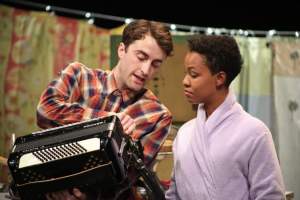
Charlie Thurston as Val Xavier and Kemiyondo Coutinho as Lady; photo by Jeff Carpenter

Charlie Thurston as Val Xavier and Kemiyondo Coutinho as Lady; photo by Jeff Carpenter

Purcell likewise seeks to recalibrate audience perceptions by encouraging movement to new vantage points in the three-quarter seating arrangement (which for the third act include a center platform around which spectators were invited to sit). The conventions of the theatrical experience get further spotlighted just as Williams’s dramaturgy begins to tighten into a more “conventional” plot knot and crisis (which does involve some questionable rewriting of the actual script for the horrific conclusion).

All told, it’s a thought-provoking, often moving experience that works only partially but is mindful of Williams’s experimental audacity — an aspect that often gets short-changed when evaluating this playwright, and that caused no end of misunderstanding from critics and audiences during his life.

Purcell has a smart and sensitive grasp of the richness of Williams, so I’m eager to see what he and his Williams Project do in their next adventure.

Orpheus is at least better known than The Two-Character Play, so of course I jumped at the chance to see the latter as staged by Civic Rep (at the New City theater space until August 1). Like Orpheus, The Two-Character Play stretches across a long span of Williams’s life and was presented in two different versions onstage as he continued to struggle with the material.

The cliché — which has been predictably repeated in a few reviews I’ve seen — would have us believe that poor Tennessee was too boozed up, drugged out, and just too damn depressed in his final decades, that he couldn’t match the earlier masterpieces: the old “there are no second acts” charge (as the frequently misused Fitzgerald phrase goes).

And The Two-Character Play (eventually premiered as such in 1975) is an unfortunate example of an aging, addicted, angst-ridden playwright who’d lost his touch — so goes the conventional wisdom.

In fact, for all its flaws — and flaws seem to be essential to its underlying philosophy of drama — The Two-Character Play actually has links back to the white-hot period of Williams’s creativity in the 1950s and, more importantly, manifests his restless search for new dramatic forms and modes of revelation. Williams himself deemed it his “most beautiful” play after Streetcar.

Much of what people complain about with the “he was too drunk and high” line comes down to the fact that Williams refused to repeat past formulas here, that he wasn’t trying to write another Streetcar (which Civic Rep staged as their inaugural production in January — and which I unfortunately missed). Civic Rep’s approach to The Two-Character Play, directed by L. Zane Jones, honestly tackles the difficulty of a piece of theater that denies the easy entrée of naturalism, of a storyline and characters with whom we can readily identify.

Sister and brother Clare and Felice are also trapped by roles and patterns, as in Orpheus — but now the focus is entirely internalized, a hell of the individual psyche. They are presented as actors who increasingly lose control as they attempt to control the success of their upcoming performance during a tour — a performance of a show titled The Two-Character Play.

Williams crafts a mise en abyme of identity, framing this piece of metatheater as a metatheatrical reflection — which is nicely captured by Thorn Michaels’ ghostly lighting and Angie Harrison’s “behind the curtains” design with its real and imagined entrances and exits. Audience “involvement” is encouraged in this case by Jones’s placement of the spectators on opposite sides (sidewise) of the action, so that reactions from other audience members become an integral part of the staging: yet another type of mirroring. Andy Swan’s sound design evokes hazy memories that jumble uneasily together.

By still further coincidence — or is it synchronicity? — a third group, Seattle Theatre Works, just closed its run of Luigi Pirandello’s Six Characters in Search of an Author, as adapted and directed by Daniel Tarker. The aims and world views of both playwrights differ profoundly, though there is a shared flash of Twilight Zone weirdness in the way the situations are set up in both (more so in the Pirandello).

But both deal with characters trapped by roles they are somehow forced to play. The six characters who appear suddenly in Pirandello are condemned to a kind of eternal return, replaying the tragedy that has been imagined for them, but knowing what is to come now each time they replay it. In his intricate reflections on the play and production (well worth reading), the Seattle writer Omar Willey remarks that points to “an unevenness of tone in the production” as to whether the play is ultimately a comedy or a tragedy or “somewhere between.”

A similar issue of tone — how much is camp, how much is “real emotion” — arises with performing The Two-Character Play. Making it even more challenging for the cast of two, there is no countervailing group of people from “normal reality” (Pirandello’s theater company members) as a sort of gauge.

As the two characters, Robin Jones and Sam Read sustain the suspense of gradual revelation of the past trauma that has scarred them, playing out a fugue of despair as relentlessly encroaching as the coming dusk. The sense of an ending — an ending dreaded and yet desired — hovers throughout in Williams’s text of this, his final full-length play.

In her earlier moments, Jones plays amusingly but also provocatively with the “type” of the volatile actress ready to fly off into a rage, while Read is reminiscent of a tormented figure from Edgar Allan Poe. They seek to escape their condition, as Page declares, “There’s no such thing as an inescapable corner with two people in it.” In The Two-Character Play the redeeming Eros of Orpheus has been replaced by the shared tragic connection of a pair of siblings. Or is hell really “les autres”?

“To think of The Two-Character Play as belonging to the tradition of a play-within-a-play would be a mistake,” observes dramaturg Thea Cooper in her lucid program note. “This play is more along the lines of an authorial confession than a demonstration of clever literary architecture. It shares more artistic DNA with Ionesco and Albee than with Shakespeare or Shaw. It may be the least contrived of all of Williams’s work, more about unmasking than masking…. Ultimately, this is a play about questions rather than answers. Like life itself, it is a narrative that one experiences rather than understands, at least in the moment.”

(c)2015 Thomas May. All rights reserved.

Filed under: review, Tennessee Williams, theater

Thielemann’s Bayreuth Ring

ring

The Bayreuth Festival season is approaching, so I dug up an old review (published on Artsatl.com) of Christian Thielemann’s Bayreuth Ring from 2008, which originally came out on Opus Arte:

It’s no coincidence that the technologically forward-looking Opus Arte — an early adopter of the high-definition DVD and Blu-ray formats — here documents the current Bayreuth “Ring” via good old-fashioned CDs. In fact, this set marks the company’s first foray into the CD market. The stage direction by octogenarian German playwright (and opera novice) Tankred Dorst, which revolves around the idea of the modern and mythological worlds coexisting in parallel universes, has gained few fans since the production was unveiled in 2006. Instead, the real buzz around this “Ring” has focused on what Thielemann and the orchestra accomplish.

continue reading

Filed under: Bayreuth Festival, review, Ring cycle, Thielemann, Wagner

A Gorgeous Chamber Music Première in Seattle

Steven Stucky; photo (c) 2005 Hoebermann Studio

Steven Stucky; photo
(c) 2005 Hoebermann Studio

Along with its mix of well-known and unusual repertoire, the Seattle Chamber Music Society annually commissions a brand-new work for its Summer Festival. Monday evening’s programme unveiled the selection for 2015: Cantus by the Pulitzer Prize-winning composer Steven Stucky, who has gained prominence primarily as an instrumental and choral composer. (His first opera – a brilliantly witty yet at the same time touching one-act buffa to Jeremy Denk’s libretto improbably “dramatising” Charles Rosen’s The Classical Style – will receive its full stage première next week at the Aspen Festival.)

continue reading

Filed under: American music, Brahms, chamber music, commissions, Mendelssohn, review, Seattle Chamber Music Society, Steven Stucky

An Unusual and Moving Evening at Seattle’s Summer Chamber Music Festival

Nicholas Phan

Nicholas Phan

New Bachtrack review:

The second week of the Seattle Chamber Music Society’s month-long Summer Festival concluded with a programme that – as the two earlier concerts that week had similarly done – expanded perceptions of the notion of chamber music itself by including works that cross over the instrumental divide and call for voice.

continue reading

Filed under: Britten, chamber music, James Ehnes, review, Seattle Chamber Music Society, Strauss

Kafka’s The Trial in Seattle’s Ellis Island

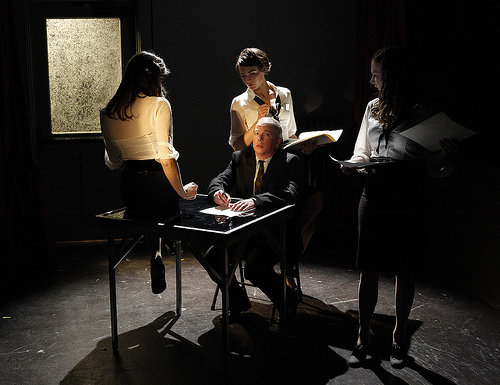
Greta Wilson, Sara Mountjoy-Pepka, Sydney Andrews, and Darragh Kennan in The Trial; photo credit: Chris Bennion/New Century Theatre Company

Greta Wilson, Sara Mountjoy-Pepka, Sydney Andrews, and Darragh Kennan in The Trial; photo credit: Chris Bennion/New Century Theatre Company

Coming up early next month is a workshop of a new chamber opera by Sarah Mattox, Heart Mountain, presented by Vespertine Opera Theater. This will take place in the site-specific space of the repurposed INS building in Seattle. Here’s a piece I wrote a couple years ago about another theater work that made use of that space for an adaptation of Kafka’s The Trial:

Arbitrary, inscrutable bureaucratic authorities with the power to determine individual fates. The tension of not knowing. The cruelly frustrating uncertainty of the whole process. In spite of the trappings of reality, life’s daily rituals twisted into a surreal waiting game.

That’s an impressionistic précis of Franz Kafka’s The Trial in the brand-new theatrical adaptation currently being presented by New Century Theatre Company. But it could also describe what generations of immigrants who hoped to become U.S. citizens experienced while being detained in the former Immigration and Naturalization Service (INS) Building located south of the ID and east of Century Link Field.

continue reading

Filed under: review, theater

Morlot’s intimate view of Mahler’s panoramic Third in Seattle

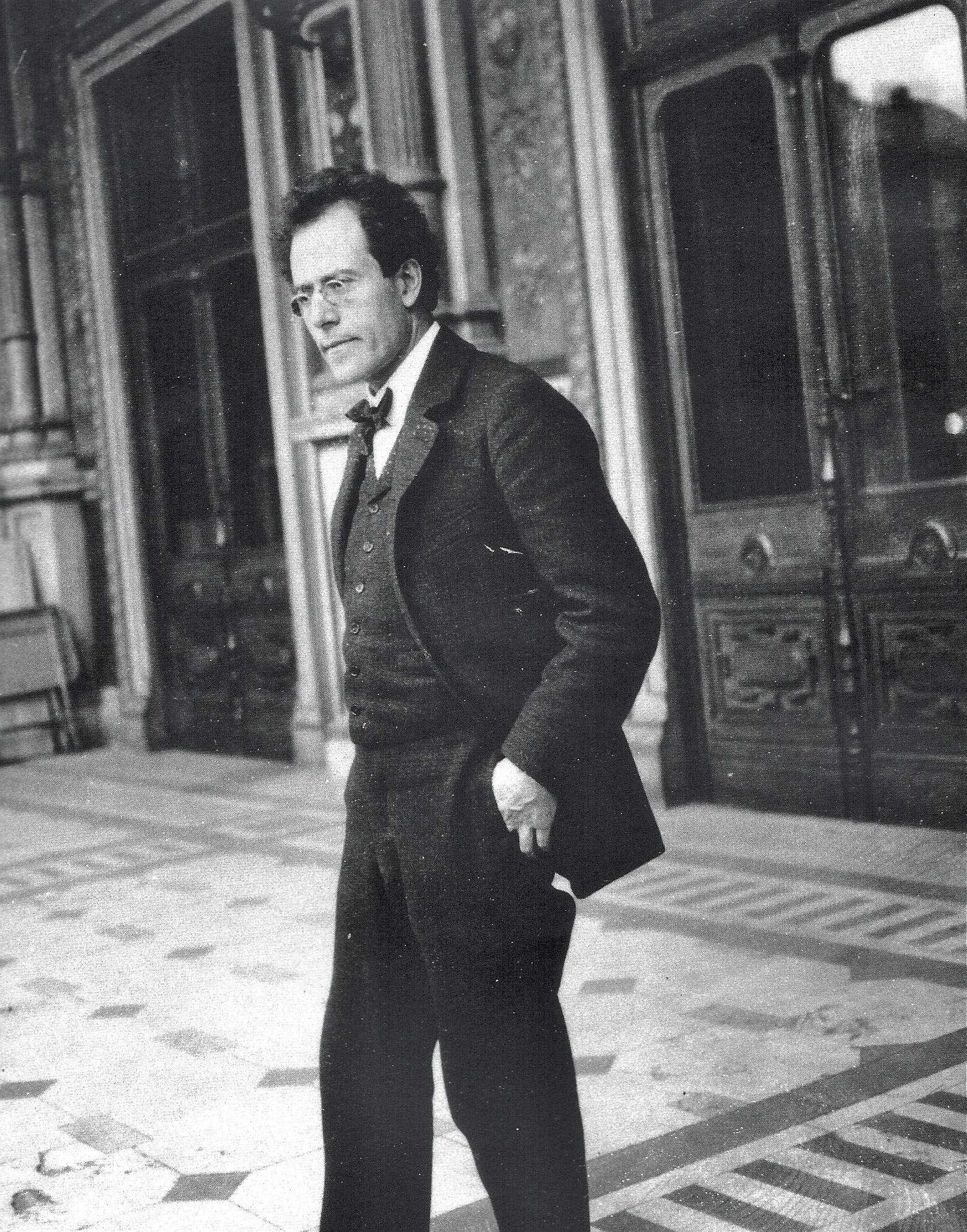
Mahler

My latest review has now been posted on Bachtrack:

With the seemingly boundless D major chord that ends Mahler’s Third Symphony as final benediction, the departing audience encountered a series of suspended chimes in gentle tintinnabulation: part of a recent installation in Benayoya Hall’s grand lobby by Trimpin, Seattle Symphony’s composer-in-residence.
continue reading

Filed under: Ludovic Morlot, Mahler, review, Seattle Symphony

Glas Reflections: Akropolis Performance Lab

Joseph Lavy; photo (c)  Joe Patrick Kane

Joseph Lavy; photo (c) Joe Patrick Kane

It takes a little more effort than usual if you want to arrange to see the current offering from Akropolis Performance Lab: but then, APL is hardly your regular evening of theater. Founded by Joseph and Zhenya Lavy in 2000, APL draws inspiration from the experimental legacy of Jerzy Grotowski and the like. And that bit of extra effort, in my opinion, is certainly worth making.

Now playing at APL is a peculiarly fascinating piece titled The Glas Nocturne. Instead of relying on conventional marketing, APL has allowed news of the production to spread by word of mouth and social media — in fact they’ve generated buzz by keeping the performance location “undisclosed” to the public.

You have to visit their website and express interest in being one of ten (max) lucky audience members to be invited for a given performance, which APL describes as “a speakeasy-styled adventure.” (It’s up to the invitees to choose whether to make a donation as well.) As of today, my understanding is that the run has been extended until 7 June.

The Glas Nocturne is co-artistic director Joseph Lavy’s dramatic adaptation of the scandal-causing, much-abused novel Doktor Glas, which Swedish writer Hjalmar Söderberg published in 1905. Lavy and Annie Paladino are the show’s co-directors. The novel, written as a first-person narration/confession, revolves around the ethical dilemma the eponymous physician faces when a beautiful young patient — with whom Dr. Glas has fallen in love — confesses her disgust for her repulsive older husband, the Reverend Gregorius. And, as Margaret Atwood remarks in her introduction to an English translation of Söderberg’s novel, the tormented narrator knows all too well that he’s “the last person on earth who should have been a doctor.”

The scene is of course set for a murder, but that’s only one of the issues confronted in Lavy’s fine-spun, suspenseful condensation of the novel’s musing on moral codes, eros, the longing for transcendence (Dr. Glass’s first name is Tyko — as in Tycho Brahe), and the oppression of women.

The resulting 90-minute monologue mixes Freudian psychology with the painfully refined decadence of Huysmans — all garnished with a taste of Ingmar Bergman-tinged despair. It makes for a dangerously riveting cocktail. (And if you do go, and are served one of Lavy’s personally crafted “Norwegian Blonde” cocktails after the performance, don’t be surprised if you eye the tempting potion with a barely perceptible tiny shiver of anxiety.)

Physical acting is a crucial aspect of Grotowski’s theatrical technique, and Joseph Lavy builds a good deal of his character interpretation from non-verbal cues and gestures: the way he washes his face in a pitcher of freshly poured water, convulses in an agony of sexual despair, or — most chillingly of all — indicates his faked reading of a grave heart condition when Dr. Gregorius pays him a visit.

Joseph Lavy; photo (c)  Joe Patrick Kane

Joseph Lavy; photo (c) Joe Patrick Kane

As for the text, Lavy commands the art of transition in gating the audience through Dr. Glas’s abrupt mood swings, his high intelligence leavening the potential heaviness with the kind of black humor Dostoevsky exploits in Notes from the Underground. Like many a narcissist, Dr. Glas is also an artist manqué, and his odes to nature and childhood are strewn with just enough self-consciousness to inject a slight note of parody.

Punctuating Lavy’s ruminations and rituals is the musical commentary supplied by an ensemble of women. Their “choral” interpolations give voice to the soundtrack of Dr. Glas’s raving mind, for which Zhenya Lavy has devised a neat succession of traditional Scandinavian folk songs and a handful of piano nocturnes she herself plays.

Much of the fun comes from sharing this experience on such on intimate level, with a very small group of fellow guests. Is it just coincidence that another of my most resonant theatrical experiences of late in Seattle involved an audience of at most 20 viewers?

At any rate, I’m now hooked and can’t wait to see APL’s next major production, which is reported to be an original work based on the Faust myth as retold by Marlowe, Goethe, and Thomas Mann (Ecce Faustus). Stay tuned to see this in February 2016.

If you miss the run of The Glas Nocturne, APL plans to bring the piece back for periodic showings over the course of the next year (with showings planned in October and in December as well).

September promises a remount of their re-worked version of Pomegranate & Ash. And APL additionally offers a series of quarterly Sunday Salons — the next one is planned for July 26.

The Glass Nocturne, adapted by Joseph Lavy and co-directed by Lavy and Annie Paladino, plays until June 7. Information on how to apply for an invitation here.

(c) 2015 Thomas May – All rights reserved.

Filed under: review, theater

Archive

Enter your email address to follow this blog and receive notifications of new posts by email.