
Here’s my review for Musical America of the American premiere of Kaija Saariaho’s final opera, Innocence, which was presented by San Francisco Opera this month:
Filed under: Musical America, review, Saariaho, San Francisco Opera

June 24, 2024 • 11:29 am Comments Off on The Pain and Insight of Saariaho’s “Innocence”
Here’s my review for Musical America of the American premiere of Kaija Saariaho’s final opera, Innocence, which was presented by San Francisco Opera this month:
Filed under: Musical America, review, Saariaho, San Francisco Opera
June 17, 2024 • 3:47 am Comments Off on Adams’s Early Masterwork “Harmonium” Strikes a Chord in Seattle
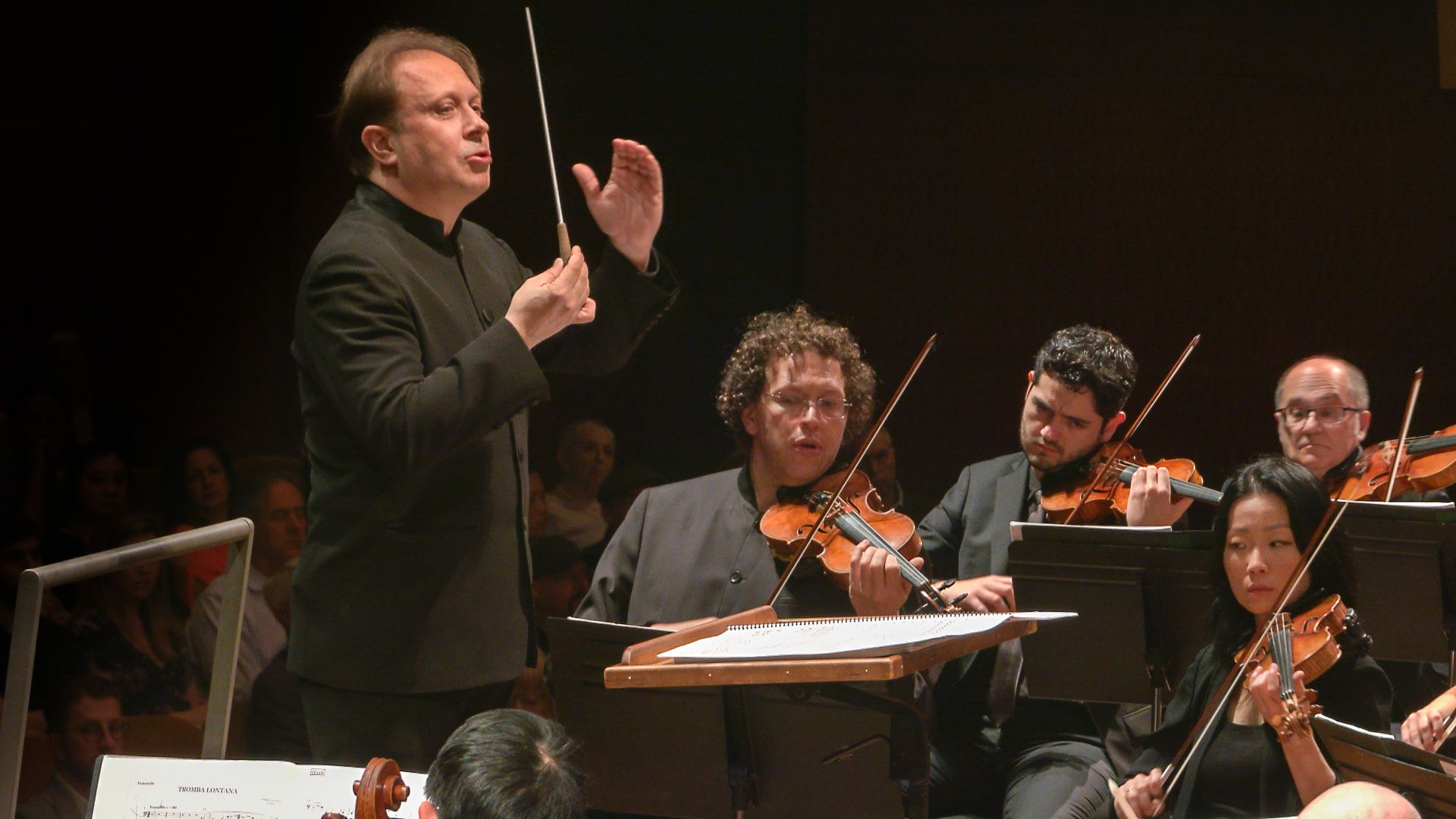
For their second-to-last program of the season, the Seattle Symphony added John Adams’s early breakthrough Harmonium to its repertory with a breathtaking performance led by Conductor Emeritus Ludovic Morlot. During the 1970s, Adams had been building a reputation as an experimental composer doing his own thing in the Bay Area. He had become an advisor on contemporary music to the San Francisco Symphony’s then-music director Edo de Waart and received a commission to write a big choral-orchestral piece to help the orchestra celebrate its first season in Davies Hall, SFO’s new home across the street from the War Memorial Opera House. The premiere in April 1981 was a sensation that launched Adams on his path toward international stardom.
In his guise as a conductor, Adams has paid multiple visits to Seattle to lead the musicians in various of his own compositions and regards the SSO as “an excellent orchestra.” So it was especially satisfying to finally hear the collective forces of the SSO and its Chorale perform this pivotal work from more than four decades ago for the first time.
As it happened, I’d just come from hearing the original septet version of Adams’s 1978 piece Shaker Loops the week before at the Ojai Music Festival (performed by members of the visiting Mahler Chamber Orchestra, with fresh birdsong obbligato from the trees surrounding the outdoor Libbey Bowl). Adams had adopted the idioms of Minimalism in his distinctive, “impure” way in Shaker Loops and does something similar in Harmonium, but working for the first time with the much larger canvas of symphony orchestra and chorus. It was interesting to notice that some of the DNA of Shaker Loops is still present in varied form in Harmonium. At the same time, aspects of the signature language Adams would go on to develop (mostly orchestral, but in some respects choral as well) also appear in this score — certain timbral gestures from the tuned percussion, a shine that anticipates Grand Pianola Music (1982), or the stirring choral “pillars” found in the operas.
But the very fine performance led by Morlot kept me from falling into the trap of viewing a great artist’s early work merely contextually, as a launching pad toward future greatness. Harmonium proved completely compelling on its own terms, a splendidly structured choral triptych that conveys states of transcendence, serene contemplation, and unbridled joy.
Adams initially considered setting texts from the Wallace Stevens collection called Harmonium and then thought of writing for a wordless chorus, relying on their pure sounds, before he found a basis for what he imagined — “human voices — many of them — riding upon waves of rippling sound in John Donne’s “Negative Love” and two poems by Emily Dickinson: “Because I Could Not Stop for Death” and “Wild Nights.”
Morlot showed his sensitive understanding of Adams’s dramatic use of sudden harmonic modulations — at this stage in his career, the composer had been likening it to the process of “gating” in electronic music — and shaped the sense of progressive revelation via negation in the opening Donne section with a tenacious clarity.
The Chorale, excellently prepared by Joseph Crnko, encompassed an enormous sonic spectrum, from mystic whispers to ecstatic, Whitmanesque yawping that sent shockwaves crashing through Benaroya Hall. (Fittingly, the concert had begun with Tromba lontana, an “anti-fanfare” from 1986 in which the composer uses a pair of trumpets to sound an elegiac rather than military mood, calling to mind Whitman’s poem “The Mystic Trumpeter.”) Adams’s guiding image of surging waves of sound came to life most thrillingly in the final “section”Wild Nights” movement, a drastically contrasting juxtaposition with Dickinson’s death meditation preceding it.

One of the most unforgettable moments in Harmonium is the seamless transition between the polar Dickinson poems, in which Adams builds up an irresistible, orgiastic flow of momentum. Beethoven’s Fifth Symphony, which occupied the second half of the program, happens to offer a plausible parallel in the musical “tunnel” that interlinks its last two movements.
Curiously, the program on which Harmonium was given its world premiere in San Francisco also involved a Beethoven pairing: in that case, with the Emperor Piano Concerto No. 5 — a work whose aura Adams confronted the next year in his wonderfully over-the-top Grand Pianola Music. On this occasion, Morlot — in his first reunion with the SSO since the sadly under-attended opening night of the season last September — approached the Beethoven with a clear sense of proportions and architecture. And with a bigger, more-rounded sound overall than in his Beethoven interpretations of several years ago, when he was music director.
Morlot held back from imposing an “interesting” perspective on the score, following Beethoven’s command of a single eighth-note rest between the first two statements, for example. He followed all of the repetitions — including, a bit surprisingly, even in the Scherzo. Still, the vision that emerged was more finale-centric, it seemed to me, with the terseness of the opening movement as a mere station on the way forward rather than an existential state. Despite brisk tempi, Morlot shaped the eccentrically long-spun melody of the Andante’s main theme with style and drew a magnificent dark sheen from the strings in particular, with bold strokes in the finale.
If aspects of the Scherzo felt understated, Morlot steered clear of the feeling of anti-climax that deflates so many renditions of the finale. The return of the ominous Scherzo music actually felt surprising, and the insistent paragraphs of C major brought to mind something of the French Revolutionary era music that was a clear inspiration for the young Beethoven.
review (c) 2024; all rights reserved Thomas May
Filed under: Beethoven, John Adams, Ludovic Morlot, review, Seattle Symphony
May 23, 2024 • 12:30 pm Comments Off on Extreme States: Yuja Wang’s Kaleidoscopic Recital in Seattle

My review of Yuja Wang’s recital at Benaroya Hall last Friday evening has been posted here:
It would be facile to suggest that the program Yuja Wang chose for her North American tour this spring was intended to display her astounding versatility – a versatility that is merely one manifestation of the artist’s virtuoso showmanship….
Filed under: Alexander Scriabin, Chopin, Debussy, Olivier Messiaen, pianists, review
May 18, 2024 • 1:29 pm Comments Off on Gemma New’s Welcome Return to Seattle

A few weeks ago, Gemma New led the Seattle Symphony in an interestingly unusual program centered around Vaughan Williams’s Antarctic Symphony. The New Zealand-born conductor made an unexpected return visit this past week, when she agreed to take on another guest program in lieu of Elim Chan, who had been originally scheduled to make her debut with the orchestra but canceled owing to a family emergency.
New had just the week before stepped in for Marta Gardolińska at San Francisco Symphony — where, as in Seattle, she took on the program that had been announced, with no changes. That remarkable confirmation of New’s versatility and grace under pressure enhances her already impressive profile.
Thus New opened the first night of Seattle Symphony’s program (17 May) with a contemporary piece she had to learn under extra pressure: Unsuk Chin’s Subito con forza. The piece — so texture- and idea-rich that the term “concert opener” really doesn’t do it justice — was one of the many commissions around the (ill-fated) Beethoven anniversary year in 2020 for compositions reflecting in some way or other on the legacy of Beethoven.
Chin has described Beethoven as “the first consciously modern composer, in the sense that every piece asked for original solutions, even if this meant breaking through existing forms.” She adds: “What particularly appeals to me are the enormous contrasts: from volcanic eruptions to extreme serenity.” Subito con forza — meaning “suddenly, with power,” a phrase in the style of a Beethovenian musical indication such as “Allegro con brio” for the first movement of the Fifth Symphony — abounds in eruptions and contrasts. The opening gesture, for example, alludes to the Coriolan Overture and then explodes into a parallel but unfamiliar universe of chiming percussion and extended technique and quickly gutters into ghostly shiverings on the strings.
Seeming to explore untapped potential or multiple other directions Beethoven might have followed with his raw material, Chin’s approach differs in fascinating ways from Jörg Widmann’s Beethoven homage Con brio. New elicited a sense of the incandescent fire of Chin’s imagination, harnessed through the composer’s formidable orchestral technique.
It made for a wonderful companion piece to the second half of the program, the Symphony No. 1 by Beethoven himself. The audience was treated to an engrossingly fresh account that conjured a sense of the young composer bursting with ideas and the passion to stake his claim. New avoided the temptation to play up Beethoven as an eccentric flouting convention, which made his surprise moves in this work all the more effective, from the harmonic detour of the opening measures and the dam-rupturing energy of the extended coda in the first movement to the teasing, step-by-step presentation of the finale’s main theme.
The conductor’s style of sweeping, balletic gestures signaled the mellifluous, fully layered sound she elicited from the orchestra, with careful attention to dynamics and inner lines, but nothing over-polite or smoothed over. New was particularly sympathetic to the wit and humor of Beethoven’s First and — abetted by the Benaroya Hall acoustic — emphasized a somewhat brighter sonority overall, with Alexander White’s trumpet part always clearly discernible. She aligned the double basses in a curious configuration on stage left, divided into two subsections stretching to the wall. I couldn’t quite notice a difference in the sound, but I assume it supported a particular balance she was looking for. New left a vivid impression of having something to say with this familiar rep, and I’m eager to hear more Beethoven from her.

The program also offered an account of the Samuel Barber Violin Concerto featuring Jame Ehnes, one of the piece’s most eloquent advocates today. Any chance to hear Ehnes is to be cherished, but this performance struck me as particularly special, with the violinist adding a darker perspective to the work than I’ve heard before. The unwavering technique and consistently beautiful phrasing were there, but Ehnes touched on a more tragic than consoling aspect to Barber’s long-limbed lyricism.
Oboist Ben Hausmann — who also deserves kudos for his significant role in the Beethoven symphony — set the tone for the Andante with a solo of heartrending sincerity, while Ehnes countered with a melody of his own that seemed to have been generated in the moment. The Andante also allowed him to display the full richness of his 1715 “Marsick” Stradivari’s lower range. The frenzied virtuosity of the brief, perpetual-motion finale takes a drastically different turn from the preceding movements but felt like a necessary counterpart to so much lyrical effusion. New gave the orchestra a good deal of leeway, which, aside from a few issues of balance, encouraged an especially engaging rapport with the soloist.
Ehnes offered a substantial encore with his account of Eugène Ysaÿe’s single-movement Sonata No. 3 in D minor for solo violin, matching passion with flawless technique for this music clearly close to his heart.
Review (c) 2024 Thomas May
Filed under: Beethoven, conductors, James Ehnes, review, Seattle Symphony
May 8, 2024 • 4:39 pm Comments Off on Striking Gold in Seattle

Wrapping up a rich and lively weekend of music in Seattle, Víkingur Ólafsson paid a visit to Benaroya Hall on Sunday afternoon May 4 for a program solely devoted to J.S. Bach’s “Keyboard exercise, consisting of an ARIA with diverse variations for a harpsichord with two manuals” — or, as posterity knows the work, the Goldberg Variations.
Seattle was the latest stop on the Icelandic pianist’s current world tour of the work, which comprises no fewer than 88 concerts, in homage to the number of keys on the modern piano (quite a few more than the 54 keys of Bartolomeo Cristofori’s original “gravicembalo” or the 60-something keys Bach was used to when playing one of his harpsichords).
As Ólafsson explained to the culture journalist Paul Hodgins, the fact that he turned 40 this year inspired him to think up “thinking that I wanted to have a “a different kind of touring season. I thought, ‘What if I do a whole world tour with the Goldberg Variations and challenge myself, hopefully to keep renewing myself and finding … new truth in this work — do 88 variations on these 30 variations and try to try to find something unique each night?’” In reality, demand has been so high that Ólafsson has ended up extending the number up into the 90s.
But once the Seattle audience had settled into place — an impressively large gathering for a solo recital on a Sunday afternoon — and the boyish-looking Ólafsson strolled out onto the lonely stage, it was as if he were confronting his awe at this colossal monument for the first time.
Nothing could have been further removed from the routine or predictable. Even though the basic outlines of his interpretation of the Goldbergs are available from the DG recording he released last October — coming in at about 74 minutes total — he radiated such presence and intensity in this live performance that he gave the impression he had only just arrived at his understanding of the work and its interconnections.
Indeed, it would be fascinating to compile the pianist’s observations throughout his odyssey, following each performance, of what struck him as unique or different in that particular iteration, in that specific exchange with the audience.
At the same time, the signatures of Ólafsson’s style were there, presented with compelling grace and concentration. His first statement of the Aria was like gifting a troubled world with an object of pellucid, crystalline beauty, each note value and ornament having its raison d’être. Throughout, Ólafsson chose subtle rather than flamboyant alterations in the repeats — variations of the variations — that heightened the sense of mindful attention his performance encouraged.
But there was no dearth of drama, signaled already by the leap into Variation 1, following the mood carefully established by his phrasing of the Aria: an abrupt intrusion of velocity that audibly took the breath of some in the audience. As if to say that the peaceful quietus mimicked by the final cadence of the Aria’s return in its first statement was an illusion, now the business of living begins, the whirlwind of experience.
I could single out numerous specific reactions and associations set loose by each station on Ólafsson’s journey — that overused metaphor for music-in-action, virtually impossible to avoid in this case. His way of slowly dialing up the weight of a bass line on its return, the exuberant, life-affirming trills of Variation 14, the shock of the first turn to a full variation in the minor in No. 15, itself dwarfed by the seemingly inextricable situation of tragedy in the Adagio Variation No. 25 — Wanda Landowska’s famous “black pearl” — which, in Ólafsson’s hands, fell just short of ten minutes by the clock but seemed an eternity of wandering in a labyrinth of grief.
I’m well aware of the critiques of Ólafsson — not a few of which seem to make a great deal out of the non-musical topic of the photo essay accompanying the DG recording, with its mannered poses and hand displays waiting for a contemporary Rodin to sculpt. It’s no surprise that Bach’s 1741 masterpiece provokes such intense and contradictory responses and defenses. This is a work that reminds us of what is really at stake when music matters.
For my part, I failed to see Ólafsson’s choices as a display of self-indulgence or arbitrary exaggeration. Instead, I was won over by his ability to encompass so many shades of emotion and states of being while deploying the most extraordinary technique. I relished his deeply songful legato lines and transformation of toccata display into unfettered joy. With his magician-like hand-crossing and suspended right-hand gestures, the visual dimension also fascinated. My only question, not even necessarily a quibble, was the degree to which Ólafsson seemed to rely on the pedal for his legato bliss and tonal mixings.
The Quodlibet was vigorous and hearty, but instead of leading to the moment of final reassurance, the Aria’s return came shrouded in melancholy or even a touch of disbelief — is this all our experience amounts to? Unlike Marx’s notion of recurrence a second time as “farce,” Ólafsson’s has spoken of the Aria’s comeback as a tragic moment: “And that’s what (we feel) collectively when we have that moment together. The aria comes back, and then we lose it again. It’s one of the most tragic moments in music. Not because the music sounds so tragic, but because we feel our own impending death. It is going on without us.”

Yet there is optimism in the endurance of Bach’s own work, which the Thomas Cantor described as “composed for connoisseurs, for the refreshment of their spirits.” Ólafsson, in his essay accompanying the album, resorts to the metaphor of “a grand oak tree, no less magnificent, but somehow organic, living and vibrant, its forms both responsive and regenerative, its leaves constantly unfurling to produce musical oxygen for its admirers through some metaphysical, time-bending photosynthesis.”
At the end of it all, Ólafsson acknowledged the several rounds of applause with self-effacing sincerity, pointing gratefully to the Steinway. With no apparent depletion of the energy with which he had first beelined his way there an hour and a quarter before, he explained why an encore simply wasn’t in the works (though I’ve seen reports of an occasional encore offered in other venues on this tour): “There’s already an encore built into the Goldbergs, with the repeat of the Aria. And if I played that again, I’d have to continue with the first variation, and the second, and … We’d still be here for awhile….”
Ólafsson also mentioned how happy he was to be in Seattle, since it have him a chance to reunite with a former classmate at Juilliard who had been a source of inspiration: Seattle Symphony concertmaster Noah Geller.
A couple days before, on Friday evening (May 2), Geller had been in the spotlight as the curator and featured artist of the SSO program Noah Geller’s Playlist — the last in a new series this season that has also featured such artists as Mahani Teave and Conrad Tao.

Played without intermission and with SSO reduced to a chamber size ensemble, the concert was filled with delights from start to finish — and offered yet more music of Bach. Geller was joined by principal second violinist Elisa Barston as co-soloist in Bach’s Double Violin Concerto in D minor, BWV 1043 — which Geller characterized as “the happiest that D minor has ever been made to sound.” The highlight of their account was the lyrically urgent Largo (in F major), while the fast outer movements flowed with overlapping waves of energy.
If Bach creates the illusion of a unified mega-instrument from the two soloists — Geller and Barston playing off each other with stylishly expressive flourishes — the great sonatas and partitas fashion a mirage of plurality from the solo instrument. Geller later played as an encore a heartfelt, deeply touching account of the Andante from Bach’s Sonata No. 2 in A minor for solo violin.
It followed his marvelously satisfying interpretation of the last and most-popular of Mozart’s canonical violin concertos, K. 219 in A major. SSO assistant conductor Sunny Xia elegantly guided the sonic balance. Geller seemed to be revisiting the hallucination of an idyll that had been imagined by his first, quasi-“slow motion” appearance in the opening movement, free this time to ponder its meaning at ecstatic length and singing high above the ensemble voices with sweet but never syrupy tone. He showed swashbuckling virtuosity in particular in the speedy section of the curiously constructed Rondeau finale. The entire piece emanated personality and multifaceted charm.

Between the two repertoire items, Geller selected a new piece by the composer Samuel Carl Adams. Hailing from Berkeley (where his famous father, John Adams, resides), Adams is of late a locally based artist, having moved to Seattle with wife Helen Kim, SSO associate concertmaster. Composed in 2018, Movements (for us and them) is composed for string orchestra with a concertino string quartet (Geller did not perform here).
It was an inspired choice, juxtaposing the shifting textural currents of Bach’s concerto grosso format and Mozart’s solo concerto plot with a richly reimagined drama of single and collective voices. A composer whose textural innovations are matched by a solid understanding of architecture and long-range form, Adams found inspiration in the Italian writer and journalist Italo Calvino’s Six Memos for the New Millennium (planned as part of the Charles Eliot Norton Lectures at Harvard). Movements pulsates with exciting rhythmic layering and polyphonic bounty, reflecting the composer’s desire to explore “cooperation and fluidity” in musical terms.
(c)2024 Thomas May All rights reserved
April 26, 2024 • 11:33 am Comments Off on “El Niño” Arrives at the Met: Fresh and in Full Flower

My Musical America review of the Metropolitan Opera’s new production of John Adams’s El Niño has now been posted:
NEW YORK—At the end of El Niño’s opening chorus, during the transition to the Annunciation scene, the orchestra begins to vibrate in steadily intensifying waves of ecstatic energy—a moment of sonic transfiguration that is one of the signatures of the composer John Adams. …
Filed under: directors, John Adams, Metropolitan Opera, Musical America, review
April 19, 2024 • 10:11 pm Comments Off on Guest Appearances by Shiyeon Sung and Alisa Weilerstein with Seattle Symphony

Thursday evening’s program with Seattle Symphony brought the season’s latest guest conductor, Shiyeon Sung, whose international career took off when she won the Sir Georg Solti International Conductors’ Competition in 2007. Typically introduced as the first female conductor from South Korea to achieve international renown, Sung brought musical intelligence and sensitivity to her collaboration with the players, beginning with an effervescent account of Carl Maria von Weber’s Oberon Overture.
Jeff Fair’s evocative “magic horn” call established the wonderland atmosphere of early German Romanticism, and Benjamin Lulich followed suit with his beautifully shaped clarinet solo. A few balance issues with the strings aside, Sung brought out the blend of wonder and zestful joy of Weber’s fine score from his last opera, which was written in English for the London stage and premiered in 1826 (the year of Mendelssohn’s Overture to A Midsummer Night’s Dream).
The evening’s other guest was the intrepid cellist Alisa Weilerstein (who made her belated Seattle Chamber Music Society debut last summer with memorable results). Performing as the soloist in Witold Lutosławski’s Cello Concerto is about much more than a fearless display of virtuosity. Clad in vivid red, Weilerstein inhabited the role of Lutosławski’s determined, feisty, and ultimately transcendent solo protagonist with passion and persuasiveness, underscoring the piece’s riveting theatricality.
Incredibly, this marked the SSO’s first-ever performance of the landmark concerto written by the Polish composer in 1970 for Mstislav Rostropovich. Weilerstein made a powerful case for the work, whose four movements unfold without a pause and call for strenuous, nearly continuous participation from the soloist. It is up to the cellist, for example, to hold our attention in an opening soliloquy lasting several minutes. Lutosławski indicated that this passage should be played “indifferently,” even frivolously, but Weilerstein intensified the suspense, her repeated D’s implying a ticking time bomb that is eventually set off by the brutal interruption of the brass.
At the same time, the cellist tapped into a deeply Romantic reserve of soul-stirring expression for the cantilena’s lyrical refuge. Always, though, Weilerstein projected a bravely independent and defiant persona, whether with insouciant pizzicatos or in her vertiginous flights in the uppermost register. The conductor is at times relegated to overseeing traffic control and cueing the aleatoric orchestral responses. Shiyeon Sung led the orchestra sympathetically, giving ample rein to the soloist. After the orchestra’s monstrous, full-force chord near the end, Weilerstein emerged in the epilogue with renewed energy and insistence, a voice crying out against the collective insanity.
As an encore, Weilerstein turned to her recent preoccupation with Bach’s Cello Suites (cf. her Fragments project), offering a moving interpretation of the Sarabande from Suite No. 4 that was especially notable for its unusual degree of probing fragility.
The program’s second half was devoted to Dvořák — the under-programmed Sixth Symphony of 1880, to be precise. Shiyeon Sung showed herself a wonderful colorist in possession of an admirable technique, eliciting Dvořák’s ingratiating blends of woodwinds with sensitivity and refinement, especially in the Adagio. The elegantly controlled diminuendo she shaped near the end of the first movement illuminated a major turning point in the symphonic journey before the concluding flare-up to full, joyful sonority. Rollicking energy dominated, as it should, in Dvořák’s scherzo, its furiant syncopations defiantly exuberant despite the minor key. Rambling detours make the finale the weakest part of the Sixth and pose a challenge to the conductor, but Sung guided the SSO through its leisurely musings with a sense of purpose.
Review (c) 2024 Thomas May
Filed under: Antonín Dvořák, conductors, review, Seattle Symphony
April 15, 2024 • 2:08 pm Comments Off on Kahchun Wong and Seattle Symphony Tackle Mahler’s Third

My review for Classical Voice of Kahchun Wong’s return engagement with Seattle Symphony to conduct Mahler’s Third:
SEATTLE — In 2016, Kahchun Wong’s final hurdle before taking first prize in the Gustav Mahler Conducting Competition was to win the jury over with his interpretation of Mahler’s Third Symphony. The conductor reaffirmed his special connection to the work that helped launch his international career during his return engagement with the Seattle Symphony. In the first of three performances of Mahler’s Third, on April 11, Wong reached and sustained a peak of mutual understanding with the musicians for which our era seems to have lost the vocabulary — words like “sublime” having long since gone out of style.
Filed under: Mahler, review, Seattle Symphony
March 25, 2024 • 9:52 am Comments Off on Vänskä and Trpčeski Make an Incandescent Match with Seattle Symphony
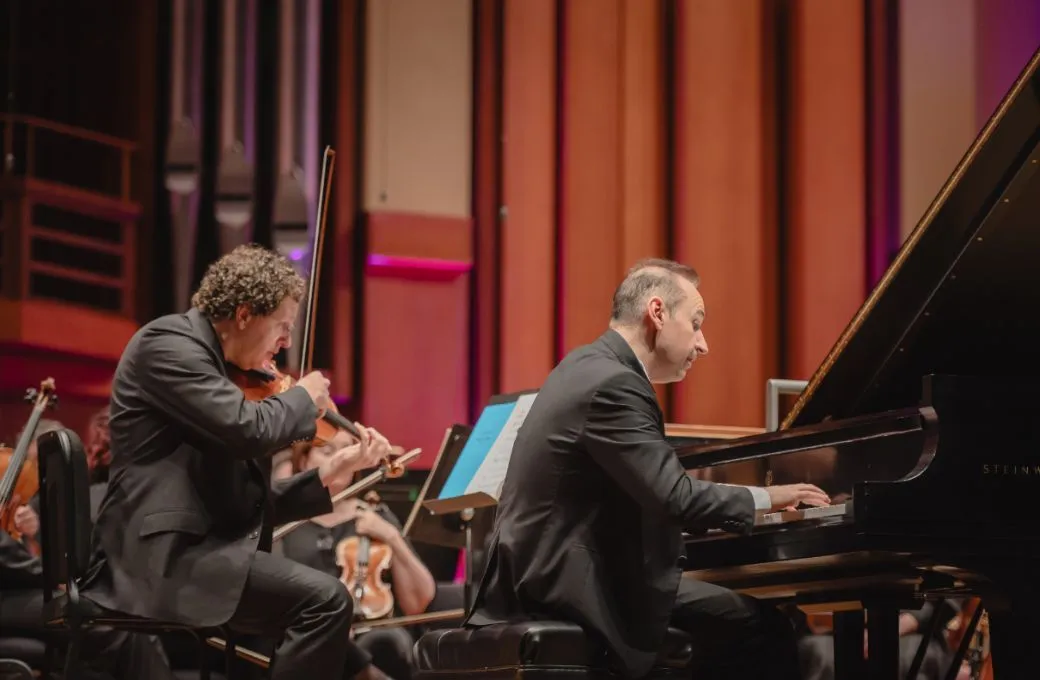
My review of the SSO’s latest program has been posted:
Any suspicions that the best-loved piano concerto in the repertoire might sound routine or stale were dispelled from the outset in this performance by Simon Trpčeski, by turns majestic, heaven-storming, intimate, dreamy and terpsichorean. The Macedonian pianist immediately warmed to the orchestra and audience, bringing an intensity of focus and purpose to his interpretation. …
Filed under: pianists, Prokofiev, review, Tchaikovsky
March 22, 2024 • 12:23 pm Comments Off on Lessons in Chemistry: The Complete Etudes of Philip Glass by Five in LA

An unforgettable evening this week spent with the Complete Etudes of Philip Glass, presented by Pomegranate Arts at Walt Disney Concert Hall as part of the Los Angeles Phiharmonic Green Umbrella series:
LOS ANGELES — The tradition of etudes for solo piano, by definition and connotation, evokes a single performer embarked on a Gradus ad Parnassum, a lonely and sometimes Sisyphean pilgrimage toward elusive perfection.
Filed under: Los Angeles Philharmonic, Philip Glass, piano, review
 Arts & Culture Stories from NPR
 MEMETERIA by Thomas May