MEMETERIA by Thomas May

Music & the Arts

The Death of Klinghoffer at the Met

Reposting this since the opening is just few days away.

Thomas May's avatarMEMETERIA by Thomas May

ENO-Klinghoffer

Here’s my recent essay for the Metropolitan Opera’s Season Book on the most controversial opera of the season:

Behind the Headlines
In the world of opera, it’s common for a new work to take some time to establish its place in the repertoire. Just think of Così fan tutte, written in 1790 but largely ignored until the mid-20th century, or Les Troyens, which didn’t reach the United States until more than a century after its composition. A generation has passed since the 1991 premiere of John Adams’s second opera, The Death of Klinghoffer, but for the most part the work is still known solely by its controversial reputation. Apart from that original production, only two other full stagings have been seen in the U.S., and both of these took place within the past three years (at Opera Theatre of Saint Louis in 2011 and Long Beach Opera in spring 2014).

View original post 2 more words

Filed under: Uncategorized

Built-In Beauty

The Seattle Architecture Foundation’s new season has begun. Current tour schedules listed at http://seattlearchitecture.org/tours

Thomas May's avatarMEMETERIA by Thomas May

Photo by Monique Blanchard Photo by Monique Blanchard

My latest piece for City Arts :

The Smith Tower celebrated its 100th birthday earlier this month, and to mark the architectural anniversary visitors were able to enjoy the Tower’s Chinese Room and the vistas from the Observation Deck for the original admission price collected in 1914—a budget-busting 25 cents.

Of course, Smith Tower is always just “there,” part of the ever-present scenery of daily life in downtown Seattle. Maybe on your checklist of show-off-the-city items for visitors. But try for a moment to ignore the familiarity of icons like this.

Because architecture is so integrated into our everyday patterns, it’s easy to take the urban landscape for granted—buildings, facades, interiors, walkways, skylines—yet at the same time they profoundly influence the way we experience those everyday patterns, at however unconscious a level.

It’s the mission of the Seattle Architecture Foundation (SAF) to “awaken people to these…

View original post 50 more words

Filed under: Uncategorized

Lucerne’s Lion Monument – with Pig

IMG_1336

No reference I’ve ever seen to the popular tourist attraction known as the Löwendenkmal (Lion Monument) in Lucerne fails to trot out the quote by Mark Twain claiming this is “the most mournful and moving piece of stone in the world.” He also wrote this, in the same book (A Tramp Abroad):

The Lion lies in his lair in the perpendicular face of a low cliff — for he is carved from the living rock of the cliff. His size is colossal, his attitude is noble. His head is bowed, the broken spear is sticking in his shoulder, his protecting paw rests upon the lilies of France. Vines hang down the cliff and wave in the wind, and a clear stream trickles from above and empties into a pond at the base, and in the smooth surface of the pond the lion is mirrored, among the water lilies.

Around about are green trees and grass. The place is a sheltered, reposeful woodland nook, remote from noise and stir and confusion — and all this is fitting, for lions do die in such places, and not on granite pedestals in public squares fenced with fancy iron railings. The Lion of Lucerne would be impressive anywhere, but nowhere so impressive as where he is.

This massively proportioned monument is indeed an impressively stylized expression of a mode of tragic grief. It was designed by the Danish sculptor Bertel Thorvaldsen and executed by Lucas Ahorn in sandstone in a spot to the east of the Altstadt, with a pond situated below. The inscription reads HELVETIORUM FIDEI AC VIRTUTI (“[Commemorating] the loyalty and bravery of the Swiss”).

As for what it commemorates, the event wasn’t exactly politically correct among European liberals when it was unveiled in 1821, since the lion is a tribute to Swiss mercenary troops in the service of Louis XVI who were massacred by revolutionaries while trying to defend the Tuileries Palace in the insurrection in August 1792.

One intriguing detail about the sculpture is usually glossed over: why does the outline surrounding the lion figure seem to trace the shape of a pig, complete with pointy ears and snout? Do you see it here?

Luzern-lion

I’ve heard several possible explanations, but the most popular one is that it represents payback by the sculptor for being cheated by the town council out of the agreed-on payment for the commission. He’s memorializing a parody of them as pigs on top of the noble monument. Or perhaps, goes another theory, it’s a middle finger aimed at the French for this massacre. Or — certainly the least-fun theory — could it just be coincidence?

Filed under: Uncategorized

Seattle Mayor’s Arts Awards 2014: Stephen Stubbs

Congratulations to Stephen Stubbs, one of today’s recipients of the Mayor’s Arts Awards in Seattle.

Thomas May's avatarMEMETERIA by Thomas May

Stephen Stubbs Stephen Stubbs

My profile of Stephen Stubbs, one of this year’s recipients of the Mayor’s Arts Awards in Seattle, is now live on City Arts:

When he was coming of age in his native Seattle in the 1960s, Stephen Stubbs experienced a sea change in popular music that glorified the image of the troubadour. Countless musicians picked up a guitar, accompanying themselves to songs intended to be authentic, from the heart.

Stubbs was among them—only the instrument he was plucking was a lute. At Nathan Hale High School, Stubbs had belonged to a madrigal choir, which stoked his curiosity about Renaissance music.

continue reading

View original post

Filed under: Uncategorized

The Latest from Martin Amis

Amis

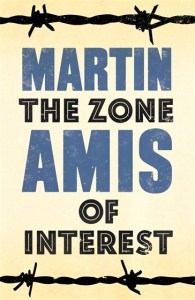
Last night I attended the reading by Martin Amis at this year’s edition of the Edinburgh International Book Festival. I haven’t had a chance yet to get to his latest novel, The Zone of Interest — from which Amis read an extended excerpt — but it sounds a good deal more substantial than Time’s Arrow from 1991, which also concerns the Holocaust.

Last night’s interview with Alan Taylor, editor of The Scottish Review of Books, included discussion of what drew Amis to such a bottomlessly grim subject, the virus of ideology vis-à-vis religion (and its contemporary manifestations, e.g., Isis), the insights of Primo Levi as a survivor, the writing process, the novelist’s famous “war against cliché” (with a brief excursion into Joyce, recapping some themes from his essays — such as a reading of Ulysses as essentially “about cliché”), and a brief tribute to Christopher Hitchens (by way of a joke that surely would have been more effective when stretched out in Hitchens’s characteristic manner).

There were some very thought-provoking reflections on the nature of evil, the terrible historical “fusion” that led to Hitler and the Nazis, and the impossibility of finding an “explanation.” Amis stated, “What I do reject is the claim that it’s easy to understand — that this kind of brutality and fanatical hatred is simply atavistic human nature at its root, waiting to come out.”

The subject was not one he “decided on,” Amis explained, referring instead to Nabokov’s notion of the “throb” — the moment of recognition an artist gets when it becomes clear that “here is something I can write a novel about.”

In his review, Taylor ventures that The Zone of Interest might be Amis’s “greatest book”:

What Amis has achieved through fiction is to illuminate that which history can only hint at. By and large, we do not know what those who prosecuted the genocide in the first half of the 1940s thought or felt. Their testimonies were compromised, their accounts self-serving, designed to save their skins or excuse the inexcusable. Like Doll, Rudolph Hoss, who was in command of Auschwitz for three years and who presided over the extermination of a quarter of a million people, was insensitive, apathetic and obsessed with notions duty and efficiency. Killing had no effect on him. Everything could be explained by quoting numbers. Amis puts us where we would rather not go, into the head of someone like him, someone emotionally dead, to whom life is actually meaningless.

Filed under: book recs, novelists, Uncategorized

Pick-Up Poetry

Thomas May's avatarMEMETERIA by Thomas May

"Back from the cordial grave I drag thee" “Back from the cordial grave I drag thee”

Poetry’s ties with romance are ageless, but nowadays the connection tends to evoke sappy clichés and, at worst, Hallmark card-style confections. So why not add some panache by filling your quiver with lines from the great poets?

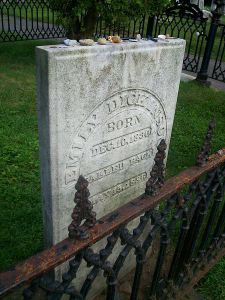
Or maybe not… Over at The Hairpin, Lizzy Straus recently compiled a list of first lines from Emily Dickinson poems not likely to be very useful as pickup lines. These especially should probably be excluded from your speed-dating repertoire:

144 – I never hear the word “Escape”
260 – I’m nobody! Who are you?
303 – Alone I cannot be
332 – Doubt me! My dim companion!
336 – Before I got my eye put out
339 – I like a look of agony
407 – One need not be a chamber to be haunted
456 – A prison gets to be a friend

View original post 113 more words

Filed under: Uncategorized

People Who Need People

Thomas May's avatarMEMETERIA by Thomas May

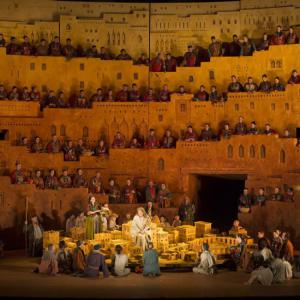
Carthage in Berlioz's Les Troyens: ROH production by David McVicar (photo: Cooper) Carthage in Berlioz’s Les Troyens: ROH production by David McVicar (photo: Cooper)

The science journalist Ed Yong sums up two recent studies showing the significance of social interconnection:

Now, two teams of scientists have independently shown that the strength of this cumulative culture depends on the size and interconnectedness of social groups. Through laboratory experiments, they showed that complex cultural traditions — from making fishing nets to tying knots — last longer and improve faster at the hands of larger, more sociable groups.

Psychologist Joe Henrich, lead author of one of the studies, brings up the implications of these findings for the Internet era:

“Innovations like literacy, writing and mail allowed us to access the thoughts of people in distant places and times,” says Henrich. “Extend that to the Internet, and things should only speed along even more.”

Jong points out an additional issue suggested by the two studies:…

View original post 151 more words

Filed under: Uncategorized

How Useless Is Poetry?

Thomas May's avatarMEMETERIA by Thomas May

Percy_Bysshe_Shelley

(Percy Byssshe Shelley, portrait by Alfred Clint, 1819)

Nowadays the received wisdom seems to follow the Oscar Wilde line — literally, that is, without his archness — that “all art is quite useless.” Especially when the art in question is poetry and, even more, music. This alleged uselessness is then either trumpeted as a glorious thing — a refuge from the brutal world of commerce — or turned into a weapon to arm Philistines (“uselessness” abused).

A recent example of the former strategy is the poet and scholar Meena Alexander’s musing, in an address to the Yale Political Union last April, that poetry stands apart from the everyday world of historical reality: “The poem is an invention that exists in spite of history. Most of the forces in our ordinary lives as we live them now conspire against the making of a poem.”

Noah Berlatsky challenges Alexander by arguing…

View original post 135 more words

Filed under: Uncategorized

Forever Young

Thomas May's avatarMEMETERIA by Thomas May

NYO14

My latest article for Listen magazine is now live.
This was an especially inspiring assignment. After another season of doom and gloom about the future of music, discovering how motivated these young musicians are — how determined to make the most of their gifts — gave me a real boost:

The inspiring players of Carnegie Hall’s National Youth Orchestra debunk the myth of the ‘death’ of classical music.

It’s a ploy that always generates controversy: announce the death of “classical music” (however you define it), furnish your obituary with a sauce of ominous statistics and watch your site traffic explode. Another death knell hit the blogosphere and Twitterverse this January, courtesy of a Slate article titled “Requiem: Classical Music in America Is Dead,” which came illustrated with a gray-haired conductor stationed in front of a tombstone. Predictably, the piece triggered a raft of
indignant but thoughtful counterarguments in response.

View original post 205 more words

Filed under: Uncategorized

Poetry’s “Thereness”

Thomas May's avatarMEMETERIA by Thomas May

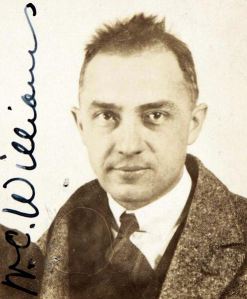
William Carlos Williams: passport photo, 1921 William Carlos Williams: passport photo, 1921

In “Reading the Difficult: A new critique of the New Criticism” – an article in this month’s Poetry magazine – Peter Quartermain reflects on the confounding “simplicity” of the kinds of poems that the New Critics disdained. With all their armory of explication de texte, interpretive analysis, and scansion exercises, they were at a loss when confronted with poems that don’t “care whether you are puzzled or not” but simply exist as “an event, and you can join it, take part in, or not.”

Especially in the case of the short poems of William Carlos Williams, there is an “implacability in the language that resists both paraphrase and explication. The language is so spare, the details so sparse, the statement so stubbornly there before the reader, uncompromising, that the reader’s knowledge cannot intervene, cannot interfere with the poem; indeed it renders that knowledge…

View original post 336 more words

Filed under: Uncategorized

Archive

Enter your email address to follow this blog and receive notifications of new posts by email.