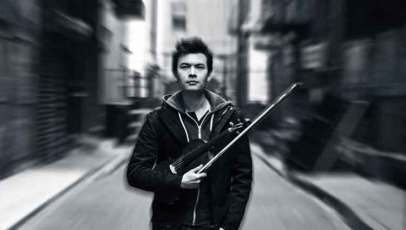
My new profile of pianist and composer Conrad Tao for Steinway is now online:
HIS NAME HASN’T changed, but mentally splicing the twenty-three-year-old Conrad Tao with the child prodigy who first came before the general public more than a decade ago is likely to make you do a double take.
Aurelia Florian as Violetta Valéry in Verdi’s “La Traviata.” Photo: Cory Weaver/San Francisco Opera
Part two of my reviews of San Francisco Opera’s fall season is now posted on Musical America:
SAN FRANCISCO—Along with a sensational production of Elektra , San Francisco Opera’s lineup so far this season is spotlighting some of the art form’s most gripping female …
It’s official: Thomas Dausgaard, the first name that came up as Ludovic Morlot’s possible successor, will become music director of the Seattle Symphony as of 2019. He has signed a four-year contract.
Thomas Dausgaard, currently SSO Principal Guest Conductor, was widely believed to be the conductor SSO management would tap, ever since Morlot announced he will step down at the end of the 2018-19 season.
My most recent review of Dausgaard in action with the SSO in an all-Strauss program is here.
Here’s the full press release from Seattle Symphony:
SEATTLE, WA – The Seattle Symphony announced today that Danish conductor Thomas Dausgaard will become the orchestra’s next Music Director, beginning in the 2019–2020 season. Dausgaard will succeed current Music Director Ludovic Morlot whose tenure concludes after the 2018–2019 season.
Dausgaard has served as the Seattle Symphony’s Principal Guest Conductor since 2014. Additionally, he is Chief Conductor of the BBC Scottish Symphony Orchestra, Chief Conductor of the Swedish Chamber Orchestra (through 2019), Honorary Conductor of the Orchestra della Toscana, and Honorary Conductor of the Danish National Symphony, having previously served as its Principal Conductor from 2004–11.
“For several years, it has been clear that Thomas’ partnership with our musicians is grounded in deep mutual respect and admiration,” commented Leslie Jackson Chihuly, Seattle Symphony Board Chair. “His deepening relationship with the orchestra has produced some of the most electrifying concerts we’ve heard in Benaroya Hall these last few years. His work has been a wonderful complement to Ludovic’s exemplary artistic leadership. Ludovic and Thomas share many creative instincts which have shaped and contributed quite naturally to the exciting evolution of our music making. Thomas is simply the right leader for the next step in our artistic development. We greatly look forward to welcoming him to our Symphony family, and we know he will bring profound inspiration and warmth to our community.”
“Making music with the Seattle Symphony is very special to me,” shared Dausgaard. “Their inspiring artistry fuses generosity, team spirit, devotion and abandon. The orchestra is supported by an equally passionate board and administration, as well as a tremendous audience in the beautiful and acoustically stunning Benaroya Hall. I love the city of Seattle and the great natural beauty of this magical part of the world. So it is with deeply felt joy and honor that I look forward to becoming Music Director of the Seattle Symphony. My warmest thanks to my distinguished predecessors who took the orchestra to its present excellence — and to everybody now asking me to take the Seattle Symphony into the future.”
“This is a joyful outcome for the Seattle Symphony!” added President & CEO Simon Woods. “Thomas Dausgaard has evolved through his career into an artist of extraordinary insight, with all the musical and technical skills to translate his ideas into the most inspired music making. His relationship with the Seattle Symphony goes back over a decade, and for him to move from Principal Guest Conductor to Music Director represents a kind of organic artistic progression that is rare and treasurable. With his highly individual approach to programming, his deep history with recording and his experience as music director with a number of important European orchestras, he is in every way imaginable the perfect fit for our organization.”
Thomas Dausgaard’s close relationship with the Seattle Symphony began in 2003 with performances of Nielsen’s Fifth Symphony, giving Seattle audiences a first glimpse of his creativity and dynamism. Dausgaard’s first season as Principal Guest Conductor in 2014–2015 was marked by a three-week Sibelius Festival which celebrated the composer’s worldwide 100th birthday with performances of all seven of his symphonies. Since then, Dausgaard’s exhilarating and propulsive interpretations of symphonies by Mahler, Nielsen and Rachmaninov have inspired both orchestra and audiences, leading The Seattle Times to write, “The results are thrilling, with completely involved musicians playing for an unusually attentive audience, and a conductor who is a passionate advocate for music that is unapologetically beautiful,” and in another review, “You can tell by the wild cheering emanating from Benaroya Hall: Thomas Dausgaard is back in town.”
In Seattle, Dausgaard has made a point of exploring the “roots of inspiration” for composers and immersing the audience in unique, contextual experiences. In past seasons this has included local Finnish choirs spontaneously rising up out of the audience to sing Finlandia to great emotional effect during the Sibelius Festival, a chorus of alphorns in the Samuel & Althea Stroum Grand Lobby pre- and post-concert to demonstrate the sounds that Strauss was influenced by when he composed the Alpine Symphony, and the Portland-based vocal ensemble Cappella Romana singing Russian liturgical music to introduce Rachmaninov’s Piano Concerto No. 1 and Second Symphony to show the undercurrent of Gregorian chant that Rachmaninov would have heard as a child in the Russian Orthodox Church. In the current season Dausgaard will conduct two subscription programs beginning with an all-Brahms concert in January including the Haydn Variations, select Hungarian Dances, Liebeslieder Waltzes and Symphony No. 2, and in June he will conduct Sibelius’ monumental choral symphony Kullervo, presented alongside performances of traditional music by Finnish folk musicians.
A champion of contemporary music, Dausgaard conducted the American premiere of Snow by British composer Helen Grime in June 2017. Snow is part of an ongoing series of commissions in a project devised and launched by Dausgaard titled “Scottish Inspirations” with the BBC Scottish Symphony Orchestra. Enjoying connections with many of the leading composers of today, Dausgaard maintains long-term associations with Magnus Lindberg, Per Nørgård, Bent Sørensen,Sally Beamish and Hans Abrahamsen, among others, and with the Swedish Chamber Orchestra he is currently engaged in leading an ambitious multi-season commissioning project taking its inspiration from J.S. Bach’s Brandenburg Concertos and featuring new work by Mark-Anthony Turnage, Olga Neuwirth, Anders Hillborg, Brett Dean, and American composers Steven Mackey and Uri Caine.
With over 70 albums to his name, Dausgaard joins one of America’s most recorded orchestras with its triumphant recent history including three Grammy Awards and rave reviews for many recordings on its own label, Seattle Symphony Media. Dausgaard’s projects with the Seattle Symphony include the 2016 live recording of Mahler’s Symphony No. 10 (performing version by Deryck Cooke), which was named Disc of the Year by Europadisc and nominated for a 2017 Gramophone Award with the review stating, “this exceptional issue from the Pacific Northwest ought to be a game-changer for all concerned.” Dausgaard’s latest Seattle Symphony Media live recording of Nielsen’s Symphonies No. 3, “Sinfonia espansiva,” and No. 4, “The Inextinguishable,” will be released on November 10. TheSeattle Timesreview of the Fourth Symphony from that performance included this description, “Dausgaard underscored the drama in the mighty outbursts from nearly every section; elegant descending passages in thirds, broad unison statements, mysteriously hushed string passages and a blazing finale.”
Thomas Dausgaard was selected as the Harriet Overton Stimson Music Director following a 6-month search by an 11-member search committee comprised of musicians, board and staff and chaired by Seattle Symphony Board member Paul Leach.
Christine Goerke; Photo: Cory Weaver/San Francisco Opera
New review for Musical America:
SAN FRANCISCO—“The museum is closing…” The Elektra presented as part of San Francisco Opera’s new fall season takes place in the midst of a fictional exhibition of Mycenaean-era artifacts. But this Keith Warner …
Chamber music is all about knowing how to forge close partnerships. For the world-renowned cellist Jan Vogler, that instinct includes connecting to artists beyond the classical-music sphere. But he didn’t expect a serendipitous encounter with Bill Murray to lead to one of the most innovative projects he has ever undertaken.
Seattle Symphony opening night, with conductor Pablo Rus Broseta and soprano Renée Fleming
On Saturday, Seattle Symphony kicked off its new season with special guest Renée Fleming. Associate Conductor Pablo Rus Broseta was on the podium, filling in for Music Director Ludovic Morlot (who was prevented by a leg injury from opening his seventh — and second-to-last — season helming the SSO).
Such affairs are often little more than a lightweight, pleasant upbeat to the season proper. But last night’s performance proved captivating throughout and contained several genuinely memorable moments.
Both halves of the program kept Fleming at the center of attention. The beloved soprano — who sang the National Anthem at the 2014 Super Bowl that brought the Seahawks victory — was in very fine voice indeed. To showcase different aspects of her artistry, she offered an unusual mixture that ranged from mid-century Samuel Barber to arrangements of songs by Björk and some little-known Italian gems from the late 19th century.
The Barber and Björk selections are paired on Fleming’s Distant Light album as well, released at the beginning of this year. Barber’s Knoxville: Summer of 1915 by itself became a compendium of Fleming at her most expressive: full tonal support, lush brushstrokes for sustained notes, and emotionally resonant phrasing were in generous supply, together with sensitivity to the nuances of James Agee’s text.
Drawing on all this, Fleming was able to shape the touching flashes of insight from a childhood recalled. Instead of the more comforting, lulling vision of bittersweet nostalgia for a vanished America, her account made it clear that this is a rare musical portrait of innocence dissected — an innocence that, as the musical element reinforces, can only be ephemeral.
Fleming followed this with a foray into a pair of songs by Björk, the adventurous, fantastically original Icelandic singer and songwriter. She sang “Virus” (from Biophilia) and “All Is Full of Love” (from Homogenic), creating a rapturous glow in the second. But even using a mic (though from what I could tell, there was no instrumental amplification), her middle voice occasionally become drowned by the rather gentle ambient orchestration.
The concert’s second half went completely Italian. Fleming gave charming introductions to the fare, which featured sun-dappled lyricism for Licinio Refice’s Ombra di nube (from her Guilty Pleasures album) and Tosti’s delectable Aprile, as well as the swooning fatalism of the famous avalanche aria from Catalani’s La Wally (an operatic death teasingly described by the soprano).
The highlight here was Fleming’s full-throttle version of “L’altra notte in fondo al mare” from Arrigo Boïto’s Mefistofele. She made the misfortunate Margherita’s roller-coaster ride of a mad scene stunningly vivid and perturbing, peppered with featherweight trills that sounded downright eerie in the context, all the more so for their technical finesse.
Leslie Chihuly (in her final season chairing SSO’s Board of Directors) announced the lineup of seven (!) new musician appointments with the SSO: Demarre McGill (returning as principal flute), John DiCesare (principal tuba), Emil Khudyev (associate principal clarinet), Andy Liang (second violin section), Danielle Kuhlmann (fourth horn), Christopher Stingle (second trumpet), and Michael Myers (fourth/utility trumpet).
All except McGill were able to participate in this concert, and there was a palpable sense of rejuvenating energy. Having profiled this talented young conductor for Musical America a year ago, I wasn’t at all surprised by how splendidly Pablo Rus Broseta acquitted himself of this high-stakes assignment.
Framing each half of the concert with a substantial overture — Barber’s Overture to The School for Scandal and Verdi’s to La forza del destino — Rus Broseta showed a remarkable command of small details that make big differences, as in his calibration of the brass balance in the Verdi. It had such bite, I felt a sudden urge to see the entire opera, one of Verdi’s wildest creations.
Rus Broseta has a disciplined mind — tempered by his Modernist training — and never settles for the “showy” surface. And he was a sensitive partner with Fleming, allowing her to shine above all in the Barber and Boïto.
Extending the generous, positive spirit of the evening, Fleming returned for a set of three encores. Lauretta’s “O mio babbino caro” from Puccini’s GianniSchicchi,featuring her lustrous high A-flat, is an example, she suggested, of perhaps the perfect universal aria. With an invitation to the audience to join her in “I Could Have Danced All Night” from My Fair Lady, Fleming also gave a nod to one of her upcoming new ventures later this season, when she makes her Broadway debut in Carousel. And with a deeply felt “Song to the Moon” from Dvořák’s Rusalka, she acknowledged her own early years in opera.
Review by Thomas May (c)2017 – All rights reserved
In 1888, the twenty-something Mahler played the first movement of his Second Symphony on the piano for conductor Hans von Bülow, an important early mentor. Bülow was famous for, among other things, introducing the world to a score once regarded as “unplayable”: Wagner’s epochal “Tristan und Isolde.”