

“Each day when I get up (and if there’s a piano) I have to play Bach for an hour. That’s how my day begins.”
Filed under: Uncategorized

April 4, 2016 • 2:48 am Comments Off on András Schiff on Bach
“Each day when I get up (and if there’s a piano) I have to play Bach for an hour. That’s how my day begins.”
Filed under: Uncategorized
April 2, 2016 • 1:08 am Comments Off on Paying Attention
 According to the sociologist Frank Furedi in a recent essay for Aeon, today’s anxiety about not being able to focus is just another manifestation of a long-standing pattern:
The first time inattention emerged as a social threat was in 18th-century Europe, during the Enlightenment, just as logic and science were pushing against religion and myth. The Oxford English Dictionary cites a 1710 entry from Tatler as its first reference to this word, coupling inattention with indolence; both are represented as moral vices of serious public concern.
[…]
Often the failure to inspire and capture the imagination of young people is blamed on their inattentive state of minds. Too often educators have responded to this condition by adopting a fatalistic approach of accommodating to the supposed inattentive reading practices of digital natives
I found another curious term for distraction: “leaky sensory gating,” as used in a study from Northwestern University examining “why the inability to shut out competing sensory information while focusing on the creative project at hand might have been so acute for geniuses such as Proust, Franz Kafka, Charles Darwin, Anton Chekhov and many others.”
Filed under: education
April 1, 2016 • 2:56 am Comments Off on Stile Antico’s Homage to Shakespeare
I happily recall the British early music vocal ensemble Stile Antico’s first visit to Seattle over four years ago. On 9 April they return, under the auspices of the Early Music Guild, for a program titled The Touches of Sweet Harmony: The Musical World of William Shakespeare.
The ensemble describes their program as follows:
“To mark of the 400th anniversary of the death of William Shakespeare, Stile Antico performs a mouthwatering program of Elizabethan and Jacobean music. In addition to settings of words from Shakespeare’s plays, we encounter music written for the great events of his life or which explore some of the themes of his work. Completing this fascinating picture are Shakespeare-texted works by Huw Watkins and Nico Muhly, written especially for Stile Antico.”
Filed under: early music, Shakespeare
March 31, 2016 • 12:12 am Comments Off on Happy Haydn Day
Here’s a symphony I’m delighting in at the moment:
Filed under: Haydn
March 27, 2016 • 12:00 am Comments Off on Rain Shower of Color

Filed under: photography
March 25, 2016 • 6:25 pm 1

Last night’s Seattle Symphony concert featured two guest artists of genuine distinction: Jesús López-Cobos, Conductor Emeritus of the Cincinnati Symphony Orchestra and former music director of Madrid’s Teatro Real, and the violinist Augustin Hadelich.
The latter is especially familiar to Seattle audiences as a longtime regular at the Seattle Chamber Music Festival. This time he returned with a fresh crowning of laurels from last month’s Grammy Awards: he won Best Classical Instrumental Soloist for his recording of L’Arbre des Songes, a violin concerto by Henri Dutilleux. (So fresh, in fact, that, as Hadelich later mentioned, he still hasn’t received the gold-plated trophy he accepted in absentia.)
Hadelich recorded the Dutilleux with the Seattle Symphony and Ludovic Morlot on their new in-house label, and the SSO and audience welcomed him back with obvious warmth, cheering before he’d played a note. (A couple days before, Hadelich had recorded a shorter Dutilleux piece for violin and orchestra — Sur le même accord — which is due for future release on the SSO label.)
But from the moment he did start playing — the vehicle was Tchaikovsky’s Violin Concerto — Hadelich cast an absolutely irresistible spell. I kept trying to dissect his secret. There’s no shortage of flawlessly virtuosic young violinists, and being able to showcase your technique on the Kiesewetter Strad from 1723 doesn’t hurt.
Still, what made his performance unique was its authenticity. I mean that not in the sense of HIP, of period instrument ideology, but quite simply as a matter of musical and emotional honesty. Too often technique and sincerity (“playing from the heart”) are set up as opposite poles; operating from a stance of modesty, Hadelich grounds his technique — and it’s jaw-dropping fabulous, above all his masterful intonation and dynamics — with sheer love of the musical message.
In the process Hadelich succeeded in dusting away the clichés, phony sentimentality, and sense of routine that frequently accompany the Tchaik. He kept his distance from the lapel-grabbing emotional sensationalism performers know guarantees excitement, but by the same token there was nothing cool or unduly “objective” here.
Overall Hadelich seemed to have in mind Tchaikovsky’s abiding affection for Mozart — always a tempering influence on his own tendencies toward excess. The violinist shaped the first movement’s main theme with a tasteful classicism. When deep pathos emerged, in the minor-key Canzonetta, it resonated powerfully.
Hadelich’s interactions with the players underscored his intense engagement in this music as a present-tense affair. I’d forgotten how beguiling Tchaikovsky’s woodwind lines are here. The clarinet — featuring the expressive work of guest player Gabriel Campos-Zamora — becomes virtually a second protagonist.
Throughout, López-Cobos was interpretively in sync with Hadelich, encouraging clarity of shape and timbre from the players. He set a leisurely pace in the first movement but was able almost imperceptibly to quicken and then moderate it again, in accord with Hadelich’s phrasing choices. The finale was thrillingly breakneck, a rousing conclusion to a work in which Tchaikovsky seems to regain purpose and joie de vivre.
Hadelich returned for an encore: the Andante from J.S. Bach’s Second Solo Sonata in A minor. It was the epitome of this artist’s gift for fusing marvelous technique with incandescent expression: an early-21st-century version of what used to be called “the sublime.”
There was likewise a great deal to admire in Jesús López-Cobos’ work from the podium in this all-Russian program. It seemed to be connected by a “travel” theme (remember that Tchaikovsky wrote his Violin Concerto soon after his disastrous attempt at marriage while he was sojourning in Western Europe). As an opener, the Spanish conductor led a charming account of Glinka’s Summer Night in Madrid, rhythmically vivid and awash in cheerful colors.
It turned out to be a pretty accurate trailer for the characteristics he brought to Rimsky-Korsakov’s Scheherazade in the second half. Particularly in the wake of John Adams’s new masterpiece, Scheherazade.2, last week — I admit to approaching another encounter with Rimsky’s crafty Sultana with some skepticism. It bored me the last time I heard the SSO play this score (three years ago).
This time, I couldn’t get enough of it. López-Cobos coaxed a uniformly high-quality performance from the SSO. Magisterial and majestic, he crafted a beautifully proportionate interpretation of Rimsky’s score, giving just the right amount of time and emphasis to its components.
So rewarding were the musical allurements that he tempted the audience to forget about the half-hearted Arabian Nights program, for which the composer in any case expressed ambivalence. The narrative that mattered was how one texture and melodic idea gave way to the next. Threading this story together was the impressively phrased, gorgeous playing from Elisa Barston, the evening’s concertmaster.
–(c) 2016 Thomas May. All rights reserved.
Filed under: conductors, review, Seattle Symphony, Tchaikovsky, violinists
March 25, 2016 • 8:44 am Comments Off on Music for Good Friday
March 22, 2016 • 8:13 am Comments Off on Lacrimae Rerum
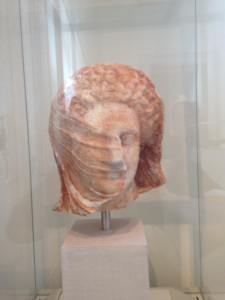
Yet however much we may like
The stoic manner in which
The classical authors wrote,
Only the young and the rich
Have the nerve or the figure to strike
The lacrimae rerum note.
–fromA Walk After Dark, W.H. Auden
Filed under: Uncategorized
March 21, 2016 • 7:18 am Comments Off on Hidden Handel
Director Trevore Ross on staging Handel’s oratorios for the LA Master Chorale. First in their five-season-long project is Alexander’s Feast.
Filed under: choral music, directors, Handel, Los Angeles Master Chorale
 Arts & Culture Stories from NPR
 MEMETERIA by Thomas May