MEMETERIA by Thomas May

Music & the Arts

New General Director of San Francisco Opera

Matthew Shilvock

Matthew Shilvock

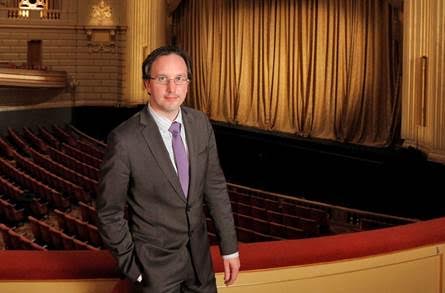
They sure know how to keep a secret. San Francisco Opera finally has finally announced who will succeed David Gockley, and it’s an insider: current Associate General Director Matthew Shilvock takes on the reins as the company’s seventh General Director starting August 1, 2016. His contract is for five years, through July 2021.

From SFO’s press release: “Mr. Shilvock, born and educated in England, joined San Francisco Opera in 2005 and has served as Associate General Director since 2010. As Associate General Director, Mr. Shilvock manages and leads five departments: Music Operations (orchestra, chorus, dancers, commissions); Electronic Media; Education; the San Francisco Opera Center (professional artist training programs); and Rehearsal. He currently also serves as Interim Director of Development.

Joshua Kosman observes: “In signing Shilvock, 38, to a five-year contract, the Opera has made a choice that emphasizes continuity in the company’s leadership over experience or a proven track record. Over the course of his decade in San Francisco, Shilvock has taken an active role in just about every aspect of the company’s activities, from artistic planning and labor negotiations to financial development and educational outreach. But this will be his first time at the helm of an opera company.”

Kosman offers the following roundup of Shilvock’s responses in regard to programming philosophy:

“We want to strengthen the brand of San Francisco Opera, so that people come to us not simply because they recognize a title, but because they have faith in what we’re doing. ‘Butterfly’ will always sell better than ‘Jenufa,’ but we want to give audiences the motivation to come to a piece like ‘Jenufa’ that may not be familiar to them.”

In response to a question about new and recent works that he had found particularly rewarding, Shilvock cited Jake Heggie’s “Moby-Dick,” Philip Glass’ “Satyagraha” and Carlisle Floyd’s “Susannah” as examples of the kinds of work the company should be doing.

Shilvock pointed in particular to the Diane B. Wilsey Center, the 299-seat theater scheduled to open next year in the newly renovated Veterans Building, as an engine for experimentation.

“The programming will have a shorter lead time, and we’ll be able to do works there with greater intimacy, or that find different resonances with the audience. There’s a wonderful sense of innovation that can happen there.”

“By choosing Shilvock, the San Francisco Opera has gotten to have it both ways: opting for the status quo by continuing Gockley’s tradition, while coming down on the side of youth and freshness,” remarks Anne Midgette in The Washington Post.

New York Times reporter Michael Cooper points out that the selection of Shivlock “signaled that the search committee — which had been grappling with whether to appoint someone with a background as an artist or an administrator —–saw his understanding of the practicalities of running the opera house as critical.”

Filed under: music news, San Francisco Opera

Still Fresh: Morlot and the Seattle Symphony Embark on a New Season

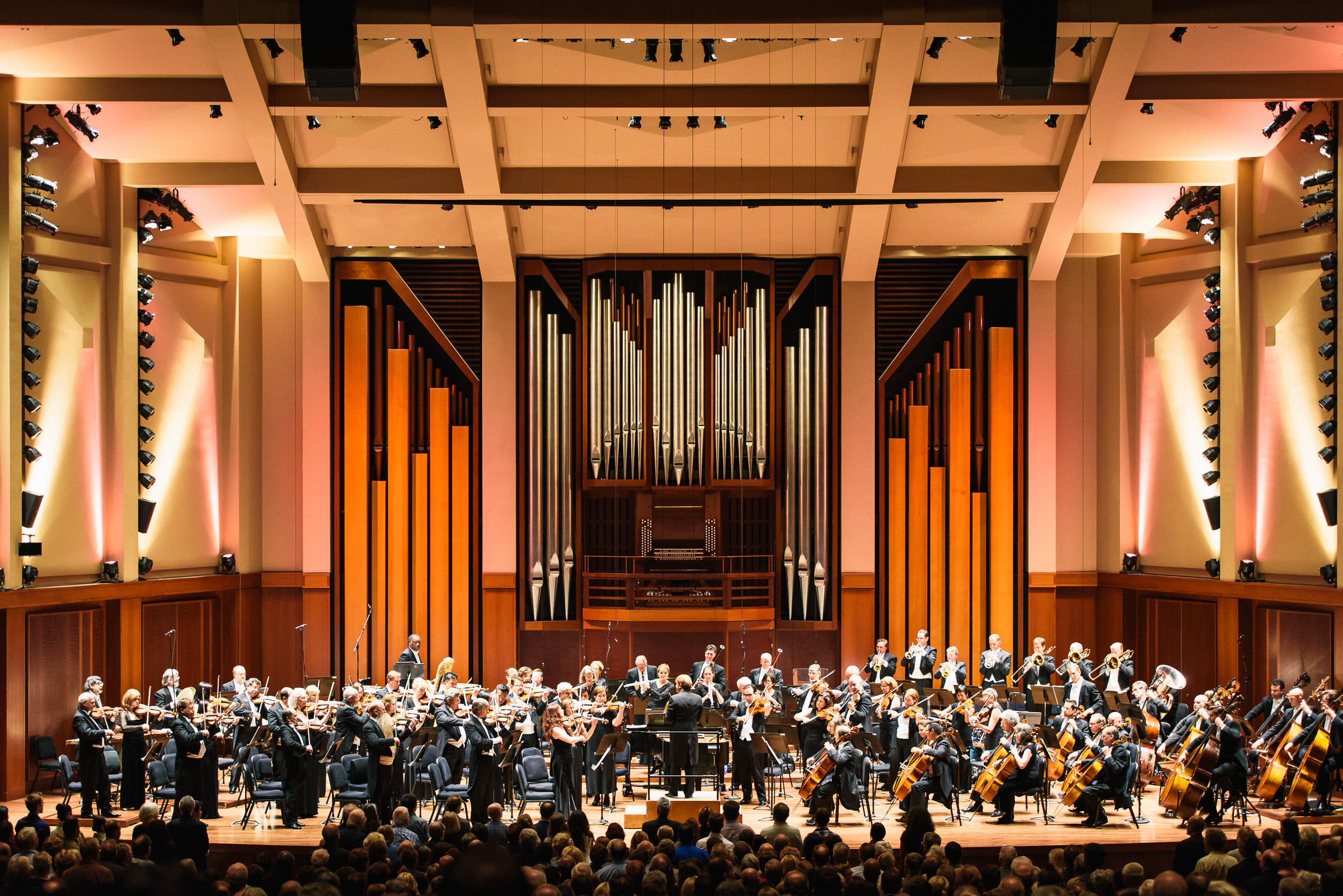
SSO: Opening Night Gala with Ludovic Morlot and Piano Competition winner Kevin Ahfat. Credit: Brandon Patoc Photography

SSO: Opening Night Gala with Ludovic Morlot and Piano Competition winner Kevin Ahfat. Credit: Brandon Patoc Photography

I imagine some people are doing a double take when they realize Ludovic Morlot has just started his fifth season helming the Seattle Symphony. Well, it is hard to believe we’re almost a decade into his tenure: his approach to me feels as fresh as ever. But with the added benefit of confidence accruing. (Here’s another double take: this is the orchestra’s 113th season.)

Saturday evening’s season opener certainly had several Morlot trademarks: a lovely pairing of American and French composers that showed off the health and vigor of the musicians, along with a like-minded peer in the guest artist for the second half.

The performances also overturned a couple of pesky clichés. One is the matter of non-native-born Americans supposedly having a hard time with getting across an authentic feel for the “American” sound — meaning in this context primarily the jazz-inflected rhythms of such popular 20th-century composers as Leonard Bernstein.

Morlot was perfectly at home in the Overture to Wonderful Town and inspired a deliciously stylish reading from the players, complementing Bernstein’s warm lyricism with brash joie de vivre. Instead of over-emphasizing them, Morlot let Lenny’s meter shifts propel the music with an elegantly giddy, light-as-air verve.

The artistic high point came with the orchestral suite Copland fashioned from his original chamber-orchestra score for Appalachian Spring. Here was a touching example of Morlot’s fresh perspective. My reaction was similar to what I felt when he gave us the same composer’s Lincoln Portrait for the concert opener in 2012.

Copland’s suite sounded as if it were being sung in a single tender breath. The performance featured another Morlot trademark: mindful, deftly balanced timbral blending and well-judged phrasing that allowed a particular gesture to reverberate with maximal impact (as right after the final tutti variant of the “Simple Gifts” tune). The result made this music sound so much richer and affecting than you might expect from an aging chestnut. Contributions from the winds were particularly lovely, including guest clarinetist Frank Kowalsky.*

Opening Night Gala

Opening Night Gala Credit: Brandon Patoc Photography

The piano dominated the rest of the program. I have mixed feelings about the prominence given to guest artists at a symphony orchestra’s opening concert: it often seems to decenter the musicians we should be celebrating and enjoying, making them secondary as the spotlight is turned over to a “star.” (And, yes, I get the necessity of this to stir up donor interest and create buzz.**)

But Jean-Yves Thibaudet was the perfect choice to fill the star role. Not only are he and Morlot natural artistic partners: he plays with the orchestra with genuine empathy and give-and-take. In addition to which, Thibaudet will be coming back several times this season in his role as artist in residence with the SSO.

So it was a treat to hear them join together for the fifth of Camille Saint-Saëns’s piano concertos, also known as “the Egyptian.” (Saint-Saëns wrote it while staying in Luxor and also alludes to music he heard in Egypt.) The second cliché that got overturned: the formula that composer X writes difficult music for the soloist whose “virtuosity is not an end in itself, but a vehicle for [fill in the blank with some “higher” purpose].”

Well, not so much in the Saint-Saëns. The virtuosity called for is often over the top, a vestige of the composer’s Lisztian side, and many stretches are exactly for the sake of virtuosity, period. But what fun when played by an artist of such refined taste and intelligence. Thibaudet truly dazzled and charmed, even eliciting a note of dreamy mystery in the Andante, with spirited collaboration from the orchestra.

The concerto was prefaced by the Danse Bacchanale from Saint-Saëns’s opera Samson et Dalila, extending the “Orientalist” theme (and pinpointing one source of Hollywood’s musical orientalism). Much of it is wonderfully trashy, sequence upon sequence, but Morlot had a way of making it sound better than it is.

The piano figured in the middle of the first half as well, when the young Canadian-born Kevin Ahfat took to the keyboard to play the final movement from Samuel Barber’s Piano Concerto. Ahfat had just been announced as the winner of the Seattle Symphony’s inaugural Piano Competition. Along with a $10,000 cash prize, the victory nets him a future performance with the SSO next season.

I had to miss the competition itself, so this was my first time hearing Mr. Ahfat, but he instantly made a powerful impression. I liked the choice of the too-seldom-heard Barber, and though this movement really exhibited only one side of his artistry — a very extroverted, showy side — his playing brimmed with personality and flair. If he can just grow out of the Juilliard mode of exhibitionistic technique-centrism…

To close the concert, Morlot pulled a shtick a la Itzhak Perlman, having Thibaudet come out (joined by Ahfat on another keyboard) for a pretend audition as they embarked on a humorously awkward account of “Les Pianistes” from Saint-Saëns’s Le carnaval des animaux, bringing the curtain down with the finale to the same suite.

*Although the “official” Seattle press has ignored this news, principal clarinetist Ben Lulich has been appointed “new acting principal clarinet” of the Cleveland Orchestra but will perform at some of the SSO’s concerts this season (where he’s technically on leave for the season).

**According to an SSO Tweet, $785,000 was raised for education and mentoring at the post-concert gala:

–(C)2015 Thomas May. All rights reserved.

Filed under: Ludovic Morlot, piano, review, Seattle Symphony

Inuksuit Live

Evidence of human presence

Evidence of human presence

Yesterday afternoon Seattle’s Seward Park resonated with the sounds made by nearly a dozen-and-a-half percussionists, along with the contributions of nature, of everyday life in a human-inhabited environment, and of the spectator-participants.

On offer was John Luther Adams’s Inuksuit, a remarkable piece conceived for performance outdoors by an indeterminate collective of percussionists (anywhere from “9 to 99” players). Inuksuit had its West Coast premiere at the Ojai Festival in 2012, and percussionist and educator Melanie Voytovich organized this Seattle presentation.

The timing and location couldn’t have worked out better: hints of the coming fall tinged the mid-afternoon mood — the Autumnal Equinox just around the corner — while a changeable sky opted for outlooks from gloomy cloudcover to full-on sunbursts.

As Melanie points out, the word “inuksuit” (which is plural) connotes “a type of stone landmark used by native peoples of the Arctic region”; more generally, it can be a proxy or evidence of a human who has been present in a space.

Bernd Herzogenrath, a versatile author focused on American studies, observes that Inuksuit “enables listeners and performers to experience a place more fully, while subtly presenting a narrative of life on Earth.”

That’s one aspect I valued especially from yesterday’s performance: the sense that both the “audience” and the performers were absorbed in the same task, seeking a more intense experience together, without division or boundary between the two.

Inuksuit-whirling

Almost reflexively, I initially settled down into position when I realized Inuksuit had actually begun. It was a moment of interesting awkwardness, as I’d been chatting with some friends as people kept on arriving, and we noticed a change of aura — but the piece commences so quietly that you need to have visual cues to notice it’s started. You suddenly become aware of a kind of subliminal wie ein Naturlaut of gentle blowing sounds — JLA out-Mahlering Mahler — which then turn more ceremonial, ritualistic.

That being-caught-short prompted my anxiety about maintaining proper “audience behavior” and made me instantly shut up and stay put. But as the work continued, I felt urged to explore it as much as possible from “inside” by getting up and wandering multiple times around the space, as if joining actors onstage for a play in progress.

It was wonderful: the shifting angles and perspectives — visual and aural — made it all the clearer that there simply is no way to take it all in, to gain a complete perception of what’s happening. And that, along with the John Cagean chance elements of any given performance, is inherent in the beauty of JLA’s conception of this work.

Much of the fascination emerges from such interactions: from seeing other listeners, active audience or chance passersby, as they take note of some gesture or shift in the sound source, in its level of intensity or texture. The unfeigned delight of small children was infectious to watch, and even the attending animals seemed mesmerized:

Inuksuit-dogs

Usually when I’m attending an outdoor performance the ambient sounds are either a pleasant decoration or, in the case of manmade ones like a flight path overhead, disturbing annoyances that I pretend I’m not hearing in an effort to refuse them entry into the experience. But on this occasion I welcomed all that: I wanted these noises to break whatever vestigial fourth wall was there, to bleed their own music to this sound installation.

My colleague Roger Downey remarked that the experience, quite unexpectedly, was like “chamber music” compared to listening to the recording of Inuksuit.

In his preview, Roger points out that “it’s genuinely revolutionary work, representing a new way of playing and listening outside the traditional Western box.”

When I noticed one of the players in a distant corner switch to a siren, I couldn’t help thinking of its difference from the riotous and menacing note the sirens introduce into Varèse’s Amériques, for all their manic humor. Here the effect was almost of a subtle brushstroke.

The inclusiveness of Inuksuit is all. Its random elements gather together across the performance space over the piece’s duration, just as JLA has the players (who were sporting black T-shirts) in-gather in the final minutes, slowly approaching toward the center. This somehow all results in a sense of purpose that is fueled by the energy of everyone present. The music fades back out into inaudibility but has left behind its own evidence.

–(C)2015 Thomas May. All rights reserved.

Filed under: John Luther Adams, new music, review

Inuksuit in Seattle

It’s happening on Saturday: at 2 pm in Seward Park.

From Roger Downey’s preview:

It’s hard to convey the effect of Inuksuit in performance, particularly if you haven’t heard it live. And I haven’t: My closest encounter so far is listening to it twice on headphones, in a version recorded live in New England in 2013. Phones turn the piece inside out. Instead of surging in from all sides, the thunder of the called-for “nine to 99 percussionists” in full cry is focused in the center of your skull. It’s an incredible ride, but it leaves you completely unable to describe how the piece is going to sound outdoors, amid the twitter of birds and blat of distant motorbikes….

No two performances of Inuksuit can be the same, and no two listeners can hear it the same way. Your experience will differ, whether you like it or not.

Filed under: John Luther Adams

Ehnes Quartet Review

Ehnes-Quartet

My review of the Ehnes Quartet and their Beethoven cycle from this summer’s Seattle Chamber Music Society Festival has been published in the current issue of String magazine. A link to it is here (pdf).

Filed under: Beethoven, chamber music, James Ehnes, review, Seattle Chamber Music Society

The Coming-Soon-Park: Philippe Quesne at On the Boards

What a delightful way to launch the new season: over the weekend, On the Boards presented La mélancolie des dragons, a visual-theatrical tone poem by the Paris-based theater artist Philippe Quesne featuring his Vivarium Studio.

I’d only read about Quesnes before, having missed his previous appearance at On the Boards over four years ago in L’Effet de Serge. Once you’ve experienced his work live, en personne, it’s even more obvious that, like music, it really can’t be captured by the proxy of words.

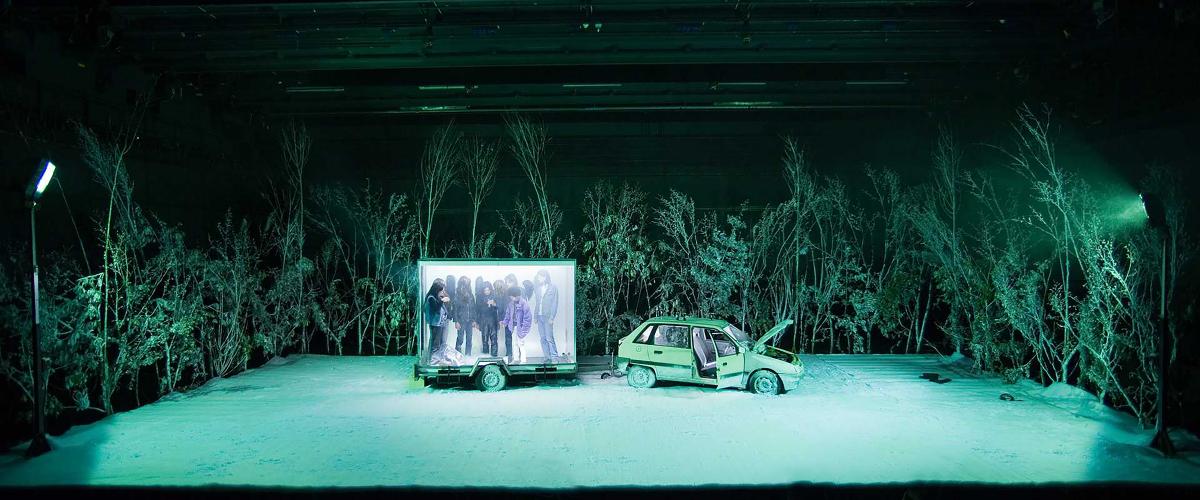
The mise en scène initially signals that a hyper-realistic play is perhaps about to unfold: a run-down VW Rabbit sits stranded on the stage, as if exhausted from hauling a mysterious trailer. The wintry landscape is framed by snow-covered trees that are part-Chekhov, part-Stephen King: as the audience visibly shivers settling into their seats, you half wonder whether some menacing interloper would come stalking through the treeline.

But it all turns out to be the setup for a gracefully quirky homage to the evocative power of theater. The “realistic” stage picture opens up a world of surprising invention whose only unifying story line riffs on the magical connection between performer and audience.

Audience in this case enters into the picture in the figure of Isabelle, the far-from-menacing interloper who happens upon the stranded Rabbit and its inhabitants and offers to help. Though apparently a chance encounter, she is greeted warmly by a band of seven men on the road touring their “show.”

Before that comes a lengthy preludial section: the lights come up on four of these guys sitting in the car (all sporting metal-style, shoulder-length hair), sharing a bag of chips, drinking cans of Rainier beer, and rocking out to an ADD-driven setlist of AC/DC and The Scorpions.

No words, just a silent theater of gestures and movement accompanied by music. In fact, though the VW’s in dismal shape (Isabelle pokes beneath the hood, liberating alarming puffs of smoke), the sound system carries on unperturbed. Music is an integral component of Quesne’s vivarium, and later in Mélancolie the soundtrack makes way for some very apt Haydn.

Once all the characters have been revealed, spoken dialogue is introduced. We learn that these men have been peddling their nameless show: a sort of mobile, minimalist amusement park on wheels. “Really?” exclaims Isabelle in wonder. “Can you show me?”

Which is of course both Mélancolie‘s theme and process: the show-me part of theater that makes us sit up and eagerly watch, casting aside the drive for interpretation — whether that means fitting it all into a coherent plot or getting to the bottom of some putative motivation. Image is message in the world of Quesne.

Mélancolie2

Or rather, images and their enjoyment. Isabelle, and we, are treated to a parade of sometimes silly, sometimes buoyant “acts”: dancing wigs, a machine that blows bubbles, a tub of water made to spew in a “geyser,” enormous pillow-like balloons that are gathered into an installation, like a zany, tripped-out Stonehenge.

Isabelle’s reactions, and the reactions of her entertainers to her reactions, are just as fun to watch as what’s being displayed. At the climax, the varied attractions are mixed together into a lighter-than-air Gesamtkunstwerk.

Amid all the frothiness, Quesne does weave in some clever metatheatrical commentary, poking gentle fun at that logocentric need to make it all make sense.

When Isabelle is being introduced to the “installation” of books, Quesne humorously harps on an anthology of writings on melancholy and a children’s book about dragons. Aha! So that’s what it’s about!

“We are…autonome!” declared one of the entertainers, lauding their DIY inventiveness but also suggesting the best attitude for watching the show.

There’s also some delicious banter about texts versus images, and Antonin Artaud gets name checked, as if to seal the piece with experimental-theater cred. All very sweetly tongue in cheek.

Quesne’s theater artistry is rooted in his work as a visual designer for opera, theater, even exhibitions. He also likes to compare his sensibility to that of an entomologist. (He began studying insects as a hobby when he was a kid.)

But while much of the amusement of this show emerges from observing the naive, childlike wonder of Isabelle and the showmen, Quesne steers clear of any tone of mockery or superciliousness. It’s a subtle balancing act: and therein lies Mélancolie‘s real magic.

–(C)2015 Thomas May. All rights reserved.

Filed under: On the Boards, review, theater

Magical Magiya

A taste of a young composer who’s got a great season ahead of him:

Sean Shepherd‘s Magiya for the National Youth Orchestra in its inaugural season two years ago, from the BBC Proms.

Filed under: American music, new music

“Lament and Moaning of a Heart”

Igor Stravinsky and Charlie Chaplin

Igor Stravinsky and Charlie Chaplin

An apparent missing link in the development of the young Igor Stravinsky has been unearthed.

Titled Funeral Song (Pogrebal’naya Pesnya in Russian), the piece was written by the 26-year-old composer as a memorial to his recently deceased mentor Rimsky-Korsakov in 1908. After a single performance, the manuscript was never published and was long believed to have been irretrievably lost in the 1917 upheaval and its aftermath.

But it turned out to be hibernating amid a pile of old manuscripts gathering dust somewhere inside the St. Petersburg Conservatory.The Stravinsky authority Natalya Braginskaya described the find at hte International Musicological Society in St Petersburg early this month.

According to the eminent Stravinsky expert Stephen Walsh:

Stravinsky recalled it as one of his best early works, but could not remember the actual music.
[…]
Braginskaya, who has studied the orchestral parts (the full score has not turned up and will need reconstructing), describes “The Funeral Song” as a slow, unvarying processional with contrasting instrumental timbres: a dialogue of sonorities, very much as Stravinsky himself vaguely remembered it in his autobiography 25 years later. There are echoes of Rimsky-Korsakov, but also, she says, of Wagner, whose music Stravinsky admired more than he was later prepared to admit.

In his post on the find, Zachary Woolfe quotes from one of the reviews of the premiere (which predated Stravinsky’s sudden fame with The Firebird in Paris:

One critic described “the lament and moaning of a heart against the backdrop of a somber landscape,” while another chastised it for chilliness: “Better keep silence if losing a friend and teacher leaves us cold.”

Filed under: music news, Stravinsky

“What Kind of a God Lets Others Fight for Him?”

I’m still processing my reactions to the Deutsches Theater’s production of Nathan the Wise, the Enlightenment masterpiece from 1779 by Gotthold Ephraim Lessing.

“Provocative” would be an understatement — though provocation (or at least the semblance thereof) is mother’s milk in this theater scene by comparison with the usual fare in the English-speaking world.

At least it can’t be denied that director Andreas Kriegenburg, along with his designers Harald Thor (sets) and Andrea Schraad (costumes), has created a visually arresting production: inspired by the enigmatic monolith at the opening of Stanley Kubrick’s 2001: A Space Odyssey, it’s dominated by a large wooden cube — here, a ramshackle, hut-like structure that comically, unpredictably, moves back and forth on the stage.

The Kubrickian impetus is also apparent in a lengthy pantomime-prelude that has nothing to do with Lessing. Kreigenburg shows two “clay figures,” man and woman after the moment of their creation in the process of discovering each other, but then enters in original sin…by way of a primeval “us against them” pattern the cast enacts. And then a childish voice reminds everyone: “But what about the Lessing?” — and the “play” begins.

The comedy is the thing here: Kriegenburg has dared to radically rethink this sacred text of Enlightenment tolerance as an “archaic comic strip” in which the characters — still decked out in their primordial clay but adorned with cliched bits of dress and props to signify their religious affiliations — waddle about in the comic style of silent films, recalling Charlie Chaplin and Harold Lloyd in their gestures. (Some of their stage movement also called The Walking Dead zombie dramaturgy to mind, though I couldn’t tell whether that was intentional.)

Jörg Pose (Nathan), Bern Moss (Saladin), and Elias Arens as the arrogant young Templar play out their roles, but their gestures and even declamation of Lessing’s poetic text are riddled with an eccentric, frequently strained, range of comic moves. The shtick at times gives way to the crudest potty humor, as when the Patriarch — (Natali Seelig, outfitted in a grotesque fat suit) — holds his conference with the naive Templar while on the can. And all of this is accompanied by an almost ceaselessly piped-in soundtrack of clownish music, as if these were routines they had performed over and over.

The dramaturgical notes for the production speak loftily of the relation between comedic form and the “supremely serious” content of Lessing’s text. But is Kriegenburg merely underscoring a profoundly cynical understanding of Lessing’s vision as not only a marvelous “fairy-tale” with a “utopian conclusion” but, literally, a farce in the face of historical — and present-day — reality?

Does this explain his avoidance of allusions to gravely serious issues in the news today, to which an “earnest” director would clearly want to relate Lessing’s play — from the refugee crisis to the atrocities of Daesh? Such topical allusions as do appear are treated as jokes.

And yet, in the scene Nathan’s recitation of the famous Ring Parable, the tone changed, perhaps even in spite of the context. Much of the critical reaction I’ve seen has been pretty vehemently negative, but I can’t say my own experience was. At times I was reminded of the eccentric, apocalyptic humor of Ligeti’s Le Grand Macabre, at others of the craziness of Charles Ludlam and the Ridiculous Theater, where iconoclastic absurdity can suddenly trigger a shocking reversal into something profound.

Perhaps it was just the chance to encounter Lessing’s magnificent text again (in English here), however distorted.

(c)2015 Thomas May — All rights reserved.

Filed under: directors, Enlightenment, Lessing, theater

Yo-Yo Ma and the Bach Cello Suites

yo-yo-ma_345x290

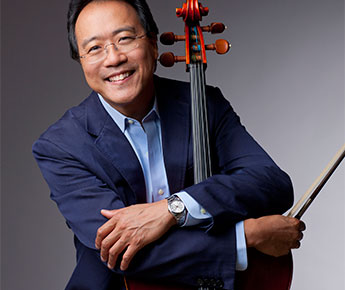
The superstar cellist’s performance from last week at the BBC Proms can still be streamed here:

http://bbc.in/1NSESFo

David Karlin gave Ma a five-star review on Bachtrack:

One man. Four strings. Thirty-six dance movements. Five thousand listeners, perfectly hushed, many of them having queued for hours and rushed to fill the promenade space of the Royal Albert Hall as soon as the ushers let them out of their starting blocks. Yo-Yo Ma’s late night Prom – a performance of all six of Bach’s unaccompanied cello suites – was an eagerly anticipated event and a giant undertaking. Many of the audience were cellists (two and half hours of unaccompanied cello is a tall order for anyone else) and the atmosphere in the hall was electric.

Alexandra Coghlan at The Arts Desk:

This humility serves Ma well in music that holds a mirror up to any performer, exposing affectation or excess just as clearly as coldness or humourlessness. His Bach is intimate but not introverted, free and improvisatory in spirit but meticulously prepared and understood. He began as he meant to go on, with a G major Prelude so casual and direct it was as though we were joining a conversation in mid-flow. It was the only possible start to a musical epic – just the right degree of bathos, reminding a crowd bedding down for a long evening of serious music of the wit and overflowing good humour also be found here.

John Allison at The Telegraph:

Post-concerto encores drawn from these suites are, of course, common at the Proms, but this was the festival’s first complete performance. The bucolic Prelude to the Suite No. 1 in G major signalled what was to come, a performance full of dynamic shading and carried on warm tone quivering with life. The solemnity with which he placed the low, phrase-ending notes in the Sarabande pointed towards the evening’s more profound moments, several of them encountered in the tragic-sounding D minor suite, though even here he found wild abandon in the closing Gigue.

From George Hall’s review

During a magisterial survey of these complex, subtle compositions, Ma’s attention to detail was as notable as his grasp of the bigger picture. The playing was at times tender and introverted, at others bold and sonorous. Throughout, Ma held the measure of Bach’s organic, largely abstracted dance movements and unfolded them before the audience in a way that was intellectually satisfying and heartfelt.

Filed under: Bach, BBC Proms, Yo-Yo Ma

Archive

Enter your email address to follow this blog and receive notifications of new posts by email.