
Filed under: photography

May 1, 2015 • 5:20 am Comments Off on The Piper’s Calling
Filed under: photography
April 30, 2015 • 8:27 pm Comments Off on Salonen’s Nyx
Here’s a recent program essay I wrote on Esa-Pekka Salonen’s Nyx. The composer himself is conducting the San Francisco Symphony this week in a program that includes The Firebird and Ravel’s Mother Goose.
To music lovers, the mention of Finland seems to conjure the ghost of Sibelius. For the gifted Finnish composers of Esa-Pekka Salonen’s generation in particular, Sibelius is a commanding presence. And yet such “anxiety of influence” can indeed generate creative innovation. Over the past several decades there has emerged an extraordinary generation of creative thinkers staking out new territory, and the once-marginalized Finland has turned into a progenitor of some of today’s most interesting composers.
April 28, 2015 • 9:33 pm Comments Off on Trimpin the Light Fantastic

Trimpin’s Gurs Zyklus; photo courtesy Nic Dahlquist, Stanford Lively Arts
I’m unable to attend this week’s world premiere of Trimpin’s latest project, Above, Below, and In Between, a commission from the Seattle Symphony and Ludovic Morlot.
But to mark the occasion, here’s a feature I wrote a few years ago in conjunction with the Seattle premiere of Trimpin’s Gurs Zyklus at On the Boards:
Contemporary composers are so routinely described as “crossing barriers” and “defying genres” that these tags have become meaningless clichés. But Trimpin genuinely resists categorization.
The familiar labels aren’t much help in trying to define his unusual career. Based in Seattle for over three decades, the German-born Trimpin follows a path that zigzags wildly, unbound by conventional parameters. He’s a kinetic sculptor working with sound, an installation artist, an inventor, an instrument builder who combines the insatiable curiosity of artist and scientist alike with the old-fashioned know-how of a craftsman.
Trimpin’s work can be encountered in museums (the tornado of guitars at EMP), in natural environments, and even in venues like Terminal A in Sea-Tac Airport, where travelers unwittingly activate his 80-foot-long kinetic sculpture of gadgets and instruments as they pass alongside on a rolling walkway. But his latest big project breaks new ground even for Trimpin. Receiving its Seattle premiere this Thursday through Sunday at On the Boards, The Gurs Zyklus is as unclassifiable as the MacArthur “genius” award-winning artist himself.
The Gurs Zyklus places his vision as a composer, inventor, and builder within the context of music theater. Originally commissioned by Stanford University’s Lively Arts program and given its world premiere there last May, the work has been reconfigured as a site-specific work for On the Boards. “It’s being presented as a three-sided staging and will feel very intimate in our main stage theater space,” says artistic director Lane Czaplinski. “You feel you’re inside the work, as in a sculpture, as opposed to on the outside watching.”
The production marks the first time since the early 1990s that On the Boards has hosted the work of Trimpin and of Obie Award-winning director Rinde Eckert, who is collaborating on the theatrical conception of The Gurs Zyklus. It’s an especially good fit, Czaplinski adds, since it represents “that in-between category which is the future of opera and music theater. People don’t yet know quite how to talk about it, but this is what we do at On the Boards.”
The creative process underlying the work, Trimpin explains, was fueled by a desire to transform the inert facts of history and information into “other forms of expression: notation, music, sound sculpture design, and performance.” It also represents the artist’s attempt to come to terms with memories that have haunted him since his childhood in a small town in southwestern Germany, where Gerhard Trimpin was born in 1951. (Long ago he officially lopped off his first name.) He recalls chancing upon an overgrown Jewish cemetery as a youngster and becoming intrigued by the Hebrew inscriptions on the headstones,” which he thought resembled “mysterious hieroglyphs.”
But the fate of the Jewish population was a taboo topic in those early postwar years. Eventually Trimpin learned that in October 1940 the Nazis had rounded up all of the town’s Jews and sent them by train to the internment camp of Gurs. Located to the southwest, in the French Pyrenees close to the Spanish border, Gurs was run by the collaborative Vichy government but had been operating since the 1930s, when the French first used it to control the influx of refugees from Franco’s forces in the Spanish Civil War.
A profile of Trimpin by Jean Strouse called “Perpetual Motion” in the New Yorker in May 2006 caught the attention of Victor Rosenberg. His mother had come from the same hometown (Efringen-Kirchen ) and his uncle was interned at Gurs. Rosenberg contacted Trimpin, offering to let him access to a shoebox full of letters mailed from the camp to his father. This became the trigger for The Gurs Zyklus, which, says Trimpin, “is about the challenge of learning, deciphering, investigating, wanting to know more about what is happening.”
Other remarkable connections from Trimpin’s own experience began to illuminate the past. In the late 1980s he had become friends with fellow maverick composer Conlon Nancarrow, for example, but only later learned that Nancarrow himself had spent time as a prisoner at Gurs in its earlier phase, after fighting with the Abraham Lincoln Brigade against Franco’s Fascists. Trimpin decided to retrace the journey from his hometown to Gurs, recording the sounds of the train and the announcements at each stop. And as he was developing The Gurs Zyklus during a year-long residency at Stanford, by chance he encountered a local resident who had been sent to Gurs as a young boy.
All of these links to Gurs became strands of the work, which blends aspects of opera, oratorio, staged installation, and memory play. Its musical and symbolic elements range widely. Clicking castanets mimic a message being sent in Morse code as Spanish Fascists order the assassination of Federico García Lorca. This reference to the struggle in which Nancarrow took part — the score also incorporates his music — ominously foreshadows the darkness descending over Europe. Trimpin’s script and sequence of visual imagery draws from the Rosenberg letters. Along with their despairing reports of everyday conditions, the letters express a poignant hope for release from the camp.
The raw material gathered from his own trip to Gurs — the sounds of the train trip, the innocuous-sounding roll call of place names — provides the “information” that becomes transformed into a powerfully resonant narrative. Even the patterns on tree bark samples taken from Gurs are translated into musical notation, giving voice at last to these silent “witnesses” of what took place. Trimpin also uses instruments he has invented for other pieces, such as the “Fire Organ” — a contraption of glass tubes and Bunsen burners that emits sounds with a texture uncannily similar to the human voice. While interacting with his students at Stanford, Trimpin designed other mechanical elements specifically for The Gurs Zyklus, constructing the most intricate components in his three-storey studio in Madrona.
All of Trimpin’s projects share this one-of-a-kind aura. Yet while much of his work evokes a sense of delighted whimsy with the sheer bravura of its invention — a “Dr. Seuss,” as Czaplinski puts it —The Gurs Zyklus explores a dark past, pushing beyond the expressive limits of conventional instruments and easily digested narrative chronology. The essence of its dramaturgy lies in the metaphorical combinations of sound and visual images, of isolated memories that turn out to be interconnected. Site-specific acoustical perceptions are also integral to the piece. “These are events that don’t make sense at first,” Trimpin remarks. How to decipher them “is then up to the individual. The audience’s understanding comes from their own interpretation of what they have just experienced.”
(c) 2015 Thomas May. All rights reserved.
Filed under: American music, new music, Seattle Symphony
April 27, 2015 • 5:38 pm Comments Off on Hughes, Shakespeare, and the Goddess

There’s no shortage of “upstart crows” when it comes to Shakespeare studies: scholar-mavericks who challenge the self-appointed gatekeepers in academia. And it’s no surprise that (after discounting the obvious crackpots) many of these turn out to offer little more than half-baked theories that crumble under closer scrutiny.
But one of the most significant unconventional readings of Shakespeare of recent years belongs to a class of its own: the poet Ted Hughes’ Shakespeare and the Goddess of Complete Being. Is this a truly paradigm-shifting vision or an absurdly reductive idea that sacrifices too much to in pursuit of a “hedgehog” theory?
Ann Skea offers a sympathetic portrayal of the scope of Hughs’ great project:
In his long introduction, Ted outlined the religious and psychological conflict caused by the Calvinist Puritan suppression of Old Catholicism in which the goddess of earlier pagan beliefs still flourished. The religious aspect of this conflict was particularly relevant during Shakespeare’s lifetime, but the universal psychological aspect of the suppression of natural human energies, especially sexual and imaginative energies, is clear to see.
It was in Ted’s writing on Shakespeare that what he called “the tragic equation” was explicated: the love goddess, enraged by the puritanical suppression of sexual energies, becomes the ‘Queen of Hell’ – the demonised boar who destroys the hero.
[…]
Much of Ted’s discussion of Shakespeare’s ‘great theme’ can be traced back to [Robert] Graves’ arguments in “The White Goddess,” but the psychological aspect of Ted’s “tragic equation” shows just how much he was also influenced by the work of Carl Jung.
[…]
Ted was well aware that Shakespeare and the Goddess of Complete Being was a difficult book: difficult to write and, for some readers, difficult to read… Ted’s own knot of obsessions meant he was uniquely qualified to recognise an underlying theme that others had never noticed…Most importantly, he was a poet bringing his poetic sensibilities to the work of another poet; and in the whole body of Shakespeare’s work he recognised a progressive exploration of many of his own beliefs, difficulties and questions.
Filed under: poetry, Shakespeare, theater
April 25, 2015 • 9:54 pm Comments Off on Lacrimae Rerum
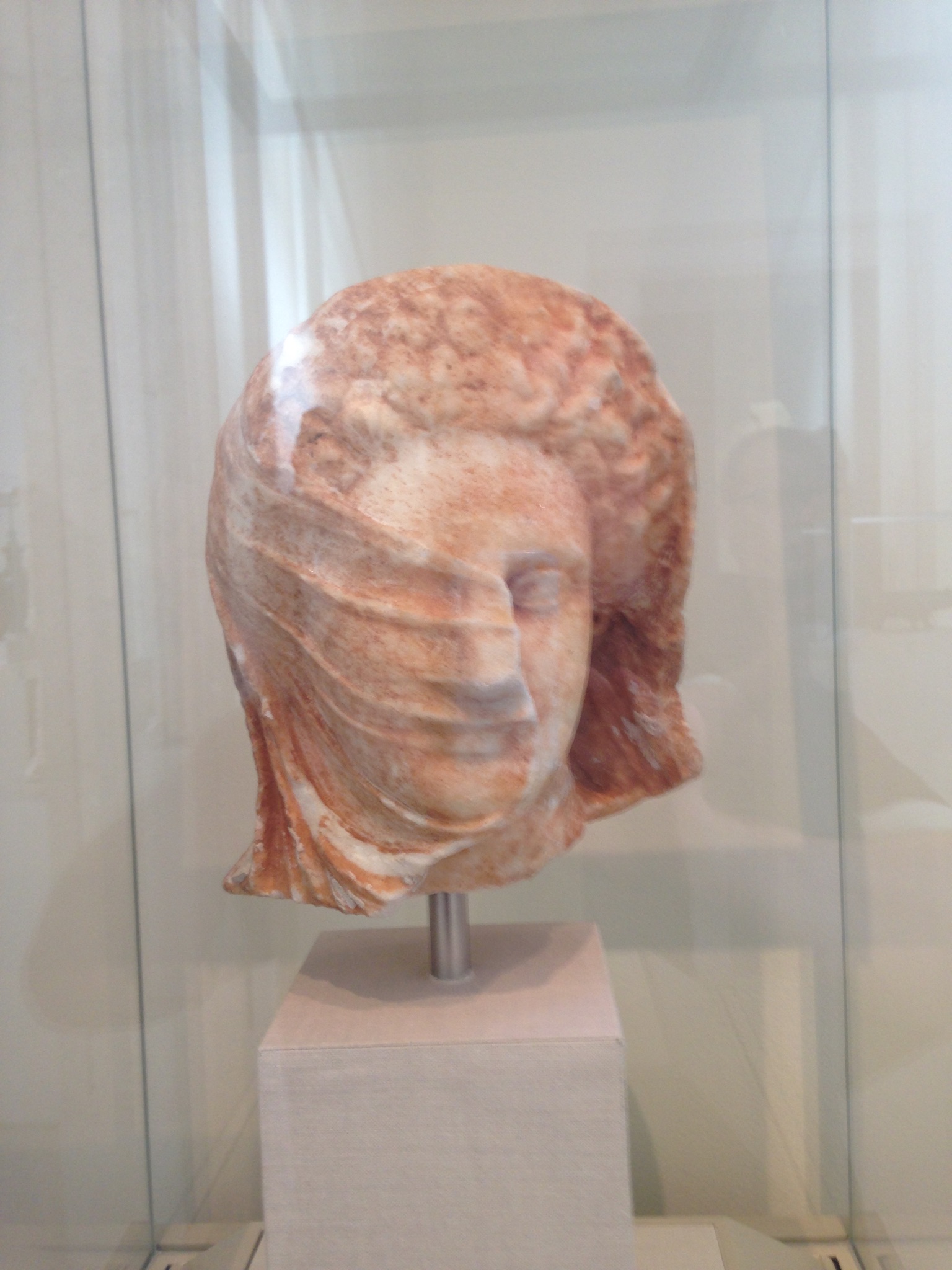
Yet however much we may like
The stoic manner in which
The classical authors wrote,
Only the young and the rich
Have the nerve or the figure to strike
The lacrimae rerum note.
–from A Walk After Dark, W.H. Auden
Filed under: classical art, photography, poetry
April 24, 2015 • 12:12 pm Comments Off on Zabur

Mohammed Fairouz; photo by Samantha West
A notable premiere by composer Mohammed Fairouz is being given tonight by the Indianapolis Symphony: Zabur, to a libretto by Najla Said.
From Scott Shoger’s interview with the composer about this contemporary war requiem:
Fairouz:
Zabur is the most persistently and overwhelmingly dark pieces that I’ve ever written, although it doesn’t end in that darkness. It ends in a wonderful image of children in the sunlight like the end of Mahler’s Kindertotenlieder. Sometimes as an artist, part of the job description is to go into psychological and emotional places that the rest of the world would avoid.
[…]
Zabur begins with a great outcry and destruction that proves to be a flash-forward or premonition of what will happen — that everyone in the shelter will be destroyed. I was debating with myself how to end the piece, but I decided to bring back the children’s choir to sing, “The children of your servants will live on forever.” It’s an absolutely heartbreaking ending, but with the sound of the children, you have this group of 100-some children in Indianapolis connecting artistically, in some way, to their brothers and sisters half a world away in Syria who are suffering. There’s something very moving about that.
Filed under: American music, new music
April 23, 2015 • 9:44 am Comments Off on Hercules vs. Vampires: Opera Goes to the Movies
This starts tonight at LA Opera.
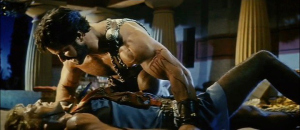
Los Angeles Opera truly has become a company interested in innovation. Next month brings Hercules vs. Vampires, an opera-meets-cult film mashup between Mario Bava’s 1961 film (Hercules in the Haunted World) and LA-based composer Patrick Morganelli.
Here’s my interview with Mr. Morganelli:
A century ago, the budding film industry borrowed pretty heavily from opera—which makes a lot of sense, considering how the larger-than-life gestures of operatic acting suited the new medium of silent film so effectively.
And film has been repaying the favor in recent years: Jake Heggie’s Dead Man Walking, Kevin Puts’ Silent Night, Howard Shore’s The Fly, André Previn’s Brief Encounter, even a new opera by Giorgio Battistelli inspired by the controversial Al Gore documentary An Inconvenient Truth, set to premiere in May at La Scala.
Filed under: Uncategorized
April 22, 2015 • 6:47 am Comments Off on Happy Earth Day
Since I’ve been on a Haydn kick, my thoughts turn musically to the two great oratorios from the end of his career: The Creation and The Seasons.
Filed under: Haydn
April 20, 2015 • 12:57 pm Comments Off on Finding the Key: Anthony Doerr’s All the Light We Cannot See
Congratulations to Anthony Doerr for a well-deserved Pulitzer 2015 win.
“What do we call visible light? We call it color. But… really, children, mathematically, all of light is invisible,” is the lesson that beams in on the short-wave radio. The hyper-curious, gifted, white-haired German orphan Werner Pfennig and his sensitive sister Jutta listen in, escaping through the invisible waves for a moment from the coal-mining town of Zollverein.
This is just one of many memorably etched moments in Anthony Doerr’s new novel, All the Light We Cannot See. I became a fan of Doerr’s writing last year when his short story collection Memory Wall fell into my hands. Doerr possesses the rare gift of a distinctive style that avoids mannerism and that endows his characters — well, most of them — with depth and compassionate believability.
The beauty of Doerr’s fiction is both stylistic and structural. His lyrical, keenly observed prose in All the Light We Cannot See supports…
View original post 458 more words
Filed under: Uncategorized
April 20, 2015 • 10:13 am 2
Great way to start the week – one of my favorite takes on opera’s “storm” meme:
Filed under: Berlioz
 Arts & Culture Stories from NPR

