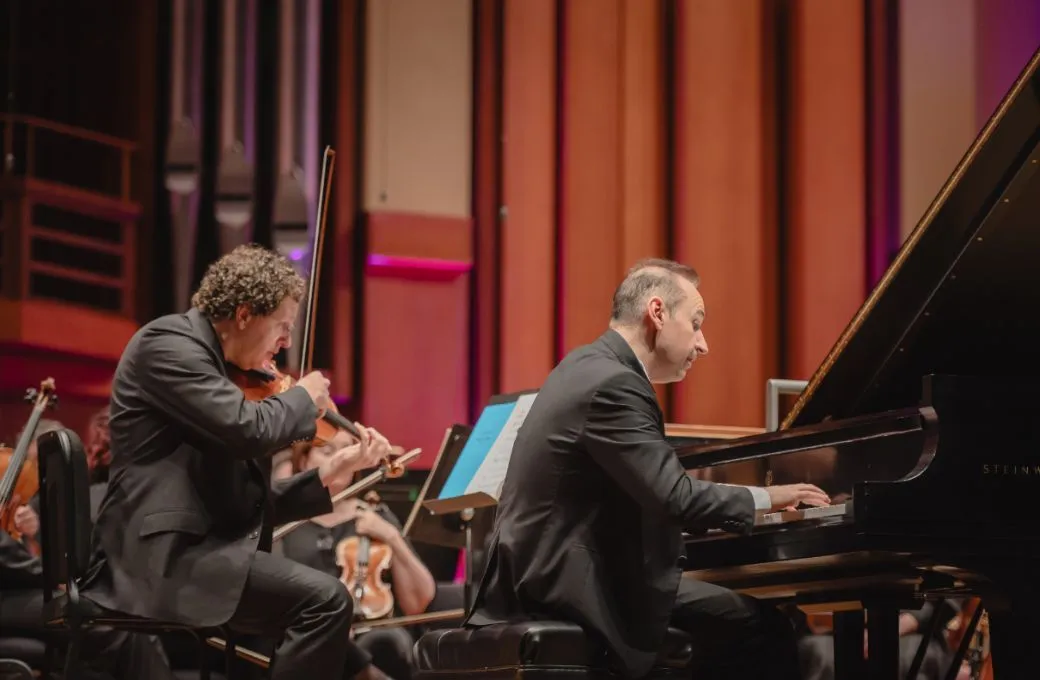
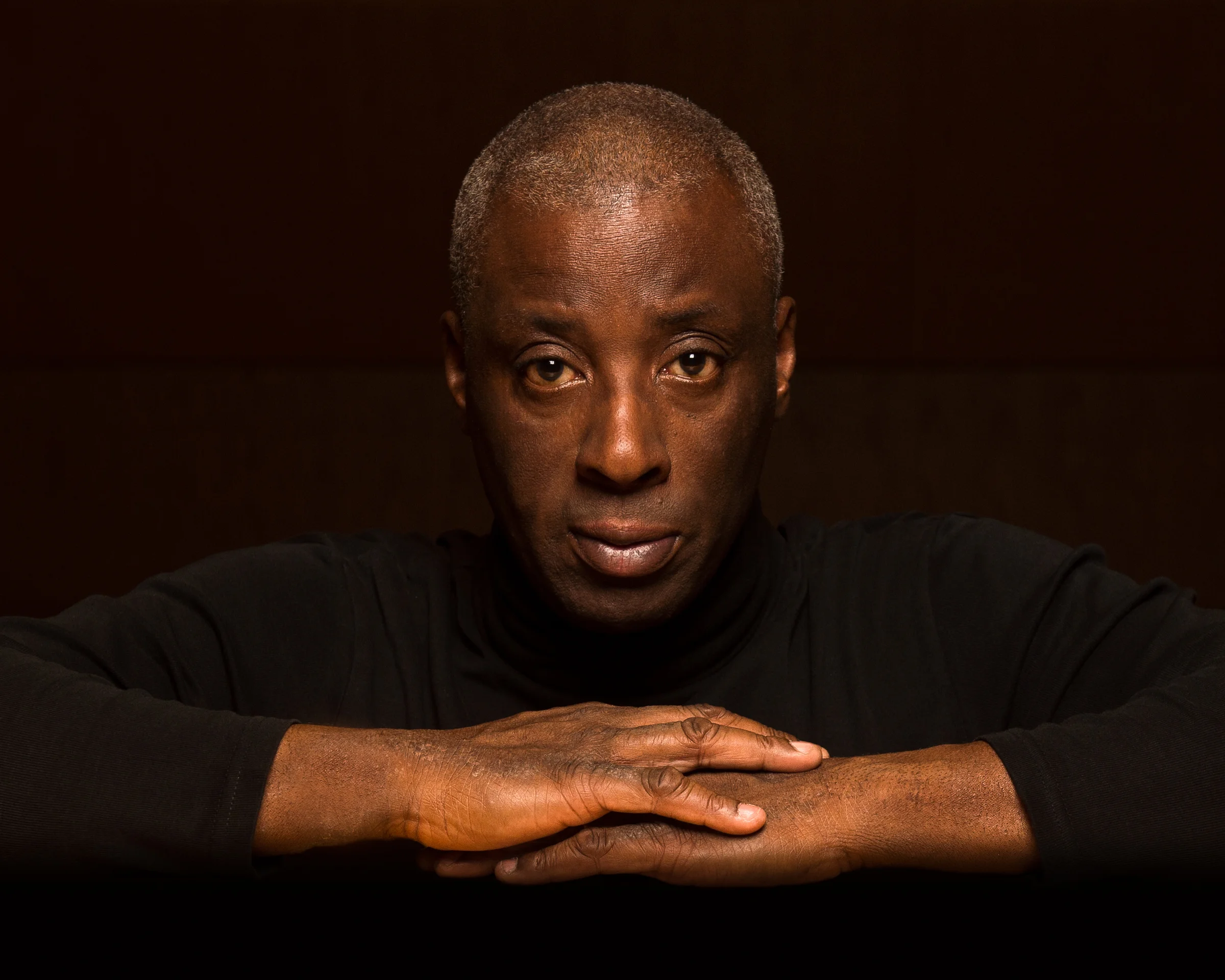
PostClassical Ensemble begins the new year with Amazing Grace, a program centered around Jeffrey Mumford’s cello of radiances blossoming in expanding air in its Washington, D.C., premiere. The concert, which music director Angel Gil-Ordóñez will conduct on 10 January 2024 at 7.30 pm at the Kennedy Center Terrace Theater, presents Annie Jacobs-Perkins as the soloist and will also include music by John Newton, George Walker, Margaret Bonds, Gustav Mahler, Gabriel Fauré, and Luciano Berio. Mumford, who also serves as guest curator, will receive PCE’s American Roots Artist Award for his outstanding contributions to American music.
Amazing Grace: In Paradisum
Wednesday, January 10 2024, 7:30pm
Terrace Theater | The Kennedy Center | 2700 F St NW, Washington, DC
Presented without intermission
Jeffrey Mumford, guest curator
Annie Jacobs-Perkins, cello
Katerina Burton, soprano
CAAPA Chorale
Andre Leonard, piano
PostClassical Ensemble conducted by Angel Gil-Ordóñez
PROGRAM:
John Newton: Amazing Grace
George Walker: O Praise the Lord
George Walker: Stars
George Walker: Lyric for Strings
Jeffery Mumford: of radiances blossoming in expanding air (DC premiere)
Gustav Mahler: 4th Symphony. 4th Movement, The Heavenly Life
I’d meant to post this last month but got distracted by a very busy December. For Chorus America’s TheVoice, I wrote about some recent approaches to Handel’s Messiah by choral ensembles seeking to engage with wider communities: from the Saint Paul-based Ahmed Anzaldúa and his group Border CrosSing’s bilingual El Mesías to the choral thought leader Jace Kaholokula Saplan’s Messiah i ka ’Ōlelo Hawai’i.
Conductor Kahchun Wong and Chorus master Joseph Crnko with Seattle Symphony and Chorale and soloists Katie Van Kooten, Sara Couden, Thomas Cooley, and Hadleigh Adams (left to right); image (c) Jorge Gustavo Elias
Seattle Symphony performed its very first concert on this day in 1903: 24 musicians conducted by Harry F. West (details in Greg Lange’s History Link article here).
Meanwhile, the 21st-century incarnation of SSO is ringing in the New Year with guest conductor Kahchun Wong at the helm in performances of Beethoven’s Ninth Symphony. Yes, it has become cliché to do the Ninth at year’s end, but last night’s opening performance for a very full house genuinely stood out as a memorable event — particularly in comparison with the disappointments of last year’s go.
The Singapore-born Wong conducted the entire score from memory, drawing on a fascinating and idiosyncratic repertoire of gestures to communicate with the musicians: sweeping, circular motions, painterly hand waving, finger wiggles, a variety of crouching positions and leaps. It was clear how deeply he has internalized this music, allowing him to keep it flowing on multiple tracks at once. Phrases had compelling, dramatic shape, while he kept the larger arc of each movement, and of the entire Ninth, continually in view. The thunderous dive into the first movement’s recapitulation, for example, was breathtaking — a rare instance where the shift to major sounds not triumphant but catastrophic.
Especially noteworthy: Wong’s astonishing sensitive to dynamics and ability to shape and blend the sound to such fine gradations. Crescendos in the first two movements in particular were extraordinarily effective and dramatic. For the Scherzo, he opted for a somewhat more-measured tempo in lieu of the infernal machine that is frequently whipped into operation, and he likewise steered clear of the speeded-up pacing that has become fashionable for the slow movement, making a proper differentiation between the Adagio and Andante double variations. Nothing extreme, just a thorough immersion in the musical thought and feeling itself. Again, Wong’s loving attention to details of texture — the gentle throb of the violas not as accompaniment but part of the Adagio’s first theme — added immeasurably to this interpretation.
Also in contrast to last year, the Seattle Symphony Chorale sounded much better prepared and present, producing waves of glorious sound, as well as genuine mystery in the section where Beethoven re-enacts Gregorian chant — though the unnecessary use of amplification was an unfortunate choice. The soloists — soprano Katie Van Kooten soprano, alto Sara Couden, tenor Thomas Cooley, baritone Hadleigh Adams — didn’t blend particularly well, though some individual contributions made a powerful impact (especially Cooley’s exhortation in the high-flying march variation).
In Wong’s reading, only the “terror fanfare” that initiates the finale disappointed as too restrained. But his understanding of this massive structure as a miniature drama came through resoundingly, making for the finest overall Ninth I’ve heard in several years. Nothing else shares this program, so the focus is entirely on Beethoven. Even if you think you’ve heard the Ninth enough times for now, this one is worth seeking out. Wong returns to conduct Mahler’s Third in April. And judging from this success, we may be seeing a good deal more of him ….
I had the pleasure of writing the program essay for Sir András Schiff’s series of recitals devoted to the keyboard works of J.S. Bach currently under way at the Boulez Saal in Berlin.
Boulez Saal is publishing lots of terrific content on its digital platform. The selection of exclusive video productions includes introductory talks (free access) as well as performances (with a membership) by the celebrated pianist.
I’m currently obsessed with John Milton’s wildly original On the Morning of Christ’s Nativity from his official debut as a poet from 1645 — in particular, its juxtaposition of the birth of Jesus and the demise of the old order (and its anticipations of Auden):
The Oracles are dumb;
No voice or hideous hum
Runs through the arched roof in words deceiving.
Apollo from his shrine
Can no more divine,
With hollow shriek the steep of Delphos leaving.
No nightly trance or breathed spell
Inspires the pale-ey’d priest from the prophetic cell.
The lonely mountains o’er,
And the resounding shore,
A voice of weeping heard and loud lament;
From haunted spring, and dale
Edg’d with poplar pale,
The parting Genius is with sighing sent;
With flow’r-inwoven tresses torn
The Nymphs in twilight shade of tangled thickets mourn.
In consecrated earth,
And on the holy hearth,
The Lars and Lemures moan with midnight plaint;
In urns and altars round,
A drear and dying sound
Affrights the flamens at their service quaint;
And the chill marble seems to sweat,
While each peculiar power forgoes his wonted seat.
Fascinated by the discovery reported by Archaeology News of an ancient domus that likely belonged to a senatorial family. The former luxury mansion, located between Palatine Hill and the Roman Forum, contains a “rustic” or “rural” mosaic preserved in astonishingly good condition:
“Dating to the last decades of the second century BC, the mosaic is made from sea shells, Egyptian blue tesserae, precious glass, tiny fragments of marble and other colored stones.”One of the most striking features of the domus is an extraordinary mosaic wall covering referred to as “rustic,” dating back to the last decades of the 2nd century BCE. Composed of sea shells, Egyptian blue tesserae, precious glass, marble fragments, and other colored stones, this mosaic depicts intricate scenes of naval warfare and conflict. The representation includes weaponry, trumpets, and ship prows adorned with tridents and rudders, symbolizing triumphs both on land and at sea.”
I reviewed the Tannhäuser production currently onstage at the Met:
Could there be something like a Tannhäuser ‘curse’? Wagner fretted until the end of his life about how to improve his first opera inspired by medieval German sources. Like a beckoning Venus, the work tempted him at various points in his life to return and tinker away at what he perceived as its imperfections. Wagner’s most significant revision, fashioned for his operatic debut in Paris in 1861, spurred the most humiliating fiasco of his mature career – not because of the ‘content’ but because of protests in part related to Napoleon III’s policies involving the Austrian Empire….
I’m looking forward to the final performance on Sunday afternoon of Seattle Opera’s Holiday Chorus Concert showcasing the company’s impressive chorus.
The program features a blend of sacred and secular repertoire, including Ottorino Respighi’s Lauda per la natività del Signore, the choral prelude to Pietro Mascagni’s Zanetto, “Laudi alla Vergine Maria” from Giuseppe Verdi’s Quattro pezzi sacri, “There Is No Rose” by local composer Melinda Bargreen, choruses from Gian Carlo Menotti’s Amahl and the Night Visitors, the “Sleep” chorus from Kevin Puts’s Silent Night, and selections from A Consort of Choral Christmas Carols by P.D.Q. Bach.
Run time approx. 90 minutes with intermission Tickets are $65 general public, $50 subscribers; 1 Flex Pass credit. Sold out, but call Audience Services for the latest ticket availability at 206.389.7676.
Seattle Opera Chorus also plans to undertake its first-ever tour of the Puget Sound region in January, with concerts at McIntyre Performing Arts & Conference Center in Mount Vernon on Friday, January 26, and at Vashon Center for the Artson Vashon Island on Sunday, January 28.
“This is a unique chance to see the chorus outside of a production and to get to know these artists more intimately,” said Chorus MasterMichaella Calzaretta, who is in her second full season with the company. “Our program offers a range of music that highlights the chorus’s power and dynamism and that won’t be heard anywhere else in Seattle. An opera chorus offers a truly distinct sound world—I think we might surprise some people with the breadth of emotions and styles we’re capable of producing.”
David Robertson led the Seattle Symphony; photo by Brandon Patoc
SEATTLE — So far this season, the Seattle Symphony has played under no fewer than seven conductors as part of its central masterworks subscription series. The musicians have shown remarkable flexibility in adapting to a dramatically varied range of podium styles and personalities for each program as the search for a permanent music director continues.
Eric Banks conducts The Esoterics during a rehearsal Nov. 19 at Queen Anne Christian Church in Seattle (Luke Johnson / The Seattle Times)
In advance of this weekend’s world premiereof A Calendar of Light by composer Dale Trumbore and poet Barbara Crooker (Sat in Seattle and Sun in Tacoma, both at 7.30pm), I wrote a profile of Eric Banks and The Esoterics, the ensemble he created as a grad student 30 years ago in Seattle:
Eric Banks: photo (c) Jorge Gustavo Elias
Having arrived early to a Queen Anne church to lead a rehearsal of a cappella choral group The Esoterics on a crisp November afternoon, founding director Eric Banks wraps up his latest text exchange with composer Dale Trumbore. They’ve been going over details of her new choral work, A Calendar of Light, which The Esoterics will premiere in just a little more than a month. Even though daylight saving time ended a couple days before — creating the brief illusion of an extra hour — he stays focused and has no temptation to slow down….