MEMETERIA by Thomas May

Music & the Arts

Azrieli Music Prize Laureates for 2024

from left: Jordan Nobles, who received the Azrieli Commission for Canadian Music; host Sylvia L’Écuyer; Jason van Eyk, Managing Director of the Azrieli Centre for Music, Arts and Culture; Ana Sokolović, Chair of the Advisory Council for the Azrieli Music Prizes and Juan Trigos, who won the first-ever Azrieli Commission for International Music;(c) Tam Photography for Danylo Bobyk

The biennial 2024 Azrieli Music Prizes (AMP) laureates have just been announced by the Azrieli Foundation. They include Yair Klartag, who received the Azrieli Commission for Jewish Music; Josef Bardanashvili, who won the Azrieli Prize for Jewish Music; Jordan Nobles, who received the Azrieli Commission for Canadian Music; and Juan Trigos, who won the first-ever Azrieli Commission for International Music — a prize created to promote greater intercultural understanding. View a recording of the livestream of the announcement here.

Each Laureate will receive a prize package valued at over CAD 200,000, including a cash award of CAD 50,000; a world-premiere performance of their prize-winning work in Montréal by the Orchestre symphonique de Montréal Chorus at the AMP Gala Concert on October 28, 2024; two subsequent international performances; and a professional recording of their prize-winning work.

Each cycle of AMP’s four music prizes focuses on an instrumentation category. The 2024 Laureates will compose choral works for a cappella choir and up to four additional instruments and/or vocal soloist(s).

This year, three distinguished panels of luminaries and experts selected the winning submissions, including Chaya Czernowin, Tania León, Dr. Neil W. Levin, Samy Moussa, Gerard Schwarz, and Ana Sokolović. 

The Azrieli Prize for Jewish Music is awarded to a composer who has written the best new undiscovered work of Jewish music. Josef Bardanashvili won for his Light to My Path Choral Fantasy for Mixed Choir, Saxophone, Percussion, and Piano. Each movement in his composition grows from one of the various states of belief – supplication, ecstasy, doubt, gratitude – outlined in the Book of Psalms. 

In selecting Bardanashvili, the Jury noted that his “music is beautiful. It is clear the composer is putting his own inner musical and sacred world on display and, in so doing, inviting the listener to enter it.”

The Azrieli Commission for Jewish Music is awarded to encourage composers to creatively and critically engage with the question, “What is Jewish music?” It is given to the composer who displays the utmost creativity, artistry, technical mastery and professional expertise in their response to this question. 

For the Commission, Yair Klartag will create The Parable of the Palace, an 18-minute work for choir and four double basses. The work will draw on Jewish philosopher Maimonides’s (1138-1204) famous parable to investigate the limits of logic and reason in explaining reality and the metaphysical. The Parable of the Palace will divide the choir and double basses into four smaller ensembles, in which each choir approaches–but never quite reaches–the pitch of the double bass. 

The jury praised Klartag for “meeting a very high standard in how his music clearly connects at all levels and yet manages to evade our expectations.”

The Azrieli Commission for Canadian Music is offered to a Canadian composer to create a new musical work that engages with the complexities of composing concert music in Canada today. Jordan Nobles’s proposal – Kanata for Large Choir – will be a 15-minute tribute to the Canadian landscape inspired by travel across Canada. Each section of the new work will be composed on the land as Nobles travels through it. The work will feature the modern and First Nation names of the rivers, lakes and mountains from each province.

The jury credited Nobles as “a strong composer who writes music that is unashamedly honest and clearly in his voice. His compositions are elemental, expansive and engaging, pulling you into his sound world.”

The Azrieli Commission for International Music is offered to a composer who engages with the world’s diverse cultural heritage. 2024 laureate Juan Trigos will honour the pre-Hispanic culture of his native Mexico with his commissioned work Simetrías Prehispánicas. The 20-minute composition for chorus, amplified flute, trombone, percussion, and keyboards will incorporate text by anonymous and major Aztec poets from the 15th century in their original Nahuatl and Spanish translations.

Reviewing Trigos’s proposal, the jury praised him as “a gifted composer whose music is polished, rhythmic, original, well-orchestrated and directional.” 

More details about the AMP Gala Concert, featuring the premiere of all four Prize-winning works by the OSM Chorus, conducted by Andrew Megill, will follow in 2024. 

Filed under: competitions, music news

New Artist of the Month: Jonas Frølund

I wrote about the young Danish clarinetist Jonas Frølund for Musical America:

The layered musical personality that emerges from Jonas Frølund’s debut portrait album,Solo Alone and More, is cause enough to sit up and take notice. That it consists almost entirely of solo clarinet playing by a newcomer who only completed his training last year (at the Paris Conservatoire) makes the achievement genuinely astonishing….

continue

Filed under: clarinet, Musical America, New Artist of the Month

Out of the Ashes of Smyrna

Cappella Romana has created an extraordinary and rare program on the theme of the endurance of Byzantine chant traditions near the end of the Ottoman Empire that were preserved by the diaspora of Greek-speaking refugees from the city once known as Smyrna (now İzmir). Performances will be in Seattle (10 November at 7.30pm at St. Demetrios Greek Cathedral) and Portland (11 November at 8pm at St. Mary’s Cathedral and 12 November at 3pm at Holy Trinity Greek Orthodox Cathedral). You can also access the performance online a week after the premiere.

In 1922, one of the worst episodes of “ethnic cleansing” reached its climax with the Burning of Smyrna and the massacre of Greeks and Armenians in this multicultural center. Cappella Romana’s John Michael Boyer writes in his program essay of the violence, all too familiar from current events, which overtook this “most important commercial port in the Eastern Mediterranean … the image of an international cosmopolitan city with the Greek element paramount in a modernized economy and an urbane society”:

According to American eye-witnesses, on the 13th of September at noon, the Kemalists set fires in the Greek and Armenian districts of the city, forcing its 400,000 Greeks to run toward the wharf. At night, on the narrow strip of the Quai, the inhospitable night sea ahead and flames approaching behind, the Greeks were in a living Hell. Ships of the allied fleet in the open sea, following orders which they had received from their countries, observed “systematic political neutrality.”

The program presents chants from psalmody and hymnography from the Smyrnean tradition, including chants associated with the Sunday of the Samaritan Woman (St. Photeiní) and from the Divine Liturgy from Smyrna, Asia Minor, and the diaspora. Among the composers are Kosmás Evmorphópoulos of Madytos (1869-1901), Nikólaos Georgíou, Protopsáltis of Smyrna (ca. 1790-1887), Pétros Philanthídis (1840-1915), Christóoulos Georgiádis of Kessáni (19th c.), Triandáphyllos Georgiádis (1865-1934), Michael Perpiniás (1903-1975), and Pétros Manéas (1870-1950), and Panyiótis Gerogiádis Kiltzanídis of Prousa (1815-1896).

Filed under: Cappella Romana, music news

Rachel Barton Pine and Kristiina Poska Dazzle with the Royal Scottish National Orchestra

Kristiina Poska conducts violinist Rachel Barton Pine and the RSNO © Leighanne Evelyn Photography

I had the pleasure of covering the Royal Scottish National Orchestra’s latest concert in Edinburgh, which featured two guest artists in remarkable sync:

Although the most recent work on this weekend’s Royal Scottish National Orchestra programme dates from 1952, audiences are still just beginning to make its acquaintance. The ongoing reappraisal of the twentieth-century African American composer Florence Price would not be possible without the contributions of performers who have championed her music….

continue

Filed under: Aaron Copland, conductors, Florence Price, review, Sibelius, violinists

Carnevolar XI: Halloween Aerial Spectacular

This sounds like a Halloween event you won’t find anywhere else: Carnevolar XI: DéComposition combines choreographed acrobats with live orchestral music such as Mussorgsky’s Night on Bald Mountain and Saint-Saëns’s Danse Macabre.

Seattle Modern Orchestra has just launched a collaboration with Emerald City Trapeze, whose Halloween performances attract hundreds of people from all over the Pacific Northwest every year. Remaining performances are Friday October 27 and Saturday October 28; doors and bar open at 7:00 PM, show begins at 8:00 PM. Saturday, October 28th (Halloween-themed dance party): Party begins after the show and ends at 2:00am.

The show and dance party are both 21+ only. Bring a valid ID for entrance.

Filed under: music news

Azrieli Music Prizes: Review of London Debut Concert

Bows (l to r): Georgia Mann, Pouyan Biglar, Iman Habibi, Jessika Kenney, Sharon Azrieli, Steven Mercurio, Zhongxi Wu, Rita Ueda and Naomi Sato (photo: Chris O’Donovan Photography)

The Toronto-based Azrieli Music Prizes recently presented the European premieres of all three works by the 2022 laureate composers in AMP’s London debut concert at Cadogan Hall. Here’s my report:

Launched a little less than a decade ago, the Azrieli Music Prizes (AMP) have already grown to become Canada’s largest competition devoted to music composition. The biennial initiative has expanded to embrace an international scope and last weekend made its London debut at Cadogan Hall with a programme of all three prize-winning works from the 2022 rounds. Steven Mercurio, a member of the AMP Jewish Music jury, led the Philharmonia Orchestra and guest soloists.

continue

Filed under: commissions, competitions, music news, review

Kronos at 50

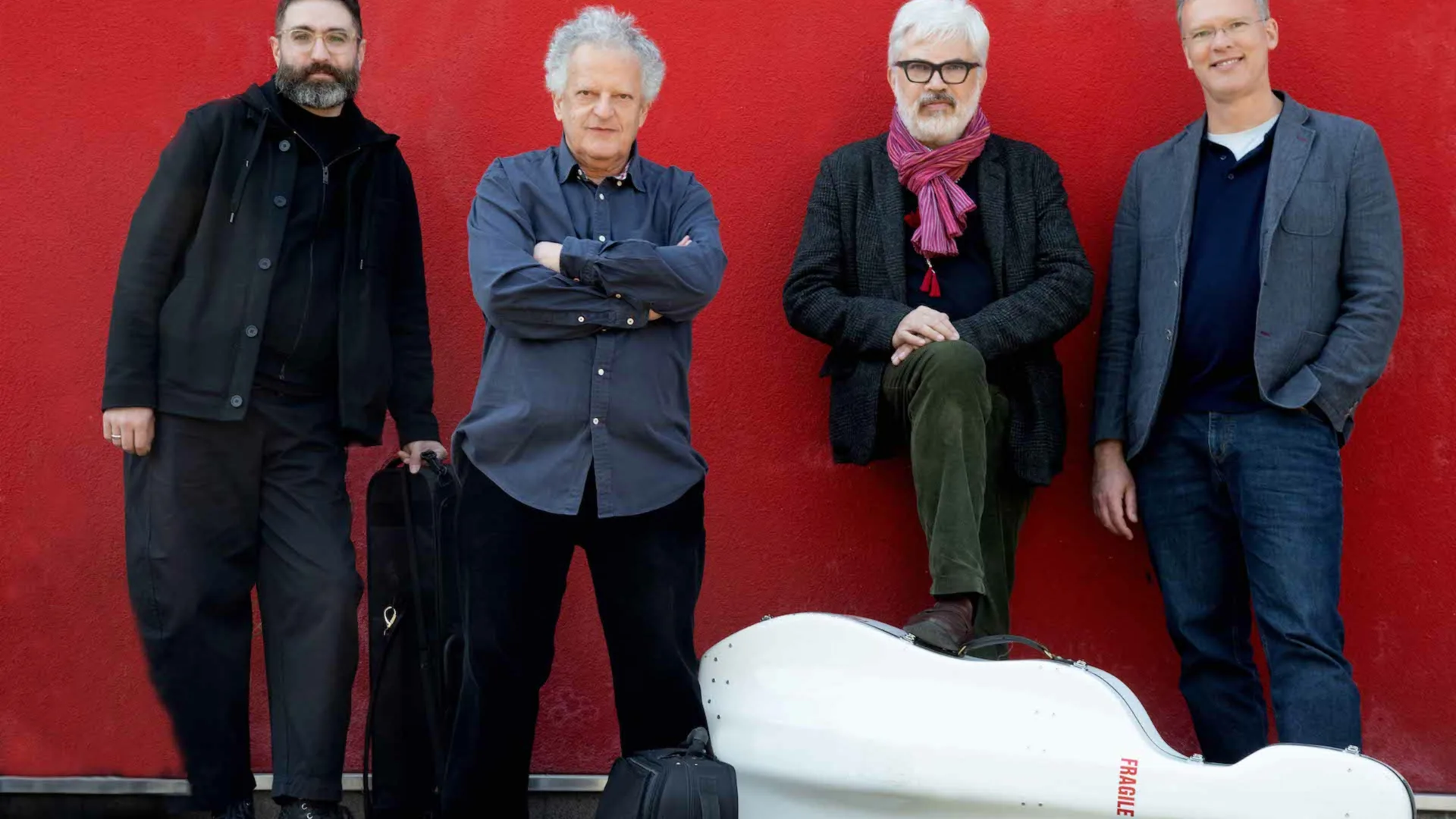
My profile of the Kronos Quartet at 50  is available in The Strad.

Ask violinist David Harrington what he’s listening to these days, and you’ll get an instant glimpse into the insatiable hunger for discovery that defines and fuels Kronos Quartet, the trailblazing ensemble he founded in 1973. With Kronos Quartet, it’s the ears that are the window to the soul.

continue

Filed under: Kronos Quartet, new music, string quartet

Gerard Schwarz and His All-Star Orchestra Embark on Season Five

Celebrating Unity around the World is the title of  inaugural program of the All-Star Orchestra’s 10th-anniversary season; the program aired on September 28, 2023. Founded by the conductor Gerard Schwarz in 2012, soon after he concluded his 26th season as music director of Seattle Symphony, the All-Star Orchestra comprises prominent musicians from leading orchestras across the United States, including members of the New York Philharmonic and Metropolitan Opera Orchestra, Boston Symphony, Cleveland Orchestra, National Symphony, and San Francisco Symphony, among several other ensembles. 

The name evokes the kind of showcase team of outstanding athletes familiar from the sports world, or perhaps a supergroup of highly successful rock stars — but with the All-Star Orchestra, the focus is first and foremost on the music itself. Schwarz, who also serves as music director, devised the orchestra as a project through which top-level musicians could join together to cultivate symphonic music and share their love of this living tradition through public broadcasts. Each concert/program lasts about an hour and includes the maestro’s commentary — a latter-day response to Leonard Bernstein’s Omnibus concerts that spread the word about classical music a half century ago. 

One unusual aspect of this multiple Emmy Award-winning project is that the All-Stars do not play for live audiences but record their performances in a ballroom at the Manhattan Center with an array of 18 high-definition television cameras and a team of top audio engineers. The results are not only broadcast on member PBS stations but released as DVDs on the Naxos label, and ensuring the highest quality for both the visual and the audio dimensions has been essential to the project’s success. 

Along with the musicians he handpicked to be members of the All-Star Orchestra, Schwarz thus invited the eminent producer Dmitriy Lipay, winner of five Grammy Awards, to serve as audio director and producer for the project. The audio engineering team for the present program provided excellent sound — an especially notable feat in view of the vast spectrum of orchestral sonorities Schwarz selected to showcase, ranging from Richard Wagner to the 20th-century master Alberto Ginastera to the contemporary American composer Valerie Coleman. 

Schwarz chose a thrilling opening work with music from Wagner’s early opera Tannhäuser. Rather than simply present the Overture from the original 1845 version, however, he leads the musicians in an engrossing account of the expanded version Wagner created for the Paris production of 1861 — an event of unique music historical importance despite the provocations of the composer’s opponents, which forced the production to close after just three performances. Schwarz thus segues from the Venusberg music at the center of the original Overture to the extended ballet Wagner devised for the opening scene in Paris. 

The ballet depicts both the orgiastic transports sponsored by Venus in her forbidden realm, where Tannhäuser has been sojourning, and a feeling of languor from the bacchantes’ overstimulation. Schwarz seamlessly move from the vocabulary of Wagner’s earlier style to the chromatically saturated harmonies he had explored in Tristan und Isolde and imported into his revision of Tannhäuser. The overlap of languages from different eras of Wagner’s creative life intensifies the fundamental conflict between sacred and profane love that gives Tannhäuser its universal appeal.

A very different ballet music emerges in Alberto Ginastera’s dance suite from Estancia. The Argentine composer wrote this ballet score commissioned in 1941 by the forerunner of New York City Ballet. Schwarz coaxes the players to revel in Ginastera’s vibrant use of rhythms, majestically clashing harmonies, and boldly colorful orchestration as he pairs percussion and horns to evoke a sense of raw, elemental power. But the quasi-Impressionist evocation of the cattle ranch’s shimmering horizons is also well-calibrated. For the climatic dancing tournament that ends the suite, Schwarz coordinates a kaleidoscopic battery of percussion and trumpets.

The final selection is Umoja: An Anthem for Unity by the American composer and flutist Valerie Coleman, also known as the founder of the pioneering Imani Winds ensemble. Coleman initially composed Umoja for women’s choir; in 2019 the Philadelphia Orchestra commissioned her to write an expanded instrumental version. The title comes from the Swahili word for “unity” and refers to “the first principle of the African Diaspora holiday Kwanzaa.” 

In her interview segment on the program, Coleman discusses how Umoja is the kind of music that “not only sends a message but is also part of a vast tradition of passing stories down, passing heritage, just through the element of intuition and feel.” She situates the sonority of African drums within a classical framework, evoking a sense of the vast Serengeti: “You feel the wildlife — you feel all of these things that are truly what I think is Mother Earth … the core of unity,” according to Coleman. “And we’re truly celebrating the moment and the message of unity.”

Ultimately, Schwarz has said that his vision for the All-Star Orchestra project is to make great music as accessible as possible. This first program of the latest season is proof that with the right elements in place, he can offer an appealing alternative to the many distractions competing for our attention span. 

Review (c) 2023 Thomas May. All rights reserved.  

Filed under: All-Star Orchestra, audio engineering, Gerard Schwarz, review

Mahani Teave’s Debut Tour

Mahani Teave, shown here at a Harriman-Jewell Series recital, will appear at Benaroya Hall Oct. 14 with the Seattle Symphony. (Courtesy of the Harriman-Jewell Series)

I’ve been fascinated — and moved — by Mahani Teave’s story since first writing about her two years ago (link to my New York Times story here). The pianist from Rapa Nui is now in the middle of her inaugural North American tour and comes to Seattle this weekend.

Unlike the rest of her tour, which has been focused on solo recitals, this stop involves a piano concerto and marks Teave’s debut with the Seattle Symphony. She will perform Mozart’s D minor Piano Concerto, K. 466, with SSO assistant conductor Sunny Xia on the podium, on 14 October at 7.30pm at Benaroya Hall. Teave will also play two new solo works inspired by Rapa Nui musical tradition. The other orchestral pieces include Aaron Jay Kernis’s Elegy and Juhi Bansal’s Songs from the Deep.

My Seattle Times preview of Mahani Teave’s PNW appearance:

For Mahani Teave, Benaroya Hall is a long way from home in more than the geographical sense….

continue

Filed under: music news, pianists, Seattle Symphony

John Adams’s Naïve and Sentimental Music

A rare opportunity to hear John Adams’s mammoth symphonic canvas on this weekend’s San Francisco Symphony program. Esa-Pekka Salonen, who led the Los Angeles Philharmonic in the world premiere in 1999, conducts. My program note here.

The program also includes the world premiere of Jesper Nordin’s Convergence, with violinist Pekka Kuusisto as the soloist.

Filed under: Esa-Pekka Salonen, John Adams, program notes, San Francisco Symphony

Archive

Enter your email address to follow this blog and receive notifications of new posts by email.