MEMETERIA by Thomas May

Music & the Arts

Queer Baroque: Sound Salon Explores Identity in Baroque Music

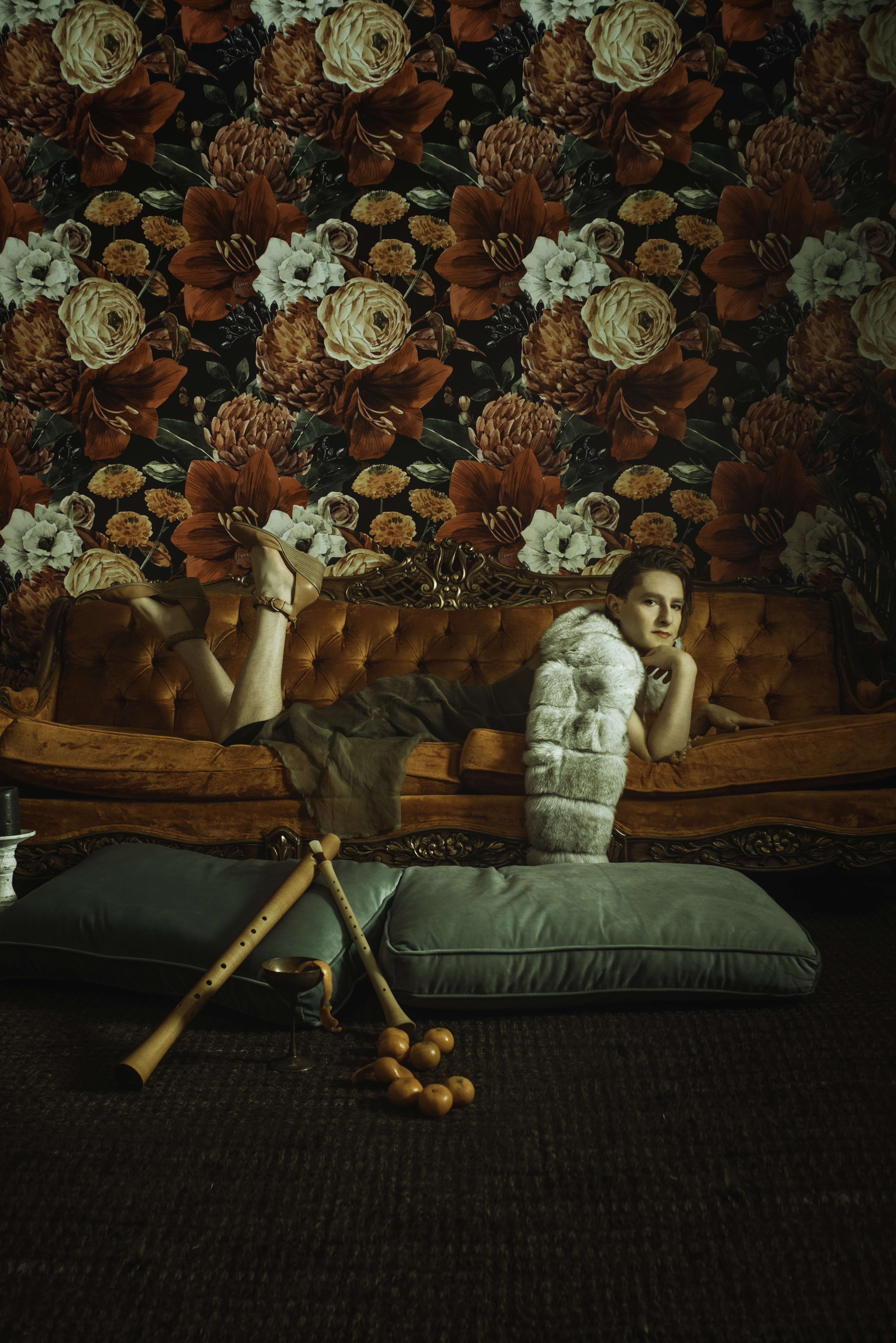
Byron Schenkman, founder and artistic director of Sound Salon; photo (c) Shaya Lyon

Queer Baroque, the final program of Sound Salon’s season, salutes Pride Month with a blend of 17th-century drama and 21st-century insight to celebrate musical and personal otherness. Two performances: May 30 at 7.30pm at the Royal Room (5000 Rainier Ave S.) and May 31 at 7.00pm at the Good Shepherd Center (4649 Sunnyside Ave N.); tickets are “pay-as-you-wish, “with a suggested price of $36 and a minimum of $1.

Baroque music thrives on extremes. For harpsichordist Byron Schenkman, its emotional volatility and theatrical flair – hallmarks of a musical language that flourished in 17th- and early 18th-century Europe – hold special resonance for contemporary audiences and performers alike.

That belief underpins Queer Baroque, the final program of the season for the chamber music series Sound Salon, which Schenkman (they/them) founded and directs. They will be joined by multi-instrumentalist and composer Niccolo Seligmann (they/them) and male soprano Elijah McCormack (he/him) for two performances to mark the start of Pride Month with an imaginative – and often playful – exploration of identity and otherness through the lens of Baroque music.

The concept for the program goes back to the mid-1990s, spanning a period of profound cultural shifts – both in Seattle’s LGBTQ+ community and in the broader evolution of how queerness, and those who embody it, are seen, represented and understood.

“Thirty years ago, I helped plan a concert called ‘Queer Baroque,’ featuring musicians from Seattle Baroque Orchestra – and it nearly got canceled,” Schenkman recalls. When the presenting board at the time asked them to change the name in order to receive funding, they refused. “It generated so much buzz that the concert ended up being packed and was a big success. But one of the board members resigned over it.”

About a year and a half ago, as Schenkman began planning a version of the program updated to reflect a more expansive understanding of queerness, they assumed the moniker “Queer Baroque” no longer conveyed the edginess it once had. But in light of rising anti-LGBTQ+ rhetoric, particularly targeting trans communities, the title – and the conversation around it  –  feels urgent again.

Elijah McCormack

“At a time when we see ‘deviants’ scapegoated for so many social ills, I think this is an important program,” says McCormack, a transgender singer who specializes in early music. “Queer identities have been medicalized and classed as inherently disordered. It’s not new for these things to be pathologized or demonized.”

The program combines vocal and instrumental music from the 17th and 18th centuries to consider what it means to be seen as “other.” In the Baroque era, that otherness was often manifested in portrayals of madness in songs and stage works.

“This fascination with madness in the 17th century reflects a change in society’s attitude that led to people perceived as ‘crazy’ being put into institutions – behind bars – where the ‘normal’ people would come to look at them,” says Schenkman, who describes themself as “a queer Jewish keyboard player and scholar.”

By the 19th century, they add, “the idea of madness had become entangled with gender and sexuality: to be overly emotional, feminine or sexually expressive was often pathologized as insanity. Being queer, being feminine and being ‘crazy’ were increasingly seen as overlapping.”

That entanglement between emotional excess and perceived deviance plays out in several of the program’s vocal works. Barbara Strozzi’s cantata L’Astratto is a comic mad scene in which the singer cycles unpredictably through emotions and musical styles, unable to settle on one. “It’s also a kind of self-portrait of someone trying to locate themselves through art,” Schenkman says.

For McCormack, the piece culminates “in a touching sort of lament about the perils of losing yourself, even your own mind, in the love of someone else.”

He also performs Élisabeth Jacquet de la Guerre’s cantata Susanne, a retelling of the biblical story of Susanna and the Elders. “It’s so common for women – and people perceived as women  – to be punished for maintaining agency over their own bodies,” McCormack says. “I imagine that, for Jacquet de la Guerre, it was powerful to set a text about a heroine who defies the entitlement of men in authority. It’s still powerful today.”

Another vocal highlight is Henry Purcell’s From Rosy Bowers, a theatrical song in which a chambermaid feigns madness to trick Don Quixote. “Here we have a woman pretending to be crazy to manipulate a character created by a male writer and composer,” Schenkman says. “It’s like putting on a drag show: playing with the stereotypes and tossing them on their heads. Some of that happens musically as well.”

Not all of the program’s queerness is textual or narrative. Some of it lies in performance choices themselves – like Seligmann playing a movement from one of Jacquet de la Guerre’s violin sonatas on the bass viol, a bowed, fretted string instrument from the Baroque era that’s typically used for lower lines. Schenkman likens the transposition to subverting gender expectations: “What’s a high voice supposed to do? What’s a low voice?”

Niccolo Seligmann; photo: Anna Schutz

“This program uses Baroque music to celebrate that queerness is not just one thing,” Seligmann says. “It’s a rich panoply of experiences that intersect with other axes of identity, including the time period.”

Seligmann, whose playing has been widely heard both in live concerts and on soundtracks like the Netflix series The Witcher, also contributes an example of their work as a composer. McCormack will sing a scene from Seligmann’s Julie, Monster: A Queer Baroque Opera, inspired by the life of Julie d’Aubigny (1673-1707), a genderfluid opera diva and swordfighter. Seligmann describes the excerpt as “a queer seduction aria that proposes more egalitarian ways of sharing intimacy,” connecting Julie “with a herstory of gender rebels” and today’s audiences “with queer ancestors for us to honor and celebrate.”

For Schenkman, who has long blended scholarship with activism, the concept of “Queer Baroque” continues to resist classification. “We’re all a little queer, and a little not,” they say. “The problem isn’t difference. The problem is pretending there’s only one normal way to be. I want whoever’s in the room to enjoy looking at different ways people diverge from norms – and celebrate it.”

Filed under: Baroque opera, Byron Schenkman, early music, gay, queer, , , ,

Fire, Water, Secrets, and Memory: Tan Dun Returns to Seattle Symphony

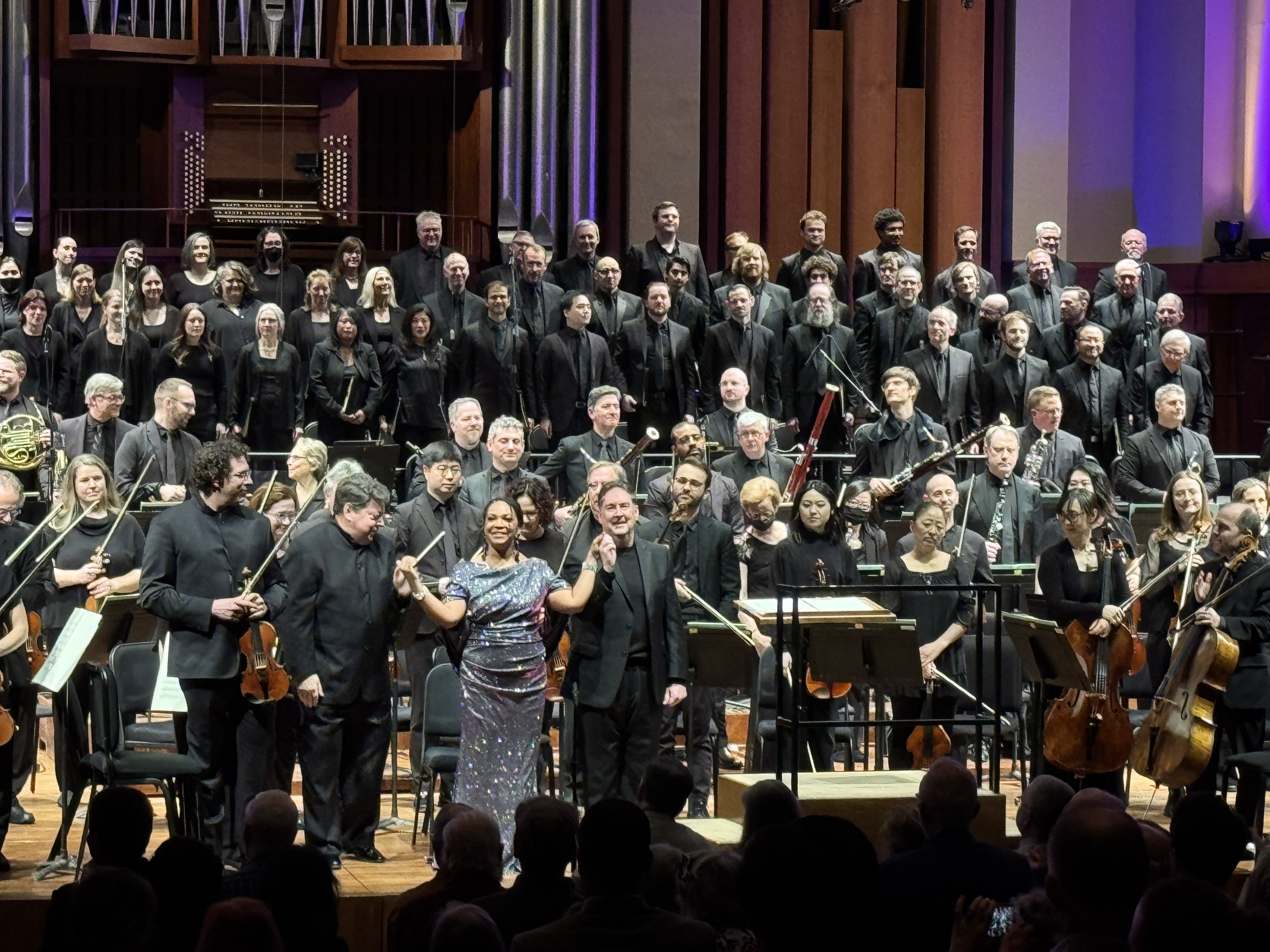
Tan Dun conducting Seattle Symphony, with harpist Xavier de Maistre; photo (c) James Holt / The Seattle Symphony. 

A concert built around the artistry of composer, conductor, and cultural connector Tan Dun offers no shortage of conceptual fascination. This week’s concerts mark his turn to the Seattle Symphony podium after a memorable debut here two and a half years ago, when he led his monumental Buddha Passion.

Raised in a remote village in China’s Hunan province and shaped equally by Western classical forms and ancient Chinese traditions, Tan – who since 1986 has been based in the US – brings a theatrical imagination and a deep sense of ritual to the concert stage. He framed last night’s program with a pair of short but intensely colorful works by two early 20th-century composers he admires, serving as explosive preludes to two large-scale pieces from his own catalog.

A vivid reading of Manuel de Falla’s Ritual Fire Dance, from his 1915 ballet El amor brujo, crackled with rhythmic energy and flared with instrumental color, setting one element against another as water came into protracted focus in the ensuing Concerto for Water Percussion and Orchestra, composed by Tan in 1998 and dedicated to Tōru Takemitsu. 

Tan draws out music’s ritual origins in intriguing ways. Percussionist Yuri Yamashita not only performed the solo part but dominated much of the piece with an almost shamanistic stage presence – from the way she mindfully released droplets from her fingers to the immersive sound world she conjured using bowls of wood or glass, as well as gongs dipped mesmerically into one of two large water bowls over which she presided. 

At some moments she even softly vocalized, as if engaged in a conjuring. Enhancing the theatrical experience were three video screens suspended above the orchestra –- one large at center and two smaller flanking it – which projected close-up footage of the bowls and the rippling water, inviting the audience into the tactile, elemental, organic world of the piece.

The orchestra functioned as a kind of elemental chorus, not so much a counterpart as a kaleidoscopic resonator. Specific voices occasionally emerged from the fabric – most memorably in a luminous duet between Yamashita and principal cellist Efe Baltacıgil, whose tone seemed to bloom out of the water’s surface. A long, improvisatory cadenza captivated with its focus on the physicality of sound.

Still, the Water Concerto’s meditative pacing and episodic structure began to feel diffuse over the span of the piece – though whether this observation reflects a Western bias about form or a real imbalance in proportions is a fair question. In any case, this was a welcome opportunity to hear the work in live performance. 

After intermission came a brisk, glittering account of Stravinsky’s Feu d’artifice (Fireworks), a four-minute burst of orchestral color dating from a little before the young Russian’s leap to international fame with The Firebird.

To this taste, the highlight of the program was Nu Shu: The Secret Songs of Women – a 13-part multimedia concerto that unfolded with greater emotional clarity and formal cohesion than the Water Concerto. Nu Shu originated as a commission for a harp concerto from the Philadelphia Orchestra but, inspired by Tan’s immersive research into a little-known linguistic and social tradition from his native Hunan Province, grew into a sui generis fusion of concerto, orchestral narrative, and ethnomusicological-sociological documentary.

The “secret songs” in question have to do with the vanishing Nüshu tradition — a secret, invented language once used by women in rural Hunan to communicate among themselves in calligraphy and through chanting and song. Tan painstakingly researched the small community of remaining Nüshu speakers, capturing their voices and stories in multiple videos. 

Nu Shu unfolds in 13 short video portraits created by the composer and his team – shown on the three screens above the stage – each anchored in the landscapes of the women’s daily lives and their stories of isolation and solidarity, which are shared from generation to generation.

For Tan, the harp represents “the most feminine of instruments,” writes Esteban Meneses in his excellent program note, and serves as “an intermediary between what the composer imagines as the future – the Western orchestra – and the past, represented by the microfilms.”

Xavier de Maistre was the eloquent soloist, playing a kind of bard who mediates these stories and showing remarkable dynamic and expressive range. Tan likewise assigns a crucial narrative role to the orchestra, which acted as a bridge translating memory into something shared and immediate.

Repeat performance on Friday, May 16, at 8 pm.

(c)2025 Thomas May

Filed under: review, Seattle Symphony, Tan Dun, , , ,

Archive

Enter your email address to follow this blog and receive notifications of new posts by email.