MEMETERIA

Icon

Arts writing by Thomas May

More Than a Pretty “Song to the Moon”: Rusalka as a Dark Parable

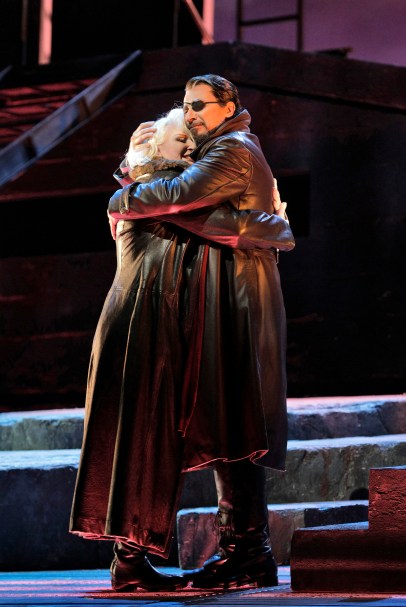
Rusalka-Rachel Willis-Sørensen as Rusalka and Kristinn Sigmundsson as Vodník the Water Goblin in Dvořák’s-credit-Cory Weaver

Rachel Willis-Sørensen (Rusalka) and Kristinn Sigmundsson (Vodník the Water Goblin); photo (c) Cory Weaver/San Francisco Opera

David McVicar and San Francisco Opera have been a winning combination in recent seasons. Here’s another to add to the list along with Meistersinger and Les Troyens: the company’s staging of Rusalka in June. My review for Musical America (with another on Carmen and Orlando to follow):

SAN FRANCISCO — After he returned from his sojourn in the New World, Dvořák ceased writing symphonies and turned for inspiration to Czech legend and folklore: first, in a brilliant quartet of symphonic poems — still too infrequently programmed — and then in a pair of operas.

It’s not surprising that Rusalka, the second of these, has found its place in the international repertoire as the most popular of Dvořák’s ten stage works. Along with offering a poetic variant on a universally resonant archetype (the folktale of the mermaid), Rusalka fuses Dvořák’s disparate musical influences into a versatile musical language ideally primed for narrative effectiveness.

That said, Rusalka, which premiered in 1901, suffers from some basic dramaturgical weaknesses as well as stretches of second-rate musical inspiration. But the production presented by San Francisco Opera — only the second time Rusalka has been staged by the company — swept these shortcomings aside to reveal a richly layered and fully engaging work…

My continue

Filed under: Antonín Dvořák, directors, review, San Francisco Opera

Yuval Sharon’s Berlin Flute Seeks to Put the Magic Back in Mozart

Papageno (Florian Teichtmeister) and Tamino (Julian Prégardien) in The Magic Flute credit: Monika Rittershaus : Staatsoper Berlin

Papageno (Florian Teichtmeister) and Tamino (Julian Prégardien), with dead serpent, in The Magic Flute (credit: Monika Rittershaus / Staatsoper Berlin)

BERLIN — In his program note for the new production of The Magic Flute that he directed for Berlin Staatsoper, Yuval Sharon recalls the image of a young girl in Ingmar Bergman’s 1975 film version who is repeatedly shown to be deeply absorbed watching a performance of Mozart’s opera unfold. She represents the ideal audience member for this work, according to Sharon, because she retains the childlike capacity for wonder.

continue


Filed under: directors, Musical America, review, Yuval Sharon

Der Kindheit Verzauberung

Tonight was the final performance of Berlin Staatsoper’s new Zauberflöte production, directed by Yuval Sharon. Very happy to have been able to catch this — report forthcoming for Musical America. (Available here.)

Filed under: Berlin Staatsoper, directors, Mozart, Musical America, Yuval Sharon

Refugees and Opera

Joshua Barone recently reported for the New York Times on a new production at Bavarian Staatsoper for part of its youth program that was “written for refugees, children of immigrants and born-and-raised Bavarians.”
The piece draws on Rossini’s Mosè in Egitto, among other sources. “Theater about the refugee crisis has proliferated in Germany since migration into the country reached its peak in 2016,” writes Barone. “But rarely has the hot-button issue … entered the realm of opera, much less children’s opera.”

Actually, the Zuflucht Kultur Association has been engaging with these issues for several years, offering productions of Mozart’s Zaide, Così, and Idomeneo (which traveled to the Lucerne Festival last summer), Carmen, Orfeo, and, most recently, Don Carlos.

Here’s a radio interview (in German) with mezzo Cornelia Lanz, one of the association’s producer-performers, on their Orfeo production.

Filed under: directors, music news, opera

Lohengrin Stream from Bayreuth

If you missed the live stream last Wednesday (25 July, the traditional opening day of the Bayreuther Festspiele), through the magic of VPN you can still view a recording of the complete performance on BR-Klassik here. Apparently it’s still available to view until 31 December.

This staging by Yuval Sharon is a genuinely historic production. This is the first time an American has directed at Bayreuth. It also marks the achievement of a complete “cycle”: Christian Thielemann, 59, has now conducted all ten canonical Wagner operas at Bayreuth. And one of the production’s especially powerful elements is the portrayal of Ortrud — Wagner’s most fascinating villain? — in her return to the Green Hill after a long hiatus.

David Allen’s review for the New York Times is particularly astute:

[Sharon] is the closest thing that American opera has to a genuine avant-gardist. … This is a story, in the director’s mind, not about Elsa’s tragic failure to keep her faith, but about Lohengrin’s unreasonable demands, about the hypocrisy of his — and, therefore, modernity’s — inability to live up to his own vision for society. And who will make that hypocrisy clear, challenge it, overcome it? The women.

Christian Wildhagen, writing for the NZZ, was less swayed by the young American. He observes:

Doch dass die offenbar tiefschürfend reflektierte, mit allerlei Romantik und Farbensymbolik angereicherte Szenerie und das über weite Strecken biedere, ermüdend oft auf die Zentralperspektive fixierte Stehtheater im weiten Bühnenrund sinnstiftend (und nicht bloss illustrierend) ineinandergriffen – davon kann auch hier keine Rede sein.

The indispensable perlentaucher.de rounds up some of the German critical press here.

Filed under: Bayreuth Festival, directors, Wagner, Yuval Sharon

Götterdämmerung Caps Triumph of SFO Ring

Götterdämmerung-SFO

Iréne Theorin as Brünnhilde with members of the San Francisco Opera Chorus in Wagner’s “Götterdämmerung.” Photo: Cory Weaver/San Francisco Opera

Here’s the final installment of my coverage for Musical America of San Francisco Opera’s extraordinary Ring cycle.

SAN FRANCISCO—If Siegfried highlights Zambello’s ability to tease out vital, three-dimensional characters from a deceptively simple surface, Götterdämmerung shows her clarifying the most complex component of the entire cycle–an installment which introduces an entire generation of characters new to the Ring–with a gripping theatrical momentum. The night/day dichotomy of the Prologue aptly summed up the diametrical viewpoints of this staging…

continue

Ring review: Part 1

Ring review: Part 2

Ring review: Part 3

Filed under: directors, Musical America, review, Ring cycle, Runnicles, Wagner

San Francisco Opera Reforges Its Ring

SFO-Ring-Walküre

Iréne Theorin as Brünnhilde and Greer Grimsley as Wotan in Wagner’s “Die Walküre.”
Photo: Cory Weaver/San Francisco Opera

Here’s Part 1 of my review for Musical America of San Francisco Opera’s Ring, directed by Francesca Zambello and conducted by Donald Runnicles:

SAN FRANCISCO—One sure gauge of a successful Ring production is when it consistently leads you to a liminal state: to a kind of hovering between rapt focus on the moment and deliberation about what it all implies. Over the course of San Francisco Opera’s Ring, I found myself taking that threshold for granted, encouraged to ponder the connections, musical and dramatic, that are essential for Wagner’s project to make its desired impact.

continue [behind MA’s paywall]

Filed under: directors, Musical America, review, Ring cycle, San Francisco Opera, Wagner

Bye Bye Beethoven

Last night at Zellerbach Hall, Patricia Kopatchinskaja’s remarkable staged concert,Bye Bye Beethoven, opened the Berkeley edition of the programs she just curated for the 2018 Ojai Festival. One of the most creative deconstructions I’ve seen in a while, one that really achieves what it sets out to do: to shake us out of the stupor of the safe concert routine and show us what we’ve been missing.

According to Kopatchinskaja, “the concert routine around the world is so absurd,” continually replaying the same icons “with not very much imagination relevant to our time.” Bye Bye Beethoven dramatizes her concern “about petrified traditions. I don’t think Beethoven would be happy to know that in the future his music would take so much space.”

It’s not iconoclasm—ultimately, a Puritan approach—but rather a wittily inventive transformation of perceptions that motivates Bye Bye Beethoven.

This is the kind of work being done all the time in the visual arts, in poetry, in fiction, in film. Why can’t we have more of it in concert life?

Filed under: Cal Performances, directors, Patricia Kopatchinskaja

Musical America’s Artist of the Month: Louisa Proske

DSC_9631 (1)

Louisa Proske; photo by Russ Rowland

Congratulations are in order for the talented and brilliantly original director Louisa Proske, this month’s featured Artist of the Month at Musical America:

Only a week is left before tech rehearsals start for Heartbeat Opera’s fourth
annual spring festival, but Louisa Proske remains intently focused on our
conversation….

continue reading

Filed under: directors, Musical America, profile

Opera Omaha’s Inaugural ONE Festival Proves Up to Its Ambitions

OmahaOne

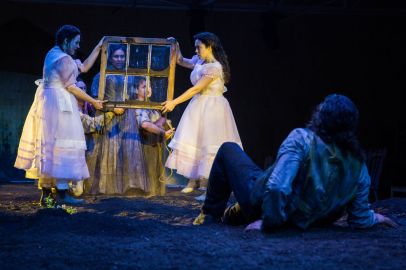
Proving Up by Missy Mazzoli and Royce Vavrek, directed by James Darrah, with John Moore, Talise Trevigne, Michael Slattery, Cree Carrico, Abigail Nims, Andrew Harris, and Sam Shapiro; photo (c) Emily Hardman

My coverage of the inaugural ONE Festival at Opera Omaha is now live on Musical America. (I’m afraid there’s a paywall.)

I devoted Part 1 to the world premiere of Proving Up, the brilliant new opera by Missy Mazzoli and Royce Vavrek in James Darrah’s staging:

Part 1

Part 2

Filed under: American opera, directors, Musical America, new opera, Opea Omaha, review

Archive

Enter your email address to follow this blog and receive notifications of new posts by email.