An impressive debut album from iSing Silicon Valley: titled Here I Stand (and released by Innova Recordings), this collectioncelebrates “the power of girls to change the world as they raise their voices in remembrance, in strength, and in the pure, shared delight of coming together to sing.”
The ISing ensemble, founded in 2013 and consisting of more than 300 singers from grades 1 through 12 in Silicon Valley, has collaborated with the likes of Meredith Monk as well as Voces8 and Cappella SF.
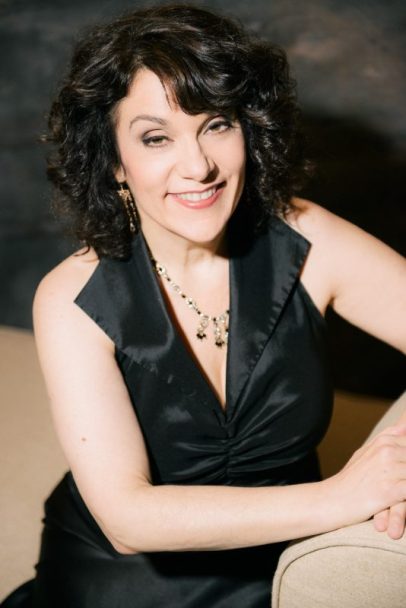
Here I Stand highlights iSing’s commitment to presenting newly commissioned works and premieres. iSing Artistic Directors Jennah Delp-Somers and Shane Troll conduct, with accompanists Anny Cheng and Anna Khaydarova and guest artists Emily Botel (violin), Ron Ho (violin), Lesley Robertson (viola), Warren Wu (cello), Kent Reed (percussion), and Meredith Clark (harp).
TRACK LISTING
1. Only in Sleep, Ēriks Ešenvalds
2. Ave Generosa, Ola Gjeilo, Ave Generosa
3. In Your Light, Daniel Elder (arr. iSing commission, 2019)*
4. 365, Daniel Elder (arr. iSing commission, 2019)*
5. Never Shall I Forget (Nos. 1-3), Adam Schoenberg (iSing commission, 2019)*
6. Like a Singing Bird, Bob Chilcott
7. Birds’ Lullaby, Sarah Quartel
8. Salut Printemps, Claude Debussy
9. Here I Stand, Karen Linford (iSing commission, 2016)*
As we in the USA continue to languish with no serious leadership from the federal government, no rational plan to combat the coronavirus pandemic and allow for a safe return to social activity, other countries are getting their feet back on the ground, however tentatively. Performances are slowly returning in Europe, an encouraging sign that we can still only admire from afar.
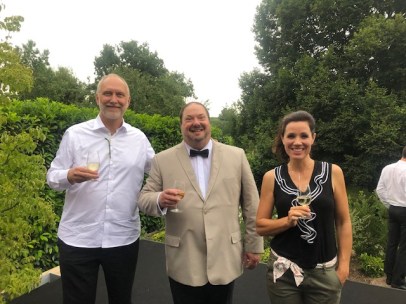
Recently my good friend Thaddeus Burns presented an open-air concert to a small group of guests at his home in Soral, just outside Geneva. The wonderful conductor John Fiore, who is based in Geneva and frequently appears at such venues as the Semperoper in Dresden and the Deutsche Oper Berlin, led a group of colleagues who call themselves ensemble d-cadences — comprising members of the l’Orchestre de la Suisse Romande. The lineup included the pianist Todd Camburn, a renowned lieder accompanist and vocal coach, and the elegant young soprano Clémence Tilquin.
Fiore put together a tasteful program of Mozart, Ravel, and Dukas (for which I contributed some comments — see below). A group of guests sat outdoors as the ensemble played on the patio. I’ve also embedded a few short excerpts into the program listing to share a little taste of this enchanting early evening of music and camaraderie.
Further to the east in Switzerland, Lucerne Festival had just opened its “Short Festival” — the replacement of its usual month-long festival, this time for ten days and in accordance with the country’s safety regulations. “Life is live” as Lucerne put it — and so is music as we most want to experience it.
Grand Concert de Déconfinement et Soutien John Fiore conductor
Todd Camburn piano
Clémence Tilquin soprano
Wolfgang Amadé Mozart (1756-91)
Overture to Der Schauspieldirektor (1786)
Second and Third movements from the Piano Concerto in C major, K. 467 (1785)
Todd Camburn
“Come Scoglio” from Così fan tutte, K. 588 (1789-90)
Clémence Tilquin
“Ch’io mi scordi di te? – Non temer, amato bene,” K. 505 (1786)
Clémence Tilquin and Todd Camburn
Encore: “Dove sono” from Le nozze di Figaro, K. 492
All Mozart arrangements for small orchestra by John Fiore
Interval
Maurice Ravel (1875-1937) Ma mère l’Oye (1910)
Arranged for chamber orchestra by Iain Farrington
Paul Dukas (1865-1935) L’âprenti sorcier (1897)
Arranged for chamber orchestra by Iain Farrington
left to right: Todd Camburn, John Fiore, Clémence Tilquin
Opera and Concerto: Mozart Finds Independence in Vienna
On the morning of 16 March 1781, Wolfgang Amadé Mozart arrived in Vienna for what was officially intended as a three-month stay. He had traveled to the capital at the request of Prince-Archbishop Hieronymus Colloredo, the ruler of Salzburg (as well as his employer), whose sizable entourage—including three musicians—he joined and with whom he was expected to return when the sojourn drew to a close.
Yet the 25-year-old Mozart was abuzz with plans of his own. Already on the evening of his arrival, despite having been on the road during the previous night, he performed for a gathering of prominent aristocrats. Wolfgang confided to his father that he found Vienna a “magnificent place—and for my métier the best place in the world.”
His ambitions precipitated a dramatic rupture with Colloredo, whose demeaning treatment brought the composer’s long-simmering resentment to a boil. Mozart was dismissed from the staff of the powerful man he derisively called “the arch-booby” and stayed in Vienna for the remaining decade of his all-too-short life.
One factor that made the Habsburg capital so attractive was the prospect that here Mozart could devote himself increasingly to opera. The confidence that enabled him to make this decisive leap into a freelance career had been bolstered by his recent experience in Munich with Idomeneo, a major creative breakthrough. Its unprecedented perspective on the moribund opera seria (“serious opera”) tradition already marked a kind of declaration of independence for the composer.
Within months of determining to stay in Vienna, Mozart was immersed in his comic opera Die Entführung aus dem Serail. It premiered in the summer of 1782 and scored a great success, eventually becoming his most popular work for the stage during his own lifetime. Abduction belongs to the genre of German Singspiel, a hybrid of music and spoken text that Emperor Joseph II had attempted to foster, though the style of Italian comic opera (opera buffa)—presided over by Antonio Salieri—won pride of place at the imperial court.
Der Schauspieldirektor (“The Impresario”) is Mozart’s only other contribution to the Singspiel genre before The Magic Flute from his final year. The composer described it as “a comedy with music,” and the part for which he was responsible—an overture, a pair of arias, a trio, and a sparkling quartet-finale—has long since been enjoyed for its own sake, detached from the brief comic play about jealous, rivaling prima donnas who audition for a struggling company.
Emperor Joseph asked Mozart to write the piece as part of the entertainment accompanying a private state visit at his palace in Schönbrunn. There it was first presented to the guests in a kind of competition with another one-act comic opera in Italian by Salieri (Prima la musica e poi le parole). Gottlieb Stephanie, who happened to be an actual impresario and had furnished the composer with the libretto for Abduction, penned the text.
Mozart dashed this music off in just two weeks early in 1786 while still working on Le nozze di Figaro, his brilliant reinvention of the opera buffa genre (to be premiered in the spring). The satirical framework of Der Schauspieldirektor is undeniably lightweight, but the score benefits from the inimitable panache and superb craft that Mozart had been perfecting in his recent Viennese compositions—above all, in the soon-to-be-unveiled Figaro. The effervescent Overture by itself comprises a virtual comedy-within-the-comedy, using mirthful contrasts to set the stage for the ensuing story of vainglorious artists who in the end find harmony.
Along with allowing him to pursue his passion for opera, Vienna represented what Mozart hailed as “the land of the clavier.” The keyboard became his alter ego. It kept him in the public eye through performances that—in addition to income from private lessons—provided a significant source of income once he chose the risky path of the freelance artist. Mozart developed the piano concerto into a remarkable synthesis combining artistic and popular appeal.
The Viennese piano concertos might also be seen as forming a bridge between Mozart’s advanced instrumental composition and his operas—a kind of laboratory where he experimented with ideas that animate his music for the stage. In his hands, the piano concerto became nothing less than a signature genre: Mozart used it to introduce his latest musical thoughts while simultaneously showcasing his personality as a performer. At the same time, he took pride in the commercial appeal of this music.
Mozart presented the K. 467 Concerto in C major in March 1785. The handbill advertising the concert drew attention to a special enhancement mechanism: “an especial large forte piano pedale will be used by him for improvising.” The Mozart expert Neal Zaslaw describes this as a custom-built, “legless fortepiano which lay on the floor underneath his regular piano… [and] was played by means of a pedalboard with the feet, as an organ is played … to reinforce the low notes.”
Mozart conceived the C major Concerto as a work of impressive architectural scope, with a symphonic richness of detail. The slow movement is all the more effective as a contrast to the bright, festive atmosphere of the movements surrounding it (we hear the finale following this Andante). Veiled strings and poignant harmonies intensify the aura of intimacy. Here, especially, we can imagine the soloist as the protagonist of a voiceless opera, entrusted with an aria that unspools at extravagant length.
Mozart’s biographer Maynard Solomon writes of “an entire movement of unrelieved, time-stopping beauty, blending chromatic pathos and measured tranquility … for something just short of eternity.” Mozart brings us back to earth with a scintillating finale built around a smile-inducing theme. The genial interplay between orchestra and piano reenacts the spell Mozart knew how to cast as a celebrity pianist in Vienna.
By 1790, when Così fan tutte was premiered, changes in the taste of the fickle Viennese public as well as a devastating economic fallout resulted in hard times for Mozart. The demand for new piano concertos had all but disappeared. The genesis of Così, his third and final collaboration with the librettist Lorenzo Da Ponte, remains mostly obscure. As court librettist until his abrupt dismissal in 1791, Da Ponte had collaborated with Salieri, who even had dibs on his libretto for Così but abandoned it after composing two trios.
Two years had passed since Mozart’s most recent commission for the stage, and he returned with a vengeance. Set in Naples, Così fan tutte stands apart even within the great Da Ponte trilogy of operas—arguably, it represents his most sophisticated achievement in music theater. This erotic comedy revolves around the wager two male friends take up to prove the existence of faithful love. They put this to the test by disguising themselves and attempting to seduce each other’s fiancées—a project that, to their mutual chagrin, proves all too successful. The opera’s sextet of characters interlock and recombine with the provocative, rueful geometry of a play by Tom Stoppard.
The more serious and steadfast of the two women, Fiordiligi is given a pair of character-defining arias (like the Contessa in Figaro). In the first of these, Come scoglio (“Like a rock”), she articulates her determination to remain faithful through Mozart’s intensely virtuosic vocal line, which calls for dramatic leaps over a treacherously wide range. So dramatic, indeed, that they parody the stock poses of serious opera. (Mozart was doubtless also indulging in some fun at the expense of Salieri’s mistress Adriana Ferrarese, who created the role of Fiordiligi.)
In March 1786, a month after the premiere of Der Schauspieldirektor, Mozart composed another aria on the topic of unwavering love, which was interpolated into a private revival in Vienna of Idomeneo. He reworked this material at the end of the year to fashion a stand-alone scena, the recitative and aria Ch’io mi scordi di te? – Non temer, amato bene (“Will I forget you? … Fear not, beloved”). The occasion was an upcoming farewell concert by the English soprano Nancy Storace. She had recently created the role of Susanna at the premiere in May of Le nozze di Figaro and was now leaving Vienna behind. Whether Storace and Mozart themselves became lovers is purely speculative, but the composer took pains to inscribe his personality into this spacious concert aria by creating a prominent part for solo piano, which offers an animated accompaniment to the beautifully ornamented vocal line.
“The Poetry of Childhood”: Music by Ravel and Dukas
“Mozart is absolute beauty, perfect purity,” Maurice Ravel once remarked about his favorite composer. He was proclaiming an essential aspect of his own credo: the quest for a perfectly crafted beauty, cherished for its own sake, lies at the heart of the French composer’s aesthetic. Ravel attributed a kind of pleasure principle to his idol: “What Mozart created for the enjoyment of the ear is perfect.” (Beethoven, in contrast, he cited as a misstep in the direction of subjectivity—the example of a composer who “overacts, dramatizes, and glorifies himself, thereby failing to achieve his goal.”)
Ravel associated such perfectionism with the innocence of childhood fantasy. As an adult, he felt a strong kinship with children and consciously tapped into fantasies of childhood as a source of musical poetry.Ma mère l’Oye (“Tales of Mother Goose”) in fact originated as a project intended specifically for children. The music alludes to classic fairy-tales as recounted Charles Perrault in his anthology of 1697 and by two other French authors. “It was my intention to awaken the poetry of childhood in these pieces,” the composer remarked, “and this naturally led me to simplify my style and to thin out my writing.”
Ravel befriended Ida and Cipa Godebski, a Polish couple whose salons attracted a striking array of Parisian artists. He also became close to their two children and between 1908 and 1910 wrote a sequence of five pieces for piano four-hands for them as a private gift—though it was not the Godebski children but two young girls who have the Paris premiere in 1910.
Ma mère l’Oye is best known in its later (1911) orchestral incarnation, which Ravel also expanded into a ballet. But the arrangement of the original for chamber orchestra by Iain Farrington that we hear suggests the prismatic nuance of the orchestrated version and at the same time conveys the forthright intimacy of the piano writing that was its starting point.
The solemn processional of the opening pavane of Sleeping Beauty ushers us, along with the stricken princess, into a dreamlike state. We sense the ambivalence of Ravel’s summoning of childhood: a past recaptured, nostalgically, by the knowing adult’s memory. Tom Thumb (Petit Poucet) tells of a poor woodcutter’s son who tries to plan a way out of the woods by dropping breadcrumbs, only to discover that birds have eaten them.
In Laideronnette, the Empress of the Pagodas, a princess has been made the ugliest woman in the world by a witch’s spell but finds herself transported into a magical kingdom where her miniature subjects, robed in gems, serenade her with an orchestra whose instruments are made of the shells of walnuts and almonds.
Ravel traces the unlikely duet of Beauty and the Beast as a Satie-like waltz that leads to another transformation—and a love that blossoms. Prince Charming himself arrives to awaken Sleeping Beauty in the final number, and the forest becomes an enchanted garden—the apotheosis of imaginative fantasy.
Although not written specifically for children, L’apprenti sorcier (“The Sorcerer’s Apprentice”) has become identified de facto with one of the best-loved classics for young ears thanks to the legacy of Walt Disney’s 1940 film Fantasia and its spinoffs. The cartoon animation of Paul Dukas’s symphonic poem from 1897 even served as the original prototype for the Fantasia idea. Its popularity has eclipsed the rest of the slender catalogue of works that the highly self-critical Dukas allowed to be published.
The source material for this “symphonic scherzo” was itself a version of an archetypal tale of magic power gone awry that similarly finds expression, say, in the legend of the golem. Dukas was inspired by the narrative Goethe etches with point and humor in his ballad Der Zauberlehrling, published in 1797. The zombie-like broom that keeps on fetching water because the young apprentice has not learned the spell to make it stop—it only redoubles its efforts after he splits it with an axe—has countless contemporary counterparts, as anyone frustrated by an errant “Alexa” or Roomba can attest.
The success of Dukas’s scherzo is closely allied to his orchestral wizardry, which even inspired a young Stravinsky. Still, Iain Farrington’s arrangement manages to channel the score’s wit and thrilling energy—at times echoing the frenzy of Wagner’s Ride of the Valkyries. After an “establishing shot” that conjures the sorcerer’s milieu with eerie harmonies, Dukas develops his engaging musical narrative from a simple but obstinate, rhythmically captivating motif. Notes on the Program by Thomas May (c)2020
The wonderful Seattle-based pianist Judith Cohen will given a recital on Zoom titled Mighty Miniatures on Sunday 16 August at 4.30pm PST. The program — including music by Beethoven, Scarlatti, Ravel, Debussy, and Prokofiev — is a benefit for the Washington State Governor’s Mansion Foundation, an all-volunteer, non-profit and non-partisan organization.
Judith Cohen is the Artistic Director of the Governor’s Chamber Music Series, which is held at the mansion. She programs two of GMF’s four concerts each season, which runs annually from October through May.
More information on the program and registration here.
Time for live performances to begin again in Lucerne. On Friday Lucerne Festival launches “Life Is Live”, a ten-day-long series of events that invite audiences back into the KKL Concert Hall and other venues.
The Opening Concert also marks a belated debut for the 93-year-old Herbert Blomstedt, who will conduct the LUCERNE FESTIVAL ORCHESTRA for the very first time.
Here’s a list of ways to hear programs being broadcast via livestreams and radio. For example, the Opening Concert (with Martha Argerich as the soloist in Beethoven’s Third Piano Concerto) will be transmitted with a short time-delay, starting at 2pm EST on 14 August on SRF2.
Other notable events: two all-Beethoven recitals with Igor Levit, an all-Schumann recital by the young tenor Mauro Peter, a recital by the saxophonist Valentine Michaud, and Cecilia Bartoli and friends in the Handel-inspired program “What Passion Cannot Music Raise”.
On 18 July at 7:30p.m. (Beijing time), the Shanghai Philharmonic Orchestra (SPO) closes its season with a concert that will be delay-streamed a week later, starting at 1:00p.m. EST (7:00p.m. Central European Time) on Saturday, 25 July, on Facebook and Twitter. The stream will remain available here for viewing for an indefinite period.
SPO Artistic Director Zhang Yi will conduct the orchestra in Bruckner’s Symphony No. 4 (“Romantic”) — part of the ensemble’s complete Bruckner cycle — and Beethoven’s Piano Concerto No. 5 (“Emperor”), with Song Siheng as the soloist.
One sign of hope at least in the music world with regard to live performance: Lucerne Festival, after having to cancel its meticulously planned Summer Festival, has announced a short festival of 10 days that will take its place. Unlike the United States, Switzerland has a functioning government that has actually taken the coronavirus pandemic seriously and is thus in a position to start carefully relaxing restrictions on audience gatherings.
Titled Life Is Live, the short festival includes Martha Argerich and Herbert Blomstedt with the Lucerne Festival Orchestra in the opening concerts, as well as a pair of recitals by Igor Levit, who continues his complete Beethoven sonata cycle.
James Ehnes, Seattle Chamber Music Society artistic director, in the recording studio he set up while sequestered at his home near Tampa, Florida, where he just completed recording Bach’s solo violin Sonatas and Partitas. (Courtesy of Kate Ehnes)
Here’s my story about Seattle Chamber Music Society’s plan to go forward with its beloved, month-long Summer Festival with an online version.
Along with its terrible human toll, the ongoing coronavirus pandemic has ravaged the performing arts. Cancellation announcements are now so routine that the Seattle Chamber Music Society’s (SCMS) decision to proceed with a 2020 Summer Festival comes as a welcome respite…
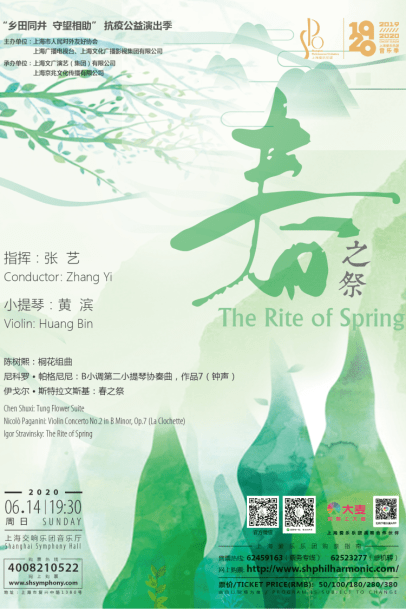
Live orchestral music making is slowly returning to Mainland China. My colleague Rudolph Tang alerted me to this concert from the Shanghai Philharmonic, which is now being streamed from its Facebook page.
More than 150 days since it had to shut, the Shanghai Philharmonic Orchestra resumed its season with this live concert yesterday led by music director Zhang Yi. A socially distanced audience was in attendance, and the concert marks a major effort to globally stream orchestral music from Mainland China.
This isn’t another chamber concert with just a handful of players, as we’ve been increasingly seeing as concert halls in Europe and Asia tentatively return to business. The centerpiece here is nothing less than the stage-crowding Rite of Spring.
Rudolph Tang attended the concert. He reports that the audience was about 350 strong and “had to go through a series of checkpoints, including body temperature check, filling out forms, showing their QR codes, and metal detection” and were additionally required to wear masks throughout the program.
He adds: “The orchestra encored veteran Chinese composer Shi Wanchun’s Long Live the People after Rite. It’s the theme music of the hugely popular film The Founding of the Nation (1989) about how the PRC was formed. The concert was enthusiastically received and the global streaming initiative was covered widely by the local newspapers.”
More green shoots: on Sunday 24 May 2020, the Taiwan Philharmonic (aka National Symphony Orchestra) will begin performing live again in the first of a series of three concerts (to continue on 30 May and 12 June) at Taiwan’s National Theater and Concert Hall.
These three concerts will be live-streamed to a global audience on this YouTube channel. For the first concert — scheduled to begin on Sunday at 19:30 Taiwan time (12:30 CET/7:30 EDT) — music director Shao-Chia Lü will conduct a program of Dvořák/Serenade in D minor, Tchaikovsky/Serenade for Strings, and Tyzen Hsiao/Bang Chhun Hong (“Longing for the Spring Breeze”).
Taiwan has weathered the COVID pandemic especially well to date, without resorting to shutting businesses or implementing lockdowns. The hope is now to show a way back to being able to perform full-scale orchestral concerts again.
The government has allowed a live audience already for this first concert: a total of 500 in attendance, whose temperatures will be checked. Everyone will be required to wear masks, and other safety measures such as spaced seating will be followed. The orchestra envisions as many as 1,000 people who may be able to attend the upcoming concerts.
The performances will be archived afterward and available on the YouTube channel.
During its virtual gala on Thursday, 7 May at 7pm EST, the Los Angeles-based American Youth Symphony will give the world premiere of Geometric Unity by Music Director Carlos Izcaray.
“Due to this current pandemic, we are all truly being required to live in the digital age, which presents us with an enormous opportunity to do things differently and think about what the classical music experience looks like online” said Izcaray. “Geometric Unity was written with this in mind, utilizing new technologies that support the incredible talent of our musicians, and offer an accessible and inspirational listening experience.”
The title Geometric Unity pays homage to the physicist and economist Eric Weinstein “theory of everything”.*
“Izcaray toys with a new musical algorithm developed to create a richly modern, yet palatable harmonic experience,” according to the press release. The piece is “also inspired by jazz vocalist and multi-instrumentalist Jacob Collier, whose songs often feature highly imaginative uses of harmony.”
Along with the performance, the online virtual gala — available on YouTube and at AYA’s page — includes a panel discussion about composing new orchestral works, an online silent auction, a cooking demonstration, and even a little bit of magic.
*Marcus du Sautoy writes about Weinstein’s challenge to Einstein in The Guardian.