MEMETERIA by Thomas May

Music & the Arts

Multifaceted Mason Bates Takes on Steve Jobs

masonbatesDJ-2

My first piece for Rhapsody is now online:

There’s been a lot of buzz recently about the new film portrayal of Steve Jobs, which one critic dubbed a “kind of talk opera.” Turns out there’s an actual opera about Steve Jobs in the pipeline, and it’s by one of the most interesting young American composers at work today: Mason Bates.

continue reading

Filed under: Mason Bates, new music, Rhapsody

Inuksuit Live

Evidence of human presence

Evidence of human presence

Yesterday afternoon Seattle’s Seward Park resonated with the sounds made by nearly a dozen-and-a-half percussionists, along with the contributions of nature, of everyday life in a human-inhabited environment, and of the spectator-participants.

On offer was John Luther Adams’s Inuksuit, a remarkable piece conceived for performance outdoors by an indeterminate collective of percussionists (anywhere from “9 to 99” players). Inuksuit had its West Coast premiere at the Ojai Festival in 2012, and percussionist and educator Melanie Voytovich organized this Seattle presentation.

The timing and location couldn’t have worked out better: hints of the coming fall tinged the mid-afternoon mood — the Autumnal Equinox just around the corner — while a changeable sky opted for outlooks from gloomy cloudcover to full-on sunbursts.

As Melanie points out, the word “inuksuit” (which is plural) connotes “a type of stone landmark used by native peoples of the Arctic region”; more generally, it can be a proxy or evidence of a human who has been present in a space.

Bernd Herzogenrath, a versatile author focused on American studies, observes that Inuksuit “enables listeners and performers to experience a place more fully, while subtly presenting a narrative of life on Earth.”

That’s one aspect I valued especially from yesterday’s performance: the sense that both the “audience” and the performers were absorbed in the same task, seeking a more intense experience together, without division or boundary between the two.

Inuksuit-whirling

Almost reflexively, I initially settled down into position when I realized Inuksuit had actually begun. It was a moment of interesting awkwardness, as I’d been chatting with some friends as people kept on arriving, and we noticed a change of aura — but the piece commences so quietly that you need to have visual cues to notice it’s started. You suddenly become aware of a kind of subliminal wie ein Naturlaut of gentle blowing sounds — JLA out-Mahlering Mahler — which then turn more ceremonial, ritualistic.

That being-caught-short prompted my anxiety about maintaining proper “audience behavior” and made me instantly shut up and stay put. But as the work continued, I felt urged to explore it as much as possible from “inside” by getting up and wandering multiple times around the space, as if joining actors onstage for a play in progress.

It was wonderful: the shifting angles and perspectives — visual and aural — made it all the clearer that there simply is no way to take it all in, to gain a complete perception of what’s happening. And that, along with the John Cagean chance elements of any given performance, is inherent in the beauty of JLA’s conception of this work.

Much of the fascination emerges from such interactions: from seeing other listeners, active audience or chance passersby, as they take note of some gesture or shift in the sound source, in its level of intensity or texture. The unfeigned delight of small children was infectious to watch, and even the attending animals seemed mesmerized:

Inuksuit-dogs

Usually when I’m attending an outdoor performance the ambient sounds are either a pleasant decoration or, in the case of manmade ones like a flight path overhead, disturbing annoyances that I pretend I’m not hearing in an effort to refuse them entry into the experience. But on this occasion I welcomed all that: I wanted these noises to break whatever vestigial fourth wall was there, to bleed their own music to this sound installation.

My colleague Roger Downey remarked that the experience, quite unexpectedly, was like “chamber music” compared to listening to the recording of Inuksuit.

In his preview, Roger points out that “it’s genuinely revolutionary work, representing a new way of playing and listening outside the traditional Western box.”

When I noticed one of the players in a distant corner switch to a siren, I couldn’t help thinking of its difference from the riotous and menacing note the sirens introduce into Varèse’s Amériques, for all their manic humor. Here the effect was almost of a subtle brushstroke.

The inclusiveness of Inuksuit is all. Its random elements gather together across the performance space over the piece’s duration, just as JLA has the players (who were sporting black T-shirts) in-gather in the final minutes, slowly approaching toward the center. This somehow all results in a sense of purpose that is fueled by the energy of everyone present. The music fades back out into inaudibility but has left behind its own evidence.

–(C)2015 Thomas May. All rights reserved.

Filed under: John Luther Adams, new music, review

Magical Magiya

A taste of a young composer who’s got a great season ahead of him:

Sean Shepherd‘s Magiya for the National Youth Orchestra in its inaugural season two years ago, from the BBC Proms.

Filed under: American music, new music

Listening to Iceland

(JPEG Image, 750 × 750 pixels)

With just a few hours here and there over the years spent during layovers at Keflavik Airport, I have yet to make a proper excursion to Iceland (and that most certainly is on my list). But for the time being there’s the composer Anna Thorvaldsdottír.

Her recent release on Sono Luminus, titled In the Light of Air, might seem like another “soundscape” to the casual ear: a cinematic evocation that comfortably conforms to the images we’ve filed away for a specific place on the planet.

A lot of Sibelius gets talked about this way, and it’s happened to John Luther Adams and Alaska as well. But — as with Sibelius and JLA — that’s only a superficial point of entry with Thorvaldsdottír. If these are soundscapes, they’re filled with surprises that question the clichés.

The pregnant repetitions of notes, eerie glides along the strings, the harp’s piquant fall: they all become strangely, even disturbingly, alluring, their gathered patterns distilling an unusual blend of calm and unease: Thorvaldsdottír awakens slumbering mysteries.

Scored for viola, cello, harp, piano, percussion, and electronics, In the Light of Air is a suite comprising four movements: “Luminance,” “Serenity,” Existence,” and — the longest of the four — “Remembrance.” Thorvaldsdottír builds lucid but unpredictable textures using this lovely instrumentarium, with each player eventually emerging as a soloist against the context of the others. The result touches on the archaic, with early musicy drones, but also brings to mind a sci-fi adventure Morton Feldman might have imagined.

Thorvaldsdottír conceived In the Light of Air as an installation integrating music and a lighting design that reacts to both the playing and the breathing of the musicians: the International Contemporary Ensemble (ICE), who premiered the work at the Reykjavik Arts Festival on May 25th 2014.

“Internally I hear sounds and nuances as musical melodies and enjoy weaving various sounds together with harmonies and lyrical material,” says the composer. “Structurally I like working with perspectives of details and the unity of the whole and the relationship between the two.”

Thorvaldsdottír additionally designed an installation of metallic ornaments tom complement her music — known as klakabönd (“a bind of ice”) in Icelandic — which were realized by Svana Jósepsdóttir. Here’s a video that gives at least a little flavor of that experience:

Filed under: CD review, new music

A Day for Pierre Boulez

Pierre Boulez (photo: Georg Anderhub/LUCERNE FESTIVAL)

Pierre Boulez (photo: Georg Anderhub/LUCERNE FESTIVAL)

This past Sunday, Lucerne Festival’s Summer 2015 edition presented an entire “Day for Pierre Boulez” to mark the 90th birthday of one of music’s great revolutionaries (the actual birthday fell on on March 26). Sadly, Boulez was unable to be present in person due to health reasons, but the day argued for his profound enduring influence.

Studded across all of the programmes were eight world premieres from a collection of composers of different vintages and Boulezian inspirations…It was the works written expressly in homage to Boulez that were most revealing of the legacy and challenge he leaves his fellow composers…[T]wo new pieces by György Kurtág and Wolfgang Rihm, both performed with unwavering conviction by the young players of the Academy Orchestra, [were] the most subtle, striking, and moving tributes to Boulez’s life and music…
As the whole Day for Pierre showed, it’s not just the inspiraton of his work as composer, conductor, writer, and teacher: Boulez, it turns out, is an attitude of mind, a way of being in the creative world.

–Tom Service in The Guardian

Every concert was exquisitely curated, and established Boulez in the context of the tradition he founded…
But it was the evening’s programme in Lucerne’s world-renowned concert hall that spoke most loudly of Boulez’s legacy. New works by living masters Wolfgang Rihm and György Kurtág were performed alongside that of young composers by the Lucerne Academy Orchestra…
For the second half, the Academy orchestra donned Boulez T-shirts for the Notations, which, in one form or another, have occupied the composer all his life. The fully orchestrated versions, composed towards the end of the century, were laid bare by the presentation of the original piano pieces of 1945, written when he was just 20. It was a revelation.

–Jonathan McAloon, Telegraph

Here’s a summary of the items that were on the program for this marathon celebration:

13.30, 18.00, and 19.00 | KKL Luzern, Roof Terrace
Chiaki Tsunaba | Justin Frieh
Boulez Dialogue de l’ombre double for Clarinet and Tape

14.00 | Tribute to Boulez 1 | KKL Luzern, Lucerne Hall
Ensemble intercontemporain | students of the LUCERNE FESTIVAL ACADEMY | Matthias Pintscher
Boulez Rituel in memoriam Bruno Maderna | world premieres by Pintscher and Mason

15.15 and 16.00 | Tribute to Boulez 2 & 3 | Kunstmuseum Lucerne
ensembles of the LUCERNE FESTIVAL ACADEMY | Julien Leroy | Yi Wei Angus Lee | Raphaël Ginzburg | Jaclyn Dorr
Boulez Messagesquisse (two versions) |
Mémoriale (… explosante-fixe … Originel)

15.15 | Tribute to Boulez 4 | KKL Luzern, Terrace Hall
string quartets of the LUCERNE FESTIVAL ACADEMY
Berg Lyric Suite

16.00 | Tribute to Boulez 5 | KKL Luzern, Terrace Hall
string quartets of the LUCERNE FESTIVAL ACADEMY
Boulez Livre pour Quatuor

17.00 | Tribute to Boulez 6 | KKL Luzern, Lucerne Hall
Ensemble intercontemporain | students of the LUCERNE FESTIVAL ACADEMY | Matthias Pintscher | Sarah Maria Sun
Boulez sur Incises | world premieres by Holliger and Machover

18.30 | Introduction to Symphony Concert 10 | KKL Luzern,
Concert Hall
A project in response to Boulez’s Notations with Richard McNicol, and Aleksandar Aces | in cooperation with Klavier-Festival Ruhr

19.30 | Symphony Concert 10 – Tribute to Boulez 7 | KKL Luzern, Concert Hall
LUCERNE FESTIVAL ACADEMY Orchestra | Mariano Chiacchiarini | Julien Leroy | Matthias Pintscher
Boulez Notations I–IV and VII (versions for piano and for orchestra) | Pintscher Osiris | world premieres by Kurtág, Moussa, Peszat, and Rihm

Filed under: Lucerne Festival, modernism, music news, new music, Pierre Boulez

Beneath Lighted Coffers

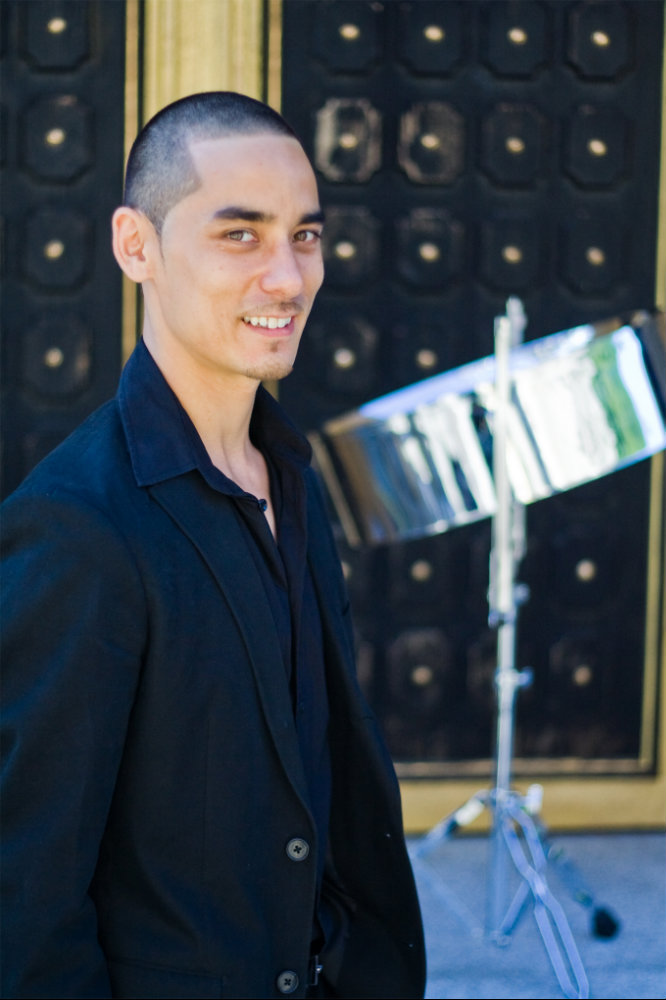
Andy Akiho; photo by Aestheticize Media

Andy Akiho; photo by Aestheticize Media

The National Symphony Orchestra’s program this weekend, conducted by Manuel López-Gómez, is titled Rhythms of the Americas. It will include the world premiere of a new Concerto for Steelpan by the composer and percussionist Andy Akiho, who was recently named winner of the The Lili Boulanger Memorial Fund.

Here’s a taste of what to expect from Andy’s new concerto. Inspired by the Pantheon in Rome, he has given the piece an evocative title: Beneath Lighted Coffers:

When the National Symphony undertook its first international concert tour under Music Director Christoph Eschenbach’s leadership in June 2012-playing at venues across the Americas-the Republic of Trinidad and Tobago was among its destinations. The NSO performed a concert in honor of the 50th anniversary of the Republic’s independence from the United Kingdom, and the following day Music Director Christoph Eschenbach was presented with a steelpan by the Prime Minister in gratitude. A tuned percussion instrument made of sheet metal that was invented in Trinidad and Tobago in the 20th century, the steelpan is a fitting symbol for the Republic’s independence from colonial domination. At that occasion Maestro Eschenbach announced that the NSO would commission a concerto for this marvelously versatile instrument.

continue reading

Filed under: National Symphony, new music, percussion, program notes

New Music from Bryce Dessner

Getting commissioned to write a percussion piece to be paired with your mentor David Lang’s the so-called laws of nature is a pretty impressive vote of confidence. And the result was Bryce Dessner‘s enchanting Music for Woods and Strings  (2013), commissioned by Carnegie Hall.

This piece has just been released on Sō Percussion’s new album. Dessner, also known as the guitarist for The National, describes the “chord stick” process he devised for the work: “Using sticks or violin bows, the players can sound either of two harmonies, or play individual strings, melodies, and drone tremolos.” This “hybrid dulcimer” sound, which he likens to “chord hockets,” shows the inspiration of American folk song tradition in its warmly layered rhythmic counterpoint.

The Los Angeles Philharmonic will premiere Dessner’s latest piece, Quilting, as part of the Next on Grand Festival of contemporary American composers, which has just gotten under way (with John Adams to lead a program on Tuesday.

A couple years ago, Dessner compiled a list of his own favorite contemporary works for BoingBoing, including both Adams’s Shaker Loops and John Luther Adams’s For Lou Harrison. I approve the man’s taste.

Filed under: American music, Bryce Dessner, David Lang, John Adams, John Luther Adams, Los Angeles Philharmonic, new music

The Horror! The Horror!

Daniel Cilli; © Steve di Bartolomeo

Daniel Cilli; © Steve di Bartolomeo

I wish I’d been able to see the American premiere of Tarik O’Regan’s opera based on Joseph Conrad’s Heart of Darkness. It was given by San Francisco’s Opera Parallèle in an all-too-brief production.

The intrepid Lisa Hirsch reports:

All things considered, it’s something of a surprise that Tarik O’Regan’s opera Heart of Darkness took four years to reach the United States after its 2011 premiere at the Royal Opera’s Linbury Studio Theatre. Its brevity and eloquence, as well as the small forces it requires, make it a natural for adventurous opera companies everywhere.

Leave it to the ever-alert Opera Parallèle, champion of contemporary and 20th-century opera, to remedy the situation. Its production, strongly cast and beautifully played, scores another success for the company and makes a strong case for the opera.”

Here’s Joshua Kosman’s assessment:

The immersive qualities of the opera have two sources. One is the kaleidoscopic inventiveness of O’Regan’s score, which uses a chamber ensemble and vivid vocal writing to conjure up the moral miasma of the African interior as Marlow encounters it, and to delineate the few nuggets of action that move the plot forward.”

And over at Bachtrack, Jamie Robles writes:

Opera Parallèle’s production visuals enhance the move from scene to scene, adding to the music’s flow. A large screen fills the back of the stage, and across it projections splash colorful images of Ohio-based illustrator Matt Kish, taken from his book interpreting The Heart of Darkness, which offers one illustration for each page of the novella. Kish’s work is similar to that of many graphic novel artists: highly stylized with geometric and simplified forms; the colors are bright and primary with heavy black outlines. The imagery has the simplicity of cartoons, and also their instantaneous impact. Interestingly, the artwork was similar to Phillips’ graphic reworkings of the pages in The Humument.

Filed under: new music, Tarik O'Regan

Penderecki’s Concerto Grosso for Three Cellos

Krzysztof_Penderecki

I’m looking forward to Christoph Eschenbach’s concert with the National Symphony Orchestra tonight. Here’s one of the notes I wrote for the program — on the Concerto Grosso for Three Cellos by Krzysztof Penderecki:

The remarkably lengthy and productive career of Krzysztof Penderecki might be regarded as a kind of microcosm of some of the (seemingly) contradictory tendencies in contemporary music. Penderecki first came to international attention as an avant-garde artist who pushed his experiments with texture to bold extremes, at times bordering on “noise,” in such pieces as Threnos (also known as Threnody to the Victims of Hiroshima (1960)-a piece initially titled 8’37” in tribute to John Cage, whose chance aesthetics and other revolutionary attitudes made Cage a profoundly influential figure for several important composers of the Polish Renaissance (as the postwar flowering of new music in that country has been called).

continue reading

Filed under: Eschenbach, National Symphony Orchestra, new music

Salonen’s Nyx

Here’s a recent program essay I wrote on Esa-Pekka Salonen’s NyxThe composer himself is conducting the San Francisco Symphony this week in a program that includes The Firebird and Ravel’s Mother Goose.

To music lovers, the mention of Finland seems to conjure the ghost of Sibelius. For the gifted Finnish composers of Esa-Pekka Salonen’s generation in particular, Sibelius is a commanding presence. And yet such “anxiety of influence” can indeed generate creative innovation. Over the past several decades there has emerged an extraordinary generation of creative thinkers staking out new territory, and the once-marginalized Finland has turned into a progenitor of some of today’s most interesting composers.

continue reading

Filed under: new music, Salonen

Archive

Enter your email address to follow this blog and receive notifications of new posts by email.