MEMETERIA by Thomas May

Music & the Arts

Trimpin the Light Fantastic

Trimpin's Gurs Zyklus; photo courtesy Nic Dahlquist, Stanford Lively Arts

Trimpin’s Gurs Zyklus; photo courtesy Nic Dahlquist, Stanford Lively Arts

I’m unable to attend this week’s world premiere of Trimpin’s latest project, Above, Below, and In Between, a commission from the Seattle Symphony and Ludovic Morlot.

But to mark the occasion, here’s a feature I wrote a few years ago in conjunction with the Seattle premiere of Trimpin’s Gurs Zyklus at On the Boards:

Contemporary composers are so routinely described as “crossing barriers” and “defying genres” that these tags have become meaningless clichés. But Trimpin genuinely resists categorization.

The familiar labels aren’t much help in trying to define his unusual career. Based in Seattle for over three decades, the German-born Trimpin follows a path that zigzags wildly, unbound by conventional parameters. He’s a kinetic sculptor working with sound, an installation artist, an inventor, an instrument builder who combines the insatiable curiosity of artist and scientist alike with the old-fashioned know-how of a craftsman.

Trimpin’s work can be encountered in museums (the tornado of guitars at EMP), in natural environments, and even in venues like Terminal A in Sea-Tac Airport, where travelers unwittingly activate his 80-foot-long kinetic sculpture of gadgets and instruments as they pass alongside on a rolling walkway. But his latest big project breaks new ground even for Trimpin. Receiving its Seattle premiere this Thursday through Sunday at On the Boards, The Gurs Zyklus is as unclassifiable as the MacArthur “genius” award-winning artist himself.

The Gurs Zyklus places his vision as a composer, inventor, and builder within the context of music theater. Originally commissioned by Stanford University’s Lively Arts program and given its world premiere there last May, the work has been reconfigured as a site-specific work for On the Boards. “It’s being presented as a three-sided staging and will feel very intimate in our main stage theater space,” says artistic director Lane Czaplinski. “You feel you’re inside the work, as in a sculpture, as opposed to on the outside watching.”

The production marks the first time since the early 1990s that On the Boards has hosted the work of Trimpin and of Obie Award-winning director Rinde Eckert, who is collaborating on the theatrical conception of The Gurs Zyklus. It’s an especially good fit, Czaplinski adds, since it represents “that in-between category which is the future of opera and music theater. People don’t yet know quite how to talk about it, but this is what we do at On the Boards.”

The creative process underlying the work, Trimpin explains, was fueled by a desire to transform the inert facts of history and information into “other forms of expression: notation, music, sound sculpture design, and performance.” It also represents the artist’s attempt to come to terms with memories that have haunted him since his childhood in a small town in southwestern Germany, where Gerhard Trimpin was born in 1951. (Long ago he officially lopped off his first name.) He recalls chancing upon an overgrown Jewish cemetery as a youngster and becoming intrigued by the Hebrew inscriptions on the headstones,” which he thought resembled “mysterious hieroglyphs.”

But the fate of the Jewish population was a taboo topic in those early postwar years. Eventually Trimpin learned that in October 1940 the Nazis had rounded up all of the town’s Jews and sent them by train to the internment camp of Gurs. Located to the southwest, in the French Pyrenees close to the Spanish border, Gurs was run by the collaborative Vichy government but had been operating since the 1930s, when the French first used it to control the influx of refugees from Franco’s forces in the Spanish Civil War.

A profile of Trimpin by Jean Strouse called “Perpetual Motion” in the New Yorker in May 2006 caught the attention of Victor Rosenberg. His mother had come from the same hometown (Efringen-Kirchen ) and his uncle was interned at Gurs. Rosenberg contacted Trimpin, offering to let him access to a shoebox full of letters mailed from the camp to his father. This became the trigger for The Gurs Zyklus, which, says Trimpin, “is about the challenge of learning, deciphering, investigating, wanting to know more about what is happening.”

Other remarkable connections from Trimpin’s own experience began to illuminate the past. In the late 1980s he had become friends with fellow maverick composer Conlon Nancarrow, for example, but only later learned that Nancarrow himself had spent time as a prisoner at Gurs in its earlier phase, after fighting with the Abraham Lincoln Brigade against Franco’s Fascists. Trimpin decided to retrace the journey from his hometown to Gurs, recording the sounds of the train and the announcements at each stop. And as he was developing The Gurs Zyklus during a year-long residency at Stanford, by chance he encountered a local resident who had been sent to Gurs as a young boy.

All of these links to Gurs became strands of the work, which blends aspects of opera, oratorio, staged installation, and memory play. Its musical and symbolic elements range widely. Clicking castanets mimic a message being sent in Morse code as Spanish Fascists order the assassination of Federico García Lorca. This reference to the struggle in which Nancarrow took part — the score also incorporates his music — ominously foreshadows the darkness descending over Europe. Trimpin’s script and sequence of visual imagery draws from the Rosenberg letters. Along with their despairing reports of everyday conditions, the letters express a poignant hope for release from the camp.

The raw material gathered from his own trip to Gurs — the sounds of the train trip, the innocuous-sounding roll call of place names — provides the “information” that becomes transformed into a powerfully resonant narrative. Even the patterns on tree bark samples taken from Gurs are translated into musical notation, giving voice at last to these silent “witnesses” of what took place. Trimpin also uses instruments he has invented for other pieces, such as the “Fire Organ” — a contraption of glass tubes and Bunsen burners that emits sounds with a texture uncannily similar to the human voice. While interacting with his students at Stanford, Trimpin designed other mechanical elements specifically for The Gurs Zyklus, constructing the most intricate components in his three-storey studio in Madrona.

All of Trimpin’s projects share this one-of-a-kind aura. Yet while much of his work evokes a sense of delighted whimsy with the sheer bravura of its invention — a “Dr. Seuss,” as Czaplinski puts it —The Gurs Zyklus explores a dark past, pushing beyond the expressive limits of conventional instruments and easily digested narrative chronology. The essence of its dramaturgy lies in the metaphorical combinations of sound and visual images, of isolated memories that turn out to be interconnected. Site-specific acoustical perceptions are also integral to the piece. “These are events that don’t make sense at first,” Trimpin remarks. How to decipher them “is then up to the individual. The audience’s understanding comes from their own interpretation of what they have just experienced.”

(c) 2015 Thomas May. All rights reserved.

Filed under: American music, new music, Seattle Symphony

Zabur

Mohammed Fairouz; photo by Samantha West

Mohammed Fairouz; photo by Samantha West

A notable premiere by composer Mohammed Fairouz is being given tonight by the Indianapolis Symphony: Zabur, to a libretto by Najla Said.

From Scott Shoger’s interview with the composer about this contemporary war requiem:

Fairouz:

Zabur is the most persistently and overwhelmingly dark pieces that I’ve ever written, although it doesn’t end in that darkness. It ends in a wonderful image of children in the sunlight like the end of Mahler’s Kindertotenlieder. Sometimes as an artist, part of the job description is to go into psychological and emotional places that the rest of the world would avoid.

[…]

Zabur begins with a great outcry and destruction that proves to be a flash-forward or premonition of what will happen — that everyone in the shelter will be destroyed. I was debating with myself how to end the piece, but I decided to bring back the children’s choir to sing, “The children of your servants will live on forever.” It’s an absolutely heartbreaking ending, but with the sound of the children, you have this group of 100-some children in Indianapolis connecting artistically, in some way, to their brothers and sisters half a world away in Syria who are suffering. There’s something very moving about that.

Filed under: American music, new music

Music for Easter Weekend

Kings_college_cambridge_ceiling

For this Easter weekend, you can stream the Good Friday performance of Scottish composer James MacMillan’s St. Luke Passion from King’s College, Cambridge (the compose conducts).

In a recent interview with Boosey & Hawkes, MacMillan speaks about the work:

I’ve always enjoyed a fruitful fascination with the Passion story, and there are deep reasons through history why artists and composers have been attracted to it, right up to our own times. The story is compelling and the images are powerful, prompting a variety of responses. Each time I return to it I try and find different perspectives. Some works are purely instrumental reflections following Haydn’s example, such as my Fourteen Little Pictures for piano trio, or the Triduum of orchestral works written in the mid-90s. Others follow more familiar formats with choir, such as the Seven Last Words from the Cross or the St John Passion.

As to why he chose the narrative found in Luke’s gospel:

My setting of the St John Passion took a particular approach, examining the human drama, and was almost operatic in impact. So returning after a five-year interval I wanted to take an alternative direction. St John stands apart from the other three so-called synoptic Gospel writers who share structure and common material and, of those three, St Luke has a special appeal for me. As well as relating Christ’s life and teachings, Luke is concerned with the idea of the Kingdom of God which points forward to the same author’s Acts of the Apostles. This started me thinking about a more spiritual, inward, and pared-back approach to create a focused work about an hour long.

Meanwhile, here is the incomparable Jordi Savall conducting Bach’s St. Matthew Passion (featuring Le Concert des Nations at the Palau de la Música Catalana, Barcelona).

Not to be missed, even if not specifically Holy Week-related: Bach’s Mass in B minor from Sir John Eliot Gardiner’s recent tour with the English Baroque Soloists and Monteverdi Choir (which included a stop at the Lucerne Easter Festival; this performance is from the Paris Philharmonie.

For good measure, here’s Johann’s son Carl Philipp Emanuel Bach’s cantata on the Resurrection and Ascension of Jesus, Wq240:

The culmination of Mahler’s Symphony No. 2 (“Resurrection”), a composition tailor-made for Leonard Bernstein:

Finally, from John Adams’s The Gospel According to the Other Mary (Act 2, scene 5 (“Burial/Spring – Mary Awakens on the Third Morning”):

Filed under: Bach, Easter, John Adams, new music, spirituality

Sounds of Water, Rituals of Rebirth: Tan Dun’s Water Passion

water-passion

My essay on Tan Dun’s Water Passion, which is being performed next weekend by Grant Gershon and the LA Master Chorale, is now live:

In 2013 the peripatetic Tan Dun traveled to the Thomaskirche in Leipzig to conduct his Water Passion in the very space in which J.S. Bach had introduced the St. Matthew Passion nearly three centuries ago (most likely in 1727). The gesture underlined the kind of cross-cultural counterpoint that lies at the heart of the Chinese composer’s oratorio.

The full title reads Water Passion after St. Matthew, yet Tan also models his work on his reading of Bach’s monumental precedent. It might even be titled Water Passion after St. Matthew after Bach — the second “after” being taken in its double sense of “according to” and “postdating” (for a contemporary world).

continue reading

Filed under: choral music, essay, Los Angeles Master Chorale, new music

Orpheus Ascending: Mohammed Fairouz’s New CD

follow-poet

Mohammed Fairouz’s Follow, Poet is among the most inspiring CDs I’ve encountered in quite a while. For one thing, it documents two recent works by a composer who brings to the new-music scene not just a fresh voice but a powerful intellect and — most significantly — an unclouded vision of art’s potential for our jaded age. A vision that is ambitious without being naive.

Fairouz, still just south of 30, has already channeled his imagination into an astonishing gamut of genres, from intimate chamber works to concertos and major-scale symphonies (four to date!), choral pieces, and opera and other theater works. And with Follow, Poet, he is the youngest composer in the history of Deutsche Grammophon to have an entire album devoted to his works.

Such ample gifts could easily run aground with compromised or even downright hackwork production just to fulfill the commissions that seem to be piling up from all sides. (Alas, not an uncommon phenomenon.) But start listening to the song cycle Audenesque, one of the gems featured on Follow, Poet, and you find yourself in the hands of an artist who crafts the musical equivalent of a page-turner: the first song sets the stage for W.H. Auden’s masterful elegy In Memory of W.B. Yeats with a gripping blend of musical images, a mix of restless churning and numb melancholy.

In place of mere accompaniment or wallpaper “illustration” of Auden’s own images, Fairouz builds a sound world that vividly engages with the elegy’s aesthetic agenda, which is organized into three stages as three separate but interlinked songs. First is the despairing indifference of the “real world” in response to the artist’s death, followed by a reflection on the actual difference poetry can make. The elegy culminates in the moving breakthrough of renewal in the third song, with its promise of “the healing fountain.”

Fairouz’s music beautifully amplifies the oracular-in-the-ordinary tone characteristic of Auden. An additional layer enriches the cycle by bridging Auden’s elegy with the present era as Fairouz appends a fourth song, his setting of the late Irish poet Seamus Heaney’s Audensque.

Auden paid homage to Yeats as the exemplary poet, and Heaney’s poem feelingly, and with humor, eulogizes fellow poet Joseph Brodsky (who died in 1996 — on the same date on which Yeats had died). The music forges still another link in this chain of connection, becoming the composer’s elegy for Heaney (the poet had befriended Fairouz near the end of his life).

In a short booklet essay, the conductor/musicologist Leon Botstein provides an eloquent appraisal of Fairouz’s musical pedigree and approach. You can hear the sensibility he shares with Samuel Barber (the unforced lyricism, with its elegiac undertow), Kurt Weill (the accessibility that nevertheless forces you to listen actively, without the crutch of easy sentiment), and Gustav Mahler (the narrative punch, along with the pointed details of Fairouz’s chamber orchestration); an arresting harmonic pattern at the climax of the Auden poem meanwhile casts its Philip Glass-like spell. Yet the perspective Fairouz brings to his influences is strongly individual, never sounding eclectic.

The other musical work is Sadat, a chamber ballet being released here ahead of its stage premiere (to be given in late May 2015 by the Mimesis Ensemble at Carnegie Hall). Cast in five brief but representative scenes, Sadat distills a portrait of the slain Egyptian leader Anwar Sadat.

Like Audenesque, the wordless ballet score manifests the theatrical and narrative instincts that figure so prominently in Fairouz’s compositions. Whether the scene is of public mourning or an intimate encounter between the young army officer and his fiancée, a minimum of musical gestures is needed to establish the atmosphere.

Sadat‘s chamber orchestration centers around a characterful array of tuned and untuned percussion (including highly colorful writing for xylophone). Fairouz’s use of these instruments alludes more directly to the Middle Eastern sound world that contributes important elements to the Arab-American composer’s palette — he even calls for the sound of a shofar — though similar gestures are subtly present in his scoring of Audenesque as well.

The performances are sympathetic, alluring, dramatically crisp. Evan Rogister leads the Ensemble LPR, a group of 14 musicians associated with New York’s admired “alternative” performance venue, Le Poisson Rouge. With its warmth, variety of colors, and flexibility, Kate Lindsey’s mezzo is ideally suited to Fairouz’s vocal writing. His lines trace their own musical sense while remaining alert to the sounds and rhythmic life of the words.

Follow, Poet is also the inaugural release in an innovative series — Return to Language — that Elizabeth Sobol, the president of Universal Music Classics, has launched to explore the synergy between music and words.

To that end, the album includes separate tracks of the Pulitzer Prize-winning poet Paul Muldoon reciting the poems set to music by Fairouz, along with a couple of brief excerpts from speeches by President John F. Kennedy extolling the power of poetry.

“I believe in cultivating a respect and love for depth of language and reflection and expression, even in the age of Twitter and YouTube, when some of that seems in danger of being eroded,” says Sobol. “And it has always been the interrelatedness of literature and music that has touched me most deeply in art — the exponential power of storytelling when you join words and music.”

It’s a highly laudable effort that deserves to have a widespread audience — and the choice of music by Mohammed Fairouz to kick it off shows that UMC is on the right track.

–(c)2015 Thomas May. All rights reserved.

Filed under: CD reviews, Mohammed Fairouz, new music, poetry, programming, review

Bon Anniversaire à Pierre Boulez

There’s a lot more reflection on Pierre Boulez to come this year — including an entire day that Switzerland’s Lucerne Festival is devoting to his work on 23 August — but today marks the official 90th birthday of the French master.

Here’s a roundup of some recent commentary on Boulez and his inarguable impact on musical life in our time:

Ultimately I think Boulez is a great optimist, despite the shadows that coloured his early years. In the end what he believes is simple: today’s music has to be different from the music of the past.

That’s a natural thing. Western music continues to evolve and transform and change. And those that don’t agree, well … they’re wrong!

George Benjamin in The Guardian

America can’t be discovered out of nothing. In Boulez’s music you immediately hear everything that he has come into contact with – and that is an enormous amount. Even Bach.

Daniel Barenboim

The tie between heart and brain characterizes Boulez’s music. “I claim the right for music to have many levels of perception,” he told DW in 2003. “Works […] that take time to solve are the works that remain in your memory for a long time.”

Deutsche Welle

For those who carp about Boulez’s conducting activities allegedly having taken his attention away from composition – they generally seem not to like his music very much, so it is not immediately clear why they should care – the Notations should stand as a rebuke. Boulez himself has owned that he would have been unable to compose the pieces without the experience of conducting Wagner and Mahler. With every listening, that claim becomes more and more unarguable. The virtuosity in orchestral writing is staggering, in its way as much so as that of Ravel, or indeed Mahler.

Mark Berry (aka Boulezian) reviewing the BBC’s “Total Immersion Day”

Boulez’s style is explosive. He detonates a germ of an idea and, like a seed, it grows a sonic forest. The common fallacy is that pieces as highly and intricately structured as these require technical understanding. But you don’t need to be a botanist to be stirred by a field of wild flowers.

Mark Swed in the Los Angeles Times

My development really went backwards through time. I got to know Berg, I got to know Webern, I got to know Schönberg … and then I got to know Mahler. It was totally reversed – because there was no tradition whatsoever.

Pierre Boulez at UE’s Musik Salon

See Amanda Angel’s list of Boulez’s Top Five Transformations at WQXR.

france musique has a podcast and other material on Boulez currently available.

Also make sure to check out the content-rich Boulez-90 site at Universal Edition.

Filed under: anniversary, new music, Pierre Boulez

Songs of Ascent

lamc

Last night’s LA Master Chorale program presented the world premieres of two pieces: Nackkum Paik’s Succession and the latest from composer-in-residence Shawn Kirchner. Here’s the essay I wrote for the program:

Images related to rising up have inspired wonder and awe ever since humans acquired consciousness. Such images are ubiquitous in the natural world around us — whether in the mountains that loom majestically over a landscape or the reliable motions of the firmament. Is it any surprise that themes of ascension are so integral to religions all around the world? “When the Buddha sat under the bo tree,” observes Joseph Campbell, “he faced east — the direction of the rising sun.”

continue reading

Filed under: choral music, essay, new music

The Dream Logic of Unsuk Chin’s Alice in Wonderland

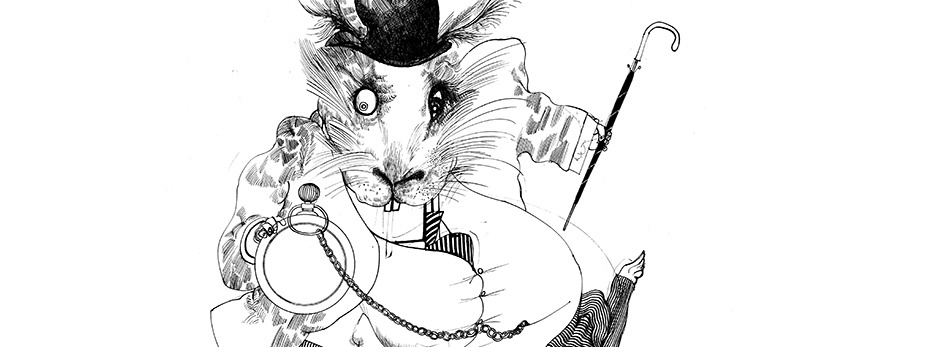
"White Rabbit" by Ralph Steadman

“White Rabbit” by Ralph Steadman

At the end of this month the Los Angeles Philharmonic will be presenting the West Coast premiere of Unsuk Chin’s opera Alice in Wonderland.

Here’s my program essay for the production:

The story of Alice in Wonderland’s creation is rooted in Los Angeles: this West Coast premiere in one sense represents a homecoming. It was Los Angeles Opera that originally commissioned Unsuk Chin to write her first opera, intending to unveil it as part Kent Nagano’s final season as music director (the 2005-06 season). When that plan became unfeasible because of budget cutbacks, Nagano brought the work-in-progress along with him for his inaugural season at Bavarian State Opera.

Alice in Wonderland therefore premiered at the National Theater in Munich in 2007 — the very theater (rebuilt, of course, after its bombing in the Second World War) that gave the world its first Tristan und Isolde in 1865. A certain fantasy narrative that would similarly go on to cast a spell over an enormous spectrum of admirers also happened to be published in that year by the brilliant mathematician, pioneering photographer, and Anglican deacon Charles Lutwidge Dodgson (1832-1898) — aka Lewis Carroll. Celebrations around the globe are marking the 150th anniversary of the first edition of Alice’s Adventures in Wonderland in 2015.

Yet well before the premiere of her opera, Unsuk Chin had written the song cycle snagS&Snarls — a kind of preliminary study to find her way into the world of Lewis Carroll (much as Wagner had done vis-à-vis Tristan with his Wesendonck Lieder). Four of the five songs comprising snagS&Snarls eventually made their way (with alterations) into the score of Alice in Wonderland. Nagano led the first performance at the Ojai Festival in 2004, the year in which Chin won the Grawemeyer Award for her Violin Concerto (more or less considered the music world’s Nobel Prize).

Other pieces by Chin have in the meantime been commissioned by the Los Angeles Philharmonic. Gustavo Dudamel in fact chose to include one of these during the first week of his tenure as music director in October 2009: Šu, a concerto for sheng (mouth organ). In 2013 came the orchestral work Graffiti, Chin’s ode to street art. The composer herself has described Graffiti in terms that could well apply to her method in Alice. She writes that the musical language of Graffiti “shifts between roughness and refinement, complexity and transparency. It is rich in contrast and labyrinthine, neither tonal nor atonal.”

Unsuk Chin’s engagement with Alice in Wonderland reaches even further back than the original LA Opera commission from just over a decade ago. Most fans of Carroll’s Alice books fell in love with these stories as children. Chin, though, is typically atypical in this regard. Instead of reading the work of Lewis Carroll as a child, she was already an adult when she encountered him for the first time as a conservatory student in her native South Korea. Chin recalls that her curiosity was triggered by reading the cognitive scientist Douglas R. Hofstadter’s Gödel, Escher, Bach. The rest of that seminal book’s title, it’s useful to know, is An Eternal Golden Braid. A Metaphorical Fugue on Minds and Machines in the Spirit of Lewis Carroll.

Chin found her title for snagS&Snarls in the chapter heading of another of Hofstadter’s books (Metamagical Themas). Hofstadter intrigued Chin by pulling back the surface layer of what many assume to be the mere “childlike” fantasy of Carroll’s writings and revealing a labyrinthine complexity underneath — a complexity animated by the pure joy of linguistic play. The unpredictable imagery and logic-defying antics of the world according to Lewis Carroll immediately resonated for Chin at her core, touching not just on her aesthetic outlook but on her perception of the centrality of dreams.

“The visions of my dreams represent a far more existential level of experience than anything I have known in my everyday life,” she has stated. “Dreams are for me an encounter with another world, in which utterly different physical laws prevail. Sometimes a dream is so complex that as soon as you wake up only a vague memory of it remains.… When you try to describe such a complex dream-state in words, the result is inevitably what we call ‘nonsense,’ because our language is subject to a very different type of logic.”

Unsuk Chin

Unsuk Chin

Indeed when it came to adapting Alice in Wonderland to the opera stage, Chin decided to interpolate two of her own dream scenes as the opening and final scenes, respectively. She explains that she was “never fully satisfied with the beginning and the end” of Carroll’s published narrative, which seemed “so much more conventional than the rest of Alice” and may have possibly signaled “a concession to public taste, as otherwise the book would have been too daring for its time.” The new dreams — which present additional mysterious encounters for Alice — supply more than a neatly symmetrical framework. They’re organic to the sense of dream time and dream logic that pervades the opera and steer clear of a facile separation between dream and “the real world” (the kind of separation that gives, say, The Wizard of Oz its denouement). As Chin puts it: “I wanted the dreamworld to be the the reality in my opera.”

Chin teamed up with the distinguished playwright, librettist, and scriptwriter David Henry Hwang — a native Angeleno — who crafted a virtuoso text of eight interlocking scenes, with no intermission. The libretto artfully blends key episodes from Alice in Wonderland and the original language of Lewis Carroll with clever postdatings, from the maniacal word play for the acrosticized twisting of “Twinkle, Twinkle, Little Star” to a sly reference to the paradox of Schrödinger’s cat: a potent symbol for the overall philosophy of apparently “nonsense logic” that informs the opera as a whole.

Hwang also includes myriad details in his stage directions, and these are reflected in Chin’s musical realization. They likewise pose fascinating, at times Ring-level challenges for the staging — Alice falling through the rabbit-hole, swimming in a pool of her tears, growing a mile high, and so on.

“As humans, what we’re really interested in is storytelling and concept,” says director Netia Jones in a recent interview with Mark Powell about the high-tech elements that she has enlisted to realize her vision for Alice. “To fully benefit from the amazing sleight of hand that these techniques can offer — the coup de théâtre moment that amazes or confounds, as live performance has always sought to do — it’s vital that any technology behind a production is handled confidently enough to fade into the background.” She adds: “It’s a delicate balancing act between this air of creative anarchy, which Chin’s score definitely lays the foundation for, and the
almost militaristic technical precision required to support it.”

Carroll’s penchant for enigmas, puzzles, acrostics, and other language games also appeals to Chin’s sensibility. The composer made her international breakthrough as a composer in 1993 with Akrostichon-Wortspiel (“Acrostic-Wordplay”), a work that sets texts both by Carroll and by Michael Ende — the aptly named author of another beloved children’s classic, The Neverending Story. In this case, she turned to the conclusion of the Alice saga, drawing on the second book, Through the Looking-Glass, and What Alice Found There (published in 1871). snagS&Snarls actually begins at the end, so to speak, with the very final poem capping Through the Looking-Glass. The poem is an acrostic in which the first letter of each line yields the name of Carroll’s (perhaps erroneously) presumed model, Alice Pleasance Liddell. (This is the only number from snagS&Snarls that never found its way into the opera Alice in Wonderland.) Chin’s list of current projects includes a setting of Alice Through the Looking Glass, which has been commissioned by the Royal Opera in London for the 2018-19 season.

Another impetus behind Chin’s choice of subject matter came from her association with one of her key mentors, György Ligeti. Following her initial studies in composition in Seoul, Chin spent three years in Ligeti’s coveted composition seminar in Hamburg (and eventually resettled in Berlin, where she resides). The maverick Ligeti has treasured Alice in Wonderland ever since encountering Carroll in a Hungarian translation as a child, and before his death in 2006 he was discussing plans for an opera based on Alice. The cartoon- and comic book-inspired “anti-opera” he completed, Le Grand Macabre, shows a number of uncanny parallels with Carroll’s tale of his heroine’s underground adventures. As it happens, Chin shares with her teacher the ability known as synesthesia, that is, to perceive sounds in terms of other senses — chords as colors, for example.

But an Alice in Wonderland by Ligeti would have been utterly distinct from Unsuk Chin’s Alice in Wonderland. She possesses the uncanny talent of being able to tap into an astonishing diversity of sources — including, at times, the manifold web of Ligeti’s orchestral textures — without diluting her unique musical language in faceless eclecticism or tamping down her one-of-kind, magical vision. You can hear fragments that suggest The Rite of Spring, Petrushka, or Bartókian folksiness. The epic motto of Strauss’s Thus Spake Zarathustra is tucked into the fanfare announcing the witnesses in the grand ensemble trial scene. An ominous tolling motif in the lower depths recalls the Coronation music from Boris Godunov.

What results is a fascinating blend of unpredictability and irony that has little in common with, say, the neoclassical posturing of Stravinsky. Often as Stravinsky’s influence is felt in the score for Alice, Chin’s use of allusive gestures never resembles Stravinsky’s manner of being allusive.

Much of the lore of Carroll’s phantasmagoria has to do with its enormous impact on the “adult world” of interpreters. In an essay on the centrality of “imaginary theater” in Chin’s creative thinking, the musicologist Habakuk Traber remarks that “subsequent literary developments — Surrealism, Dadaism, and the Theater of the Absurd, and in particular the ominous literary world and imagery of Franz Kafka” have endowed the Alice books “with a prophetic, prescient dimension.” So, too, the post-Freudian drive to psychologize Carroll and his creations, to interpret his literary dreams. Even pop culture has tried to “explain” what happens. Ever since Jefferson Airplane’s big hit, it’s become alms impossible not to associate the White Rabbit with an afternoon spent experimenting with psychedelic drugs.

Alice in Wonderland “has so many layers,” Chin has remarked: “It can captivate experts and laymen, children and adults as well. That is also an artistic ideal for me.” She even points out that composing the opera entailed a radical shift in orientation toward writing something “much more direct and immediate than in my other pieces.” Speaking with the scientist Matthias Essenpreis, Chin says that once she committed to writing for the genre and to using the Alice material, “I attempted to break away from the traditions of contemporary music and in an instinctive and very fluent way to compose music that resembles a funhouse mirror and that is ironic.”

Chin’s infectious theatrical sensibility enhances her choice of vocal types to assign the characters — including an instrument for the Caterpillar (given a long bass clarinet solo), accompanied by written words — as well as her repertoire of types of vocalization. Alice in Wonderland contains a kind of pocket history of singing: a hint of blues in Alice’s plaintive aria “Who in the world am I,” fancy coloratura for the frantic White Rabbit, a children’s chorus of ethereal simplicity, harpsichord-accompanied recitative at the start of the Mad Tea-Party scene and a characterful Baroque aria as the Mad Hatter laments the cruelty of Time, high dudgeon vocals for the vengeful Queen of Hearts, all culminating in an ensemble of intricately ordered chaos.

Even in the version for reduced ensemble that was prepared as a counterpart to the original gargantuan (and impractical) ensemble used for the opera’s original production in 2007, the scintillating imagination of Chin’s orchestration is unmistakeable — and gives Alice in Wonderland its essential texture. From the first sounds we hear (following those of the actors’ gestures, lulling us into this dreamworld), Chin utilizes extremes of range to effect a sense of drastically elongated dimensions, for example. Yet the “nonsense” world of dream logic hardly means that anything goes.

By the same token, for all of her elaborate timbral and compositional structures, Chin knows the importance of spontaneous fantasy. She remarks that she tries “to avoid providing rigid interpretations of the book — whether psychoanalytical or otherwise. Let the story and its dialogues speak for themselves. What ultimately attracts her to Alice is “the effortless and unconscious way in which Lewis Carroll expresses deep philosophical questions. Alice is not solely a matter of dreams. It is also about a clash between the different ways in which we communicate and experience reality.”

(c)2015 Thomas May. All rights reserved.

Filed under: essay, Los Angeles Philharmonic, new music, opera

The Bang on a Can Marathon Comes to Seattle

Bang on a Can All-Stars

Bang on a Can All-Stars: image (c) Peter Serling

Here’s a performance/happening you’re not going to be able to file away into one of the familiar musical categories. Is it classical (because, you know, strings and other traditional instruments, complicated scores being interpreted)? Experimental, maybe avant-garde? “Crossover” (whatever that‘s supposed to mean nowadays)? Let’s just call it a one-of-a-kind event: the first-ever Seattle edition of the annual Bang on a Can marathon. It takes over the Moore Theatre this Sunday, February 15, for six hours of blissful music-making.

You know how the phrase “classical music concert” used to imply a mostly predictable format? That’s no longer a safe assumption, thanks to the innovative thinking of orchestras like the Seattle Symphony and music director, Ludovic Morlot — thinking that involves not just the content of a concert but the venue where it’s performed.

By the same token, there once was a time when the prospect of a “new music” (aka “modern music”) program signaled a ritualistic exercise in high-toned concentration. Back in 1987, a trio of like-minded young composers — Julia Wolfe, Michael Gordon, and David Lang — put together a 12-hour marathon of adventurous music in a SoHo art gallery (when NYC’s SoHo was still SoHo). That one-off event was intended to attract curious ears to the energy and excitement and variety of music being composed in our time outside the commercial formulas of the pop industry — and outside the confines of the concert hall.

The inaugural marathon turned out to be the birth of a performing arts organization that’s now a major international force in the realm of contemporary classical music (another unsatisfactory term for a whole world of music that can’t be readily defined). More than a quarter century on, Bang on a Can remains “dedicated to the support of experimental music, wherever we would find it.” It commissions and records new works, develops programs to foster a new generation of audiences and musicians, and presents numerous events, including the annual Bang on a Can Marathon.

The appeal of the marathon format, according to co-founder and composer (and Dan Savage look-alike) Michael Gordon, is that it encourages people to “let down their guard. The event is aimed at people who are interested in broad listening, who come to listen with open hears. Many people know what they like and might come to the Marathon to hear that type of music. The next thing on the line-up will be completely different, something they would have never come across otherwise. Everything moves quickly and the sets are pretty short. So they start listening to things that they wouldn’t normally encounter. That’s basically the whole point: to broaden your listening and to have a good time with it.”

The venue is important for that context. Seattle’s Bang on a Can Marathon is being co-presented by Seattle Theatre Group and On The Boards at the Moore Theatre. Gordon refers to Bang on a Can’s MO of performing in “neutral spaces, audience-friendly spaces” that shed any of those lingering fears (however unjustified) of the concert hall as a place where only the musically initiated can feel comfortable. He points out that museums and public spaces like the Winter Garden in New York have served this purpose well.

Gordon also has praise for the Seattle Symphony’s recent initiatives under Ludovic Morlot: “They’re doing a lot of progressive work — not only reaching out into other communities but also by doing a lot of interesting commissioning. Orchestras have to change their attitudes. The SSO is on the forefront of finding a way to be relevant today.”

Bang on a Can’s Marathon will mix in work from adventurous Seattle-based or -associated composers and musicians with pieces by each of the organization’s co-founders. The whole event will be framed by new-music “classics” that have had a profound — and not always acknowledged — impact on the music world at large: Brian Eno’s ambient masterpiece, Music for Airports, and Music for 18 Musicians, one of Minimalist Steve Reich’s signature works.

“The Marathon is all about finding people who are pushing the boundaries of their kind of music and letting that be the thread that goes through each of the acts,” says Jherek Bischoff, who was asked to curate the Seattle festival. “Pushing boundaries is one thread.” Another is serendipity: “Someone might come for the hip-hop segment [featuring Shabazz Palaces] and then they’ll happen to hear some modern classical right next to it.”

Bischoff, who comes from a family of musicians, was raised on a sailboat and on Bainbridge Island. He began his career as a multi-instrumentalist: “I started with the saxophone, moved on to tuba and then to bass — and then things stated getting crazy with way too many instruments…” Not surprisingly, Bischoff channels his talents into myriad musical activities, from performing and composing to producing — and, now, curating.

“People I wanted to include sprang to mind right away,” Bischoff explains. “For me, it’s exciting to give them the opportunity to play at the Moore. One of those people is Morgan Henderson. He’s the perfect example of what Bang on a Can is doing, which is to take someone who totally goes under the radar and put them in the spotlight. Morgan is one of the most talented musicians I know. He plays bass in the hardcore band The Blood Brothers but then he also plays flute in the Fleet Foxes band — the exact opposite type of music and instrument.”

Jherek Bischoff

Jherek Bischoff

Another figure Bischoff was eager to add to the line-up is Seattle pianist Gust Burns. “He’s one of the most insanely technically proficient pianists I’ve heard, and at the same time he’s also a wonderful improviser. When you see him perform, you can’t believe that there’s just one person making all that sound with the piano.”

Bischoff, who moved to Los Angeles a few months ago, will also bring along his own recent efforts as a composer: “It’s ambient orchestral music that was inspired by my time out at the cistern in Fort Worden State Park [in Port Townsend], where I did a residency. The cistern is a two-million-gallon water tank underground that has a 45-second reverb. I improvised there for days and recorded the whole thing and ended up turning some of those improvisations into full-blown orchestral pieces.” The results will be performed by the Scrape Ensemble (strings) with Bischoff on bass and “a bunch of reverb piped in to give you a bit of a sense of that alternate space.”

Along with those mentioned above and the Bang on a Can All-Stars, other artists on the roster include the duo Jesssika Kenney & Eyvind Kang, Jim Knapp, Greg Campbell, and California-based red fish blue fish.

But isn’t four hours of musical discovery a bit overwhelming? Bischoff points out that it’s perfectly fine for the audience to weave in and out and take breaks — much as became the custom during performances of a mammoth work like Philip Glass’s Einstein on the Beach. “You can step out to get a drink. The Bang on a Can marathon I attended in New York took place in a big atrium and there was even a food court where you could go to eat and watch as the music played on.”

If you go: The Bang on a Can Marathon’s Seattle edition is being co-presented by Seattle Theatre Group and On The Boards at the Moore Theatre, Sunday, February 15, from 4 to 10 p.m. Tickets here.

(C)2015 Thomas May. All rights reserved.

Filed under: new music, preview, programming innovation

Down the Rabbit Hole

Angelenos have lot to look forward to in coming weeks — including the belated West Coast premiere of Unsuk Chin’s Alice in Wonderland by the LA Philharmonic (in a co-production with LA Opera). I’m more and more in love with this work.

Chin on her love of dreams and their “reality”:

The visions of my dreams are for me a much more existential level of experience than anything that I have known in my everyday life. They influence my personality and are the great joy of my life. Dreams are for me an encounter with another world, in which completely different physical laws prevail.

Sometimes a dream is so complex that as soon as you wake up only a vague memory of it remains … When you try to describe such a complex dream-state in words, there inevitably arises what we call nonsense, since our language is subjected to a completely different logic.

Filed under: Los Angeles Opera, Los Angeles Philharmonic, new music, opera

Archive

Enter your email address to follow this blog and receive notifications of new posts by email.