MEMETERIA

Icon

Arts writing by Thomas May

Bon Anniversaire à Pierre Boulez

There’s a lot more reflection on Pierre Boulez to come this year — including an entire day that Switzerland’s Lucerne Festival is devoting to his work on 23 August — but today marks the official 90th birthday of the French master.

Here’s a roundup of some recent commentary on Boulez and his inarguable impact on musical life in our time:

Ultimately I think Boulez is a great optimist, despite the shadows that coloured his early years. In the end what he believes is simple: today’s music has to be different from the music of the past.

That’s a natural thing. Western music continues to evolve and transform and change. And those that don’t agree, well … they’re wrong!

—George Benjamin in The Guardian

America can’t be discovered out of nothing. In Boulez’s music you immediately hear everything that he has come into contact with – and that is an enormous amount. Even Bach.

—Daniel Barenboim

The tie between heart and brain characterizes Boulez’s music. “I claim the right for music to have many levels of perception,” he told DW in 2003. “Works […] that take time to solve are the works that remain in your memory for a long time.”

—Deutsche Welle

For those who carp about Boulez’s conducting activities allegedly having taken his attention away from composition – they generally seem not to like his music very much, so it is not immediately clear why they should care – the Notations should stand as a rebuke. Boulez himself has owned that he would have been unable to compose the pieces without the experience of conducting Wagner and Mahler. With every listening, that claim becomes more and more unarguable. The virtuosity in orchestral writing is staggering, in its way as much so as that of Ravel, or indeed Mahler.

—Mark Berry (aka Boulezian) reviewing the BBC’s “Total Immersion Day”

Boulez’s style is explosive. He detonates a germ of an idea and, like a seed, it grows a sonic forest. The common fallacy is that pieces as highly and intricately structured as these require technical understanding. But you don’t need to be a botanist to be stirred by a field of wild flowers.

—Mark Swed in the Los Angeles Times

My development really went backwards through time. I got to know Berg, I got to know Webern, I got to know Schönberg … and then I got to know Mahler. It was totally reversed – because there was no tradition whatsoever.

—Pierre Boulez at UE’s Musik Salon

See Amanda Angel’s list of Boulez’s Top Five Transformations at WQXR.

france musique has a podcast and other material on Boulez currently available.

Also make sure to check out the content-rich Boulez-90 site at Universal Edition.

Filed under: anniversary, new music, Pierre Boulez

Songs of Ascent

lamc

Last night’s LA Master Chorale program presented the world premieres of two pieces: Nackkum Paik’s Succession and the latest from composer-in-residence Shawn Kirchner. Here’s the essay I wrote for the program:

Images related to rising up have inspired wonder and awe ever since humans acquired consciousness. Such images are ubiquitous in the natural world around us — whether in the mountains that loom majestically over a landscape or the reliable motions of the firmament. Is it any surprise that themes of ascension are so integral to religions all around the world? “When the Buddha sat under the bo tree,” observes Joseph Campbell, “he faced east — the direction of the rising sun.”

continue reading

Filed under: choral music, essay, new music

The Dream Logic of Unsuk Chin’s Alice in Wonderland

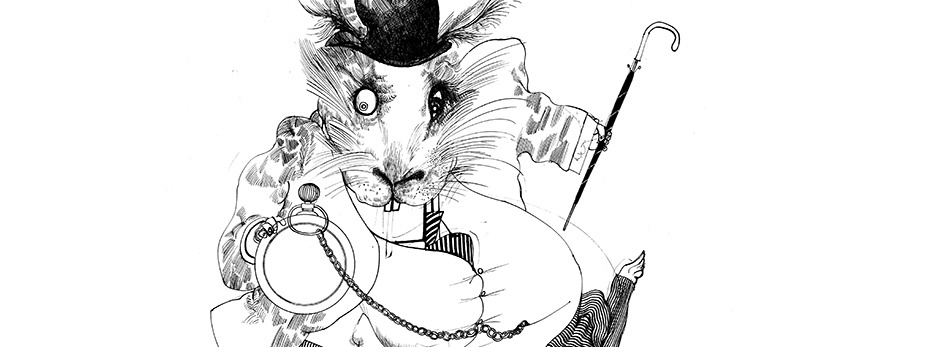
"White Rabbit" by Ralph Steadman

“White Rabbit” by Ralph Steadman

At the end of this month the Los Angeles Philharmonic will be presenting the West Coast premiere of Unsuk Chin’s opera Alice in Wonderland.

Here’s my program essay for the production:

The story of Alice in Wonderland’s creation is rooted in Los Angeles: this West Coast premiere in one sense represents a homecoming. It was Los Angeles Opera that originally commissioned Unsuk Chin to write her first opera, intending to unveil it as part Kent Nagano’s final season as music director (the 2005-06 season). When that plan became unfeasible because of budget cutbacks, Nagano brought the work-in-progress along with him for his inaugural season at Bavarian State Opera.

Alice in Wonderland therefore premiered at the National Theater in Munich in 2007 — the very theater (rebuilt, of course, after its bombing in the Second World War) that gave the world its first Tristan und Isolde in 1865. A certain fantasy narrative that would similarly go on to cast a spell over an enormous spectrum of admirers also happened to be published in that year by the brilliant mathematician, pioneering photographer, and Anglican deacon Charles Lutwidge Dodgson (1832-1898) — aka Lewis Carroll. Celebrations around the globe are marking the 150th anniversary of the first edition of Alice’s Adventures in Wonderland in 2015.

Yet well before the premiere of her opera, Unsuk Chin had written the song cycle snagS&Snarls — a kind of preliminary study to find her way into the world of Lewis Carroll (much as Wagner had done vis-à-vis Tristan with his Wesendonck Lieder). Four of the five songs comprising snagS&Snarls eventually made their way (with alterations) into the score of Alice in Wonderland. Nagano led the first performance at the Ojai Festival in 2004, the year in which Chin won the Grawemeyer Award for her Violin Concerto (more or less considered the music world’s Nobel Prize).

Other pieces by Chin have in the meantime been commissioned by the Los Angeles Philharmonic. Gustavo Dudamel in fact chose to include one of these during the first week of his tenure as music director in October 2009: Šu, a concerto for sheng (mouth organ). In 2013 came the orchestral work Graffiti, Chin’s ode to street art. The composer herself has described Graffiti in terms that could well apply to her method in Alice. She writes that the musical language of Graffiti “shifts between roughness and refinement, complexity and transparency. It is rich in contrast and labyrinthine, neither tonal nor atonal.”

Unsuk Chin’s engagement with Alice in Wonderland reaches even further back than the original LA Opera commission from just over a decade ago. Most fans of Carroll’s Alice books fell in love with these stories as children. Chin, though, is typically atypical in this regard. Instead of reading the work of Lewis Carroll as a child, she was already an adult when she encountered him for the first time as a conservatory student in her native South Korea. Chin recalls that her curiosity was triggered by reading the cognitive scientist Douglas R. Hofstadter’s Gödel, Escher, Bach. The rest of that seminal book’s title, it’s useful to know, is An Eternal Golden Braid. A Metaphorical Fugue on Minds and Machines in the Spirit of Lewis Carroll.

Chin found her title for snagS&Snarls in the chapter heading of another of Hofstadter’s books (Metamagical Themas). Hofstadter intrigued Chin by pulling back the surface layer of what many assume to be the mere “childlike” fantasy of Carroll’s writings and revealing a labyrinthine complexity underneath — a complexity animated by the pure joy of linguistic play. The unpredictable imagery and logic-defying antics of the world according to Lewis Carroll immediately resonated for Chin at her core, touching not just on her aesthetic outlook but on her perception of the centrality of dreams.

“The visions of my dreams represent a far more existential level of experience than anything I have known in my everyday life,” she has stated. “Dreams are for me an encounter with another world, in which utterly different physical laws prevail. Sometimes a dream is so complex that as soon as you wake up only a vague memory of it remains.… When you try to describe such a complex dream-state in words, the result is inevitably what we call ‘nonsense,’ because our language is subject to a very different type of logic.”

Unsuk Chin

Unsuk Chin

Indeed when it came to adapting Alice in Wonderland to the opera stage, Chin decided to interpolate two of her own dream scenes as the opening and final scenes, respectively. She explains that she was “never fully satisfied with the beginning and the end” of Carroll’s published narrative, which seemed “so much more conventional than the rest of Alice” and may have possibly signaled “a concession to public taste, as otherwise the book would have been too daring for its time.” The new dreams — which present additional mysterious encounters for Alice — supply more than a neatly symmetrical framework. They’re organic to the sense of dream time and dream logic that pervades the opera and steer clear of a facile separation between dream and “the real world” (the kind of separation that gives, say, The Wizard of Oz its denouement). As Chin puts it: “I wanted the dreamworld to be the the reality in my opera.”

Chin teamed up with the distinguished playwright, librettist, and scriptwriter David Henry Hwang — a native Angeleno — who crafted a virtuoso text of eight interlocking scenes, with no intermission. The libretto artfully blends key episodes from Alice in Wonderland and the original language of Lewis Carroll with clever postdatings, from the maniacal word play for the acrosticized twisting of “Twinkle, Twinkle, Little Star” to a sly reference to the paradox of Schrödinger’s cat: a potent symbol for the overall philosophy of apparently “nonsense logic” that informs the opera as a whole.

Hwang also includes myriad details in his stage directions, and these are reflected in Chin’s musical realization. They likewise pose fascinating, at times Ring-level challenges for the staging — Alice falling through the rabbit-hole, swimming in a pool of her tears, growing a mile high, and so on.

“As humans, what we’re really interested in is storytelling and concept,” says director Netia Jones in a recent interview with Mark Powell about the high-tech elements that she has enlisted to realize her vision for Alice. “To fully benefit from the amazing sleight of hand that these techniques can offer — the coup de théâtre moment that amazes or confounds, as live performance has always sought to do — it’s vital that any technology behind a production is handled confidently enough to fade into the background.” She adds: “It’s a delicate balancing act between this air of creative anarchy, which Chin’s score definitely lays the foundation for, and the
almost militaristic technical precision required to support it.”

Carroll’s penchant for enigmas, puzzles, acrostics, and other language games also appeals to Chin’s sensibility. The composer made her international breakthrough as a composer in 1993 with Akrostichon-Wortspiel (“Acrostic-Wordplay”), a work that sets texts both by Carroll and by Michael Ende — the aptly named author of another beloved children’s classic, The Neverending Story. In this case, she turned to the conclusion of the Alice saga, drawing on the second book, Through the Looking-Glass, and What Alice Found There (published in 1871). snagS&Snarls actually begins at the end, so to speak, with the very final poem capping Through the Looking-Glass. The poem is an acrostic in which the first letter of each line yields the name of Carroll’s (perhaps erroneously) presumed model, Alice Pleasance Liddell. (This is the only number from snagS&Snarls that never found its way into the opera Alice in Wonderland.) Chin’s list of current projects includes a setting of Alice Through the Looking Glass, which has been commissioned by the Royal Opera in London for the 2018-19 season.

Another impetus behind Chin’s choice of subject matter came from her association with one of her key mentors, György Ligeti. Following her initial studies in composition in Seoul, Chin spent three years in Ligeti’s coveted composition seminar in Hamburg (and eventually resettled in Berlin, where she resides). The maverick Ligeti has treasured Alice in Wonderland ever since encountering Carroll in a Hungarian translation as a child, and before his death in 2006 he was discussing plans for an opera based on Alice. The cartoon- and comic book-inspired “anti-opera” he completed, Le Grand Macabre, shows a number of uncanny parallels with Carroll’s tale of his heroine’s underground adventures. As it happens, Chin shares with her teacher the ability known as synesthesia, that is, to perceive sounds in terms of other senses — chords as colors, for example.

But an Alice in Wonderland by Ligeti would have been utterly distinct from Unsuk Chin’s Alice in Wonderland. She possesses the uncanny talent of being able to tap into an astonishing diversity of sources — including, at times, the manifold web of Ligeti’s orchestral textures — without diluting her unique musical language in faceless eclecticism or tamping down her one-of-kind, magical vision. You can hear fragments that suggest The Rite of Spring, Petrushka, or Bartókian folksiness. The epic motto of Strauss’s Thus Spake Zarathustra is tucked into the fanfare announcing the witnesses in the grand ensemble trial scene. An ominous tolling motif in the lower depths recalls the Coronation music from Boris Godunov.

What results is a fascinating blend of unpredictability and irony that has little in common with, say, the neoclassical posturing of Stravinsky. Often as Stravinsky’s influence is felt in the score for Alice, Chin’s use of allusive gestures never resembles Stravinsky’s manner of being allusive.

Much of the lore of Carroll’s phantasmagoria has to do with its enormous impact on the “adult world” of interpreters. In an essay on the centrality of “imaginary theater” in Chin’s creative thinking, the musicologist Habakuk Traber remarks that “subsequent literary developments — Surrealism, Dadaism, and the Theater of the Absurd, and in particular the ominous literary world and imagery of Franz Kafka” have endowed the Alice books “with a prophetic, prescient dimension.” So, too, the post-Freudian drive to psychologize Carroll and his creations, to interpret his literary dreams. Even pop culture has tried to “explain” what happens. Ever since Jefferson Airplane’s big hit, it’s become alms impossible not to associate the White Rabbit with an afternoon spent experimenting with psychedelic drugs.

Alice in Wonderland “has so many layers,” Chin has remarked: “It can captivate experts and laymen, children and adults as well. That is also an artistic ideal for me.” She even points out that composing the opera entailed a radical shift in orientation toward writing something “much more direct and immediate than in my other pieces.” Speaking with the scientist Matthias Essenpreis, Chin says that once she committed to writing for the genre and to using the Alice material, “I attempted to break away from the traditions of contemporary music and in an instinctive and very fluent way to compose music that resembles a funhouse mirror and that is ironic.”

Chin’s infectious theatrical sensibility enhances her choice of vocal types to assign the characters — including an instrument for the Caterpillar (given a long bass clarinet solo), accompanied by written words — as well as her repertoire of types of vocalization. Alice in Wonderland contains a kind of pocket history of singing: a hint of blues in Alice’s plaintive aria “Who in the world am I,” fancy coloratura for the frantic White Rabbit, a children’s chorus of ethereal simplicity, harpsichord-accompanied recitative at the start of the Mad Tea-Party scene and a characterful Baroque aria as the Mad Hatter laments the cruelty of Time, high dudgeon vocals for the vengeful Queen of Hearts, all culminating in an ensemble of intricately ordered chaos.

Even in the version for reduced ensemble that was prepared as a counterpart to the original gargantuan (and impractical) ensemble used for the opera’s original production in 2007, the scintillating imagination of Chin’s orchestration is unmistakeable — and gives Alice in Wonderland its essential texture. From the first sounds we hear (following those of the actors’ gestures, lulling us into this dreamworld), Chin utilizes extremes of range to effect a sense of drastically elongated dimensions, for example. Yet the “nonsense” world of dream logic hardly means that anything goes.

By the same token, for all of her elaborate timbral and compositional structures, Chin knows the importance of spontaneous fantasy. She remarks that she tries “to avoid providing rigid interpretations of the book — whether psychoanalytical or otherwise. Let the story and its dialogues speak for themselves. What ultimately attracts her to Alice is “the effortless and unconscious way in which Lewis Carroll expresses deep philosophical questions. Alice is not solely a matter of dreams. It is also about a clash between the different ways in which we communicate and experience reality.”

(c)2015 Thomas May. All rights reserved.

Filed under: essay, Los Angeles Philharmonic, new music, opera

The Bang on a Can Marathon Comes to Seattle

Bang on a Can All-Stars

Bang on a Can All-Stars: image (c) Peter Serling

Here’s a performance/happening you’re not going to be able to file away into one of the familiar musical categories. Is it classical (because, you know, strings and other traditional instruments, complicated scores being interpreted)? Experimental, maybe avant-garde? “Crossover” (whatever that‘s supposed to mean nowadays)? Let’s just call it a one-of-a-kind event: the first-ever Seattle edition of the annual Bang on a Can marathon. It takes over the Moore Theatre this Sunday, February 15, for six hours of blissful music-making.

You know how the phrase “classical music concert” used to imply a mostly predictable format? That’s no longer a safe assumption, thanks to the innovative thinking of orchestras like the Seattle Symphony and music director, Ludovic Morlot — thinking that involves not just the content of a concert but the venue where it’s performed.

By the same token, there once was a time when the prospect of a “new music” (aka “modern music”) program signaled a ritualistic exercise in high-toned concentration. Back in 1987, a trio of like-minded young composers — Julia Wolfe, Michael Gordon, and David Lang — put together a 12-hour marathon of adventurous music in a SoHo art gallery (when NYC’s SoHo was still SoHo). That one-off event was intended to attract curious ears to the energy and excitement and variety of music being composed in our time outside the commercial formulas of the pop industry — and outside the confines of the concert hall.

The inaugural marathon turned out to be the birth of a performing arts organization that’s now a major international force in the realm of contemporary classical music (another unsatisfactory term for a whole world of music that can’t be readily defined). More than a quarter century on, Bang on a Can remains “dedicated to the support of experimental music, wherever we would find it.” It commissions and records new works, develops programs to foster a new generation of audiences and musicians, and presents numerous events, including the annual Bang on a Can Marathon.

The appeal of the marathon format, according to co-founder and composer (and Dan Savage look-alike) Michael Gordon, is that it encourages people to “let down their guard. The event is aimed at people who are interested in broad listening, who come to listen with open hears. Many people know what they like and might come to the Marathon to hear that type of music. The next thing on the line-up will be completely different, something they would have never come across otherwise. Everything moves quickly and the sets are pretty short. So they start listening to things that they wouldn’t normally encounter. That’s basically the whole point: to broaden your listening and to have a good time with it.”

The venue is important for that context. Seattle’s Bang on a Can Marathon is being co-presented by Seattle Theatre Group and On The Boards at the Moore Theatre. Gordon refers to Bang on a Can’s MO of performing in “neutral spaces, audience-friendly spaces” that shed any of those lingering fears (however unjustified) of the concert hall as a place where only the musically initiated can feel comfortable. He points out that museums and public spaces like the Winter Garden in New York have served this purpose well.

Gordon also has praise for the Seattle Symphony’s recent initiatives under Ludovic Morlot: “They’re doing a lot of progressive work — not only reaching out into other communities but also by doing a lot of interesting commissioning. Orchestras have to change their attitudes. The SSO is on the forefront of finding a way to be relevant today.”

Bang on a Can’s Marathon will mix in work from adventurous Seattle-based or -associated composers and musicians with pieces by each of the organization’s co-founders. The whole event will be framed by new-music “classics” that have had a profound — and not always acknowledged — impact on the music world at large: Brian Eno’s ambient masterpiece, Music for Airports, and Music for 18 Musicians, one of Minimalist Steve Reich’s signature works.

“The Marathon is all about finding people who are pushing the boundaries of their kind of music and letting that be the thread that goes through each of the acts,” says Jherek Bischoff, who was asked to curate the Seattle festival. “Pushing boundaries is one thread.” Another is serendipity: “Someone might come for the hip-hop segment [featuring Shabazz Palaces] and then they’ll happen to hear some modern classical right next to it.”

Bischoff, who comes from a family of musicians, was raised on a sailboat and on Bainbridge Island. He began his career as a multi-instrumentalist: “I started with the saxophone, moved on to tuba and then to bass — and then things stated getting crazy with way too many instruments…” Not surprisingly, Bischoff channels his talents into myriad musical activities, from performing and composing to producing — and, now, curating.

“People I wanted to include sprang to mind right away,” Bischoff explains. “For me, it’s exciting to give them the opportunity to play at the Moore. One of those people is Morgan Henderson. He’s the perfect example of what Bang on a Can is doing, which is to take someone who totally goes under the radar and put them in the spotlight. Morgan is one of the most talented musicians I know. He plays bass in the hardcore band The Blood Brothers but then he also plays flute in the Fleet Foxes band — the exact opposite type of music and instrument.”

Jherek Bischoff

Jherek Bischoff

Another figure Bischoff was eager to add to the line-up is Seattle pianist Gust Burns. “He’s one of the most insanely technically proficient pianists I’ve heard, and at the same time he’s also a wonderful improviser. When you see him perform, you can’t believe that there’s just one person making all that sound with the piano.”

Bischoff, who moved to Los Angeles a few months ago, will also bring along his own recent efforts as a composer: “It’s ambient orchestral music that was inspired by my time out at the cistern in Fort Worden State Park [in Port Townsend], where I did a residency. The cistern is a two-million-gallon water tank underground that has a 45-second reverb. I improvised there for days and recorded the whole thing and ended up turning some of those improvisations into full-blown orchestral pieces.” The results will be performed by the Scrape Ensemble (strings) with Bischoff on bass and “a bunch of reverb piped in to give you a bit of a sense of that alternate space.”

Along with those mentioned above and the Bang on a Can All-Stars, other artists on the roster include the duo Jesssika Kenney & Eyvind Kang, Jim Knapp, Greg Campbell, and California-based red fish blue fish.

But isn’t four hours of musical discovery a bit overwhelming? Bischoff points out that it’s perfectly fine for the audience to weave in and out and take breaks — much as became the custom during performances of a mammoth work like Philip Glass’s Einstein on the Beach. “You can step out to get a drink. The Bang on a Can marathon I attended in New York took place in a big atrium and there was even a food court where you could go to eat and watch as the music played on.”

If you go: The Bang on a Can Marathon’s Seattle edition is being co-presented by Seattle Theatre Group and On The Boards at the Moore Theatre, Sunday, February 15, from 4 to 10 p.m. Tickets here.

(C)2015 Thomas May. All rights reserved.

Filed under: new music, preview, programming innovation

Down the Rabbit Hole

Angelenos have lot to look forward to in coming weeks — including the belated West Coast premiere of Unsuk Chin’s Alice in Wonderland by the LA Philharmonic (in a co-production with LA Opera). I’m more and more in love with this work.

Chin on her love of dreams and their “reality”:

The visions of my dreams are for me a much more existential level of experience than anything that I have known in my everyday life. They influence my personality and are the great joy of my life. Dreams are for me an encounter with another world, in which completely different physical laws prevail.

Sometimes a dream is so complex that as soon as you wake up only a vague memory of it remains … When you try to describe such a complex dream-state in words, there inevitably arises what we call nonsense, since our language is subjected to a completely different logic.

Filed under: Los Angeles Opera, Los Angeles Philharmonic, new music, opera

Happy Birthday, John Luther Adams!

jla

A birthday salute to the marvelous composer John Luther Adams, who was born on January 23, 1953 — and who was named Musical America’s Composer of the Year for 2015 — on the heels of winning last year’s Pulitzer Prize in Music for Become Ocean.

He also recently garnered Columbia’s William Schuman Award for Lifetime Achievement, it was announced last month.

My feature on JLA and the Seattle Symphony commission of Become Ocean appears in last fall’s issue of Listen magazine — but behind a paywall, so I can’t post the whole thing here.

Explore more of the world of JLA:

— a recent Radiolab feature on the composer

–WQXR’s Meet the Composer spotlight, hosted by Nadia Sirota

–NPR’s Tom Huizenga on JLA’s new CD, The Wind in High Places

–JLA’s essay (he’s also a gifted writer) titled “The Place Where You Go To Listen”

–Kyle Gann’s introduction to JLA [pdf]

–another JLA essay: “Global Warming and Art”

And just listen:

Filed under: American music, John Luther Adams, new music

Protected: How City Arts Tried to Hijack a Seattle Symphony Premiere

This content is password-protected. To view it, please enter the password below.

Filed under: American music, commissions, journalism, new music, Seattle Symphony

Guest Review: World Premiere Staging of The Gospel According to the Other Mary

Mary

I’m deeply grateful to Tom Luce to be able to publish his insightful review of the world premiere of the opera staging of John Adams’s The Gospel According to the Other Mary. Directed by Peter Sellars, the production just opened this past weekend at English National Opera.

Review by Tom Luce:
The Gospel According to the Other Mary
World Premiere Staging of John Adams’s and Peter Sellars’s Masterpiece

On Friday 21 November, English National Opera unveiled its new production of the Adams/Sellars “alternative” version of the crucifixion of Christ. The two-act work, described by its creators as a “Passion Oratorio”, was premiered in a concert performance at Disney Concert Hall by the Los Angeles Philharmonic in May 2012 under Gustavo Dudamel’s baton. The following year came the first semi-staged concert performance, also featuring the LA Philharmonic under Dudamel. That version later toured to New York and Europe (including a stop at London’s Barbican). Dudamel’s interpretation was released on a recording by Deutsche Grammophon earlier this year, so the music has been accessible to the public at large since then.

Directed by Sellars himself, ENO’s production was the work’s first full staging. Along with its two creators, it deservedly received a prolonged ovation from a rapt and obviously much moved audience.

The performance was uniformly excellent, with cast and chorus admirably meeting the challenging mixture of singing, movement, and acting Sellars demands of and inspires from his performers. All the principal singers — Patricia Bardon as Mary Magdalene, Meredith Arwady as Martha, and Russell Thomas the Lazarus — were committed and effective, as were dancers Banks, Stephanie Berge, Ingrid Mackinnon, and Parinay Mehra, who variously shadowed them and contributed other parts to the narrative.

The musical side at ENO was in the hands of Joana Carneiro. Of Portuguese origin, she is better known in the U.S. than in Britain, having for some years been music director of the Berkeley Symphony. Her technical mastery and impassioned commitment to this highly complex score were remarkable. The ENO orchestra played magnificently.

Those familiar with Sellars’ “ritualisations” of the two Bach Passions with the Berlin Philharmonic Orchestra would find nothing to surprise them in his staging. One hallmark is his use of dance, mime, and body movement to externalise and heighten emotion. “Put your body where your belief is”, he says in the ENO’s introductory video. Another is the subtle intermingling of narrative and representation. The main thrust is narrative, but to heighten impact at critical points in the drama, the narrators act out the events — just as the Evangelist in the Berlin Bach Passions both expounds the story and at times impersonates characters — e.g., Peter in denial, or Christ at his death. This subtle shifting of roles keeps crude dramatisation at bay but facilitates a wide variety of dramatic tone and effects. I have not seen anything comparable in other directors’ work; it is one of Sellars’s most skilful and original attributes.

The stage design by George Tsypin, subtly lit by James Ingalls, is spare but eloquent: sand and barbed wire represent a Middle East riven by conflict and oppression, simultaneously biblical and contemporary.

The work juxtaposes and fuses ancient and modern in presenting Mary and Martha as running a hostel for homeless, impoverished, and marginalised people, with Jesus as a mixture of family friend, honoured guest, and spiritual patron. He is also a miracle worker in the raising of their dead brother Lazarus, sacrificial victim of the elites whose power he challenges, and a source of hope for the future of the world.

The literary sources are the Bible — especially St John’s Gospel — supplemented and re-interpreted through modern American cultural figures: poet and author Louise Erdrich, who is partially of native American descent; Dorothy Day of the radical Catholic Worker movement; Rosario Castellanos, the Mexican writer, activist, and diplomat; and the black poet June Jordan (who wrote the libretto for an earlier Adams/Sellars collaboration, I Was Looking at the Ceiling and Then I Saw the Sky).

In the ENO video Sellars also says: “The moment you feminize Christianity and you go into feminine spirituality, you go into a very different space and it operates very differently”. It is of the essence in Sellars’s dramatic work that he sees the cultural myths we have inherited through women’s eyes. This is as much an emotional and dramatic as a political standpoint.

The main originality of his St Matthew Passion ritualisation lies in its inspiration and liberation in the listener and viewer of wider and wilder feelings going well beyond the conventional liturgical responses or the “authentic” musical response to a deeper human involvement in the passion of Christ and its human and political significance. In doing so he responds to the injunction in the very first line of the work: “Come, ye daughters, help me lament”. (The discreet presence in the audience of Mark Padmore, the Evangelist in the Berlin Passions, at Friday’s Gospel premiere served to underline the connection between the Bach and Adams ventures.)

John Adams’s music reaches new levels of emotional profundity, dramatic responsiveness, and absence of mannerism, going even beyond his achievement in The Death of Klinghoffer. There is an extraordinary richness and flexibility of harmony and melody and a fascinating orchestral sound, to which a cimbalom gives an exotic edge without ever sounding kitschy. Amongst many fine moments, the most deeply moving for me is the aria with which the first act ends, sung by Lazarus after the Passover evening: “Tell me, how is this night different? … This is the night we eat the bread of affliction so that evil may turn into good”. Within an orchestral palette evoking a kind of Nachtmusik, Adams here creates a deep and movingly optimistic reflection on the events of the opera. Over many years I have heard nothing finer from a contemporary composer.

With this production English National Opera cements its standing as the world’s most committed John Adams house, having previously mounted Nixon in China and Doctor Atomic and having originated the Klinghoffer production admired recently at the Met.

The work itself will surely take a high place in the canon of works from the last century or so in which great composers address themes of human injustice and inequality. It will be alongside Tippett’s A Child Of Our Time (1944) and his The Knot Garden (1970), an opera featuring a female revolutionary fighter and a mixed-race/same-gender couple, which sadly seems to have slipped out of the repertoire in recent years); Hans Werner Henze’s dramatic cantata The Raft of Medusa; and above all Alban Berg’s Wozzeck. Its full unveiling at last week’s premiere was an event of real significance.

Tom Luce lives in London and Seattle. He has followed musical events for over 50 years. He wrote music reviews for Seattle’s Crosscut.com.

Filed under: American opera, Bach, culture news, directors, John Adams, new music, opera

Sublime Salonen from the Seattle Symphony and Jennifer Koh

Jennifer Koh; © Juergen Frank

Jennifer Koh; © Juergen Frank

My latest review:

It’s not unusual for Ludovic Morlot to offer a spirited brief introduction to a particular piece. But at the top of last night’s Seattle Symphony concert, the maestro was eager to elucidate a rationale threading together the motley menu of Samuel Barber, Esa-Pekka Salonen, and a Tchaikovsky warhorse: essentially, the proposition that all three works represented personal responses to periods of challenge or even crisis.

continue reading

Filed under: new music, review, Seattle Symphony, Tchaikovsky

A German Maverick: Lachenmann’s Concertini


Getting to encounter the latest crop of Lucerne Festival Academy students is always inspiring, but tonight’s concert included an especially thrilling discovery. With the composer in the house, the Academy players performed Helmut Lachenmann’s Concertini, which was given its world premiere at Lucerne nine years ago.

In a brief interview with Mark Sattler, the Festival’s new music dramaturg, Lachenmann made some very interesting observations, his Swabian accent reinforcing the no-BS, down-to-earth perspective of this genuine German maverick. He noted the difference between safe, unchallenging “listening” (when we’re looking for the same old dependable emotional reactions in a piece of music) and actively “observing” a musical landscape — which also leads us to observe something about ourselves. And he declared he doesn’t think of himself as a poet but as someone working with instruments and sounds as “objects.”

The phrase “risk-taker” gets thrown around a lot in new music circles, to the point of irrelevance, but Lachenmann is a great model for the guts behind that overused label. Though they are several universes apart, in a way his attitude reminds me of the radicalism of Harrison Birtwistle.

About the aesthetic principle in works like Concertini, Lachenmann writes:

From the beginning I have been concerned not just with ‘noisiness’ and alienation but with transformation and revelation, with real ‘consonance’ in the widest sense, so that rhythm, gesture, melody, intervals, harmony — every sound and everything sounding — is illuminated by its changed context.

The concertante arrangement allows an ever-shifting balance between accompanying, disguising, covering, uncovering, counterpointing, how and where transformation occurs, every aspect of this ad hoc collection of sound categories: explorers in a self-perpetuating labyrinth, yet fixed in a rigid time-frame; searching an overgrown garden for …

Filed under: composers, education, new music

Archive

Enter your email address to follow this blog and receive notifications of new posts by email.