MEMETERIA

Icon

Arts writing by Thomas May

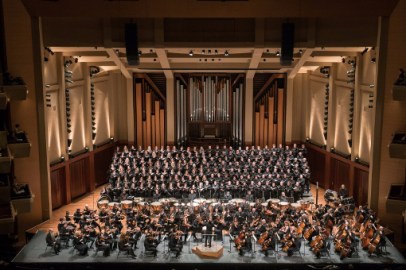
Strange Beauty: The Berlioz Requiem in Seattle

71199-bpatoc-berlioz-requiem-preview-0008-resized

(c) Brandon Patoc

My review of the Berlioz Requiem performed by Ludovic Morlot and Seattle Symphony:

Even for a composer as naturally original as Hector Berlioz, the Grande messe des morts stands apart for its wild uniqueness…

continue reading

Filed under: Berlioz, review, Seattle Symphony

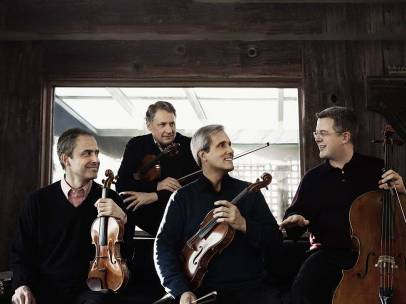
Contemplating End Times with the Emerson Quartet

emersons

Emerson String Quartet Photo by Lisa Marie Mazzucco

My review of the Emerson Quartet’s performance for the White Light Festival at Lincoln Center for Musical America (paywall):

NEW YORK—“Conclusions are the weak point of most authors,” George Eliot famously declared, “but some of the fault lies in the very nature of a conclusion, which is at best a negation.” That may hold true for fiction, but composers glory in the powerful statements they can make when a piece approaches the double bar line. And, in the case of certain composers, music written when their own lives are nearing the end possesses a special mystique.

continue reading 

Filed under: Beethoven, Emerson String Quartet, Musical America, review, Shostakovich

Gidon Kremer with Seattle Symphony

69544-gidon-kremer---paolo-pellegrin---magnum-photos-7

Gidon Kremer; © Paolo Pellegrin

My review of Gidon Kremer’s visit with Seattle Symphony:

It’s entirely characteristic of Gidon Kremer to choose a discovery piece rather than a surefire crowd-pleaser for what was a rare appearance in Seattle…

continue reading

Filed under: Gidon Kremer, Ludovic Morlot, Mendelssohn, review, Schumann, Seattle Symphony

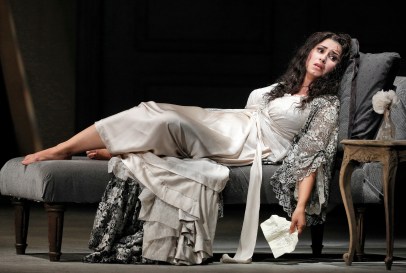
The Memorable Women at San Francisco Opera Continue, with La Traviata and Turandot

_B5A8477-X3

Aurelia Florian as Violetta Valéry in Verdi’s “La Traviata.” Photo: Cory Weaver/San Francisco Opera

Part two of my reviews of San Francisco Opera’s fall season is now posted on Musical America:

SAN FRANCISCO—Along with a sensational production of Elektra , San Francisco Opera’s lineup so far this season is spotlighting some of the art form’s most gripping female …

continue reading (behind Musical America‘s paywall)

Filed under: Puccini, review, San Francisco Opera, Verdi

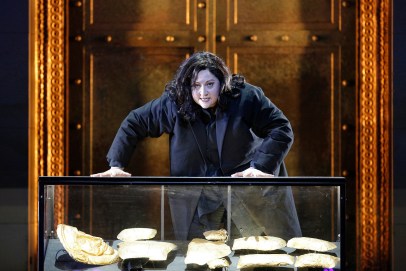
High-Voltage Elektra at San Francisco Opera

_B5A8670-X3

Christine Goerke; Photo: Cory Weaver/San Francisco Opera

New review for Musical America:
SAN FRANCISCO—“The museum is closing…” The Elektra presented as part of San Francisco Opera’s new fall season takes place in the midst of a fictional exhibition of Mycenaean-era artifacts. But this Keith Warner …

continue reading (paywall)

Filed under: review, San Francisco Opera

Protected: Thrilling Berlioz and Mahler with Guest Conductor Giancarlo Guerrero and Seattle Symphony

This content is password-protected. To view it, please enter the password below.

Filed under: Berlioz, Mahler, review, Seattle Symphony

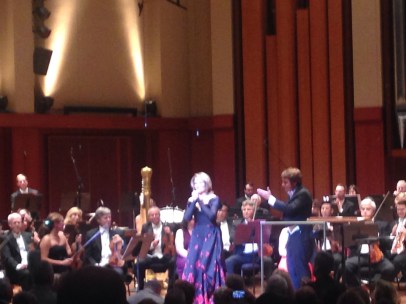
Seattle Symphony’s Captivating Season Opener with Renée Fleming

sso-opening

Seattle Symphony opening night, with conductor Pablo Rus Broseta and soprano Renée Fleming

On Saturday, Seattle Symphony kicked off its new season with special guest Renée Fleming. Associate Conductor Pablo Rus Broseta was on the podium, filling in for Music Director Ludovic Morlot (who was prevented by a leg injury from opening his seventh — and second-to-last — season helming the SSO).

Such affairs are often little more than a lightweight, pleasant upbeat to the season proper. But last night’s performance proved captivating throughout and contained several genuinely memorable moments.

Both halves of the program kept Fleming at the center of attention. The beloved soprano — who sang the National Anthem at the 2014 Super Bowl that brought the Seahawks victory — was in very fine voice indeed. To showcase different aspects of her artistry, she offered an unusual mixture that ranged from mid-century Samuel Barber to arrangements of songs by Björk and some little-known Italian gems from the late 19th century.

The Barber and Björk selections are paired on Fleming’s Distant Light album as well, released at the beginning of this year. Barber’s Knoxville: Summer of 1915 by itself became a compendium of Fleming at her most expressive: full tonal support, lush brushstrokes for sustained notes, and emotionally resonant phrasing were in generous supply, together with sensitivity to the nuances of James Agee’s text.

Drawing on all this, Fleming was able to shape the touching flashes of insight from a childhood recalled. Instead of the more comforting, lulling vision of bittersweet nostalgia for a vanished America, her account made it clear that this is a rare musical portrait of  innocence dissected — an innocence that, as the musical element reinforces, can only be ephemeral.

Fleming followed this with a foray into a pair of songs by  Björk, the adventurous, fantastically original Icelandic singer and songwriter.  She sang “Virus” (from Biophilia) and “All Is Full of Love” (from Homogenic), creating a rapturous glow in the second. But even using a mic (though from what I could tell, there was no instrumental amplification), her middle voice occasionally become drowned by the rather gentle ambient orchestration.

The concert’s second half went completely Italian. Fleming gave charming introductions to the fare, which featured sun-dappled lyricism for Licinio Refice’s Ombra di nube (from her Guilty Pleasures album) and Tosti’s delectable Aprile, as well as the swooning fatalism of the famous avalanche aria from Catalani’s La Wally (an operatic death teasingly described by the soprano).

The highlight here was Fleming’s full-throttle version of “L’altra notte in fondo al mare” from Arrigo Boïto’s Mefistofele. She made the misfortunate Margherita’s roller-coaster ride of a mad scene stunningly vivid and perturbing, peppered with featherweight trills that sounded downright eerie in the context, all the more so for their technical finesse.

Leslie Chihuly (in her final season chairing SSO’s Board of Directors) announced the lineup of seven (!) new musician appointments with the SSO:  Demarre McGill (returning as principal flute), John DiCesare (principal tuba), Emil Khudyev (associate principal clarinet), Andy Liang (second violin section), Danielle Kuhlmann (fourth horn), Christopher Stingle (second trumpet), and Michael Myers (fourth/utility trumpet).

All except McGill were able to participate in this concert, and there was a palpable sense of rejuvenating energy.  Having profiled this talented young conductor for Musical America a year ago, I wasn’t at all surprised by how splendidly Pablo Rus Broseta acquitted himself of this high-stakes assignment.

Framing each half of the concert with a substantial overture — Barber’s Overture to The School for Scandal and Verdi’s to La forza del destino — Rus Broseta showed a remarkable command of small details that make big differences, as in his calibration of the brass balance in the Verdi. It had such bite, I felt a sudden urge to see the entire opera, one of Verdi’s wildest creations.

Rus Broseta has a disciplined mind — tempered by his Modernist training — and never settles for the “showy” surface. And he was a sensitive partner with Fleming, allowing her to shine above all in the Barber and Boïto.

Extending the generous, positive spirit of the evening, Fleming returned for a set of three encores.  Lauretta’s “O mio babbino caro” from Puccini’s Gianni Schicchi, featuring her lustrous high A-flat, is an example, she suggested, of perhaps the perfect universal aria. With an invitation to the audience to join her in “I Could Have Danced All Night” from My Fair Lady, Fleming also gave a nod to one of her upcoming new ventures later this season, when she makes her Broadway debut in Carousel. And with a deeply felt “Song to the Moon” from Dvořák’s Rusalka, she acknowledged her own early years in opera.

Review by Thomas May (c)2017 – All rights reserved

Filed under: review, Seattle Symphony

Trying to rethink Madame Butterfly at Seattle Opera

65336-butterfly-alexey-dolgov--pinkerton--and-lianna-haroutounian--cio-cio-san--jacob-lucas-photo-resized

Alexey Dolgov (Pinkerton) and Lianna Haroutounian (Cio-Cio-San); photo by Jacob Lucas

My review for Bachtrack of the new Madame Butterfly production opening Seattle Opera’s season:

How well do we really know Madame Butterfly? So iconic that, for some, it’s the archetype of the art form itself, Puccini’s mega-popular opera has recently been coming in for renewed scrutiny.

continue

Filed under: Puccini, review, Seattle Opera

Bewitched, Bothered, and Bewildered: Alcina Casts Surprising Spells in Santa Fe

64947-alcina-else-van-den-heever-c-ken-howard-for-santa-fe-opera-2017-resized

Elsa van den Heever (Alcina) © Ken Howard for Santa Fe Opera, 2017

My review of Santa Fe Opera’s Alcina for Bachtrack:

George Bernard Shaw crystallised longstanding biases when he declared that Handel’s operas were “only stage concerts for shewing off the technical skill of the singers”. David Alden, a longstanding maverick director and hero of Regie-philes, made his reputation in part through his striking interpretations of Handel. If anything, his production of Alcina, which he first staged at the Opéra National de Bordeaux in 2012 (with many of the same singers), pushes too far in the opposite direction to the theatrically static fossil of Shaw’s stereotype.

continue

Filed under: directors, Handel, review, Santa Fe Opera

Pecking Order: The Golden Cockerel a Crowing Success at Santa Fe Opera

GC2

TIM MIX (KING DODON) PHOTO CREDIT: PAUL HORPEDAHL FOR SANTA FE OPERA, 2017

Even though it’s still more or less a rarity for American audiences nowadays, Nikolai Rimsky-Korsakov’s The Golden Cockerel can seem surprisingly — indeed, unnervingly — familiar to audiences enduring the current political moment.

At least that’s one of the main premises of the new production Santa Fe Opera is presenting this season (a co-production with Dallas Opera). Also marking its company debut, Rimsky’s final opera (better known by its French title, Le coq d’or) actually has a direct American connection as regards its source.

The libretto by Vladimir Belsky is an adaptation of a verse fairy-tale by Pushkin, who got the story from none other than Washington Irving (specifically, from The Legend of the Arabian Astrologer, one of his Tales of the Alhambra inspired by the American writer’s travels in Spain).

Despite those far-flung historical connections, Cockerel — the final opera by the prolific Rimsky (completed in 1907) — posed a trenchant contemporary critique of Tsar Nicholas II that, especially in the aftermath of the disastrous Russo-Japanese War, was obvious enough to cause trouble with the censors. Rimsky died before the opera could be premiered (in 1909 in Moscow).
 

GC1

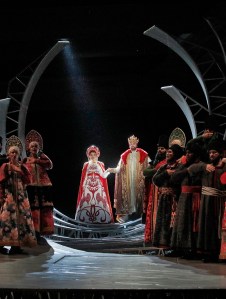
VENERA GIMADIEVA (QUEEN OF SHEMAKHA) AND TIM MIX (KING DODON) PHOTO CREDIT: KEN HOWARD FOR SANTA FE OPERA, 2017

Cockerel involves an odd, both beguiling and baffling combination of dramaturgical registers such that it’s a challenge to stage the work outside its Russian context, which boasts a rich performance tradition of Rimsky’s operas (despite or even because of the composer’s posthumous hurdles with Soviet cultural authorities).

The framework is standard-issue fairy-tale: in a land long ago, King Dodon hopes to put an end to the threat of warfare from beyond his borders and even considers building a wall. As he seeks advice, a mysterious Astrologer presents him with the ideal solution: a beautiful Golden Cockerel that only needs to be perched atop a building to keep watch. It acts as a kind of early-warning system, allowing the King to indulge in his love of sleep and food worry-free.

But when the warning comes, he goes on a pre-emptive war, only to be seduced by his enemy, the Queen of Shemakha. She cajoles him into a marriage to gain his kingdom, and they return to the capital. But the Astrologer had extracted a promise that the grateful Tsar would give him anything he requested. Naturally, the Astrologer now demands the new Queen for himself. The King reacts violently, and the Golden Cockerel fatally pecks him.

That’s just the scaffolding. Infused into the fairy-tale story line are elements of political satire, allegory, Orientalism, and intoxicating late Romanticism. The Golden Cockerel even became an inspiration for modernist trends thanks to the Paris production by Sergei Diaghilev’s Ballets Russes company in 1914, which put a distancing wedge between the music and story by keeping the singers to the sides while dancers enacted the roles.

Director Paul Curran and the creative team accentuate the satirical elements with a kind of broad comedy that wouldn’t be out of place in a Saturday Night Live skit.  Gary McCann (responsible for the set and costumes) imprisons Tsar Dodon in a fat suit, his jello-y bulges on display when he snoozes in his long red underwear (though he is hilariously undersized for a throne many times too big for him).
Near the culmination, this master of blustering incompetence appears decked out in a modern suit with a flaming red tie (yes, that‘s the blowhard he’s meant to evoke, tho Dodon possesses certain charming aspects that undo the implied comparison). His new Queen is wearing a smart white pantsuit. 

The clowning and pratfalls grow a bit tiresome, however, and make for a dragging first act. In the second, when Dodon heads off to the Queen’s neighboring land and is engaged by her entrancing musical and choreographic come-on, the shtick really begins to wear thin.

By way of compensation, the visuals added something of the missing note of mystery, fantasy, and even potentially sinister undertow. McCann’s costumes, alluding to the Ballets Russes era, exploded with color and folk exuberance, as well as the trendy Orientalism of that period. Enhanced by Paul Hackenmueller’s lighting, his set design relied on a large wavy metal curve and Constructivist-inspired swirls (a way of paying homage to the opera’s Modernist connections).

The curve was used for Driscoll Otto’s projections, whose beautifully intriguing imagery included opulent patterns and disturbingly surreal dreamlike sequences — dreams and the psyche figure heavily in the story — though the projections for the Golden Cockerel itself were surprisingly unimpressive (and difficult to see because of the angling of the large curve). During last night’s performance (July 28), a dramatic lightning storm provided perfectly counterpointed timing for the dark “invasion” scene, into which the Queen of Shemakha enters, Kundry-like, ready to disarm the enemy with her own brand of warcraft.

The cast ranged from adequate to wonderful. After Eric Owens bowed out of the assignment, baritone Tim Mix took on the role of King Dodon. He showed a delightful sense of comic timing and sang with musical intelligence but lacked power and needed depth. As his main general Commander Polkan, bass Kevin Burdette was scene-stealingly funny, a very effective character singer who gets a nasty comeuppance.  

As Dodon’s sons, who end up slaughtering each other in battle, Richard Smagur and Jorge Espino underscored the fatal hereditary mix of arrogance and idiocy. Singing offstage, Kasia Borowiec lent her lovely soprano to the Cockerel’s (a-little-too-repetitive) crowings. (The Cockerel is conceived as a female role in the tradition of so many other ornithological characterizations, despite the bird’s sex.)
GC3

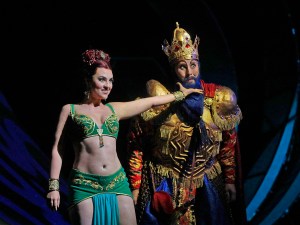
VENERA GIMADIEVA (THE QUEEN OF SHEMAKHA) AND TIM MIX (KING DODON) PHOTO CREDIT: KEN HOWARD FOR SANTA FE OPERA, 2017

The star of the evening was the Russian soprano Venera Gimadieva in the virtuosic role of the Queen of Shemakha. Rimsky lavishes his most alluring, exquisitely ornamented music on her (including in the number “Hymn to the Sun”). Aside from some lingering insecurities with intonation, Gimadieva handled her gorgeous coloratura with nuance and panache, executing some breathtakingly tapered notes. She also showed graceful and arresting stage presence, a delightful foil in her dancing to the fat-footed, bloated King as she wraps him around her finger. 

Also superb was alto Meredith Arwady as Amelfa as a loyal royal servant, a substitute Mom to the King whose voice by itself is like a character, immense, sturdy, amber, and richly reverberant in the astonishingly low notes Rimsky writes for the part.

He also writes a double-take-inducing high E for the high-flying tenor Astrologer, who frames the opera as an it’s-just-make-believe-after-all mise-en-abyme. Barry Banks, brandishing moody sunglasses and an Andy Warhol air, suggested a hint of the eerie, E.T.A. Hoffmann-esque in his portrayal, contributing another layer that otherwise tended to be sacrificed in favor of the satirical.

Actually, there was another star of the evening: conductor Emmanuel Villaume, who coaxed consistently expressive, multi-hued, luminous playing for Rimsky’s scintillating score. He clearly treasures its shimmering beauties and gave the musicians time to indulge in the soloistic writing, but judiciously, and in ways that enhanced the theatricality onstage.  

If you go: Santa Fe Opera’s production of The Golden Cockerel by Nikolai Rimsky-Korsakov continues through Aug. 18. Information and reservations here.

Review (c) 2017 Thomas May — all rights reserved

Filed under: review, Santa Fe Opera

Archive

Enter your email address to follow this blog and receive notifications of new posts by email.