MEMETERIA by Thomas May

Music & the Arts

American History, Taylor Mac Style

Taylor Mac

Taylor Mac

The performance phenomenon known as Taylor Mac has been riding a wave of more mainstream success of late.

A few seasons ago he was a smash in a remarkable production of Brecht’s The Good Person of Szechuan by the Foundry Theatre at the the New York Public Theatre (playing both Shen Te and Shui Ta). The run of Mac’s wild new play Hir at New York City’s Playwrights Horizons was recently extended — yikes, recognition by the global capitalist economy! — and Hir is showing up on several best-of-the-year lists. (The title of this darkly absurd comedy about a dysfunctional, moving-to-postgender family conflates “his” and “her,” though Mac’s own gender pronoun of preference rejects both of these in favor of the delightfully befuddling “judy.”)

And Mac is heading into 2016 with his most-ambitious project ever: A 24-Decade History of Popular Music (still in progress), which will eventually comprise 24 concerts, each devoted to one of the 24 decades of the history of the United States (from 1776 through 2016).

Ultimately Mac plans to stitch these programs together into a single blow-out extravaganza of three acts, eight hours each, spread over a continuous 24 hours. Food and a medical tent are being promised; bring-your-own bedding is encouraged; communities will be forged.

You can sample an excerpt from the intended magnum opus in this weekend’s show at On the Boards, where Mac is making his belated debut.

At the opening last night, Mac offered a brief overview of the scheme: a string of popular songs, with each hours’ worth more or less representing a particular decade. Many are of course instantly recognizable numbers, but he’s mixed in some genuine obscurities (and will also be writing some of his own songs).

Mac also promises some spectacular diversions will be part of the still-gestating Gesamtkumstwerk. For example, last night he remarked that he’s come to see the necessity of including a skit for 24 Tiny Tims: “half of them the ukelele-playing Tiny Tim, and half the Charles Dickens type — as choreographed by my dear friend Susan Stroman. (But she doesn’t know that yet.)”

Actually, “a history of popular music” is a misnomer: the songs serve as vehicles for nothing less than Mac’s subversive, “subjective history” of the United States. Through his running commentary — with abundant use of audience collaboration — he de- and recontextualizes the songs.

Mac’s Seattle show involves a distillation of material from the larger project into a stand-alone concert focusing on the theme of “songs of the American right” across the decades.

The guiding conceit is to get the audience to enact a “ritual sacrifice”: Mac’s version, more or less, of catharsis, of which, admittedly, we’re all in need in these unsettling times.

Songs of the American Right wants to force us to face ugly moments in American social and political history and then, through Mac’s ironic deconstruction and parody, to enable the audience to exorcize the associated negativity in what he calls “a radical-fairy realness ritual.”

Backed in this show by a band of three musicians (piano, bass, and drums) and a local burlesque artist as guest performer, Mac morphed from standup comic to larger-than-life glitter queen to confrontational therapist. The show flows past several hiccups with an improvisatory rhythm.

He was clad in a fantastically overwrought, deliriously reflective costume, complete with a Lady Liberty crown, that was designed by Machine Dazzle (who’s crafting a different costume for each decade of the big show).

Mac had a sequence of topics in his sights: religious and political hive-think, capital punishment, gender conformity, sexual repression, civil rights, and homophobia.

Each of these he hooked onto associated songs, preserving the original lyrics but undermining them with his commentary and audience-participation frolics. (Don’t even  think of trying to weasel out by sitting in the most anonymous seat. You won’t succeed.)

Some of these were self-consciously gimmicky, but forgivably so thanks to Mac’s sheer humor and stage moxie and humor; some, like a call to a communal “high school same-sex prom dance” (where Mac insisted that the entire audience leave their seats and join together onstage, intended to “undo” the judgmentalism of Ted Nugent’s 1970s song “Snakeskin Cowboy”), introduced a fascinating dynamic of awkwardness and vulnerability.

That points to the real flavor of Songs of the American Right — and of  Mac’s overall aesthetic. This is an artist not interested in offering a polished “product” to his audience to consume as performance. Some segments of his show were less polished, less persuasive, some were too drawn out. The historical points are intentionally exaggerated, at times sledgehammer fashion. (“What is there about this,” he asked, pointed to his costume, “that says ‘lack of hyperbole?!'”) But for Mac, a “mixed” experience is more authentic than precision-engineered illusions of perfection.

Mac sang a few well-known icons, like “An Okie from Muskogee” and the opening “Amazing Grace”, sung to the tune of “House of the Rising Sun.” But many songs on his set list were historical curiosities, doubtless first-time discoveries for the audience: “Christ the Apple Tree” (a pious hymn popular in the 1790s), the 1920s tune “Masculine Women! Feminine Men!” and the anti-war song from the WWI era, ““I Didn’t Raise My Boy to Be a Soldier” (cleverly set off against its “right-wing” counterpart urging manly men to go to war).

Mac wasn’t too concerned about a literal association of each song with a “conservative” perspective. “Amazing Grace” became a symbol for the topic of churchgoing conformity — “one of the few kinds of rituals we still have in America, like sports,” Mac said. “Where everyone’s on the same team, and it’s homogenous.”

As with the anti-war/pro-war song confrontation from the early 20th century, he counterpointed the racism of Stephen Foster’s “My Old Kentucky Home” with Nina Simone’s defiant “Mississippi Goddamn” in one of the show’s most electrifying highlights.

And does judy have pipes: Mac’s remarkably versatile vocal stylings were grounded throughout in charismatic musicianship. In a touching encore, Mac rose high above the audience, perched on a stool, leading a group-sing of Patti Smith’s “People Have the Power” — gently yielding the reins to the assembled crowd.

–(C)2015 Thomas May. All rights reserved.

Filed under: performance, review, theater
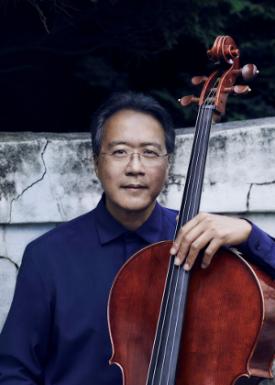
A Chair and a Cello: Yo-Yo Ma Shows What Matters

31876-275-yo_yo_ma_jason_bell_resized
Yo-Yo Ma © Jason Bell
One irony of a musician operating at peak level is that the technique enabling this, the virtuosity that otherwise attracts so much attention, is reduced to secondary interest. It becomes a given and retreats into the background, eclipsed by the purely musical values that a less-confident technique would obscure. At least that’s the case when the musician is Yo-Yo Ma performing a solo recital as profoundly satisfying as he did on his latest visit to Seattle.

continue reading

Filed under: Bach, review, University of Washington

Shedding Light on Dark Sisters

dark_sisters_1
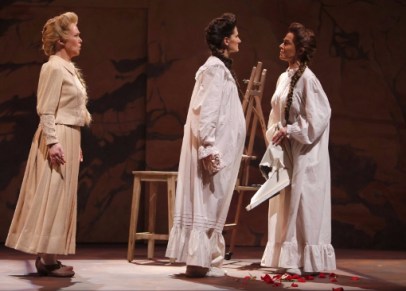
l to r: Melanie Krueger (Eliza), Eve-Lyn de la Haye (Zina), and Heather Pawsey (Presendia) Credit: (c) Tim Matheson


A new review for Musical America, in which I write about Vancouver Opera’s current production — the Canadian premiere — of the chamber opera Dark Sisters. (Content is behind a paywall.)

VANCOUVER, BC — Dark Sisters is the final new work Vancouver Opera will have presented before Canada’s second-largest opera company shifts from the full-season model currently underway to a festival one (in the spring of 2017).

This chamber opera by Nico Muhly and librettist Stephen Karam was first seen in New York in a 2011 production by the late lamented Gotham Chamber Opera and then at co-commissioner Opera Philadelphia in 2012, where a chorus of praise replaced the rather tepid initial reception

continue reading

Filed under: new opera, Nico Muhly, review

A Noble Attempt: Thomas Dausgaard Leads the Seattle Symphony in Mahler’s Tenth

31150-275-thomas_dausgaard_ulla_carin_eckblom_resized
Thomas Dausgaard
© Ulla-Carin Eckblom

Can we really claim that there is a Mahler Ten? Opinions remain sharply divided among the most fervent Mahlerians. Some refuse to consider the proposition of performing even the first movement of the composer’s final, unfinished symphony – let alone any of the various attempts to construct a performable whole using the extensive sketches Mahler left behind at his death in 1911.

continue reading

Filed under: conductors, Mahler, review, Seattle Symphony

Music for a While: Beguiled by Beethoven and John Luther Adams in Los Angeles

john_luther_adams

In the immediate aftermath of the 9-11 attacks, music presenters struggled to readjust programmes so that they could provide an appropriately solemn response. For some this seemed the only justification to enjoy music at all in the face of nightmarish reality.

But the act of making music with care and conviction is itself life-affirming and humanity-empowering, as Leonard Bernstein knew when he famously declared: “This will be our reply to violence: to make music more intensely, more beautifully, more devotedly than ever before”.

continue reading

Filed under: Beethoven, John Luther Adams, Los Angeles Philharmonic, Ludovic Morlot, review

Kancheli’s Latest in Seattle, with Counterpoint from Martinů and Brahms

Seattle Symphony

Seattle Symphony

Bearing an exotically enigmatic title — Nu.Mu.Zu — the new work by the 80-year-old Georgian composer Giya Kancheli left a distinctly memorable impression in its North American premiere by the Seattle Symphony Orchestra under Ludovic Morlot. The world premiere took place only a few weeks ago in Brussels (Kancheli’s current residence is in Antwerp), with Andrey Boreyko and the National Orchestra of Belgium; both that ensemble and the SSO co-commissioned the piece.
continue reading

Filed under: Brahms, Kancheli, Ludovic Morlot, Martinů, new music, review, Seattle Symphony

Nothing Human Is Alien: A Poignant Mother Courage and Her Children at Seattle Shakespeare

 Trick Danneker, Chesa Greene, Jeanne Paulsen, and Spencer Hamp; photo by John Ulman

Trick Danneker, Chesa Greene, Jeanne Paulsen, and Spencer Hamp; photo by John Ulman

One of the shows on my personal most-anticipated list for the season opened Friday, and I’m still digesting the experience. Staging Mother Courage and Her Children, which is on the boards now at Seattle Shakespeare Company, is not an effort to be undertaken lightly. This is, aside from their 2011 production of The Threepenny Opera, Seattle Shakes’ first time out with the work of Bertolt Brecht.

Obviously at home with the dislocations and built-in “alienation effects” inherent in Shakespearean dramaturgy, the company brings to the challenge a valuable perspective from its long experience with the Bard.

An unconventional, class-focused production of Coriolanus that Bertolt Brecht saw in Berlin in the 1920s (directed by Erich Engel) was, after all, one of the formative influences on the German playwright’s ideas for a radically new kind of theater.

Directed by Jeff Steitzer, this production uses the acclaimed translation David Hare prepared for a Royal National Theatre production in 1995 (directed by Jonathan Kent).

That choice establishes a basic interpretive grid from the outset. Hare’s version underlines the caustic, cynical humor of the text, mostly leavening any hint of preachiness in the longer philosophical asides with a theatrical tartness reminiscent of Samuel Beckett. Could it be that some variety of humor — the more acid-etched, the better — is our preferred modern form of “alienation”?

A couple of topical references depressingly bring home how little has changed over the past two decades. In fact the most “Brechtian” aspect of this Mother Courage might be how it shows the ease with which the condition of war becomes normalized — in the ways it gets talked, even joked, about, justified, maneuvered around.

No matter how far we like to think we’ve advanced since Brecht’s masterpiece was first produced in 1941 (in neutral Zurich, in the middle of war-torn Europe) — or since the play’s setting in the Thirty Years’ War (1618-48), for that matter — the headline news of today’s refugees unnervingly echoes the grim plight of those caught up in those historical conflicts.

Jeanne Paulsen as Mother Courage; photo by John Ulman

Jeanne Paulsen as Mother Courage; photo by John Ulman

Mother Courage is a play, and a project, riddled with paradoxes that are necessarily insoluble — starting with Brecht’s theoretical aims versus realizing the play in praxis. One of these is the (very Shakespearean) ensemble nature of the work which at the same time requires a “star” quality performance to make the role of Anna Fierling (nicknamed “Mother Courage”) work properly.

That’s what Jeanne Paulsen delivers in her unflinching, gritty, sentimentality-proof portrayal of the intrepid matriarch whose idée fixe is to make a living and get her three children — Eilif, Swiss Cheese, and Kattrin — through the war.

But the living she makes by trading from her moveable canteen turns out to be most profitable when nations are at war, so Mother Courage is not to be thought of merely as a pitiable victim of the violence — even if she ends up losing all three children to it.

That’s the paradox anyone who takes on the role has to cope with, and Paulsen emphasizes how this contradiction has hardened Anna into a position where her own cynicism is among her most potent weapons of self-defense.

Paulsen’s steely-tempered Anna delivers her repartees with the deadpan timing of a 17th-century Bea Arthur. She has no need of a Shakespearean fool — it’s the character inside her who comes out with devastatingly witty responses to the war. We see Paulsen’s Mother Courage endure unbearably cruel experiences, yet at her core she’s already been numbed from the beginning.

Seattle Shakes has assembled an admirably strong cast to counterbalance Anna’s powerful personality with other vivid character portrayals and effectively paced ensemble work.

R. Hamilton Wright and Larry Paulsen; photo by John Ulman

R. Hamilton Wright and Larry Paulsen; photo by John Ulman

Trick Danneker gives the elder son Eilif a touch of a dark-spirited Candide, swiftly corrupted by his success at slaughter but too slow to learn the rule of moral relativism that holds sway. Spencer Hemp plays the good-natured Swiss Cheese like the ill-fated hero of a Brechtian fable. As the mute, genuinely heroic daughter Kattrin (in a world where heroism is a sick joke), Chesa Greene does superb work inhabiting her character to life with only gestures and body language.

Larry Paulsen, who accompanies Mother Courage through many of the play’s peripatetic sequence of scenes, reveals the complexity Brecht built into the Chaplain — exactly the sort of character you initially expect to remain a nasty caricature of the evils of religion doubling as an excuse-maker for war. While he doesn’t disguise the Chaplain’s cowardice and opportunism, Paulsen underscores his contradictions, which are almost as imposing as Anna’s — including a sense of compassion he develops in contrast to her stuck-in-place cold-heartedness.

R. Hamilton Wright makes a terrific Cook, an everyman with a well-developed carapace of cynicism as well as a philosophical streak that can match Anna. Alyssa Keene’s Yvette, showing her own ways to profit from the war, also brings to mind a few scenes of Candide in her cartoonish arc from pneumatic camp prostitute to plump, rich widow.

Reacting to the first of her children’s deaths (just before the one intermission taken in this production), Paulsen retreats inside her wagon and lets out a searing cry of anguish — heard but never seen, for as Mother Courage her entire survival strategy requires a constant facade of acting, never revealing true emotion.

Jeanne Paulsen and Chesa Greene; photo by John Ulman

Jeanne Paulsen and Chesa Greene; photo by John Ulman

It’s a wrenching moment that crystallizes the larger issue that looms over any production of this play: the paradox of Brecht’s epic theater of ironic emotional detachment versus the urge to feel sympathy for Anna. Steitzer’s staging essentially opts to set this contradiction aside, with only a few token efforts at creating “alienation”: the bare-bones set design with curtain (Craig B. Wollam) and some over-the-top stylizations of ancillary characters like the Commander-in-Chief Bill Johns) who mentors his young warrior Eilif.

Otherwise the dramaturgy and design (including Doris Black’s period costumes and Rick Paulsen’s lighting) aren’t really too far off from the staging of a Shakespeare play.

The one area where I’d most expect the distancing to be played up — the songs — represents the production’s weakest aspect. Oddly, there’s no clear credit in the program for the composer of the new songs (not Paul Dessau’s), just a reference to Robertson Witmer for “music arrangements.” In any case, the score offers little more than pallid imitation Kurt Weill. The pre-recorded tracks sound a bit too canned and, not surprisingly, inspire lackluster singing at best. (Seattle Shakes’ blog posts a playlist of songs from various Brecht plays.)

That aside, Seattle Shakes has achieved a powerful and thoroughly engaging theatrical interpretation of a show that tends to be more revered as a “classic” than actually experienced, particularly by American audiences. Anyone bothered by the deviations from Brecht’s principles would do well to remember that the playwright himself believed the classics like Shakespeare only survived through “sacrilege.”

If you go: Seattle Shakespeare’s production of Mother Courage and Her Children plays at the Center Theatre at Seattle Center (305 Harrison Street, Seattle) through 22 November 2015. Tickets here.

–(c)2015 Thomas May. All rights reserved.

Filed under: Brecht, review, Shakespeare, theater

The Latest “Sonic Evolution” from Seattle Symphony

Last week brought the newest installment in Seattle Symphony’s adventurous Sonic Evolution series: a collaboration with Seattle’s Earshot Jazz Festival.

The SSO describes Sonic Evolution, which began with Ludovic Morlot’s tenure and is now in its fifth season, as “a bridge for the Symphony to engage with Seattle’s creative community through innovative concert programs that celebrate the past, present, and future of the city’s musical legacy.”

Alack and alas, the series has managed to trigger a panic attack for the likes of Norman Lebrecht, who was moved last year to pen an absurd editorial claiming that the orchestra had “handed the pass to the enemy.”

This despite the irrelevant triviality of not having actually attended the performance in question, a part of which featured the rap legend Sir Mix-A-Lot (the object of his freak-out).

Two Sonic Evolution events rather than one have been baked into the current season. (Is that enough for Lebrecht to fret over the prospect of this unconventional concert format “replacing” the usual repertoire?) The second one, in May 2016, promises a collaboration (to which I’m especially looking forward) with the Seattle International Film Festival, Michael Gordon, William Brittelle, Fly Moon Royalty, and others.

There was much to recommend last week’s program as well, titled “Under the Influence of Jazz.” The concept of a jazz band-symphonic “fusion” of course has long roots by now, with George Gershwin among its most celebrated pioneers.

It remains a tricky proposition. And yet Derek Bermel upped the ante by pitching his multi-movement jazz concerto The Migration Series on an epic scale. (Bermel was returning to Seattle after a new commission last year from the Seattle Chamber Music Society.)

For this listener the risk paid off abundantly. Bermel originally wrote The Migration Series in 2006 on a commission from the American Composers Orchestra and the Lincoln Center Jazz Orchestra under Wynton Marsalis.

It wasn’t until he was already involved in the composition, Bermel said during a brief onstage interview, that the sounds he was hearing began to evoke memories of the great cycle of 60 paintings by the same title by Jacob Lawrence (1917-2000). The artist had a Seattle connection, having moved here later in his career, where he became a professor at the University of Washington. Bermel added that as a teenager he recalled being profoundly affected by seeing the series (which is currently split between the collections of MOMA in New York and the Phillips Collection in Washington, D.C.).

This cross-connection between music and visual art is another dimension of the ways Sonic Evolution is experimenting with opening up the concert format to other kinds of stimulation. As we listened to the Bermel, reproductions of paintings from Lawrence’s cycle were projected, ranging from landscapes and urban settings to chilling depictions of the violence faced by African-Americans during the Great Migration northward, along with complex crowd scenes.

Bermel says he didn’t aim to “illustrate” particular paintings but wanted “to focus on the shapes, colors, moods, and atmospheres evoked by groups of scenes within the series… In this grand American story, I gravitated toward the larger themes, those of determination, mystery, despair, and hope; Lawrence’s unique sense of perspective and distance – his generosity and universality of narrative – allowed the space for me to add music.” Apparently this was the first performance of The Migration Series to present the music in tandem with the art that inspired it.

Bermel constructs his five-movement score (with three connecting interludes) as a kind of jazz concerto grosso. The super-talented Roosevelt High School Jazz Band took on the role of the concertino, the band as hyper-soloist in dialogue with the SSO, while Bermel himself played a soulful, extended clarinet solo.

The composer aptly compares his method of construction here to a mosaic, and parts of the score tend to lure the ear like glittering shapes, while simple motifs recur as binding devices. If some stretches feel a touch overlong, what remains most striking is the quality of Bermel’s musical language: engaging, original, with something genuine to say. (You can hear a sample at the bottom of this piece from Second Inversion.)

Also on the agenda was a world premiere was by local jazz wizard Wayne Horvitz: Those Who Remain, a compact two-movement concerto for his longtime collaborator, jazz guitarist Bill Frisell. In this case, I found the interest of the source of inspiration — the poetry of Seattle’s own Richard Hugo (1923-1982) — overshadowed the substance of the musical work.

Horvitz’s solo part (including room for improvisation) for Frisell seemed deliberately understated, and the orchestration was colorful and vibrant — especially the second movement’s chorale theme — but for all its charms, a first hearing left me underwhelmed, without a clear sense of musical profile.

In fact I was fortunate to have gotten a wonderful Horvitz fix earlier in the week at the Paramount Theater’s presentation of his original score for The Cabinet of Dr. Caligari (part of the Trader Joe’s Silent Movie Mondays): Horvitz and his ensemble performed the music live. It’s a fascinating and truly inventive collaboration between jazz and silent film.

The concert’s second half brought the Seattle-born vocalist Shaprece center stage, accompanied by Morlot and the SSO in arrangements of her songs by Phillip Peterson (and by an expressive pair of dancers and a bearded backup vocalist).

The theme of visuals continued throughout the concert — less successfully for the Horvitz and then with more liveliness (and club floor slickness) for Shaprece’s numbers. She commands such a beautiful voice I’d love to hear Shaprece in a wider range of material. But anything that’s reminiscent of Björk, as several songs in her set were, is fine by me.

–(c)2015 Thomas May. All rights reserved.

Filed under: art, jazz, review, Seattle Symphony

In C and in Sync: Delights from Morlot, Melnikov and the Seattle Symphony

Alexander Melnikov; © Arts Management Group

Alexander Melnikov; © Arts Management Group

A new Bachtrack review:

One unfortunate trend in how concert music is often marketed these days showers disproportionate attention on a ‘star’ soloist, who basks in the limelight and the obligatory standing ovations, as though the orchestra were merely the house ‘backup band’ graciously permitted to share the stage.

What a delight this concert was, in contrast, when Alexander Melnikov joined with the Seattle Symphony under Ludovic Morlot’s baton to reaffirm the unadulteratedly collaborative experience of a concerto.

Rather than a parade of quirks justified as ‘virtuosity’ or a psychogram of a performer’s dominating personality, the 41-year-old Russian pianist provided a deeply satisfying, richly musical account of Beethoven’s Piano Concerto no. 1 in C major. And much of that satisfaction came from the sympathy Melnikov, Morlot and the SSO found in their partnership.

continue reading

Filed under: Beethoven, Ludovic Morlot, Mozart, pianists, review, Seattle Symphony, Stravinsky

An Elektra That Really Shocks: Boston at Carnegie

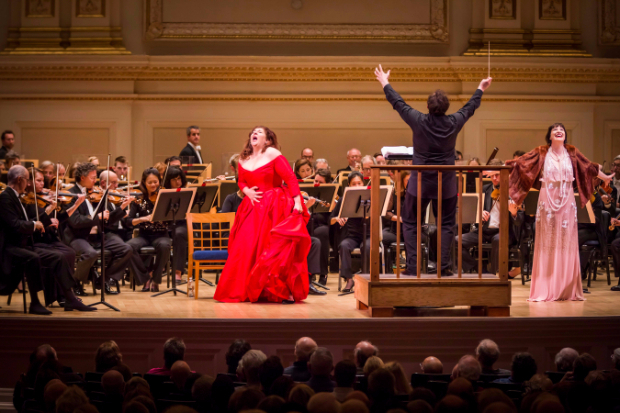
Elektra (left, Christine Goerke) and Chrysothemis (right, Gun-Brit Barkmin), with Andris Nelsons conducting the Boston Symphony; photo (c) Chris Lee

Every year around Halloween, it seems, it gets harder to find ways to spook willing celebrants of the pagan holiday. How can the ritual rechanneling of anxieties and existential fear into thrillers and other forms of entertainment — our society’s safety valve — possibly compete with the daily onslaught of news in the real world today?

Yet, under the right conditions, a few landmarks of art can still deliver the shock that Aristotle tried to justify with the concept of “catharsis.” It’s especially ironic when works once viewed as the spearheads of Modernism accomplish this for contemporary audiences.

When a piece like The Rite of Spring does so, it’s no longer because the music is inextricably identified with a specific moment in music history — a moment of upheaval that can no longer pack that particular punch for jaded ears — but in fact the opposite: because it has graduated to classic, “timeless” status.

The Boston Symphony Orchestra got me thinking along these lines with this week’s concert performance of Elektra at a packed Carnegie Hall. With Andris Nelsons conducting and a (mostly) dream cast headed by Christine Goerke, this foray into concert opera brought Richard Strauss’s score (premiered in 1909) to thrilling, astonishing, and, yes, shocking life for ears and sensibilities in 2015.

From the very first onslaught — an outburst of D minor chords that are the Big Bang generating much of Elektra‘s music — Nelsons kept the tension at a high voltage shouted at full force until the audience was left gasping for air nearly two intermissionless hours later. A rare-for-Carnegie Hall standing ovation followed.

Nelsons marshaled the BSO as if at the operating console of a massively complex, sleek machine. The musicians responded with split-second precision, delivering immaculate ensemble textures and sinuous solo lines (the extensive woodwind section by itself forming a kind of Greek chorus that restlessly comments on musical events).

Thanks to the Isaac Stern Auditorium’s acoustics, countless details registered with maximum impact — perhaps most terrifyingly in the sudden pauses as the opera approaches its climactic murder scene, the silences ripping a chasm into Strauss’s otherwise ceaselessly roiling score.

Each time Strauss anticipates the voluptuously lyrical idiom of Der Rosenkavalier in Elektra, such passages seemed suspect (though not necessarily ironic), for all their swooning beauty — momentary lulls in the brutalist energy Nelsons kept at the center of attention.

He also emphasized the driving mania underlying the dance rhythms in a way that de-familiarized them and underscored their frighteningly unforgiving force. I’d never realized until this performance how close Strauss comes here to the acid-drenched satires by Weimar artists like George Grosz and John Heartfield (whose work is currently in focus over in the Neue Galerie’s riveting Berlin Metropolis exhibit). A similar sense of an insane world pretending everything is in order applies to Elektra as well.

Even those who experienced Christine Goerke’s unforgettable Dyer’s Wife in the Met’s revival of Die Frau ohne Schatten must have felt unprepared for the blazing, fearless glory of her singing Wednesday night.

While she conveyed an impression of Elektra’s pitiful state with the vulnerable accents of her first great solo, her steeliness and power never let up: vocally Goerke embodied the monomania that makes Elektra such a threat to her mother and her mother’s lover Aegisth but that also keeps her mired in a state of hypersensitive angst. Her frequent high notes were lightning bolts, signals of a tormented consciousness.

Even in this unstaged (semi-staged?) performance, Goerke complemented all this with impressive physical energy, swirling about in a dance that could easily rival the fevered tarantella of Ibsen’s Nora Helmer.

I was especially taken with the German soprano Gun-Brit Barkmin as Elektra’s sister Chrysothemis, who longs for a simple, normal life free of all this drama. She was more vocally forceful than what I usually expect in this role but also contrasted effectively with the darker shadings of Goerke and the grotesqueries of Klytämnestra, sung with bat-shit-crazy delirium by Jane Henschel. The sick mindset that holds sway was swiftly established by the opening scene of the gossiping maids.

Only the great recognition scene between Elektra and the disguised, returning Orest — portrayed with a touch too much heroic grandeur by James Rutherford — seemed to be missing an element of passion. And that’s mostly because everything else was kept so taut that there was little room for the expansiveness (musically and psychologically) of this moment to register in more depth.

As the drunken Aegisth heading right on schedule toward his doom, Gerhard Siegel recalled suggested a touch of the clueless Baron von Ochs mixed with the chilling perversity of Herod. No film score has surpassed the music Strauss writes during his fatal entrance into the unlit palace.

I could find no mention of a stage director or costume designer, but the blocking on Carnegie’s very crowded stage — Elektra calls for the largest orchestra Strauss ever used in an opera — worked without drawing undue attention. (In concert opera it can often seem too gimmicky and distracting.)

The costumes drew attention to the Freudian era of Elektra‘s composition, with Goerke’s red strapless dress the undying flame of her obsessive love for her father Agamemnon and the symbol of its associated bloodlust.

As in Salome, Strauss has numerous opportunities to illustrate through the orchestra what his characters tell us they are hearing: above all for Elektra, but also for Chrysothemis and Klytämnestra, these moments emanated a kind of hallucinogenic haze, adding another layer to whichever perspective comes into the spotlight in Hofmannsthal’s libretto.

For all the powerhouse stamina Nelsons sustained from the players and cast, there was nothing crude or garish in this interpretation. Details stood out but never became speed bumps to the evening’s choke-hold momentum and only enhanced the suspense.

In Elektra George Bernard Shaw discerned a portrayal of “cancerous evil” that surpasses “the Klingsor scenes in Parsifal.” The only way out the drama allows for is an orgy of death. More than a century after the opera’s premiere, its demonic power remains unexorcized.

(C) 2015 Thomas May. All rights reserved.

Filed under: Andris Nelsons, Boston Symphony, Carnegie Hall, review, Strauss

Archive

Enter your email address to follow this blog and receive notifications of new posts by email.