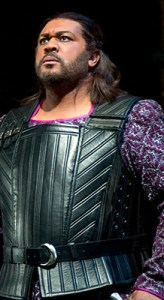
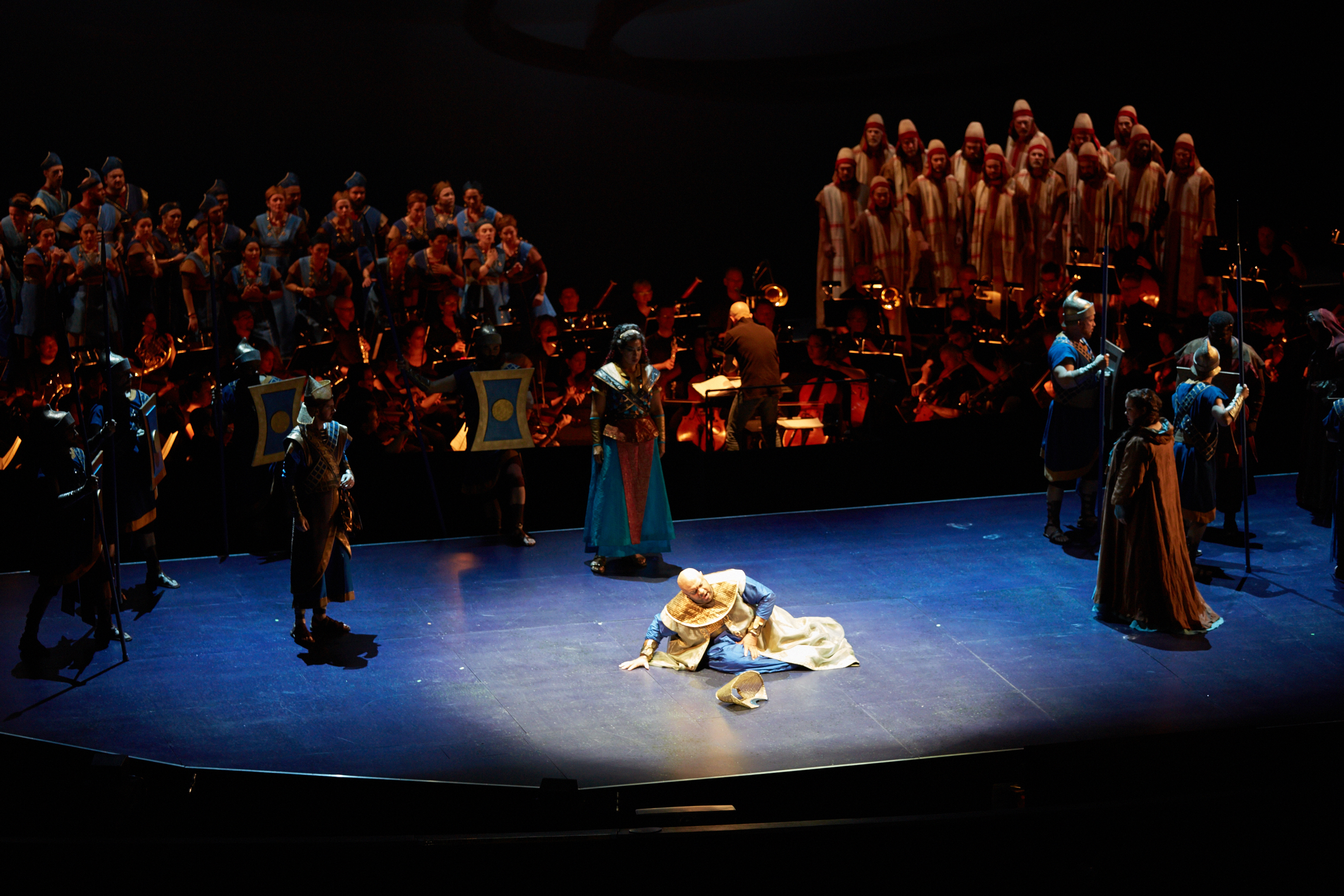
Gordon Hawkins as Nabucco
Seattle Opera has recently taken to releasing its Big News about the coming season on New Year’s Day. So here it is: the first season showing the imprint of new General Director Aidan Lang.
There’s a welcome return to five full-scale productions — along with a brief sixth offering, in the form of two performances of a new commission titled An American Dream.
Overall the lineup hews to long-established patterns, but with some more daring choices on the theatrical side. I’m especially delighted to see his fellow stage director Christopher Alden in the lineup for Dutchman after an absurdly long absence from the Seattle stage. And eager to experience Lang’s own work as a director (Mozart’s The Marriage of Figaro).
Here’s the full press release:
Company Presents First Season of Aidan Lang’s Vision
Year-Round Opera Returns in Seattle
SEATTLE—It’s a new era at Seattle Opera. The company today announced its 2015/16 season, the first to be presented by General Director Aidan Lang, and a return to full-year programming with a total of six operas, including new productions and a world premiere. Under Lang’s leadership, the company hopes to serve the community through the magic of theater and music in McCaw Hall, and in learning and engagement programs across the Pacific Northwest.
“We are excited to offer a season that is so varied, both in terms of repertoire and presentation style,” Lang said. “In addition to a world premiere, we have in Nabucco and Mary Stuart two great, highly dramatic works that have never before been seen in Seattle. And it is especially pleasing to maintain our Wagnerian credentials with a compelling, new-to-Seattle production of The Flying Dutchman. I know our audiences are in for a thrilling ride.”
The 2015/16 season includes two company premieres: Nabucco (Verdi) and Mary Stuart (Donizetti); a world premiere: An American Dream (composed by Jack Perla with libretto by Jessica Murphy Moo) conceived from the company’s community storytelling initiative, the Belonging(s) Project; and new-to-the-company productions of The Marriage of Figaro (Mozart), The Pearl Fishers (Bizet) and The Flying Dutchman (Wagner). In addition to mainstage performances, programs that serve the community are at the heart of Lang’s vision. In the 2015/16 season, Seattle Opera launches the Flight project, a multi-year series of programs and events that includes the commission of a trilogy of new operas for family audiences and in-school performances. Flight is modeled on the three-year Our Earth project, which to-date has served 31,893 people in more than 158 performances.
The mainstage season kicks off in August 2015 with a new production of an opera that’s never before been presented in Seattle: Nabucco, Verdi’s first masterpiece. The power and grandeur of the Old Testament story will come alive with innovative staging designed to bring the audience right into the action and closer to the music, notably the famous chorus “Va, pensiero.” Gordon Hawkins returns in Verdi’s first great baritone role, the King of Babylon. Mary Elizabeth Williams takes on the challenge of his fearsome daughter, Abigaille. Christian Van Horn makes his Seattle debut as Zaccaria, the High Priest. Russell Thomas returns as Ismaele, and Jamie Barton makes her Seattle Opera debut as Fenena. Italian conductor Carlo Montanaro returns following Verdi’s Attila (2012) and more recently, The Consul (2014). François Racine, who won Seattle Opera’s Artist of the Year Award for directing the acclaimed Canadian Opera Company production of Bluebeard’s Castle and Erwartung (2009), returns to direct a new production with sets by Seattle Opera’s own Robert Schaub (The Magic Flute, 2011); projections by Robert Bonniol, MODE Studios; and costumes by Ginette Grenier.
Running concurrently with Nabucco in August is the world premiere of An American Dream—an opera based on real stories from the Pacific Northwest. The heartbreak of World War II binds strangers together after a Japanese American family is forcibly removed from where they live on an island in Puget Sound, and the new residents slowly piece together the history of their home. Morgan Smith (Seattle Opera Young Artists Program graduate) returns to create the role of Jim, an American soldier married to Eva, a German Jew who has fled the Nazis and moved to the Pacific Northwest. Making their Seattle Opera debuts are D’Ana Lombard as Eva and, as the Japanese American family, Nina Yoshida Nelsen (Hiroko Kimura), Adam Lau (Makoto Kimura), and Hae Ji Chang (Setsuko Kimura). Conductor Judith Yan makes her Seattle Opera debut. Peter Kazaras, longtime Seattle Opera director, singer and former head of the company’s Young Artists Program, returns to direct following The Consul.
An American Dream is inspired by stories from Seattle Opera’s Belonging(s) Project (seattleopera.org/belongings), a community storytelling initiative where participants were asked to consider: “If you had to leave your home today and couldn’t return, what would you want to take with you? Why is that object, that memory, or that connection to your past so important?”
The simultaneous presentation of An American Dream with Nabucco is in itself a compelling artistic choice, and a deliberate pairing by the company’s general director.
“Every now and then in life, things suddenly fall neatly into place; and so it was with An American Dream,” Lang said. “The workshop process of An American Dream revealed an unexpected resonance with one of the key themes of Nabucco, which we had already planned. So we jumped at the opportunity to present the two works in parallel. In attending both operas, our audiences will inevitably have an even richer human experience than they would by seeing each piece in isolation.”
Next, Bizet’s hypnotic love story The Pearl Fishers heats up the fall. Internationally beloved designer Zandra Rhodes returns following her Artist of the Year Award costuming Seattle Opera’s The Magic Flute (2011) to create a grand vision of exotic splendor and vibrant color with her sets and costumes. Maureen McKay, a Seattle Opera Young Artists Program graduate who has gone on to impressive achievements in Europe, makes her mainstage debut as the beautiful priestess Leïla. John Tessier and Brett Polegato return to sing the two men who love her, Nadir and Zurga. Jonathan Lemalu makes his Seattle Opera debut as Nourabad. Both stage director Andrew Sinclair and conductor Emmanuel Joel-Hornak make their Seattle Opera debuts.
During the holiday season, Seattle Opera’s Education Department will deepen its collaborative partnership with Seattle Symphony. The Youth Opera Chorus will again perform with the symphony for its holiday concert on December 15, 2015 at Benaroya Hall. Additionally, the two companies are introducing a new pilot program: an in-school partnership between Opera Time (musical storytelling that fosters literacy for kindergarten-second grade) and Link Up: Seattle Symphony. Link Up allows third-fifth graders the opportunity to “join the orchestra” in a highly participatory program in which they learn to sing and play recorder in the classroom, and perform with the symphony from their seats.
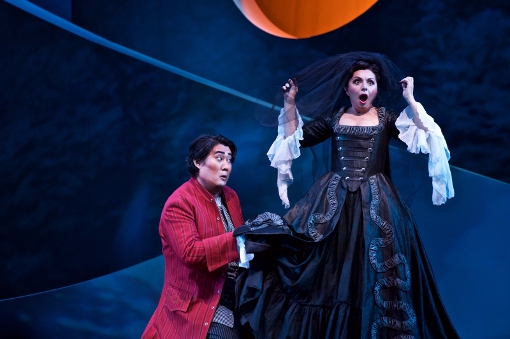
Then, in the new year, Seattle Opera presents The Marriage of Figaro, Mozart’s endlessly enjoyable comedy of manners. General Director Aidan Lang returns to stage directing to mount his own production, which The New Zealand Herald called “engrossing, astute and unmissable.” Chinese bass-baritone Shenyang makes his Seattle Opera debut as Figaro, partnered by Nuccia Focile as Susanna. Morgan Smith returns as Count Almaviva, and Bernarda Bobro debuts as his forgiving wife. In the other cast, Aubrey Allicock as Figaro weds Talise Trevigne as Susanna. The ensemble also features Arthur Woodley, Steven Cole, Karin Mushegain, and Seattle Opera Young Artist alumni Caitlin Lynch, Elizabeth Pojanowski, and Deborah Nansteel. Gary Thor Wedow returns following Don Giovanni (2014) to conduct.
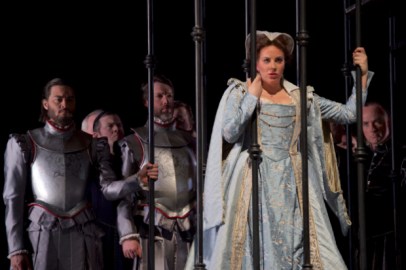
A Seattle Opera premiere, Mary Stuart takes the stage next in February 2016. Based on Friedrich Schiller’s brilliant play, Mary Stuart dramatizes the battle of titanic wills between Queen Elizabeth I of England and her Catholic cousin Mary Stuart Queen of Scotland. In extravagant period costumes, these two iconic royals clash in a haunting story of jealousy, pity, doubt, menace, exaltation and remorse. Christine Rice and Joyce El-Khoury share the honors as Donizetti’s doomed queen, with Mary Elizabeth Williams and Keri Alkema as Queen Elizabeth I, her hated rival. Baritones Weston Hurt and Michael Todd Simpson appear as the scheming courtiers Talbot and Cecil. Carlo Montanaro is at the podium and Kevin Newbury makes his Seattle Opera debut as director.
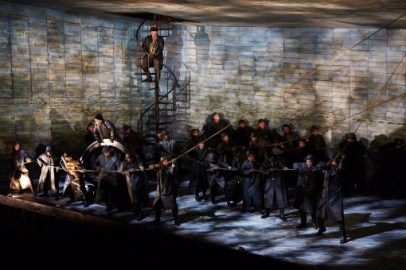
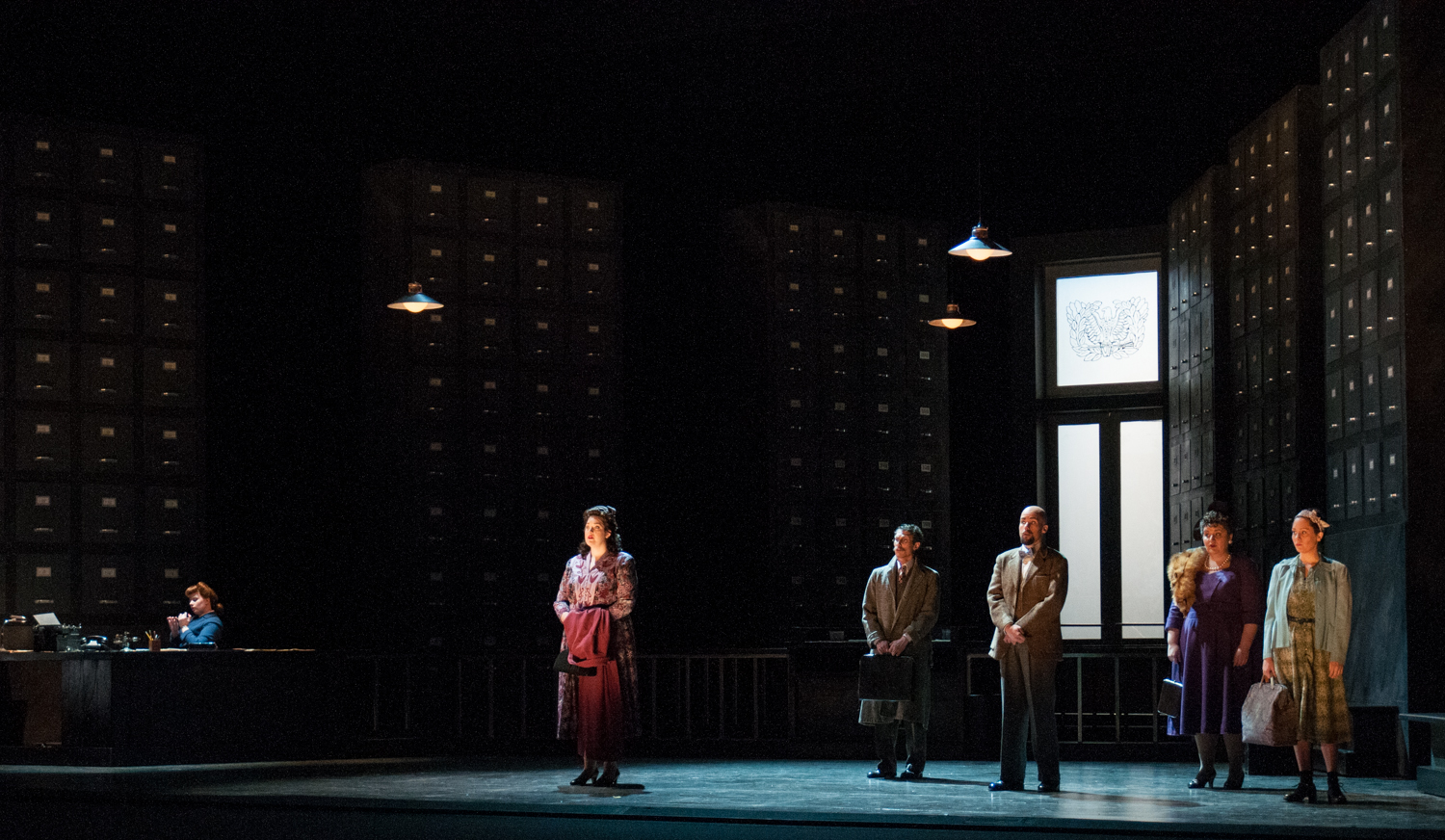
Finally, the company concludes the season doing what it does best—Wagner! In May 2016, several of Seattle’s favorite Wagnerians return to sing The Flying Dutchman, a tale of a cursed sea captain who can be redeemed only by true love. Greer Grimsley and Alfred Walker return as the Dutchman; Alwyn Mellor and Wendy Bryn Harmer sing Senta, who will break the doomed mariner’s curse. Nikolai Schukoff and David Danholt (winner of the 2014 International Wagner Competition) sing Erik, and Daniel Sumegi returns as Daland. A new production for Seattle audiences, this compelling and stylish show from the Canadian Opera Company brings together a visionary creative team in director Christopher Alden, set/costume designer Allen Moyer, and lighting designer Anne Militello. Sebastian Lang-Lessing, who made his Seattle Opera debut during the company’s 50th Anniversary Celebration in August 2014, returns to the podium.
Inspired by the fate of the Dutchman, as well as the plight of the Israelites in Nabucco, Seattle Opera and the University of Washington College of Arts and Sciences will launch the first in an annual series of programs, performances, and events that will explore the theme of exile in the 2015/6 season. Together, with experts from a variety of disciplines in history, philosophy, literature, and the performing arts, audiences will extend and enhance their performance experience through multiple perspectives on historical and contemporary representations of exile. Programming will be offered in conjunction with performances of Wagner’s work in May 2016.
Filed under: music news, Seattle Opera




 MEMETERIA by Thomas May