MEMETERIA by Thomas May

Music & the Arts

Sheku Kanneh-Mason Makes His American Orchestral Debut

Beethoven Symphony #1 & Tchaikovsky

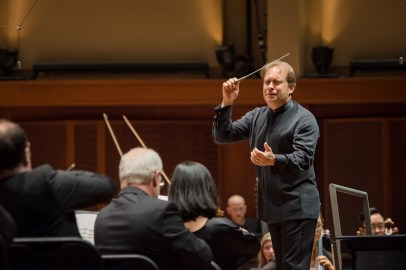
Sheku Kanneh-Mason, cello, with Ruth Reinhardt conducting the Seattle Symphony Orchestra; photo (c) Brandon Patoc

My review of Skeku Kanneh-Mason’s appearance with Seattle Symphony led by Ruth Reinhardt is now live on Musical America‘s site:

SEATTLE, WA—Last May, when he performed three pieces at the Royal Wedding of Prince Harry and Meghan Markl, the cellist Sheku Kanneh-Mason enchanted a global audience, piquing the interest of many listeners new to classical music. That engagement compelled him to cancel a previously scheduled appearance with the Los Angeles Chamber Orchestra, with the result that his American orchestral debut was postponed until last Thursday (October 18), when he appeared with the Seattle Symphony under guest conductor Ruth Reinhardt.

continue [paywall]

Filed under: Musical America, review, Seattle Symphony

Seattle Symphony Is Gramophone‘s Orchestra of the Year

As part of its 2018 Classical Music Awards, Gramophone magazine has announced the winner of Orchestra of the Year, an inaugural category whose victor was determined by a public vote. SSO was the only non-European orchestra in the running.

I wrote this for Gramophone about the award:

‘Listen boldly’ enjoins the logo which the Seattle Symphony introduced in 2011 to mark the beginning of Music Director Ludovic Morlot’s tenure. In the years since, that challenge has been directed not just to their audience but to the organisation itself. Listening boldly means acknowledging the need to reimagine its own identity and taking steps to reposition the SSO within an increasingly compartmentalised cultural landscape.

continue

Filed under: awards, Gramophone, Seattle Symphony

Seattle Symphony’s New Venue

octave-9-header

Octave 9 can create a 360° shared virtual experience with a surround video screen, in-the-round seating and responsive video and acoustics. (Rendering by LMN Architects)

Seattle Symphony just announced that it will open its new Octave 9: Raisbeck Music Center in February 2019.

Octave 9 will be located in what has been called the Soundbridge Seattle Symphony Music Discovery Center (corner of Second Avenue & Union Street). The new initiative, according to SSO, is intended to create “a versatile, immersive environment for inventive performances, education opportunities, and community engagement” — which is reminiscent of the “salle modulable” paradigm that has been realized, for example, at the Pierre Boulez-Saal in Berlin.

Why the name? “Octave 9: Raisbeck Music Center is named in honor of Seattle philanthropists James and Sherry Raisbeck, who provided a $2 million matching challenge to transform the former Soundbridge. The name, created by LORE Naming, was inspired by the size of a concert grand piano, which spans just over seven octaves. A nine-octave range, then, pushes past the boundaries, redefining what is musically possible.”

SSO’s press release continues: “Combining a modular surround video screen with 13 moveable panels, 10 ultra-short-throw projectors, motion-capture cameras, and a state-of-the-art Meyer Sound Constellation® Acoustic System with 42 speakers and 30 microphones, the technology in Octave 9 can create a 360° shared virtual experience or disappear into the background for a more traditional setting.”

The first artist-in-residence at Octave 9 will be the cellist Seth Parker Woods, the subject of my Strings magazine cover story last summer. “During his residency, he will premiere a number of new works for cello and multimedia commissioned by the Seattle Symphony from a diverse group of composers and visual artists.”

read more about Octave 9

Filed under: music news, Seattle Symphony, Seth Parker Woods

Seattle Symphony Names New President and CEO

SSO

By a unanimous vote of its Board of Directors, Seattle Symphony has named Krishna Thiagarajan, currently Chief Executive of the Royal Scottish National Orchestra, as its next President and CEO, succeeding Simon Woods, who recently became CEO of the Los Angeles Philharmonic. Thiagarajan will start his tenure this September.

From the SSO press release:

Thiagarajan’s track record in his past three leadership positions encompasses strong financial management including balanced budgets and significant growth in both ticket sales and donations. He has also produced numerous acclaimed recordings and several international tours, as well as commissioned new works and created meaningful education programs for students. His past leadership has included strong community and corporate relationships, and a personal emphasis on creating an inclusive organizational culture.

Thiagarajan: “I believe the Seattle Symphony to be among the most innovative orchestras in the United States, having delivered an impressive track record of growth, artistic excellence and strong community presence. In collaboration with this outstanding group of musicians, staff and board, as well as dedicated supporters, I look forward to serving the community of the greater Seattle area as the orchestra becomes an even more prominent cultural ambassador for the Pacific Northwest.”

Thiagarajan replaces former President & CEO Simon Woods who became the CEO of the Los Angeles Philharmonic in January after seven years of exemplary leadership in Seattle.

Complete press release

Filed under: music news, Seattle Symphony

Dausgaard and Seattle Symphony Take on an Early Sibelius Epic

84319-1617-concerts-dausgaard-0091-credit-brandon-patoc

photo: Brandon Patoc

My review for Bachtrack of Thomas Dausgaard and the Seattle Symphony in Sibelius’s Kullervo:
On 28 April 1892, when he was only 26, Jean Sibelius unveiled Kullervo to the public. Its triumph established both his career as a composer and his reputation as Finland’s musical bard…

continue reading

Filed under: review, Seattle Symphony, Sibelius, Thomas Dausgaard

Sibelius: Kullervo

Today’s listening, preparing for this weekend’s Seattle Symphony program.

Filed under: Seattle Symphony, Sibelius

Sheku Kanneh-Mason Coming to Seattle

Sheku Kanneh-Mason moved countless viewers around the world playing “Sicilienne” (attributed to*) Maria Theresia von Paradis (a contemporary of Mozart), Fauré’s “Après un rêve,” and Schubert’s “Ave Maria” at the royal wedding of Prince Harry and Meghan Markle.

Because of the engagement, Kanneh-Mason had to forego what would have been his U.S. orchestral debut in LA (with the Los Angeles Chamber Orchestra).

And so lucky Seattle gets to be the host for the cellist’s actual U.S. debut in the fall: with the Seattle Symphony under conductor Ruth Reinhardt, when he will be the soloist in Tchaikovsky’s Rococo Variations.

He’ll also give a concert in the Debut series at Lucerne Festival on 30 August, with his sister Isaka Kanneh-Mason at the keyboard.

*From the musicologist Michael Beckman (this fascinating update passed along to be by Elena Dubinets): “Can’t help noting that one of the cello pieces played at the royal wedding, the “Sicilienne” supposedly by Mozart’s blind contemporary Maria Theresia von Paradis, is actually a fake by the 20th century violinist and hoaxster, Samuel Dushkin. Pretty piece and perfect for a romantic ceremonial occasion…but also an exotic mashup based partly on a violin sonata by Weber.”

See Schott’s page for this score here:
“According to the latest research findings, ‘Sicilienne’ was not written by Maria Theresia von Paradis, but by Samuel Dushkin.”

Filed under: cello, Lucerne Festival, music news, Seattle Symphony

Seattle Symphony Performs Stravinsky’s Perséphone

82103-bpatoc-sso-persephone-press-preview-0006-resized

Stravinsky’s Perséphone at Seattle Symphony in Michael Curry staging; photo by Brandon Patoc

My review of a very memorable evening with Ludovic Morlot, Seattle Symphony, and the visual artistry of Michael Curry:

Since its tepid première at the Paris Opera in 1934, Perséphone has remained among the most neglected of Stravinsky’s major scores, unable to find a comfortable home on the opera, ballet or concert stage.

continue reading

Filed under: Ludovic Morlot, review, Seattle Symphony, Stravinsky

Swept Away by Morlot’s La mer

1617_Concerts_2018.04.19 (12).jpg

This week’s Seattle Symphony program culminates in one of music director Ludovic Morlot’s specialities: La mer, the finale to a program initially designed around orchestral color.

It opens with Escales (“Ports of Call”) by Debussy’s younger compatriot Jacques Ibert. This tripart travelogue from the early 1920s unabashedly exploits clichéd Orientalist and Spanish tropes, but the composer’s treatment of the orchestra is fresh, and Morlot found enough appealing nuances here to make it an enjoyable outing — and to pique interest in hearing more of this now-neglected composer’s considerable output.

The program had originally been slated to include a real rarity — Scriabin’s Piano Concerto, an early work that isn’t exactly in most pianist’s ready-to-go rep. Daniil Trifonov withdrew because of illness at the last minute, so it wouldn’t have been reasonable to expect Inon Barnatan to play the Scriabin when he agreed to save the day.

Scriabin’s synesthesia was meant to be a linking thread here — and perhaps something about Debussy’s Russian influences? — but the substitute turned out to be quite satisfying anyway: Mozart’s K. 488 Piano Concerto, which dates from just before the Figaro premiere.

I was impressed by Barnatan’s SSO debut two years ago (in Beethoven’s Third Piano Concerto). Once again, there was much to admire in his ultra-refined approach to the Mozart, which I heard on Thursday night — all the more striking, given that the concerto’s seemingly straightforward textures were surrounded by the complex hues and ravaging color fields of the rest of the program.

But I was puzzled by the shift from Classical poise to Romantic exaggeration of gesture in the minor-key slow movement, which contains some of Mozart’s most heart-rending music. Barnatan is such a naturally expressive interpreter that I think he would have been more effective without adding italics. Still, there were moments of that elevated beauty squeezed from the most commonplace phrase that set Mozart apart. The finale had all the joie de vivre of the Figaro that was waiting in the wings.

Morlot combined Respighi’s Pines of Rome with Debussy (Nocturnes) early in his tenure, and this time he took up the Italian’s Fountains. It’s hard to avoid the charge of musical padding here in Respighi’s opulent, neo-Richard Straussian scoring, but Morlot shaped the vignettes into miniature dramas that held interest. The SSO’s playing was at a high level, with especially fine ensemble from the strings.

It all seemed to set the stage perfectly for Debussy’s quasi-symphony La mer — including the times-of-day conceit of Respighi’s homage to Rome, moving from the sun’s fading at the Villa Medici to Debussy’s oceanic dawn.

But it soon became clear that Morlot wasn’t interested in “painting” with tone colors or the kind of pictorialism of Ibert — in other words, that he wasn’t treating La mer as another piece of program music that proves how clever Debussy was at conjuring mental images of aspects of the sea through his orchestration. In fact, and especially in contrast to the Ibert, it became obvious how much Debussy manages to do without resorting to standard musical tropes to suggest water.

Instead, the “colors” here seemed closer to the way we find them used in a Mahler symphony: expressions of an internal cosmos, building into a wordless drama of struggle and affirmation.

In his latest take on the piece, Morlot often went in surprising directions. Most remarkable of all was the intensity of the drama in the third panel, which exuded an almost terrifying ferocity I’d not heard in live performances of La mer.

The synergy with the SSO was exciting. Mary Lynch’s rendition of the ambiguous oboe phrase crowned an evening of stellar playing by the woodwinds. Morlot has internalized Debussy’s score to such a degree that he occasionally created the illusion of writing it on the spot. A moving tribute to Debussy’s continuing relevance.
–Review (c)2018 Thomas May. All rights reserved.

Filed under: Debussy, Ludovic Morlot, review, Seattle Symphony

Becoming the Light

03302018_Become-Desert_121851-1242x830

Composer John Luther Adams with conductor Ludovic Morlot and the Seattle Symphony Orchestra. Seattle Symphony presents the world premiere “Become Desert” March 29 and 31. (Brandon Patoc )

And what a night: Seattle Symphony and Ludovic Morlot have given the world premiere of Become Desert by the incomparable John Luther Adams.

My review for The Seattle Times here, where I was only able to offer a few hints of how extraordinarily original, enthralling, and transformative this music is.

Filed under: Beethoven, John Luther Adams, review, Seattle Symphony

Archive

Enter your email address to follow this blog and receive notifications of new posts by email.