MEMETERIA by Thomas May

Music & the Arts

Morlot and the Seattle Symphony Risk Traditional Rep

Opening Night Gala

My latest review of Ludovic Morlot and the Seattle Symphony is now live on Musical America (behind a paywall).

Here I cover the first two programs of the season that recently began (Beethoven’s Fourth Symphony and Mahler 1 in the first, Strauss’s Don Quixtore and Brahms’s Third Symphony in the second):

Now in his fifth season as the Seattle Symphony Orchestra’s music director, Ludovic Morlot has hit a sweet spot. The momentum he initially brought to the SSO has not slackened…

continue reading on Musical America (behind paywall)

Filed under: conductors, Ludovic Morlot, review, Seattle Symphony

Still Fresh: Morlot and the Seattle Symphony Embark on a New Season

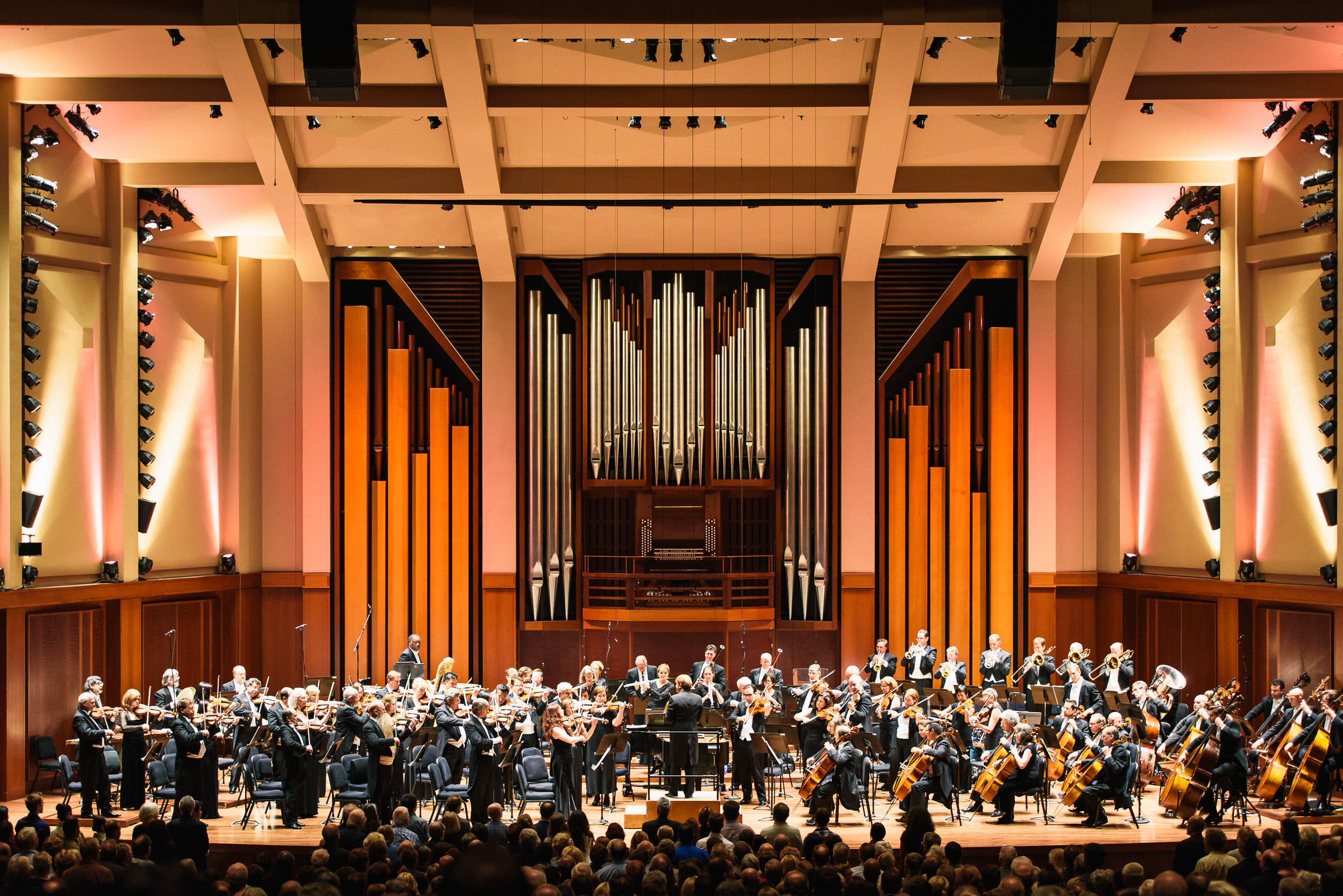
SSO: Opening Night Gala with Ludovic Morlot and Piano Competition winner Kevin Ahfat. Credit: Brandon Patoc Photography

SSO: Opening Night Gala with Ludovic Morlot and Piano Competition winner Kevin Ahfat. Credit: Brandon Patoc Photography

I imagine some people are doing a double take when they realize Ludovic Morlot has just started his fifth season helming the Seattle Symphony. Well, it is hard to believe we’re almost a decade into his tenure: his approach to me feels as fresh as ever. But with the added benefit of confidence accruing. (Here’s another double take: this is the orchestra’s 113th season.)

Saturday evening’s season opener certainly had several Morlot trademarks: a lovely pairing of American and French composers that showed off the health and vigor of the musicians, along with a like-minded peer in the guest artist for the second half.

The performances also overturned a couple of pesky clichés. One is the matter of non-native-born Americans supposedly having a hard time with getting across an authentic feel for the “American” sound — meaning in this context primarily the jazz-inflected rhythms of such popular 20th-century composers as Leonard Bernstein.

Morlot was perfectly at home in the Overture to Wonderful Town and inspired a deliciously stylish reading from the players, complementing Bernstein’s warm lyricism with brash joie de vivre. Instead of over-emphasizing them, Morlot let Lenny’s meter shifts propel the music with an elegantly giddy, light-as-air verve.

The artistic high point came with the orchestral suite Copland fashioned from his original chamber-orchestra score for Appalachian Spring. Here was a touching example of Morlot’s fresh perspective. My reaction was similar to what I felt when he gave us the same composer’s Lincoln Portrait for the concert opener in 2012.

Copland’s suite sounded as if it were being sung in a single tender breath. The performance featured another Morlot trademark: mindful, deftly balanced timbral blending and well-judged phrasing that allowed a particular gesture to reverberate with maximal impact (as right after the final tutti variant of the “Simple Gifts” tune). The result made this music sound so much richer and affecting than you might expect from an aging chestnut. Contributions from the winds were particularly lovely, including guest clarinetist Frank Kowalsky.*

Opening Night Gala

Opening Night Gala Credit: Brandon Patoc Photography

The piano dominated the rest of the program. I have mixed feelings about the prominence given to guest artists at a symphony orchestra’s opening concert: it often seems to decenter the musicians we should be celebrating and enjoying, making them secondary as the spotlight is turned over to a “star.” (And, yes, I get the necessity of this to stir up donor interest and create buzz.**)

But Jean-Yves Thibaudet was the perfect choice to fill the star role. Not only are he and Morlot natural artistic partners: he plays with the orchestra with genuine empathy and give-and-take. In addition to which, Thibaudet will be coming back several times this season in his role as artist in residence with the SSO.

So it was a treat to hear them join together for the fifth of Camille Saint-Saëns’s piano concertos, also known as “the Egyptian.” (Saint-Saëns wrote it while staying in Luxor and also alludes to music he heard in Egypt.) The second cliché that got overturned: the formula that composer X writes difficult music for the soloist whose “virtuosity is not an end in itself, but a vehicle for [fill in the blank with some “higher” purpose].”

Well, not so much in the Saint-Saëns. The virtuosity called for is often over the top, a vestige of the composer’s Lisztian side, and many stretches are exactly for the sake of virtuosity, period. But what fun when played by an artist of such refined taste and intelligence. Thibaudet truly dazzled and charmed, even eliciting a note of dreamy mystery in the Andante, with spirited collaboration from the orchestra.

The concerto was prefaced by the Danse Bacchanale from Saint-Saëns’s opera Samson et Dalila, extending the “Orientalist” theme (and pinpointing one source of Hollywood’s musical orientalism). Much of it is wonderfully trashy, sequence upon sequence, but Morlot had a way of making it sound better than it is.

The piano figured in the middle of the first half as well, when the young Canadian-born Kevin Ahfat took to the keyboard to play the final movement from Samuel Barber’s Piano Concerto. Ahfat had just been announced as the winner of the Seattle Symphony’s inaugural Piano Competition. Along with a $10,000 cash prize, the victory nets him a future performance with the SSO next season.

I had to miss the competition itself, so this was my first time hearing Mr. Ahfat, but he instantly made a powerful impression. I liked the choice of the too-seldom-heard Barber, and though this movement really exhibited only one side of his artistry — a very extroverted, showy side — his playing brimmed with personality and flair. If he can just grow out of the Juilliard mode of exhibitionistic technique-centrism…

To close the concert, Morlot pulled a shtick a la Itzhak Perlman, having Thibaudet come out (joined by Ahfat on another keyboard) for a pretend audition as they embarked on a humorously awkward account of “Les Pianistes” from Saint-Saëns’s Le carnaval des animaux, bringing the curtain down with the finale to the same suite.

*Although the “official” Seattle press has ignored this news, principal clarinetist Ben Lulich has been appointed “new acting principal clarinet” of the Cleveland Orchestra but will perform at some of the SSO’s concerts this season (where he’s technically on leave for the season).

**According to an SSO Tweet, $785,000 was raised for education and mentoring at the post-concert gala:

–(C)2015 Thomas May. All rights reserved.

Filed under: Ludovic Morlot, piano, review, Seattle Symphony

Morlot’s intimate view of Mahler’s panoramic Third in Seattle

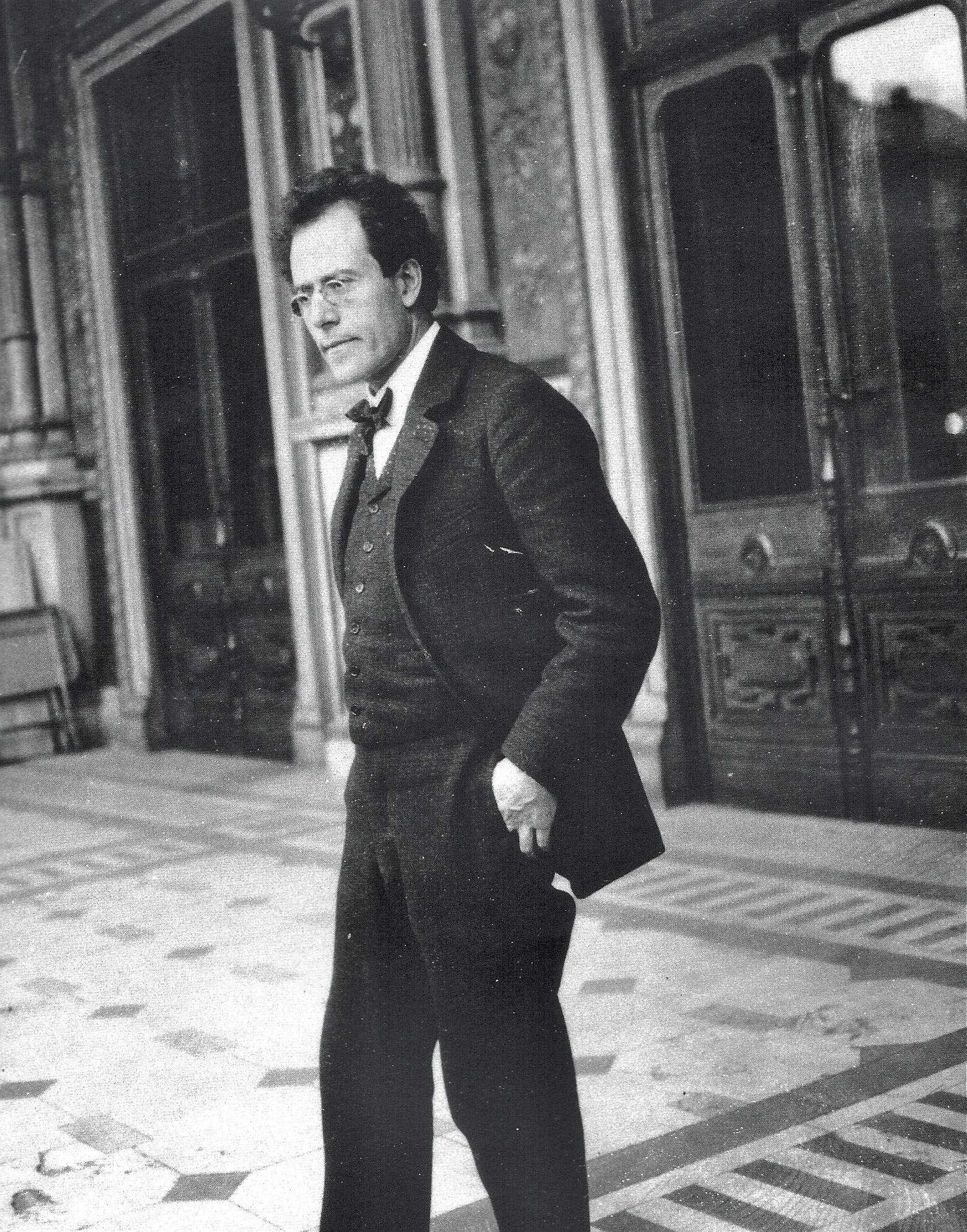
Mahler

My latest review has now been posted on Bachtrack:

With the seemingly boundless D major chord that ends Mahler’s Third Symphony as final benediction, the departing audience encountered a series of suspended chimes in gentle tintinnabulation: part of a recent installation in Benayoya Hall’s grand lobby by Trimpin, Seattle Symphony’s composer-in-residence.
continue reading

Filed under: Ludovic Morlot, Mahler, review, Seattle Symphony

Trimpin the Light Fantastic

Trimpin's Gurs Zyklus; photo courtesy Nic Dahlquist, Stanford Lively Arts

Trimpin’s Gurs Zyklus; photo courtesy Nic Dahlquist, Stanford Lively Arts

I’m unable to attend this week’s world premiere of Trimpin’s latest project, Above, Below, and In Between, a commission from the Seattle Symphony and Ludovic Morlot.

But to mark the occasion, here’s a feature I wrote a few years ago in conjunction with the Seattle premiere of Trimpin’s Gurs Zyklus at On the Boards:

Contemporary composers are so routinely described as “crossing barriers” and “defying genres” that these tags have become meaningless clichés. But Trimpin genuinely resists categorization.

The familiar labels aren’t much help in trying to define his unusual career. Based in Seattle for over three decades, the German-born Trimpin follows a path that zigzags wildly, unbound by conventional parameters. He’s a kinetic sculptor working with sound, an installation artist, an inventor, an instrument builder who combines the insatiable curiosity of artist and scientist alike with the old-fashioned know-how of a craftsman.

Trimpin’s work can be encountered in museums (the tornado of guitars at EMP), in natural environments, and even in venues like Terminal A in Sea-Tac Airport, where travelers unwittingly activate his 80-foot-long kinetic sculpture of gadgets and instruments as they pass alongside on a rolling walkway. But his latest big project breaks new ground even for Trimpin. Receiving its Seattle premiere this Thursday through Sunday at On the Boards, The Gurs Zyklus is as unclassifiable as the MacArthur “genius” award-winning artist himself.

The Gurs Zyklus places his vision as a composer, inventor, and builder within the context of music theater. Originally commissioned by Stanford University’s Lively Arts program and given its world premiere there last May, the work has been reconfigured as a site-specific work for On the Boards. “It’s being presented as a three-sided staging and will feel very intimate in our main stage theater space,” says artistic director Lane Czaplinski. “You feel you’re inside the work, as in a sculpture, as opposed to on the outside watching.”

The production marks the first time since the early 1990s that On the Boards has hosted the work of Trimpin and of Obie Award-winning director Rinde Eckert, who is collaborating on the theatrical conception of The Gurs Zyklus. It’s an especially good fit, Czaplinski adds, since it represents “that in-between category which is the future of opera and music theater. People don’t yet know quite how to talk about it, but this is what we do at On the Boards.”

The creative process underlying the work, Trimpin explains, was fueled by a desire to transform the inert facts of history and information into “other forms of expression: notation, music, sound sculpture design, and performance.” It also represents the artist’s attempt to come to terms with memories that have haunted him since his childhood in a small town in southwestern Germany, where Gerhard Trimpin was born in 1951. (Long ago he officially lopped off his first name.) He recalls chancing upon an overgrown Jewish cemetery as a youngster and becoming intrigued by the Hebrew inscriptions on the headstones,” which he thought resembled “mysterious hieroglyphs.”

But the fate of the Jewish population was a taboo topic in those early postwar years. Eventually Trimpin learned that in October 1940 the Nazis had rounded up all of the town’s Jews and sent them by train to the internment camp of Gurs. Located to the southwest, in the French Pyrenees close to the Spanish border, Gurs was run by the collaborative Vichy government but had been operating since the 1930s, when the French first used it to control the influx of refugees from Franco’s forces in the Spanish Civil War.

A profile of Trimpin by Jean Strouse called “Perpetual Motion” in the New Yorker in May 2006 caught the attention of Victor Rosenberg. His mother had come from the same hometown (Efringen-Kirchen ) and his uncle was interned at Gurs. Rosenberg contacted Trimpin, offering to let him access to a shoebox full of letters mailed from the camp to his father. This became the trigger for The Gurs Zyklus, which, says Trimpin, “is about the challenge of learning, deciphering, investigating, wanting to know more about what is happening.”

Other remarkable connections from Trimpin’s own experience began to illuminate the past. In the late 1980s he had become friends with fellow maverick composer Conlon Nancarrow, for example, but only later learned that Nancarrow himself had spent time as a prisoner at Gurs in its earlier phase, after fighting with the Abraham Lincoln Brigade against Franco’s Fascists. Trimpin decided to retrace the journey from his hometown to Gurs, recording the sounds of the train and the announcements at each stop. And as he was developing The Gurs Zyklus during a year-long residency at Stanford, by chance he encountered a local resident who had been sent to Gurs as a young boy.

All of these links to Gurs became strands of the work, which blends aspects of opera, oratorio, staged installation, and memory play. Its musical and symbolic elements range widely. Clicking castanets mimic a message being sent in Morse code as Spanish Fascists order the assassination of Federico García Lorca. This reference to the struggle in which Nancarrow took part — the score also incorporates his music — ominously foreshadows the darkness descending over Europe. Trimpin’s script and sequence of visual imagery draws from the Rosenberg letters. Along with their despairing reports of everyday conditions, the letters express a poignant hope for release from the camp.

The raw material gathered from his own trip to Gurs — the sounds of the train trip, the innocuous-sounding roll call of place names — provides the “information” that becomes transformed into a powerfully resonant narrative. Even the patterns on tree bark samples taken from Gurs are translated into musical notation, giving voice at last to these silent “witnesses” of what took place. Trimpin also uses instruments he has invented for other pieces, such as the “Fire Organ” — a contraption of glass tubes and Bunsen burners that emits sounds with a texture uncannily similar to the human voice. While interacting with his students at Stanford, Trimpin designed other mechanical elements specifically for The Gurs Zyklus, constructing the most intricate components in his three-storey studio in Madrona.

All of Trimpin’s projects share this one-of-a-kind aura. Yet while much of his work evokes a sense of delighted whimsy with the sheer bravura of its invention — a “Dr. Seuss,” as Czaplinski puts it —The Gurs Zyklus explores a dark past, pushing beyond the expressive limits of conventional instruments and easily digested narrative chronology. The essence of its dramaturgy lies in the metaphorical combinations of sound and visual images, of isolated memories that turn out to be interconnected. Site-specific acoustical perceptions are also integral to the piece. “These are events that don’t make sense at first,” Trimpin remarks. How to decipher them “is then up to the individual. The audience’s understanding comes from their own interpretation of what they have just experienced.”

(c) 2015 Thomas May. All rights reserved.

Filed under: American music, new music, Seattle Symphony

Seattle Symphony’s Sibelius Festival: Part III

Thomas Dausgaard

Thomas Dausgaard; photo (c) Morten Abrahamsen

My review of the final program in Seattle Symphony’s just-completed Sibelius Festival is now live at Musical America. The program included Symphonies 5-7. It’s a subscriber site with a paywall, so I can’t post more than the teaser here:

SEATTLE—-At the beginning of his  journey through the seven symphonies of Jean Sibelius, Thomas Dausgaard hinted at the big picture Seattle Symphony audiences could expect: “These works are about a search for the essentials…

complete review

Filed under: review, Seattle Symphony, Sibelius

Concluding the Sibelius Festival in Seattle

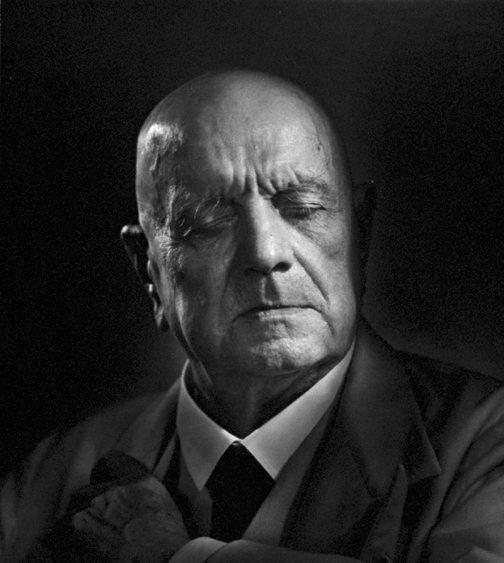
sibelius

With the strings leaning in to one of the most powerfully orchestrated C major chords of the 20th century, the Seattle Symphony’s ambitious Luminous Landscapes Sibelius Festival has reached its conclusion. (There’s also a curious Nachtisch to this week’s final program: after the orchestra players cleared the stage on Thursday, we were treated to a mini-recital of nine Sibelius lieder, with soprano/pianists Maria Männistö and Christina Siemens alternating roles.)

For fellow music lovers (and Sibelius completists) who’d been present for all three programs this past month, there was an added sense of satisfying closure that was maybe, just maybe, a bit reminiscent of being with a Ring audience at Seattle Opera as the final chord of Götterdämmerung fades out.

On Sunday you can listen to the entire marathon via the KING FM Seattle Symphony Channel, KING FM 98.1’s new collaborative project with the SSO. On March 29 the marathon starts at 12:01 a.m. with a looping 24-hour stream of the seven symphonies, the Violin Concerto (with soloist Pekka Kuusisto), and Finlandia — all with Thomas Dausgaard conducting, recorded live from the past month’s performances.

My previous coverage of the Sibelius Festival:

review of Sibelius Program I for Bachtrack

review of Sibelius Program II for Musical America

review of Sibelius Festival Program III for Musical America

And a glance at San Francisco Symphony’s recent “Creation” program, which included the composer’s fascinating, brief tone poem Luonnotar.

We’re still early in this 150th anniversary year honoring Sibelius. The birthday itself falls in December — which somehow seems just right for a composer so associated with Northern landscapes. Many orchestras have therefore planned Sibelius-related programs for the coming season as well. But the Seattle Symphony is the only U.S. orchestra to have performed an entire Sibelius symphony cycle back-to-back to mark the anniversary. It’s been a genuinely laudable artistic milestone for the ensemble.

Filed under: programming, Seattle Symphony, Sibelius

Seattle Symphony’s Sibelius Festival: Part II

Pekka Kuusisto; photo (c) Kaapo Kamu

Pekka Kuusisto; photo (c) Kaapo Kamu

My review of the second program of the Seattle Symphony’s Sibelius Festival has now been posted on Musical America. MA is a subscriber site, so I’m limited to posting the link here:

The Seattle Symphony has been on a winning streak of synchronicity when it comes to favorably timed good news. Last year [Musical America Composer of the Year] John Luther Adams’s…

continue reading (The full review appears behind Musical America‘s subscriber paywall.)

Filed under: review, Seattle Symphony, Sibelius

Seattle Symphony’s Sibelius Festival: Part I

Thomas Dausgaard; (c) Morten Abrahamsen

Thomas Dausgaard; (c) Morten Abrahamsen

My latest review is now posted on Bachtrack:

Only a few orchestras around the world have programmed a complete cycle of Sibelius symphonies this year to mark the 150th anniversary of the composer’s birth. The Berlin Philharmonic just completed its traversal under Sir Simon Rattle last month (in Berlin and London), and the Seattle Symphony – the only orchestra in the U.S. to undertake all seven symphonies in back-to-back programming for the jubilee year – embarked on its Sibelian marathon Thursday evening.

continue reading

Filed under: review, Seattle Symphony, Sibelius

Howler of the Week (Year?)

A little-known composer of obscurities

A little-known composer of obscurities

Arts journalism in Seattle — it just keeps getting better and more incisive. Here’s the Seattle Times trying to tell us that it’s reliably “covering” an institution as central to Seattle’s cultural life as the Seattle Symphony: see, we’re devoting a whole preview to this ambitious festival!

And so in this preview of Luminous Landscapes, the Seattle Symphony’s Sibelius Festival, which started last night, we are educated about a work alleged to have been obscure for most of its history — the Violin Concerto (!):

Finnish violinist Pekka Kuusisto will make his Seattle debut for [sic] the often-revised piece, which seems almost to have been cursed during Sibelius’ lifetime; its 1904 premiere was a disaster, due in part to its difficulty, and it was unknown to much of the world until 1991.

Yes, the Wikipedia entry contains a discussion of the belated unveiling of the original version of the Concerto in 1991. (Sibelius had withdrawn that score after its ill-fated premiere.) One of the problems with relying on Wikipedia alone — even when the information is pretty good, as in this case — is that without knowledge of the topic in a fuller context, it’s very easy to skim too fast and come away with a false, superficial sense of “knowing” about something without noticing what’s actually at stake. The preview isn’t discussing the ur-Concerto, just the regular one that will be played next week in the second program of the festival: a recent find!

ADDENDUM: I should add that it has occurred to me that this embarrassing gaffe might not be the author’s fault but that of the Seattle Times editor. It’s conceivable that the copy that was turned in correctly explained the (otherwise essentially irrelevant) reference to the 1991 factoid and that this was haplessly mangled by an editor with limited reading comprehension skills (and even less knowledge of music).

I hope it’s obvious that this matter is far from a pedantic point about correct dates. In either case, it means that a Wikipedia article is more reliable than the information published by the Seattle Times. Of course the second scenario — the one about the unreliable editor — would only further underscore my real point here: that the deteriorating state of arts journalism is doing a terrible disservice to a large population of readers who are genuinely interested in the arts.

Surely we haven’t already reached the point where accuracy in reporting by the “newspaper of record” is considered a luxury? Or have we…..

Filed under: journalism, Seattle Symphony

Berlioz’s Roméo et Juliette Symphony toute entière

Berlioz

Hector Berlioz didn’t even know English when he saw his first stagings of Shakespeare in 1827 in Paris, performed by a British company on tour. But it didn’t matter. “Shakespeare, coming upon me unawares, struck me like a thunderbolt,” he later recalled. “The lightning flash of that sublime discovery opened before me at a stroke the whole heaven of art, illuminating it to its remotest depths.”

Those reverberations mixed with the young French artist’s discovery of the Beethoven symphonies around the same time. And both epiphanies propelled Berlioz along his adventurous course as a musical revolutionary.

The work that fuses Berlioz’s reimagining of what a symphony could be with his Shakespearean obsession is Roméo et Juliette. Last night the Seattle Symphony performed RnJ in its entirety — to my knowledge, for the first time in their history. Ludovic Morlot led the expansive forces called for by the score: three vocal soloists, chorus, and orchestra (in this case splitting the first and second violins to left and right). There’s even a touch of acoustical “space music” in the positioning of a brief double choir offstage.

It’s a mammoth score (all told, around an hour and a half — not counting the intermission that was inserted here after the “Queen Mab Scherzo”). The instrumental sections are played as a kind of abridged suite often enough, but encountering the whole megillah is a rarity that brings home how radical were Berlioz’s ideas about music and its relation to text and drama. The result is that RnJ is more or less an acknowledged masterpiece that contains some of this genius’s finest music, yet, oddly, as a whole the work remains more often talked about than heard.

Following Maestro Morlot’s work with specific composers since his tenure began here has been fascinating — and the Berlioz thread has proved particularly satisfying artistically (La Damnation de Faust in his first season, an electrifying Symphonie fantastique this time last year).

Morlot and his musicians are showering love on Roméo et Juliette. Sorry if that sounds schmaltzy, but there’s really no other way to put it: the breathtaking precision of their dynamic shadings, the intensified expressivity, their Zen-like focus on detail, the awareness of complicated, even contradictory emotions in this score.

Berlioz carries further the idea from the finale of Beethoven’s Ninth of the instruments trying to break out into words by doing the opposite: after an orchestral introduction — the discipline of fugal writing paradoxically depicts violent disorder and passion — he stages an overall summing up of the play’s main action in a prologue “act” that features chorus and two soloists positioned behind the strings. (Sylvie Brunet-Grupposo contributed her velvety mezzo and tenor Kenneth Tarver sang with elegant fervor.)

But already you sense the instruments straining to take over the telling, with solemn, commanding rebukes from trombonist Ko-ichiro Yamamoto and the brass ensemble standing in for the Prince of Verona. And Berlioz reserves the most sublime passages for his orchestra, above all in the scene of Romeo alone and the nocturne of the young lovers meeting in the garden of the Capulet residence, beneath Juliet’s balcony. The woodwinds played with soulful poignance, with admirably individualized phrasing from Mary Lynch on oboe and clarinetist Ben Lulich; bassoonist Seth Krimsky sustained a mood of deep, anxious melancholy later in the Tomb Scene.

(The playing was so precise and riveting that I encountered a novel torture to add to the usual litany of cell phones, coughers, page-turners, seat kickers, and other occupational hazards of the concert hall: the penetrating sound that a pair of leather shoes squeaking against each other can generate, as a patron helpfully demonstrated during one of the score’s most heartbreaking moments.)

Morlot tenderly shaped the ebb and flow of the scène d’amour, with its sudden pullings-back and renewed outbursts of pained passion. Richard Wagner (Berlioz’s junior by a decade) was there at the historic premiere of this “symphonie dramatique” in Paris in 1839, and it was an epiphany for Little Richard as well.

It’s enlightening to compare/contrast the passionate melody of this music with its transmogrification in Tristan: the Classical transparency of Berlioz’s sensibility survives his most radical harmonic ideas, so that the French composer’s love music still betrays a moving awareness of limits and fragility that is a far reach from the oceanic transports Wagner permits his lovers to experience.

The players’ crisp focus on detail paid off richly, too, in the gorgeously nimble, ear-tickling “Queen Mab Scherzo” — Berlioz’s rendition, purely through the means of orchestral language, of Mercutio’s ingenious speech about the “fairies’ midwife.” Jeff Fair’s horn solo was outstanding, and Michael Werner’s light-as-a-feather pings on hand-held crotales echoed dreamily against infinitesimally delicate pizzicati. The rehearsals must have been incredibly focused, resulting in a lightning speed tempo and crystal-clear textures that throw the sheer weirdness of this music in high relief.

It should be noted that the text set by Berlioz — no mean wordsmith himself — originated in his own paraphrasing and rewriting, only loosely based on Shakespeare’s original; he had the poet Émile Deschamps craft this into a libretto, thus avoiding direct “competition” with Shakespeare’s verse. The “words” and actions of the lovers themselves are reserved strictly for the orchestra to impart.

Another highlight was Juliet’s Funeral March and the Tomb Scene (in the third part or “act,” which was performed after the intermission). A smaller subset of Joseph Crnko’s Seattle Symphony Chorale had appeared for the narrative of the Prologue. Here they came out in full force and sang with clarity and power. The restraint of their single repeated unison E gave way to emotion-laden elegy, its resplendent polyphony expertly balanced.

Arguably the lengthy finale is the weak link in Berlioz’s conception of this symphony-opera-oratorio hybrid. All the pain, longing, and ecstasy — and violence — that lead to the denouement feel swept aside in a superficially rousing reconciliation, the most overtly operatic scena of the work. Here Berlioz gravitates more obviously back toward the Beethovenian Ninth model of a choral finale. Baritone David Wilson-Johnson — filling in at the last minute — delivered the significant part of the peace-maker Friar Laurence with flair and charisma.

But Berlioz knew that “the very sublimity of this love” is beyond words, though not beyond expression. To access this he focuses in Roméo et Juliette on, as he described it, “the language of instruments, a language richer, more varied, less restricted, and thanks to its very indefiniteness, incomparably more potent.”

There’s one more chance to hear this performance of Berlioz’s Roméo et Juliette: Saturday 14 February 2015 at 8 pm at Benaroya Hall. Tickets here.

UPDATE: I asked SSO staff about an odd commotion that took place just as concertmaster Alexander Velinzon came out. A man started shouting something in an agitated voice (I couldn’t make out what he was saying) and walked up the aisle holding a pen and pointing it at one of the ushers. Apparently police were notified and came to Benaroya Hall after the gentleman had exited the hall. I’m told there were no other problems and that he was given a refund for the ticket he had purchased.

On Twitter, Terry Miller wondered whether the disturbance was from the Montague or Capulet side.

(C)2015 Thomas May. All rights reserved.

Filed under: Berlioz, conductors, review, Seattle Symphony

Archive

Enter your email address to follow this blog and receive notifications of new posts by email.